How a battery-only vehicle stores and uses energy, how it compares with hybrids, and where battery electric power is already at work.
A BEV relies on its battery alone: an on-board pack powers electric motors, with no combustion engine or fuel tank to fall back on. Hybrids and fuel cell vehicles fall outside the definition. Sales of the Tesla Model Y reached an estimated 3.4 million by September 2024.
A battery electric vehicle, or BEV, runs entirely on electricity from a battery pack carried on board, using one or more electric motors for propulsion. It has no fuel tank and no combustion engine to fall back on. Its energy comes from plugging into a charger, from a grid connection or from swapping in a fresh battery, and the car depends on that stored energy alone.
What is a battery electric vehicle?
A battery electric vehicle is one that draws all of its propulsion energy from an on-board battery pack and powers one or more traction motors with it. The name is applied to several near-equivalent terms, including pure electric, only-electric and all-electric vehicle. In everyday use the label usually refers to passenger cars, but the category also covers buses, trucks, forklifts, scooters and boats.
Because the motor controller modulates power and torque directly, a BEV does not need a clutch, a multi-speed transmission or the extensive engine cooling of a combustion car. That simplification is one of the central engineering differences between the two kinds of vehicle, and it explains why BEV drivetrains can be so compact.
A battery-only car has no engine to service, but its range depends on how fast it can refill.
How is a BEV different from a hybrid?
A BEV differs from a hybrid because it carries no internal combustion engine to supplement its motors. Hybrids, including mild, full and plug-in designs, combine an engine with electric drive, and fuel cell cars and range-extended vehicles use fuel or a generator to make electricity. None of those count as a pure battery electric vehicle.
Plug-in hybrids can run as BEVs for part of their journeys, and they are often described as plug-in electric vehicles alongside BEVs. Range-extended designs, such as the Chevrolet Volt, run a generator that keeps the battery topped up. Terminology also varies by country: China groups plug-in and hybrid cars together as new energy vehicles, while in the United States the phrase neighborhood electric vehicle describes a different, low-speed class.
Those differences matter for buyers. A BEV offers the lowest running complexity of the group, since there is no engine oil, exhaust or fuel system to maintain, but it depends entirely on charging. A plug-in hybrid can cover shorter trips electrically and fall back on fuel for longer journeys.
How does the battery pack work?
A BEV battery pack is a group of electrochemical cells with external connections that supply power to the vehicle. Early electric vehicles used lead-acid batteries in the late 19th century, but lithium-ion chemistry took over by the 2010s and now dominates most electric cars. Each cell has a nominal voltage of 3-4 volts, depending on its chemistry.
Cells are grouped into modules, and modules are grouped into the complete pack. The Tesla Model S pack is a well-known example, with up to 7,104 cells arranged in 16 modules. Pack design balances energy capacity, weight, cooling and the space left for passengers and luggage, which is why packs often sit low in the floor.
Battery storage is also central to the wider energy transition. Mobile storage in EV batteries can support a grid that relies more on renewables, and a meta-study on electricity storage places the technology in that broader context.
How does the motor and controller work?
The motor controller takes its signal from the accelerator pedal, which is linked to potentiometers, and decides how much electric power is needed. It regulates that power to the motor, supplying pulse width DC or variable frequency AC depending on the motor type. The controller also handles regenerative braking, feeding energy back into the battery as the car slows.
Early electric cars used series wound DC motors, a form of brushed motor. Separately excited and permanent magnet designs were also used. More recent vehicles favour AC motors, usually induction or brushless permanent magnet types, because they are simpler to build and have no brushes to wear out. The controller also performs safety checks, anomaly detection and failure diagnostics.
How does energy density compare?
Energy density is the main reason battery electric vehicles still trail combustion cars on range per unit of stored energy. The table below compares several energy stores and shows how far lithium-ion has come from lead-acid, while still falling short of petroleum fuels.
| Energy store | Energy density | Comment |
|---|---|---|
| Lead-acid battery | 0.36 MJ/L | Used in early electric vehicles |
| Lithium-ion battery | 0.9-2.63 MJ/L | Dominant in modern EVs, several times lead-acid |
| Ethanol | 24 MJ/L | Used as a fuel and biofuel |
| Gasoline | 34.2 MJ/L | Traditional combustion fuel |
The gap is partly offset by efficiency. Electric motors convert stored energy far more effectively than combustion engines, so a BEV travels roughly three times further than a similar combustion vehicle for each megajoule stored. That is why an electric car can deliver useful range despite the lower energy density of its battery.
Which vehicles run on battery power beyond cars?
Battery electric power now covers a wide range of machines. Trams, buses, trucks, vans, motorcycles, scooters, bicycles, skateboards, railcars and boats all have battery electric versions, and many were in use long before the modern car boom. The category is broad, and its technical principles remain the same across all of them.
Battery electric railcars called BEMUs run in Japan, charging from pantographs under electrified lines or at stations. Battery electric trams avoid overhead wires in historic centres, and charge at every stop using a combination of supercapacitors and batteries. Several battery electric ships also operate around the world, and electric ferries are being built.
Special-purpose vehicles include golf carts, milk floats, all-terrain vehicles and neighborhood electric vehicles, and some manufacturers specialise in electric work machines for factories. Three-wheeled electric rickshaws show how the idea adapts to lower-income markets with heavy two-wheeler traffic.
Motorsport has adopted battery power as well. Formula E is a fully electric international single-seater championship, conceived in 2012 and sanctioned by the FIA. Its inaugural race started in Beijing on 13 September 2014, and Alejandro Agag is the series CEO. The championship is contested by ten teams with two drivers each, although nine were competing after Team Trulli withdrew. Most races run on temporary city-centre street circuits of 2 to 3.4 km, and the Mexico City ePrix is the only event held on a road course.
How have electric buses performed?
Chattanooga, Tennessee, has run nine zero-fare electric buses since 1992. They carried 11.3 million passengers, and two of them were used during the 1996 Summer Olympics in Atlanta. Hong Kong Airport began running an electric shuttle bus in 2000, and battery-powered school buses were being tested in the same period.
For the 2008 Beijing Olympics, a fleet of 50 electric buses was deployed. Each had a range of 130 km with the air conditioning on, and the batteries were swapped at a recharging station to keep the buses running around the clock. The Foothill Transit fast-charge bus has operated in Pomona, California, since September 2010, and its Proterra EcoRide BE35 can charge in under 10 minutes.
Electric school buses followed. In 2014 the Kings Canyon Unified School District received an all-electric school bus, and it was the first modern electric school bus approved for student transportation by any state. Adelaide's Tindo bus, made in New Zealand, takes its electricity from a solar array on the central bus station.
How big is the BEV market?
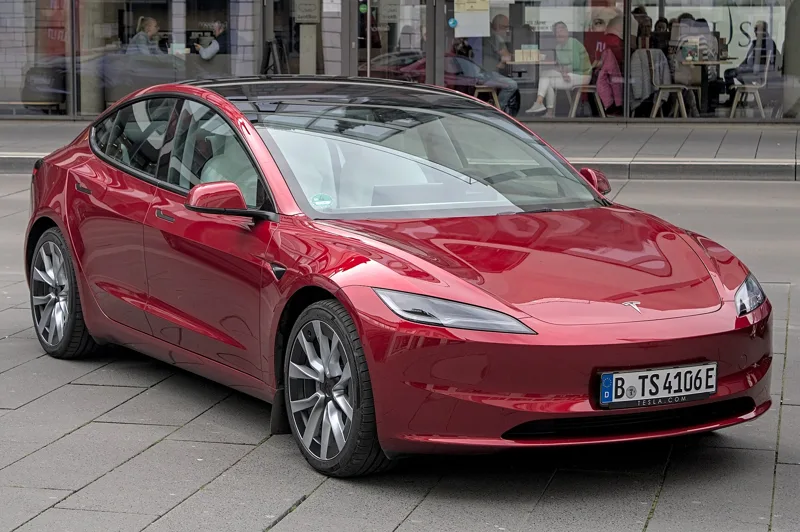
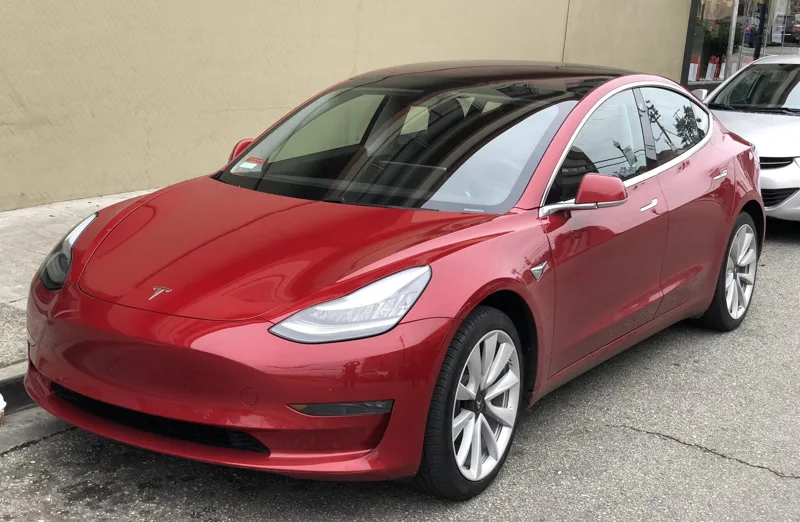
Cumulative global sales of highway-capable pure electric cars passed one million in September 2016. By September 2024 the Tesla Model Y was the top-selling all-electric car in history, with an estimated 3.4 million sales, followed by the Tesla Model 3 with over 2.6 million and the Wuling Hongguang Mini EV with 1.4 million as of May 2024.
Two-wheelers are an even larger part of the picture. In 2016 about 210 million electric bikes were used daily worldwide. China is the biggest market for electric two-wheelers, with a value of $6.9 million in 2024, and India is the world's largest bicycle market at 22 million units a year.
Adoption has varied sharply by country. China and Europe lead BEV diffusion, and other markets have found it harder. Governments are pledging billions to fund development of electric vehicles and their components, and the Indian government is seeking to become a manufacturing hub for electric vehicles.
Are battery electric vehicles cleaner?
A battery electric vehicle produces no greenhouse gas emissions while it is running, but the electricity used to charge it may produce emissions at the power station. Two factors decide the total: the carbon intensity of the electricity, measured in grams of CO2 per kWh, and the consumption of the vehicle, measured in kilometres per kWh.
On average, electric cars in the European Union saved 50-60% of CO2 emissions compared with diesel and gasoline engines in 2013. Electricity carbon intensity fell 17% in the EU between 2009 and 2013, which means the savings keep growing as grids decarbonise. Over a full life-cycle that includes battery manufacture and end-of-life recycling, the savings are 10-13% lower than the tailpipe figures suggest.
Manufacturing is the other source of emissions. Lithium-ion batteries need more materials and energy to produce, and bigger vehicles carry bigger packs, so emissions rise with size. Mining for lithium and cobalt creates environmental problems of its own, from chemical leaks that kill fish downstream to proposals for deep sea mining that could damage marine habitats.
What holds back BEV adoption?
Buyers who hesitate over battery electric vehicles usually cite one or more of four reasons: the purchase cost, the availability of charging stations, the range compared with a combustion car, and the cost of repairs and replacement parts. Other factors are more nuanced or political, and they vary widely from one country to another.
In the United States, political ideology shapes purchase decisions, and Republicans are less likely than Democrats to buy a BEV. That pattern is linked to the parties' differing positions on environmental policy and climate change. In Japan, the organisation of the car industry adds resistance, because automakers rely on the keiretsu system of smaller subcontractors. Toyota's chairman Akio Toyoda has said that roughly 5.5 million jobs could be in jeopardy during the switch.