A failed Saab bid, a Mitsubishi joint venture that ended after 26 years, a Citroen-based budget brand and a maker that began in an army workshop.
Hawtai, Soueast, Shanghai Maple and Changfeng are four Chinese car makers built on foreign partnerships: Hyundai for Hawtai, Mitsubishi for Soueast and Changfeng, and a Citroen design for Shanghai Maple. Soueast now belongs to Chery, while Hawtai, Maple and Changfeng's Leopaard brand have ended.
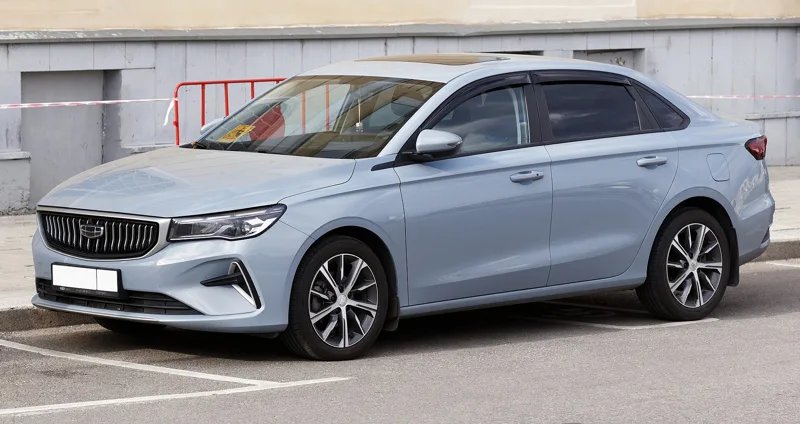
In May 2011 a Chinese manufacturer that few drivers outside Asia had heard of agreed to put EUR 150 million into the owner of Saab. The deal for a 30% stake collapsed almost at once. The company was Hawtai, and its story, set beside those of Soueast, Shanghai Maple and Changfeng, shows how much of Chinese car making was built on foreign designs and foreign partners.
None of the four set out to become a household name abroad. Hawtai started with Hyundai technology, Soueast grew up beside Mitsubishi, Shanghai Maple began with a Citroen design from the 1990s, and Changfeng began as a workshop repairing military equipment. Their parents, past or present, are Chery, Geely and GAC Group, and one of the four has now been struck off the business register.
Who are Hawtai, Soueast, Shanghai Maple and Changfeng?
They are four Chinese car makers with very different owners. Soueast, based in Fuzhou, is a Chery subsidiary. Hawtai, a privately owned Beijing company, went bankrupt. Shanghai Maple was a Geely subsidiary. Changfeng was wholly owned by GAC Group and had begun life as part of the People's Liberation Army.
Each of the four borrowed its first designs from a foreign partner, and only one is still selling cars under its own name.
Hawtai, Soueast, Shanghai Maple and Changfeng at a glance
| Maker | Base | Owner or parent | Foreign link | Where it ended up |
|---|---|---|---|---|
| Soueast | Fuzhou, Fujian | Chery, since 2024 | Mitsubishi, until 2021 | Selling SUVs again and expanding abroad |
| Hawtai | Beijing, with plants in Ordos and Rongcheng | Zhang Xiugen, as of May 2011 | Hyundai, from 2002 | Bankrupt in 2023; off the business register in 2026 |
| Shanghai Maple | Fengjing, Shanghai | Geely | Citroen ZX design | Phased out in 2010; revived in 2020; merged into Livan in 2022 |
| Changfeng | Hunan | GAC Group | Mitsubishi | Its Leopaard successor declared bankruptcy in July 2021 |
How did Hawtai get started on Hyundai technology?
Hawtai was founded in 2000 and first built an SUV of its own. In 2002 it struck a cooperation deal with Hyundai, which let it assemble Hyundai-branded SUVs from 2003. By 2004 it was selling the same vehicles under its own name, and the engines may have been the only real difference between the two.
The Chinese-market range that came out of the link covered the Hyundai Matrix people carrier, the Santa Fe and the Terracan. Demand was real: in 2010 the Santa Fe ranked fifth among all SUVs bought in China. By 2014 the Hawtai version of the Santa Fe had been renamed the C9, and the company was happy to describe it as a "Korean classic" rather than hide where the design came from.
The Hyundai arrangement had stopped by late 2010, although Hawtai was still being described as a Hyundai partner as late as 2011. The technology stayed. Its newest SUV of that period, the B35 Bolgheri, was built on Hyundai platform technology, and sedans added in 2010 were probably the first vehicles Hawtai both designed and made.
What set Hawtai apart from other private Chinese car makers?
Diesel engines. Its private rivals could not match its ability to produce them. Hawtai built its own, using technology from the Italian diesel specialists VM Motori and, according to the company, modifying the designs in-house at its Inner Mongolia plant. Some models also used engines from SAIC Motor.
Hawtai billed itself as a clean vehicle brand and supplied vehicles to the Chinese State. One of its models, the B21 or E70, took Mitsubishi 4G63 and 4G94D two-litre engines or a turbocharged 1.5L unit. Around the time of the 2009 Chrysler Chapter 11 reorganisation, the American maker also discussed an asset sale with Hawtai.
The Saab bid and other deals that never closed
The Saab offer was the boldest. In May 2011 Hawtai agreed to supply EUR 150 million to Spyker Cars, then the owner of Saab, and in exchange wanted the right to build the new Saab 9-3 in China, plus a 30% share of the Swedish firm. It was never completed.
Other ideas stalled in the same way. A tie-up with the Malaysian maker Proton was touted between 2011 and 2012 and stayed incomplete. Hawtai also approached the Russian assembler Derways about kit sales, and signed a memorandum with a Spanish mayor over assembly in a free trade zone at Valencia. Exports did reach Angola, southeast Asia and at least one of the former Soviet states.
How big was Hawtai, and what happened to it?
In late 2010 Hawtai reported a production capacity of 350,000 units a year. Rongcheng, in Shandong, accounted for 150,000 vehicles. The Ordos site in Inner Mongolia was rated at 300,000 units and made diesel engines and transmissions, with the company claiming it could produce one million engines and 500,000 vehicles.
Those figures may count whole vehicles and engines as separate items. Sales were far smaller. In 2013 Hawtai sold 28,812 passenger cars in China, the 50th largest-selling brand in the country and the 30th among Chinese marques. The company also claimed a bus plant at Yanbian, established in 2002.
Financial trouble eventually forced Hawtai to wind down its production. It went bankrupt in 2023 and was taken off the Chinese business register in 2026. Its late range had mixed electric models, such as the Shengdafei 2 XEV360 and Lusheng S1 iEV360, with combustion cars including the Shengdafei 5 and 7 and the Lusheng S5.
What is Soueast, and why does Mitsubishi keep coming up?
Soueast, officially South East (Fujian) Motor Co., Ltd., is a Fuzhou-based maker owned by Chery. Mitsubishi was a partner in the business for years and its cars were built there for the Chinese market. The name joins "South" and "East" for Fujian's position in the southeast, and now also hints at "Soul Ease".
The company was founded in November 1995 as a venture between China Motor Corporation and the Fujian Motor Industry Group. Mitsubishi joined in 2006. At the point it left, ownership stood at 50% for the Fujian group and 25% each for China Motor Corporation and Mitsubishi.
Mitsubishi-branded production covered the Lancer, Lancer EX, Lancer Fortis, Galant and Zinger, and the plant also built the Dodge Caravan under the Dodge name. Soueast won an April 2008 contract to supply 5,700 Delica minibuses to Iran's Mehreghan Co. Jackie Chan was signed as Mitsubishi's ambassador for the mainland that year too.
How did Soueast grow, and when did it peak?
By early 2011 Soueast had annual capacity of around 180,000 vehicles, heading for 300,000 once a third phase of its Qingkou plant in Fuzhou was finished. Output rose 150% in 2009, and February 2012 production ran 37% above the previous year. In 2013 it sold 96,553 cars in China, making it the 38th largest-selling brand and the 21st among Chinese marques.
The sales peak came in 2017 at 150,000 vehicles. In May 2021 Mitsubishi announced its withdrawal, ending a cooperation that the company counts at 26 years. Chery acquired the business in 2024, and it now produces Jetour vehicles.
Before that, the brand had its own models: the Veryca and C1 Xiwang microvans, the Delica minibus, the V3 Lingyue, V5 Lingzhi and V6 Lingshi, and a run of DX-series SUVs including the DX7 Bolang, which ended in 2023.
What does the new Soueast range look like?
The restarted brand sells rebadged Jetour SUVs. Soueast held a promotion conference in Fuzhou on 29 April 2024 and made its global debut in Tashkent, Uzbekistan, on 28 September 2024 with the S09 and S07. In January 2025 it showed a new brand concept in Kuwait, the UAE and Qatar, together with a third SUV, the S06.
- S05: subcompact SUV, on sale from 2025
- S06: compact SUV, from 2025, is the Jetour Dashing under another badge
- S07: on sale since 2024, a mid-size SUV that is really the Jetour X70 Plus
- S08: upcoming, based on the Jetour X70L
- S09: launched in 2024 as the Soueast take on the Jetour Shanhai L9
Where does Soueast build and sell its cars?
Soueast runs three major production bases in China, at Wuhu, Kaifeng and Fuzhou. Outside the country it has set up 10 KD factories, where vehicles are assembled from kits, in the Middle East, Central Asia, Southeast Asia and Africa.
In 2024 the company announced a presence in 18 countries and regions with 124 outlets. It plans directly operated subsidiaries in seven more places by 2025, among them Saudi Arabia, Mexico, Malaysia and Uzbekistan, according to the company.
Where did Shanghai Maple come from?
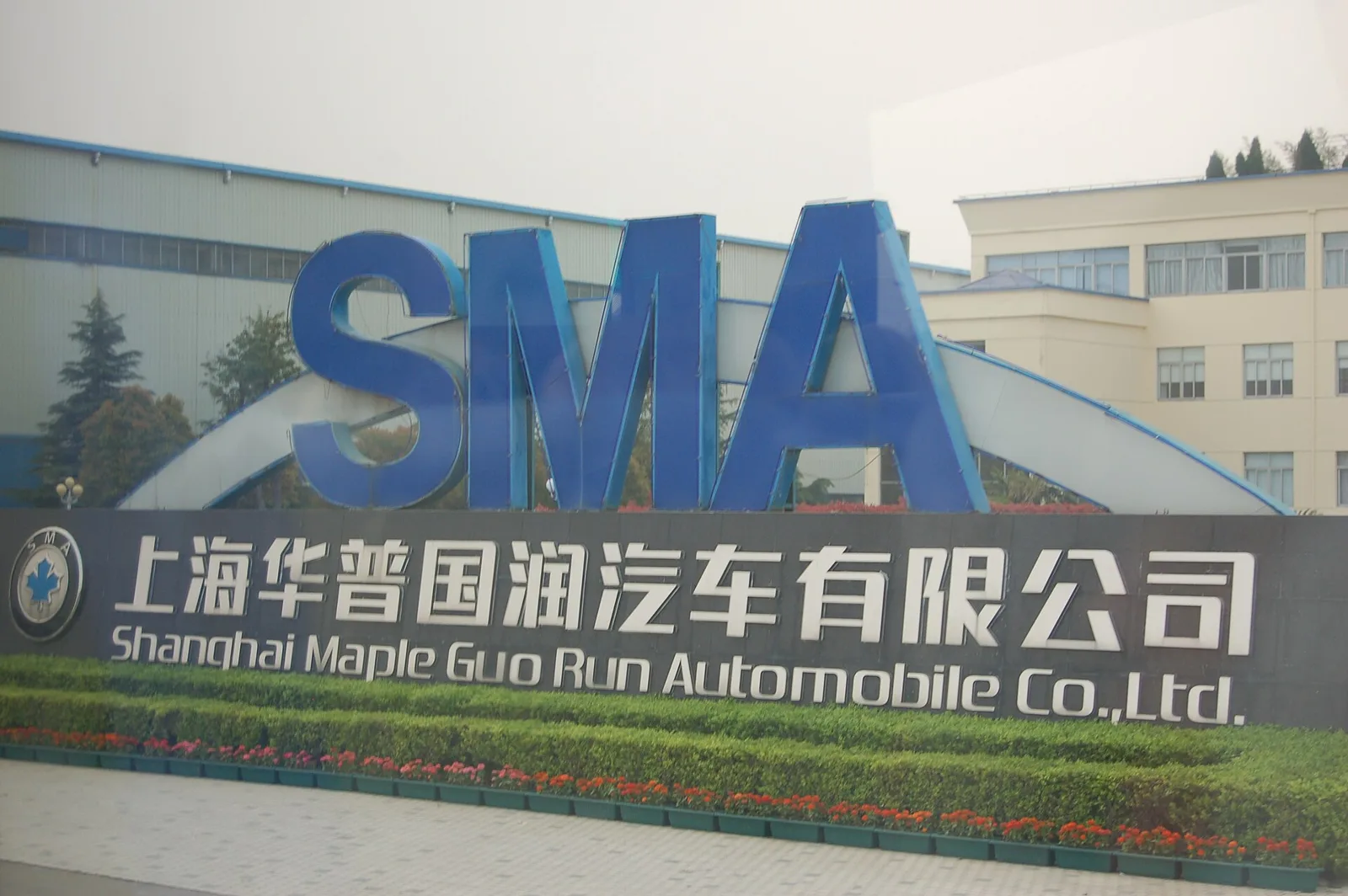
Shanghai Maple was set up in 2000 as Shanghai Maple Automobiles, selling Huapu (Maple) vehicles from Fengjing, Shanghai. Li Shutong, the younger brother of Geely's Li Shufu, founded it. Geely took a strategic stake in 2002, folded the company in fully in 2008 as its budget brand, and phased it out in 2010.
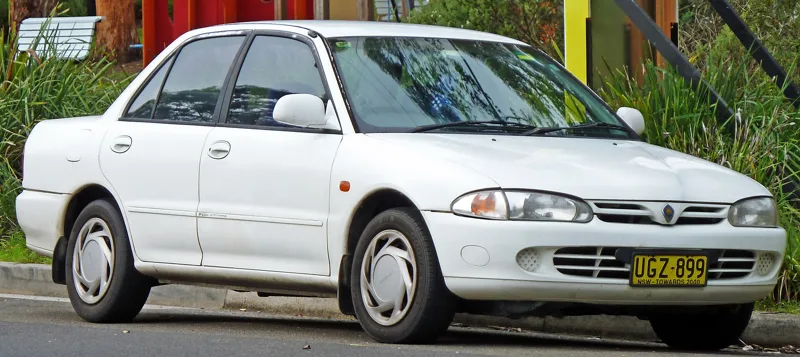
The first Shanghai Maple car appeared in the summer of 2003 and was based on the Citroen ZX of the 1990s. A reworked version, the Maple Marindo, was on show at the 2005 Frankfurt Motor Show and kept the Citroen basis. Models from the original period were the Hisoon, Marindo or Haifeng, Haiyu, Hysoul and Haijing.
Exports began in 2007, starting in Egypt, where the saloon was sold as the C51 and a version with an Audi-style grille as the C52. The sportier R80 hatchback and R81 saloon went to markets including Russia and Chile. When Geely moved away from the name in 2010, it put the Englon budget brand in its place.
Did the Maple name come back as an electric brand?
It did. In February 2013 Shanghai Maple and Kandi Technologies agreed a 50:50 joint venture for electric vehicles with 1 billion yuan (US$160 million) of initial capital, signed on 22 March. By 2020 the Maple brand was revived through a partnership between Geely and Kandi, with Geely holding 78% of Fengsheng Automotive Technology Group and Kandi 22%.
The idea was cheap electric cars adapted from Geely's petrol range. First came the Maple 30X, which drew on the Geely Vision X3. The 80V MPV and 60S compact sedan followed, with another SUV and a pair of hatchbacks pencilled in for 2021.
Kandi left in March 2021, handing its 22% to Geely. In 2022 a joint venture between Lifan and Maple created the Livan brand, and the Maple Leaf 60S became Geely's first battery-swap car under it. Once Geely Holding had acquired Lifan Group, it merged Maple into Livan, and Maple became a model name rather than a brand.
What was Changfeng Motor?
Changfeng was a Chinese maker, wholly owned by GAC Group, that grew out of an army repair shop. It built mainly light trucks and licence-built Mitsubishi Pajero copies, and in 2008 about seventy percent of its sales went to the police, the military and other state bodies.
The roots lay in No. 7319 Factory, which serviced military equipment. Production of licence-built Beijing BJ2020 SUVs began in 1988, and the company took the name Changfeng Auto Manufacturing in 1996, the year it stopped being a commercial affiliate of the army. The 1991 Mitsubishi Pajero has been built there since 1995.
How did GAC take over Changfeng?
GAC began as a minority shareholder with 29% and took control in 2012 after a long run-up that began in 2009. Changfeng Group sold its 22% and Mitsubishi its 15% in 2011. In late 2010 Mitsubishi and GAC had signed a memorandum for an equal joint venture, but Mitsubishi chose to sell out instead.
The shares behaved wildly during the negotiation and were suspended from 28 October 2010 until after 17 March 2011. On 20 March 2012 Changfeng left the Shanghai exchange. In October 2012 GAC and Mitsubishi announced GAC Mitsubishi Motors, which took over the Xing Sha factory, its supply chain and its distribution channel.
What became of the Leopaard brand?
The Changfeng Group re-entered car making in 2012 and relocated its headquarters to Changsha in January 2013, setting up Hunan Liebao Automobile to run the Liebao brand. Liebao means cheetah, and the spelling Leopaard followed. It sold SUVs and crossovers, including the Kylin, C5EV, CS3 BEV, CS6, CS9 and CS10.
Earlier products included two Mitsubishi pickup variants, the Fine and the Flying, plus the Kylin hatchback, built in a three-year joint venture with the mobile phone maker Bird Technology and shown at the 2008 Detroit show. A concept car appeared at Auto Shanghai in 2009, and a sedan, the CP2, at the 2011 Shanghai show.
Sales ran at between 30,000 and 50,000 a year from 2009 to 2011, mostly at home. Exports to Russia, Southeast Asia, the Middle East and Africa started in 2006 but were probably token. Plants stood at Yangzi in Anhui and at Changsha and Yongzhou in Hunan. Leopaard had been predicted to fail by the end of 2019, and in July 2021 Hunan Leopaard Motors declared bankruptcy.
Which of the four brands is still active?
Of the four, only Soueast has a forward plan. Its S08 is due next, and the company says it will open directly operated subsidiaries in seven more countries by 2025. Hawtai is gone from the register, Leopaard is bankrupt, and Maple lives on only as a model name under Livan.
For a driver outside China, the clearest contact is the Soueast badge on a Jetour-derived SUV in the Middle East, Central Asia or Southeast Asia. Hawtai cars reached Angola, southeast Asia and parts of the former Soviet Union before the company failed.