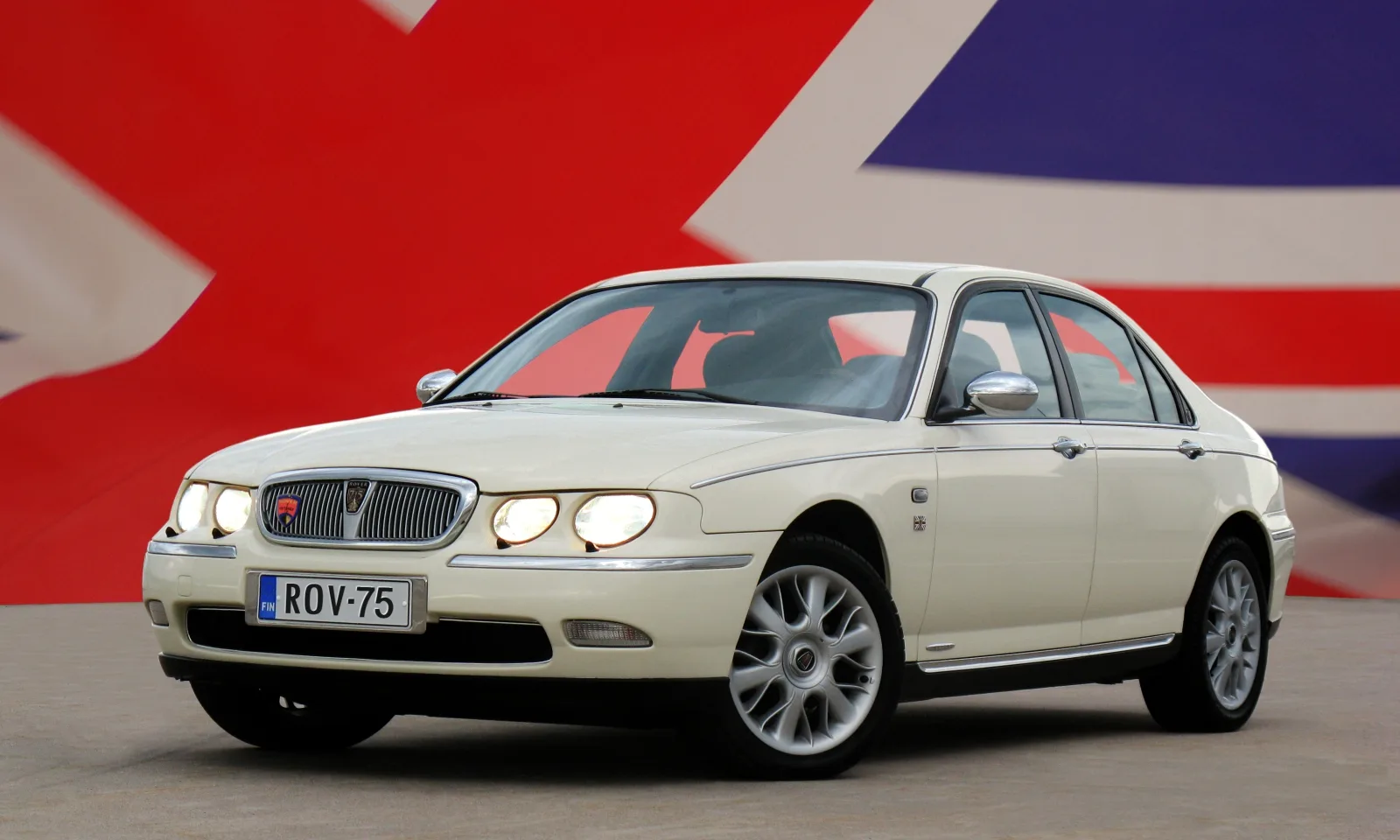
A saloon launched under a cloud, a sportier twin with a V8 and a roadster that outlived the company that made it.
The Rover 75, its sportier MG ZT twin and the MG TF roadster were all in production when MG Rover collapsed. All three ended when MG Rover entered receivership in April 2005, though Chinese owners later built the TF until 2011 and sold derivatives of the ZT and 75.
When the Rover 75 was unveiled at the Birmingham Motor Show, the public liked what it saw. Then BMW's chairman held a press conference criticising the UK Government's attitude to funding for the Longbridge factory, and the press heard a company preparing to close Rover down.
That awkward start shadowed the car for the rest of its life. The 75, the MG ZT built on it and the MG TF sports car were all in production when the company went into receivership in April 2005, and all three stopped there. Each had its own story of how it was made, what powered it and what came afterwards.
What were the Rover 75, MG ZT and MG TF?
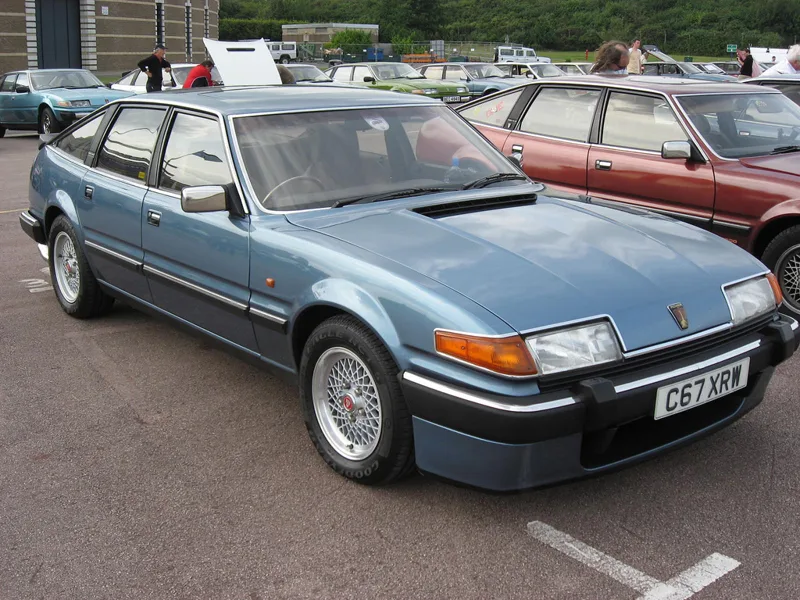
The Rover 75 was a large family and executive car built from 1998 to 2005, the MG ZT was its sportier badge-engineered sibling from 2001, and the MG TF was a mid-engined two-seat roadster, the heavily updated 2002 successor to the MG F. All three ended when MG Rover collapsed in April 2005.
| Car | Years | Body | Engines | Production notes |
|---|---|---|---|---|
| Rover 75 | 1998 to 2005 | Saloon, Tourer estate, long wheelbase | 1.8 to 2.5-litre petrol and diesel, 4.6-litre V8 | 166 Rover 75 V8s built |
| MG ZT and ZT-T | 2001 to 2005 | Saloon and estate | V6, 1.8-litre, M47R diesel, V8 in the ZT 260 | 717 ZT 260s built |
| MG F | 1995 to 2002 | Two-seat roadster | 1.6 and 1.8-litre K-Series | 77,269 built, plus 799 Limited |
| MG TF | 2002 to 2005, 2008 to 2011 | Two-seat roadster | 1.8-litre K-Series | 39,249 built to 2005, 906 at Longbridge under Chinese ownership |
BMW's chairman criticised the UK Government in a press conference after the Rover 75 was unveiled.
How the Rover 75 came about
Under Richard Woolley, Rover worked on three new designs: a large saloon called Flagship, a smaller car called Eric, and the 75. Only the 75 progressed. The first plan was simply to reskin the Rover 600, launched in April 1993, but after BMW took over Rover in 1994 it was decided to replace that platform with a new model, codenamed R40.
Work went ahead with little interference from BMW. The styling went down well with management on both sides, and both companies thought the classical look was the right direction for Rover. Development used advanced methods, including 3D virtual reality assembly simulations.
The car debuted at the Birmingham Motor Show on 20 October 1998, with deliveries starting in February 1999. Rover Group built it at Cowley for one year. In 2000 BMW sold Rover to Phoenix Venture Holdings and production moved to Longbridge in Birmingham.
Engines, gearboxes and chassis
Petrol power came from Rover's four-cylinder K Series at 1.8 litres and the quad-cam KV6, which came as a 2.0 or 2.5. The 2.0 was later dropped when a 1.8-litre turbo arrived for emissions reasons, a change that helped British company car drivers who are taxed on carbon dioxide output. The diesel came through BMW Group, a four-cylinder common-rail M47R, engineered by Rover and Steyr engineers for transverse mounting.
Gearboxes were a Getrag five-speed manual from a new facility in Bari, Italy, or a JATCO five-speed automatic. There were disc brakes at all four wheels with Bosch ABS and electronic brake force distribution. Suspension used MacPherson struts at the front and, at the back, a version of the BMW Z-Axle arrangement from the 1988 Z1 sports car.
Rover 75 problems: the launch and the brand
Initial sales in 1999 failed to match those of the BMW 3 Series and Audi A4. The public reaction to the car at Birmingham was favourable, and it held up well against the Jaguar S-Type unveiled at the same show. But the press conference that followed, in which BMW chairman Bernd Pischetsrieder criticised the Government's attitude to financial help for redeveloping Longbridge, where the new Mini and the R30 were to be built, was read as a sign that BMW meant to close Rover down. That undoubtedly scared off prospective buyers, and Rover's brand image also hurt the 75 against its rivals.
Sales picked up substantially during 2000, and in April of that year the 75 was Britain's fifth-most popular new car. It was still selling reasonably when MG Rover went bankrupt in April 2005, and a small number of unsold cars sat in stock in early 2007 while Nanjing Automobile prepared to reopen Longbridge. In 2011 it was found to be the cheapest car to insure in the UK across all age groups.
Safety
Structurally the 75 relied on reinforced footwells and underfloor box beams, with side impact bars and a steel ring around every door opening to stop them jamming in a crash. Window airbags were optional until 2005, when they became standard. Had they been standard at the time of its Euro NCAP test in 2001, the car would have scored the full five stars for adult occupant protection. Electronic stability control was due to become standard from the 2006 model year.
Rover 75 variants: Tourer, limousine and V8
The Tourer estate arrived in July 2001, styled by Ian Callum. It had an optional opening rear glass section, up to 1,480 mm of load width and 2,060 mm of length, 400 to 680 litres of space with the seats up and 1,222 litres with the 60:40 rear seats folded. It was developed alongside the saloon but BMW never authorised it for production.
A stretched version, first called Vanden Plas and later simply the Limousine, followed in 2002, built with S. MacNeillie and Son of Walsall. The rear floor pan was lengthened by 200 mm and the rear doors altered, and it came only in Connoisseur specification. The 75 was a ministerial car, and Tony Blair had official use of one as Prime Minister.
The Rover 75 V8
The V8 was announced at the 2004 Geneva Motor Show, the second rear-wheel-drive car developed from the front-drive 75 platform after the MG ZT 260 of 2003. It was the first V8 Rover since the SD1 ended in 1986. Engineers re-engineered the platform for Ford's 4.6-litre Modular engine, stiffening the tunnel and creating bespoke rear suspension, and used a Ford four-speed automatic in place of the ZT 260's Tremec manual.
Cars were taken off the standard production line for the structural changes and then returned for final trim. In total 166 Rover 75 V8s were made in saloon and Tourer form, against 717 MG ZT 260s, for 883 V8 cars.
The 2004 facelift
The spring 2004 facelift added a new grille and bumper, one-piece headlights with halogen projectors and a new rear bumper. Rover dropped the Classic SE, Club and Club SE trims and added a Contemporary level with larger alloys and sports seats. A limited-edition CDTi Sport celebrated Rover's centenary in Portugal.
MG ZT: the sporting 75
The MG ZT and estate ZT-T were launched in 2001, three years after the 75 and less than a year after MG Rover separated from BMW. Codenamed X10 and X11 in development, they kept the 75's shape but gained a new front bumper with integrated grille, colour-coded chrome waistline, a new bootlid plinth and different wheels and tyres, along with upgraded suspension and brakes and revised engine tuning.
Rob Oldaker, the Product Development Director, led the project, and Peter Stevens, who earlier styled the McLaren F1, handled the styling changes. Models were named by power output, so a 160 PS V6 was a ZT 160 and a 190 PS car with a Plus pack a ZT 190+. The first cars were both V6s, the 160 using a software-detuned version of the 75's 177ps engine and the 190 using a unique KV6 with different camshafts, intake and throttle body.
Growing the ZT range
The 180 Auto came in January 2002, and diesels with a 116 PS M47R in around August 2002, with an Xpower software upgrade lifting output to 131 PS. In July 2003 the 120 arrived with a 1.8-litre K16 engine, and the 160 moved to the turbocharged 1.8, dropping the detuned V6. In October 2003 came the long-awaited ZT 260, with a rear-wheel-drive V8 in saloon and estate forms. A facelift in early 2004 replaced the twin headlamps with a single clear unit for a less retro look.
MG Rover also built showpieces. The XPower 385 concepts used a 385 PS Ford Modular V8 and were developed by Prodrive, but never appeared before MG Rover closed. The XPower ZT 500 concept had a 500 PS supercharged 4.6-litre V8 and was rescued by the MG Owners Club, which rebuilt it and gave it VIN 001.
The record-breaking estate
In September 2003 a heavily modified MG ZT-T called the X-15 set a speed record for non-production estate cars at Bonneville Salt Flats, Utah, reaching 225.609 mph. Published conversions differ, quoting 363.082 and 360.9 km/h, and so do descriptions of the engine: one gives a 6-litre normally aspirated V8 with 765 bhp (570 kW), another an 800-plus bhp Roush V8.
MG F: where the roadster story began
The MG F and MG TF are rear mid-engined, rear-wheel-drive two-seaters sold between 1995 and 2011 by three manufacturers. The F was the first new MG designed since the MGB, which ran from 1962 to 1980. Steve Harper of MGA Developments drew the first concept in January 1991, inspired by the Jaguar XJR-15 and Ferrari 250LM, before Gerry McGovern's in-house team refined it. The MG EX-E concept of 1985 had earlier provided some styling cues.
The F was unveiled on 8 March 1995 and went on sale that September with a 1.8-litre K-Series engine in 120 PS (89 kW) form, joined later by the 145 PS (108 kW) VVC version. It used Hydragas suspension, which linked fluid and gas displacers, and quickly topped the affordable sports car charts in Britain, where it stayed until the TF arrived in 2002.
A facelift in autumn 1999 brought a revised interior and a 1.6-litre base model. The Trophy 160 followed in 2001 with a 0 to 60 mph time of 6.9 seconds, and a Steptronic CVT automatic arrived the same year. When Rover Group was sold in March 2000, Land Rover went to Ford and MG and Rover went to the Phoenix consortium for 10 pounds. The F stayed Britain's best-selling convertible against the Mazda MX-5, BMW Z3 and Audi TT, with 77,269 built plus 799 Limited versions.
MG TF: heavily updated, then Chinese-built
The MG TF arrived in 2002, named after the 1950s TF Midget. Hydragas gave way to conventional coil springs, the engine gained a new air induction system and camshafts for more power, and body torsional stiffness rose by 20 percent. It had revised front lights, bumpers and a new grille. Sales were reasonable, despite problems including uneven shut lines on the driver's door on UK cars. Euro NCAP and ANCAP both rated it four stars, and 39,249 were built between 2002 and 2005.
Production stopped in April 2005 when MG Rover collapsed. Nanjing Automobile bought the remaining assets and restarted the TF in China in March 2007, in a factory with capacity for 200,000 cars a year. In August 2008 NAC MG UK began assembling TFs from Chinese kits at Longbridge. The first was the LE500, a limited edition of 500 numbered cars, which cost more than a modern MX-5 for few changes since 2002, and that badly hurt sales.
The TF 135 and a limited 85th Anniversary edition of just fifty cars followed. Production at Longbridge stopped in October 2009 because of low demand, resumed in the new year, and the end was announced in March 2011 citing lack of demand and component supply problems. Under Chinese ownership 906 TFs came out of Longbridge.
What reviewers thought
The F and TF impressed in road tests and matched the MX-5 and Z3 for handling, performance and practicality, though build quality, reliability and dealer support in the UK lagged behind Japanese and German rivals. Parker's gave it 2.5 out of 5, praising the styling, handling and brand heritage and criticising its dated interior and patchy build quality. What Car? gave 2 out of 5 and Auto Express also 2 out of 5, the latter after Nanjing's takeover, saying the car had barely changed since 1995.
The K-Series engine in the MG F also has a reputation for head gasket failure, blamed mainly on the design and position of the thermostat, with the gasket installation, narrow spacing between cylinders and the cooling layout all cited as factors, since the engine sits at the back and the radiator at the front.
The MG Rover collapse and what became of the cars
MG Rover entered receivership in April 2005, ending production of the 75, ZT and TF. Nanjing Automobile bought MG Rover in July 2005, three months after the bankruptcy. The ZT effectively resumed in the beginning of 2007 as the MG 7, produced from March 2007, which Auto Express praised in May 2008 though it was not officially sold in the UK. It comes in one version that resembles the Mark I ZT with twin front lights and another that resembles the Mark II 75 V8, and there is a long-wheelbase MG 7L.
SAIC launched the Roewe 750 at the same time, adopting the Mark II 75 styling. The model list for the 75 itself runs to 2016 under the Roewe 750 name. Owners clubs, including one specifically for V8 models, still support the cars.
A TF GT that never reached showrooms
The MG TF GT coupe concept was designed in 2005 by Peter Stevens and his team in Norfolk, alongside the Rover 75 Coupe. It was close to production, former engineers said, and could have been on sale by the end of 2005. It was reported to carry a 2.5-litre KV6 engine, though that is disputed, and engine access was hard because the subframe had to be removed. Receivership ended the project. Nanjing's idea of building it in a new Oklahoma factory employing 500 people never happened.
Strengths and weak points of the three cars
The 75's strengths are its classical styling, the Tourer's load space and low insurance costs. The ZT and TF add engine choice and, for the V8s, rarity, with 717 ZT 260s and 166 Rover 75 V8s built. The K-Series head gasket reputation and the patchy build quality noted on the F are the main cautions, along with the TF's uneven shut lines on the driver's door.
Where this goes next
The Rover 75 and MG ZT ended in 2005, and the TF followed in March 2011 when its final production run stopped without an immediate successor. In China the MG 7 and Roewe 750 carried the ZT and 75 shapes forward. In Britain the cars live on through owners clubs, and the XPower ZT 500 concept was rebuilt by the MG Owners Club as VIN 001.