From Dan Gurney's 35 hour crossing of the United States in 1971 to the Gumball 3000's flights to Japan, the story of the two best-known road rallies.
The Cannonball Run was an unofficial 1970s race from New York to Redondo Beach, California, whose official record is 32 hours 51 minutes. The Gumball 3000, founded in 1999 by Maximillion Cooper, borrowed the spirit but is a roughly 3,000-mile celebrity road trip with no winner.
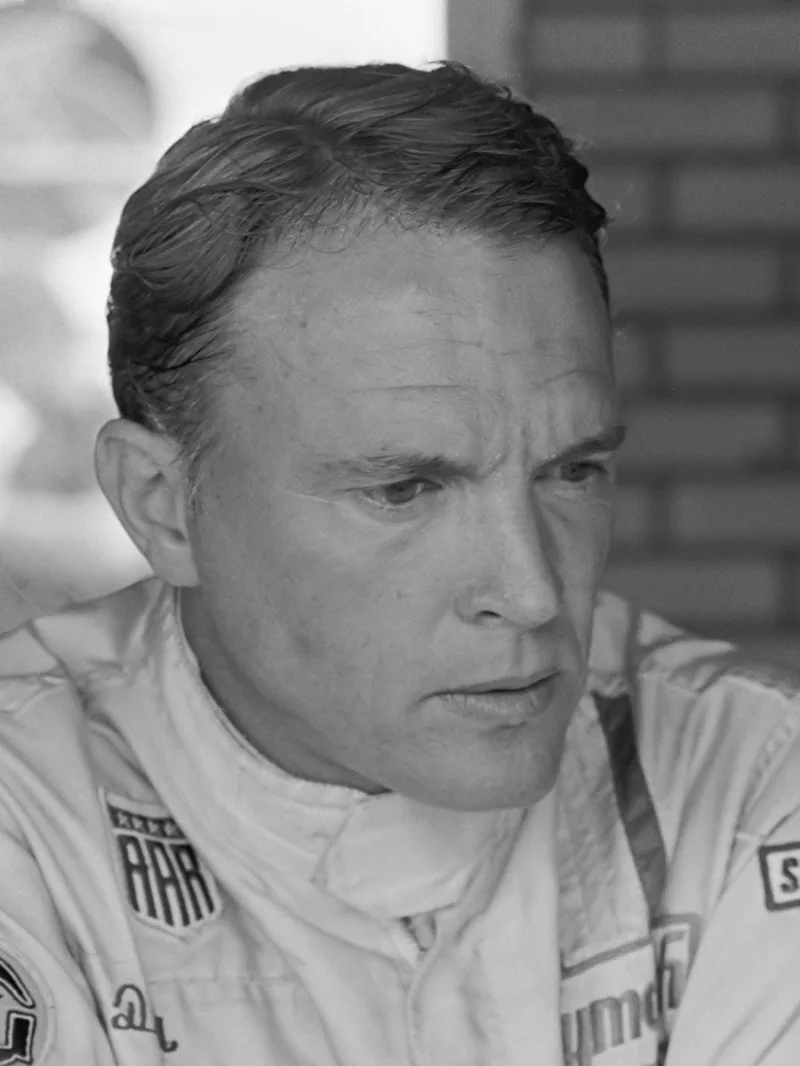
Dan Gurney, a Le Mans winner, drove a blue Ferrari Daytona from New York to Los Angeles in 35 hours 54 minutes, collected a single fine, and afterwards insisted he had never gone beyond 175 mph (280 km/h). Nobody sanctioned the race, and the prize for winning it was, reportedly, a gumball machine. That story, the Cannonball Run, ended up spawning Hollywood films, a string of outlaw imitators and, decades later, the Gumball 3000.
What was the original Cannonball Run?
The Cannonball Run, formally the Cannonball Baker memorial dash, was a race with no official blessing, held five times in the 1970s. It crossed the United States from the East Coast to the Portofino Inn in Redondo Beach, a suburb of Los Angeles. The name honoured Erwin Baker.
Two men from Car and Driver magazine dreamed it up: the writer and racer Brock Yates and his fellow editor Steve Smith. The first run, which started on 3 May 1971, was not a contest at all, since only one team took part. Yates, his son Brock Yates Jr., Smith and a friend, Jim Williams, set off in a 1971 Dodge Custom Sportsman van nicknamed Moon Trash II.
Part of the motive was celebration, of the Interstate Highway System. Part was protest, against the strict traffic laws then arriving. And part was simple fun, which comes through in the tongue-in-cheek reports that Car and Driver and other motoring titles around the world ran afterwards.
Four more runs followed: 15 November 1971, 13 November 1972, 23 April 1975 and 1 April 1979.
The rules, such as they were
The start was Manhattan's Red Ball Garage, usually after midnight. In 1979 it moved to a restaurant in the Goodwives Shopping Center in Darien, Connecticut. The finish was always the Portofino Inn. Reach it in the shortest time and you won. Those were the only rules.
Nothing dictated the route, the type of car, the number of drivers or crew, or a maximum speed. A gentlemen's agreement did require that the car which started was the car which finished: no loading it onto a truck, and no abandoning it for an identical twin hidden near the end. Speeding tickets were the driver's own problem and did not disqualify anyone, although the minutes lost while pulling over to collect one counted against the clock.
It was a race in the sense that the quickest team was declared the winner and results were announced in order of time. Yet times were not taken very seriously, and being fastest did not guarantee first place.
Those were the only rules: leave the garage, reach the Portofino Inn, and be quick.
Cannonball Run record: who won and how fast?
The second Cannonball, in November 1971, is the one Car and Driver described in its March 1972 issue, and the magazine reprinted that article in 2005 to represent the 1970s on its 50th anniversary. Gurney won it, sharing the Sunoco-blue Ferrari 365 GTB/4 Daytona with Yates as co-driver. They covered 2,863 miles (4,608 km) in 35 hours 54 minutes, an average of roughly 80 mph (130 km/h). Snow in the Rocky Mountains slowed them considerably.
The next year, a Cadillac Coupe de Ville driven by Steve Behr, Bill Canfield and Fred Olds took victory and was the first American-built winner of a Cannonball.
That 1972 run also produced the only serious accident in the official races. Near El Paso, Texas, a three-woman team, Peggy Niemcek, Judy Stropus and the SCCA racer Donna Mae Mims, was in a Cadillac stretch limousine when the driver fell asleep at the wheel and the car left the road and rolled. Mims broke an arm and the car was destroyed, but no other vehicles were involved.
On 23 to 25 April 1975, Jack May and Rick Cline left the Red Ball Garage in a Dino 246 GTS and reached California in 35 hours 53 minutes, averaging 83 mph (134 km/h). That was a record, by a single minute over Gurney.
The official record fell in the final run in April 1979. Dave Heinz and Dave Yarborough, driving a Jaguar XJ-S, travelled from Darien to Los Angeles in 32 hours 51 minutes, an average of about 87 mph (140 km/h). No official Cannonball has beaten it.
How the Cannonball became a legend
The event gained notoriety after the 1972 run, and the Time magazine story on the 1975 May and Cline drive fixed it in the public imagination. The reaction surprised many. Rather than condemning the recklessness, press and public enjoyed the comic reports in Car and Driver.
Hollywood noticed. Yates had started a screenplay called Coast to Coast, but two unofficial films beat him to the screen in 1976: Cannonball and The Gumball Rally. An official movie, The Cannonball Run, followed, with Burt Reynolds, Roger Moore and Dom DeLuise and a cameo by Yates himself. Two sequels came next, Cannonball Run II and Speed Zone, which also went by Cannonball Fever, and a later USA Network television programme, Cannonball Run 2001, got official approval to use the name.
Car and Driver took a more sensible route once the real runs ended. It sponsored closed-course tours called One Lap of America. Meanwhile, outlaw imitators in America, Europe and Australia still borrow the Cannonball name, without Yates' approval.
What came after the original Cannonball
Rick Doherty, who had run both the 1975 and 1979 events, organised a successor called the U.S. Express, which ran from 1980 to 1983. In 1980 it went from Brooklyn to the beach at Santa Monica, and Doherty won in a Mazda RX-7 with the game designer Will Wright, in 33 hours 9 minutes.
The 1981 edition, from Long Island to Emeryville in California, followed Interstate 80 for much of the way. David Morse and Steve Clausman won in Morse's gray Porsche 928. An early snowfall shut the Donner Pass to cars without chains just as the field arrived, but the 928 carried special plastic chains and kept going while the others waited. The same pair competed again in 1982 and finished second in the last U.S. Express in 1983, which ended at Newport Beach.
The fastest U.S. Express time came in 1983: 32 hours 7 minutes, 44 minutes quicker than the best Cannonball despite a longer route. It stood as the official cross-country record until 2006, when Alex Roy and David Maher took it down to 31 hours 4 minutes.
The Four Ball Rally
The Four Ball Rally, named in memory of its founder Michael A. Preston and run from 1982 to 1984 between Boston and San Diego, is described as the last true competitive cross-continent road race of the twentieth century. It was invitation only, with up to 50 entries, mostly professional drivers or others with documented experience, and its routes generally exceeded 3,100 miles, some 250 to 300 miles more than the Cannonball.
The 1982 race started on Friday 11 June. Of the 27 cars that began, twenty-one finished. Michael Begley and Steve Cook won in 37 hours 18 minutes over 3,031 miles, averaging 80.23 mph in a rented 1983 Mercedes-Benz 380SEL, which was among the slowest top-speed cars in the field at 116 mph. Their recipe was few stops. With a fuel cell and a combined 95-gallon capacity they stopped for fuel twice, and they collected one speeding ticket, in Arizona.
In 1983, 50 teams left Boston and 38 reached San Diego. Dirk Salz and Farwell Perry won in a 1978 Porsche 911SC, in 36 hours 10 minutes, averaging 85.8 mph with one ticket, issued in Missouri. Begley and Bill Cooper finished third in a modified 1979 Mercedes 6.9, after nearly two dozen Indiana State Police cars chased them until they hid in a cornfield, and a fuel-system fault in New Mexico cost another 2 hours 18 minutes.
The C2C Express
The C2C Express, devised by the New Zealander Ben Wilson and Michigan's Eric Propst, ran from 2015 to 2019 and limited entrants to pre-1980 cars costing under $3000, to keep the spirit of the original runs and the budget low. Only three competitors took part in the first event, and Wilson won in a Cadillac in just under 40 hours. By the last run, held as a 40-year tribute to the 1979 Cannonball from Darien to the Portofino Inn, over 40 teams had registered, 33 competed and 24 finished. The winning time was 31:47.
How did the Gumball 3000 begin?
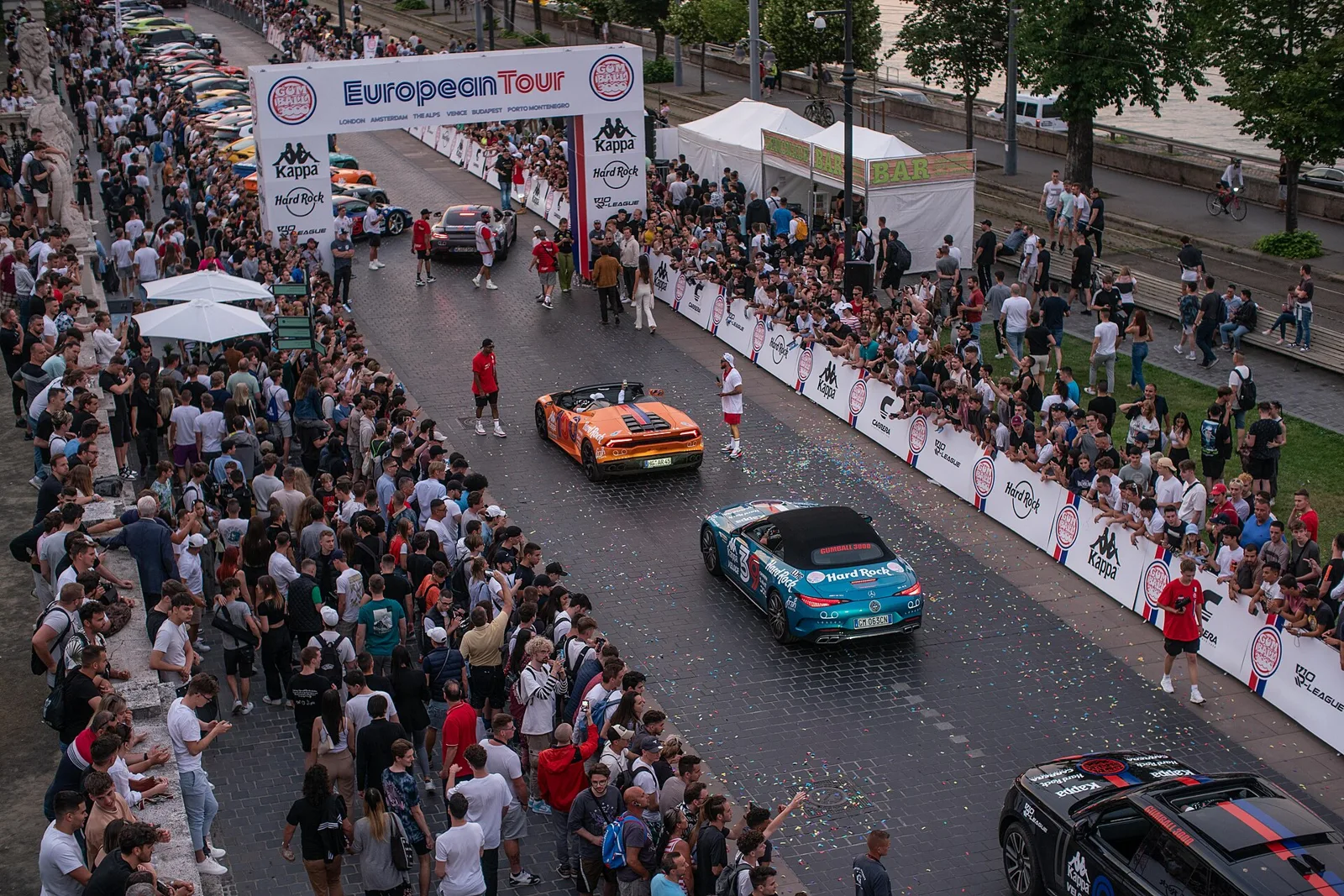
Gumball 3000 is a brand best known for its annual rally, an international celebrity motor rally on public roads. The English entrepreneur Maximillion Cooper founded it in 1999 to mix cars, music, fashion and pop culture. It began as a group of friends who planned to drive their supercars 3,000 miles (4,800 km) across Europe, in their own vehicles, for an initial entry fee of $8,700.
The first event drew on racing history. Back in 1933 the motorcycle racer Erwin Baker went from one American coast to the other in 54 hours, earning the Cannonball nickname that later inspired events on both sides of the Atlantic. It has been suggested that the Gumball name comes from the first prize in the 1970s Cannonballs, a gumball machine.
That first rally ran from London to Rimini, Italy, and back, with a party or dinner planned for each night. British media covered it at length because of the guests, among them Kate Moss, Guy Ritchie and the Minogue sisters.
Gumball 3000 rally history: from Europe to the world
The route changed every year. In 2000 the cars flew from Stansted to Spain, then passed through Bilbao, Cannes, Milan, the Nurburgring and Hamburg before heading back to London. MTV filmed a Jackass special about the rally, and the episode earned the network its highest ratings of the year. The 2001 entrants included the Formula One champion Damon Hill in a Lamborghini.
In 2002 Gumball made its first coast-to-coast journey across the United States, from New York to Los Angeles, with stops at the White House, Graceland, the Grand Canyon and Las Vegas. A film, Gumball 3000: The Movie, followed in 2003, running 98 minutes and narrated by Burt Reynolds, the same star who headlined the official Cannonball Run film.
Later years stretched the map. The 2004 rally began at the Eiffel Tower and crossed the Mediterranean to Marrakesh. Jenson Button waved the flag in 2005, in London, for a run to Monte Carlo. In 2006 the cars flew from Serbia to Thailand and later to Salt Lake City, and in 2008 the route led from San Francisco to the Beijing Olympics, with a night in North Korea. In 2010 more than 100 cars went from London to New York, and in 2018 two cargo planes flew the vehicles to Japan for a run from Osaka to Tokyo.
Cars and personalities supplied the headlines. In 2014 the DJ deadmau5 entered a Nyan Cat themed Ferrari 458 Spider called Purrari, which drew a cease-and-desist order from Ferrari and was later sold for $380,000. In 2015 Lewis Hamilton joined the final stage, from Los Angeles to Las Vegas, in a Koenigsegg Agera HH. An estimated one million fans attended the 2016 rally, which ran from Dublin to Bucharest. Costs climbed as the event grew: first-time drivers paid 28,000 pounds in 2007, and the rumoured price reached 40,000 pounds by 2014.
A serious incident in 2007
The 2007 rally, scheduled to travel from London to Istanbul across 16 countries in eight days with over 100 contestants, ended in tragedy. On 2 May 2007, a Porsche 997 Turbo taking part collided with a Volkswagen Golf in North Macedonia, and both occupants of the Golf were killed. The organisers continued until the facts became clear and then cancelled the rest of the event as a mark of respect. A court convicted the driver of endangering traffic, leading to death, and he received a two-year suspended sentence.
Pandemic, then a new calendar
The 2020 rally, from Toronto to Havana, was cancelled because of COVID-19, the first time Gumball 3000 had ever lost a full rally. It was postponed again in 2021 and eventually ran in May 2022 from Toronto to Miami. Organisers moved the finish away from Havana because of concerns about Cuba's relationship with Russia after the invasion of Ukraine in March 2022.
Because of the lost years, Gumball held two rallies in 2022 for the first time. The second, in November, started in Dubai, looped through Oman and ended in Abu Dhabi on 18 November, where participants enjoyed VIP hospitality at the Abu Dhabi Grand Prix. In June 2023 an Edinburgh to Porto Montenegro tour was the first European Gumball in four years, and in September 2024 the 25th anniversary rally took place in South East Asia.
Cannonball Run versus Gumball 3000
| Feature | Cannonball Baker Dash | Gumball 3000 |
|---|---|---|
| Founded | First run 1971; five runs in the 1970s | 1999, by Maximillion Cooper |
| Route | New York or Darien to Redondo Beach, California | Changes every year, across countries and continents |
| Distance | 2,863 miles (4,608 km) in the 1971 run | About 3,000 miles (4,800 km) |
| Duration | Fastest official run 32 hours 51 minutes | About 6 days |
| Winner | Fastest team, though times were not taken seriously | No winner: "It's a rally, not a race" |
| Field | Individual teams of any car, any crew | About 120 vehicles, half new entrants and half alumni |
| Sanction | Unofficial and unsanctioned | Organised events with nightly parties and some closed roads |
Why the original Cannonball cannot come back
Decades after the last official run, some motorists wondered whether the Cannonball could be revived. Yates remembered turning down offers, because he considered the concept unworkable. His reasons were more police activity, greater legal liability for any organiser, heavier traffic all year round and ever-expanding urban areas. He also pointed out the obvious dangers of racing on public roads.
Independent teams have meanwhile kept chasing the unofficial transcontinental record, the Cannonball Run Challenge, and have beaten it many times. The Gumball 3000 drew attention in the early 2000s with a similar formula, at times on coast-to-coast American routes, but over a distance several times as long and with no winner decided on time.
What this means if you fancy a cross-country run
If the idea is to match a Cannonball time, the history is a warning as much as an inspiration. The people who set the numbers drove public highways with police and traffic to contend with, and speeding fines were their own responsibility. The modern independent attempts are the nearest descendants of those drives.
If what appeals is the journey, Gumball 3000 is a different proposition. Participants pay for their entry, though the fee is disclosed only to those accepted, and places are split evenly between newcomers and returning Gumballers. Organisers describe it plainly as a road trip, with an evening event at every stop, rather than a competition.