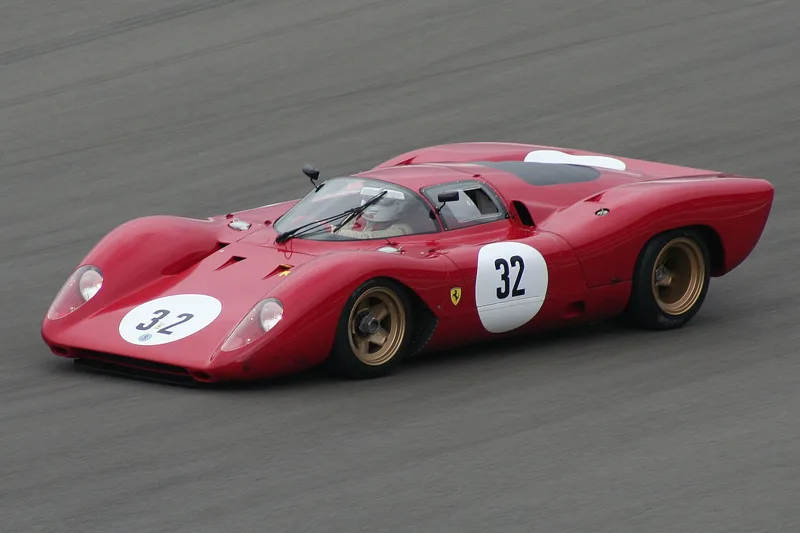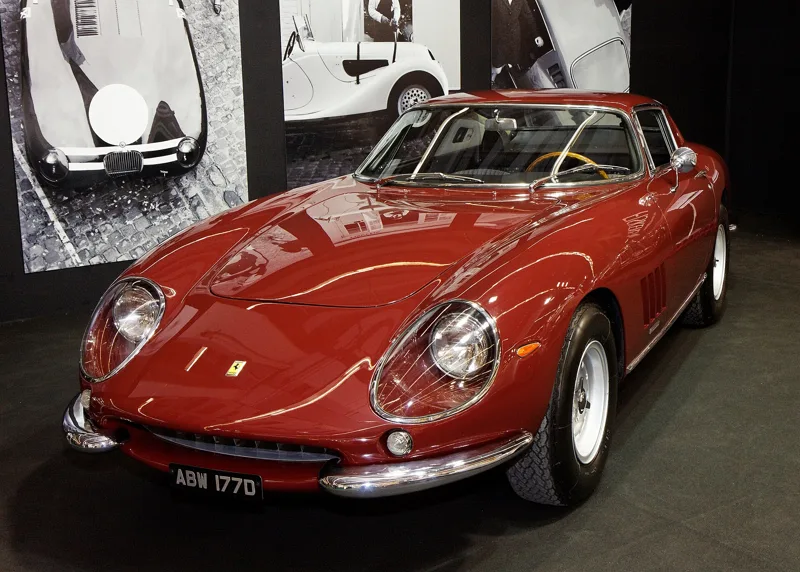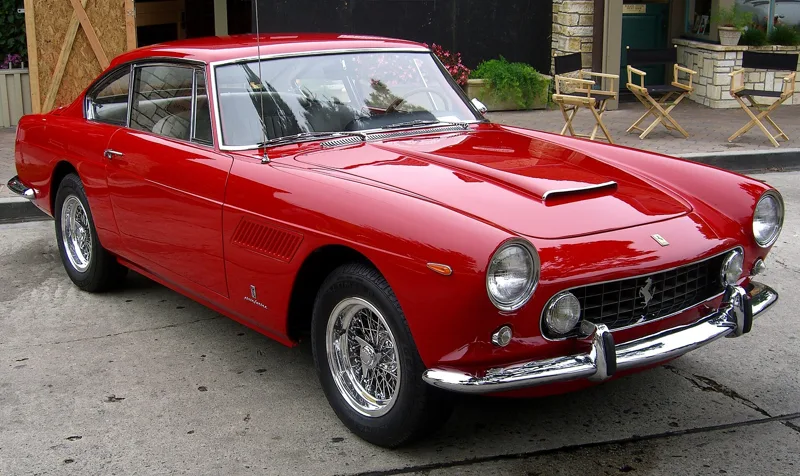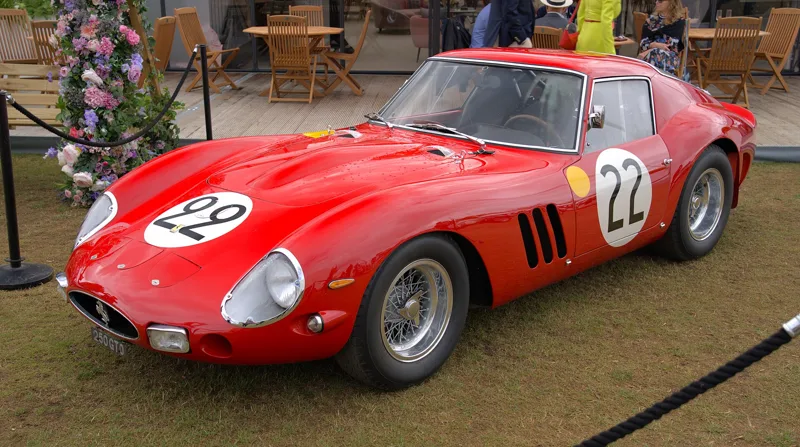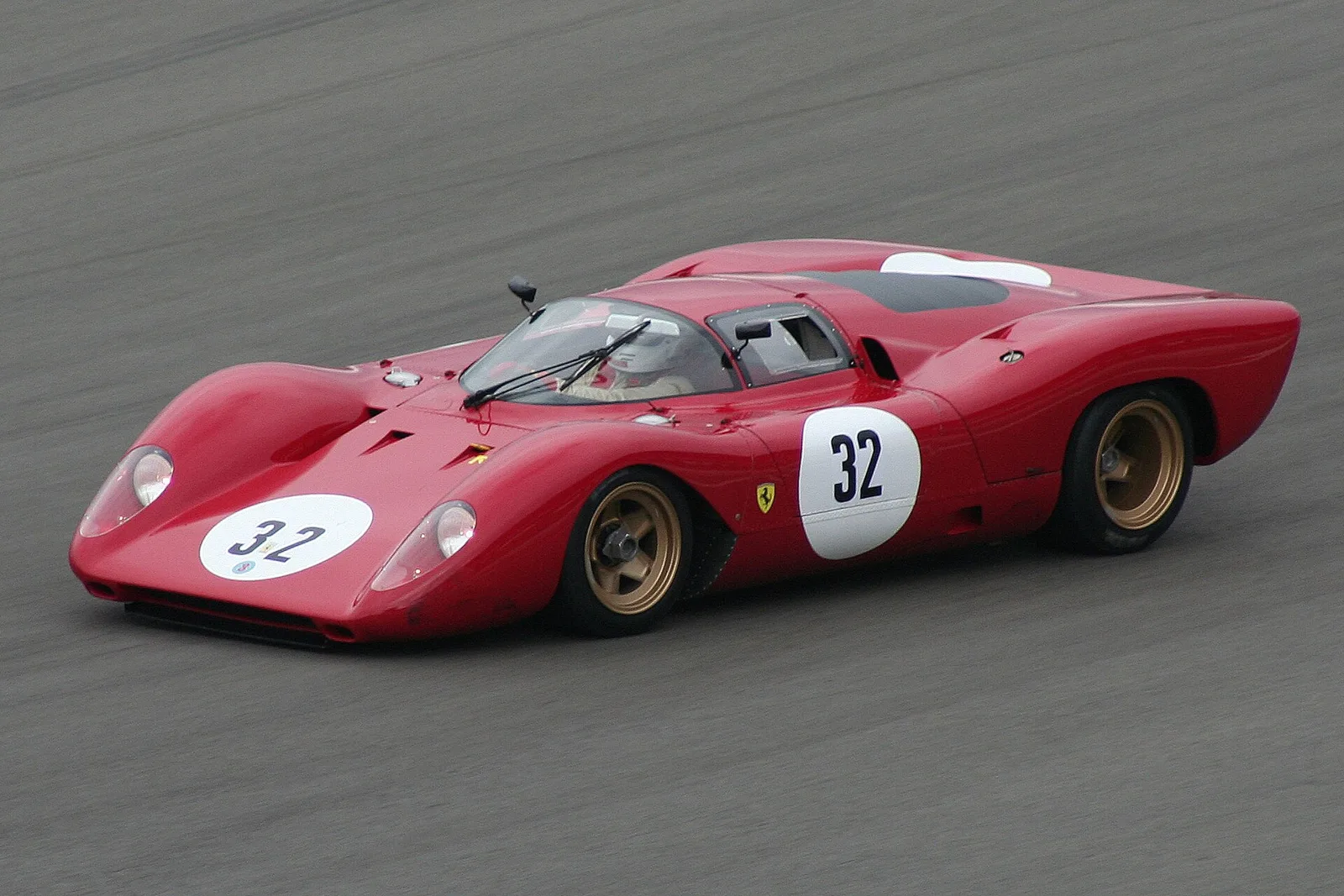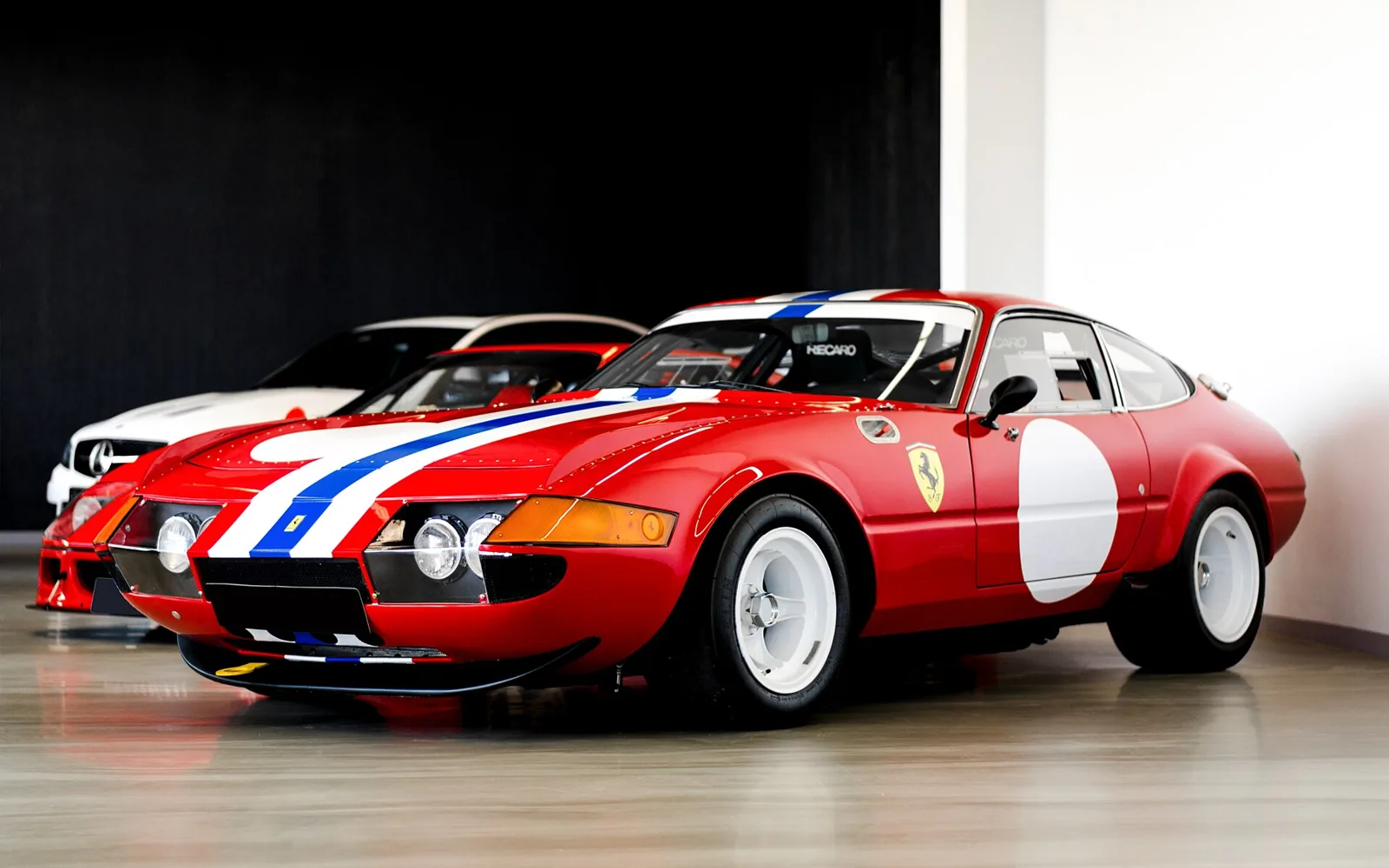
Fifteen customer-run race cars, built in three series from a road coupe, never entered by the Scuderia Ferrari factory team, and driven at Le Mans and Daytona into the early 1980s.
Ferrari built 15 Competizione racers from its road-going 365 GTB/4 between 1971 and 1973, in three series of five cars. The cars went to private teams and importers, and the best known results were GT class wins at Le Mans.
The Ferrari 365 GTB/4 Competizione was a racing version of the 365 GTB/4 road coupe, known as the Daytona. Ferrari built 15 of them in three series between 1971 and 1973, and private customers, not the works team, raced them at Le Mans, Daytona and elsewhere into the early 1980s.
Where did the Competizione come from?
The Competizione began as a customer request rather than a factory plan. Luigi Chinetti, Ferrari's importer in the United States, had run the North American Racing Team (NART) since 1957, and he ordered a 365 GTB/4 with an aluminium body in early 1969. That car carried chassis number 12547, and a second prototype followed it.
Ferrari then converted a steel-bodied GTB/4, chassis 12467, to competition specification in 1970. That car is regarded as the forerunner of the regular Competizione models. From 1971 onwards, five cars a year were built in each of the three series.
Never run by Ferrari's factory team, the Competizione raced at Le Mans and Daytona for about a decade.
How did the three series differ?
Each series was built slightly differently, mainly in body material, weight and engine tune. Ferrari's own service department, Assistenza Clienti, built all of the cars, rather than the coachbuilder Scaglietti that made the road versions.
The first series had aluminium body sheet with plastic add-on parts, including the bonnet and rear window. Its first three cars also had Plexiglas side windows. Together these changes cut the weight of the car ready to drive by more than 200 kg. Series 1 also lost its front bumper, with its twin headlamps covered by angled plastic lenses, and its wheel arches were slightly flared.
Series 2 switched to a steel body, with only the doors and bonnets still in plastic. The wheels grew to 9 inches at the front and 11 inches at the rear, and the wheel arches were flared much more widely. Series 3 looked largely the same from outside, but its engine was reworked substantially.
| Series | Year | Body | Weight | Compression | Output |
|---|---|---|---|---|---|
| Series 1 | 1971 | Aluminium with plastic add-ons | about 1,230 kg (2,712 lb) | 9.3:1 | about 360 PS (265 kW; 355 hp) at 7,700 rpm |
| Series 2 | 1972 | Steel, plastic doors and bonnets | 1,380 kg (3,042 lb) | 10.1:1 | 402 PS (296 kW; 397 hp) at 8,300 rpm |
| Series 3 | 1973 | Steel, plastic bonnets | 1,380 kg (3,042 lb) | 9.9:1 | 450 PS (331 kW; 444 hp) at 8,300 rpm |
Which chassis numbers were used?
Each series had its own run of chassis numbers, and those numbers make it possible to follow individual cars through their owners. The two prototypes were 12547 and 12467, and the 15 production cars fell into three numbered groups, one for each series.
Each series comprised five cars, one batch for each year from 1971 to 1973. Series 1 comprised cars 14407, 14429, 14437, 14885 and 14889. Series 2 comprised 15225, 15373, 15667, 15681 and 15685. Series 3 comprised 16343, 16363, 16367, 16407 and 16425.
Several chassis changed hands between teams. Car 14437 passed from Filipinetti to a later private owner, and 16407 moved from NART to Bobby Carradine, who took it to three endurance races up to 1978.
Did Ferrari's factory team race the Competizione?
The Scuderia Ferrari factory team never ran a Competizione. None of the 15 cars was run by it, and every race entry was organised by a private customer. The buyers were usually importers and private racing stables, who organised their own race entries.
The importers kept the cars for themselves at first. Eleven of the 15 went to importers as first customers, who raced them in their own stables before selling them on to independent owners.
What set the Competizione apart in its design?
The racers kept the road car's basic shape but stripped it back for competition. None of them was bodied by Scaglietti, which built the road cars. Series 1 had no front bumper, its twin headlamps sat behind angled plastic covers designed to give maximum light output, and air deflectors stood on the front wings.
The series 1 bodies were largely aluminium, and the Plexiglas side windows on the first three cars cut weight further. Series 2 and 3 moved to steel bodies, which pushed the weight up to 1,380 kg (3,042 lb). Their wheel arches were flared much wider to take the larger 9-inch and 11-inch wheels.
Who bought the cars first?
Most cars went to NART, Chinetti's team. It took both prototypes, one first-series car (14489), one second-series car (15685) and three third-series cars (16343, 16367 and 16407). NART's racing with them ran from 1970 to 1975, mostly in endurance events in America and France.
Charles Pozzi, who imported Ferrari into France, took one car from each series (14407, 15667 and 16363), and ran them only in French events. Georges Filipinetti of Switzerland bought a first-series car (14437) and a second-series car (15225), and ran them through his Geneva-based Scuderia Filipinetti in 1971 and 1972. Filipinetti died in the spring of 1973, and his motor sport programme ended before a third-series car could be delivered.
Maranello Concessionaires, the British importer run by Ronnie Hoare, took a second-series car (15681). The team entered it at Le Mans in 1972 with three British drivers, Peter Westbury, John Hine and Mark Konig, and it retired after an engine failure. Hoare later sold it on to a British owner, and that owner brought it back to Le Mans the next year, where it, too, failed for technical reasons. Ecurie Francorchamps, the Belgian team of Jacques Swaters, took a second-series car (15373) and a third-series car (16425).
How did the cars perform at Le Mans and Daytona?
The first prototype (12547) made its debut for NART at the 1969 24 Hours of Le Mans. Chinetti collected it from Maranello in June 1969, drove the 1,200 km (746 mi) to Le Mans nonstop, and took it straight into a practice session without any further work. The timing beams recorded it at more than 305 km/h (190 mph). It retired after a collision with another NART Ferrari.
From 1971 through 1975 the cars appeared often in American and French long-distance races, with the occasional outing elsewhere. They were often run at Le Mans and Daytona, and also at the 12-hour race at Sebring and the 6-hour race at Watkins Glen.
The best results came from private hands. Pozzi's cars won their class at Le Mans in 1972 and 1973, and in 1972 one of them also took the overall victory in the Tour de France Automobile. NART's top result was fifth overall at Daytona's 1973 24-hour race, with Luigi Chinetti Junior, Bob Grossman and Wilbur Shaw Junior among the drivers.
The last respectable result came at the 1979 24-hour race at Daytona. The American team Modena Sports Cars entered a six-year-old third-series car (16407), which John Morton and Tony Adamowicz brought home second overall and first in class.
How fast were the Competizione?
The second and third series both reached more than 290 km/h (180 mph), while the first series was the lightest of the three at about 1,230 kg (2,712 lb). The gap in output between the first and third series was therefore substantial.
Performance rose from one series to the next. Output went from about 360 PS (265 kW; 355 hp) in series 1 to 402 PS (296 kW; 397 hp) in series 2 and 450 PS (331 kW; 444 hp) in series 3. Series 3 lowered compression to 9.9:1 yet still gained output, through chrome-plated piston rings, forged connecting rods and modified camshafts. Weight, meanwhile, rose from about 1,230 kg to 1,380 kg (3,042 lb).
Which famous names raced them?
Several Competizione passed to well-known owners. The former Filipinetti car (14437) was entered in 1977 for Paul Newman at the 24-hour race at Daytona, and Newman, Milt Minter and Elliott Forbes-Robinson finished fifth overall with it. Newman was an actor and a keen amateur racer.
The actor Robert "Bobby" Carradine took over a former NART car (16407) in 1977. Through Modena Sports Cars and Dan Ward Racing respectively he started it three times in endurance races up to 1978.
How were the cars classed in races?
At first the Competizione could not run in the Gran Turismo class at Le Mans and Daytona. The GT rules required 500 cars to be built, and that minimum was reached only in mid-1971. Until then the cars raced as sports cars up to 5 litres, where they met purpose-built racers such as the Porsche 917 and the Ford GT40.
The first GT class classification came in 1972, and with that new arrangement class wins became possible for the 365 GTB/4. That year Claude Ballot-Lena and Jean-Claude Andruet took Charles Pozzi's second-series car (15667) to a GT class win and fifth overall at Le Mans. In 1973 Ballot-Lena and Vic Elford repeated the class win with Pozzi's third-series car (16363). The 1973 result was therefore a repeat of the 1972 class victory, with a newer car.
What happened to the other 365 GTB/4 race cars?
Some road-going 365 GTB/4 also raced after private conversions. Chassis 13855 was converted in 1972 and 13367 two years later, both by Sport Auto in Modena for Chinetti. Holman Moody and Traco Engineering converted another car for Kirk White and Roger Penske. Traco also prepared a car for Chinetti in 1972, and that car finished second overall at Daytona in 1973.
One car was entered at Le Mans in 1975 with a targa body drawn by Giovanni Michelotti, which set it apart from the rest of the 365 GTB/4 family. Another was converted by Ecurie Francorchamps in 1975 and finished twelfth at Le Mans.
Who was Luigi Chinetti in this story?
Luigi Chinetti was Ferrari's importer for the United States and the head of NART, a team he had run since 1957. He ordered the first Competizione prototype, and NART took more of the production cars than any other buyer, racing them from 1970 to 1975.
Luigi Chinetti Junior drove for NART too, and he was one of the three men behind the team's fifth-place finish at Daytona in 1973.
What did Luigi Chinetti Junior think of the car?
Chinetti Junior raced both the prototype and a production car at Le Mans and Daytona. He rated the 365 GTB/4 Competizione above its successor, the 365 GT/4 BB Competizione, and said it had also outperformed the 288 GTO. He called it very heavy and hard on its brakes, but with above-average reliability.
His verdict on Ferrari was more critical. In his view the company had not developed the Competizione as far as it needed to be developed.
Are the cars still raced today?
Some cars are still raced, though not in the way they were in the 1970s. In the years after the regular endurance-racing outings declined, some 365 GTB/4 Competizione still started in hill climbs and similar events, and some vehicles are now entered in historic motor sport events.