An unsanctioned race across America that began as a 1971 magazine stunt and now holds records for cars, diesels, motorcycles and electric vehicles.
An unsanctioned challenge, the Cannonball Run times cars and drivers crossing America from New York City to Redondo Beach, California. It began as a 1971 magazine stunt, and its outright record is 25 hours 39 minutes, set in 2020. Records also exist for diesel, motorcycle and electric vehicles.
The Cannonball Run is an unsanctioned challenge that tests how quickly a car can cross the country. The usual start is the Red Ball Garage in New York City, and the finish is the Portofino Hotel in Redondo Beach, California, about 2,813 miles (4,527 km) away. The outright record stands at 25 hours 39 minutes, set in May 2020 and averaging 110 mph (177 km/h).
What is the Cannonball Run?
The Cannonball Run is a transcontinental challenge with no official sanction and no set rulebook for cars, routes or equipment. Each record is self-verified by the team through witnesses, toll receipts, continuous video and GPS tracking. The average speeds reported in these runs are far above the limits anywhere in the United States, and the challenge is widely criticised on safety grounds.
Modern attempts usually use a team of drivers and copilots in a high-performance car chosen to look ordinary. Many cars carry extra fuel tanks to extend their range, and some have been modified to increase both performance and durability.
An unsanctioned 1971 magazine stunt that now holds records for cars, diesels, motorcycles and electric vehicles.
Where did the Cannonball Run begin?
The challenge began as an unofficial automobile race in the 1970s. It was run five times between New York City and Darien, Connecticut on the East Coast, and the Portofino Inn in the Los Angeles suburb of Redondo Beach. The races were named the Cannonball Baker Sea-To-Shining Sea Memorial Trophy Dash.
The idea came from Brock Yates, a car magazine writer and racer, and Steve Smith, another Car and Driver editor. The opening run was not a competition, because only one team entered. It was meant as a celebration of the Interstate Highway System and as a protest against the strict traffic laws of the time, and it was also intended to be fun.
The first cross-country run began on 3 May 1971. Yates, his son Brock Yates Jr., Steve Smith and their friend Jim Williams set off in a Dodge Custom Sportsman van nicknamed Moon Trash II. Further runs came on 15 November 1971, 13 November 1972, 23 April 1975 and 1 April 1979.
The 1979 running also introduced a second starting point at the Goodwives Shopping Center in Darien, Connecticut. The route from there was about 41 miles (66 km) longer than the one from the Red Ball Garage.
How is a Cannonball record set and checked?
A Cannonball record is set by a team that completes the route faster than any previous attempt, with the time verified by the team itself. Records rely on evidence such as toll receipts, witnesses, continuous video and GPS tracking, rather than an official timing body.
Several attempts have used spotters who travel ahead of the record car, sometimes in cars or in aircraft. The challenge is not authorised by any law enforcement agency, and critics have questioned whether the runs serve any purpose beyond the drivers.
Who holds the outright Cannonball record?
The current outright record is 25 hours 39 minutes, set in May 2020 by Arne Toman, Doug Tabbutt and the spotter Dunadel Daryoush. Their modified car averaged 110 mph (177 km/h) for the run, with average speeds up to 125 mph (201 km/h) across some states. The team said the car never exceeded 175 mph (282 km/h).
The record car was a modified 2016 Audi S6. Its extra fuel tank was the one used in the team's 2019 run, and its engine was tuned to suit 91- or 93-octane fuel with an estimated 600 horsepower (608 PS; 447 kW). This is the widely accepted current record.
Earlier, in 2006, Alex Roy, Dave Maher and filmmaker Cory Welles had set 31 hours 4 minutes in a modified 2000 BMW M5, averaging 90 mph (140 km/h) with a top speed of 157 mph (253 km/h). An aircraft was used to watch ahead during the daytime sections of that run.
How did the outright record fall over the years?
Ed Bolian, Dave Black and Dan Huang set 28 hours 50 minutes in October 2013, in a modified 2004 Mercedes-Benz CL55 AMG. The run averaged 98 mph (158 km/h), and its top speed reached 182 mph (293 km/h), and Bolian was the primary driver while Huang acted as spotter.
In November 2019, Toman and Tabbutt, assisted by spotter Berkeley Chadwick, clocked 27 hours 25 minutes. They averaged 103 mph (166 km/h) in a 2015 Mercedes-Benz E63 AMG, which had been modified to give 800 horsepower (811 PS; 597 kW). The team made only four fuel stops, totalling a little over 22 minutes. They left in early November ahead of the Thanksgiving travel period.
Why did the record fall during the COVID-19 pandemic?
The record was broken several times during the COVID-19 pandemic, when there were fewer road users and a reduced police presence. The runs of that period are often cited as the peak of the modern challenge.
In April 2020 a crew later identified as Chris Allen, James Allen and Kale Odhner logged 26 hours 38 minutes over 4,546.9 km (2,825.3 mi), averaging 106 mph (171 km/h) in a 2019 Audi A8L. The May 2020 run that took the outright record came a month later.
In early June 2020, Fred Ashmore was reported by Road and Track to have completed a solo run in 25 hours 55 minutes. The magazine later found that the evidence supporting the claim had been doctored, so the claim was discredited.
What are the double and diesel records?
A double transcontinental run goes from New York to Redondo Beach and back again. In May 2020 Chris Clemens and Mark Spence completed one in 74 hours 5 minutes, using a highly modified Mercedes SL500. The record for this category was reduced several times in the years that followed.
In April 2022 Nik Krueger, Mark Spence and Wesley Vigh took the double record to 65 hours 28 minutes in a modified 2008 Saab 9-5. Bennett Wilson, Chris Ruppmann and Grady Leno beat that time a week later. In October 2024 Krueger, Wesley Vigh and Christopher Michaels set 61 hours 59 minutes with the same Saab.
The diesel record fell in April 2020, when Sean G. Petr, Jason Adkins and Mark Spence drove a 2014 Volkswagen Passat TDI SE from Darien to the Portofino Hotel and Marina in 28 hours 30 minutes. Over the 4,590 km (2,852 mi) trip, the team averaged 25.5 mpg-US and 100.07 mph (161.05 km/h).
Chris Stowell broke the diesel record in August 2024 with a solo run of 27 hours 16 minutes in a 2015 BMW 535d. His average was around 105 mph (169 km/h), and the run also beat the pre-pandemic outright time set by Toman, Tabbutt and Chadwick.
How have motorcycles tackled the route?
Motorcycles have made the run since 1917, when Alan T. Bedell rode a Henderson 4-cylinder machine from Los Angeles to New York City in 7 days, 16 hours and 16 minutes. Erwin Cannonball Baker followed in 1922 on an Ace, taking 6 days, 22 hours and 52 minutes for the same direction.
The motorcycle times fell steadily over the decades. John Penton set 52 hours 11 minutes in 1959 on a BMW R69S, and Tibor Sarossy set 45 hours 41 minutes in 1968 on the same model. Fred Boyajian set 42 hours 6 minutes in October 1969, and the evidence was Western Union telegrams at both ends.
The modern motorcycle records are much faster. Carl Reese took 38 hours 49 minutes on a BMW K1600GT in 2015, and Calvin Cote completed the run in 35 hours 6 minutes in April 2019. Alex Jones set 32 hours 52 minutes on a 2014 Yamaha FJR1300 in October 2017, and Ross Beau Earnest set 32 hours 32 minutes in April 2024, averaging 86.5 mph (139.2 km/h).
When did electric vehicles enter the record books?
The first electric transcontinental event was a 1968 race that pitted student teams from Caltech and MIT against each other. Wally Rippel, an EV pioneer, led Caltech's entry, a converted 1958 VW Microbus, while MIT used a 1968 Chevrolet Corvair. The 3,311-mile (5,329 km) route had 54 charging points spread along its length.
Caltech was declared the winner after penalty points were assessed, with a corrected time of 210 hours 3 minutes. The MIT team reached Pasadena first after being towed part of the way, but penalty points were assessed.
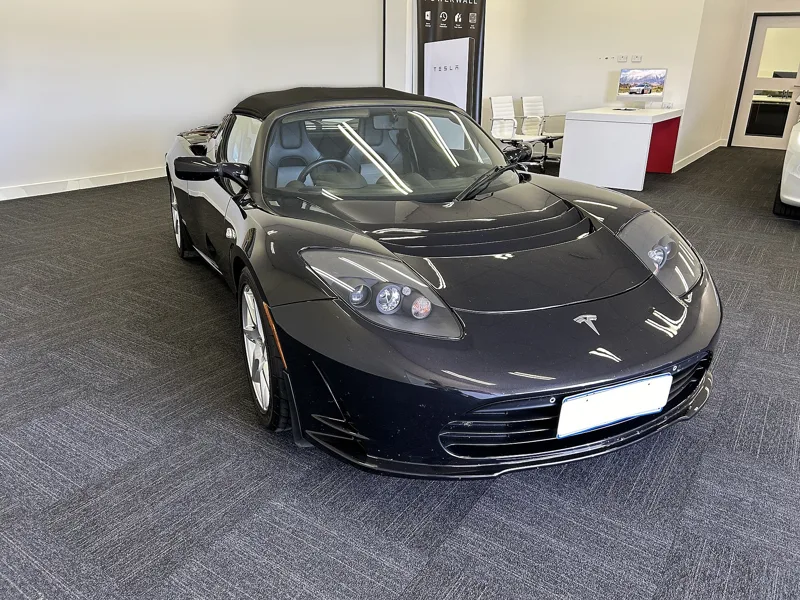
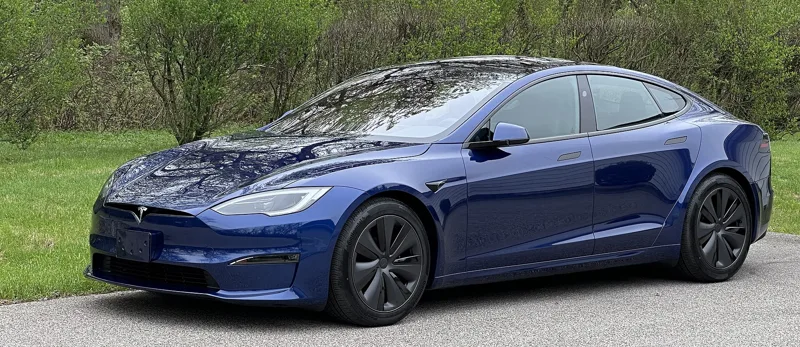
Long-range electric cars such as the Tesla Roadster and the Tesla Model S later made the route more practical. Tesla completed its first coast-to-coast supercharger corridor in January 2014, and in April 2015 Carl Reese, Rodney Hawk and Deena Mastracci set a record of 58 hours 55 minutes in a Model S P85D.
The electric records continued to fall. In August 2016 a Tesla Model S 90D covered the run in 55 hours. In December 2017 Alex Roy and Dan Zorrilla set 50 hours 16 minutes eastbound in an early Tesla Model 3. In August 2019 Kyle Conner and Matthew Davis reached 45 hours 16 minutes westbound, and by 2024 Conner's team had brought the figure to 39 hours 29 minutes in a Porsche Taycan.
What are the semi-automated records?
A semi-automated record is one where the car's driver assistance system does a large share of the driving. The first coast-to-coast semi-automated run was made in April 2015 by Delphi engineers, who covered 3,400 miles (5,500 km) from San Francisco to New York City over nine days.
In October 2015 Reese, Mastracci and Roy posted a coast-to-coast time of 57 hours 48 minutes using Tesla's Autopilot. Autopilot handled 96 per cent of the driving, and the trip used less than 14 hours of charging. By April 2025, Jay and Gypsy Roberts had lowered the semi-automated record to 38 hours in a 2017 Prius.
Why is the challenge so controversial?
Record attempts draw criticism for their illegality and for the public safety risk they pose. Because no law enforcement agency authorises them, the drivers are essentially racing outside the law, and critics have described the runs as vanity projects for the people taking part.
Some critics also argue that the runs no longer have the same appeal. Traffic enforcement fell during and after the COVID-19 pandemic while collision fatalities rose, and the critics say the runs no longer serve a clear purpose.