Safety equipment, the A and B small-car classes, hatchback body styles and gearboxes: what a first-time buyer should weigh before choosing.
The best first car is usually a small hatchback from the A-segment or B-segment, chosen mostly by build year. Small cars averaged around 40 percent of listed safety options in 1995 and over 90 percent by 2010, so newer cars protect far more.
In 1995 a typical small petrol or diesel car carried only around 40 percent of a standard list of safety equipment: side impact bars, airbags for driver, passenger and sides, ABS, electronic braking and stability control. By 2010 the same class averaged over 90 percent. That jump is the most useful single fact for anyone hunting for the best first car, because it shows that the year a car was built can matter far more than the name on the grille.
What makes the best first car: age, safety and size
Start with the safety numbers. Over the 15 years from 1995 to 2010, the share of listed safety features fitted to small cars more than doubled. Prices did not follow at the same pace: the inflation-adjusted price of the average petrol model rose 6 percent and the diesel rose 15 percent. In other words, buyers got a lot more protection for a modest extra outlay.
Studies from the European Union and JATO add the rest of the picture for 1995 to 2010. Average maximum power in the segment rose by 40 percent while average weight climbed by around 20 percent. Fuel consumption fell by around 20 percent, and the power-to-weight ratio improved by 15 percent. A newer small car is therefore safer, thriftier and quicker than an old one, and the quickness is something a new driver should factor in.
Euro NCAP files the smallest cars in a class it calls Supermini, which covers both A-segment and B-segment models. That is the pool most first-time buyers shop in.
A newer small car is safer, thriftier and quicker than an old one, which is why build year beats badge.
The small-car classes that suit new drivers
Europe sorts passenger cars into segments, and the two smallest are the natural hunting ground. The A-segment opens the European Commission's classification and holds the city cars. The B-segment sits one step up and is commonly described as small cars, or superminis in Britain.
The segments are not defined by size or weight, and the same car can be positioned differently in different markets.
| Feature | A-segment | B-segment |
|---|---|---|
| Typical length | About 2.7 m to 3.7 m (110 in to 150 in) | About 3.7 m to 4.2 m (146 in to 165 in) |
| Share of European car sales, 2024 | About 4.2% | 15.5% |
| Body styles | Nearly always hatchback, with crossover city cars rising | Hatchback, saloon, estate, coupe/convertible, MPV, crossover/SUV |
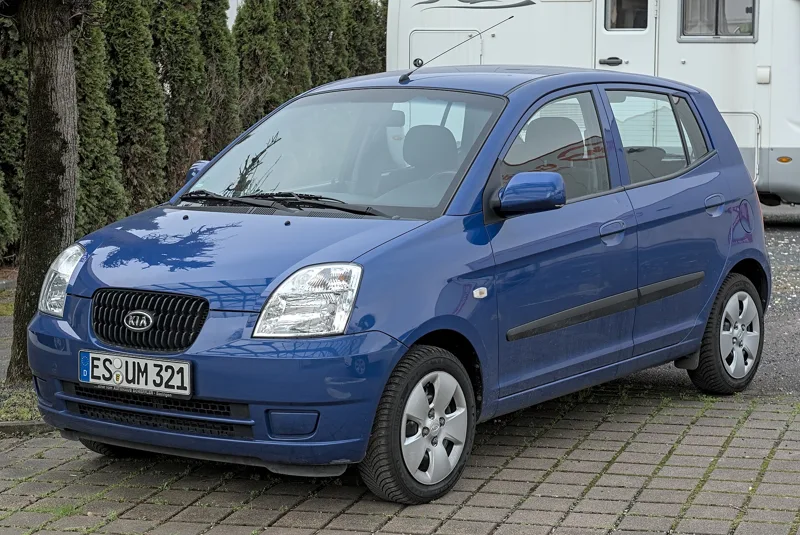
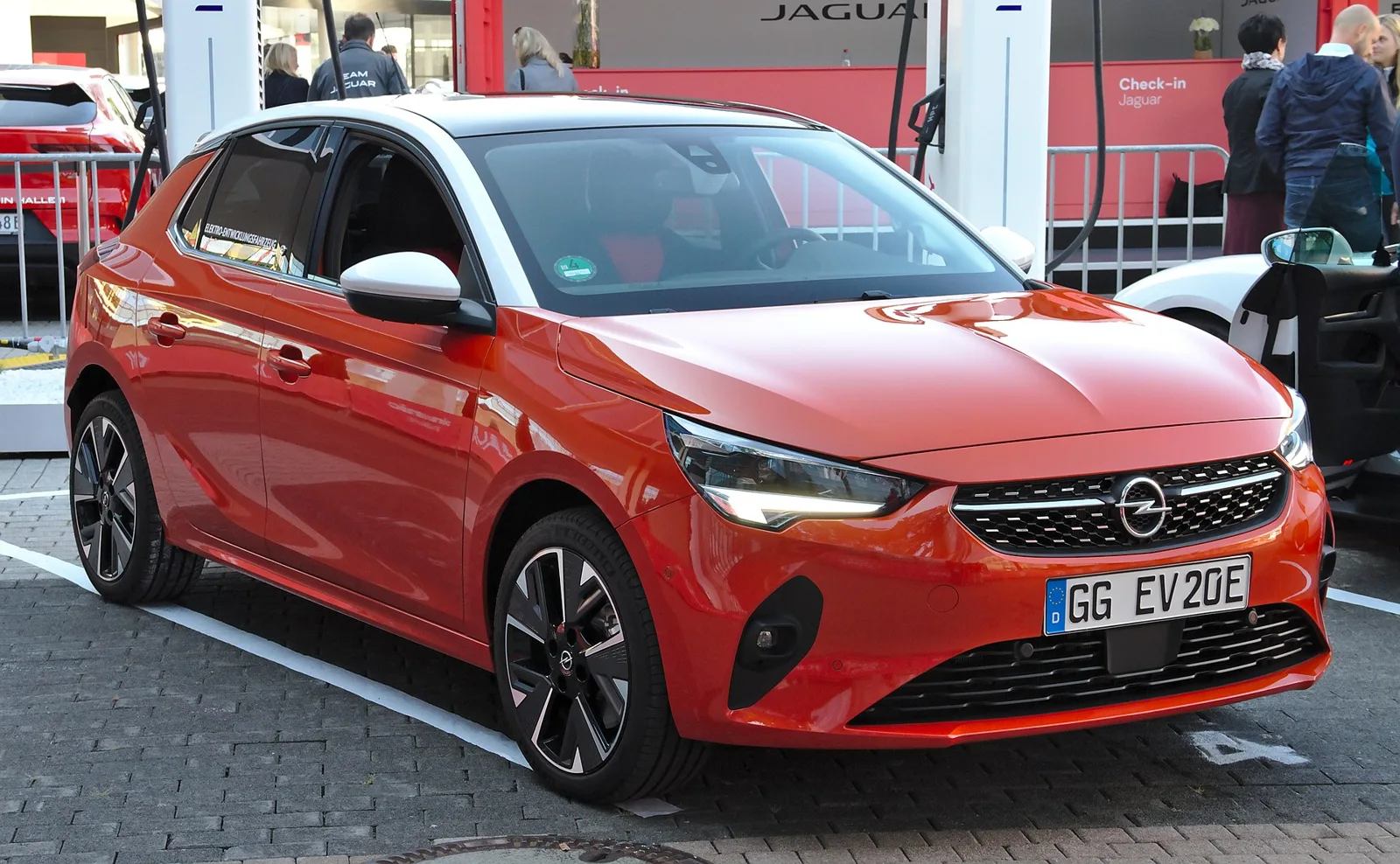
| Named examples | Fiat Panda, Fiat 500, Toyota Aygo, Kia Picanto, Hyundai i10 | Renault Clio, Toyota Yaris, Opel Corsa, Nissan Micra, Volkswagen Polo |
| Euro NCAP class | Supermini | Supermini |
City cars: the A-segment
The smallest cars suit tight streets, and their equipment has a clear pattern. Engines commonly run from 1.0 to 1.4 litres in three- or four-cylinder form, and newer models may add a turbocharger or hybrid assistance for better fuel efficiency. These cars have traditionally been sold with a manual gearbox as the only choice. Since the 2010s automatics have become more common, mostly CVTs, with a small number of makers offering automated manuals.
Fiat's Panda and 500 headed Europe's 2020 city-car sales list, alongside the Kia Picanto, Hyundai i10, Volkswagen Up!, Renault Twingo, Peugeot 108, Citroen C1, Toyota Aygo and Suzuki Ignis. Newer entrants such as the Suzuki Ignis and Toyota Aygo X borrow crossover styling. Saloon bodies hardly appear here because the shape does not work at such short lengths.
The segment is shrinking. In 2019 it took 7.7% of the European market, at 1.21 million cars, against 8% a year earlier. In 2020 European sales fell by a third, nearly 400,000 fewer cars, against a total market down 24%, leaving a 6.8% share. By 2024 the share had dropped to approximately 4.2%. The cause is that stricter safety and emissions standards squeeze the margin on very small cars, so makers are pulling out or moving their models to electric-only. The share is expected to shrink further.
Elsewhere the picture differs. In Italy, A-segment cars took 16.4% of sales in the first half of 2019. In the United States the minicar segment held 0.5% of the market, where the 2020 leaders were the Spark from Chevrolet, the Mirage from Mitsubishi and the Cooper from Mini. In India, A-segment sales have historically led the market but fell from 70,000 a month in 2014 to 47,000 a month in 2016.
Superminis: the B-segment and its hatchback habit
The B-segment is the third-largest in Europe by volume, at 15.5% of sales in 2024, according to JATO Dynamics. In Germany the segment goes by Kleinwagen and made up 15.1 percent of registrations in 2020. The term supermini appeared in the UK in the 1970s, when makers were trying to improve on the Mini, launched in 1959. The Times was using it regularly by 1977, and by the mid-1980s it was in widespread use.
The Autobianchi A112, launched in 1969, is widely seen as the first modern supermini. The Fiat 127, Renault 5, Volkswagen Polo and Honda Civic followed with a similar idea. These cars offered more comfort and convenience than before, kept the sure-footed front-wheel drive and transverse engine layout of the Mini, and added a hatchback with folding rear seats. The oil crisis of the 1970s is argued to have helped them sell. The Ford Fiesta arrived in 1976 and proved popular, and the 1983 Fiat Uno and 1990 Renault Clio both won European Car of the Year.
Japanese makers joined in too. The 1993 Nissan Micra was the first Japanese model to win the European award, and the 1999 Toyota Yaris won it with a high roof that opened up interior space. The Opel Corsa topped world sales in 1998 with 910,839 units, 54 percent of them in Europe, edging out the Toyota Corolla's 906,953.
Body styles, three doors or five
The hatchback is the most popular body style in the segment, and the reason is practicality. A hatchback has a rear door hinged at roof level that opens onto the whole interior, which forms a single volume with the passenger area. The rear seats often fold down to enlarge the load space.
Door count has shifted too. In 2007, 31 percent of European customers for B-segment hatchbacks chose the three-door version. By 2016 the share had fallen to 13 percent as buyers put usability first, and by the late 2010s several makers had stopped offering three-door versions in Europe. The Audi A3 and the Renault Clio are two examples. Makers count the rear hatch as a door, so a car with two passenger doors may be sold as a three-door.
Other body styles in the segment include the saloon (the Dacia Logan), the estate (the Dacia Logan MCV and Skoda Fabia Combi) and the coupe/convertible (the Mini Cooper Cabrio). Taller B-segment MPVs such as the Ford B-Max, Fiat 500L and Citroen C3 Picasso put interior space ahead of everything else. B-segment SUVs share platforms with hatchbacks and are usually left out by analysts when they total conventional B-segment sales. They made up 22 percent of global SUV sales in 2019.
Hot hatches cost more
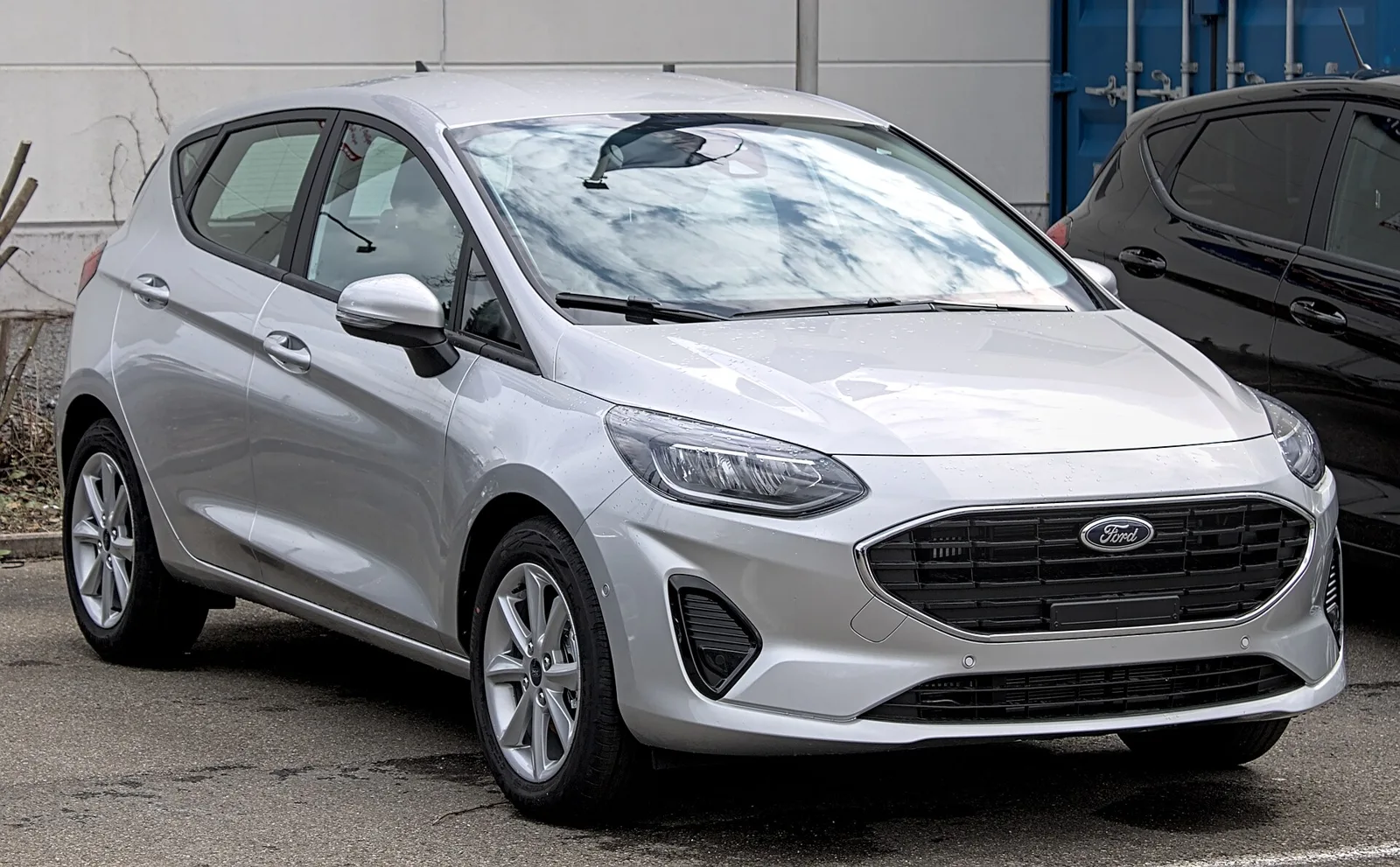
Makers sell performance versions of B-segment hatchbacks as a more expensive offering. Current examples are the Toyota GR Yaris, Suzuki Swift Sport, Hyundai i20 N, Volkswagen Polo GTI, Peugeot 208 GTi and Ford Fiesta ST.
The Corolla yardstick for a first car
One step above the superminis sits the Toyota Corolla, a compact car that was formerly a subcompact. It has been on sale since 1966 and has held the title of top-selling nameplate in automotive history since 1997, overtaking the Volkswagen Beetle. Toyota reached 50 million sales across twelve generations in 2021 and, by early 2026, had sold more than 54 million. The name means "small crown" in Latin.
Early Corollas were mostly rear-wheel drive, and later models are front-wheel drive, with four-wheel-drive versions also built. Rivals have included the Nissan Sunny, Subaru Leone, Honda Civic and Mitsubishi Lancer. Production has spread across the world, from the original Takaoka plant in Japan to Brazil, Canada, China, Pakistan, South Africa, Thailand, Turkey and Derbyshire in the UK. Australia built Corollas at Dandenong and Altona in the past.
Engine technology moved on inside it. In 1998 some non-Japanese Corollas received a 1ZZ-FE engine with an aluminium block and cylinder heads, making them lighter than versions with cast-iron A-series blocks. In August 2013 Toyota released a hybrid Corolla Axio sedan and Corolla Fielder wagon for Japan, built around a 1.5-litre hybrid system rated at 3.03 L/100 km (93.2 mpg-imp) on the JC08 test cycle. The Japanese-market car of the 2012 generation was made slightly smaller, so it was easier to drive in narrow alleys and car parks. Corolla sales in Japan reached 300,008 units in 1990, the highest annual figure in that country until the Prius passed it in 2010.
Where the hatchback came from
The first production hatchback was Citroen's 1938 Commerciale, a version of the Traction Avant aimed at tradesmen such as butchers, bakers and grocers who carried bulky loads. Early tailgates came in two pieces. After the war the design became the one-piece, roof-hinged door that most hatchbacks have used since.
Renault pushed the idea to the mass market. The Renault 4 of 1961 was the first compact two-box car to sell a million, with a sharply sloping tail and a one-piece lift-gate, and it stayed in production through 1992, with over 8 million sold. The 1965 Renault 16 took the format to family cars, with rear seats that could be adjusted, folded or taken out entirely. The 1967 Simca 1100 then paired a hatchback with front-wheel drive, a transverse engine, unitary bodywork and independent suspension, a recipe that nearly every mass-market family car has followed since. The Volkswagen Golf arrived in 1974 to replace the Beetle.
Liftbacks and estates are close cousins. A liftback is a hatchback with a more sloped roofline and a more horizontal hatch, a name Toyota used for the Celica in 1973. Estates are typically longer than hatchbacks, with a more vertical rear door and, in some cases, a third row of seats.
Going electric with a small first car
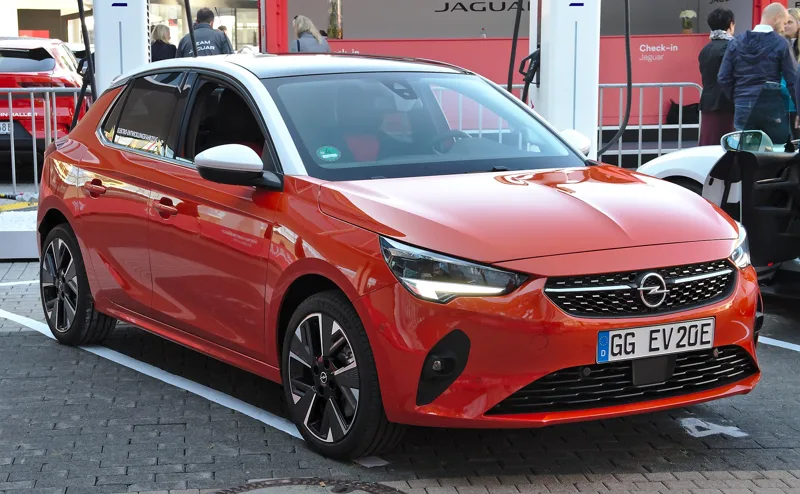
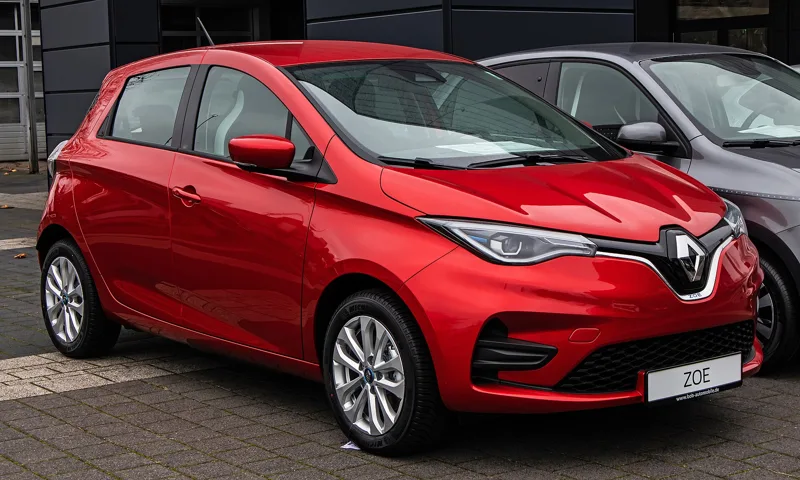
Small cars were among the first mass-market electric models. The Renault Zoe, released in 2012, was one of the first in Europe, reaching 50,000 sales worldwide by June 2016 and 200,000 by March 2020. In 2019 Groupe PSA brought out the Peugeot e-208 and Opel Corsa-e, and the low-volume Honda e and the Mini Electric came afterwards.