A five-door city car from South Korea that undercut its rivals on price, won praise for its interior and struggled with a three-star crash result.
The Kia Picanto was a five-door city car from South Korea, sold in Germany from April 2004. It won many comparison tests for its brakes, suspension and interior space, and it became known as a price breaker, but it scored only three Euro NCAP stars for occupant safety.
The Kia Picanto is a small five-door city car from South Korea. It reached German showrooms in April 2004, and it spent its early years winning comparison tests and pushing prices down. It also managed only three stars in its Euro NCAP crash test, and its owners reported a handful of recurring faults.
Where did the Picanto come from?
The Picanto followed the Kia Pride, which was built from 1989 to 2000. It reached Germany in April 2004 with petrol and diesel engines, and in Korea it was called the Morning. Unlike the Pride, the Picanto was not offered as an estate.
Its German launch coincided with the first cinema film of the Garfield cartoon character. Several demonstration cars were fitted with large Garfield stickers, and three of them were raffled in Germany. Kia offered the same sticker set to private buyers for 200 euros, fitting included.
A city car that undercut its rivals on price, won praise for its interior and still struggled with crash safety.
What did the design look like?
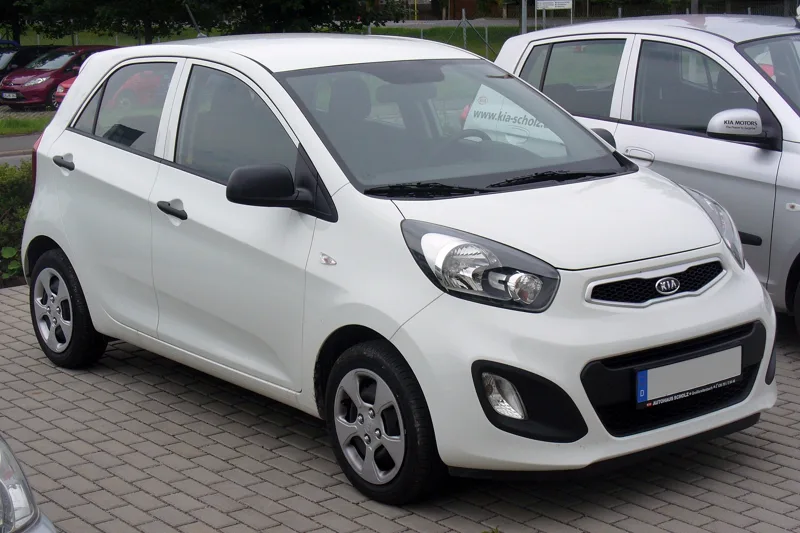
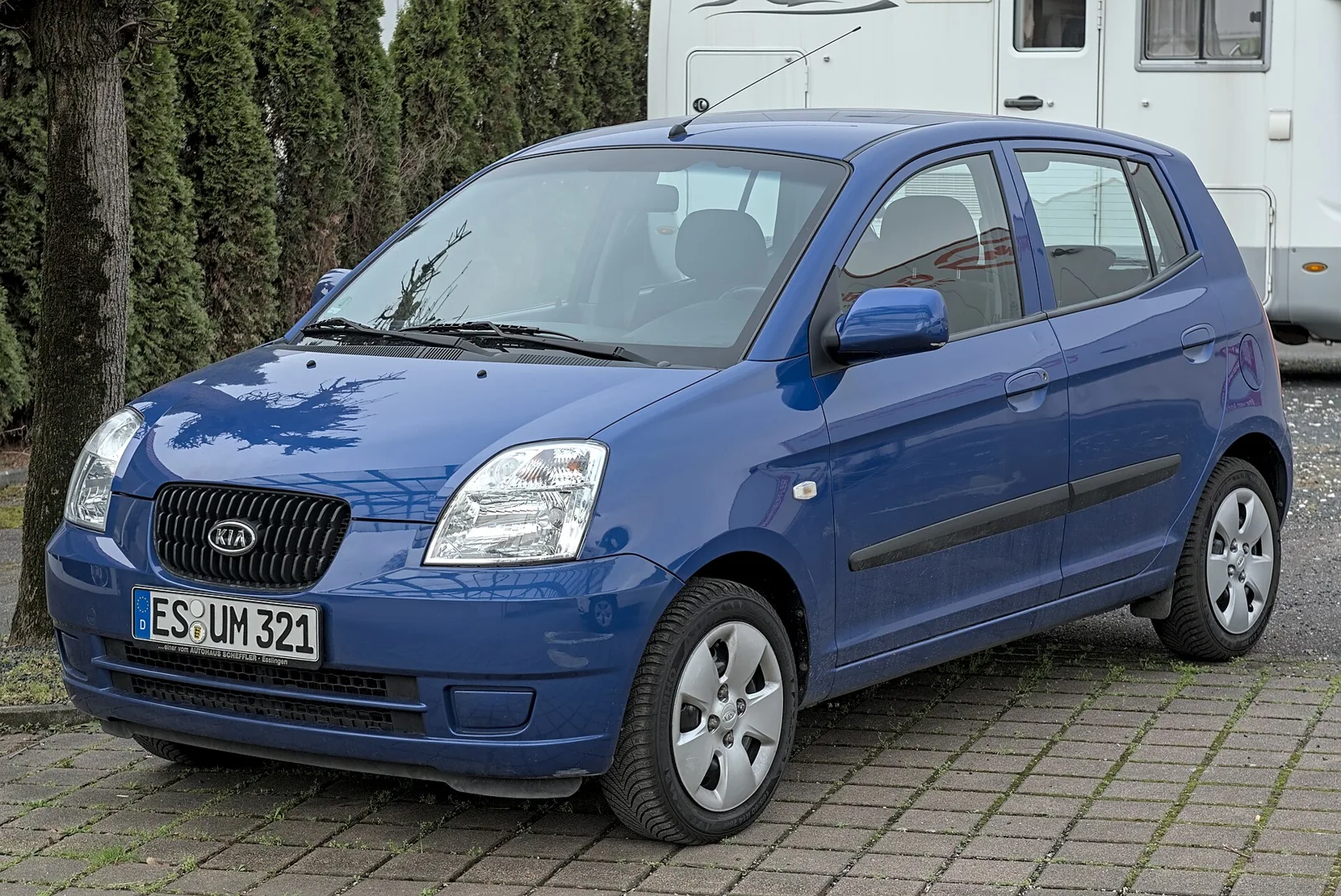
The Picanto's body was co-developed at the development centre in Ruesselsheim, with Kang Lee as chief designer in Korea, to suit European taste better. Its styling matches the European small-car norm, and only the side line, rising high to a hip swing, sets it apart from rivals.
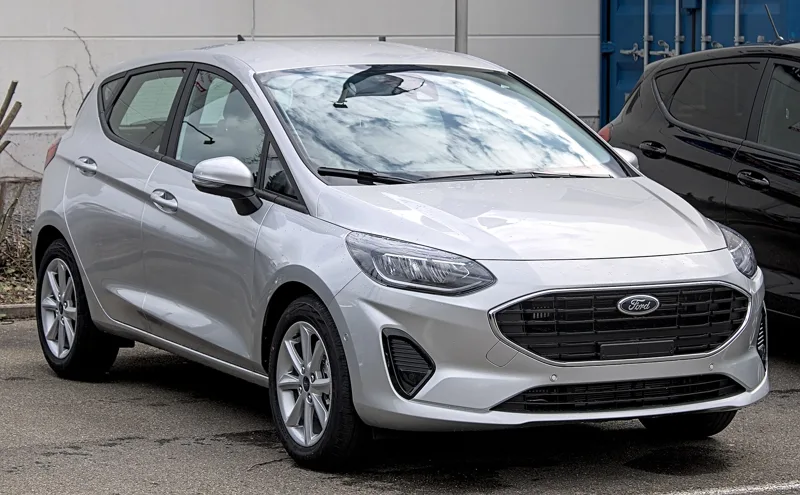
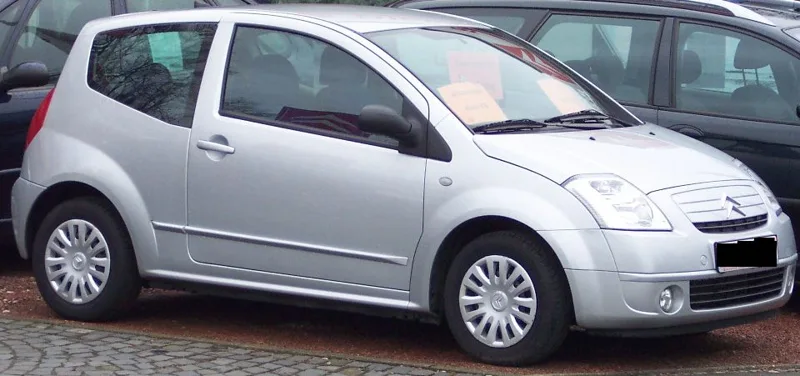
At the nose, oversized clear-glass headlights sit back from the face with indicators built in, and an oval grille is set into the bumper, slightly proud. These give the car the 'baby face' typical of its class, and in that respect it resembles the Citroen C2 and the Ford Fiesta.
The rear slopes gently, with an extremely short overhang and large clear-glass light units. A similar rear appears on the Citroen C2 and the Chevrolet Kalos. The hip swing was last common in the 1960s, and designers liked to bring it back in the early 21st century. The hip swing also appears on the BMW X3 and Hyundai Santa Fe.
Which engines and running gear did it use?
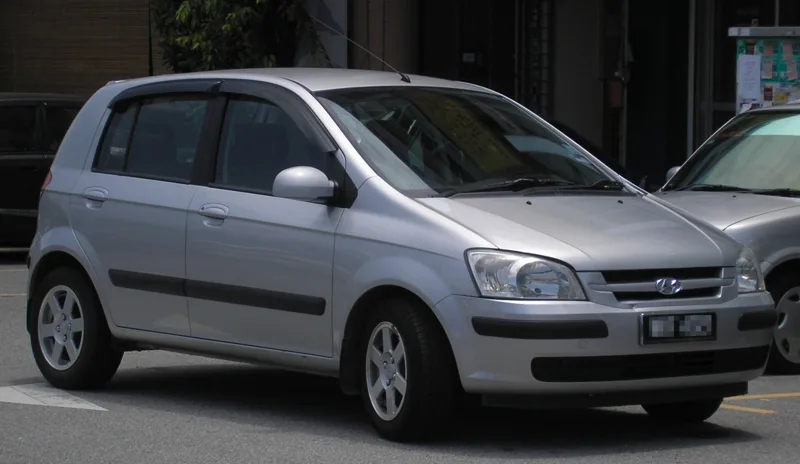
The petrol engines came from the Hyundai range, and the Picanto's diesel travelled the other way, from Kia to Hyundai. The Ruesselsheim centre developed the three-cylinder diesel independently, in its diesel competence centre, and the Picanto shares many technical details with the Hyundai Getz.
The chassis was given finer tuning to suit the local market and buyers. The front uses MacPherson struts, wishbones and an anti-roll bar, while the rear is a compound trailing-arm axle with coil springs. Four-channel, four-sensor ABS with EBD sat on a dual-circuit brake system with a brake booster.
Steering moved to electric assistance in the January 2008 update. The electric motor helps only with actual steering movements, whereas the old hydraulic system built oil pressure all the time. The ADAC rated the new system 3.1 against 3.7 for the hydraulic one, and the electronics can add artificial resistance for stability at speed.
How did the Picanto perform in comparison tests?
The Picanto won numerous comparison tests against direct rivals such as the Fiat Panda, and in one Auto Bild test it beat the larger VW Polo. Testers praised its brakes, suspension, build quality, materials and interior space, including the rear seats. The ADAC's verdict was simply 'absolutely recommendable'.
The boot was the weak spot, because at only 105/127 litres it earned no applause. A near-equal VW Fox, offered solely as a three-door, listed around 3,500 euros above a Picanto EX. For that reason the car earned the tag of price breaker.
Kia's aggressive pricing reflected a wish to raise its market share in Germany. Buyers at Kia often paid well below the list price.
What did the January 2008 update change?
The January 2008 update gave the Picanto teardrop-shaped headlights, moulded rings on the rear lights and a smoother centre console. Two storage bins vanished: a big one beneath the radio, now twice as tall, and a second left of the steering wheel, where the headlamp levelling control went instead. The diesel disappeared from the German range and was sold in only a few countries.
The radiator grille became smaller and honeycomb-shaped, with chrome in the top trim. Cool trim gave itself away through mirror-mounted indicators. ESP could now be specified, though it had to be ordered on every trim and was not available on the base version.
Probably for that reason, the EU made ESP compulsory for newly launched models in November 2011. Three in four city cars of 2010 lacked ESP, and the Attract was among them, with drum brakes at the back because discs came only with ESP. Uniquely among German trims, it went without side airbags, and it still carried the same 8,700-euro tag as the 2004 entry LX.
Comfort gained a USB connection in the top Cool trim. MP3 discs had been playable on the radio since 2004, and that became standard equipment in 2005. The navigation system became portable and came from Clarion instead of Becker.
What did the June 2009 update add?
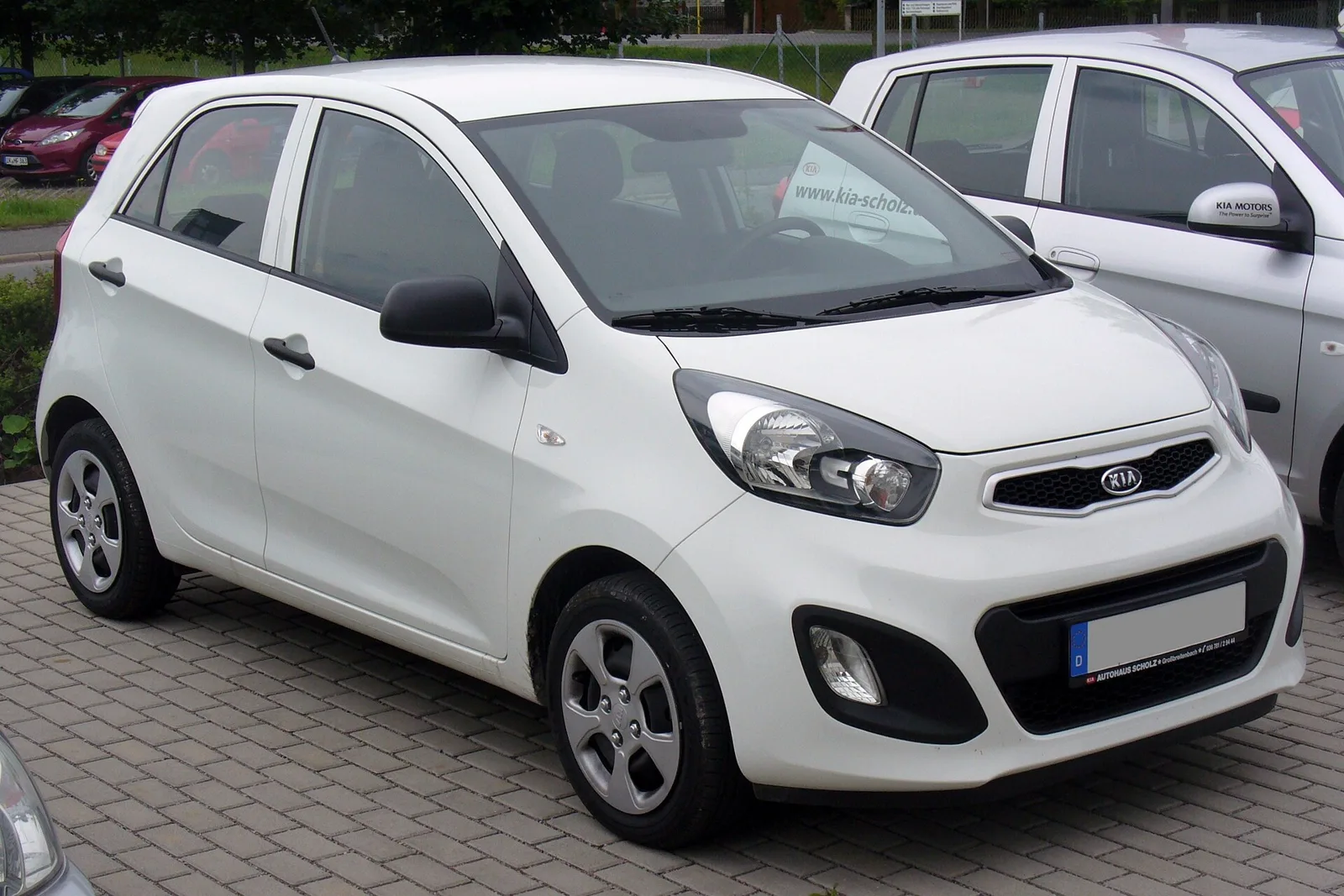
The June 2009 update made the car more dynamic in appearance and raised its comfort. The 2009 update brought reversing camera images to the interior mirror and climate control on automatic. The update first went to South Korea and Vietnam, reached Europe in the summer of 2010 and Germany that November.
Top trim picked up black-and-silver alloys, upright fog lamps, dark lamps and a suggested Tiger Nose, plus a folding key. Buyers could order full leather in black or cream. The steering wheel of the Soul became standard, and it was the only change that went straight into export. The new trims Vision and Spirit replaced the earlier ones.
From January 2010, newly registered Kia in Europe came with a seven-year manufacturer warranty. From the 2011 model year ESP came as standard in Germany, and the petrol unit was rated Euro 5.
How did the Picanto fare in crash tests?
In the November 2004 Euro NCAP test, the 2004 Picanto managed three of five stars for occupant safety, totalling 17 points. Child protection was rated better at four stars out of five, and pedestrian protection earned one star out of four.
Testers flagged serious faults. The brake pedal and steering wheel moved towards the cabin, hard parts behind the dashboard carried an injury risk, and raised chest loads appeared even with belt tensioners and load limiters.
How reliable was the Picanto?
Readers of the magazine Which? Car voted the 2007 to 2009 Picanto the most reliable model in a 2010 survey of 67,000 vehicles. In J.D. Power surveys, the mechanics were typical for the segment, and the body and paint were consistently the best in the class.
The J.D. Power surveys covered the model years 2006 to 2011. Interior quality moved from below average to above average, and in the 2012 survey the mechanics also earned the top grade. Each survey polled British owners of cars one to three years old, 17,000 of them.
The DEKRA used-car report groups cars by mileage rather than by model year, and it found body, frame and interior defects at only a fifth of the rate of other city cars from 100,000 km. Drive and exhaust problems were 40% less frequent than the class norm. Brakes were the exception, with calipers and discs worn 30% more often, which may reflect motorway use that is unusual for the segment.
Electrical and lighting defects were the most common faults from 100,000 km. Every second car showed them, and the Picanto's 54% was somewhat higher than the class norm of 48%. In the ADAC's 2012 satisfaction survey the car sat slightly above the class average.
What faults were typical?
Most of the recurring faults have a known fix, and several were handled under warranty. One known fault was a timing-gear bolt, 5 mm too short, on petrol cars built up to autumn 2006. The gear could develop play, which caused poor starting, uneven idling and lost power, and in rare cases engine damage was reported.
The bolt problem can be spotted by a black fixing bolt where a silver one should be, on the crankshaft timing gear. Dealers usually swapped the bolt during routine servicing and logged the work in the service book and the warranty records. It usually came to light within the first 50,000 km.
Cracked ABS rings, caused by corrosion, were another problem on cars from before 2006. A cracked ring gives different readings on the same axle, so the ABS assumes a slip and starts to regulate for no apparent reason. The warning light can then appear.
Rust was reported in four areas, including the upper cross member, the seat guide-rail bolts, the fuel-filler release lever and the rear seat backs. Kia replaced affected parts on request, even for surface rust. Because no recall covered three of those spots, some cars may still carry them, so a check is worthwhile.
Could the 1.1-litre run on LPG?
The 1.1-litre petrol engine could be converted to liquefied petroleum gas, known as autogas or LPG. The LPG tank occupies the spare-wheel well, while its filler sits right of the petrol neck beneath the same cap, hidden from view. The gas-level display can go in the storage tray beneath the radio.
Picanto BA/SA dimensions and specifications
| Specification | Detail |
|---|---|
| Length | 3,495 mm (137.6 in) |
| Width | 1,595 mm (62.8 in) |
| Height | 1,480 mm (58.3 in) |
| Wheelbase | 2,370 mm (93.3 in) |
| Track, front and rear | 1,400 mm (55.1 in) and 1,385 mm (54.5 in) |
| Permitted gross weight | 1,350 kg (2,976 lb) petrol; 1,410 kg (3,109 lb) diesel |
| Boot | 105 to 868 litres, depending on backrest angle |
| Fuel tank | 35 litres (9.2 US gal) |
| Towing capacity | 400/700 kg (882/1,543 lb), unbraked/braked, with the 1.1-litre CDRi |
| Nose weight | 28 kg (62 lb); 25 kg (55 lb) with automatic |
| Turning circle | 9.95 m (32.6 ft) |
| Tyres | 155/70 R13, 165/60 R14 or 175/50 R15 for petrol |
| Tax class | D4 (Euro 4) for German versions; D3 for some imports |
Which equipment came with the Picanto?
At launch the Picanto came in two trims, LX and EX. LX equipment ran to two front airbags, front side bags, ABS, electronic brake-force distribution, central locking and a leather wheel. The EX added air conditioning, and power steering was standard on it, though it was also optional on the LX.
The 2008 update replaced LX and EX with Start and Cool. In early 2009 Start became Attract, and in mid-2009 Cool gave way to Spirit and Vision. From 2011 a Sun Edition special model was offered. Metallic paint, a CD radio, a floor mat set and a portable navigation system were available on every trim.
The extras differed by trim. Start could take ESP and air conditioning. Cool offered ESP, front seat heating, a sport front grille, aluminium pedals and a four-speed automatic gearbox.
How did import versions differ?
Import versions varied with the country they came from. Common differences included no side airbags, no alloy wheels and unpainted plastic parts and bumpers. Some had a smaller 1.0-litre engine, an extra seat in the middle of the rear bench, or rear backrests that could not be adjusted for angle.
A few imports carried E2 emissions ratings instead of E3, since the importer skipped an exhaust test. The interior could also be beige, with plain beige seats in place of the black seats with red, orange or blue accents on German cars.
Did the Picanto race?
Kia Picanto cups, partly official, take place in Spain and Poland. They are comparable with the cup series run for other near-series vehicles.