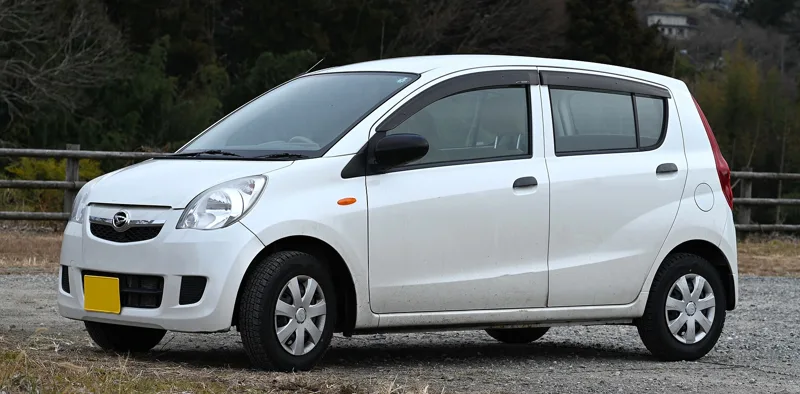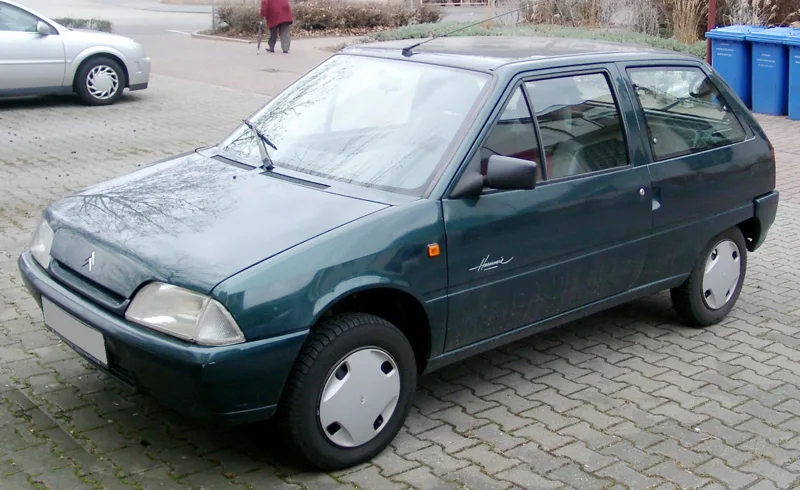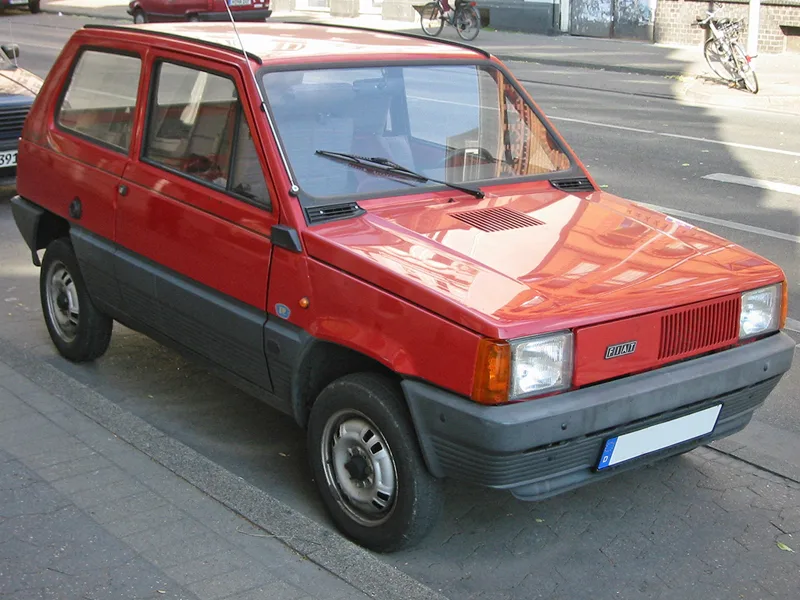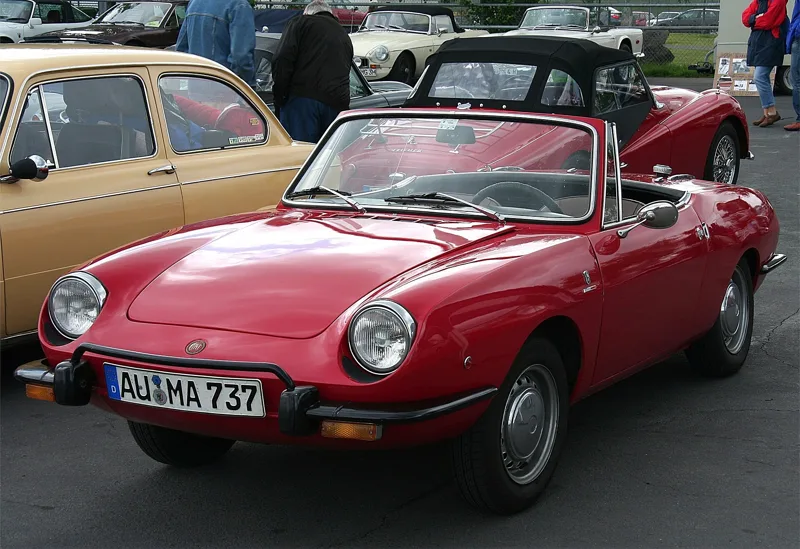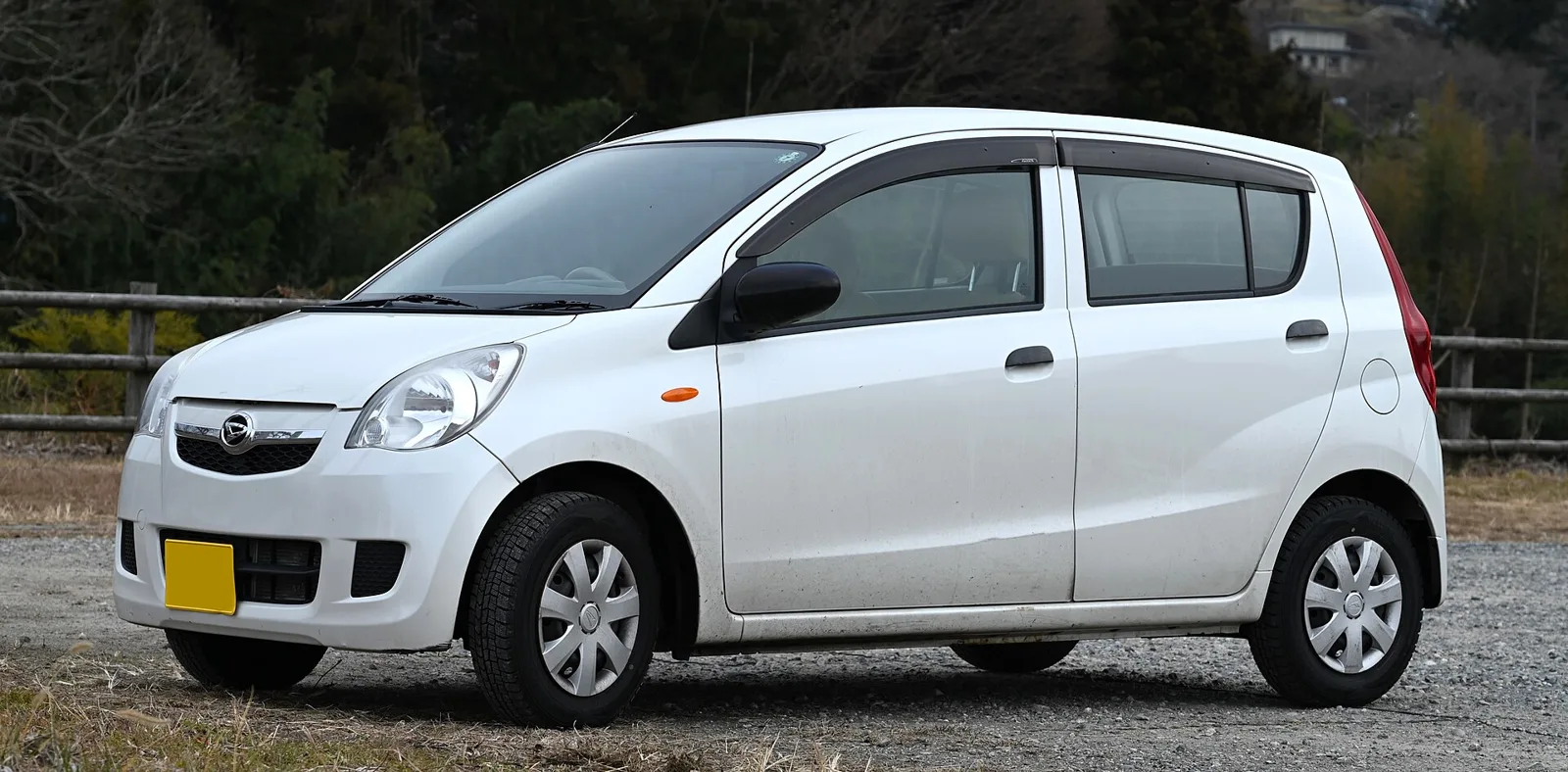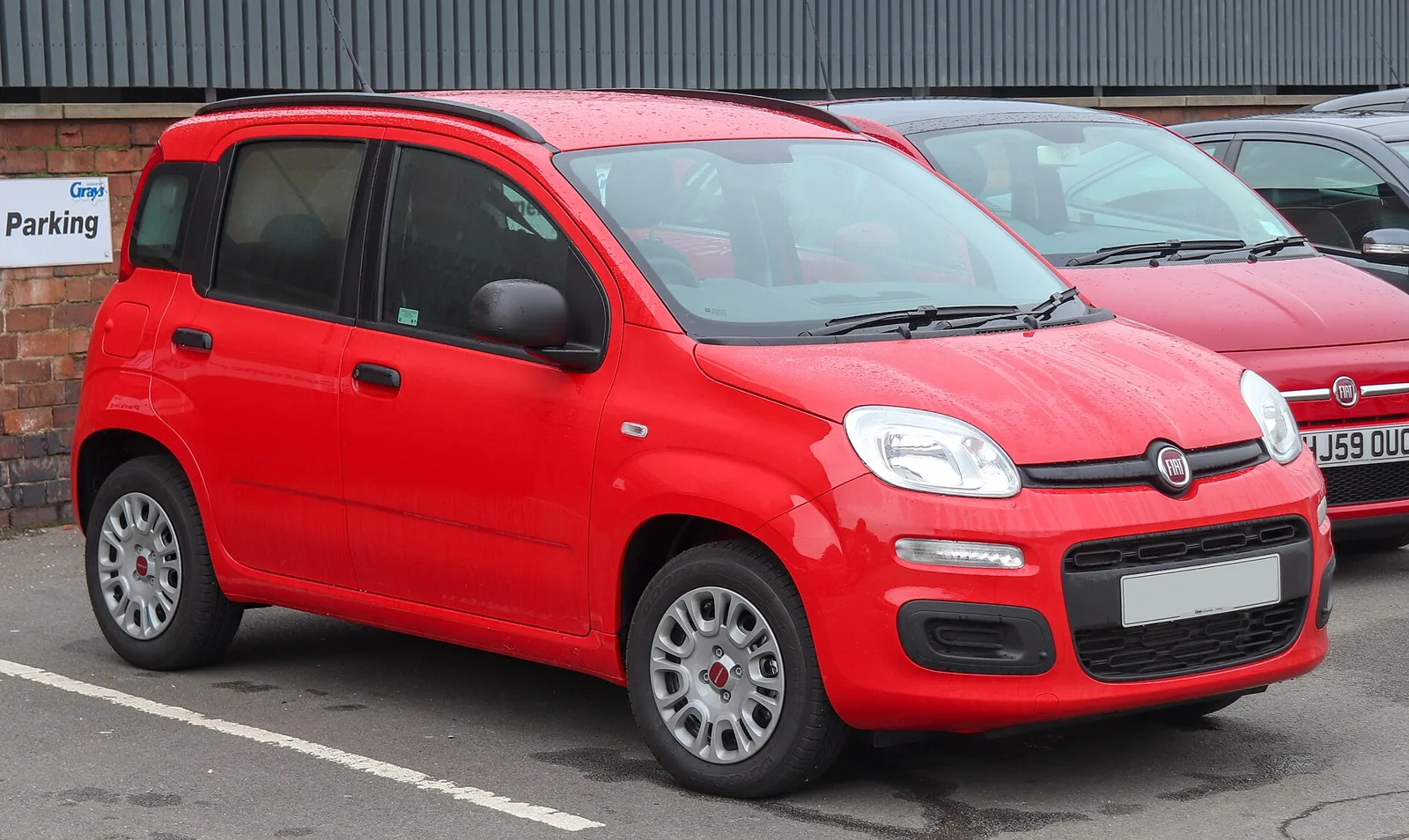
Four generations of Fiat's city car, from the 1980 utilitarian box on a 2CV-style brief to the 2024 Grande Panda, with more than 7.8 million built.
Since 1980 the Panda has been a city car built in four generations, passing 7.8 million cars. The 4x4 variant, the TwinAir engines and the 2024 Grande Panda mark its later development. Its design began as a deliberately plain container on wheels.
The Fiat Panda is a city car that Fiat has built and sold for more than four decades. Four generations have followed the 1980 original, and the family has passed 7.8 million cars, of which about 4.5 million were first-generation models. Autocar counted the first generation's 23-year run among the longest-lived single generations in automotive history in 2020.
Its name came late. During development the car was known in-house as il Zero, and Fiat later proposed Rustica before settling on Panda, after Empanda, the Roman goddess who looked after travellers.
Where did the first Panda come from?
Italdesign, a newly formed studio, won the job through Giorgetto Giugiaro and Aldo Mantovani. Giugiaro handled the packaging and styling, while Mantovani set the technical approach. Together they worked for 15 days in summer 1976 at Porto Cervo in Sardinia on the first sketches.
The brief came from Fiat's chief executive, Carlo De Benedetti. He wanted a plain container with a spacious and spartan interior that weighed and cost no more than the Fiat 126 it replaced. The approach was close to the Citroen 2CV or the Renault 4, and Giugiaro drew inspiration from a folding lounge chair for the seats.
By the time De Benedetti had left Fiat, Italdesign had already produced two full-size models, four side-profile alternatives and an interior mock-up. Within a year it had built 20 rolling chassis for testing.
A two-box city car designed as a container on wheels, which became one of Europe's longest-lived small cars.
How was the first Panda built and sold?
In February 1978 Fiat tested prototypes with customers and dealers at a Milan event, asking participants to rate the design, the interior, the price and the provisional name Rustica. Production then ran into union disputes over moving work between plants, and an agreement was reached only in early 1980.
Fiat showed the production cars to President Sandro Pertini at the Quirinal Palace on 26 February 1980. The car debuted at Geneva on 5 March that year. The World Wildlife Fund had resisted the Panda name, but it relented after Fiat made a substantial donation, and Fiat delivered the cheque written on the bonnet of a Panda. Within two months of the show, the company had taken more than 70,000 orders.
What made the first Panda's interior unusual?
The rear seat was a seven-position unit that could fold flat into a bed, fold into a V to support awkward loads, or come out altogether. Seat covers and door trim were fabric that could be taken off and washed, and the dashboard used a padded fabric supported by a tube, creating a long storage pocket.
Cargo space ran to 280 litres with the seats in place and 1,000 litres with the rear seat removed. The spare wheel lived in the engine compartment, leaving the boot clear. Fresh air came from the windscreen demisters and the side vent windows, and the mirror had no day and night setting.
Italdesign designed the bodywork to be cheap and simple. The side glass was flat and the same on both sides, and the grille could be positioned to suit either a transverse or a longitudinal engine. Giugiaro likened the car to a pair of jeans, and he said he had borrowed the logic of a helicopter for its light and rational form.
Which engines and drivetrains did the first Panda use?
The launch line-up had two engines. The Panda 30 used a longitudinally mounted, air-cooled 652 cc two-cylinder derived from the Fiat 126. The Panda 45 was a transverse water-cooled 903 cc four from the Fiat 127. Fiat added an 843 cc unit in September 1982, first for export markets such as France, Belgium, Germany and the Netherlands.
The Panda 4x4 arrived in June 1983 with a 965 cc engine rated at 48 bhp. It was the earliest small transverse-engined production car with four-wheel drive, and the system could be selected manually with an ultra-low first gear. The Austrian firm Steyr-Puch supplied the drivetrain, from the clutch and gearbox through the transfer case, prop shafts and live rear axle to the brakes.
How did the Panda change in the 1980s and 1990s?
A thorough revision arrived in January 1986, internally called 141A. The air-cooled two-cylinder gave way to a 769 cc water-cooled four, and the 903 and 965 cc engines were replaced by a 999 cc unit making 45 PS, or 50 PS in the 4x4. The rigid rear axle with leaf springs became an Omega axle with coil springs.
In the same year a 1301 cc diesel with 37 PS arrived, based on a Brazilian engine also used in the 127 and Uno. A van version followed, with the rear seats removed and plastic panels in place of the rear windows. In 1987 an entry-level Panda Young joined the range, and the 4x4 Sisley special edition added metallic paint, an inclinometer and a bonnet scoop.
The 1990 Italia 90 was a limited edition marking Fiat's sponsorship of the World Cup. It had tricolour stripes, a custom fabric interior with CIAO logos and football hubcaps in some markets. Twelve convertible service cars were driven onto the pitch at World Cup stadiums.
An electric version, the Panda Elettra, arrived in early 1990. Its 19 bhp motor replaced the rear seats, and the car weighed far more than the standard Panda. Range was about 100 km at a steady 50 km/h, and a full charge took eight hours from a household socket. It cost three times as much as the Panda 750 Young, and it was discontinued in 1998.
Did the Panda win awards in its first life?
The first generation met with success across Europe. It finished second in the 1981 vote for European Car of the Year, behind the Ford Escort Mk3, and it remained on sale in some regions until 2003. Giugiaro received the Compasso d'Oro for the design in 1981.
Critics were less kind about the styling. Der Spiegel quoted Giugiaro calling the Panda the most enchanting work of his life, while a Bild road tester likened the car to a shoe box. The styling continued to attract mixed reactions as the Uno arrived in 1983 and boxy shapes became the house style at Fiat through the 1980s.
What was the second-generation Panda?
The second generation, codenamed Model 169, arrived in 2003 with almost no engineering links to the first. It was originally to be called the Fiat Gingo until Renault objected that the name was too close to its Twingo. Fiat then renamed it the Panda, and the new car was built only at Tychy in Poland.
The tall five-door borrowed ideas from mini MPVs and small SUVs, and the second-generation Fiat Multipla was a clear reference point. It won the 2004 European Car of the Year award and the Compasso d'Oro for industrial design. It was designed by Giuliano Biasio at Bertone, and production model development went to the I.DE.A Institute.
Fiat badly needed the new Panda to succeed. Half a million had sold by October 2005, and more than half of production went to Italy, where the car was seen as a spiritual successor to the Fiat 500 rather than a straight swap for the Seicento or the earlier Panda. The 500,000th car was built in October 2005, and the 1,000,000th followed in September 2007.
Which Panda models did buyers choose?
The entry-level Actual made do without power windows and carried a full-size spare, with black bumpers, and it arrived in January 2004. The Dynamic added ABS, dual airbags, roof bars and a cassette player, while the top Emotion, sold as the Eleganza in the UK, added alloy wheels and automatic climate control.
The Panda 100 HP was the sporty model. It used a 1.4-litre 16-valve FIRE from the Punto with 100 PS and a six-speed manual, and it had four-wheel disc brakes. It reached 100 km/h in 9.5 seconds and a top speed of 185 km/h (115 mph). Production stopped in July 2010 under tougher emissions rules.
The 4x4 Climbing was introduced in December 2004 with a higher ride height and larger wheels. The Cross edition followed in January 2006, and unlike the Climbing it had a differential lock. Limited specials, such as the Active and Dynamic editions, added extra interior fittings.
How did the Panda perform as a family car?
The second-generation car earned strong reviews and a loyal following. A 2006 Top Gear survey ranked the Panda eighth out of 152 cars for reliability, craftsmanship, running costs, driving experience and service. Official buyers liked it too, and police, the military and mail services all took the car in various versions.
In the safety tests, the 2004 car was assessed by Euro NCAP. ABS, electronic brake distribution and at least one front airbag became standard across the range in September 2005.
What were the Panda's concepts and special editions?
Fiat showed a series of concepts and specials. The Panda Hydrogen was a fuel-cell prototype with a 60 kW unit beneath the floor, reaching more than 130 km/h. The Panda Terramare was a self-built amphibian based on a 4x4, and it crossed the English Channel from Folkestone to Cap Gris Nez in just over six hours in July 2006.
Two factory-built 4x4s entered the 2007 Dakar Rally, driven by Miki Biasion and Bruno Saby with a 1.3-litre Multijet turbodiesel and a six-speed manual. Both retired on the fourth stage. Other showpieces included the Panda Aria, a 900 cc turbocharged concept with Multiair valve control and a Stop and Start function.
How did the Panda fare in the Chinese copy row?
Fiat fought a legal battle over the Great Wall Peri, a car that copied the Panda's design. In July 2008 a court banned the Peri from import into Europe and ordered Great Wall to pay a 15,000 euro fine for the first car imported, and 50,000 euros for each one after that.
What did the third-generation Panda look like?
The third generation debuted at the 2011 Frankfurt Motor Show and rode on the Fiat Mini platform. Production began at the renewed Pomigliano d'Arco plant in late 2011. The earlier model stayed in production as the Panda Classic, about 27 percent cheaper.
Engine choice became central to the range. The Natural Power bi-fuel version used the 0.9-litre TwinAir turbo, with CNG stored in two cylinders under the floor and 35 litres of petrol. Output on gas fell from 80 PS to 70 PS after September 2018, while petrol power stayed at 85 PS. The EasyPower LPG version used a 1.2 FIRE with 69 PS.
The Trekking appeared in late 2012, offering the looks of the 4x4 without the skid plates. The 4x4 itself returned at the 2012 Paris Motor Show with TwinAir petrol and 1.3 Multijet II diesel options, but the 4x4 was discontinued in May 2022 because of component shortages.
What is the Panda Cross and the Pandina?
The Cross debuted at Geneva in 2014 as the range-topping, off-road-styled Panda, with wider tyres and more ground clearance than the city models. A 4x2 Cross was offered from 2017 under the City Cross name, which later changed in France and elsewhere.
A mild-hybrid Panda arrived in 2020 with a 1.0-litre FireFly petrol engine, a 12-volt belt-driven starter generator and an 11 Ah battery. In February 2024 Fiat announced the Pandina, a special version of the Cross named for the Italian nickname of the car, with driver assistance systems added to meet the latest EU safety rules.
What is the Grande Panda?
The Grande Panda was introduced on 14 June 2024 as a B-segment model. Its underpinnings come from Smart's car platform, which the fourth-generation Citroen C3 and Opel Frontera also use. Buyers can choose mild-hybrid or fully electric drive. The older third-generation car continues alongside it.
Specifications at a glance
| Generation | Years | Platform | Notable version |
|---|---|---|---|
| First | 1980-2003 | Italdesign body, Fiat 127 and 126 engines | 4x4, 1983 |
| Second | 2003-2011 | Tychy-built five-door | 100 HP, 100 PS |
| Third | 2011-2024 | Fiat Mini platform | TwinAir, 85 PS petrol |
| Fourth | 2024- | Smart platform | Mild hybrid and electric |