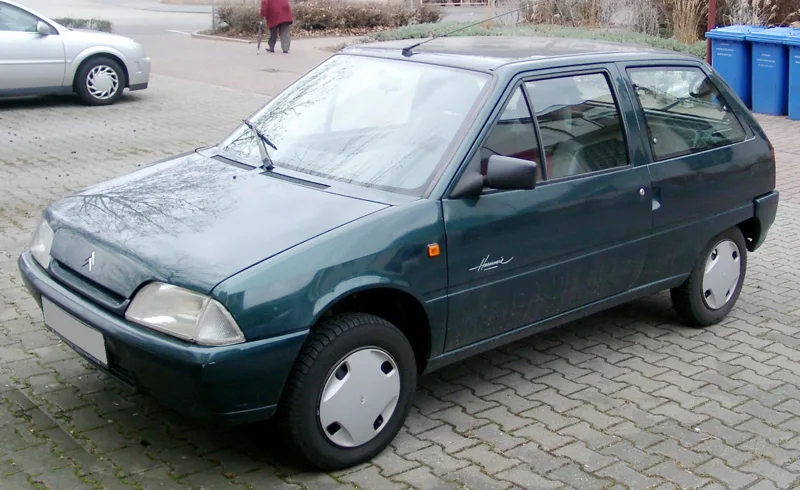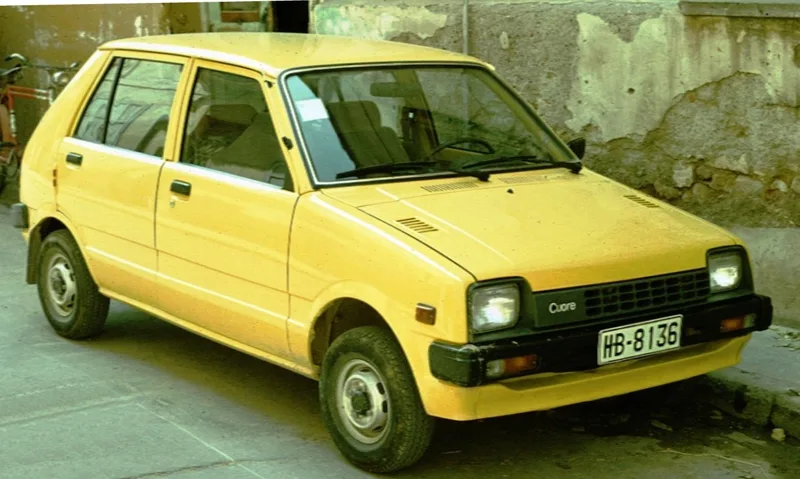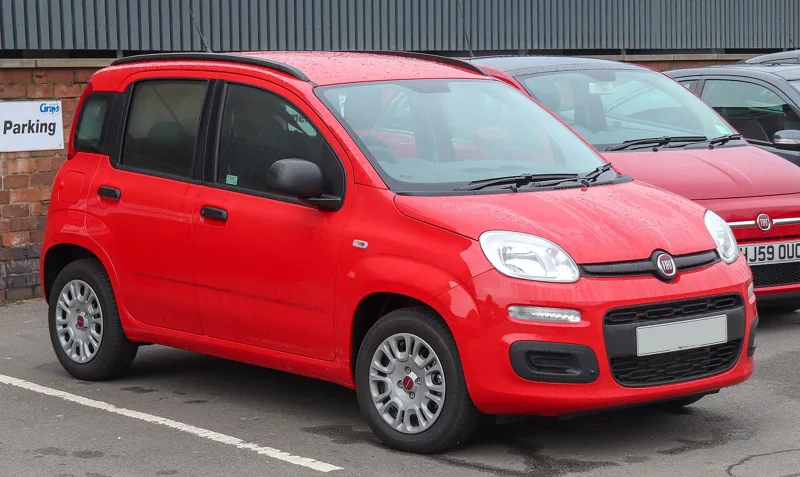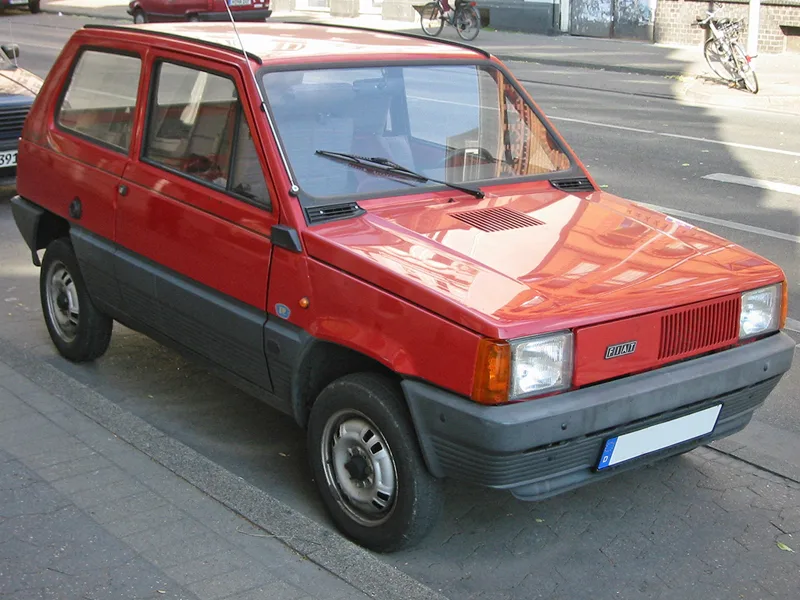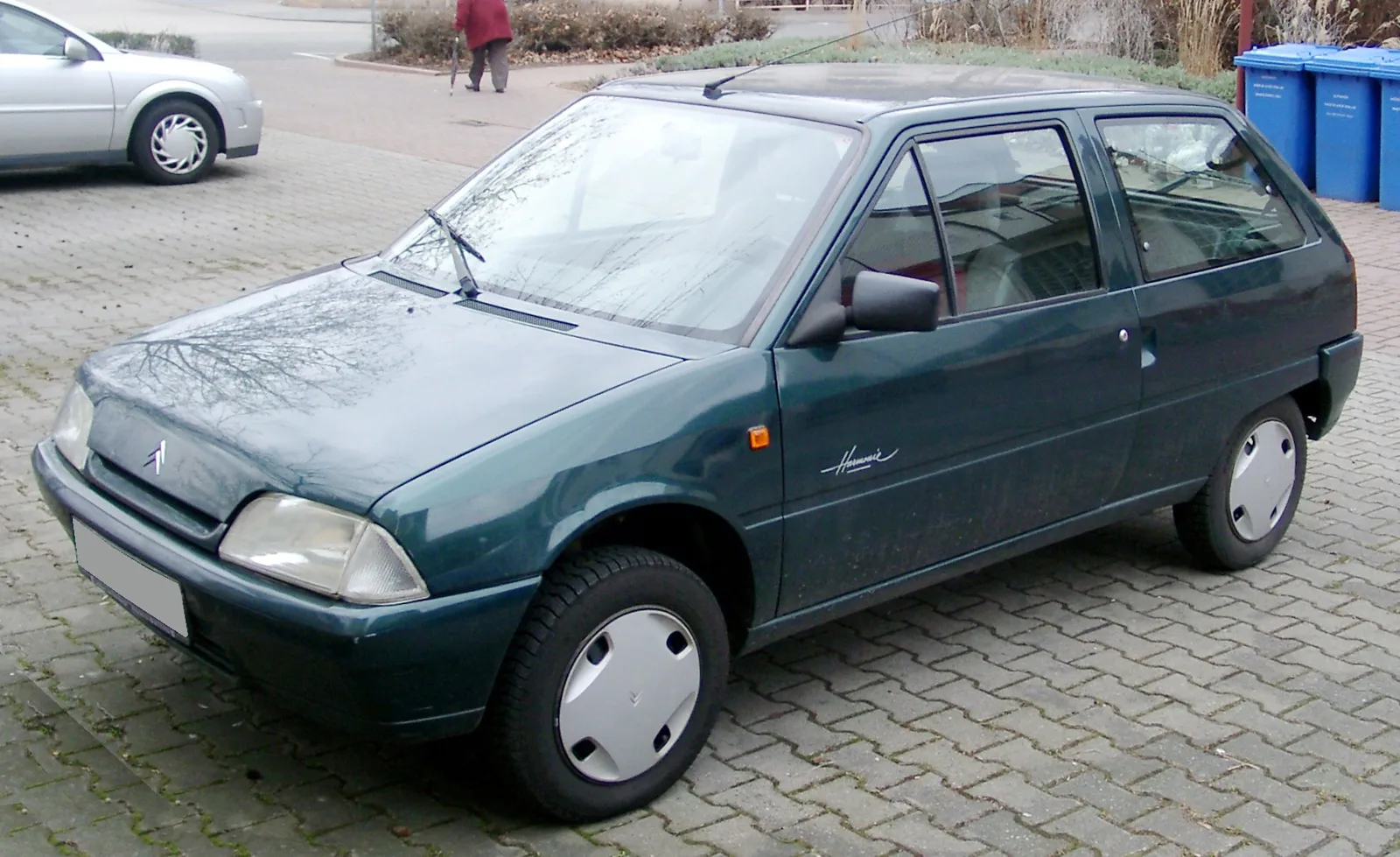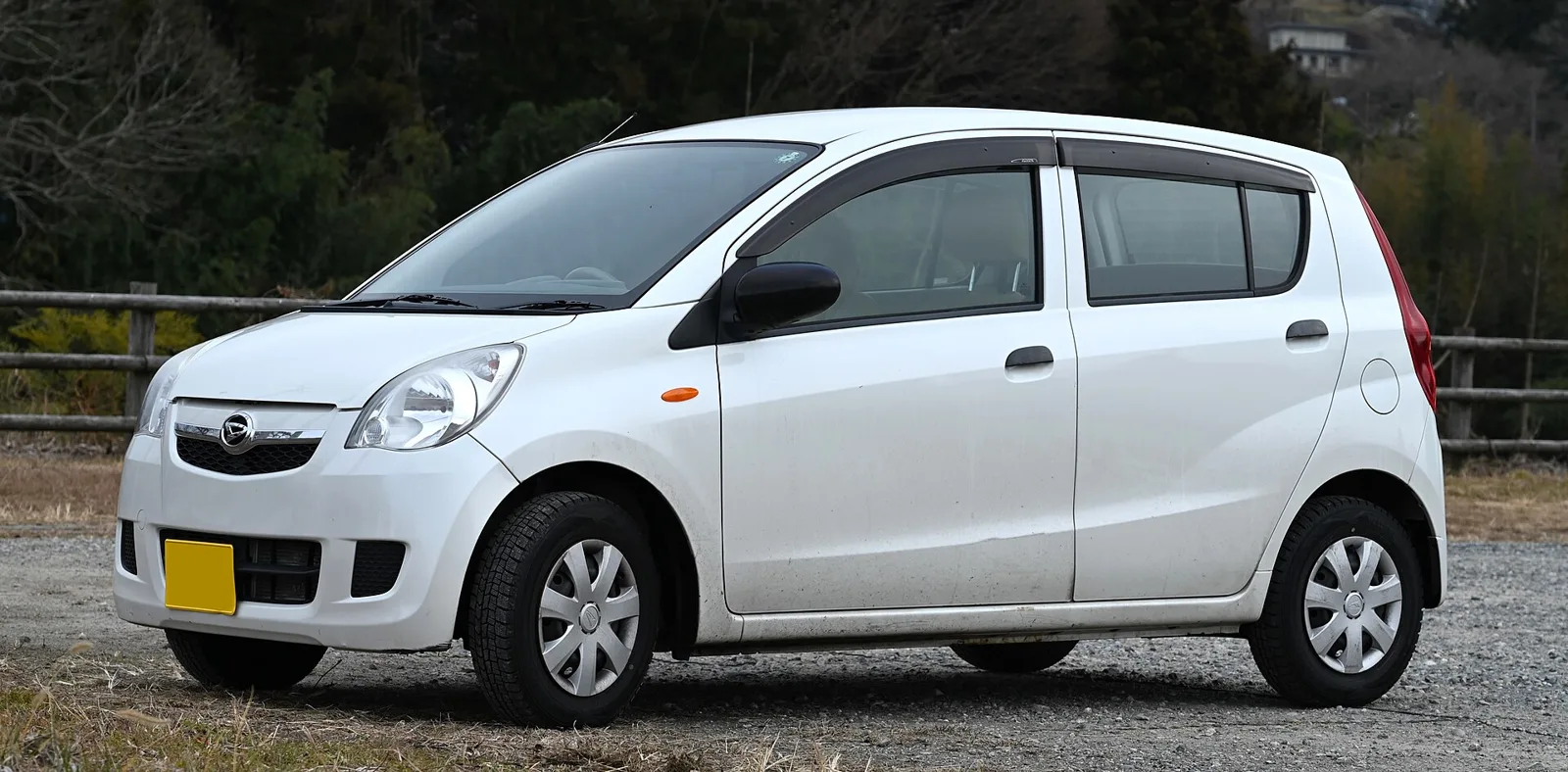
Japan's Mira and Italy's Panda both reached the road in 1980, and European testers put the little Daihatsu beside the Panda 30.
The Daihatsu Mira, a Japanese kei car, first appeared in June 1980 as the commercial sibling of the Cuore, the same year Fiat's Panda debuted at Geneva. European testers praised the Cuore's refinement and set it against the Panda 30. Export Miras later grew to 850 cc and 1000 cc engines.
A Japanese kei car and an Italian city car make an odd pairing, but the Daihatsu Mira and Fiat Panda arrived in the same year and were measured against each other by European testers. The Mira was tiny by any standard, built within Japan's kei rules, while the Panda was a fresh design from Italdesign. Their paths diverged quickly, with the Mira finding a second life as a pickup in Thailand.
Why are the Mira and Panda compared?
The Daihatsu Mira arrived in June 1980 as the commercial version of the Cuore, while Fiat's Panda made its debut at the Geneva Motor Show in March of the same year. European testers praised the 617 cc Cuore for its refinement and lively character, comparing it directly with the Panda 30 and the Citroen Visa Club. Both cars were small, cheap and built for city work.
The two were also aimed at different sorts of owner. The Mira was a kei car in Japan, subject to strict size and engine limits, while the Panda was a European design that Fiat expected to sell widely. Export versions of the Mira later grew to 850 cc and 1000 cc engines, so the Japanese formula was never the whole story.
Two small cars from 1980, one built for Japan's kei rules and one built for the crowded streets of Europe.
How did the Mira's two-cylinder engine work?
The first L55 Mira used a 547 cc two-cylinder AB10 unit, and the export-only L60 Cuore carried a 617 cc AD engine. Both had twin balancing shafts, which gave a smoothness and quietness close to a four-cylinder, and that was the feature testers singled out.
Cost was the weak point. A balance-shaft two-cylinder was said to cost as much to build as a conventional four, which made it an expensive way to be smooth. The bigger engine helped in export markets, where the car was pushed in the second half of 1982 as part of Daihatsu's drive for European sales.
The Quattroruote magazine commended the car's agile city manners. It was never going to be a motorway car, though, and the 30 PS (22 kW) big version had a top speed of 120 km/h (75 mph).
How did the Panda's engine line grow?
The Panda 30 used a 652 cc air-cooled two-cylinder borrowed from the Fiat 126, while the Panda 45 had a 903 cc water-cooled four from the Fiat 127. A third engine, an 843 cc unit from the 850, arrived in September 1982 and was first reserved for export to France, Belgium, Germany and the Netherlands.
The Panda 4x4 arrived in June 1983 with a 965 cc engine producing 48 bhp (36 kW). It was the first small transverse-engined production car with a four-wheel-drive system, which could be selected by hand and had an ultra-low first gear. Under normal conditions it started from second, and its fifth gear matched fourth in the standard Panda. Austrian firm Steyr-Puch supplied the drivetrain, which was fitted at the Termini Imerese plant.
The January 1986 facelift replaced the air-cooled twin with a 769 cc, 34 PS four from Fiat's FIRE family. The larger units became a 999 cc engine with 45 PS, and the 4x4 version reached 50 PS (37 kW). An April 1986 diesel with 37 PS (27 kW) completed the set.
What was the Panda's design brief?
Fiat's chief executive, Carlo De Benedetti, asked for a straightforward container with a spacious, spartan interior that weighed and cost no more than the Fiat 126 it replaced. Giorgetto Giugiaro and Aldo Mantovani of Italdesign worked on the project in 1976 under the working name Zero.
The design owed something to the Citroen 2CV and the Renault 4, both cheap and utilitarian cars. Giugiaro took inspiration for the seats from a folding lounge chair, and he planned the cargo area so that two 50-litre demijohns could fit alongside a full set of passengers.
Flexibility inside was a selling point. The rear seat had seven positions and could fold into a bed or a V, or come out altogether, and the cargo area held 280 litres or 1000 litres with the seat removed.
Production was delayed by union talks in January 1979, over Fiat's plan to move work from the Cassino, Sulmona and Termini Imerese plants. Prototypes had already been shown to buyers in Milan in February 1978, and the response cards asked about the working name Rustica.
Mira and Panda compared on paper
| Specification | Daihatsu Mira | Fiat Panda |
|---|---|---|
| First appearance | June 1980, replacing the Max Cuore | Geneva Motor Show, March 1980 |
| Body | Kei-type city car; van and sedan forms | Two-box, three-door hatchback |
| First-generation engine | 547 cc two-cylinder AB10; 617 cc AD in the L60 Cuore | 652 cc air-cooled two-cylinder (Panda 30) |
| Largest early engine | Export versions up to 850 cc and 1000 cc | 965 cc in the 4x4 (1983) |
| Turbo version | Mira Turbo, October 1983, 41 PS (30 kW), 130 km/h (81 mph) | not given |
| Four-wheel drive | Turbo and 4WD versions of the Mira van from October 1983 | Panda 4x4 from June 1983 |
| Second generation | L70 Mira and Cuore, August 1985 | Second-generation Panda, 2003 |
| Third generation | L200, March 1990 in Japan | Third-generation Panda, September 2011 |
| Top speed in tests | 120 km/h (75 mph) for the big 30 PS version | not given |
| Foreign pickups | Mira P1 pickup in Thailand, 1990 to 1995 | not given |
| Licensed copies | Norkis Legacy pickup in the Philippines, 2004 | SEAT Panda and Marbella, 1986 to 1998 |
What is a kei car, and where did the Mira fit?
For most Mira generations, Daihatsu offered two engine sizes: a smaller one to suit Japanese domestic rules of 550 or 660 cc, and a bigger one for export markets. The Mira was a kei-type city car in that mould, and it was the commercial version of the Cuore before it became a line of its own.
The name means look (at) in Spanish and goal or purpose in Latin. The Mira was the latest successor to a line of cars that began with the Daihatsu Fellow of 1966.
The commercial Mira had temporary rear seats that folded completely flat, and it could be recognised by the luggage rails fitted in its rear side windows. Passenger versions, the Cuore, had a proper rear seat and more comfortable equipment.
How did the Mira change through the 1980s?
Daihatsu lightly facelifted the L55 in May 1982 and dropped the Cuore part of the name, so it became simply the Mira. The sporty five-speed MGX, available only as a three-door, came with radial tyres, and the Daimatic autoclutch was replaced by a fully automatic two-speed unit at the same time.
The Mira Turbo arrived in October 1983, using a carburettor and a turbocharged version of the two-cylinder engine to produce 41 PS (30 kW) and a top speed of 130 km/h (81 mph). Daihatsu also added turbo and four-wheel drive versions of the Mira van that month.
The second-generation L70 Mira and Cuore appeared in August 1985 with a longer wheelbase and a new three-cylinder engine family. Export L80 versions used an 847 cc three-cylinder called the ED-10, and a Swiss 796 cc variant suited the four-horsepower tax band in some cantons.
When did the Cuore name disappear?
The Cuore nameplate was retired in Japan in April 1989, when the commodity tax was abolished. From then on the commercial and passenger models were called the Mira Van and Mira Sedan. Production of the L70 generation in Japan stopped when the 660 cc L200 arrived in March 1990.
The Mira Parco special edition was a long-running Japanese theme. The first arrived in February 1985 and was sold through 11 Parco stores nationwide, with 10-inch alloy wheels, front disc brakes and a special interior. Further Parco editions followed in 1988 and 1989, and the 1989 car added a turbo engine and four-wheel drive.
Giovanni Michelotti used the first-generation Cuore as the basis for a prototype called the Michelotti PAC, a personal automotive commuter car shown at Geneva in 1985.
How far did the Mira travel beyond Japan?
In 1980 the Cuore sold well in Argentina and Chile, with 4,300 cars shipped, but economic hardship in both countries ended those exports by 1982. Belgium sold the car as the Cuore 550 for the small engine and as the Cuore 623 or 625 depending on the bodywork.
Daihatsu's Thai arm built the L70 from late 1990 and added the Mira P1 pickup, which was made from 1990 to 1995. The pickup proved so popular that Daihatsu's Thai sales rose by 50%. The Mira P4 followed as a roofed four-seater wagon, and an extended-cab version called the Miracab appeared.
The Thai car was too long to be a true kei car, so later examples used the 850 cc engine seen in other export markets. The 1997 Asian financial crisis then ended Daihatsu's Thai car business, with sales falling from 4,000 in 1995 to 160 in 1997. Production stopped in February 1998.
In 2004 Norkis, a Philippine company better known as an assembler and distributor of Yamaha motorcycles, revived the Mira pickup. The vehicles were reconditioned from used imports and sold as the Legacy, with a later 659 cc engine that could also run on LPG. The original two-seat pickup weighed 900 kg (1,984 lb) and measured 3,630 mm (143 in) long.
In Australia the two-seater version was sold as the Handivan and later as the Handi.
What did the L200 bring to the Mira?
The L200 was the third and most popular Mira generation, launched in spring 1990 with the Mira badge in Japan. The Cuore name was dropped there, and the export version was coded L201 and usually sold as the Cuore.
The turbocharged TR-XX was the top model, with a fuel-injected 12-valve engine making 64 PS (47 kW). A part-time four-wheel drive version called the L210 was offered in V or S trim, and the L220 was the only kei car with mechanical four-wheel steering. In November 1990 the X-4 added permanent all-wheel drive, with a sales target of about 700 cars a month.
A facelift from August 1992 gave the range rounder lights and bumpers, and the new RV-4 rode the Japanese fashion for recreational vehicles with raised suspension, a roof rack and a bullbar.
How did the Panda's later generations develop?
The second-generation Panda arrived in 2003 as a five-door hatchback styled by Giuliano Biasio of Bertone, and it took the European Car of the Year title in 2004. The third generation was shown at Frankfurt in September 2011 and is still made at Pomigliano d'Arco in Italy.
Over roughly four decades Panda production has passed 7.8 million, and about 4.5 million of those were first-generation cars. Autocar ranked the first generation 29th among the most long-lived single generations of any car, after its 23-year run ended in 2003.
SEAT of Spain sold a licensed variation of the first Panda, first as the Panda and later as the Marbella, from 1986 to 1998.