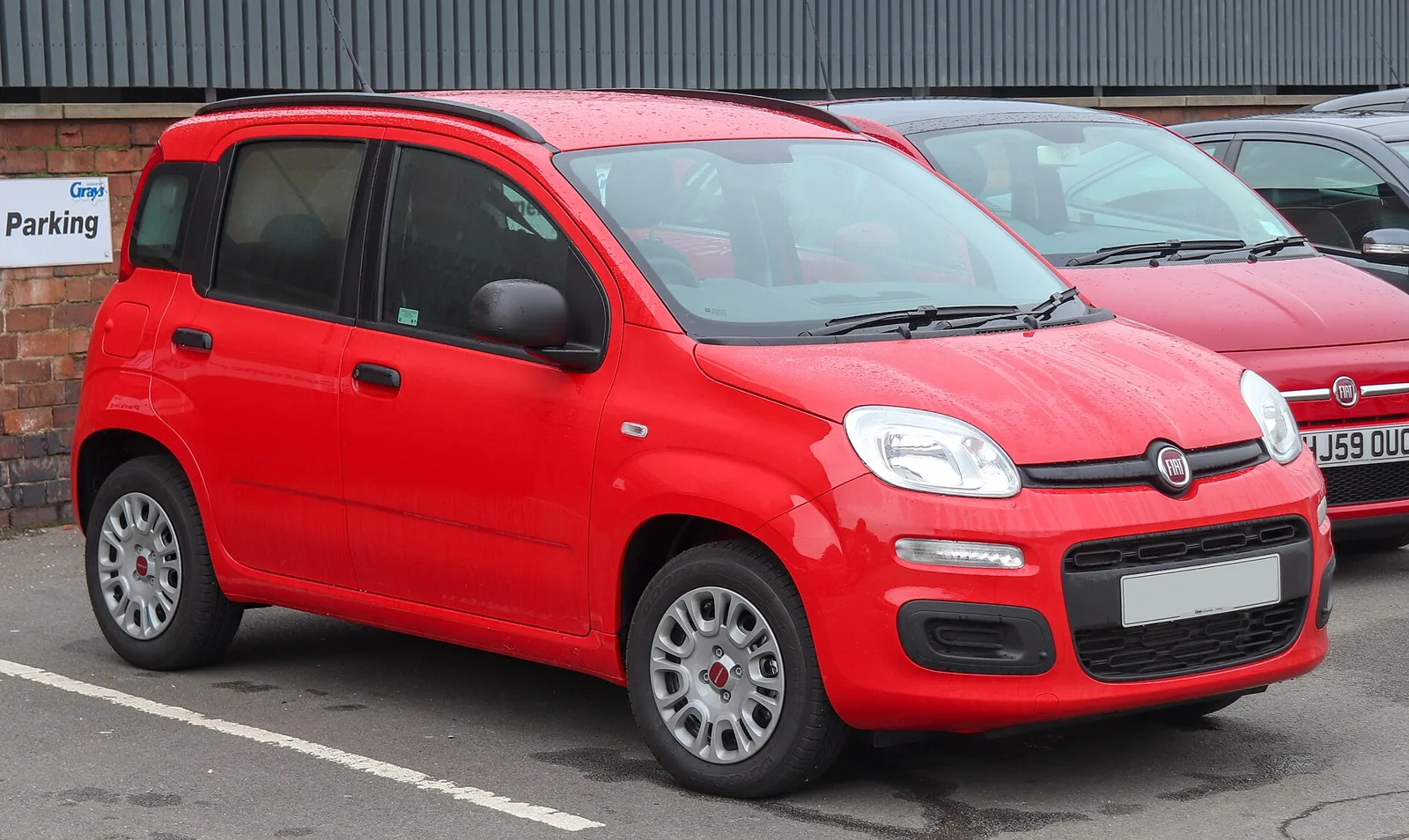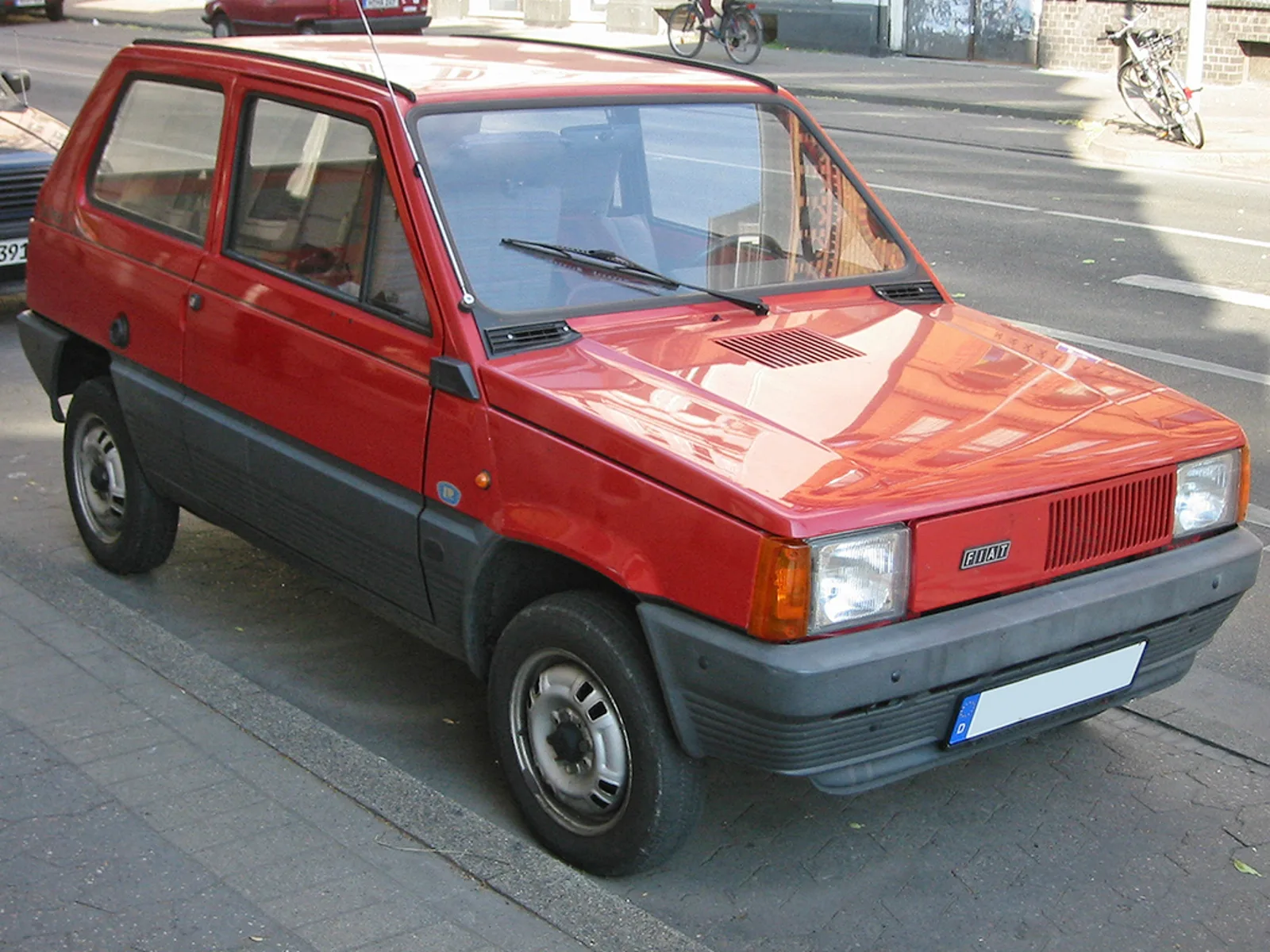
Italdesign styled the 1980 Panda as a roomy, clever alternative to French rivals, but a fight over where to build it held up its launch.
The first-generation Fiat Panda was a supermini styled by Italdesign and built from 1980 until 2003. Its interior design, with reclining seats and a rear hammock, won over young buyers, while the Panda 30 and 45 used a 652 cc twin and a 903 cc four-cylinder engine. A trade union dispute over where to build it delayed production.
The first Fiat Panda was styled by Italdesign, and its road to the showroom was anything but smooth. A bitter labour dispute over where to build it held production back, and the car went on pre-order in February 1980.
Why did the Panda take so long to reach production?
A bitter union fight began in January 1979. The FLM wanted FIAT to move the new models to central and southern Italy, to Cassino, Sulmona or Termini Imerese, rather than keep them in Turin and Desio. The row eventually settled on production at Termini Imerese and at the Autobianchi works in Desio, once the 126 line was dismantled.
The dispute turned violent at times. On 10 November 1979, about twenty pre-production Pandas were set alight at the Desio plant. Pre-orders followed in February 1980, with prices sharply higher than the 1978 estimate, because of the rapid currency devaluation of the period and a fresh oil crisis.
A small car designed around its interior, where the seats folded into a bed and the flat glass became a talking point.
Who styled the first Panda?
Italdesign, the newly founded studio of Giorgetto Giugiaro and Aldo Mantovani, produced the look in a few weeks in the summer of 1976. FIAT's technical office then took on the front-wheel-drive chassis, coded Progetto 141, which proved complex because early plans called for both 126 and 127 engines in bodies with three and five doors.
The working title Zero paid homage to an old FIAT model. The official name, Panda, came from the marketing department, which chose a fanciful name over the project code, continuing a naming pattern begun with the Ritmo in 1978.
Early prototypes were shown in secret in February 1978 at Novegro park, behind a strict security cordon. Invited customers and dealers filled in a multiple-choice questionnaire on the exterior, interior, spaciousness, finish, controls and the provisional name Rustica. The engine was listed as 650 cc, and the hypothetical price as 2,800,000 lire.
Historically, the design repeated a layout that Oreste Lardone had devised for a Fiat 500 prototype in 1931. That prototype was shelved after a minor accident in development, on the orders of Giovanni Agnelli.
What engines did the first Panda use?
The Panda 30 used a 652 cc (39.8 cu in) air-cooled twin derived from the Fiat 126. The Panda 45 used a water-cooled 903 cc (55.1 cu in) four from the Fiat 127. An 843 cc (51.4 cu in) unit from the Fiat 850 saloon later became the Panda 34, intended solely for export to countries where the 30's twin was considered inadequate. The first Panda thus borrowed its engines from the two FIAT models it sat between.
Those engines were not what sold the car. The interior was. Reclining front seats and a rear hammock, which could be folded flat to a single surface from the steering wheel to the tailgate, let young buyers turn the car into an improvised bed.
Giugiaro framed the load requirement around a practical example: two 50-litre demijohns of wine had to fit in the boot with the rear seat folded. Many FIAT executives kept second homes in the Langhe hills, and they carried wine from there back to Turin.
Why was the glass such a problem?
The first Panda used flat glass in its side and rear windows, and in the windscreen as well. That saved mass and cost on the side and rear glass. A flat windscreen, however, had to be laminated to meet the rules, and without curvature to hold its shape, the laminated glass often developed surface waves.
The waviness arose in a very high percentage of pieces, and faulty ones were scrapped. The problem was eventually solved. Giugiaro complained about the flat glass, feeling that it disguised complexity as simplicity and marked a step backwards in car design.
How did the sunroof and five-speed Super arrive?
The Panda 45 Tetto Apribile, a sunroof version, debuted in September 1981 with a two-section opening: 92x44 cm at the front and 92x67 cm at the rear. At the Paris Motor Show in September 1982 the Panda 45 Super arrived with a five-speed gearbox and a new black plastic grille with five chrome diagonal bars.
The sunroof became available on the 30 from March 1982, and the 30 Super joined the trim list in February 1983. The Super also brought small changes to the trim finishes.
What did the 4x4 bring to the range?
An Austrian engineering firm developed a complete four-wheel-drive system for the Panda 4x4, known as type 153. The car was launched in June 1983 with a 965 cc (58.9 cu in) engine producing 48 PS (47 hp), derived from the Autobianchi A112 unit. Its components were assembled onto a reinforced body at Termini Imerese.
Four-wheel drive was selected by hand, with a low first gear, and in normal conditions the car started from second. The 4x4 weighed 740 kg (1,631 lb), covered the standing kilometre in 38.8 seconds and reached 135 km/h (84 mph). It was the first small transverse-engined car with a four-wheel-drive system. Later the Sisley took the 4x4 in a more luxurious direction, with beige seats and a dedicated instrument panel.
What changed with the 1986 Supernova?
In January 1986 the Panda Supernova replaced the 652 cc and 903 cc engines with new FIRE four-cylinders of 769 cc (46.9 cu in) and 999 cc (61.0 cu in). Their outputs were 34 PS (33.5 hp) and 45 PS (44 hp), and both were liquid-cooled with a single overhead camshaft. The 652 cc twin they replaced had been air-cooled. The 4x4 reached 50 PS (49 hp).
The rear suspension changed from leaf springs to a curved, interconnected axle known as the Omega axle, already used on the Y10. The four-wheel-drive version kept leaf springs at the back. The Italian range had five versions: three 750s, a 1000 Super and the 4x4.
What else changed on the 1986 Supernova?
The body was strengthened, the interior received improvements, and the rear track was widened with a change to the flank. The number plate moved down to the bumper, and the range was broadened for export markets.
The full range, including the export versions, ran from the 750 L to the 4x4 i.e. and a D variant, a long list that shows how many options the carmaker offered.
How did the commercial version differ from the car?
The commercial version built for SIP and ENEL telephone and electricity services was a two-seater with a fixed partition and a notional 810 litres of load volume. Its tailgate was replaced by a grey plastic roller shutter with a small window, and its rear side windows became rigid doors that opened from outside. The later van kept the idea, in a different colour.
The van introduced in April 1986 offered 750 or 810 litres in petrol and diesel forms. Carrozzeria Maggiora, a Turin coachbuilder active since 1925, developed it, and the firm prototyped the van using hand-beaten parts, drawing the construction plans only once the car existed.
What diesel and van versions arrived in 1986?
In April 1986 a 1301 cc (79.4 cu in) diesel joined the range, breathing naturally and rated at 37 PS (36 hp) at 4,000 rpm. It was a detuned version of the engine used in the 127 and Uno, which made 45 PS at 5,000 rpm, and it was intended to replace the ageing 127 D. It normally had a five-speed gearbox and was available only in the L trim.
What was special about the interior?
The interior drew the most attention from the Panda's creators, who kept it simple and useful. Storage bins, grouped instrumentation and few pretentious finishes let the car suit young owners.
Front seats reclined, and on first-series cars the rear hammock was also available split in two parts, although the awkward central support that came with the split was later eliminated.
How was the Panda received?
The Panda came second in the Car of the Year award the year after its launch, after strong pre-orders. The production lines could not keep up with the demand, and delivery times stretched towards a year.
Why did the Panda's engines and interior matter?
Those engines were a means to an end. The car's appeal rested on how its cabin and seating worked for young owners, which is why the interior received such particular care in its design.
How fast did the Panda sell?
Demand was strong from the start. More than 70,000 orders came in during the two months after pre-orders opened, and delivery times nearly reached a year. The millionth Panda left the line in July 1984, and 1,400,000 examples of all versions had been built by the end of 1985.
What did the 1984 changes do to the range?
In November 1984 the trims were renamed L, CL and S, and a new grille with five diagonal bars spread across the range. Emergency lights came on every version except the Panda 45 CL and the 34, and the Panda 34 could not have any optional accessories.
What special editions were offered?
The Panda 30 College of March 1985 had two-tone bodywork, metallic paint and blue or brown chenille interiors. The Nuova Panda 4x4 of September 1985 was a styling special produced in 5,000 examples, in Alpine Green, Corfu White or metallic light grey, with a matt black roof and a bull bar with lamps.
The 4x4 special kept its 48 DIN PS engine, so the changes were cosmetic: a roof rack, a sticker livery and red seat belts. The Panda 45 S V.I.P. was the British version of the College.
What did the Elettra and Selecta bring in 1990?
In 1990 the Panda Elettra arrived in Italy alongside the first catalytic-converter Pandas, which used the 999 cc FIRE engine with electronic injection. The Selecta, with a continuously variable transmission, was presented at the Paris Motor Show in October 1990.
The Selecta went on sale the following year with a carburettor version of the 999 cc FIRE engine. Later it became catalytic, with the 1108 cc FIRE unit and electronic injection.
Which later Pandas followed the Young and Dance?
The Panda Young of 1987 used the older 769 cc pushrod engine to cut costs, and the Dance followed in 1989 with a 903 cc pushrod unit. At the end of 1988 the diesel had been offered only in the trim matching the CL, with an orange stripe on the tailgate, and in 1989 the diesel went out of production. The Italia '90 World Cup edition arrived in 1990, and the Selecta, with a continuously variable transmission, went on sale in 1991.
The 1991 restyling changed the grille, aligning it with the Tipo, and in 1992 and 1993 the Euro 1 rules removed the two uncatalysed 750 engines. The Panda 900 then received a 899 cc injected engine. By then the car had been on sale for more than a decade, and the changes were mostly to its engines.
Specifications at a glance
| Specification | Value |
|---|---|
| Years built | 1980 to 2003 |
| Engines, first series | 652 cc twin (Panda 30), 843 cc four (Panda 34), 903 cc four (Panda 45) |
| Sunroof | 92x44 cm front, 92x67 cm rear |
| Panda 4x4 engine | 965 cc (58.9 cu in), 48 PS (47 hp) |
| Panda 4x4 weight | 740 kg (1,631 lb) |
| Standing kilometre (4x4) | 38.8 seconds |
| Top speed (4x4) | 135 km/h (84 mph) |
| Millionth Panda | July 1984 |
| Total by late 1985 | 1,400,000 Pandas, all versions |