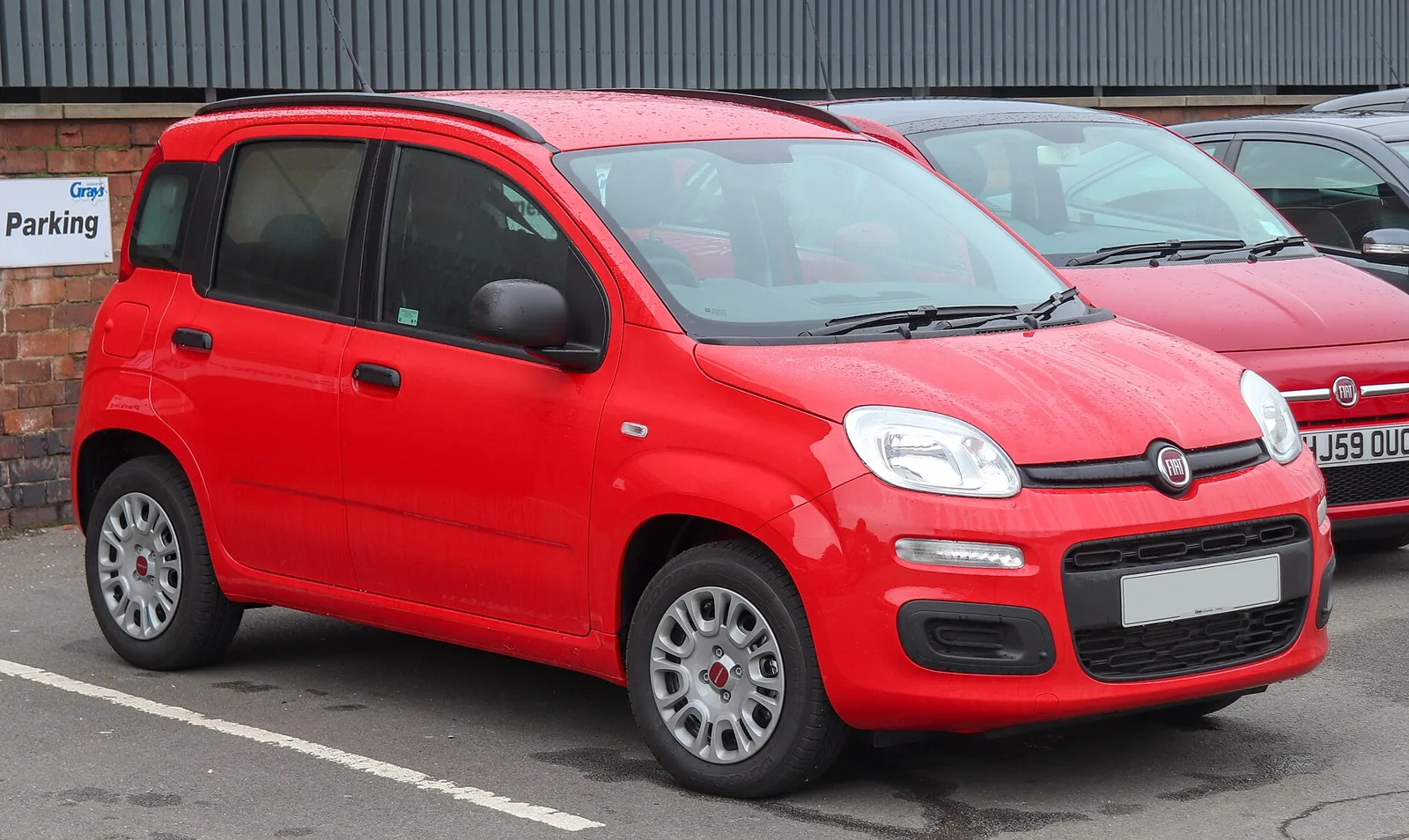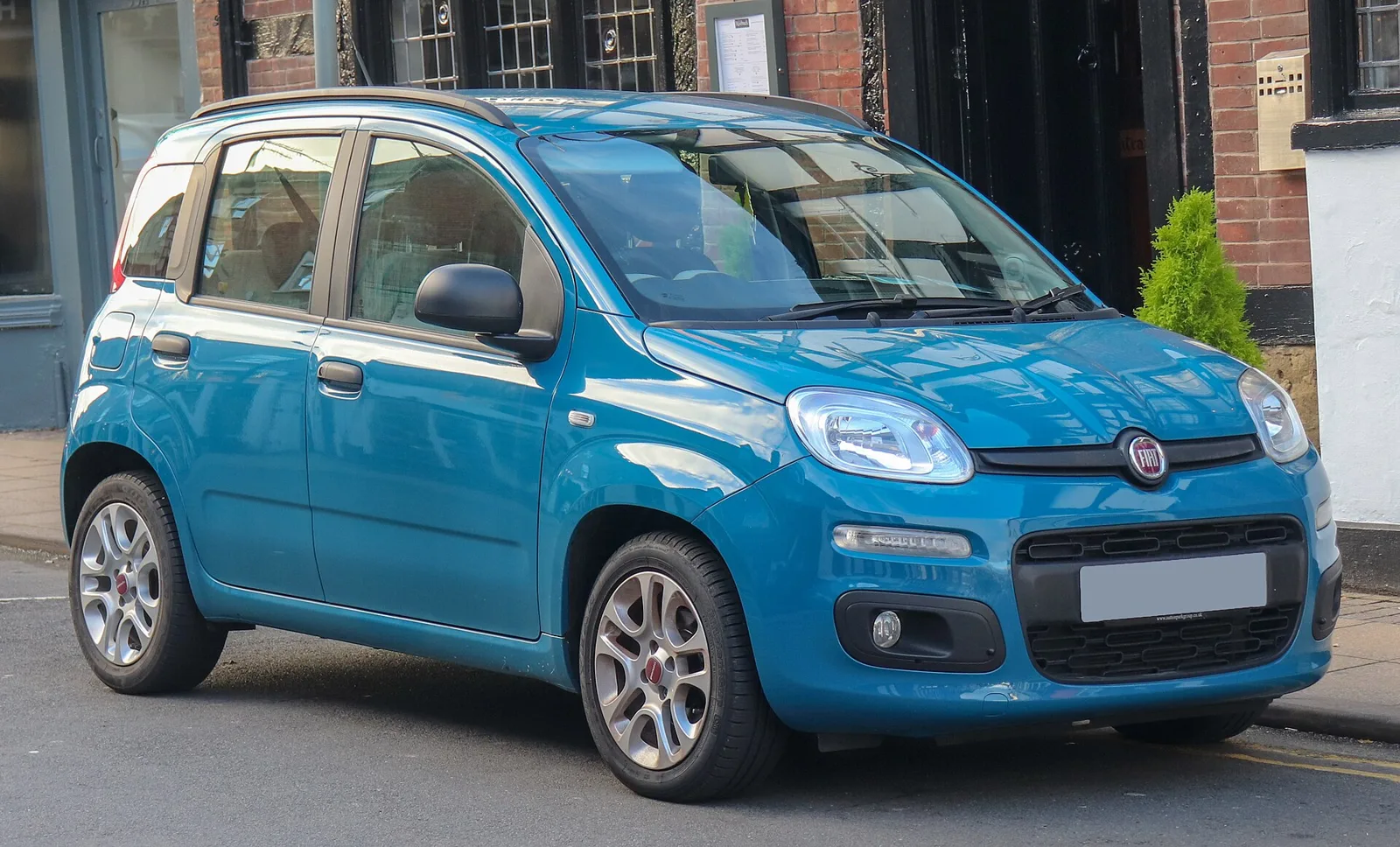
A city car line begun in 1980 and carried into a third generation, now sold in 2024 under a new name and a safety update.
The Fiat Panda began in 1980 as a rugged city car designed by Giorgetto Giugiaro. The third generation arrived in 2012, gained 4x4, Cross and hybrid versions, was renamed Pandina in 2024, and sold 125,000 units in Europe in 2023, the 25th best-selling car overall.
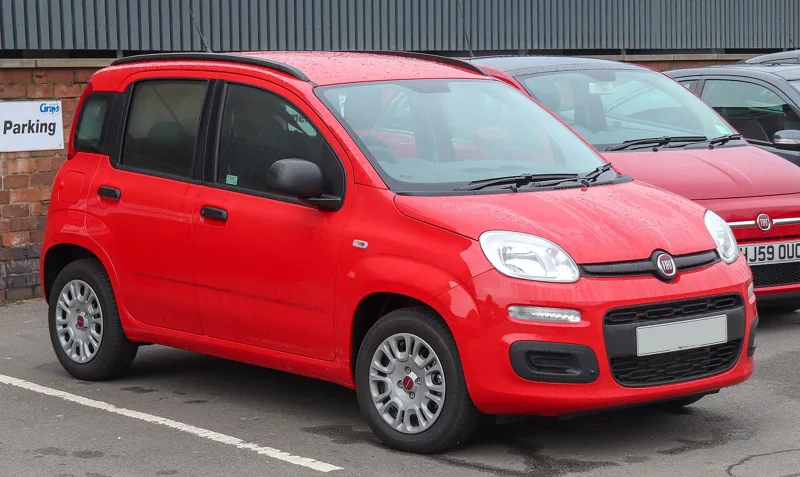
The Fiat Panda III, renamed Pandina in February 2024, is the third generation of a small car that began in 1980 and still sold 125,000 units in Europe in 2023. It has been built since 2011 at Pomigliano d'Arco, near Naples, and it carries on the first Panda's idea of a simple, rugged runabout.
Where did the Panda come from?
Giorgetto Giugiaro drew the Panda in 1976, after Fiat's chief, Carlo De Benedetti, asked for it. The car was Italy's answer to the Renault 4L: plain, tough and happy on rough tracks, and it was first known as Rustica. The name Panda came from Empanda, a Roman goddess who looked after guests and travellers.
Giugiaro was a former Fiat designer who had drawn the Fiat Dino and then set up on his own. Just before the Panda he had styled the Volkswagen Golf I, which appeared in 1974. The tailgate was a broad, almost vertical square, and the 3.38-metre body carried five people.
Under the bonnet sat a 903 cc four-cylinder in-line unit making 45 PS (33 kW; 44 hp), carried over from the Fiat 127. The car went on sale in February 1980 and stayed in the catalogue for 23 years, selling 4.5 million copies.
A city car line begun in 1980, now carried into 2024 under a new name and a safety update.
What replaced the original Panda?
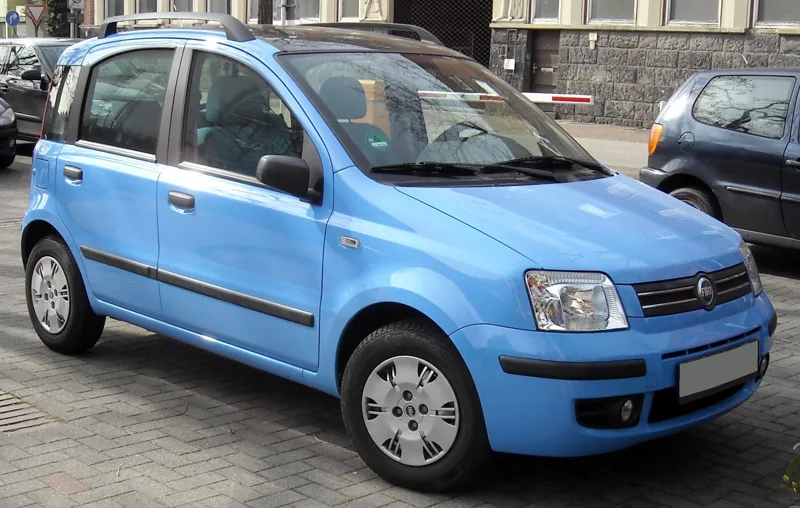
The second Panda was an entirely new car that took over from both the first Panda and the Fiat Seicento. Gingo was the early project name, dropped to avoid confusion with the Twingo, so in 2003 the model returned to the Panda badge as the Fiat Panda II. Giuliano Biasio at Bertone was responsible for its look.
Its raised body owed something to the Multipla, and Roberto Giolito also had a hand in the Panda II. A concept named Fiat Simba had previewed it at the Bologna show in 2002, and that styling was reused with few changes on later models.
Operations shifted from Poland to Pomigliano d'Arco near Naples, a plant that had long been dedicated to Alfa Romeo models. Staff were asked in a referendum whether they would alter their contracts to raise output to 350,000 cars. Lacking agreement, Fiat kept open the option of building the Panda in Poland.
Production stopped for four months in 2008 to replace the tooling and train staff. The Alfa Romeo 147 and GT ended in August 2010 to make room, and the Giulietta was built at Cassino instead, alongside other Fiat and Lancia models.
How was the Panda III developed?
The third-generation Panda was first worked on with ItalDesign, Giugiaro's company. That firm was sold to Volkswagen in 2010, which forced Fiat to bring the work home to keep its designs private. The Fiat Style Centre, under Roberto Giolito, finished the car, and it went on sale on 8 March 2012.
Frankfurt saw the Panda III in September 2011. Despite a bleak economy, the launch slipped by only a few months. The car rode on a rebuilt Fiat 500 II platform, specifically the version sold in America from 2011.
A few of the first car's ideas carried over, such as the dashboard with a generous open cubby in front of the passenger. Weight rose 12%, reaching 940 kg (2,072 lb) from 840 kg (1,852 lb), as the car grew by 11 cm (4.3 in) in length, 5 cm (2.0 in) in width and 1.0 cm (0.4 in) in height.
Which engines did the Panda III offer?
At launch the Panda III offered three engines: a 1.2 FIRE petrol with 69 PS (51 kW; 68 hp), a two-cylinder TwinAir petrol without a turbo, and a diesel. The diesel was a 1,248 cc Multijet II rated at 75 PS (55 kW; 74 hp), rising to 95 PS (70 kW; 94 hp) in the 4x4.
| Engine | Capacity | Maximum power |
|---|---|---|
| FIRE 1.2 petrol, four cylinders | 1,242 cc (75.8 cu in) | 69 PS (51 kW; 68 hp) |
| TwinAir petrol, two cylinders, naturally aspirated | 964 cc (58.8 cu in) | 65 PS (48 kW; 64 hp) |
| Multijet II diesel | 1,248 cc (76.2 cu in) | 75 PS (55 kW; 74 hp), with 95 PS (70 kW; 94 hp) in the four-wheel-drive version |
| Gearboxes in the 2017 range | Five-speed manual or Dualogic automatic | Not applicable |
Both petrol engines were later to be offered in bi-fuel form, running on petrol or on methane or LPG.
What were the 4x4 and Cross versions?
Four-wheel drive returned to the Panda at the end of 2012, with real off-road capability. It was offered with the 0.9 TwinAir petrol at 85 PS (63 kW; 84 hp) or the 1.3 MultiJet diesel at 75 PS (55 kW; 74 hp), and the Cross body arrived in late 2014.
The Cross body raised ground clearance, added front protection and improved off-road ability. The engines matched the regular car, with the diesel's output raised to 95 PS (70 kW; 94 hp), while the petrol version received a six-speed manual.
The Panda Trekking, sold from 2012 to 2016, was a two-wheel-drive car that copied the 4x4's look. It used a braking device called Traction+, which slows the wheel with the least grip so that torque passes to the other wheel. In 2017 the Panda City Cross arrived as a two-wheel-drive car with the Cross body, alongside the Panda Wild 4x4.
Four-wheel-drive production stopped in May 2022 because parts were short, and Fiat was hoping to bring the model back in early 2023. In France the Cross and City Cross dropped the Panda name, though elsewhere they kept it, and by the end of 2022 the City Cross outside France had become Panda Cross again.
What changed with the Pandina and the GSR2 rules?
Fiat unveiled the Pandina on 29 February 2024, a date chosen to echo the 1980 presentation of the original Panda. It was a unified version based on the Panda Cross, and it carried a safety update to meet the European GSR2 rules, which apply to all cars built from 7 July 2024.
The Pandina label moved to the third-generation Panda Cross, which surrendered the Panda name to a new hybrid or electric car. That car, based on the Citroen C3 in its fourth generation, is built in Serbia and sold as the Grande Panda. Larger, taller, heavier and much dearer, it has little in common with Fiat's traditions, and Stellantis built it on a streamlined PSA CMP base.
The Pandina comes in two-tone paint, with a choice of Italia Blue, Passion Red, Cinema Black or Gelato White, a black roof and some Positano yellow accents. Its dashboard gets a white finish, the name appears on the flanks, the centre rear light and the front seats, and a panda head decorates the wheel arches.
The Pandina and the City version both gain a 7-inch digital gauge cluster and a new infotainment screen. The European GSR2 rules brought advanced emergency braking and lane-keeping assistance. The Panda III continues to be made in Italy and sold worldwide as the Panda Classic, at least until 2029, although in Europe Stellantis restricted it to ten countries.
How do the Panda Hybrid and the FireFly engine work?
The Panda Hybrid arrived in 2020 with a micro-hybrid system built around the new FireFly 1.0, a naturally aspirated three-cylinder engine rated at 70 PS (51 kW; 69 hp). Fiat said it cut consumption and emissions by 30% compared with the 1.2 FIRE, and list prices started at 10,900 euros for cars delivered from 10 January 2020.
The FireFly has 999 cc (61.0 cu in) and two valves per cylinder, with one overhead camshaft and continuous variable phasing. It runs a compression ratio of 12:1 and is built in light alloy weighing 77 kg (170 lb). A quiet chain replaced the timing belt to reduce maintenance.
The belt-driven starter-alternator, rated at 3.6 kW (4.8 hp), captures energy while braking and coasting and stores it in an 11 Ah lithium-ion battery beneath the driver's seat. It restarts the engine, supports acceleration, and shuts the engine off below 30 km/h when the gear lever is in neutral, with the auxiliary battery supplying power while coasting.
How did Fiat move into hybrid and electric cars?
Sergio Marchionne, who died in 2018, had long resisted putting electric models on the world market. Under the new leadership, studies of electric and hybrid engines that had begun years earlier were carried through to completion.
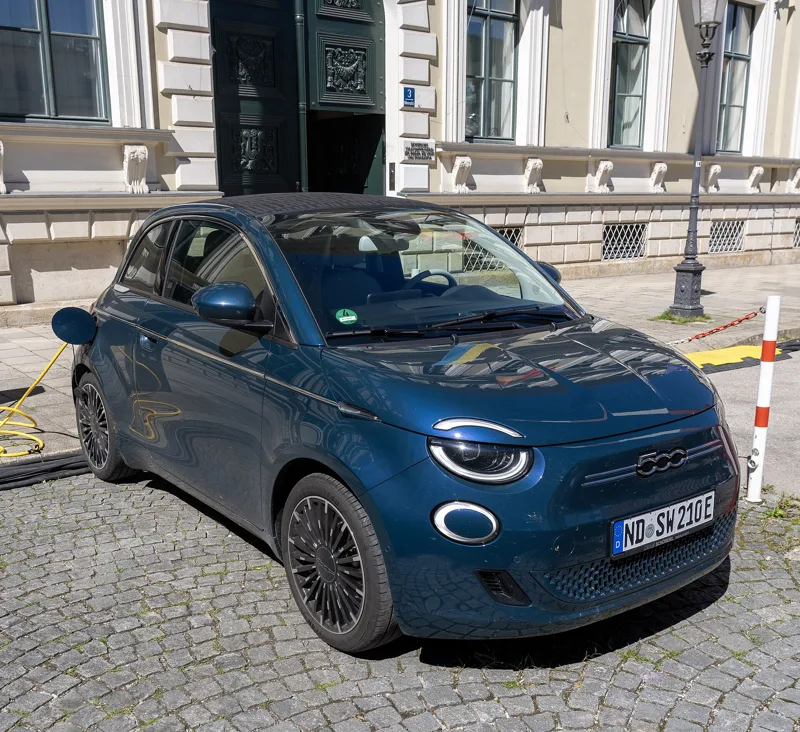
Fiat had already sold its first 100% electric car in series, the Panda Elettra, from February 1990. A new electric Fiat 500 was previewed for the Geneva show in early March 2020 and built at Mirafiori in Turin. The hybrid Panda's launch was described as an important stage in Fiat's history.
How safe is the Panda?
The 2012 Panda won 4 stars in Euro NCAP crash tests. Since 2009 an electronic stability control system has been needed to reach 5 stars, and the basic Panda had offered ESP only as an option before it became standard.
In November 2013 Fiat won Euro NCAP's Advanced Reward for City Brake Control, a system fitted as standard on the Panda and the 500L. It uses a lidar sensor mounted high on the windscreen to scan the road 10 to 12 metres ahead, and it brakes automatically below 30 km/h.
If a collision looms and the driver fails to respond, the system charges the brakes in advance and increases hydraulic assistance. The automatic braking applies a deceleration of 10 m/s2 between 5 and 20 km/h and 6 m/s2 between 20 and 30 km/h. Should the driver touch the brake even moments before impact, the system tunes the braking to avert the crash.
In 2018 Euro NCAP reworked its scoring. Pedestrian tests, which the Panda was never designed for, took away many points, even though occupant safety had not changed. In 2019 the basic entry-level Panda, the only small city car tested under the new rules, earned no stars in the 2018 tests.
What did the Natural Power 4x4 add?
The Natural Power version of the 4x4 let the driver choose the drive mode from the cabin, which made it stand out from the rest of the line-up. Its all-wheel-drive system uses Torque on demand with two differentials, and an electronically lockable differential, ELD, forms part of the stability system.
The lever offers three positions. Auto lets the computer choose two- or four-wheel drive from sensor readings. Lock holds 4x4 up to 50 km/h, engages ELD and disables the traction control. Hill Descent helps keep the speed steady on downhill runs.
The Natural Power 4x4 came with City Brake Control as standard, a system that had until then been an option on the Fiat 500L.
Where was the Panda built and where is it most common?
Panda output came back to Italy, at Pomigliano d'Arco, where the line could manage 1,000 units daily. On Pantelleria, an island off Sicily, over 80% of vehicles on the road are Fiat Pandas, the densest concentration anywhere. That return fitted Fiat's wider effort to strengthen its national roots.
On 17 November 2017 Fiat celebrated the millionth unit of this third-generation Panda, a City Cross. The 2017 line-up spanned five engines, six trims, two drive modes and two gearboxes, and the car was reported as Europe's best-selling vehicle in its class that year.
Did the Panda take part in rallies?
The Panda has entered several rallies. The list includes the 2017 Paris-Dakar, the 2015 Rally of Sweden on snow, and the amateur Panda Raid in 2017 and 2019, which crossed Morocco across 3,000 km, with between 250 and 300 taking part.