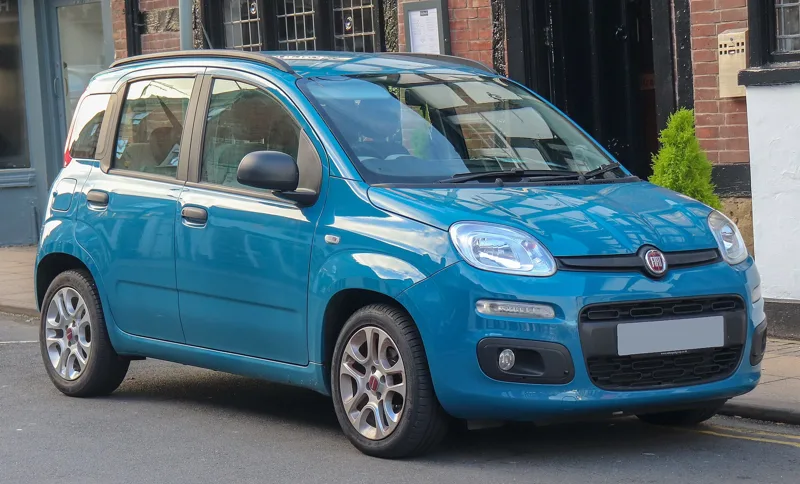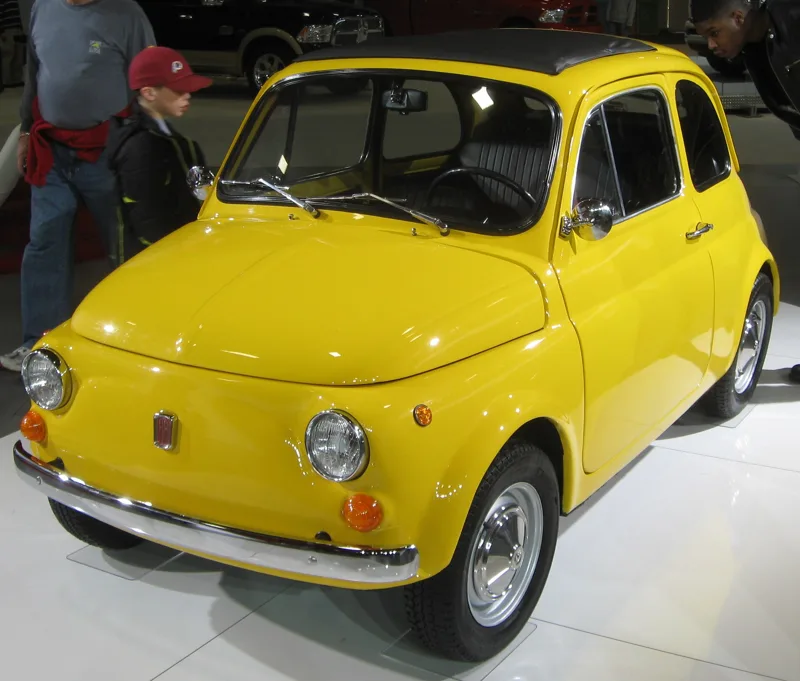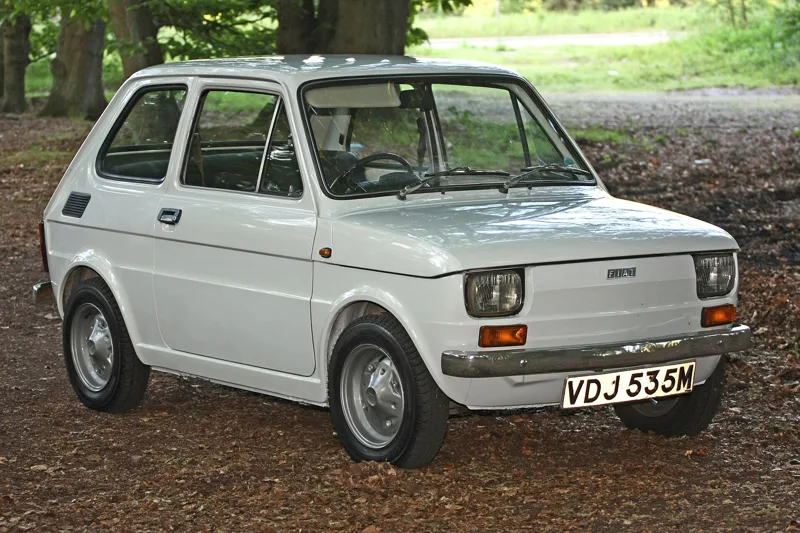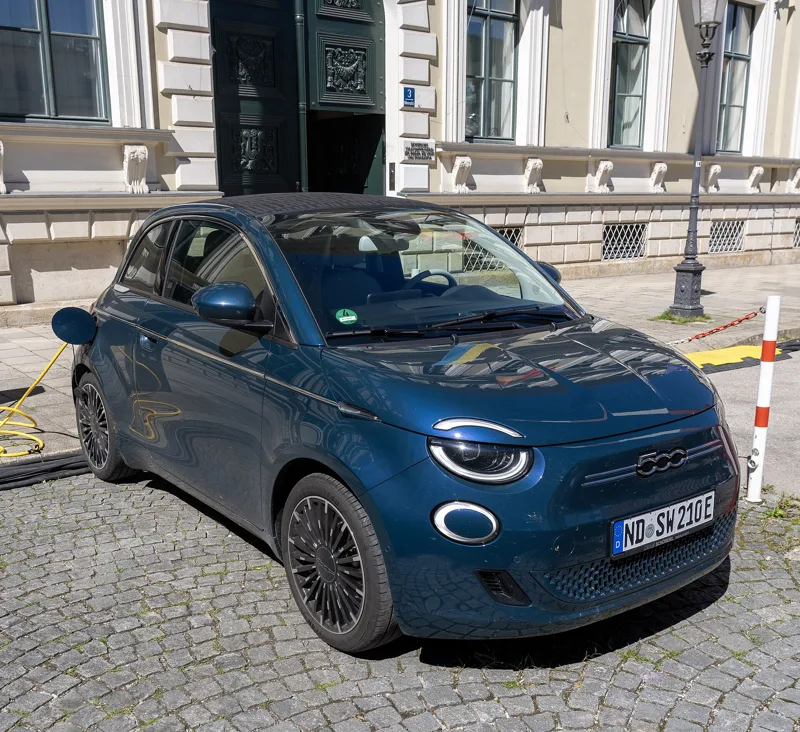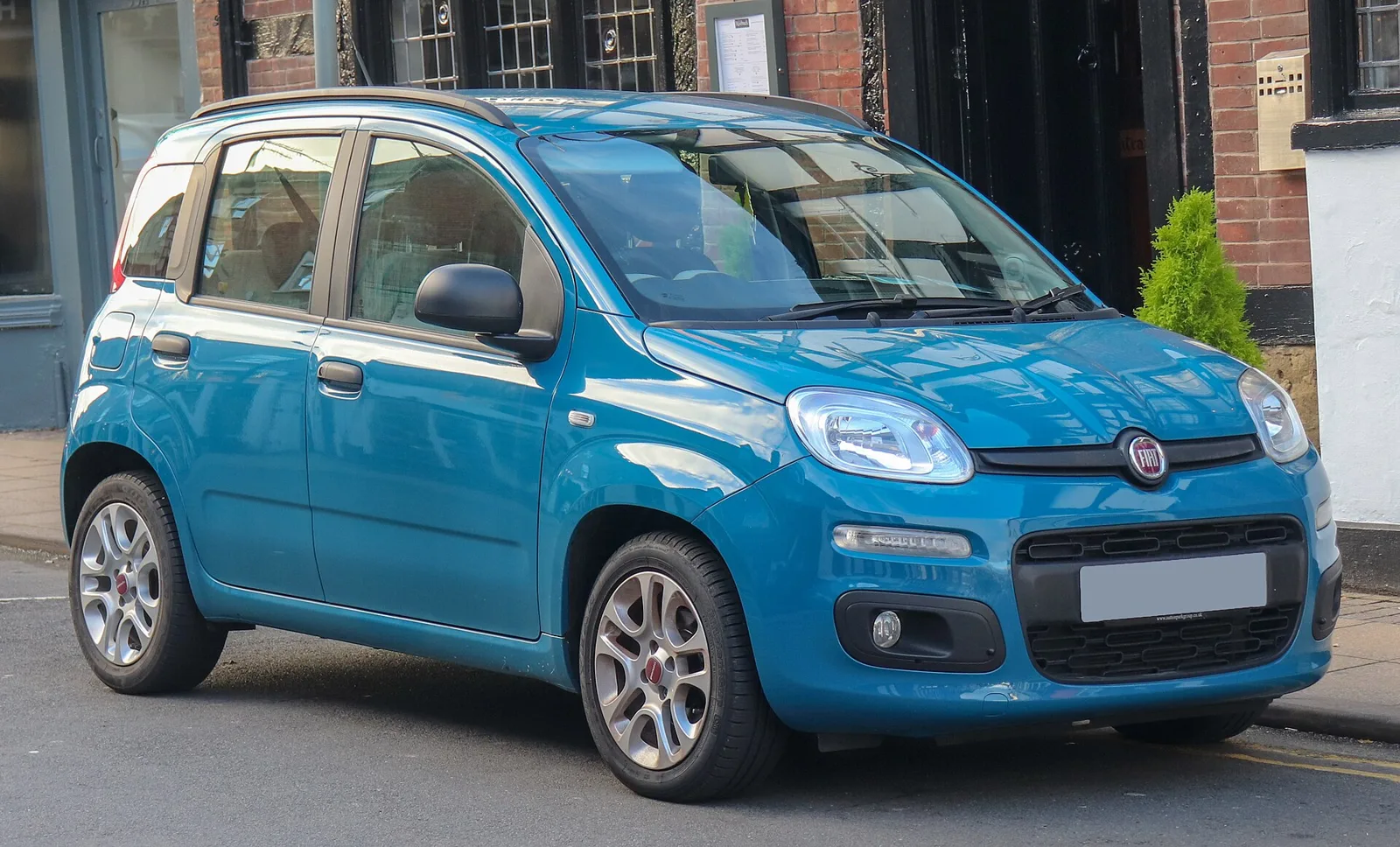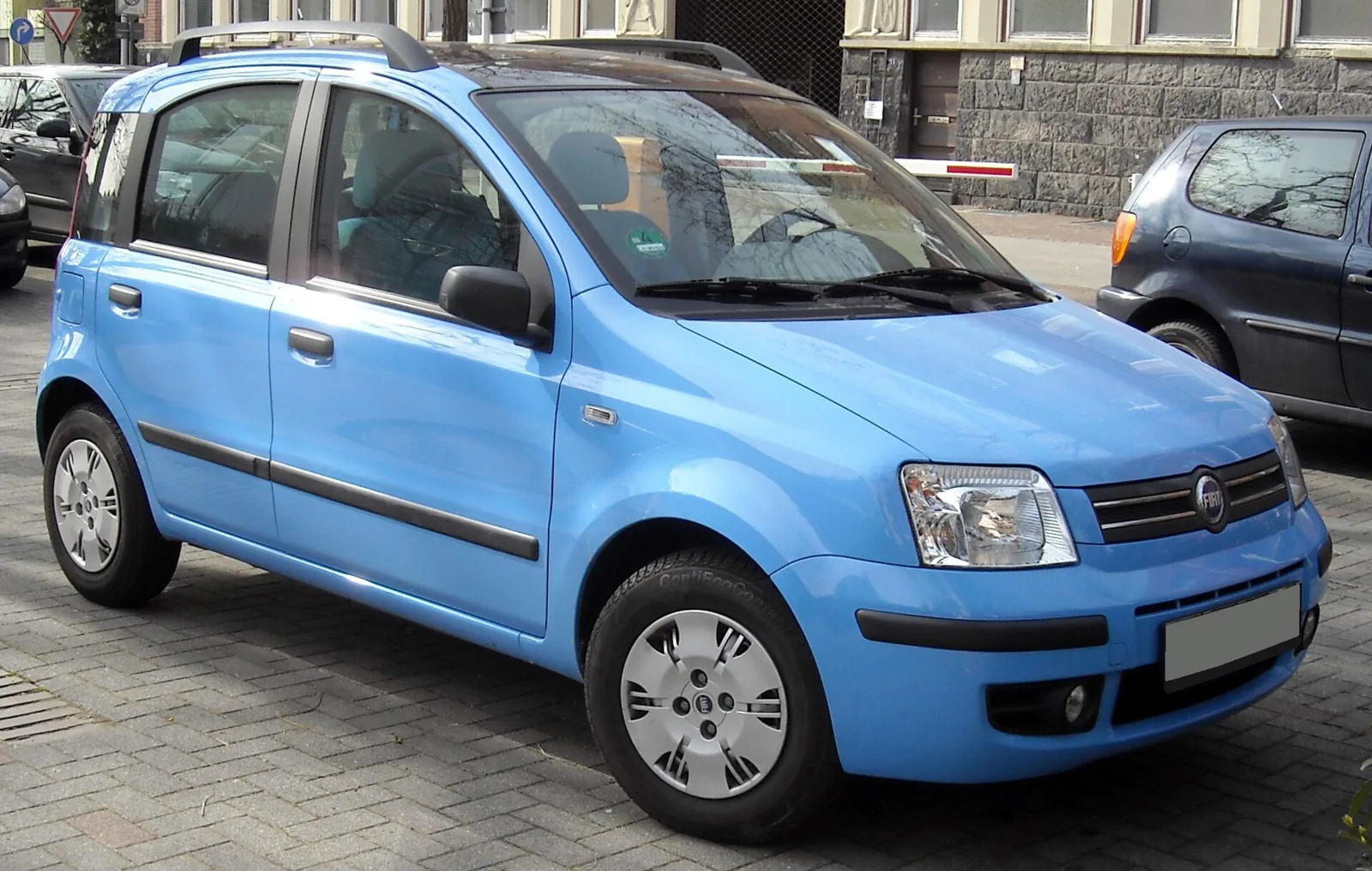
Fiat's 2003 supermini returned to the Panda name after a Renault objection, went five-door and, with the first generation, helped build over 6,000,000 Pandas since 1980.
The Fiat Panda 169 was the second generation of Fiat's supermini, built from 2003 to 2012. It moved from three to five doors, briefly carried the Gingo name before Fiat restored Panda, and was produced at Tychy in Poland. Second-series production ended on 20 December 2012.
The Fiat Panda 169 arrived in 2003 as a five-door supermini, and its first weeks were about a name rather than engines. Renault objected to the Gingo name that Fiat had unveiled at Geneva, and Fiat went back to Panda about a month before sales began.
Why was the car briefly called Gingo?
Fiat unveiled the car in March 2003 at the Geneva show as the Fiat Gingo. The name sounded too much like the Renault Twingo, a direct rival in the same class, and Renault warned against it publicly and threatened legal action. Buyers and trade insiders also missed the Panda name, which had decades of reputation behind it.
Fiat Auto reversed course about a month before sales began and restored the Panda name, a model that had gone out of production after twenty-three years. Internally the project had been called Project 169, and the car went on sale in Italy in the autumn of 2003. Fiat put 560 million euros into designing and industrialising it.
A supermini that was first shown as the Gingo, then grew into a family of 4x4, sporting and van versions.
What made the second series different?
The 169 kept the dimensions of a supermini but moved from three doors to five, giving the interior more flexible space. Its architecture leaned towards a small people carrier, and it was pitched as a practical, youthful car that buyers could personalise with many accessories inside and out.
Safety equipment was up to date for the period: ABS, front, side and curtain airbags, and electronic stability control. Power steering and manual or automatic single-zone air conditioning with LCD controls were fitted, and a particulate filter came with the turbodiesel engines. A colour satellite navigation screen could also be specified, something unthinkable on the 1980 original.
Underneath, the front suspension used MacPherson struts and the rear a torsion beam, simple, economical and reliable arrangements.
Why was the Fiat Simba important?
Fiat's Simba concept car, shown at the Bologna Motor Show in December 2002, previewed the lines of the new Panda. The production car was conceived as the heir to the historic 1980 original, and its styling came from an outside designer, Giuliano Biasio.
The proposal was supervised by Humberto Rodriguez, head of the Fiat Style Centre. The result kept the dimensions of a supermini while changing the body enough to set it apart from the first Panda.
Why did buyers choose the 169?
Low fuel consumption, good room for four people and fairly modest list prices helped seal its success. Output rose steadily in the early years, from 83,046 cars in 2003 to a peak of 262,178 in 2006.
Buyers also had a range to choose from, with petrol and diesel engines across the trims, and the turbodiesels were paired with a particulate filter. Air conditioning could be manual or automatic single-zone.
How big was the second-generation Panda?
Length was 3.54 metres (11.6 ft), which suited city streets, and height was 1.54 metres (5.05 ft), which gave good space for four people. Electric power steering with a City function made delicate manoeuvres easier, and fuel consumption stayed low. Those points, along with fairly modest list prices, sealed the success of the second series.
Packaging had its limits. The fuel tank held between 30 and 35 litres, and the boot ranged from 206 to 860 litres with the fixed rear seat, or from 176 to 786 litres with the sliding one. Even so, the car was named Car of the Year for 2004.
How did the 169 fare in crash tests?
Euro NCAP awarded the Panda an overall total of 3 stars. The survival cell resisted both frontal and side impacts well. The lack of a passenger airbag and of side airbags held the rating back, and side-impact loads on the test dummies reached excessive values in the shoulder area.
The survival cell itself held up well in both kinds of impact. The missing airbags were what penalised the overall score.
Which trims and engines could buyers choose?
In Italy the Panda came in four main trims. Actual and Active used the 1108 cc (67.6 cu in) petrol engine producing 54 PS (53 hp), while Dynamic and Emotion offered the 1242 cc (75.8 cu in) petrol unit with 60 PS (59 hp) or the 1.3 Multijet diesel.
Dynamic brought power steering, central locking, ABS with EBD, front electric windows, twin airbags and 155/13 steel wheels. Emotion added alloy wheels on 165-65/14 tyres, fog lamps, automatic air conditioning, a multifunction on-board computer and a radio with CD and MP3 playback.
Where was the Panda 169 built?
Production started on 5 May 2003 at the FIAT-owned Tychy plant in Poland. The same works also built the 500, the second-generation Ford Ka and the Seicento, and the 500 and Ford Ka share the Panda's platform. Output peaked at 262,178 cars in 2006, the highest annual figure the second series reached.
Yearly figures were 83,046 in 2003, 206,638 in 2004 and 214,478 in 2005. After the peak, output fell to 260,695 cars in 2007 and 247,131 in 2008.
The millionth second-generation car was produced on 5 September 2007. The 1,500,000th came off the line on 21 July 2009, a blue 1.3 Emotion with a Multijet engine for an Italian buyer.
How many Pandas were built in total?
Fiat has built more than 6,000,000 Pandas since 1980, counting the first and second generations together. Second-series production ended on 20 December 2012, after the Panda Classic had continued with a reduced range beside the newer model during 2012.
What did the 2006 and 2009 facelifts change?
The 2006 facelift came with new body colours, a black dashboard and fresh seat fabrics, at the same time as the Natural Power and 100HP versions. The October 2009 update brought new roof bars and larger mirrors, reworked the instrument graphics and added a seatbelt reminder.
The 2009 update also brought the 1.2 petrol engine up to 69 PS (68 hp), approved to Euro 5 standard. The company said that revised engine emitted only 113 grams of carbon dioxide per kilometre.
How did the 4x4 differ from the city car?
The Panda 4x4, presented in 2004 and sold from 1 October that year, used a raised and reinforced floor and permanent four-wheel drive through a viscous coupling. In normal driving only 2 per cent of the drive reached the rear wheels, and four-wheel drive engaged within seconds when the rear wheels lost grip.
Ground clearance was 160 mm under the engine guard, or 165 mm on the Climbing. The approach angle was 26 degrees on petrol and 24 on diesel, and the petrol model could manage a 50 per cent gradient when starting on the slope.
The Climbing added painted bumpers with shields, wheel covers or alloys on the Multijet versions, and side and rear protection. The 4x4 was Italy's best-selling off-roader in 2006, 2007 and 2008. The Climbing body measured 3.57 metres (11.7 ft) in length, compared with 3.54 metres (11.6 ft) for the standard car. In July 2008 the viscous coupling gave way to an electro-hydraulic coupling.
What were the Panda Cross and the 100HP like?
The Panda Cross, shown at the 2005 Bologna Motor Show, used the 4x4's mechanics beneath a completely new front end with round headlamps and unpainted rear bumper protection. Its only engine was the 1.3 Multijet with 69 PS (68 hp), and four-wheel drive was standard. The standard kit ran to ESP and ELD, manual air conditioning and alloy wheels, and the Cross could not be homologated for five seats, which the standard cars could be.
The 100HP arrived at the end of 2006 as a small sports model with a lower stance, revised steering and aerodynamics, and a 1.4 FIRE 16-valve engine uprated to 100 PS (99 hp), the same unit Fiat used on other models. Its honeycomb grille, side skirts and chrome tailpipe completed the look. Its reference points were small Italian sporting cars of the past, among them the Mini De Tomaso and the Autobianchi A112 Abarth. An optional Pandemonio pack added red brake calipers, white adhesive side stripes and chrome shadow alloy wheels.
The car weighs 975 kg (2,150 lb), has four disc brakes and a six-speed gearbox, and rides on 15-inch alloy wheels. It reaches 100 km/h in 9.5 seconds and tops out at 185 km/h (115 mph). A Sport button replaced the City button, sharpening throttle response and steering.
Which special and limited editions were there?
The Panda Van, introduced a few months after launch, offered 1,000 litres of load volume and a 505 kg (1,113 lb) payload, with tie-down hooks and a two-way partition in the two-seat versions, and the FreeRide trim came with ESP as standard for a few months in 2006. The FreeRide also came with side bumper strips, manual air conditioning, a radio with CD and MP3 player, and a choice of a 1.2 with 60 PS (59 hp) or a 1.3 Multijet with 70 PS (69 hp).
The Mamy trim was aimed at English mothers and reached Italy in late 2008. It came with ISOFIX child-seat mounts, a mirror to watch the rear seat, standard ESP and washable harness pads, and it was offered in five body colours, including Mischievous Blueberry.
The Alessi was built in small numbers from 2006 to 2009, with white bumpers, a silicone phone holder in the tunnel and black-and-white wheels. The Mondiale of May 2006 was a German special with tricolour stickers and football-inspired badges, fitted with the 1.2 FIRE engine producing 60 PS (59 hp).
What was the Panda Swiss?
The Panda Swiss, shown at the 2005 Geneva motor show, was a styling exercise based on the 4x4. It was finished in red with a white stripe along the centre of the bodywork, deliberately inspired by the Swiss flag.
Its roof bars and door handles were chrome-plated, the side protection strips were silver, and a white cross sticker sat beneath the side indicator lamps.
What about the prototypes?
Several Panda ideas stayed prototypes. The Marrakech of 2003 was a yellow dune-buggy style prototype with a steel tube roll bar in place of doors. The Bigusto, with two-tone bodywork, never entered production and stayed a concept. The Jolly was different: a doorless convertible with sky-blue metallic paint and Rope interior trim, it was built in a limited number from 2006 by Stola for the Italian islands.
The Terramare of 2006 was an amphibious prototype with an inflatable pontoon and a waterjet turbine. Its developer, the engineer Maurizio Zanisi, gave it two water modes: dinghy mode, self-limited to 10 km/h (6.2 mph), and Overcraft mode, capped at 50 km/h (31 mph).
Specifications at a glance
| Specification | Value |
|---|---|
| Years built | 2003 to 2012 |
| Length | 3.54 metres (11.6 ft) |
| Height | 1.54 metres (5.05 ft) |
| Fuel tank | 30 to 35 litres |
| Boot, fixed rear seat | 206 to 860 litres |
| Petrol engines | 1108 cc (67.6 cu in) with 54 PS (53 hp); 1242 cc (75.8 cu in) with 60 PS (59 hp) |
| Diesel | 1.3 Multijet |
| Euro NCAP | 3 stars |
| Total output | over 6,000,000 Pandas since 1980, both generations |