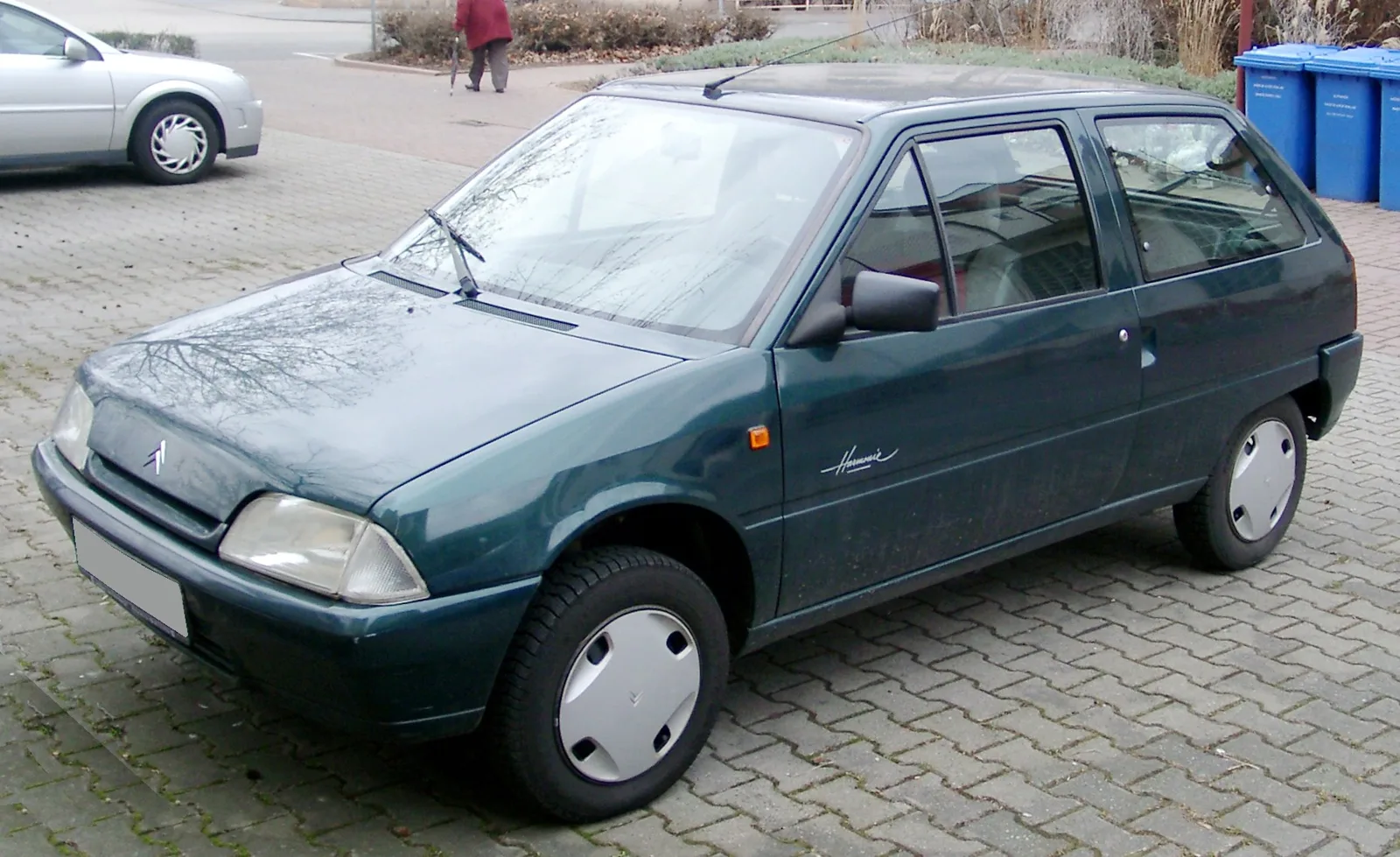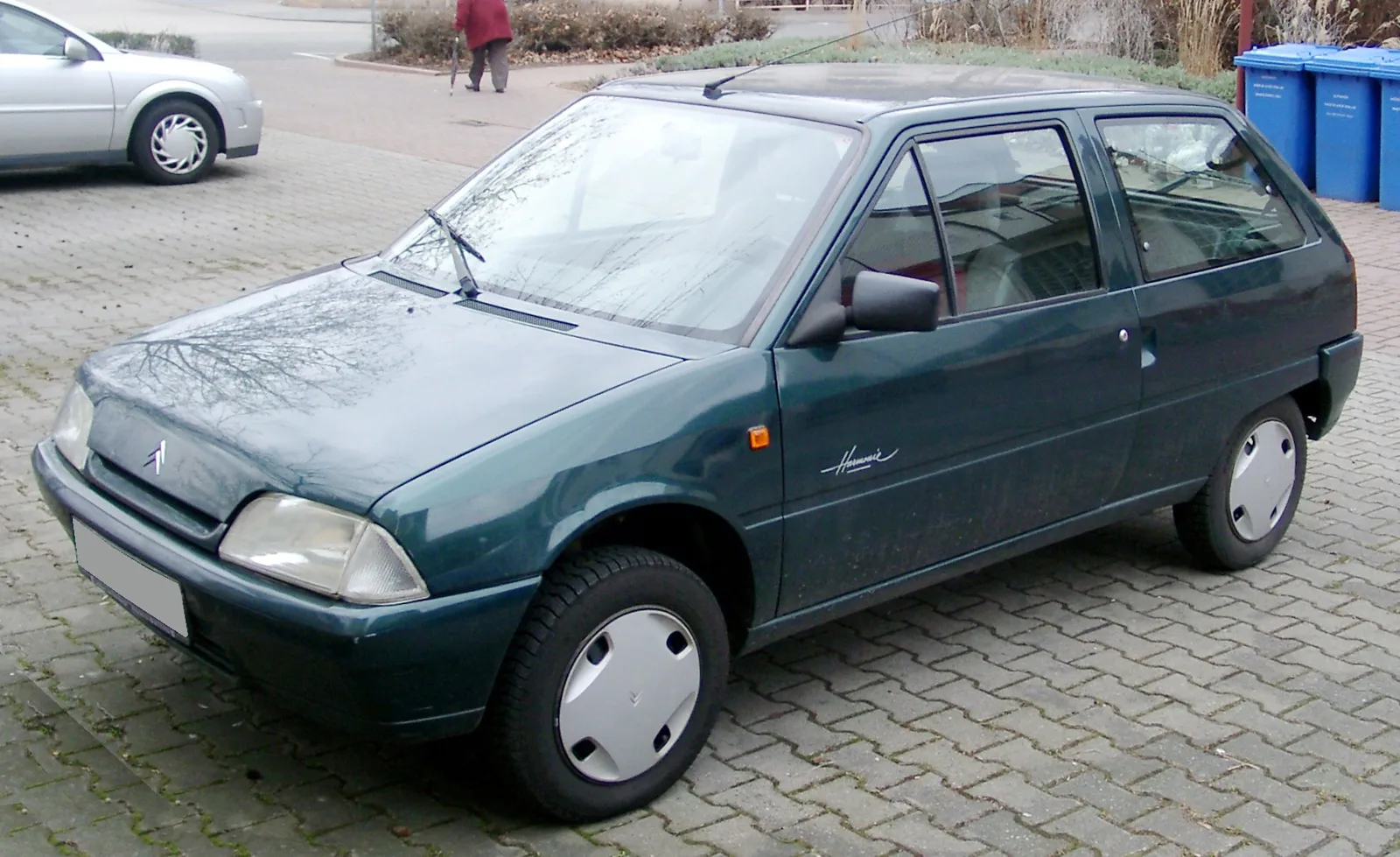
Citroen's AX and Fiat's Panda both promised cheap, light motoring, but the Panda was already on sale six years before the AX appeared.
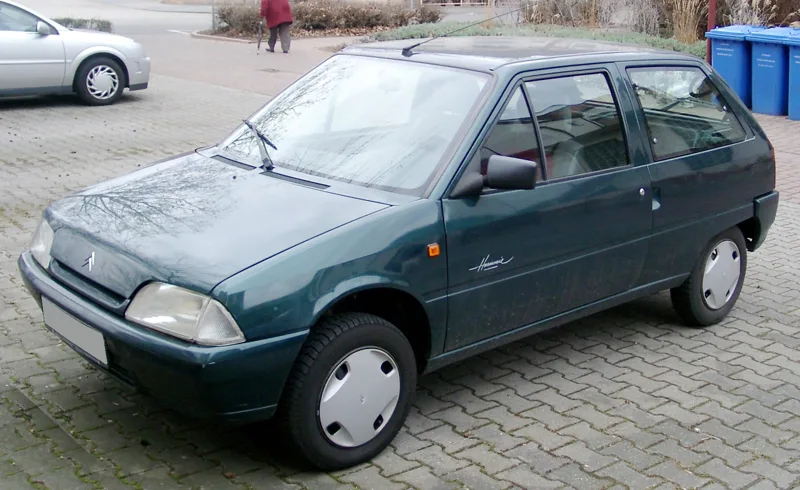
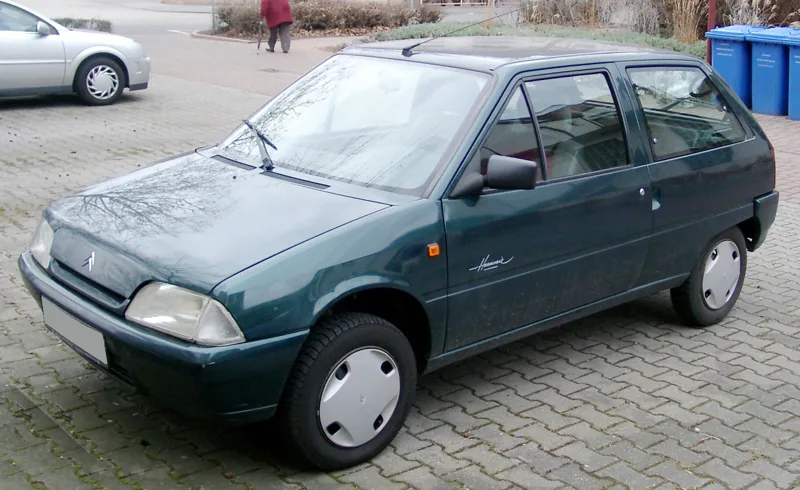
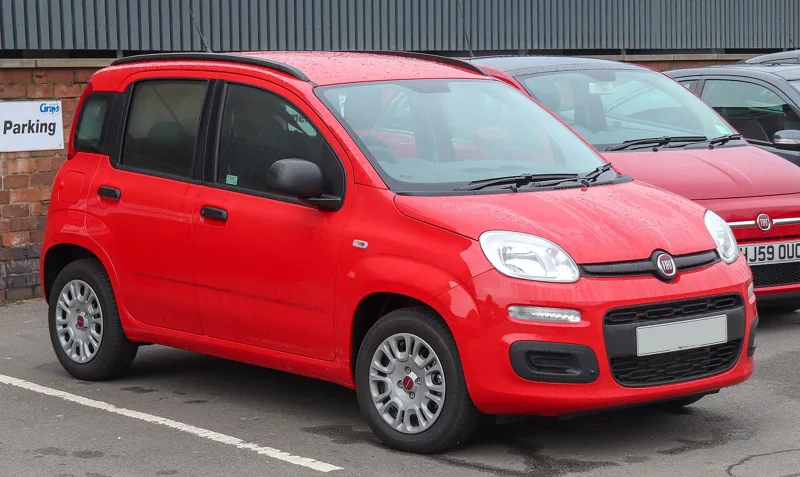
The Citroen AX and Fiat Panda were both light, cheap small cars, but they arrived six years apart. The Panda launched at Geneva in 1980 and gained a 4x4 in 1983, while the AX went on sale in 1986 and built 2,561,432 examples before production ended in December 1998.
The Citroen AX and Fiat Panda had a lot in common on paper. Both were light, inexpensive small cars, both were offered with four-wheel drive, and both were built to keep weight and cost down. The Panda had a six-year head start, though, and the two cars took very different routes from there.
Why were the AX and Panda rivals?
Both cars were aimed at buyers who wanted a small, economical car, and their rivalry shows most clearly in four-wheel drive. Citroen's AX 4x4 was offered with five doors only and sold with limited success against the Fiat Panda 4x4. Fiat's car had arrived first, in June 1983, and it used a transverse engine layout in a small body.
The AX was launched at the 1986 Paris Motor Show to replace the Visa and the LNA. Its development began in 1983, when it was also meant to become the basis for a Talbot sister model to replace the Samba. Falling Talbot sales and the success of the Peugeot 205 led Peugeot to axe that version before the AX went on sale.
One car was built on a less-is-more idea, the other on a pair-of-jeans idea, and both wanted cheap miles for the same buyer.
How did the Panda's design begin?
Giorgetto Giugiaro and Aldo Mantovani of Italdesign designed the Panda in 15 days in the summer of 1976 at Porto Cervo in Sardinia. Fiat's brief asked for a container-like car that weighed and cost no more than the Fiat 126 it replaced. Fiat then received over 70,000 orders in the two months after the Geneva show.
The brief called for a straightforward container with a spacious and spartan interior. Giugiaro took inspiration for the seats from a folding lounge chair, and he set the cargo area so that two 50-litre wine demijohns could fit alongside a full set of passengers. The car used monocoque construction with a nearly flat floor and a roof high enough for upright seating.
Giugiaro later explained his intent in a 1980 interview with the Turin newspaper La Stampa. He compared the Panda to a pair of jeans, a simple and practical garment without fuss, and said he had tried to bring the spirit of military design, especially helicopters, to the car.
What did the Panda's interior and body offer?
The Panda used a seven-position rear seat that could fold flat into a bed, fold into a V, or come out altogether. Its cargo area held 280 litres in the boot, or 1000 litres with the rear seat removed. Washable fabric covered the seats, door trim and dashboard.
The spare wheel was stored in the engine compartment, which left the luggage area free. Exposed painted sheet metal made up much of the interior, and fresh air was routed only to demist the windscreen. Early cars had a recess in the bodywork instead of door handles.
The windows were completely flat, which cut weight and cost and made them easy to replace and interchangeable from side to side. Fiat had trouble finding a maker willing to produce such simple glass.
The bodyside panels were welded continuously to the roof and covered with a black moulding, which removed an expensive sheet-metal fold and formed a rain gutter. The lower doors were corrugated to resist drumming, and a two-piece roll-forward canvas roof could be specified, much as on earlier French cars.
Fiat's marketing strategist, Luigi Maglione, was puzzled on first seeing the interior and assumed the mock-up was incomplete. The new chief executive, Nicola Tufarelli, confirmed that the rustic interior was the final design.
Panda and AX side by side
| Specification | Citroen AX | Fiat Panda |
|---|---|---|
| Launch | Paris Motor Show 1986; on sale 2 October 1986 | Geneva Motor Show, March 1980 |
| Designer | not given | Giorgetto Giugiaro and Aldo Mantovani, Italdesign |
| Drag coefficient | 0.31 | not given |
| Basic weight | 640 kg (1,411 lb) | not given |
| Smallest engine | 1.0 L TU-series belt-driven OHC | 652 cc air-cooled two-cylinder (Panda 30) |
| Largest early engine | 1.4 L petrol; 1.4 L diesel from 1988 | 903 cc four-cylinder (Panda 45); 965 cc in the 4x4 |
| Four-wheel drive | AX 4x4, five-door only, not sold in the UK | Panda 4x4 from June 1983 |
| Economy record | 2.7 litres per 100 km in 1989 (100 mpg-imp; 87 mpg-US) | not given |
| Electric version | AX Electrique, 374 built | not given |
| Production end | December 1998, 2,561,432 built | First generation until 2003; over 7.8 million across all generations |
| Successor | Citroen Saxo, from June 1996 | Second generation, 2003 |
How did the Panda's engines and 4x4 develop?
The first Panda 30 used a 652 cc air-cooled two-cylinder borrowed from the Fiat 126, while the Panda 45 had a 903 cc water-cooled four from the Fiat 127. The Panda 4x4 arrived in June 1983 with a 965 cc engine producing 48 bhp (36 kW), and it was the first small transverse-engined production car with a 4WD system.
The 4x4 system could be selected manually and had an ultra-low first gear, and normal starting was from second. Austrian firm Steyr-Puch supplied the whole drivetrain, including the clutch, gearbox, power take-off, prop shaft and rear live axle. The cars were then fitted to reinforced bodies at the Termini Imerese plant in Sicily.
The Panda 34 arrived in September 1982 with an 843 cc water-cooled unit from the 850, and it was originally reserved for export to France, Belgium, Germany and the Netherlands. Fiat's Super trim and a five-speed gearbox option followed on the 45 in 1982.
The January 1986 facelift changed much of the mechanical package. The 652 cc two-cylinder gave way to a 769 cc, 34 PS four from Fiat's FIRE family, and the 903 and 965 cc units were replaced by a 999 cc engine with 45 PS (50 PS in the 4x4). The rigid axle was replaced by a coil-sprung arrangement known as the Omega axle, first seen on the Lancia Y10. The 4x4 kept its leaf-sprung live axle.
April 1986 brought a 1301 cc diesel with 37 PS (27 kW), a detuned version of a Brazilian engine. It joined a range that by then ran from the 750L to the 1000S and the 4x4.
What made the AX so economical?
A drag coefficient of 0.31 and a basic weight of 640 kg (1,411 lb) did most of the work. Plastic panels in non-load-bearing areas and steel only as thick as the loads required kept the shell light, and the suspension had unusually long wheel travel.
Self-coloured plastic bumpers were an option. That technology came from the ECO 2000 project shared by the PSA group, Renault and the French government. The production car was far more conventional than the one-box prototype, which had been softened after negative reactions in focus groups. The one-box idea reached the market later with the Renault Twingo in 1992.
The economy peak came in 1989 with a naturally aspirated diesel using the 1360 cc all-aluminium TUD engine. It returned 2.7 litres per 100 km (100 mpg-imp; 87 mpg-US), and a run from Dover to Barcelona covered over 1,000 miles (1,609 km).
What sporting versions did the AX get?
The first performance AX was the limited-run AX Sport from 1987, with a 1.3 engine, twin carburettors and 95 PS (70 kW; 94 bhp). Later came the 85 PS (63 kW; 84 bhp) AX 14 GT, and the 100 PS (74 kW; 99 bhp) GTi arrived in 1992 as the most powerful AX.
The AX Sport wore white steel wheels in 5.5 by 13 inch sizes, which matched those on its sister car, the Peugeot 205 Rallye. It used Solex carburettors until late 1988 and then Weber units, just as the 205 Rallye did. Its inlet manifold was shorter than the 205's, to suit the smaller engine bay.
The 1991 revamp brought a heavily facelifted tailgate and a more conservative dashboard. The AX 14 GT gained fuel injection that year, to meet tougher EU emission rules for 1992. The AX Echo followed in January 1995 with a top speed of 110 mph (177 km/h), and it outsold its closest rival, the Peugeot 106 Ski, which shared components with the AX.
How did the AX 4x4 compare with the Panda 4x4?
The AX 4x4 was offered only as a five-door, was never sold in the UK, and had limited success against the Panda 4x4. Citroen later built the AX Pistes Rouges 4WD, based on the standard three-door AX GT with its 1360 cc engine, using a four-wheel-drive system from the French firm Dangel. It was built from 1992 to 1994.
Fiat's 4x4 came out in 1983, nearly a decade before the Pistes Rouges, so it had the earlier start.
Outside the factory, Aixam's Mega Club and Mega Ranch took the AX as a base for a different kind of car. They had plastic bodies and an optional convertible top, with two-wheel or four-wheel drive, and nearly 1,000 were built before the model was discontinued in 1998.
Did either car go electric?
Citroen built the AX Electrique with Heuliez, producing 374 examples from December 1993 to 1996. It carried a 20 kW (26 hp) motor, used nickel-cadmium batteries, and was estimated to reach around 75 km (47 mi) on a charge. Its top speed was 91 km/h.
The Electrique was sold mainly to administrations, which could buy it as a two-seater panel van as well as the four-seat passenger car. It reached 50 km/h in 8.3 seconds. Its proprietary fast-charging system used the same pins as home charging and worked at a number of stations around France, and the car sold for 80,000 French Francs when new.
In 2011 a modified AX Electrique, fitted with lithium iron phosphate batteries by the French research body CEA-Liten, covered 1,280 km in 24 hours using a relay of driving and fast charging. Its 14 kWh battery allowed stints of between 105 and 115 km before a 38-minute charge.
How did the Panda's later generations develop?
The second-generation Panda arrived in 2003 as a five-door hatchback styled by Giuliano Biasio of Bertone, and it took the European Car of the Year title in 2004. The third generation was shown at Frankfurt in September 2011 and remains in production at Pomigliano d'Arco in Italy. The fourth is sold as the Grande Panda and built in Serbia.
Over roughly four decades Panda production has passed 7.8 million, and about 4.5 million of those were first-generation cars. The first generation was made until 2003, a run that Autocar placed 29th among the most long-lived single generations of any car, in early 2020.
SEAT of Spain sold a licensed variation of the first Panda, initially as the Panda and later as the Marbella, from 1986 to 1998.
How long did the AX stay in production?
The AX was built from 1986 until December 1998, a run of 12 years, and the total reached 2,561,432 cars. Vigo in Spain ended production in May 1997 after 812,000 vehicles, and the Mangualde plant in Portugal kept building the model for a few more months.
The right-hand drive version for the UK was launched in August 1987, and a five-door joined it a year later. It was withdrawn from the UK market during the first half of 1997, after right-hand drive production ended. The very earliest cars had a fault in which the gear shifters could fall off, and it was fixed before the car reached export markets.
From June 1996 the range was slimmed down as the Saxo arrived. The Peugeot 106, launched in 1991, and the Saxo were both developments of the AX. Those two cars followed the 1990s move towards heavier, more solid and safer-feeling small cars, while the AX had stayed closer to a less-is-more idea.