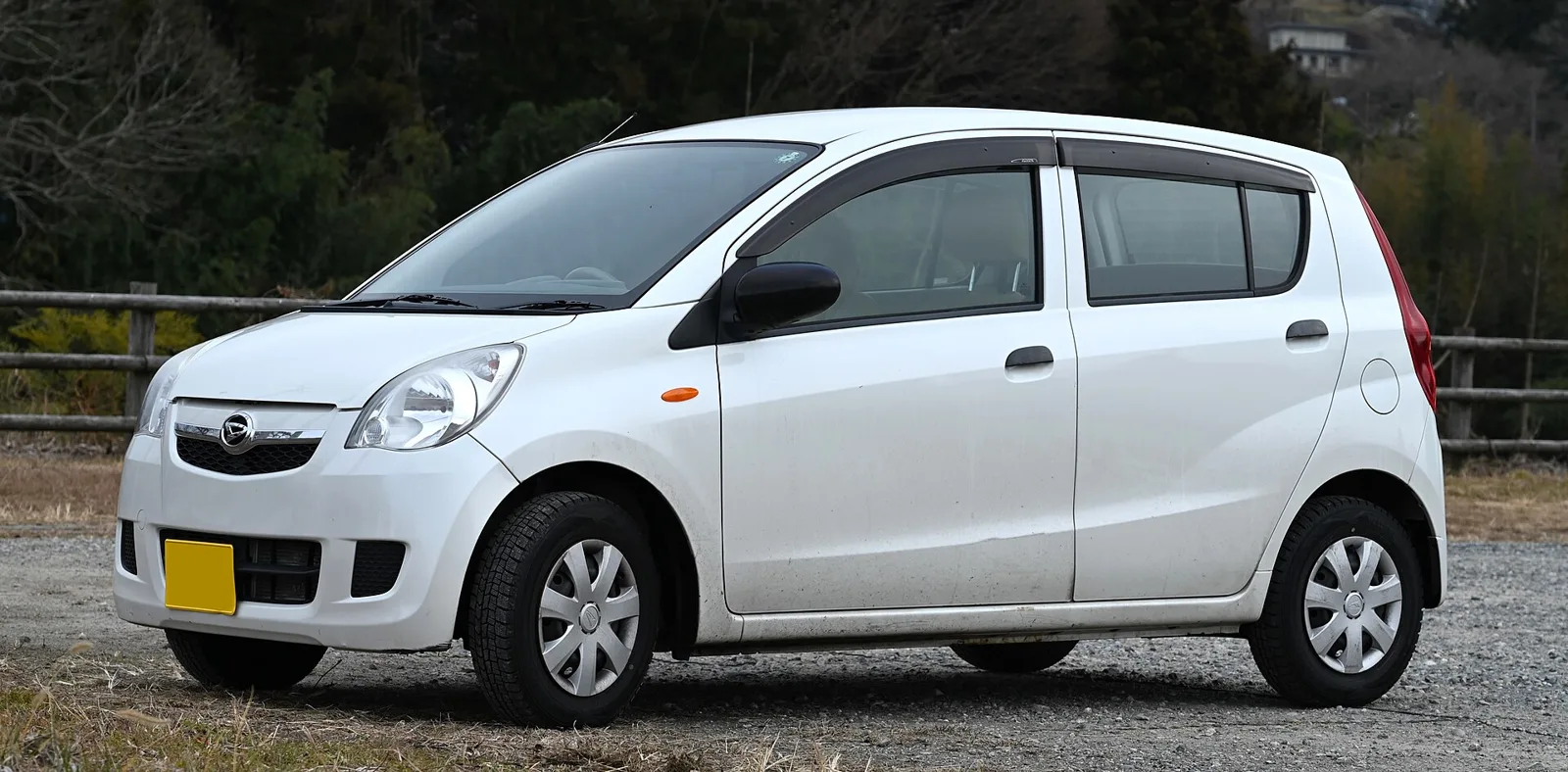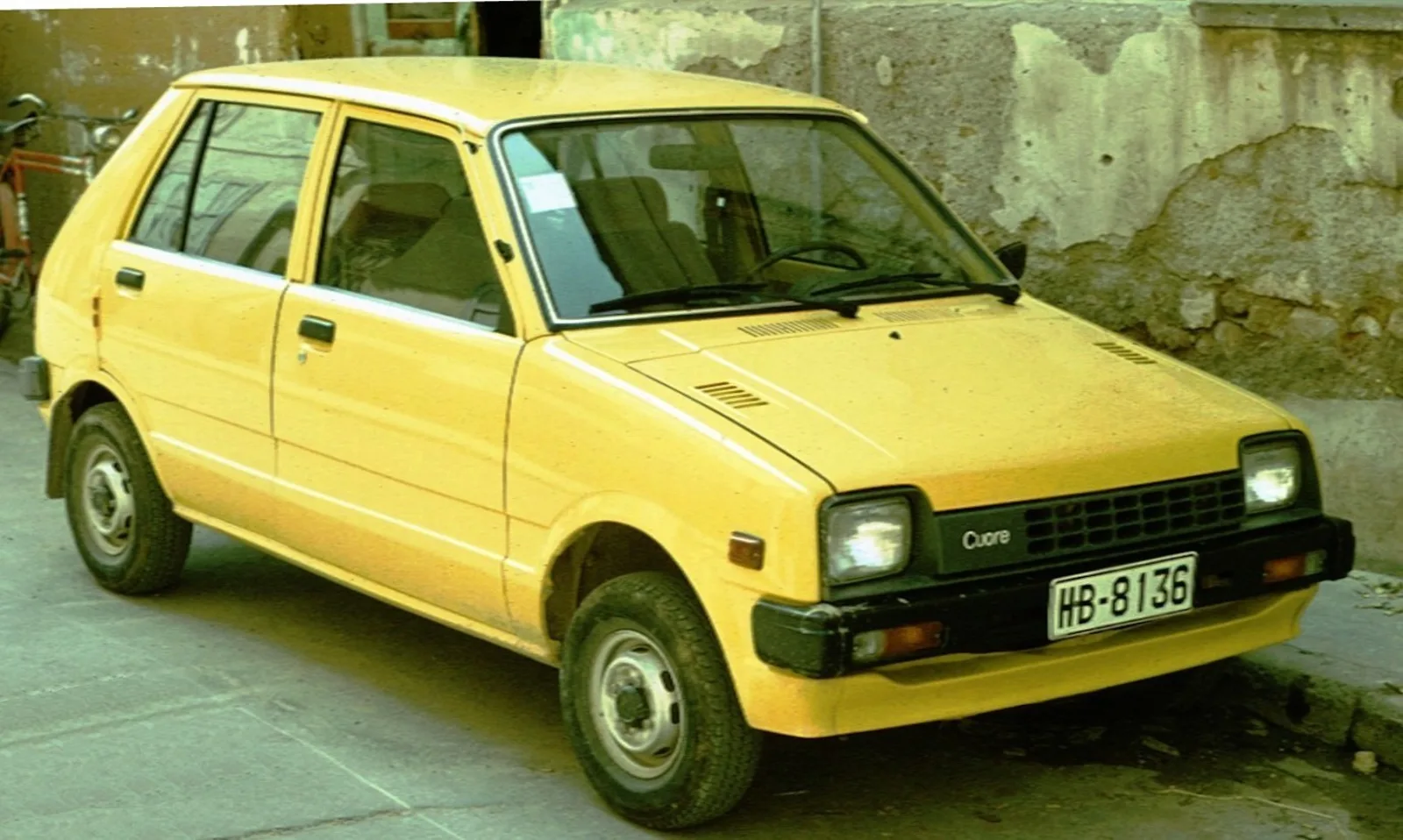
A small Japanese city car that wore the Cuore name, became a van, a sedan, a rally car and a pickup, then ended in Japan in 2018.
Daihatsu's kei city car went on sale in 1980 as the Mira or Cuore, and it stayed in Japanese production until 2018. Vans, sedans, pickups and rally versions followed, and partner plants in Thailand, Malaysia and Pakistan built their own variants.
The Daihatsu Mira, also sold as the Cuore, Domino and Charade, was a kei-class city car built by Daihatsu. It was built in a range of body styles and chassis variations, and it spawned vans, sedans, pickups and sporting versions. Production in Japan ran from 1980 until 2018, when the car was dropped as it could not meet upcoming safety standards.
How did the Mira begin?
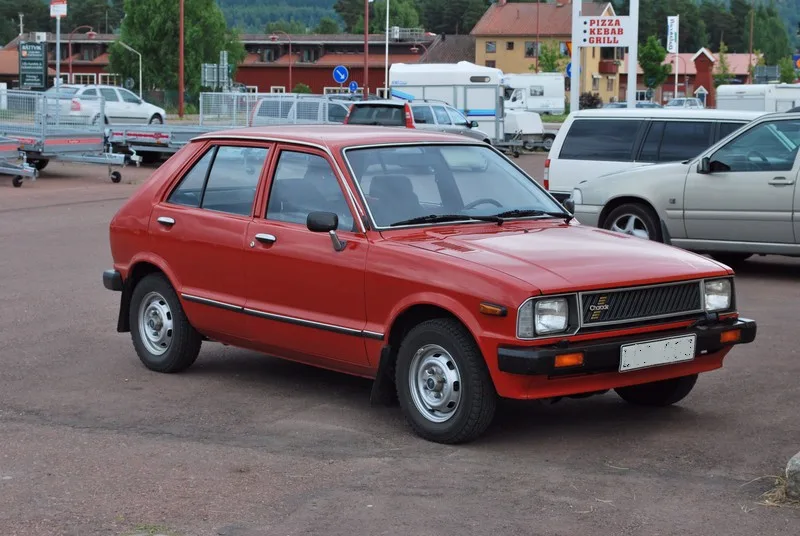
The Mira and Cuore replaced the Daihatsu Max Cuore in July 1980. The car was the latest successor to a line that began with the Daihatsu Fellow in 1966, and the Mira was originally introduced as the commercial version of the Cuore. The name Mira means look at in Spanish and goal or purpose in Latin.
The first generation, the L55 series, is a source of some confusion. It is usually counted as the second generation of the Cuore, and the Mira was originally marketed as the Mira Cuore. Both names were used in the early years, which is why the line can be hard to follow.
Outside Japan the Mira was offered with larger 850 or 1000-cc engines. In Australia the two-seater was sold as the Daihatsu Handivan and later the Handi.
A kei city car that went from van to rally car to Thai pickup, and kept its name through seven generations.
What engines did the first Mira use?
The L55 series used two main engines: the two-cylinder AB10 of 547 cc, and the slightly larger 617-cc AD unit, which was fitted to the export-only L60 Cuore. Both had twin balancing shafts, which gave a smoothness and quietness close to a four-cylinder engine.
The 617-cc car was praised in testing for its refinement and lively, enthusiastic performance against European rivals such as the Fiat Panda 30 and the Citroen Visa Club, both also with two-cylinder engines. The main drawback was cost, because the balance-shaft two-cylinder was said to cost as much to build as a conventional four.
The bigger 30 PS (22 kW) version had a top speed of 120 km/h (75 mph). Quattroruote praised the car for its agile city driving, although it was less suited to the autostrada. The bigger engine arrived in the second half of 1982 as Daihatsu pushed its European exports.
How did the Mira change in the 1980s?
The range was lightly facelifted in May 1982, when the Mira dropped the Cuore part of its name. The sporty five-speed MGX, a three-door only model with radial tyres, joined the range, and a fully automatic two-speed replaced the Daimatic autoclutch transmission.
In October 1983 the Mira Turbo arrived with a carburetted, turbocharged version of the two-cylinder. It produced 41 PS (30 kW) and reached 130 km/h (81 mph). Turbo and four-wheel drive versions of the Mira van also appeared that month.
The second generation, the L70, was released in August 1985 with a longer wheelbase and a new three-cylinder EB engine of 547 cc. An 847-cc three-cylinder called the ED-10 was developed for export, and a 796-cc narrow-bore version suited the four-horsepower tax category in some Swiss cantons.
Why did the Mira have separate van and sedan versions?
Japanese tax rules shaped the line. Commercial vans had temporary rear seats that folded flat, and luggage rails in the rear side windows made them easy to spot. Passenger Cuores, by contrast, offered a proper rear seat and more comfortable equipment.
The engines of the early L70 cars were carburetted and either naturally aspirated or turbocharged, offering 38 and 52 PS (28 and 38 kW). A five-door van arrived in January 1986, followed by a walk-through van with folding doors two months later. In April 1989 the Cuore name was retired in Japan, and the commercial and passenger models became the Mira Van and Mira Sedan.
Special editions kept the line lively. The Mira Parco arrived in February 1985 with the Parco clothing chain, with 10-inch alloy wheels, front disc brakes, air conditioning and a special interior. It was sold through 11 Parco stores, and a second and third Parco edition followed.
What was the Mira TR-XX?
The L200 series, introduced in spring 1990, was the third and most popular generation, and it used the Mira badge in Japan. The top model was the turbocharged TR-XX, which came as a passenger car and as a van. The passenger version had a fuel-injected, 12-valve, intercooled turbo engine producing 64 PS (47 kW).
The TR-XX van had less stringent emissions requirements, so it used a carburetted, six-valve version of the intercooled turbo engine, producing 61 PS (45 kW). A part-time four-wheel drive L210 was available in V or S models, and the L220 was the only kei car with mechanical four-wheel steering.
In November 1990 the X-4 arrived with permanent all-wheel drive and the 64 PS turbo engine, with a sales target of about 700 cars a month. The X-4 later became part of the TR-XX series when the TR-XX van was dropped.
How did the Mira go rallying?
To challenge the Suzuki Alto Works in the All-Japan Rally Championship, Daihatsu developed the Mira X4R in 1991. It had a strengthened engine with a forged crankshaft and flywheel, a close-ratio gearbox and other chassis changes, with a minimal interior and diagonal tyres.
The Group A X4R was sold at about 10 units a month, at a price around twenty percent above the regular X-4. Noriyuki Hotta won the class championship in 1992 in the car.
Which markets built their own Mira?
Daihatsu's Thai arm kept building the L70 series after Japan replaced it, from the second half of 1990. The work fell to Daihatsu Phra Nakhon Motor, a three-way venture of Daihatsu, Phra Nakhon Automobile and the trading house C. Itoh.
For the Thai market Daihatsu developed the Mira P1 pickup, built from 1990 to 1995. The pickup sold so well that Daihatsu's Thai sales jumped by 50 percent. The P4 followed as a roofed four-seater micro-ute, and the Miracab and the Mint hatchback were also offered.
The Thai cars grew too long to be true kei cars and used 850-cc engines in later years. The 1997 Asian financial crisis ended Daihatsu's Thai run, as sales fell from 4,000 in 1995 to 160 in 1997, and production stopped in February 1998.
In the Philippines, Norkis revived the Mira Pickup in 2004 as the Legacy, reconditioned from used imports. Those cars used the later 659-cc EF engine, which could also run on LPG.
How did Malaysia and Pakistan use the Mira?
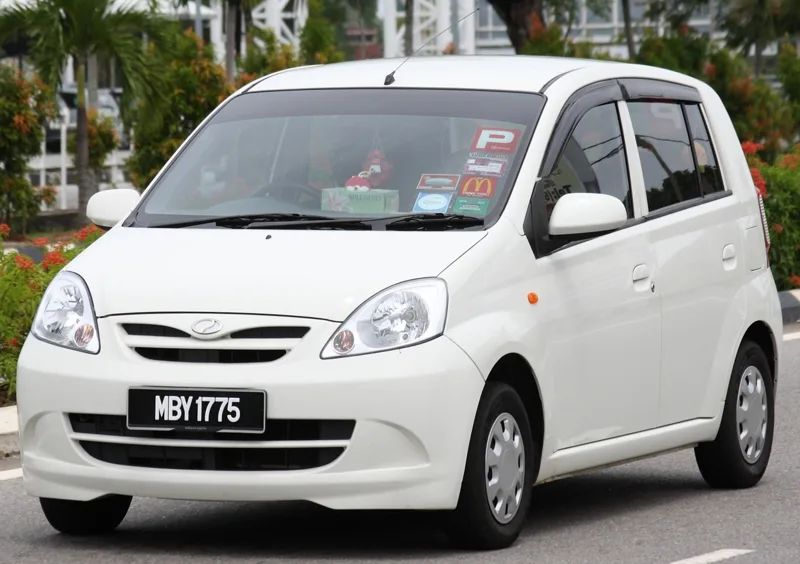
The L200 was chosen by Malaysia's Perodua as its first product, and it went on sale there as the Perodua Kancil in 1994. The Kancil received several facelifts and ended in July 2009, and it was sold in Indonesia as the Daihatsu Ceria between 2001 and 2006.
The L500 remained in production in Pakistan as the Daihatsu Cuore, built by Toyota Indus Motor Company from March 2000 to 2012 with the carburetted 847-cc ED-10 engine. Pakistani cars were five-door hatchbacks with 41 PS (30 kW), and 2,440 were built in 2001 against a capacity about four times higher.
What changed with the 1990s and 2000s generations?
Production of the L500 began in September 1994, and the design stayed close to the L200. The Mira Moderno joined the range in October 1995 as a non-commercial model, and the retro Mira Classic followed in August 1997. Its successor, the Mira Gino, was based on the fifth-generation L700.
In January 1998, working with Sanrio, Daihatsu added a Hello Kitty version of the Mira Moderno. It came in pastel colours and carried Hello Kitty details throughout, including a Hello Kitty ignition key. The Gino later arrived with a 1.0-litre engine as the Mira Gino 1000 for a short period in Japan.
The L700 arrived in autumn 1998 with a 989-cc DOHC three-cylinder for export, while Japanese cars stayed under the 659-cc limit. Japanese models used fuel-injected 659 cc engines, with the sporty TR producing a claimed 64 PS (47 kW), the maximum allowed for kei cars under an informal agreement.
The fuel-economy model arrived in December 1998 as the TV, with a CVT and a high-compression EF-VE engine producing 52 PS (38 kW). On the standard Japanese cycle it returned 27.0 km/L (3.7 L/100 km; 64 mpg-US). In October 2000 the turbo TR was dropped, leaving only the Mira Gino with a turbocharged engine, while the low-end EF-SE was uprated to 48 PS (35 kW).
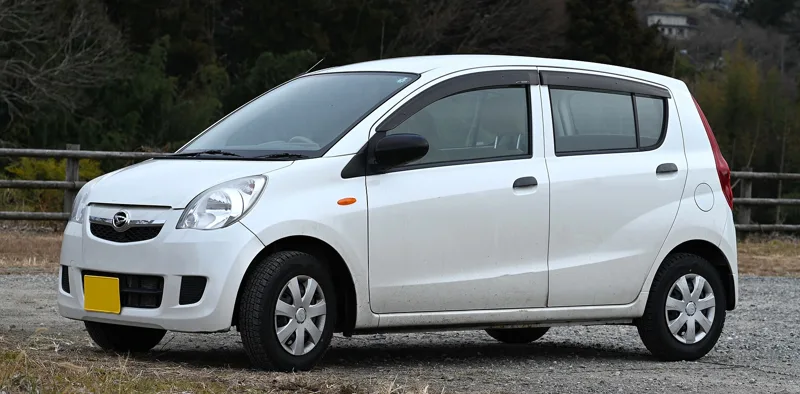
The sixth generation, the L250 of 2002, was labelled the Daihatsu Charade in the United Kingdom, South Africa, Australia and Gulf states. The seventh generation, the L275, was presented in December 2006 with a 658-cc three-cylinder Topaz Neo engine in naturally aspirated and turbo forms.
The L250 also produced the Mira Friend-Matic in November 2005, a version aimed at wheelchair users. The Self-Matic variant could be driven straight from a powered wheelchair, through a driver's door that opened to 90 degrees and an automated entry system. Buyers of that variant were eligible for government help, and the Friend-Matic stayed on sale until August 2009.
What were the key Mira specifications?
| Specification | L55 (1980) | L200 (1990) | L275 (2006) |
|---|---|---|---|
| Launch | June 1980, replacing the Max Cuore | Spring 1990, Mira badge in Japan | December 2006 presentation |
| Japanese engine | 547 cc two-cylinder AB10 | 660-cc three-cylinder, 40 to 64 PS (29 to 47 kW) | 658-cc KF-VE, 43 kW (58 PS) |
| Turbo output | Mira Turbo, 41 PS (30 kW), October 1983 | TR-XX turbo, 64 PS (47 kW) | KF-DET turbo, 47 kW (64 PS) |
| Top speed | 120 km/h (75 mph) for the 617-cc version | Not given | Not given |
| Export engine | 617-cc AD unit in the L60 Cuore | 847-cc ED10K, 41 PS (30 kW) ECE | Toyota KR 1.0-litre three-cylinder |
| Fuel economy | Not given | Not given | 21 to 25.5 km/L on the Japanese 10-15 cycle |
| Four-wheel drive | Switchable 4WD van, L71V | L210 part-time, X-4 all-wheel drive | Four-wheel drive variant, L285 |
How did the Mira end in Japan?
The Mira was discontinued in Japan on 30 March 2018, along with the Mira Cocoa, because it would not be able to pass upcoming safety standards. With that, Daihatsu left the bonneted light van market, where the Mira had represented the company for 38 years.
The sixth-generation production line had already moved to Malaysia, where it became the Perodua Viva from May 2007. Other successors included the Perodua Kelisa, a rebadged fifth-generation Mira, and the Perodua Axia, which was heavily inspired by the Mira e:S.