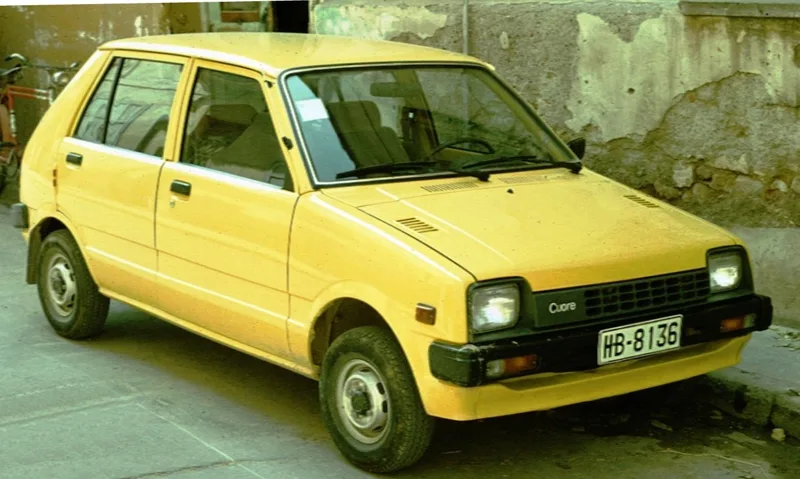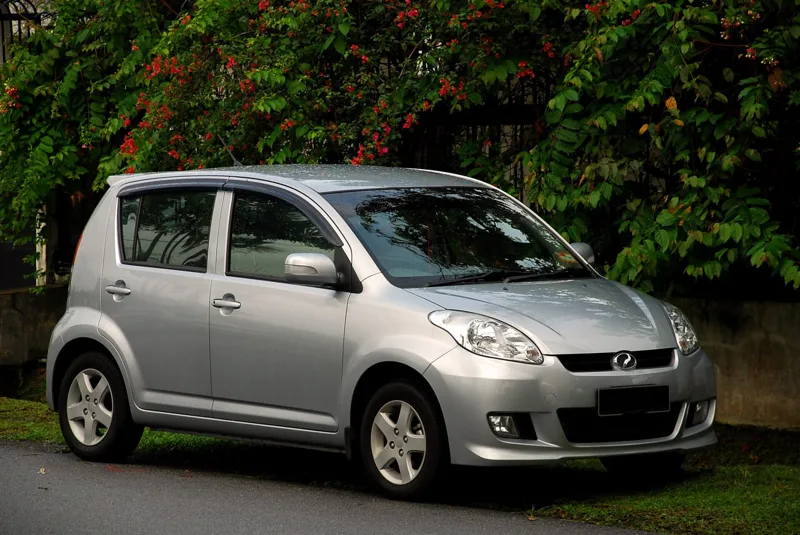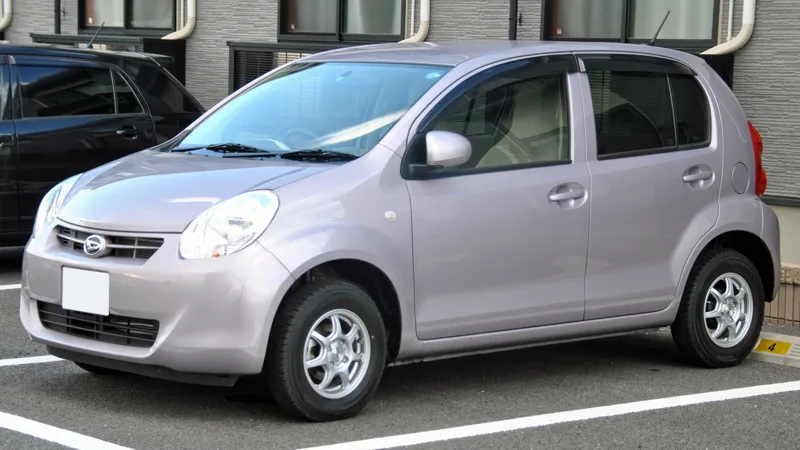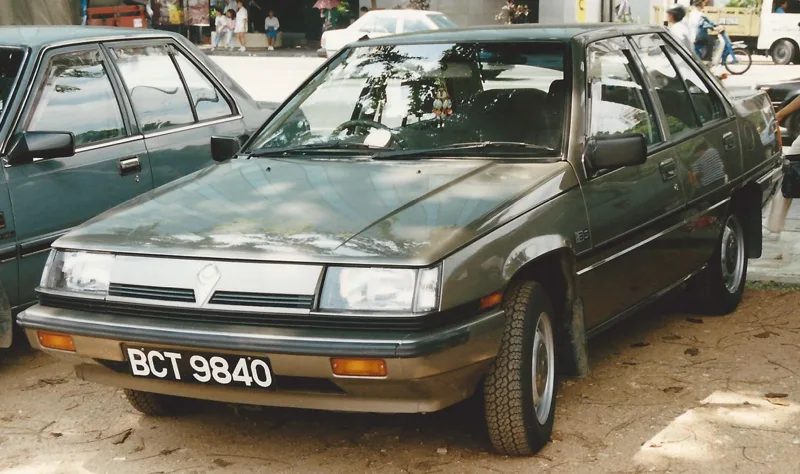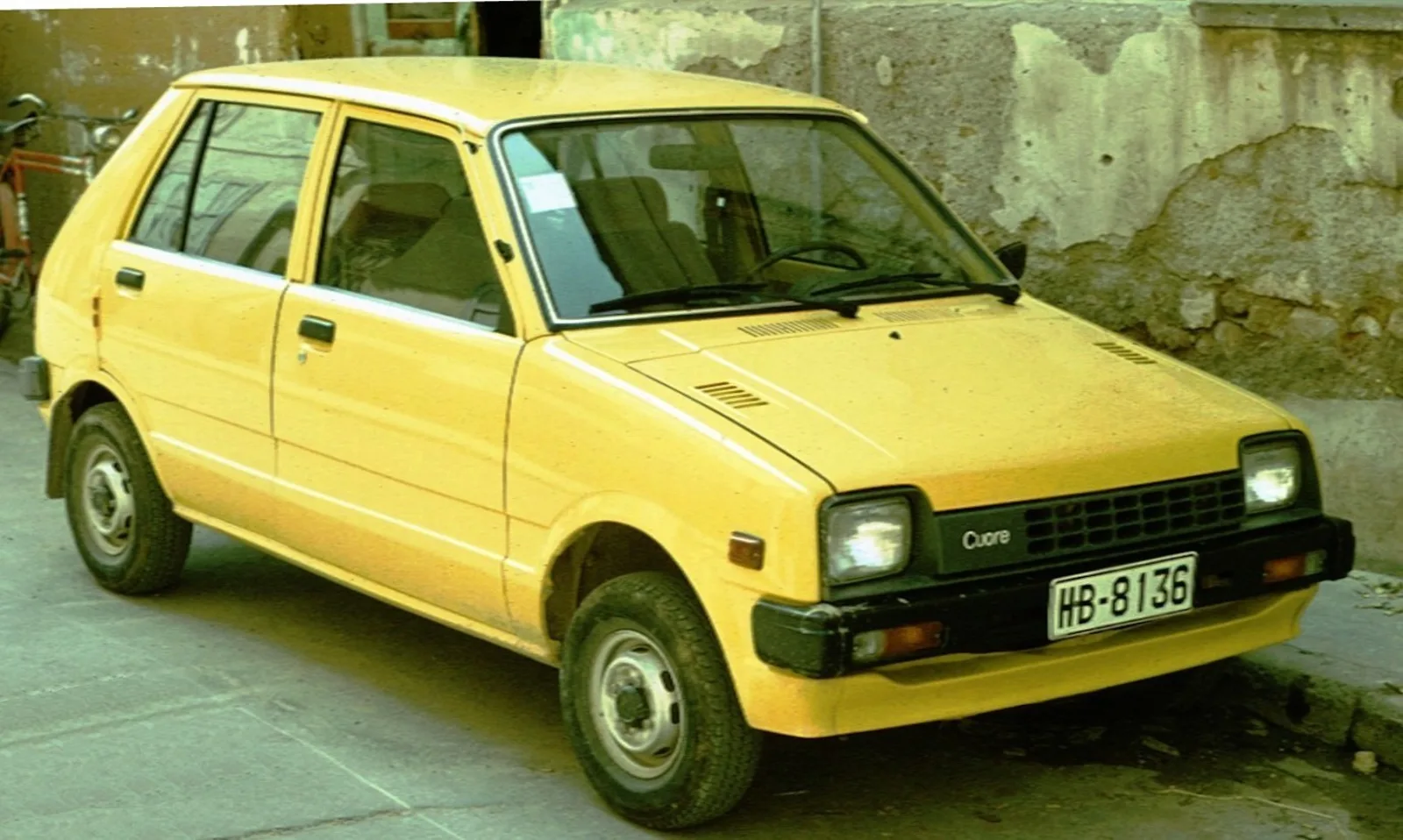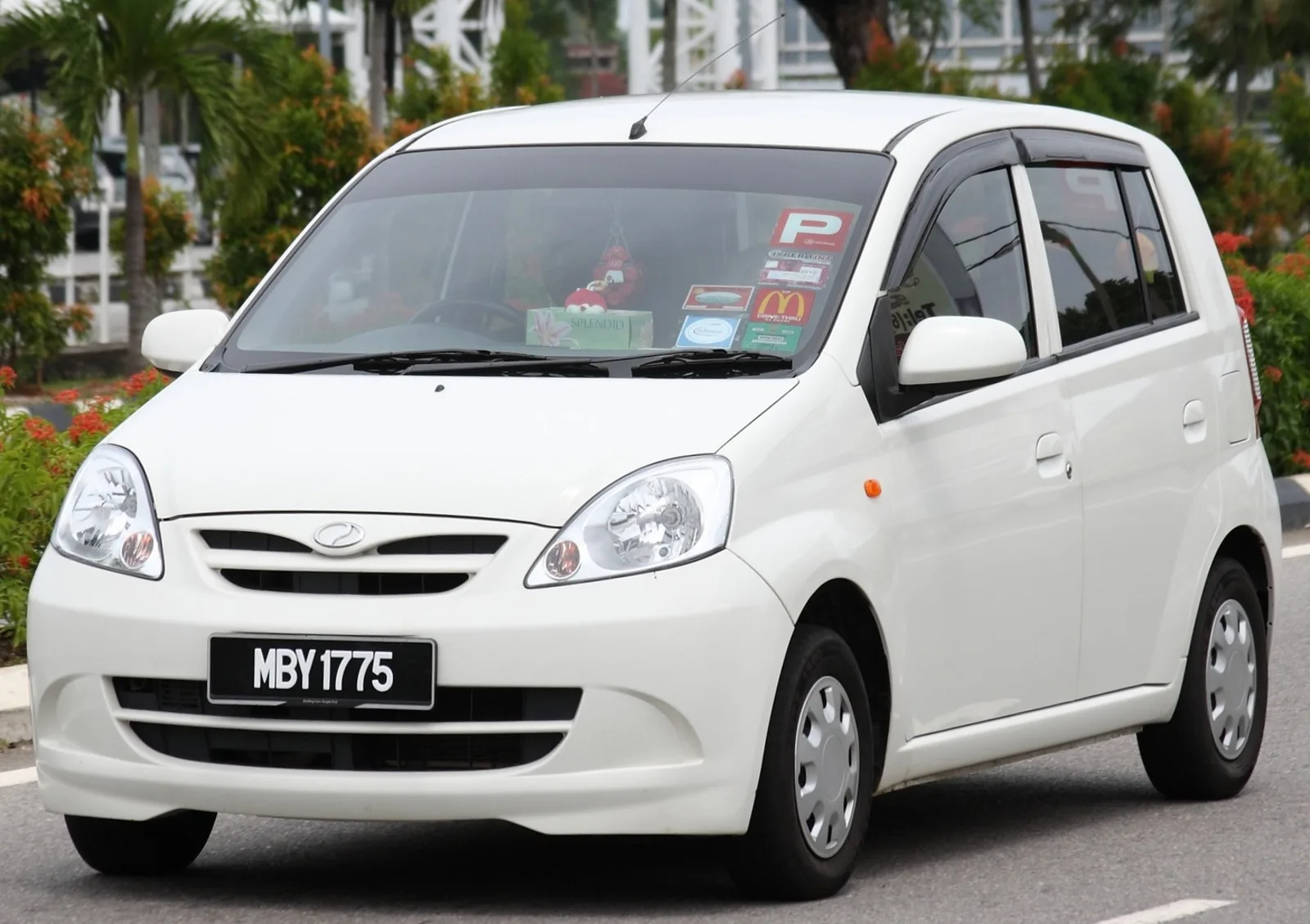
Three Daihatsu-based Perodua models: the 2001 Kelisa city car, the 2007 Viva that replaced it and the 2009 Alza, the maker's first purpose-built MPV.
The Perodua Kelisa, launched in 2001, and the Viva, launched in 2007, are Malaysian city cars based on Daihatsu Miras, the Viva replacing the Kelisa and the older Kancil. The Alza, launched in 2009 on a Daihatsu Boon Luminas, was Perodua's first purpose-built MPV and sold more than 400,000 by 2022.
A new car in Britain could cost under GBP 5,000 in 2002, provided it was a Perodua Kelisa, which undercut everything else on sale. That small Malaysian hatchback, named after a fish and built on Daihatsu foundations, led to the Viva, which was on sale until 2015, and then to the Alza, Perodua's first purpose-built MPV.
What is the Perodua Kelisa?
The Kelisa is a city car from Malaysian maker Perodua, launched in 2001 as the successor to the Kancil. It was sold alongside the older car until the Viva replaced both in 2007. Every Kelisa was based on the fifth-generation Daihatsu Mira (L700), with some hints of the Nissan Micra (K11).
The name comes from the arowana, a fish native to Malaysia that is known there as ikan kelisa. Perodua had been selling vehicles in the United Kingdom since 1997, and the Kelisa arrived there in 2002 as the replacement for the Nippa, a rebadged Kancil. Like that car, it was the cheapest new model on sale in Britain, starting at under GBP 5,000.
The Kelisa was the cheapest new car on sale in Britain, at under GBP 5,000.
How did the Perodua Kelisa range develop?
The Kelisa launched in three variants, the EX, GX and EZ, and kept the same three after its 2003 facelift. Around them Perodua ran a series of special editions, starting with a 2002 Limited Edition, followed by the SE in 2004 and the Imago in 2006.
That 2002 Limited Edition was recognisable by two-tone paint, leather seats and a leather-wrapped steering wheel. The facelift came on 21 October 2003 with a honeycomb grille, a new lower front bumper carrying amber indicators, a lower rear bumper with a reflector, side protector mouldings, a rear wiper, a roof antenna in the centre, a new meter panel and new wheel designs. Wheels grew from 13 inches to 14.
Buyers of the facelifted car chose from Gemilang Blue, Kristal White, Millenia Gold and Sparkling Silver. In spring 2004 Perodua relabelled the range by engine size, producing the 850 EX, 1000 GX and 1000 EX, and changed the gear ratios of the manual cars. The Limited Edition returned that year.
The SE, on sale from August to November 2004, was offered as the GXS (manual) and EZS (automatic). It had clear indicator lenses, front seats with fixed headrests, a painted centre cluster, a leather-wrapped wheel and a bodykit of rear spoiler and skirts. Regular cars kept yellow indicator lenses.
The Imago of 2006 was available as the GXQ and EZQ. It carried a silver centre cluster, leather seats embroidered with the Imago name, chrome door handles, a sporty spoiler and a light double-metallic finish called Metallic Pearl Jade. In February 2007 selected Kelisas gained built-in Bluetooth.
The EZ differed from the GX by adding an air ionizer, electrically adjustable mirrors and hands-free phone equipment with a holder. After the facelift, GX and EZ cars each had their own upholstery patterns.
What did Top Gear and the critics make of the Kelisa?
Opinion ran from affection to hostility. On Top Gear's second series James May drove a Kelisa, was generally impressed and likened it to the original Mini. Jeremy Clarkson, in his 2005 DVD Heaven and Hell, bought a Kelisa EX and promptly blew it up to make a point about its looks.
In April 2007 Clarkson named it the worst car in the world. The name, he wrote, was like a disease, and he imagined it being assembled in a jungle by people wearing leaves on their feet. The Malaysian Government objected, with a representative replying that no UK customer had complained.
Awards were kinder. The Kelisa won the NST Car of the Year in 2002, the NST MasterCard Compact Car of the Year in 2003 and the Compact Car category at the ASEAN Auto Car Awards for 2003/2004. In 2023 the Mighty Car Mods channel entered a Kelisa in K car GLOBAL, a 24-hour endurance event for kei cars run at Sepang International Circuit, fitting it with parts from an Australian Daihatsu Cuore that they carried in two luggage bags.
What is the Perodua Viva?
The Viva is a Perodua city car that went on sale on 10 May 2007, built on the sixth generation of the Daihatsu Mira (L250). Perodua first marketed it purely as the Kelisa's replacement, and only later, with the 660 BX, did it also take over from the Kancil. Its name is Italian for "long live".
It was previewed by the XX06 Concept Car at the 2006 KL International Motor Show. At launch there were six variants: the 660 EX and 850 EX, both manual, and four 1.0-litre cars, the SX (manual), EZ (automatic), SXi (manual) and EZi (automatic). The SX and EZ were sold as Standard, the SXi and EZi as Premium. Five colours were offered, with two more added in September 2007.
How did the Perodua Viva range change?
Through 2009 the Viva gained a cheaper base and a smarter top. The 660 BX arrived on 20 July 2009 as the new entry model and the replacement for the Kancil, lacking the audio player and speakers and the alarm and central locking of the 660 EX.
Three days later the Elite versions, the Elite MT, Elite AT and Elite EZi, replaced the 1.0 Standard and Premium cars at the top of the range. They had redesigned front bumpers with fog lamps, chrome door handles, a honeycomb grille in the rear bumper, a bonnet bulge and a new 14-inch alloy wheel. A 1.0 automatic appeared quietly, matching the 850 EX apart from its transmission and powertrain, and the 660 EX gained body-coloured bumpers and a CD player in place of its cassette deck.
In November 2010 the Elite Exclusive Edition slotted between the Elite and the Elite EZi, with leather upholstery, a unique exterior colour and differently finished wheels. From July 2012 every Viva, the 660 BX included, came with two SRS airbags, which had previously been limited to the EZi models.
March 2013 brought the 1.0 S automatic, which replaced the plain 1.0 automatic and added a stereo that plays MP3 and WMA files, a driver's vanity mirror, seat-back pockets, an under-seat tray and a seat height adjuster. Its gear shift bezel and centre cluster moved from unpainted plastic to silver paint, and "medium grade" fabric gave way to "high grade". The 660 EX and Elite EZi were quietly dropped the same month, their price lists removed from the website.
The Perodua Axia launched on 15 September 2014, and the Viva stayed on in a single 850 manual variant. Between March and April 2015 it disappeared from Perodua's website.
What engines did the Perodua Viva use?
The Viva used three-cylinder engines of 660 cc, 850 cc and 1000 cc. All were familiar units updated with DVVT variable valve timing and EFI fuel injection, and all had twin overhead camshafts, which gave stronger low-speed pull, fewer gear changes and more power at the top end.
- EF-VE 660 (659 cc) peaks at 7200 rpm with 35 kW (48 PS; 47 bhp). Torque is 58 N.m (43 lb ft), arriving at 4400 rpm. Daihatsu also put it in the Hijet.
- ED-VE 850 (847 cc) gives 39 kW (53 PS; 52 bhp) at 6000 rpm, with 76 N.m (56 lb ft) at 4000 rpm. It grew out of a Mira engine that debuted in 1986 on export versions.
- EJ-VE 1000 (989 cc) is the strongest: 45 kW (61 PS; 60 bhp) at 6000 rpm and 90 N.m (66 lb ft) at 3600 rpm. Some Daihatsu Sirions and the Perodua Myvi shared it.
Fuel economy ranged from 15.1 km/l (42.6 mpg) for the 1000 cc automatic to 18.7 km/l (52.8 mpg) for the 660 cc manual, with the 850 cc and 1000 cc manuals falling between the two. A 1-litre manual needed about 12.8 seconds to reach 100 km/h.
The torque band is not particularly peaky, and the time it takes to reach 70 km/h (43 mph) is good. Reaching 130 km/h (81 mph) is easy enough, though the engine drones there. Top speed is around 160 km/h (99 mph). Engineers also fitted a resin intake manifold and a cam cover that houses the air cleaner.
How big is the Perodua Viva, and how safe?
Because the Mira is a kei car, the Viva is small outside and turns in a tight circle. The boot holds 149 litres with the rear seats up and 449 litres with them down.
There are five seatbelts: four three-point belts, and a two-point belt for the centre of the rear bench. Suspension follows the usual small-hatchback pattern: MacPherson struts located by L-shaped lower arms in front, and a torsion beam axle with trailing arms behind. The 1000 cc cars have power steering, an optional automatic and a front stabiliser, while the 660 cc and 850 cc cars are basic, without power steering or an automatic.
Some models had ABS with EBD and brake assist, plus dual SRS airbags, and all had a collapsible steering shaft. From July 2012, to meet newer regulations, airbags and seat belt pretensioners became standard on every Viva. An airbag car can be spotted by its steering wheel: a chromed rather than moulded Perodua logo, with extra silver trim.
Where was the Perodua Viva sold, and how was it received?
Perodua exported the Viva to Singapore, Brunei, Sri Lanka, Nepal and Mauritius. Sri Lanka had an official launch in August 2008 with the same six variants as Malaysia. In Brunei, between 2010 and 2014, distributor Econ Motors sold only the BX, with the 660 cc engine and a five-speed manual, in Ivory White, Ebony Black or Glittering Silver.
Honours included the Value-for-Money Car of the Year title for cars of 1.3 litres and below from 2008 to 2014, the Autocar ASEAN Awards supermini category in 2007 and the Asian Auto Bosch Fuel Efficiency Awards in 2008. The Malaysia Book of Records also recognised it for a fuel economy challenge.
Motoring Magazine Singapore reviewed a 1.0 EZi in August 2008 and judged it good value, roomy enough for four adults and strong on practicality, though better materials and a quieter engine would help. Sgcarmart revisited the same variant in September 2009, expecting cheap maintenance but pointing to shortcomings in build quality, ride comfort and performance.
What is the Perodua Alza?
The first-generation Alza, the M500 series, is a B-segment MPV based on the Daihatsu Boon Luminas. Launched in November 2009 as Perodua's first purpose-built MPV, it was built until 2022, when a W100-series model based on the Daihatsu Xenia replaced it.
Perodua launched it on 23 November 2009 with 1.5-litre power in two trim levels, the Standard (EZ and SX) and the Premium (EZi and SXi), each with a manual or an automatic gearbox. In 2010 it became Malaysia's best-selling MPV, with nearly 42,000 sales, 15,000 more than the rival Proton Exora, averaging around 2,800 a month. By 2022 Perodua had sold more than 400,000 Alzas.
How did the Perodua Alza range change?
The range-topping Advanced (ZHV) joined in March 2010 with a bodykit that added skirts all round and a rear spoiler, leather covers for every seat, a 5-inch touchscreen and a 150-degree reverse camera. A limited M2 Edition followed in March 2011 in Midnight Blue, priced the same as the Advance on which it was based.
In February 2012 came a still cheaper SR (BX and BZ), priced below the Standard. It lacked a rear wiper and spoiler, had UV protection only on the front and main windscreen, and went without fog lamps, airbags, ABS, EBD and brake assist. July 2012 brought an updated Advanced with a 6-inch infotainment system with GPS navigation and a reverse camera.
The Alza S arrived in March 2013 alongside the Viva S and Myvi 1.3 SE, replacing the Standard and adding fog lamps, a leather-wrapped steering wheel, a rear spoiler, chrome door handles and painted door armrests. The first facelift followed in January 2014 in three grades, Standard, SE and Advanced, with a revised grille, bumpers and alloy wheels. Engine and transmission were unchanged, and the palette ran to five colours, from Passion Red and Mystical Purple to Glittering Silver, Ebony Black and Ivory White.
On 19 September 2015, with the Myvi XS, Perodua launched a new Alza S in Metallic Electric Blue. It replaced the Standard with the SE bodykit, clear tail lamps and fog lamps, at an unchanged price.
The second facelift arrived on 5 September 2018. Its cosmetic changes, a bigger lower intake, a two-bar grille, new side skirts and bumper and a redesigned tailgate garnish, went only to the SE and Advance. The Standard gained ABS. Every grade had new instrument graphics, a remote key and an improved evaporator, and the Advance got an Android-based head unit with navigation and a reverse camera.
What went wrong with the Perodua Alza?
The first-generation Alza earned a 4-star ASEAN NCAP rating. Build quality was the sore point. After its release, owners posted complaints about brake dust and faulty discs, poor sound insulation above 70 km/h, petrol fumes after refuelling, thin roof insulation, broken door levers, noises from the air-conditioning and steering rack vibration on rough roads.
Further complaints covered heat at the rear right seat, water entering through the headlamps, paint that scratched and chipped easily and uneven rustproofing.
Perodua issued no recalls on the Alza until May 2012, when it called in the Alza and the pre-facelift first-generation Myvi hatchback after finding that an extended air-conditioning pipe might lead to rust on the steering rack. In October 2014 photos of a dismantled rear axle on the new Alza went viral. Perodua said an accident was to blame, not faulty parts, and threatened legal action against those spreading the photos.
How do the Kelisa, Viva and Alza fit together?
The three models share a Daihatsu parentage and a Perodua line of succession, with the Viva taking over from the Kelisa and then the Kancil, and the Alza sitting above them as a larger family car.
| Model | Launched | Based on | Type | Fate |
|---|---|---|---|---|
| Kelisa | 2001 | Daihatsu Mira (L700) | City car | Replaced by the Viva in 2007 |
| Viva | 10 May 2007 | Daihatsu Mira (L250) | City car | Sole 850 manual after the Axia; off the website by April 2015 |
| Alza (first generation) | 23 November 2009 | Daihatsu Boon Luminas | B-segment MPV | Production ended 2022 |
They also overlapped in the showroom. The Alza S, Viva S and Myvi 1.3 SE all appeared together in March 2013, and the Alza S of September 2015 was launched alongside the Myvi XS.