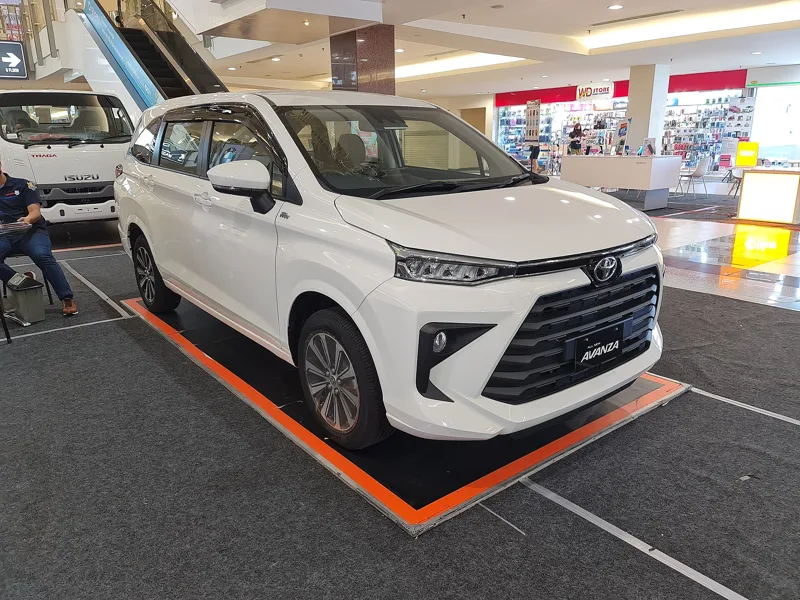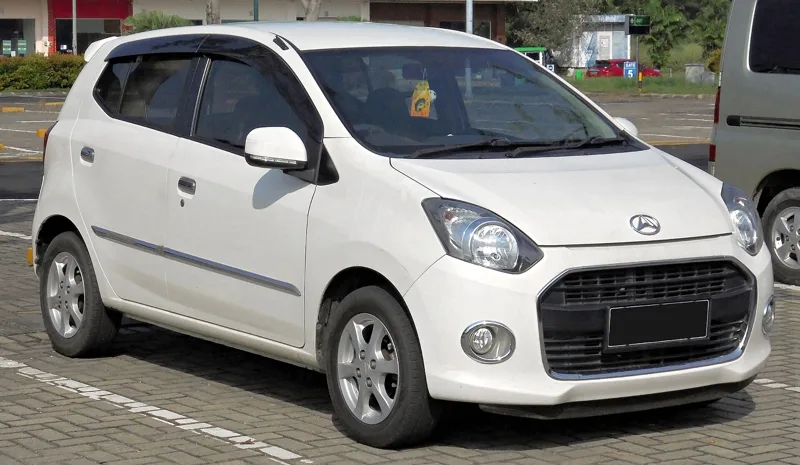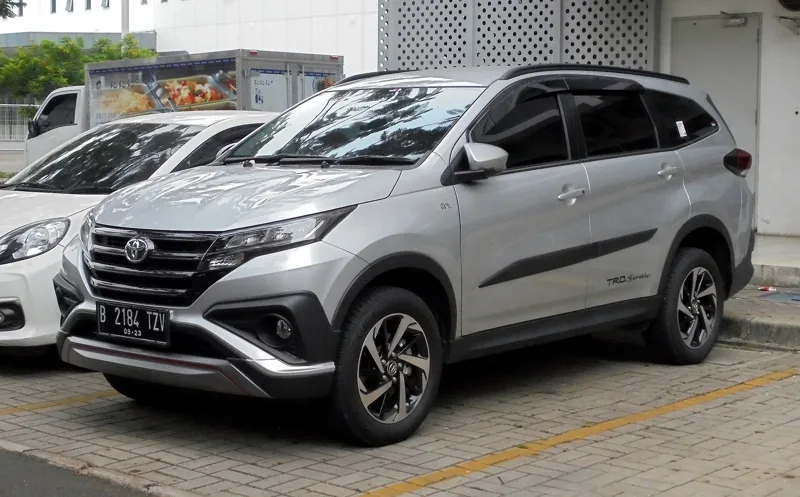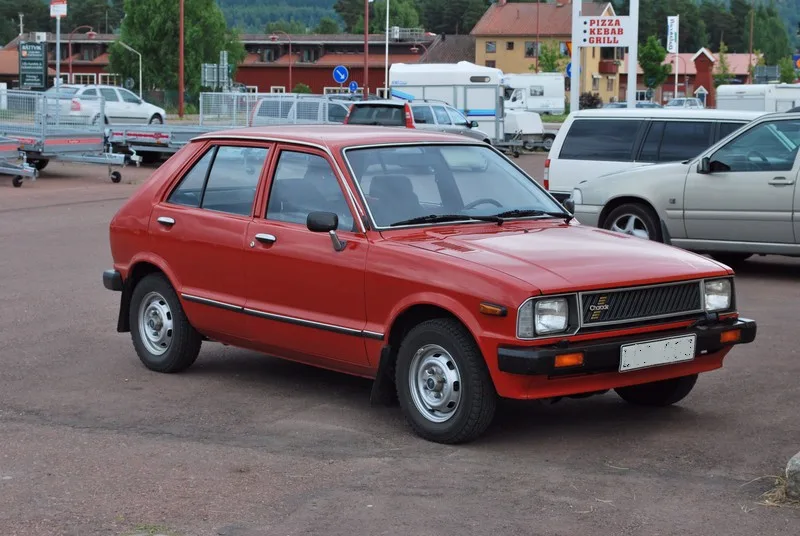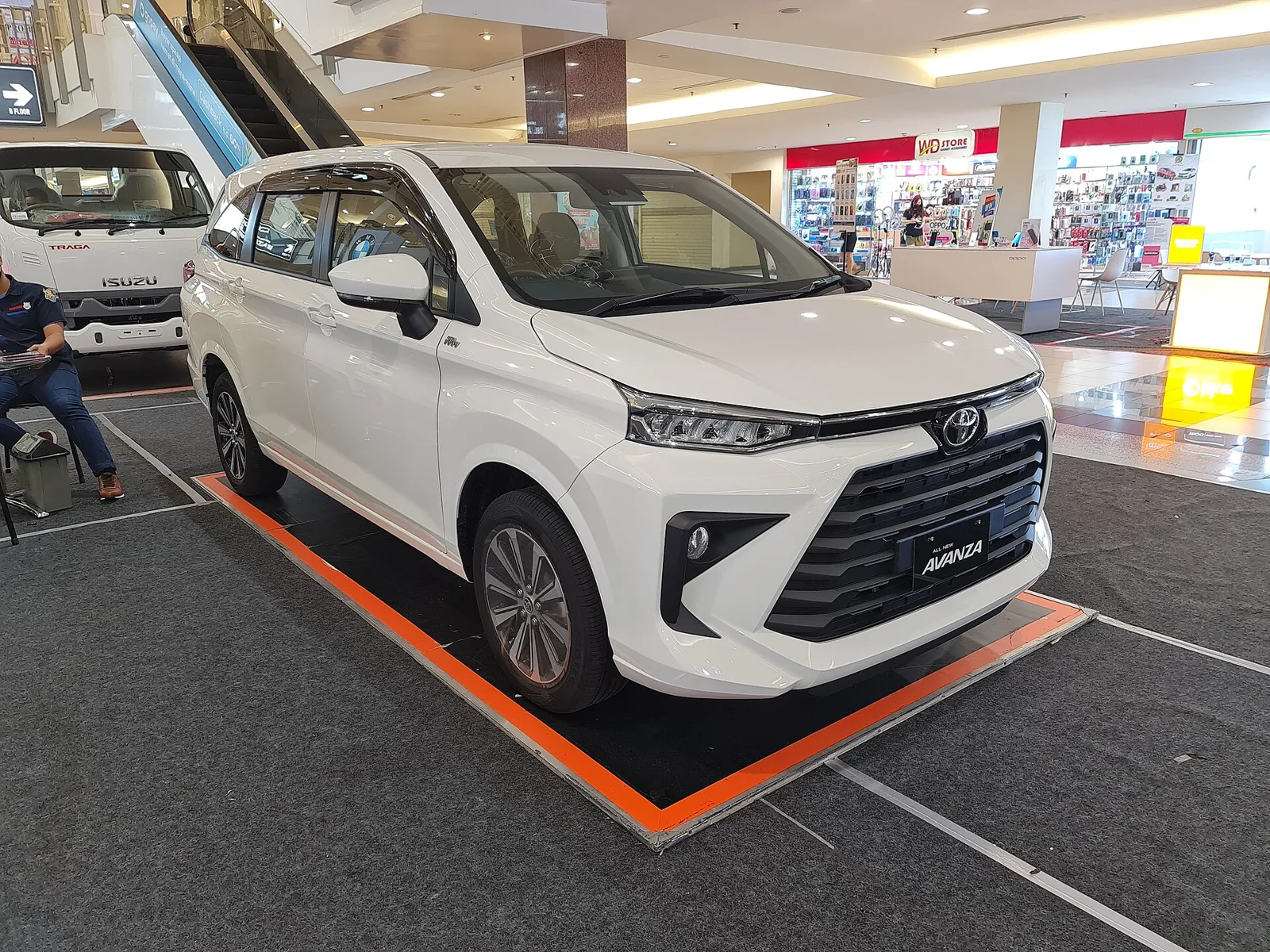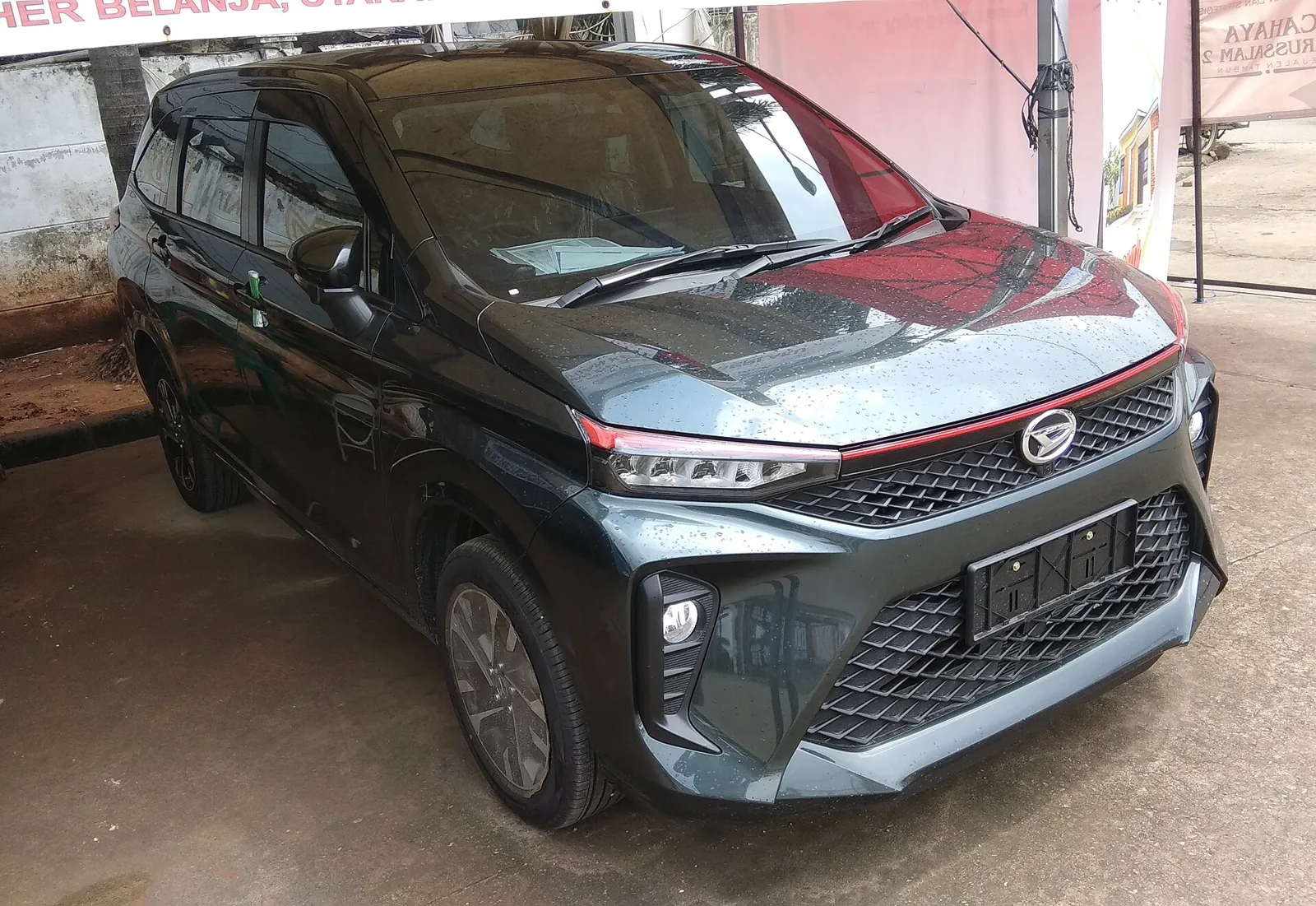
A three-row people carrier built in Indonesia from 2003, sold as a cheaper Daihatsu alongside the Toyota Avanza, and rebuilt as a front-drive family in 2021.
Launched in 2003 and 2004, this three-row MPV was the Daihatsu-badged, lower-priced counterpart to the Avanza. Most were built in Indonesia, and the family reached 2,750,576 sales by November 2018 before switching to front-wheel drive in 2021.
The Daihatsu Xenia is the cheaper twin of the Toyota Avanza, a three-row multi-purpose vehicle developed by Daihatsu and sold by both companies. Built mainly in Indonesia, the pair started life as an entry-level MPV for Indonesia and other emerging markets. Over three generations it became one of the best-selling passenger vehicles in its home market.
What are the Daihatsu Xenia and Toyota Avanza?
The Avanza and Xenia are multi-purpose vehicles, mainly sold with three rows of seats. The Avanza is the Toyota badge, while the Xenia is the Daihatsu version and is generally offered as the more affordable choice. Both were built mainly in Indonesia by Astra Daihatsu Motor.
The Avanza's spiritual predecessor was the Kijang. Toyota later split the Kijang programme into two models, the Avanza and the larger Kijang Innova, to widen its reach in the MPV sector.
A three-row family car built for emerging markets that grew into Indonesia's best-selling passenger vehicle.
Why were the Avanza and Xenia created?
The two cars were conceived by Toyota, Daihatsu and their Indonesian subsidiaries in the wake of the 1997 Asian financial crisis. The price of the best-selling Kijang had risen sharply, while the Indonesian economy had only just recovered. Feasibility studies began in 1999, when Toyota-Astra Motor proposed a more affordable vehicle under the Kijang name.
Toyota handed development and manufacturing to Astra Daihatsu Motor, because Daihatsu had experience with low-cost vehicles in Indonesia. Toyota and Daihatsu put US$90,000,000 into the project, which Toyota referred to as the U-IMV, or Under-IMV, a reference to the Innova that sits in a higher segment on the IMV platform.
The names were chosen with some care. Avanza comes from the Spanish avanza, meaning get moving, and from the Italian avanzato, meaning advance. Xenia comes from the Greek concept of hospitality, and the Veloz name later came from the Spanish word for fast.
How did the first-generation chassis work?
Unlike the Kijang and the Kijang Innova, which used full body-on-frame chassis, the first two generations of Avanza and Xenia used a semi-unibody. The front half was body-on-frame, while the rear half was monocoque. That hybrid made it possible to keep the rear-wheel drive layout of the Kijang and its ability to carry heavy loads.
The arrangement had its downsides. According to journalists, the car could ride unsteadily at high speed and was unrefined in noise, vibration and harshness. The second generation kept the same platform, and it took four years of development.
How did the first Avanza launch?
The Avanza was unveiled on 11 December 2003 and released on 15 January 2004. It was the first joint project of Toyota and Daihatsu in Indonesia, and Toyota chief engineer Kaoru Hosokawa led its development. It was built at Astra Daihatsu Motor's Sunter plant, with 61 percent of its parts sourced locally.
Toyota expected to sell 30,000 cars in 2004. By January, however, there had been 25,000 bookings, and production capacity was raised. The company sold 43,936 units that year, making the Avanza the third best-selling car in Indonesia. It took the top spot from 2006, replacing the Kijang Innova, which had held the title in 2005.
What engines and grades did the first Avanza use?
At launch the Avanza came in two grades, the 1.3 E and 1.3 G, both with a 1.3-litre K3-DE four-cylinder and a five-speed manual. A limited-production 1.3 S with a four-speed automatic followed in July 2004. The engine was later upgraded to VVT-i and designated K3-VE, and anti-lock brakes and extra sound insulation were added.
The first facelift came in July 2006 with a new grille, bumper, beige interior and tail lights. The 1.3 E and G moved to the K3-VE engine, which met Euro 2 standards. In October 2006 the flagship 1.5 S arrived with a 3SZ-VE 1.5-litre VVT-i engine and its own bumpers, side skirts and grille.
How was the first Xenia positioned?
The Xenia was the more affordable alternative to the Avanza in Indonesia. It had less safety equipment, but it offered more dealer-fitted accessories such as bumper guards, a rear spoiler and side mouldings. Its grades were the 1.0 Mi, 1.0 Li and 1.3 Xi, and several accessory packages were offered on the Li and Xi.
The Xenia used the same 1.3-litre engine as the Avanza and a 989 cc EJ-DE three-cylinder for the 1.0-litre variant. Its output was 42 to 46 kW (57 to 63 PS; 56 to 62 hp) at 5,600 rpm, with 90 N-m at 3,600 rpm. The 1.0-litre car had 13-inch wheels and only a five-speed manual.
How did the Xenia reach China?
The Xenia also went on sale in China. It was previewed as the D-01 crossover prototype at the Auto China show in November 2006 and reached showrooms in June 2007. Five-seat and seven-seat models were offered with either a 1.3-litre or 1.5-litre engine, and FAW Jilin Auto built the car.
The Chinese car was sold as the FAW Senya M80 from 21 June 2007. A crossover-styled Senya S80 followed and was revealed at the 2010 Beijing Auto Show. The line later became the Senia brand. FAW sold 223,461 units before the Senya M80 and S80 were discontinued in 2016, and the car was also rebadged in North Korea as the Ppeokkugi 1509 from 2013.
Daihatsu left the Chinese market in January 2010. The joint venture for auto parts was dissolved that year, but production continued under licence with the FAW marque.
What changed in the second generation?
The second-generation Avanza was launched in Indonesia on 9 November 2011, again with Kaoru Hosokawa leading development. It was about 20 kg (44 lb) lighter, and Toyota's South African division said the lower weight, low rolling resistance tyres, better air conditioning control and electric power steering gave a substantial gain in fuel efficiency.
The track was 25 mm (1.0 in) wider, with wider wheels for stability. The front used MacPherson struts and the rear a four-link layout with a lateral control rod. Thinner seatbacks added knee room in the second and third rows, and the boot was 18 mm (0.7 in) deeper. The Xenia arrived on the same day for sale in Indonesia only.
The second-generation Indonesian range comprised the 1.3 E, 1.3 G, 1.5 G and 1.5 Veloz. Dual SRS airbags and front seatbelts with force limiters and pre-tensioners became standard on 15 May 2013.
What did the facelifts change?
The first facelift came on 12 August 2015, led by chief engineer Kazuhiko Yamashita. It replaced the 1.3-litre K3-VE with the 1NR-VE and the 1.5-litre 3SZ-VE with the 2NR-VE, both with Dual VVT-i. ABS and EBD became standard across the range, and a double-DIN head unit with Bluetooth was added.
A special Avanza Limited Edition was shown at the 2017 Gaikindo Indonesia International Auto Show, with only 150 units built on the 1.5 G in manual and white. The second facelift came on 15 January 2019, led by Kazutoshi Sakamoto. It added LED headlights, a shark fin antenna, digital air conditioning controls and keyless entry on the Veloz.
How did the Veloz and Transmover fit into the range?
The Veloz was introduced to replace the S grade of the previous generation, and it later became a model in its own right. In Malaysia the 1.5 S was known as the Veloz in Indonesia. The second generation launched there on 11 January 2012, and unlike the first generation it was not assembled in Malaysia, where the Perodua Alza took that role.
In November 2016 Toyota-Astra Motor introduced the Transmover, a downgraded Avanza below the E grade for fleet use. It also replaced the Vios-based Limo sedan for taxi duties. On 9 August 2021 the Veloz received a GR Limited variant with a Gazoo Racing bodykit, and production of that version ended in October 2021 with 3,805 units.
What changed with the third generation?
The third-generation Avanza was launched on 10 November 2021. It moved away from the rear-wheel drive layout and used the front-wheel drive Daihatsu New Global Architecture with a full unibody. Development was led by chief engineer Eiji Fujibayashi, and the Xenia launched at the 28th Gaikindo show on 11 November 2021.
The body is 205 mm (8.1 in) longer and 70 mm (2.8 in) wider, with a wheelbase 95 mm (3.7 in) longer and a cabin 160 mm (6.3 in) longer. The turning radius rose only slightly, to 4.9 m (16.1 ft), while the weight is claimed to have dropped by around 45 kg (99 lb). The 1.3-litre 1NR-VE and 1.5-litre 2NR-VE gained 1.5 kW (2.0 PS), and automatic models use Daihatsu's Dual-Mode CVT.
Where is the third-generation Avanza sold?
In the Americas the third-generation car was launched in Mexico on 14 March 2022 and in Peru in June 2022, both with the 1.5-litre 2NR-VE. Costa Rica followed on 26 July 2022 in High Line trim with a CVT. In Asia it reached Bangladesh and the Philippines in 2022, and Vietnam marketed it as the Avanza Premio from 22 March 2022.
The Toyota Veloz is a separate nameplate that spun off the previous Veloz flagship. It has a redesigned front, a wider body by 20 mm (0.79 in) with aero kits, rear disc brakes and a digital instrument cluster with a 7-inch display. It is built in Karawang, Indonesia, and since 2022 in Rawang, Malaysia, where Perodua also builds the Alza.
The Perodua Alza, a second-generation car based on the Avanza, went on sale in Malaysia on 20 July 2022. It sits 45 mm (1.8 in) lower than the Avanza, with a ground clearance of 160 mm (6.3 in).
How many have been sold?
By October 2011 around 1 million Avanza and Xenia units had been sold, including about 113,000 exports. In 2012 the pair was the second best-selling MPV model globally, behind the Chrysler minivans. By November 2018 about 2,750,576 units had been sold, including 1,714,196 Indonesian Avanzas, 393,380 exported Avanzas and around 643,000 Xenias.
The Avanza was Indonesia's best-selling passenger car from 2006 to 2019 and again in 2021, before Honda Brio overtook it in 2020 and 2022. At its peak in 2013 it made up 17 percent of total car sales in Indonesia, or 22 percent with the Xenia included. By December 2019 around 1.8 million Avanzas had been sold in Indonesia.
What recalls affected the Avanza and Veloz?
In January 2024 Toyota recalled 6,630 Philippine Avanzas and Veloz cars built between 12 September and 13 December 2022. A fault during assembly had damaged the front disc brake slide pin boot, which could let water in and cause early brake pad wear. A separate recall followed for welding on the side impact beam of the right front door in Indonesia and the Philippines.
In February 2024 another recall covered Avanza and Veloz cars in Indonesia, Malaysia and the Philippines, along with the Perodua Alza, after the front shock absorber nuts were tightened incorrectly. That recall covered 163,654 Indonesian units and 36,930 Philippine units.
What are the Daihatsu Xenia specifications?
| Specification | Detail |
|---|---|
| Avanza launch | Unveiled 11 December 2003, released 15 January 2004 |
| First-generation engine | 1.3-litre K3-DE, later K3-VE with VVT-i |
| Xenia 1.0 engine | 989 cc EJ-DE three-cylinder, 42 to 46 kW (57 to 63 PS; 56 to 62 hp) at 5,600 rpm |
| Second generation launch | 9 November 2011 |
| Third-generation launch | 10 November 2021, front-wheel drive |
| Third-generation length | 205 mm (8.1 in) longer than before |
| Third-generation turning radius | 4.9 m (16.1 ft) |
| Third-generation weight | Down by around 45 kg (99 lb) |
| Perodua Alza ground clearance | 160 mm (6.3 in) |
| Global sales by November 2018 | About 2,750,576 |
| Chinese Senya production sales | 223,461 units |