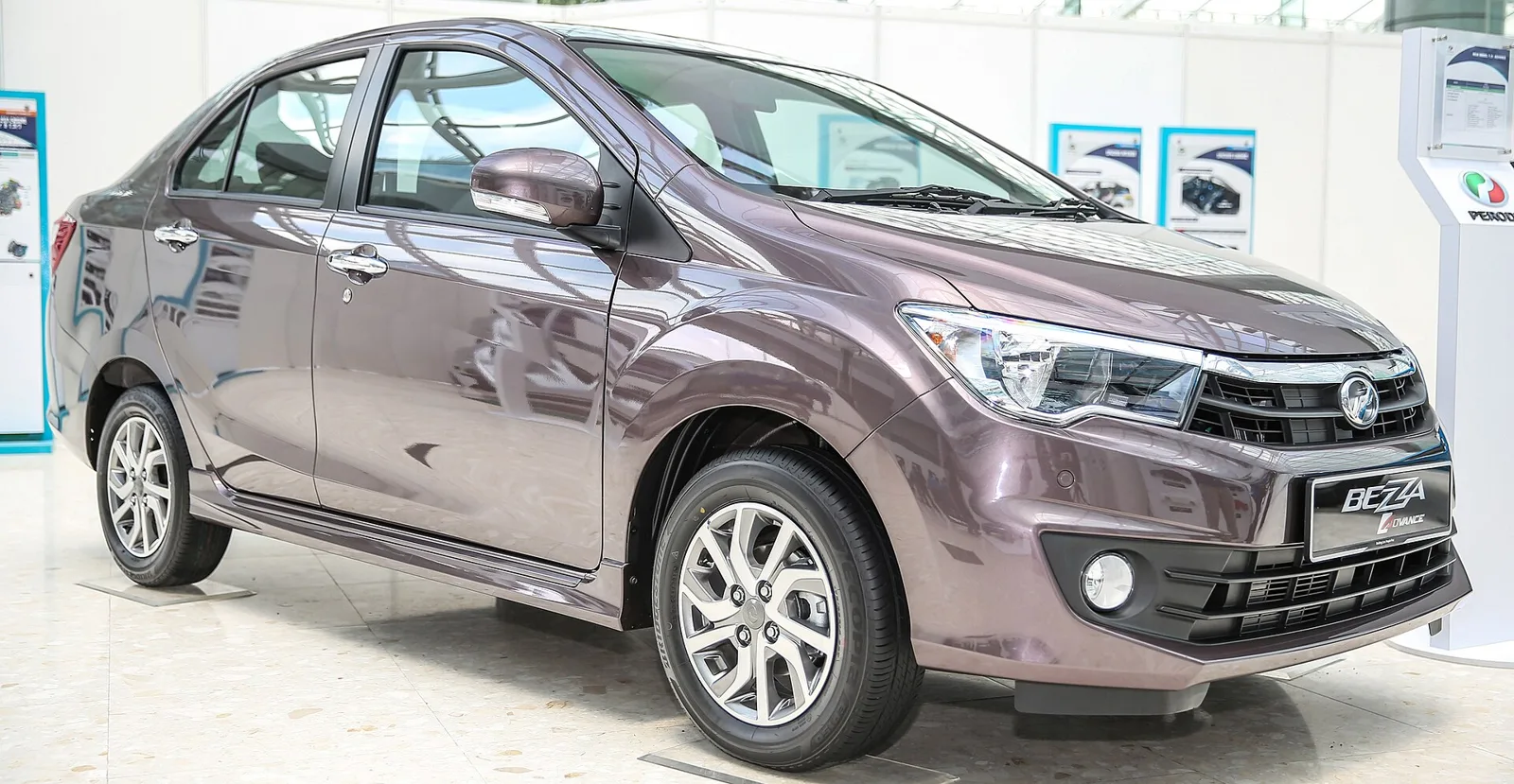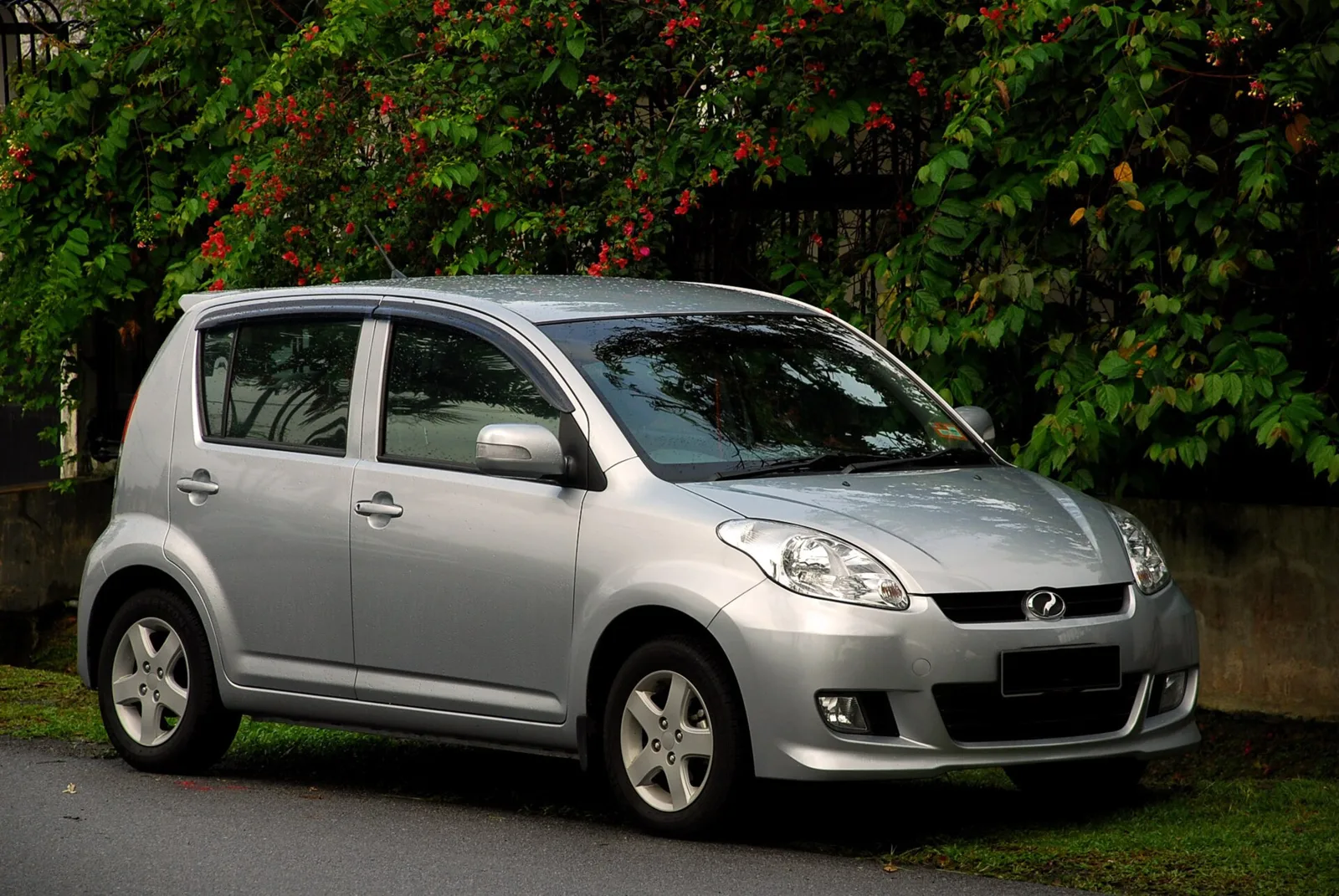
A B-segment hatchback that started on a Daihatsu platform, became Malaysia's top seller and has sold 1.487 million units across three generations.
The Perodua Myvi is a B-segment hatchback from Malaysia's Perodua, launched in 2005 and produced in three generations. It has been the country's best-selling car for many years, with 1.487 million units sold by the end of 2024. It began as a Daihatsu-based car and later became a fully Malaysian design.
The Perodua Myvi is a subcompact car built by the Malaysian manufacturer Perodua since 2005. It sits in the B-segment and draws on Daihatsu and Toyota engineering, although the third generation was designed and made in Malaysia. It has been the best-selling car in Malaysia for much of the years since its launch, and by the end of 2024 Perodua had sold 1.487 million units.
What is the Perodua Myvi?
The Myvi is a B-segment hatchback that Perodua launched in 2005 as its first car in that class. Earlier Perodua models were A-segment cars based on Daihatsu kei vehicles. The name is said to come from the words My Vehicle, My Vision and Malaysian Vision, and the car has since become the company's best-selling nameplate.
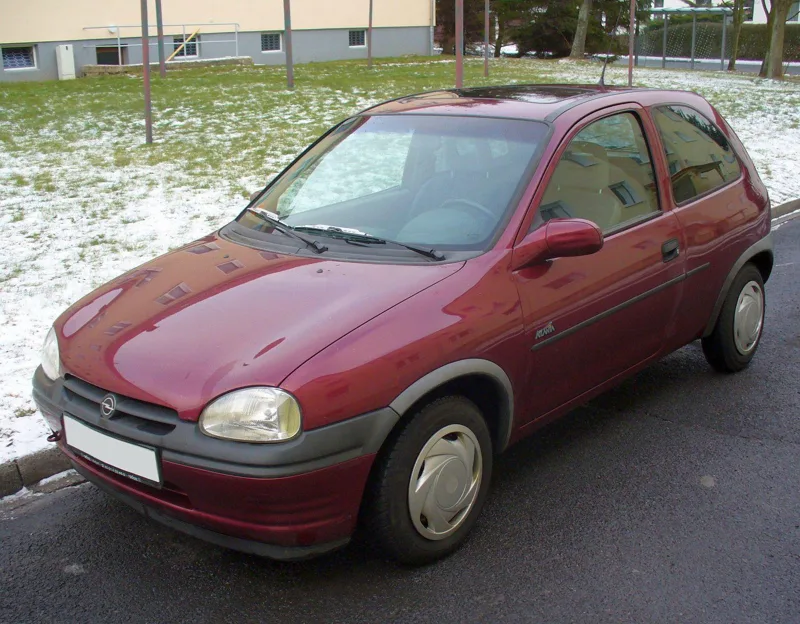
The model went through three generations, each with its own platform story. The first was closely based on the Daihatsu Boon, which was sold elsewhere as the Sirion, Passo and Justy, while the third generation used the same engine family but was otherwise an in-house Perodua design.
Built first as a niche Daihatsu-based car, the Myvi became Malaysia's top seller in its first full year on sale.
Where did the first-generation Myvi come from?
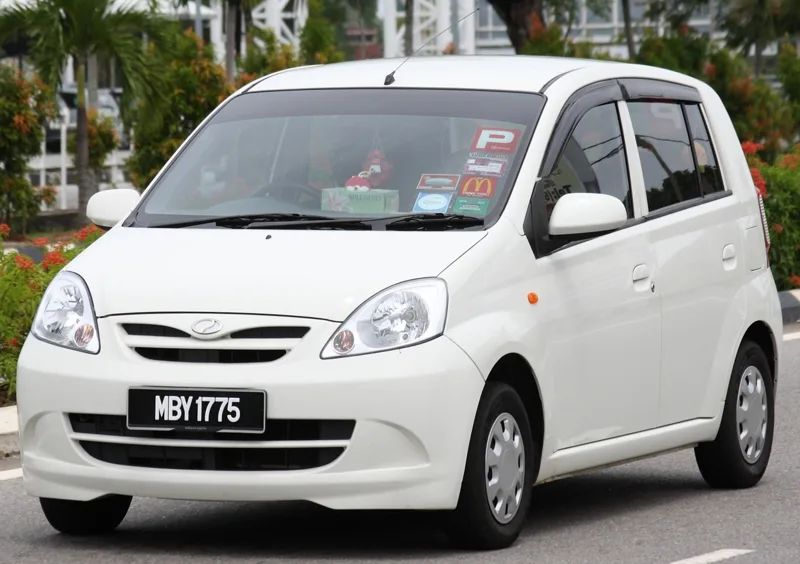
The first Myvi went on sale after its debut on 25 May 2005. Its foundations came largely from the Boon, the first-generation Daihatsu design, and Perodua had built mostly A-segment cars before it. The company intended the Myvi as a niche model in a market dominated by sedans, and it expected to sell 4,000 cars a month.
Demand was far stronger than that. Orders had reached 52,000 by August 2005, roughly a tenth of Malaysia's annual car sales, while only about 10,000 cars had been delivered. By the second half of 2006, orders were averaging 7,000 units a month.
The Myvi came in five trims at launch: 1.0SR and 1.3SX with five-speed manual gearboxes, 1.3EZ and 1.3EZi Premium with four-speed automatics, and a 1.3SXi manual. A Special Edition added a body kit with modified bumpers, side skirts and a spoiler. Dual airbags and ABS were fitted only to the 1.3 Premium.
Power came from two water-cooled four-stroke units, a 1.0-litre EJ-VE three-cylinder and a 1.3-litre K3-VE four-cylinder. Both used Dynamic Variable Valve Timing and conventional electronic fuel injection, and both were made locally at Perodua's Serendah plant.
Several features came across from the Sirion and were new for Perodua, including four-hole injectors, foamed urethane insulation in the pillars, an immobiliser and a body structure designed for pedestrian safety. A flexible flywheel reduced vibration in the manual versions.
How did the first Myvi sell and get reviewed?
The launch mattered because it was the first time Perodua competed directly with Proton, the national carmaker, which was preparing a similar-sized rival called the Savvy. The Myvi 1.3 beat the Proton Savvy 1.2 to win Car of the Year 2005/2006 from Autocar ASEAN, a magazine for buyers in Malaysia.
The Savvy arrived a few months after the Myvi and did not dent Myvi sales. Demand for the Perodua also lifted overall car sales in the country and the company's market share in 2006.
Reviews from abroad were mixed. Richard Hammond, presenting on BBC Top Gear, praised the Myvi's looks and said it handled much like a Yaris, returned close to fifty mpg and came with a three-year warranty. Jeremy Clarkson was far less impressed, criticising the brakes, ride, seats and interior, and joking that it was a car you drove with a long face.
In a 2009 survey, J.D. Power and Associates ranked the Myvi highest for initial quality in the compact car segment among new-vehicle owners.
Which special editions did the first Myvi get?
Perodua facelifted the first generation on 22 August 2008. The update brought a new grille, front and rear bumpers, bonnet, alloy rims, dashboard colour and instrument panel design, with an MP3 and WMA player and new seat fabric. The 1.3 Premium gained UV-protection glass and a seat height adjuster, plus upgraded audio with USB and Bluetooth.
The SE followed on 10 October 2008. It had revised bumpers, clear rear lamps, dark headlamps, an amber dashboard display, leather upholstery and a 2-DIN CD head unit with MP3, WMA, USB and Bluetooth support. It was offered only with the 1.3 engine, in manual or automatic form.
The Exclusive Edition, launched in October 2009, kept only the side skirts from the SE. Colours were limited to Ebony Black, Ivory White and Medallion Grey. A solid finish cost RM51,000, and metallic paint added RM500. The Limited Edition in July 2010 used the 1.3 automatic with a unique Dazzling Red finish, LE carpet mats and decorative cubic printing on the interior trim.
How did the first Myvi reach Indonesia and the UK?
Indonesia took the first-generation car as the Daihatsu Sirion from April 2007. The Indonesian version did not use the global Sirion styling, but instead kept Perodua's exterior, interior, bumpers and lamps. It was sold only with the 1.3-litre engine in D and M trims, with the M adding aerokits and leather seats.
PT Astra Daihatsu Motor sold 1,030 of the Indonesian Sirion in 2010 and 2,857 in 2011. Perodua also exported the car to the United Kingdom, where it remained the final model sold before the brand left the country in 2013.
What changed with the second-generation Myvi?
The second generation, codenamed D54T, launched on 16 June 2011 with the slogan Lagi Best. It kept the 1.3-litre K3-VE engine, but Perodua said the new electric power steering added 10 hp to the figures. The larger 1.5-litre 3SZ-VE, shared with the Alza, came from Daihatsu's Karawang plant in Indonesia.
Dual SRS airbags were standard across the range, the first for a nationally badged car in Malaysia. A three-point ELR centre rear belt replaced the two-point version, and ISOFIX was fitted as standard. ABS and EBD were available on the 1.3 Premium, 1.3 Elegance and all 1.5 variants. In April 2014 the base 1.3 was replaced by an XT model that added equipment at no extra cost.
The 2011 car was a rebadged Daihatsu Boon from Japan, but it had different styling, equipment and engines. It came with a four-speed automatic or a five-speed manual, and unlike the original Boon it was not offered with a CVT.
What did the 2015 Myvi facelift change?
Bookings for the 2015 facelift opened on 7 January 2015, and the car went on sale on 15 January. It was produced in six trim levels across two engines. The powertrains carried over, with the 1.3 producing 90 hp and 117 Nm and the 1.5 producing 102 hp and 136 Nm.
Projector headlamps and Bluetooth stopped being standard, but the equipment list grew elsewhere. The 1.5 Advance got a multimedia system with navigation and a reverse camera. Among the 1.5 models, projector headlamps with guide lights were a first for a Malaysian-made B-segment car, and the anti-snatch hook first seen in the Axia arrived too.
How safe was the 2015 Myvi?
Perodua said the 2015 Myvi earned a four-star ASEAN NCAP rating after safety upgrades. The Standard G base still had no ABS, EBD or brake assist, whereas the Premium X, SE and Advance carried all three. Those upper trims still had only two airbags, and no electronic stability control or traction control was offered.
Because the entry car lacked those systems, the rating most likely covered only the upper trims. That distinction matters for buyers comparing the entry car with the range-topping versions.
In Indonesia the second generation was sold as the Daihatsu Sirion from 23 July 2011, launched at the Indonesia International Motor Show. Sales there were 2,857 in 2011, 6,663 in 2012 and 2,374 in 2013. Brunei received the 1.5 SE from April 2016 through the distributor GHK Motors.
What made the third-generation Myvi different?
The third generation was rumoured for late 2017 or early 2018. Perodua opened bookings on 8 November 2017 and showed the car at the Malaysia Autoshow, held at MAEPS in Serdang, from 9 to 12 November. The third-generation car was launched on 16 November 2017 under the D20N project code.
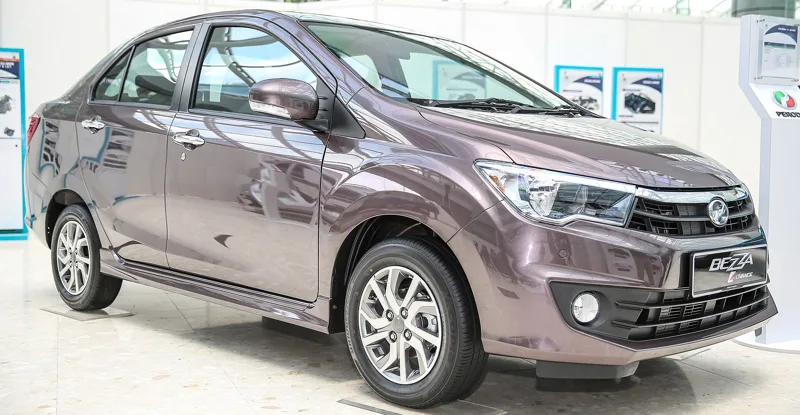
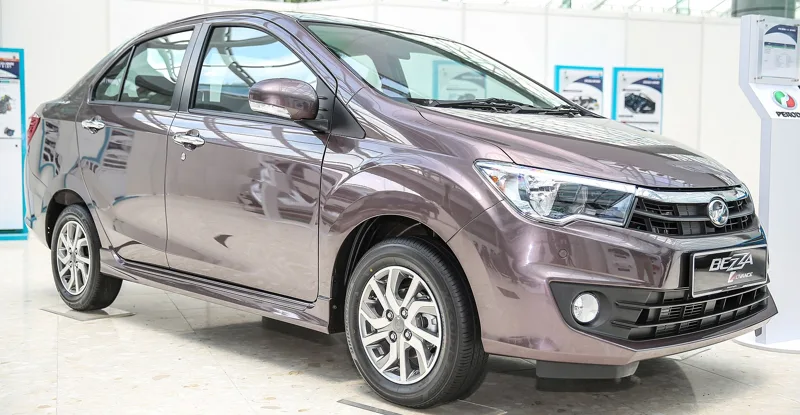
It was drawn up in-house, with Perodua's styling team under Muhamad Zamuren Musa, who had also penned the Bezza. Although the car was not a rebadged Boon, Toyota advised Perodua and supplied engines during development. The third generation was therefore a new car, not a copy of the Daihatsu design.
Standard kit included LED reflector headlights, manual levelling, LED taillights, electric mirrors, reverse sensors, a full-size spare, keyless entry and a shopping hook. The 1.3 had 14-inch alloys with a seven-spoke design, while the 1.5 had 15-inch alloys with a dual-spoke design and a dual-tone finish.
A GT concept with a different front bumper, flared arches, 17-inch wheels and a larger rear spoiler was shown at the 2018 KL International Motor Show. It was a styling exercise rather than a production model.
What engines does the third-generation Myvi use?
Perodua reworked both engines for better fuel economy and to earn the Energy Efficient Vehicle standard. The 1NR-VE 1.3-litre delivers 70 kW (95 PS; 94 hp), peaking at 6,000 rpm, with 121 Nm at 4,000 rpm. The 2NR-VE 1.5-litre makes 76 kW (103 PS; 102 hp) at 6,000 rpm, with 137 Nm at 4,200 rpm.
Both engines have double overhead camshafts and Dual VVT-i. The 1.3 could be had with a five-speed manual or four-speed automatic, while the 1.5 came only with the automatic. Perodua also made the top 1.5 AV the first Malaysian-branded car with Advanced Safety Assist.
What safety equipment did the third-generation Myvi offer?
Advanced Safety Assist, usually shortened to A.S.A., was offered on the top 1.5 AV and combined four systems. The four systems were a forward collision warning, automatic emergency braking, a front departure alert and a pedal misuse control. It was a notable step for a Malaysian-branded car at the time.
In July 2020 the Myvi received minor updates, including ASA 2.0 on every 1.5 model as standard, with the 1.3 Premium X offering it as an option. Granite Grey was extended from the 1.5 to the 1.3 Premium X at the same time.
How did the 2021 facelift change the Myvi?
The facelifted third generation launched on 18 November 2021. Perodua Smart Drive Assist, also called ASA 3.0, replaced ASA 2.0 and came as standard on every variant except the base 1.3 G, where it was an option. The line-up shrank to five variants.
The four-speed automatic used since the first generation was replaced by a D-CVT. The five-speed manual was dropped because it accounted for only 1 percent of sales. The range-topping AV added adaptive cruise control, blind-spot monitoring, a rear cross-traffic alert, plus lane departure warning backed by prevention.
How did the third-generation Myvi sell?
After one week on sale, 1,000 units had been delivered. In December 2017 the figure was 4,500, and in January 2018 about 11,000. Models with the 1.5-litre engine took 85 percent of the bookings. Deliveries reached 28,000 in March 2018, 38,000 in May 2018 and 100,000 in February 2019.
A supply disruption at one vendor briefly halted production in August 2018. Perodua promotes the Myvi as Malaysia's best-selling car in 12 of the 16 years since 2006, and its highest sales year for the third generation was 2021, with 47,525 units.
Malaysian reviewers were broadly positive. Hafriz Shah of paultan.org praised the looks, quality and features, and said that buyers with under RM100,000 should look at the Myvi first. Kon of evomalaysia.com called it stylish, affordable and practical, though not for enthusiasts, and noted that the predecessor had more interior space.
Awards came quickly. The Myvi won the Budget Car title at the 2017 iCar Asia People's Choice Awards, Vehicle of the Year 2018 at the DSF.my Allianz awards, and the Entry Level Car of the Year at Malaysia's Car of the Year awards. It also won Malaysia's Good Design Mark in 2018 and was named one of the best three city cars in 2019.
What are the Perodua Myvi specifications?
| Specification | Detail |
|---|---|
| Class | Subcompact, B-segment hatchback |
| First generation launch | 25 May 2005, M300 |
| First generation engines | 1.0-litre EJ-VE I3; 1.3-litre K3-VE I4, both with DVVT |
| Second generation launch | 16 June 2011, M600, D54T project |
| Second generation 2015 output | 1.3: 90 hp, 117 Nm; 1.5: 102 hp, 136 Nm |
| Third generation launch | 16 November 2017, M800, D20N project |
| Third generation engines | 1.3-litre 1NR-VE; 1.5-litre 2NR-VE, both Dual VVT-i |
| Third generation output | 1.3: 70 kW (95 PS; 94 hp); 1.5: 76 kW (103 PS; 102 hp) |
| Transmission, third generation | D-CVT only from the 2021 facelift |
| Best-selling run | 2006 to 2014, then 2018 to 2022 |
| Total sales to end of 2024 | 1.487 million units |