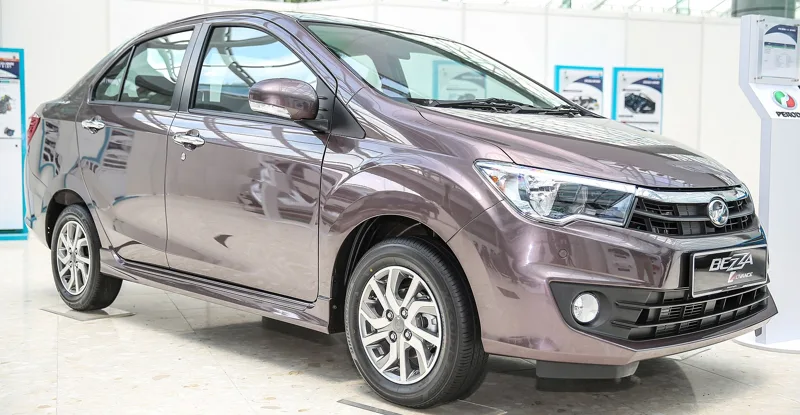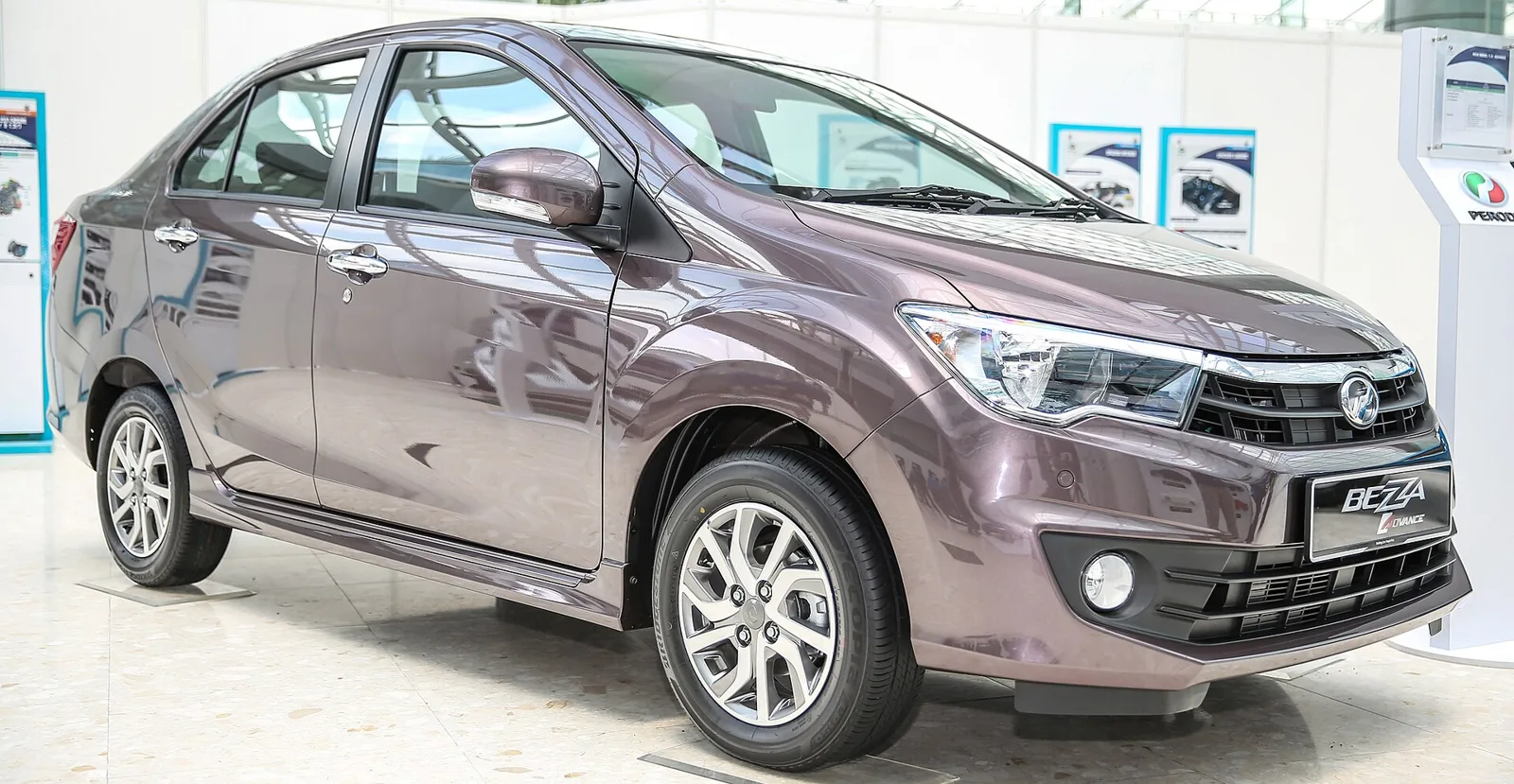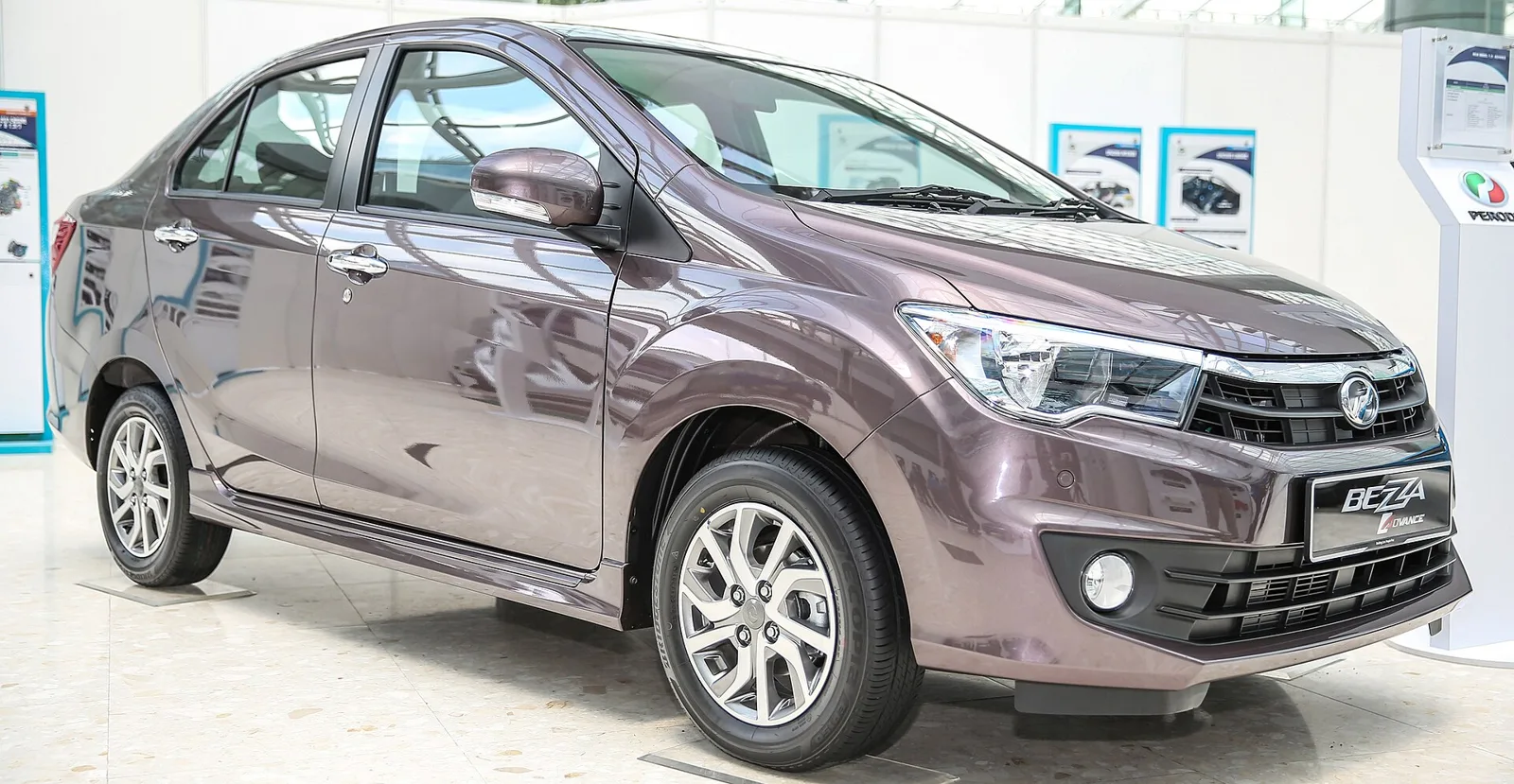
A 2016 sedan built on the Axia platform, with 1.0 and 1.3-litre engines, an awards run and strong early sales in Malaysia.
The Perodua Bezza is a Malaysian sedan that Perodua launched on 21 July 2016 as its first sedan. Built on the Axia platform, it came with a 1.0-litre or 1.3-litre engine and reached third place among Perodua models by 2021.
The Perodua Bezza is a city car sedan from Malaysian maker Perodua. It arrived in July 2016 as the company's first sedan and sits alongside the Axia hatchback in the range.
The Bezza is built on the Axia platform and was the first major in-house design from Perodua. The company led the styling and development of the upper body, with technical support from Daihatsu, and the car was the second model to come out of Perodua's new factory in Serendah, Selangor.
Where does the Bezza name come from?
The name comes from the Malay word beza, meaning different. The letters zz represent the number 22, because the car launched in Perodua's 22nd year in business. The logo was designed so that both z's look like one. The codename during development was D63D.
Perodua's first sedan, built on the Axia platform, arrived with a 1.0 and a 1.3-litre engine and sold quickly.
How was the Bezza developed?
Perodua developed the Bezza in-house, with its own styling and design division leading the work. Concept cars shown at the 2010 and 2013 Kuala Lumpur International Motor Show shaped the production model, which was approved in 2015 by the chief executive, Datuk Aminar Rashid.
The 2010 concept was called Bezza, and the 2013 concept was called Buddyz. The production car drew its inspiration from the Buddyz, and it was designed without referring to existing Daihatsu or Toyota models.
Perodua claims up to 95% local content for the car, which cost RM 300 million to develop. Unlike its rival Proton, Perodua was able to develop its first sedan without public knowledge, and the Bezza competes with the Proton Saga in its home market.
The Bezza is not a direct copy of any existing Toyota or Daihatsu model, although it rides on the Axia platform. Perodua did not build it from scratch, because its engines are Toyota-engineered and its platform is the Daihatsu-engineered Axia, while the upper body was Perodua's own work.
What engines does the Bezza use?
The Standard G and GXtra use a 1.0-litre three-cylinder 1KR-VE, which makes 67 hp at 6,000 rpm and 91 Nm at 4,400 rpm. The Premium X and Advance use a 1.3-litre four-cylinder 1NR-VE, rated at 94 hp at 6,000 rpm and 121 Nm at 4,000 rpm.
The 1.0 engine is a modified version of the 1KR-DE2 used in the Axia. It gains 1 hp and 1 Nm over that unit, and it uses VVT-i on the intake valves with an 11.5:1 compression ratio. ECE claims put the manual at 22.8 km/L and the automatic at 21.3 km/L.
The 1.3 engine evolved from the K3-VE used in the Perodua Myvi, and it has dual VVT-i with longer intake ports for better low and mid-range torque. Claimed economy is 21.7 km/L for the manual and 21.0 km/L for the automatic, while the automatic-only Advance reaches 22.0 km/L with Eco Idle.
Both engines are manufactured by Perodua under licence from Daihatsu, a member of the Toyota Group. The transmissions are a 5-speed manual or a 4-speed electronic automatic, and both engines are Euro IV compliant.
What did the Standard G come with?
The Standard G came with 14-inch seven-spoke alloy rims, fabric seats and a polyurethane steering wheel. It had a USB and smartphone audio system, 60:40 split folding rear seats and a remote boot release.
Its exterior was simpler, with manual side mirrors without turn signals, body-mounted indicators and power windows. The Advance, by contrast, was automatic only.
What technology did the Bezza introduce?
The Bezza was the first Perodua to feature stop-start idling and regenerative braking, and the first with Vehicle Stability Control. The Advance trim also scored a 5-star ASEAN NCAP rating, which made it the range-topping safety choice.
All variants have ABS with EBD, twin airbags and twin rear reverse sensors. Before the 2020 facelift only the Advance had VSC, traction control, brake assist and hill-start assist, and the rest of the range carried a 4-star ASEAN NCAP rating.
The Premium X and Advance also have twin front parking sensors and solar and security window film. The driver's power window has anti-trap protection on those two trims.
Inside the facelifted car, the speedometer gained white illumination, and a silver trim replaced the gloss black bar that had cut across the dashboard.
How did the Bezza change over time?
The Bezza changed in steps. Its rear bumper was deepened in 2017, the Standard G gave way to the GXtra in 2018, and a 50-unit Limited Edition arrived in 2019. A facelift in January 2020 brought new bumpers, LED headlamps and two new colours.
The GXtra added side skirts and chrome door handles, and it brought in an Ocean Blue colour that had previously been reserved for 1.3-litre variants. The 2019 Limited Edition was based on the Premium X and came with an automatic gearbox only.
Facelift wheels were 14-inch turbine rims on the 1.0 cars and 15-inch double-tone alloys on the 1.3. The Premium X manual was dropped, so the 1.3 engine was no longer paired with a manual gearbox.
The Advance gained a reverse camera and Advance Safety Assist 2.0 in the facelift. The system covers pedestrian detection, pre-collision warning and braking, and a front departure alert.
How well did the Bezza sell?
The Bezza sold well from launch. Perodua recorded 5,000 bookings on its first day, and 10,115 by the morning of 26 July 2016. Bookings averaged about 1,000 cars a day from 16 July, and by 2021 the car was Perodua's third best-selling model.
Perodua delivered 10,000 Bezzas by 30 August 2016, when bookings stood at 25,000. Production reached 138,800 by November 2018. In 2021 the car sold 42,698 units, compared with 42,627 for the Proton Saga.
Where else was the Bezza sold?
The Bezza was exported to several markets abroad. Mauritius received four variants from 1 May 2017, and Singapore took a single 1.3X through Perocom Auto that May. Sri Lanka saw the 1.0-litre automatic debut on 7 June 2017.
Brunei followed in mid-2017 with the 1.3 Premium X. Perodua Brunei's distributor offered manual or automatic transmissions, optional body kits and a two-year warranty on that car.
In mid-2019 Brunei received the 1.0 GXtra, and the 1.3 Premium X was dropped from the range. Singapore's facelifted model arrived in February 2020, the same month that Sri Lanka's 1.0-litre car received a design upgrade. A test-drive model was also spotted in Pakistan.
What awards did the Bezza win?
The Bezza collected awards for safety and design in its launch year. It won ASEAN NCAP Grand Prix awards for child and adult occupant protection in 2016, and Malaysia Car of the Year recognised it for design and as an entry-level car in the same year.
Frost and Sullivan named it Debut Car of the Year in 2017, and the same year it took the sedan and hatchback title below RM50k at Malaysia Car of the Year. A People's Choice Award and a Budget Car silver followed in 2016 and 2018.
What were the Bezza specifications?
| Specification | Detail |
|---|---|
| Launch | 21 July 2016 |
| Engine (Standard G, GXtra) | 1.0-litre 1KR-VE, three cylinders |
| Output (1.0) | 67 hp at 6,000 rpm; 91 Nm at 4,400 rpm |
| Engine (Premium X, Advance) | 1.3-litre 1NR-VE, four cylinders |
| Output (1.3) | 94 hp at 6,000 rpm; 121 Nm at 4,000 rpm |
| Transmission | 5-speed manual or 4-speed electronic automatic |
| Economy (1.0, manual and automatic) | 22.8 and 21.3 km/L, ECE claims |
| Economy (1.3, manual and automatic) | 21.7 and 21.0 km/L, ECE claims |
| Safety rating | 5-star ASEAN NCAP (Advance); 4-star (rest of range) |
| Emissions | Euro IV compliant on both engines |