A reworked Iriz platform, a 107 hp 1.6-litre engine and a 510-litre boot, with five-star ASEAN NCAP ratings across every trim.
The Proton Persona BH is a 2016 B-segment saloon from Malaysian maker Proton that replaced the CM Persona. It uses a 107 hp 1.6-litre VVT engine, offers a 510-litre boot and earned a full five-star ASEAN NCAP rating across every trim.
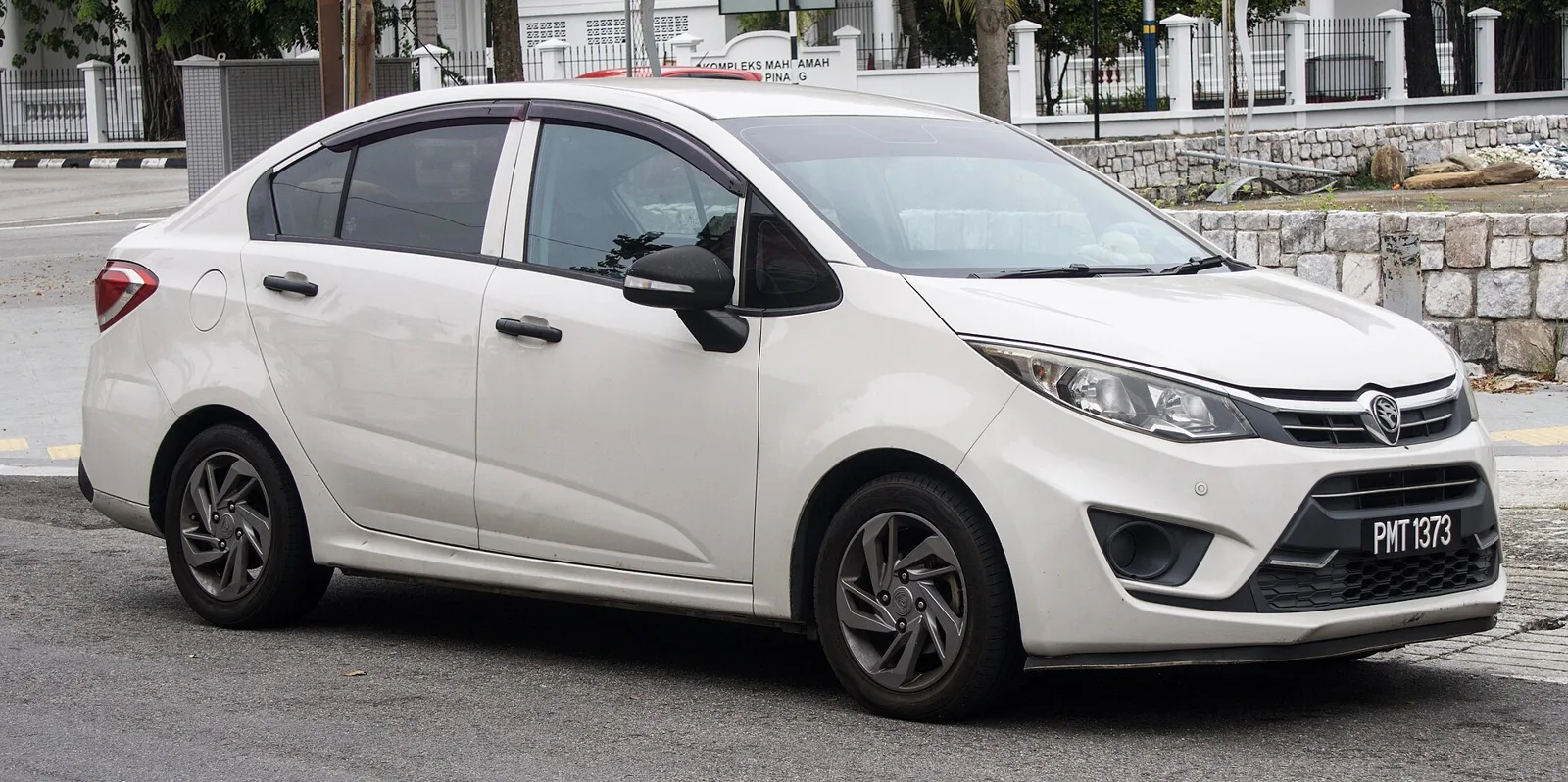
Proton's third-generation Persona, coded BH, is a B-segment saloon that took over from the CM Persona in 2016. It borrows the Iriz hatchback's platform and engine, but its body was rebuilt so the car could stand apart. Every trim carries a full five-star ASEAN NCAP rating, even though the assessor never crash tested this car itself.
What is the Proton Persona BH?
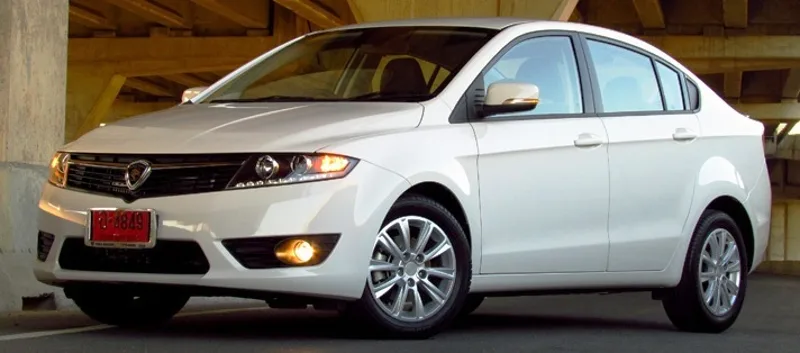
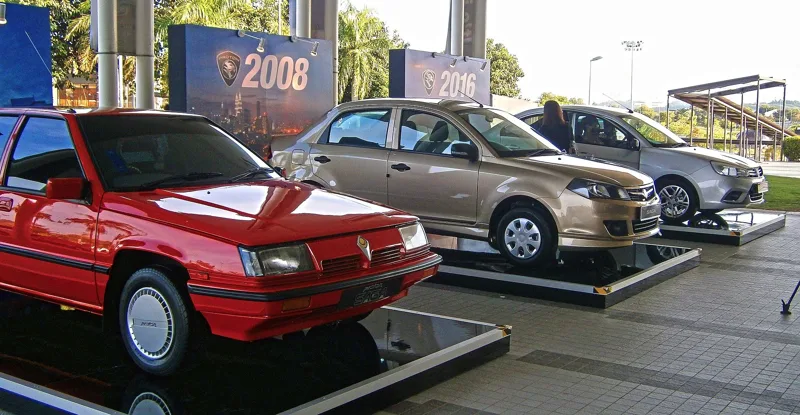
The Proton Persona BH is the third generation of the Persona saloon from Malaysian maker Proton. It was unveiled on 23 August 2016 and developed under the code P2-31A. The car is a B-segment saloon that succeeded the CM Persona, which Proton built from mid-2007 to mid-2016.
The launch took place at the Setia City Convention Centre in Shah Alam, Malaysia. It is the latest Proton model to reuse an existing nameplate, and it arrived about two years after its sister car, the Iriz.
The car is based on an extended version of the Iriz platform, and the 1.6-litre VVT engine comes from that car too. Its exterior was completely re-engineered, however, so the Persona could stand apart as its own model rather than an 'Iriz Sedan'.
Most of the body is new. Only the windscreen, front doors, wing mirror housings and front fenders carry over, and the design still follows the 'Stylish Executive' philosophy from the CM Persona. That look is now blended with the 'Proton Wings' styling first seen on the Preve.
A reworked Iriz platform that became a bigger, cleaner saloon, with a 510-litre boot and five-star marks on every trim.
How does the BH compare with the CM Persona?
The BH is one class smaller than the CM, yet it offers more headroom, comparable rear legroom and a much larger boot. Its boot holds 510 litres (18 cu ft), and the car is 90 mm (3.5 in) shorter than the outgoing CM Persona.
Against the Iriz, the BH is 482 mm (19.0 in) longer, 2 mm (0.079 in) wider and 4 mm (0.16 in) taller. Its wheelbase of 2,555 mm (100.6 in) matches the Iriz, but the rear overhang was extended to make room for a boot that was 215 litres (7.6 cu ft) in the Iriz.
Compared with the CM, the BH is 3 mm (0.12 in) narrower and 116 mm (4.6 in) taller. Its wheelbase is 45 mm (1.8 in) shorter, yet the boot is 80 litres (2.8 cu ft) larger. Taller height and short overhangs enlarge the cabin, though the exterior proportions are less balanced.
Proton credits more efficient design and packaging for the gains. The result is more headroom and a significantly larger boot in a smaller class of car, even though the rear seat space is only comparable rather than greater.
What engine and gearbox power the Persona BH?
The Persona BH uses Proton's 1.6-litre VVT S4PH petrol engine, a naturally aspirated four-cylinder unit with 107 hp at 5,750 rpm and 150 Nm at 4,000 rpm. It is paired with a Getrag 5-speed manual or a Punch Powertrain VT2+ CVT.
Proton refined the engine for lower noise, vibration and harshness. Engine mounts were reduced from four to three, and Proton says this cut the vibration reaching the cabin and made the car six decibels quieter than the equivalent Iriz. The exhaust was reworked to remove drone at lower revs, and the throttle was recalibrated for a more linear response.
Fuel economy is where Proton leaned hardest. The company says efficiency rose by 13% for the manual and 10% for the CVT, both measured at a steady 90 km/h. The tank holds 40 litres, 10 litres less than the CM.
Power is modest. The BH makes 3 hp less than the CM, but its full 107 hp arrives at 5,750 rpm instead of 6,500 rpm, and torque rises by 2 Nm. The CVT car reaches 100 km/h from a standstill in 10.9 seconds, which is 3 seconds quicker than the old four-speed automatic CM.
Proton did not offer the Iriz's 1.3-litre VVT engine in this car. It planned to place that unit in the upcoming 2016 Proton Saga instead, to avoid overlap between the two models.
The gearbox choice is shared with the Iriz. The Getrag manual sits alongside the Punch Powertrain VT2+ CVT, which Proton has refined for a smoother drive and quicker response.
How safe is the Persona BH?
The Persona BH earned the full five-star ASEAN NCAP rating across all variants, with 14.07 of 16 points for adult occupant protection. Its Vehicle Dynamic Control stability system is standard, and the body uses hot press formed steel. ASEAN NCAP did not crash test the car itself, treating it as an Iriz variant.
The Vehicle Dynamic Control programme is the core of the safety story. It pairs anti-lock brakes and electronic brake force distribution with brake assist, hill-hold assist, an emergency stop signal, traction control and electronic stability control. Monitoring draws on as many as ten computer systems, which track the four wheels and driver inputs in real time.
If the driver brakes hard, the ABS keeps the wheels from locking, EBD balances the force between wheels, and brake assist raises pressure to bring the car to a complete stop. The emergency stop signal warns following drivers, and hill-hold stops the car rolling back when the pedal is released on a slope.
Proton also fitted front parking sensors as standard, making the BH the first Proton with that feature as standard. Two sensors sit just below the headlamps and complement the pair on the rear bumper.
The body uses hot press forming, a process first offered in the 2012 Preve. Carbon steel is heated to 900 degrees Celsius and then cooled to 4 degrees Celsius before stamping, which leaves the finished steel five times stronger than standard cold rolled sheet. Eight HPF components sit in the car's reinforced safety structure.
Standard and Executive variants have twin front airbags, while the Premium adds side and curtain airbags for six in total. A 2021 update added two side airbags to the Standard and Executive variants. Two ISOFIX child seat mounts with top tethers complete the child-seat provision.
ASEAN NCAP scored the car at 14.07 of 16 points for adult occupant protection and gave it 82% for child occupant protection, exactly the same as the Iriz. The assessor did not crash test the BH itself, but it checked Proton's development test data from the MIROS PC3 lab against Iriz results. The BH was also crash tested at an Applus+ IDIADA facility in February 2016.
What equipment comes with each trim?
Four trims launched in 2016: Standard MT, Standard CVT, Executive CVT and Premium CVT. All share the VDC stability system, ECO Drive Assist, front and rear parking sensors and 15-inch alloy wheels, while the Premium adds leather seats and an Android-based touchscreen with navigation.
Standard variants use fabric seats and a single-DIN head unit with radio, Bluetooth and CD or MP3 playback. Executive moves to a larger double-DIN unit with steering wheel audio switches, fabric door trim and glossy centre console finishing. Premium is the only trim with leather upholstery and a leather-wrapped steering wheel.
The Premium's touchscreen is linked to a reverse camera and also offers DVD playback, Bluetooth and iPod connectivity. Premium is also the only trim with passive keyless entry and push-start ignition at launch, while Executive and Premium both add two rear USB charging ports and a key fob with remote trunk release.
Every variant gets electric mirrors, all-round power windows, power locks, a multi-info instrument cluster and free Yes 4G Wi-Fi access. The steering wheel is tilt-adjustable, and the driver's seat adjusts for height.
How did the 2019, 2021 and 2022 updates change it?
The April 2019 update introduced a revised front with Proton's infinite weave design and LED daytime running lights on the Executive and Premium trims. A second facelift arrived on 5 August 2021 and dropped the Standard MT. The 2022 update added a new roundel logo, six-spoke wheels and darkened LED tail lights.
The 2019 colour palette was Jet Grey, Snow White, Ruby Red, Rosewood Maroon and Armour Silver. Space Grey arrived with the 2022 update and was offered only on the Premium, which also gained LED headlamps and a black-painted rear spoiler.
The 2019 interior brought a new seat pattern, white-only air conditioning markings and a GKUI head unit on the Executive and Premium, with Hi Proton voice recognition on the Premium. The Standard kept a simpler LCD instrument cluster.
The 2022 update reworked the centre console. The vents moved below the floating audio system, the climate controls were redesigned, and the Premium gained light brown leatherette upholstery. Standard and Executive kept fabric seats.
How well did the Persona BH sell?
As of 19 September 2016 Proton had taken 8,000 bookings, and 2,000 cars had been delivered. Buyers chose the Premium trim for 45% of orders, against Proton's expectation that the base Standard would lead, and Carnelian Brown took 35%. The limited Premium SE drew 5%.
Proton set a target of 3,000 to 4,000 units a month. Export came next: the car launched in Brunei and Indonesia in 2017, and Mauritius followed at the end of August 2020 through the local company Visacar and Tours Ltd. South Africa was planned for later, after the X70 and X50 arrived in September 2022.
What awards did the Persona BH win?
The Persona BH won Best Compact Car at the Carsifu Editor's Choice Awards 2016 and Most Improved Model in Fuel Efficiency at the Malaysia Car of the Year 2016. Carlist.my later gave it bronze in the Compact Sedan category at its 2018 People's Choice Awards.
Two of the three honours came from the 2016 awards cycle, the year of launch, and the third followed in 2018. The fuel economy prize reflects the engine and gearbox refinements described above.
What are the Proton Persona BH specifications?
The Persona BH uses a 1.6-litre VVT petrol engine making 107 hp and 150 Nm, paired with a 5-speed manual or a CVT. It measures 4,387 mm long, has a 510-litre boot and weighs between 1,155 kg and 1,210 kg, and it earned five stars from ASEAN NCAP.
| Specification | Detail |
|---|---|
| Generation | Third (BH), B-segment saloon |
| Launch | 23 August 2016 |
| Engine | 1.6-litre VVT S4PH, naturally aspirated four-cylinder petrol |
| Output | 107 hp at 5,750 rpm |
| Torque | 150 Nm at 4,000 rpm |
| Transmissions | Getrag 5-speed manual; Punch Powertrain VT2+ CVT |
| Fuel economy | Efficiency up 13% (manual) and 10% (CVT), measured at a constant 90 km/h |
| Fuel tank | 40 litres |
| Dimensions | 4,387 mm (172.7 in) long; 1,722 mm (67.8 in) wide; 1,554 mm (61.2 in) tall |
| Wheelbase | 2,555 mm (100.6 in) |
| Boot | 510 litres (18 cu ft) |
| Kerb weight | 1,155 kg to 1,210 kg |
| 0-100 km/h | 10.9 seconds (CVT, from a standstill) |
| Stop from 100 km/h | 41.4 metres |
| Tyres | 185/55R15 on Standard and Executive; Goodyear Assurance on Premium |
| Safety | Full five-star ASEAN NCAP |