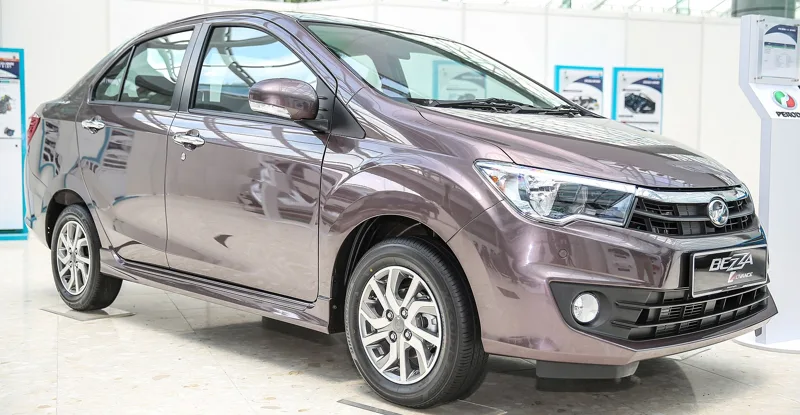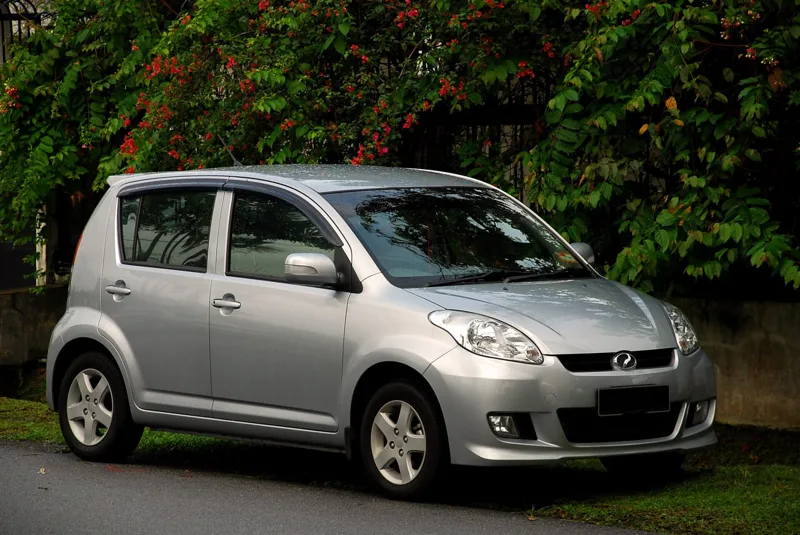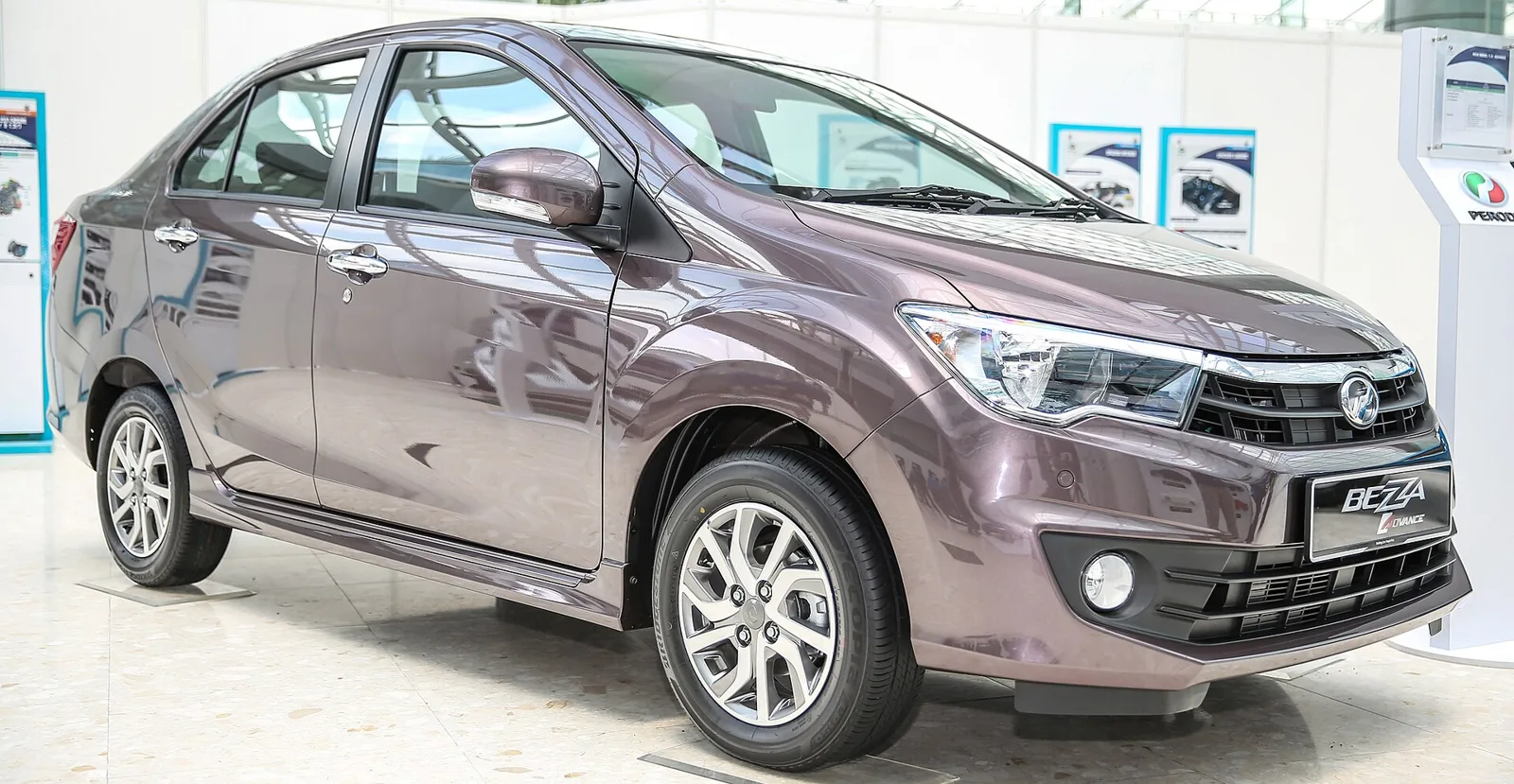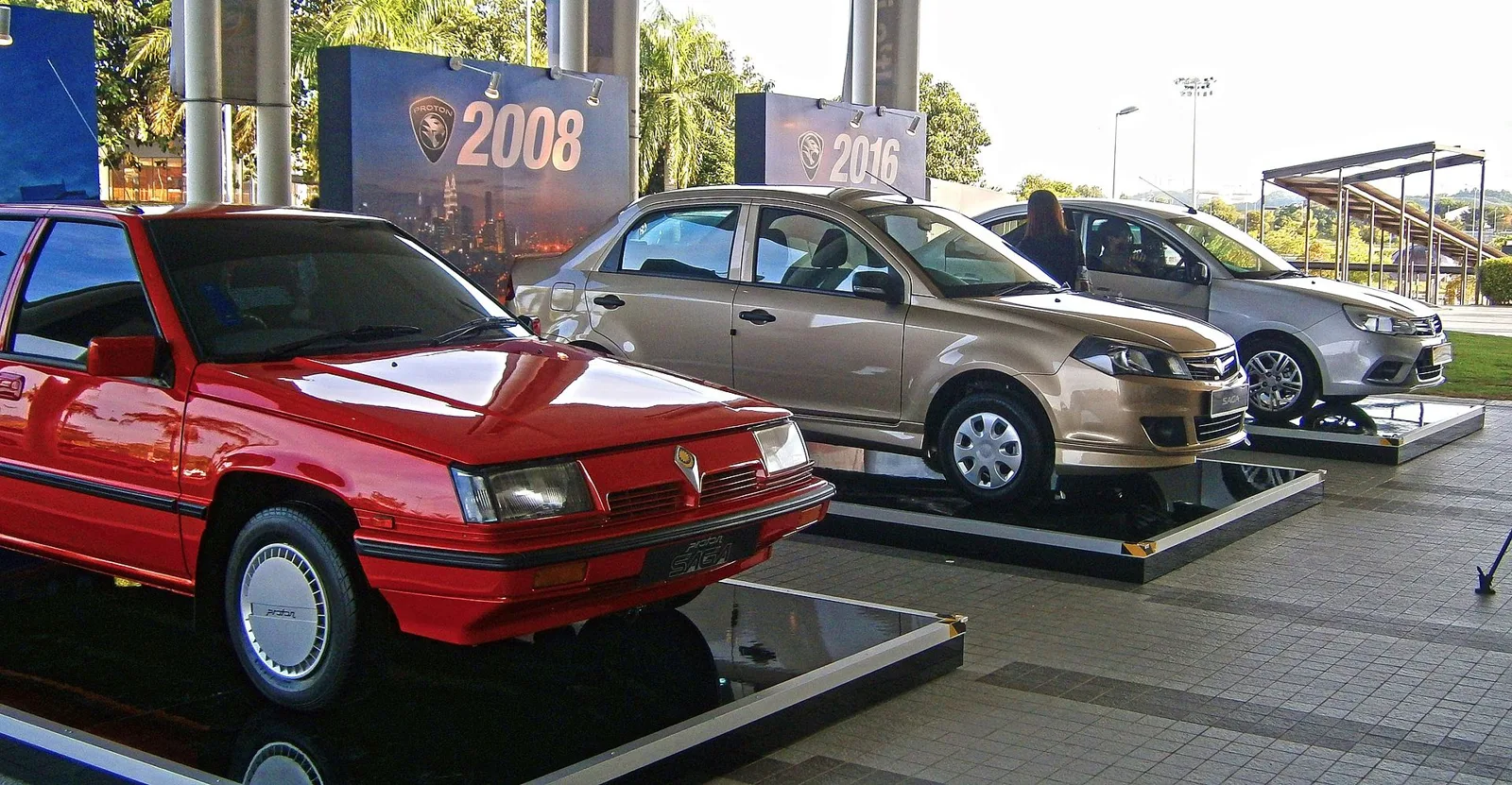
Built first with Mitsubishi, then developed in-house, the Saga became Proton's best-selling nameplate, a Malaysian taxi favourite and the brand's first step into the UK.
The Proton Saga is a Malaysian subcompact introduced in 1985. It has been produced in four generations, the first derived from a Mitsubishi model, and became Proton's best-selling nameplate, with a 2025 model on the AMA platform. It remains a national symbol in Malaysia.
The Proton Saga is a subcompact and city car from the Malaysian maker Proton, first launched in 1985 as the country's first homegrown car. It is the marque's most enduring top seller, with more than 2 million examples sold worldwide between 1985 and 2024. Its story runs from Mitsubishi-derived hatchbacks to an in-house design and a 2025 model built on a new platform.
What is the Proton Saga?
The Saga is a small car that Proton has produced across four generations, and it is the best-selling nameplate in the company's history. Its 1985 debut was a landmark for the country's motor industry, marking the start of homegrown car making. Over the years it became something of a national symbol.
Across its life the Saga has been offered as a saloon and a hatchback, and it has served as a taxi, a cheap entry point into motoring and an export model. Each generation changed the platform, the engine or both.
A Mitsubishi-derived compact that became a national symbol, Proton's best-selling nameplate and a favourite Malaysian taxi.
Where does the Saga name come from?
The name stands for Safety, Achievement, Greatness and Ability. In Malay, the word also refers to the hard red seed of the saga tree, known scientifically as abrus precatorius. Proton has kept the name for almost four decades, so the badge has become familiar in Malaysia and far beyond.
The Saga is more than a model name in Malaysia. It is widely recognised as a national symbol, and that status helps explain why the car has lasted so long.
How did the first generation come about?
The first-generation Saga emerged from a partnership between HICOM and Mitsubishi Motors, a joint venture. It drew on the second-generation Mitsubishi Lancer Fiore, with four-door saloon and five-door hatchback versions. Proton's own design work came later, with the second generation.
The saloon went on sale on 9 July 1985, powered by a 1.3-litre 4G13 Orion II. Proton then added a 1.5-litre 4G15 version in January 1987, and in mid-1987 the Magma arrived with mild mechanical and cosmetic changes. A hatchback called the Aeroback followed in October 1987.
How did the Saga reach British buyers?
The Saga reached the United Kingdom on 16 March 1989. Saloons were rebadged Proton 1.3 and Proton 1.5, and the hatchbacks carried Aeroback badging. The campaign used the slogan Japanese Technology, Malaysian Style, and the brand later set a record for the quickest sales of any new-car make entering the UK.
The car was aimed at the value end of the market. It took sales from long-established Eastern European rivals like Lada and Skoda, and it also drew buyers who would normally have picked a Japanese brand. Nissan and Toyota had by then moved upmarket to compete with European cars, leaving room at the budget end.
What were the Megavalve and 12-Valve cars?
The Saga Megavalve arrived in Malaysia in August 1990 with a more powerful 12-valve engine. Its exterior was lightly revised with a new grille, trim and rims, and rear belts and a third brake light were fitted as standard. It reached Britain in January 1991 under the name Proton 12-Valve.
What was the Iswara era?
The Saga Iswara was launched on 15 August 1992, sold in Britain as the Proton Mpi or Proton Iswara. It was named after the Helen butterfly of Sarawak. The platform carried over from the previous car, but the exterior and interior were heavily changed, and the 12-valve Mitsubishi Orion 1.3 and 1.5-litre engines stayed.
The saloon became Malaysia's preferred taxi, a role the second generation later took over. Exports to Europe ran until 1996, and the car had been sold alongside the Persona, also known as the Wira, there from 1993. In 2001 Proton added an Aeroback Special Edition, available only in silver with a manual gearbox and the 4G13 engine.
Why did the LMST struggle?
The Saga LMST hatchback arrived in 2003 with a modernised interior and bolder exterior changes. Its carburetted 1.3-litre 4G13 was tuned to 83 PS (61 kW), and it was offered in only two trim lines with a 5-speed manual. It had no airbags or ABS, and it came in four colours.
Proton put sportiness ahead of practicality, which meant an open-type glove compartment and a louder exhaust that delivered little extra power. The car lost appeal with ordinary buyers, and sales dropped sharply. A late-2006 update brought mainly cosmetic changes, and the LMST went on sale in Pakistan on 15 September 2006.
Proton then released the LMST 50th Merdeka Anniversary Edition on 4 March 2007, which was largely identical to the 2006 car. It was priced at RM26,999 against the earlier RM33,240, a gesture tied to Malaysia's 50th Merdeka celebrations. That year the Saga finished as the second best-selling car in Malaysia, behind the Perodua MyVi.
What was the second generation?
The second generation, known as the Saga BLM (Base Line Model), went on sale on 18 January 2008. It was designed in-house rather than being derived from a Mitsubishi model, and it launched in three variants priced between RM31,498 and RM39,998. Each variant relied on the 1.3-litre CamPro IAFM unit.
The new car sold strongly, with more than 23,000 bookings in under a fortnight after launch. It also took over from the Iswara as Malaysia's taxi of choice between 2008 and 2010. Taxi versions ran 1.6-litre CamPro units giving 110 bhp, and were later converted to natural gas.
How did the SE, EV concept and S16 fit in?
The Saga SE, revealed in July 2009, was a premium variant with a unique body kit and only two colour options. The same month Proton displayed an electric prototype, the Saga EV concept, shown at Universiti Putra Malaysia in Serdang. It used a 125 kW (168 hp) DC motor with a 5-speed manual, up to 109 kilometres (68 miles) between charges, and it plugged into a standard household outlet.
Proton's S16 went on sale in Australia on 24 December 2009. It matched the Saga but used the stronger 110 bhp CamPro 1.6 engine, and it retailed for AUD$11,990, which made it the cheapest new car in Australia at the time.
What did the FL and FLX models add?
Proton unveiled a facelifted Saga FL in Thailand on 30 November 2010, at the Thai International Motor Expo, and put it on sale in Malaysia a fortnight later. Large exterior changes were made, but the technical specifications and interior were mostly unchanged. Both trims offered a 4-speed automatic or a 5-speed manual, and every FL came with four power windows as standard.
Eight months after the FL, the Saga FLX arrived with a fine-tuned CamPro IAFM+ engine and a choice of manual or continuously variable transmission. Dual airbags and anti-lock braking with electronic brakeforce distribution were available, and the suspension was retuned for a better balance of comfort and handling. The FLX SE, launched on 30 November 2011, used a 108 hp 1.6-litre CVT, with sportier kit and only white or red paint.
What was the Saga SV?
On 15 June 2013 Proton introduced the Saga SV, a sub-variant of the FLX with the name standing for Super Value. Prices started at RM33,438 for the manual, yet the car gained dual airbags and a reinforced frame with minor exterior changes only. The Saga Plus followed in five colours, with prices from RM33,242 to RM36,577 on the road with insurance included, and a warranty of three years or 100,000 km.
How do the Saga generations compare?
| Generation | Launched | Platform basis | Engine |
|---|---|---|---|
| First (C21A, C22A) | 9 July 1985 | Mitsubishi Lancer Fiore | 1.3-litre 4G13, later 1.5-litre 4G15 |
| Iswara | 15 August 1992 | Previous Saga platform | 12-valve Mitsubishi Orion 1.3 and 1.5 litre |
| LMST | 2003 | Previous Saga platform | Carburetted 1.3-litre 4G13, 83 PS (61 kW) |
| Second (BT3, BT6) | 18 January 2008 | Stretched Proton Savvy | 1.3-litre CamPro IAFM |
| Third (BT3) | 28 September 2016 | Saga FLX | Iriz 1.3-litre VVT, 94 PS (69 kW) |
| 2025 model | 27 November 2025 | Advanced Modular Architecture | 1.5-litre BHE15PFI petrol |
What was the third-generation Saga?
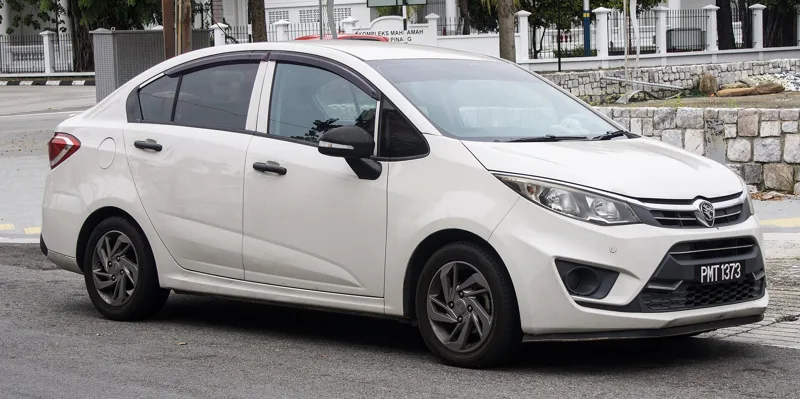
The third-generation Saga, codenamed P2-13A, sits in the A-segment as a saloon that went on sale on 28 September 2016, replacing the second generation. It sat on the outgoing FLX platform, using the 1.3-litre VVT unit from the Iriz, rated at 94 PS (69 kW). Its exterior was re-engineered and the interior was revamped with a focus on noise, vibration and harshness.
Proton positioned the car as its entry-level sedan, below the larger Persona. Electronic stability control arrived, the body structure was reportedly 20% stronger, and ASEAN NCAP awarded it a four-star safety rating.
What changed in the 2019 facelift?
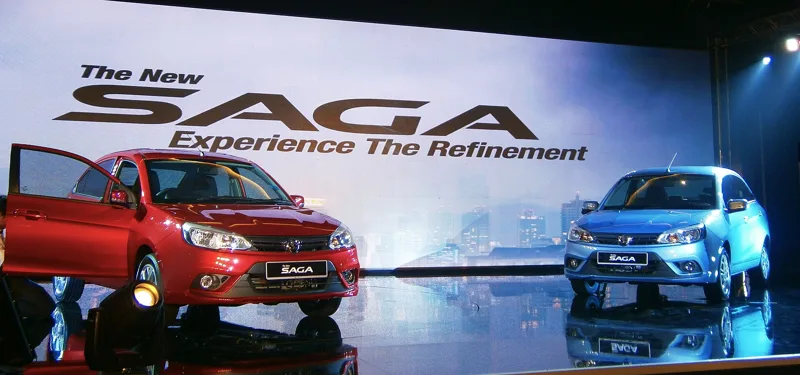
An updated Saga was launched on 6 August 2019 in Kuala Lumpur. Internally it was a minor change, but the public saw it as a facelift, with design cues borrowed from the X70, Iriz and Persona. Its trim gained an 'infinite weave' motif drawn from batik and Malaysian wood carvings.
The DOHC VVT unit, naturally aspirated, lost its CVT, which had come from Punch Powertrain, and gained a four-speed torque converter automatic from Hyundai. The Executive version disappeared, leaving Standard MT, Standard AT and Premium AT. Prices started at RM32,800 for the manual, almost RM2,000 below the pre-facelift car.
Which limited editions followed?
The Saga Anniversary Edition appeared on 9 July 2020 to mark Proton's 35th year in the industry, with optional skirts, darkened alloy wheels and yellow accents. The Saga R3 Limited Edition followed on 18 February 2021, limited to 2,000 units and styled almost like the Anniversary car.
On 12 May 2022 Proton added the Premium S, which brought keyless entry and start, automatic folding mirrors, a black and red interior theme and a leatherette and fabric seat combination.
How did production of the third generation end?
Production of the third-generation Saga ended on 26 September 2025 at the Shah Alam plant, with the last unit leaving the line that day. Production of the facelift model moved to Tanjong Malim.
What is the 2025 Saga?
The 2025 Saga, launched on 27 November 2025, is a heavily updated car and the first Proton to use the Advanced Modular Architecture platform. It is called the MC3 and comes as Standard, Executive or Premium. Every version runs the new BHE15PFI 1.5-litre petrol unit. Standard and Executive cars take a 4-speed automatic, and the Premium gets a Punch Powertrain CVT.
What awards did the Saga collect?
The first generation was named Best Value Car of the Year for the 1.5E Aeroback by What Car? in 1991, and Auto Express and What Car? both gave it awards in the early 1990s. The second generation won several Malaysian honours, including the Asian Auto-VCA award in 2008 and Frost & Sullivan prizes in 2009, 2010 and 2014.
The third generation earned the ASEAN NCAP Rising Star Award in 2016 and a Malaysia Car of the Year value award the same year. Its four-star rating under the outgoing 2021 to 2025 test protocol was also recorded.