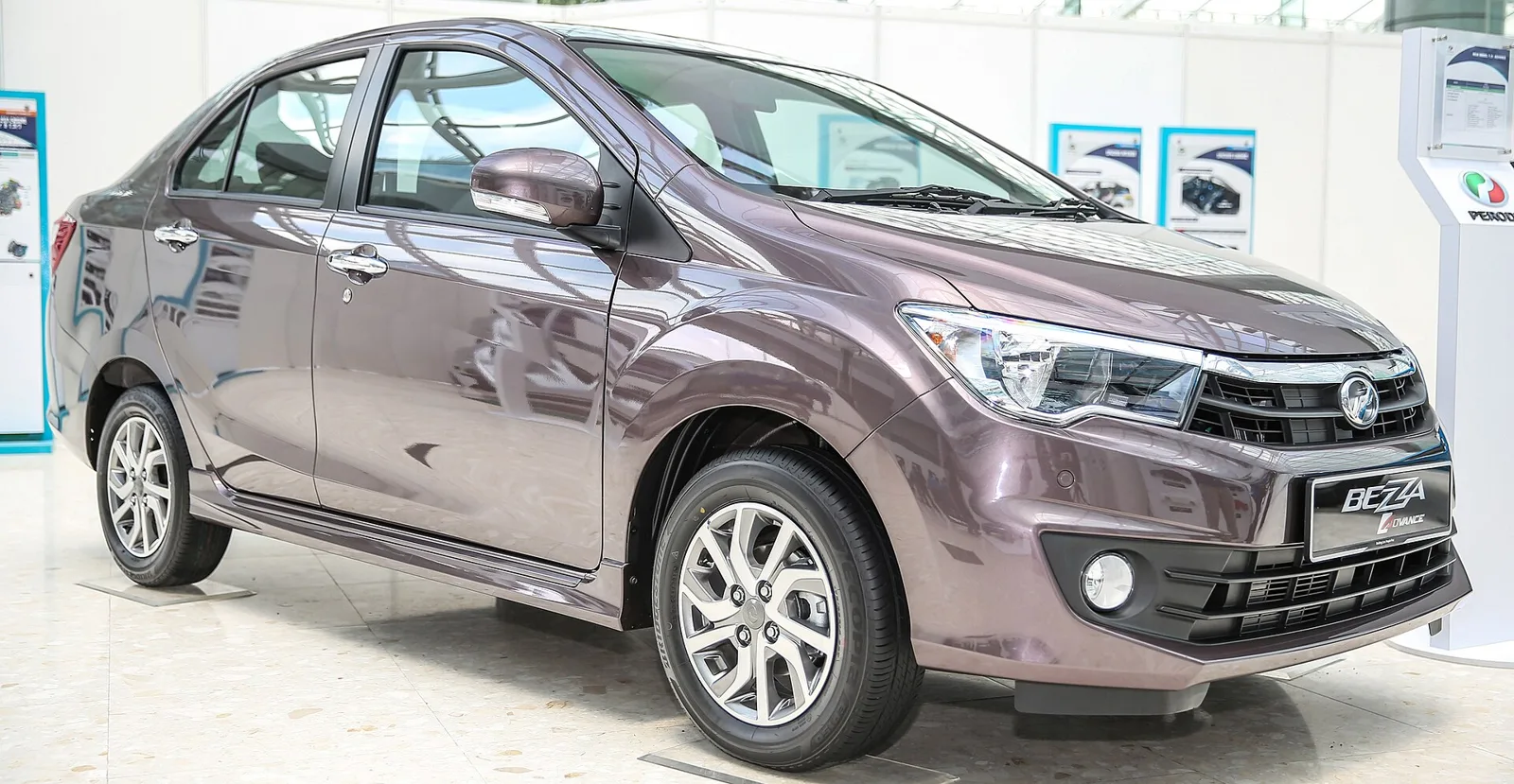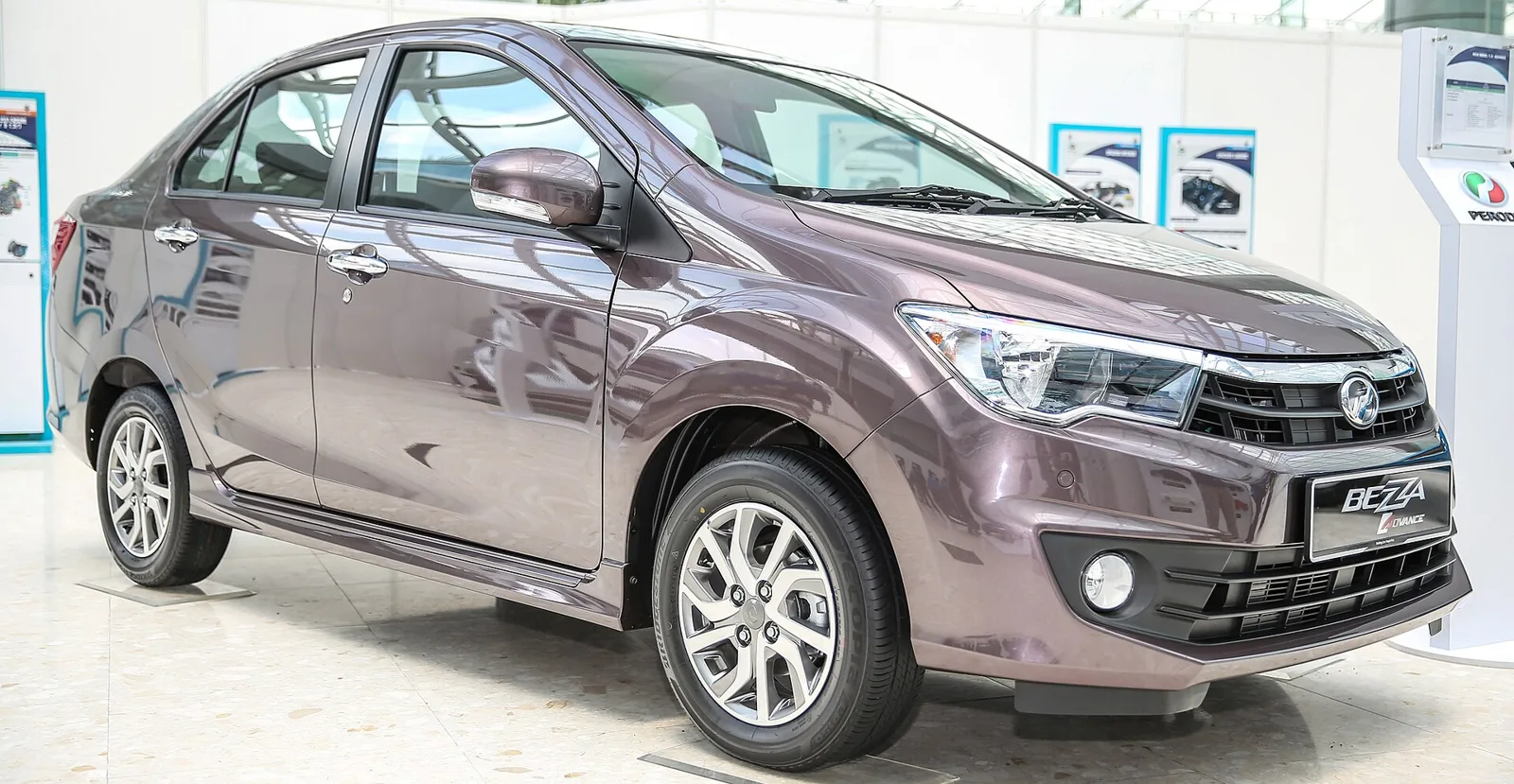
Two small Malaysian sedans launched weeks apart in 2016, measured on engines, safety, dimensions and the sales race that followed.
The Perodua Bezza and third generation Proton Saga were Malaysian rivals launched in 2016. The Bezza offered 1.0-litre and 1.3-litre engines and a 5-star ASEAN NCAP top trim, while the Saga had a re-engineered body and 4-star ratings. The Bezza edged ahead on 2021 sales.
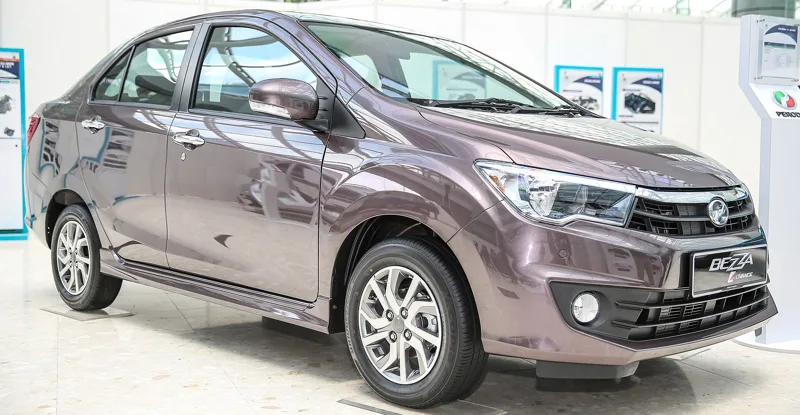
The Perodua Bezza and the third generation Proton Saga were launched within months of each other in 2016 and competed for the same buyers in Malaysia. The Bezza offered a choice of 1.0-litre and 1.3-litre engines and a 5-star top trim, while the Saga brought a re-engineered body and a 4-star rating across its range. By 2021 the Bezza had edged ahead on sales.
Why did the Bezza and Saga compete?
Both cars were aimed at buyers who wanted an affordable small car in Malaysia, and the Bezza was built to take on the Saga in its home market. Proton positioned the new Saga as its entry-level sedan, sitting below the larger Persona, while Perodua made the Bezza its first sedan to complement the Axia hatchback.
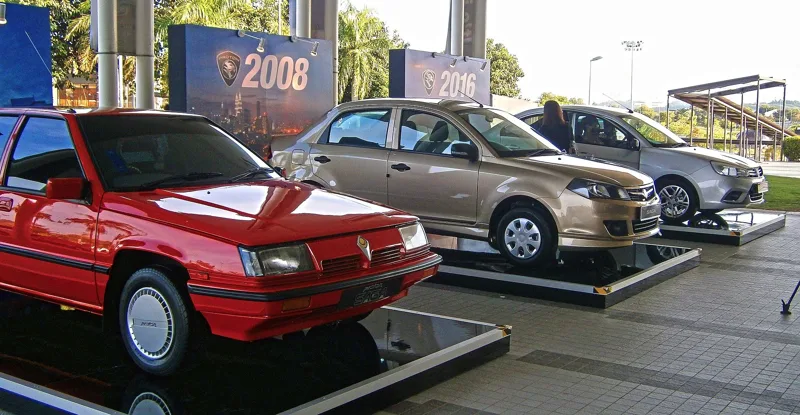
The timing was tight. The Bezza went on sale on 21 July 2016, and the Saga arrived on 28 September 2016 at Setia City Convention Centre in Shah Alam. Proton had launched the Persona only about a month before the Saga.
Two small Malaysian sedans that launched within months of each other and fought over the same buyers.
How were the two cars designed?
The Bezza was Perodua's first major in-house design. Perodua's own styling team led the upper body and development, with technical support from Daihatsu, and the car sits on the Axia's platform. Its earlier concepts, shown as Bezza in 2010 and Buddyz in 2013, were drawn without copying existing Daihatsu or Toyota models and looked to the Chevrolet Aveo instead.
Proton took a different route. The third generation Saga kept the Saga FLX platform, and the BT platform code it shares with the second generation Saga, but its body was largely re-engineered. Proton extended both the front and rear overhangs, made the body structure 20% stronger and revamped the interior with a focus on cutting noise and vibration.
Cost control shaped the Saga as much as styling did. The car was developed at a cost of RM150 million, and as much as 60% of its parts and components were recycled from the outgoing Saga. Proton set a break-even target of 3 years and a sales goal of 5,000 units a month.
Perodua's own figures for the Bezza put its development cost at RM 300 million and claimed up to 95% local content. Unlike Proton, Perodua was able to develop its first sedan without public knowledge.
What engines did each car use?
The Bezza offered a 1.0-litre three-cylinder with 67 hp and a 1.3-litre four-cylinder with 94 hp, and both could be paired with a manual or an automatic. The Saga relied on a single 1.3-litre VVT engine borrowed from the Iriz, paired at launch with a CVT. The Bezza's choice of two engines is the main mechanical difference for buyers who want options.
The 1.0-litre 1KR-VE is a refined version of the engine in the Axia, and it produces 91 Nm at 4,400 rpm. Perodua raised the compression ratio to 11.5:1 and added variable valve timing on the intake valves. The 1.3-litre 1NR-VE evolved from the engine in the Myvi and makes 121 Nm at 4,000 rpm, with variable valve timing on both intake and exhaust valves.
Perodua quoted ECE fuel consumption of 22.8 km/L for the 1.0 manual and 21.7 km/L for the 1.3 manual. The automatic-only Advance reached 22.0 km/L thanks to the Eco Idle stop-start system and regenerative braking, which made the Bezza the first Perodua with those features.
The Saga's engine story changed in 2019. The CVT made by Punch Powertrain gave way to a four-speed torque converter automatic from Hyundai, and the Saga stopped offering the 1.6-litre engine option that the car's predecessor had carried.
Dimensions and platforms
The Saga measures 4,331 mm long, 1,689 mm wide and 1,491 mm tall. Its wheelbase of 2,465 mm stayed the same as the Saga BLM's, and its boot is rated at 420 litres, 7 litres larger than the outgoing model. The drag coefficient is 0.33 Cd, a figure Proton used to sell the car's sleeker profile.
Proton marketed the Saga as an A-segment or A+-segment sedan, even though the second generation had been classed as a B-segment model throughout its life. Proton's revised marketing strategy aimed to prevent product overlap, and the Persona took over the B-segment bracket from the Saga.
The Bezza is a city car, which sets its expectations for daily use. Its appeal rests on the choice of engines and the efficiency claims that come with them.
Equipment and interiors
The entry Bezza Standard G came with 14-inch seven-spoke alloy rims, fabric seats and an audio system with a USB port. Its rear seats folded 60:40, and a remote boot release sat alongside power windows. The Advance was the trim with a multimedia touchscreen head unit linked to a reverse camera.
The Saga's wheels and trim stepped up with each grade. The Standard used 13-inch steel rims carried over from the second generation, the Executive and Premium took new alloys, and the Premium wore 15-inch turbine split-spoke rims. Power-adjustable wing mirrors became standard across all Saga variants in 2019.
Inside, the Saga's door cards and dashboard panels were all new, with faux-stitching texture in some areas. Proton also fitted a new single-DIN head unit to the Standard and Executive variants and worked hard on noise, vibration and harshness, aiming for a more refined cabin.
Which car was safer on paper?
On paper the Bezza Advance has the higher result, with a 5-star ASEAN NCAP rating against the Saga's 4-star rating across every variant. The rest of the Bezza range was rated 4-star, so the gap sits mainly at the top of each line-up.
Every Bezza came with ABS with electronic brake distribution, twin airbags and twin rear reverse sensors. Vehicle stability control and traction control were limited to the Advance at launch, and the 2020 facelift added VSC to the Premium X as well. The facelifted AV variant also received Advanced Safety Assist 2.0, which covers pedestrian detection and pre-collision braking.
The Saga's safety equipment is more basic at the bottom of the range. Twin airbags came standard on all variants, but the entry-level Standard had no ABS, and electronic stability control was reserved for the Premium. Buyers who want the full safety package in either car need to check the trim they are looking at.
Specifications side by side
| Specification | Perodua Bezza | Proton Saga (third generation) |
|---|---|---|
| Launch | 21 July 2016 | 28 September 2016 |
| Platform | Axia platform | Saga FLX platform, BT code |
| Engines | 1.0-litre 1KR-VE three-cylinder; 1.3-litre 1NR-VE four-cylinder | 1.3-litre VVT engine from the Iriz |
| Power and torque | 67 hp, 91 Nm (1.0); 94 hp, 121 Nm (1.3) | Not given |
| Transmission | 5-speed manual or 4-speed electronic automatic | CVT at launch; four-speed torque converter automatic from 2019 |
| Fuel consumption | 22.8 km/L manual (1.0); 21.7 km/L manual (1.3); 22.0 km/L (Advance) | Not given |
| Length, width, height | Not given | 4,331 mm, 1,689 mm, 1,491 mm |
| Wheelbase | Not given | 2,465 mm |
| Boot | Not given | 420 litres |
| ASEAN NCAP | 5-star (Advance); 4-star (rest of range) | 4-star (all variants) |
| Development cost | RM 300 million | RM150 million |
| Launch variants | Standard G, Premium X, Advance | Standard MT, Standard CVT, Executive CVT, Premium CVT |
| Units sold in 2021 | 42,698 | 42,627 |
How did the Saga change after launch?
The Saga's first facelift arrived on 6 August 2019. Proton considered it a minor change internally, but it altered the gearbox and dropped the Executive variant. A second facelift, called the MC2, followed on 12 May 2022 with a new Premium S AT. The Standard Lite AT joined the range on 26 August 2022.
Proton also said an updated Saga would arrive in 2025. The plan keeps the car on a shorter 5-year product cycle, which matters for a nameplate the company describes as its best-selling.
Bezza updates and special editions
The Bezza's rear bumper gained a deeper skirt across the range in April 2017. In April 2018 the Standard G gave way to the GXtra, which added side skirts, chrome door handles and the Ocean Blue colour, which had previously been limited to the 1.3-litre variants.
A 50-unit Limited Edition based on the Premium X arrived on 11 April 2019. It was automatic-only and came with every GearUp accessory. The January 2020 facelift then redesigned the front and rear bumpers, fitted upgraded LED headlamps and gave the 1.0-litre variants 14-inch turbine rims.
How well did the two cars sell?
The Bezza sold strongly from its first day, with 5,000 bookings on launch day and 10,115 by the morning of 26 July 2016. By 30 August 2016 Perodua reported 10,000 cars delivered against 25,000 bookings. Production had reached 138,800 by November 2018.
Proton's early figures were smaller. The Saga had 6,000 bookings and 1,000 deliveries by 17 October 2016, and the company targeted 5,000 units a month.
By 2021 the Bezza was Perodua's third best seller, with 42,698 units sold. The Saga sold 42,627 units over the same period, so the Bezza edged ahead by a narrow margin.
Awards and recognition
The Bezza collected a string of Malaysian honours in 2016 and 2017. It took the Entry Level Car title at Malaysia Car of the Year 2016, along with the People's Choice Award and a design prize, and a year later it won the sedan and hatchback category below RM50k.
Its 2016 ASEAN NCAP Grand Prix awards went to child and adult occupant protection in the small family car class, which added to its safety reputation.
Who bought the Saga?
Proton's late 2024 survey covered 57,674 samples and found 64% of Saga buyers were first-time car buyers. Another 18% were adding a second car, and 17% were replacing one. About 59% of buyers were men and 41% were women.
Household status split the buyers into 48% married with children and 41% single.
Where were the cars sold abroad?
The Bezza reached Mauritius on 1 May 2017 with four variants, Singapore that May with only the 1.3X, and Sri Lanka on 7 June 2017 with the 1.0-litre automatic. Brunei received the 1.3-litre Premium X in mid-2017, and the Bezza's facelift in Singapore followed in February 2020.
The Saga's export story leans on local assembly and franchise partners. Kenya's launch came on 10 December 2020 after the car was assembled from imported kits at the Mombasa plant, a move made to keep prices competitive. Nepal followed on 14 January 2021, South African shipments started on 31 May 2022, and production components began shipping to Egypt on 12 September 2024.
Proton had earlier said the Saga would be exported to right-hand drive ASEAN markets and to Chile, with production for those markets starting in early 2017. In January 2021 the car was reported under evaluation in Pakistan, with the 1299cc engine and both manual and automatic gearboxes.
Which car suits which buyer?
On the figures, the Bezza suits a buyer who values a choice of engine size and a top trim rated 5-star, while the Saga suits a buyer who wants published dimensions, a 420-litre boot and a 4-star rating on every variant. Both are small cars at the entry point of their brands.
The Bezza's efficiency claims are specific: 22.0 km/L for the automatic-only Advance is the figure to test on a real route. The Saga buyer gets a body Proton says is 20% stronger and, from the 2019 facelift, a Hyundai automatic.
Neither car wins on every point. The Bezza has the higher top-trim safety rating and the wider engine choice, while the Saga has published dimensions and a boot size to weigh. A buyer should weigh those trade-offs against the trim they actually need.