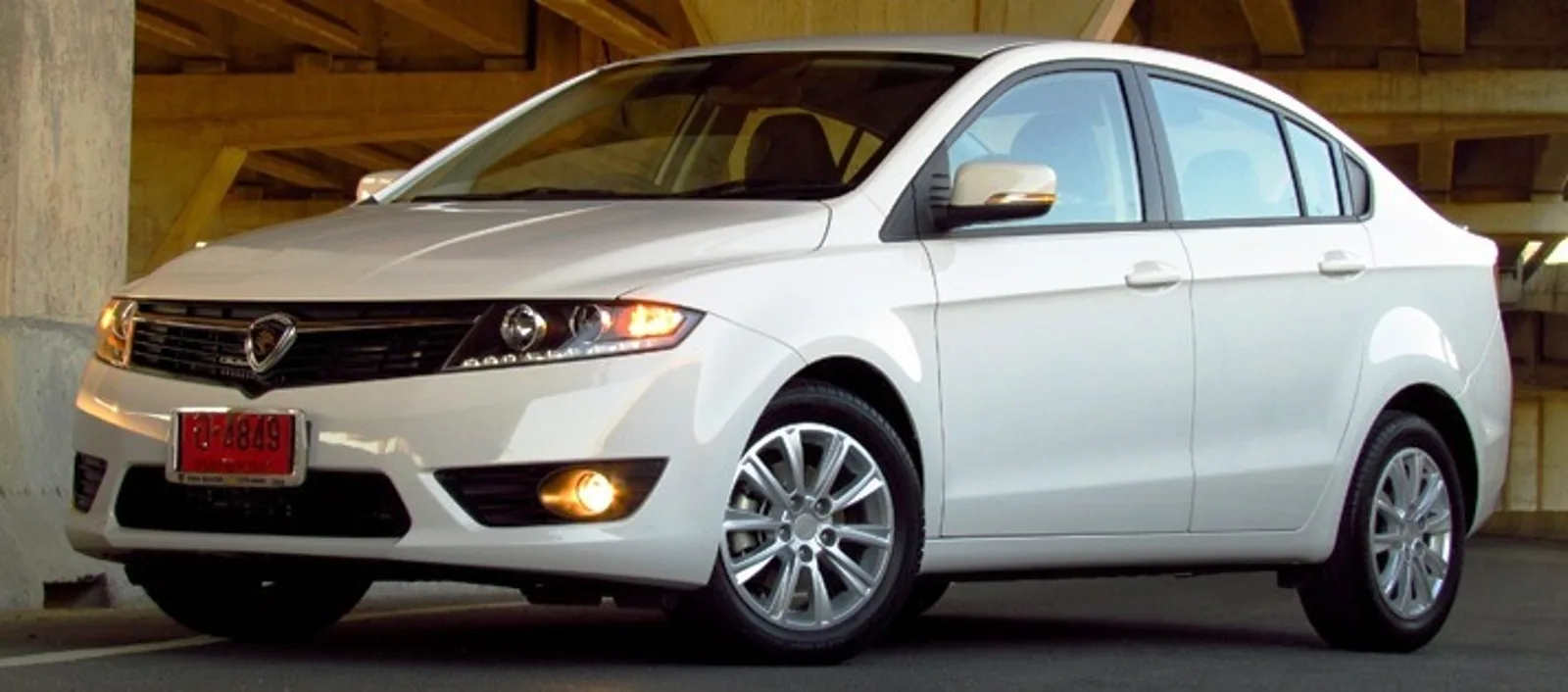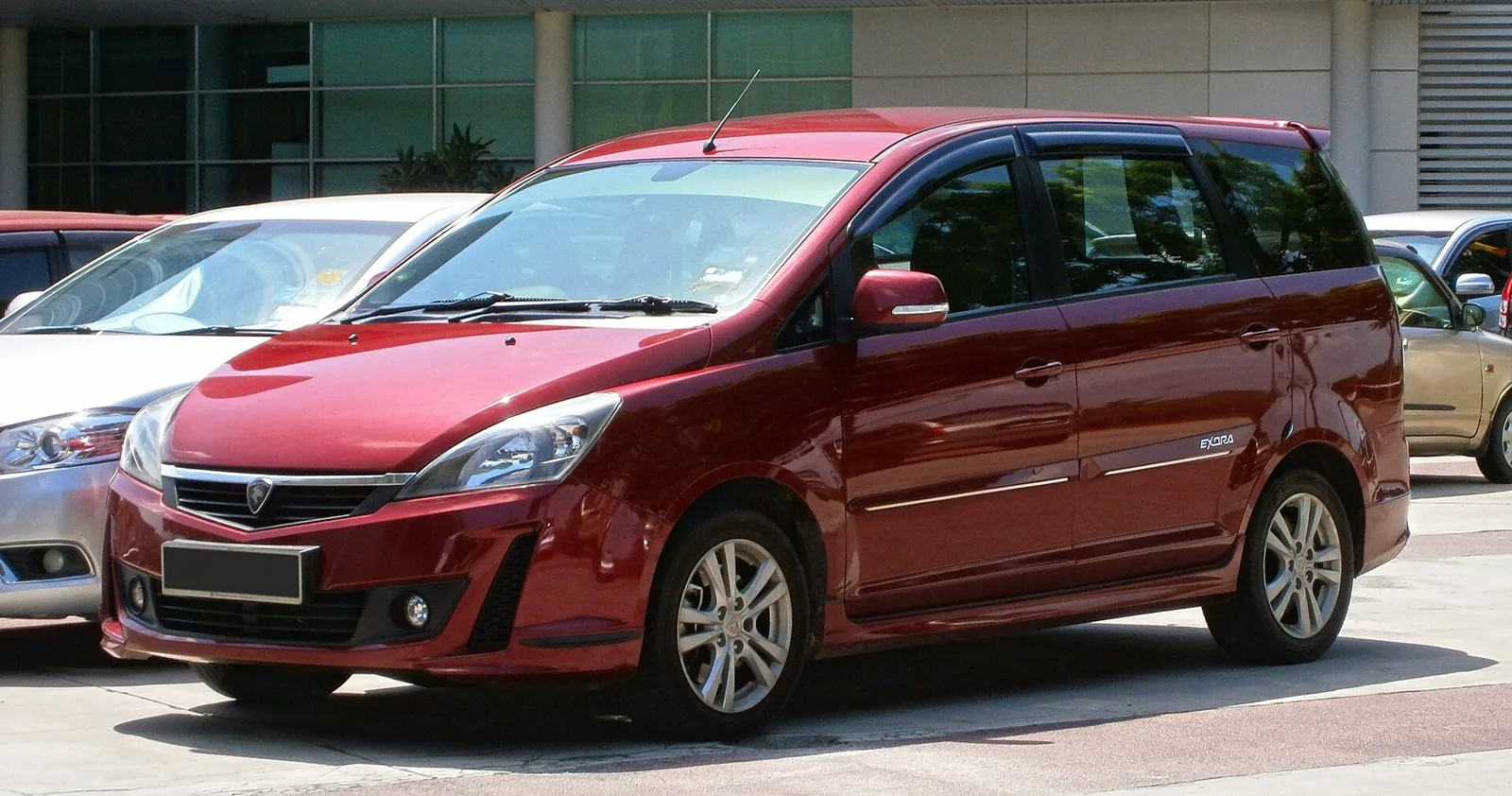
A P2-platform people carrier that sold 196,583 units over 14 years before Proton ended production in 2023.
The Proton Exora was a compact MPV built by Malaysian manufacturer Proton from 2009 to 2023. It was the country's first locally developed MPV and the first Proton on the P2 platform. Its 1.6-litre engines, including a turbocharged option, helped it sell 196,583 units over 14 years.
Malaysian carmaker Proton launched the Exora in April 2009 as a family people carrier, and the model stayed in production until October 2023. It was the first MPV designed in Malaysia and the first Proton built on the P2 platform. Its 1.6-litre engines, one of them turbocharged, carried it through a run of 196,583 cars.
Where did the Exora come from?
The Proton Exora began as a 2006 revival of an earlier Proton MPV idea, aimed at Malaysian families. The car was built on the new in-house P2 platform, with consultancy from LG CNS, and it was unveiled in April 2009 after an 18-month development phase.
Proton had tried a larger vehicle before. The 2001 Juara was a rebadged Mitsubishi Town Box Wide, a small kei-style design that drew criticism and was discontinued in 2004 amid poor sales.
The MPV project was revived in mid-2006 under former managing director Syed Zainal Abidin. Proton officially announced the car on 11 February 2008 for an early 2009 launch, and sketches reached Malaysian television in May 2008.
The name came from a public contest that drew 251,763 entries. The grand prize went to Norsholihan Binti Abdul Eanich, and the name Exora drew its inspiration from the Ixora flower. The tagline Keriangan Keluarga, meaning Family Fun, was announced on 17 February 2009, and production started at the Shah Alam plant that March.
Malaysia's first home-built people carrier, and a best-seller that the cheaper Perodua Alza eventually overtook.
Which versions did the Exora launch with?
The Exora launched in April 2009 with M-Line and H-Line trims, both powered by a 1.6-litre CamPro CPS engine and a four-speed automatic. A five-speed manual arrived with the M-Line MT in July 2009, and a no-frills B-Line followed in November 2009 with fewer safety features.
The B-Line was spotted in testing on 22 June 2009 and went on sale on 19 November 2009, four days before the Perodua Alza launched. It was offered only with a manual gearbox. In July 2010 Proton also unveiled a 25th Anniversary Edition alongside the Saga and Persona.
Proton introduced the cheaper variants partly to draw buyers away from the Alza, which had been delayed. The cheaper Alza outsold the Exora by a significant margin, and from 2010 onward it replaced the Exora as Malaysia's best-selling MPV.
How did the Exora change in its middle years?
The first refresh came on 15 July 2010, fifteen months after launch, with a new body kit, chrome fog light surrounds and 15-inch alloy wheels. The bigger change arrived on 15 December 2011 with the Bold Premium and Prime, which used the new turbocharged CamPro CFE engine.
The Bold range launched with three variants: Executive MT, Executive AT and Premium CVT. The Exora Prime sat at the top of the range, with captain seats in the second row, dual headrest LCD screens and an Absolute Brown colour option.
On 11 January 2013 Proton added the Bold 1.6 CFE Standard, which sat between the Executive and Premium. It came with the CVT, ABS and EBD but no extra accessories, and the Executive was later dropped. The MC2 facelift in 2015 brought five variants, and by 2016 the turbo CFE was the only engine on offer.
The 2013 and 2014 Standard CFE CVT specifications were identical to the 2015 to 2017 Executive variant, so the two are easy to confuse when reading about the car.
What engines did the Exora use?
The Exora used two 1.6-litre engines across its life. The naturally aspirated CamPro CPS was the original unit, and the turbocharged CamPro CFE, developed by Proton with Lotus, arrived in 2011 and became the only engine by 2016.
CFE stood for Charged Fuel Efficiency. The facelifted Exora became the first Malaysian car with a turbocharged engine, and the CFE was paired with a continuously variable transmission on the higher-grade models.
The chassis used MacPherson struts with coil springs at the front and a torsion beam with coil springs at the rear. The steering was rack and pinion with hydraulic assistance, and the turning radius was 5.4 metres (18 ft).
The most dramatic engine was a one-off. The Exora Turbo concept, shown on 16 July 2009 at Universiti Putra Malaysia, used a modified CPS making 270 hp, against 125 hp for the stock unit.
The Enhanced, RC and RC2 years
The 2017 Enhanced model appeared on 23 July 2017 as the successor to the Bold MC2. It brought mainly cosmetic changes and noise, vibration and harshness improvements, and the range was streamlined to Executive and Executive Plus. The engine moved onto a new three-mount arrangement that cut vibration reaching the cabin.
The RC running change on 28 May 2019 followed the Iriz and Persona with cabin updates. The Premium gained a GKUI head unit with Hi Proton voice recognition, and the bee-sting antenna was replaced by a shark fin.
Executive variants moved to the same wheel design as the Premium, though finished in a single tone, and the rear trim garnish was chrome rather than glossy black.
The RC2, introduced on 19 August 2022, carried Proton's latest logo and made electronic stability control standard. The Premium swapped semi-leatherette upholstery for full-leatherette and lost its rear fog lamp, and a redesigned oil cooler hose addressed premature failures.
Proton announced in May 2023 that the Exora would end production that year, with no successor named. The last car left the line in October 2023 after 14 years and 196,583 units. The model was removed from the Proton website in February 2024, once the remaining stock had sold out. The run covered every generation, from the original 2009 car through the Bold, Enhanced, RC and RC2 versions.
How safe was the Exora?
The Exora earned an equivalent four-star Euro NCAP rating, four stars from Malaysia's MyVAP programme and a four-star ANCAP rating that applied to every variant. Its high tensile steel body cage and side impact bars helped, but pedestrian results were poor.
The Euro NCAP result followed the crashing of 32 Exoras at the Applus+ IDIADA facility in Spain. The body used high tensile steel for stability and impact absorption, and side impact bars reinforced the door frames to absorb blows from either side.
ANCAP tested the car in July 2013 and scored it 26.37 out of a possible 37 points. The offset crash test returned 10.55 out of 16, with acceptable driver chest protection and marginal leg protection. The side impact test returned 14.82 out of 16.
The frontal offset result showed a high risk of serious leg injury for the driver, while the side impact performance was good. Dual frontal and side airbags, with thorax and head protection for the front seats, were fitted across the range.
The ANCAP four-star rating applied to every variant, so a buyer of any trim level received the same safety result.
Where was the Exora sold?
The Exora was exported to Indonesia, Thailand, Singapore, Brunei and Australia, and later to Egypt and Chile. Thailand was its strongest market, where it became Proton's best-selling car. In 2012 the CFE version replaced it for Indonesia, Thailand and Singapore.
The Exora launched in Thailand at the 2009 Thailand International Motor Expo. Facing strong Japanese rivals, it took 1,388 bookings out of the 25,220 placed at the show.
Australia saw a preview of the Exora CFE at the 2012 Australian International Motor Show, and it went on sale in mid-2013 as the country's cheapest MPV. A UK launch was planned for 2012 but never happened.
In July 2015 Proton signed a distributor agreement with Andes Motor for Chile, and the first left-hand drive evaluation units shipped that November. A launch was pencilled in for May 2016. Egypt sold Executive and Premium versions with the CFE and a CVT, and a batch of cars left Malaysia in September 2018. Left-hand drive CFE testing units also appeared, which pointed to possible launches in China and other left-hand drive markets. The Egyptian models shared a specification similar to that of the Malaysian Bold MC2.
How did the Exora compete in Malaysia?
Before the Exora arrived, Malaysia's budget MPV segment was dominated by the Toyota Avanza, the Toyota Innova and the Nissan Grand Livina. The Exora broke that pattern, and it was consistently placed among the country's ten best-selling vehicles. It was a far stronger result than the earlier Juara had managed.
Perodua had been developing its own MPV since early 2008. It previewed the Alza on 6 June 2009, a smaller, less powerful and less expensive model that rebadged the Daihatsu Boon Luminas. Its planned November 2009 launch gave Proton the window to introduce cheaper Exora variants and entice buyers who might otherwise have waited.
What concepts were built from the Exora?
Two concepts appeared at the 2009 launch. The Exora Prime previewed cosmetic exterior and interior changes, several of which reached production in 2012. The Exora Prestige offered VIP luxury, with a built-in office table, a fridge, an intercom, a 19-inch LCD television and a seat massage system.
Proton later confirmed that the Prestige was being sold to selected VIP buyers. On 6 November 2011 the company entered plug-in electric versions of the Exora, Saga and Persona in the RAC Future Car Challenge and claimed two awards. In 2015 a Pick-up Concept based on the Exora was shown twice, recalling the Proton Arena pick-up.
Specifications at a glance
| Specification | Detail |
|---|---|
| Segment | C-segment compact MPV |
| Platform | Proton P2, the first Proton to use it |
| Launch | 15 April 2009, Malaysia |
| Engines | 1.6-litre CamPro CPS, naturally aspirated; 1.6-litre CamPro CFE, turbocharged |
| Transmissions | Four-speed automatic; five-speed manual from July 2009; CVT on CFE models |
| Front suspension | MacPherson strut with coil spring |
| Rear suspension | Torsion beam with coil spring |
| Steering | Rack and pinion, hydraulic assistance |
| Turning radius | 5.4 metres (18 ft) |
| Production | 2009 to October 2023; 196,583 units |
| ANCAP | Four stars, tested July 2013 |