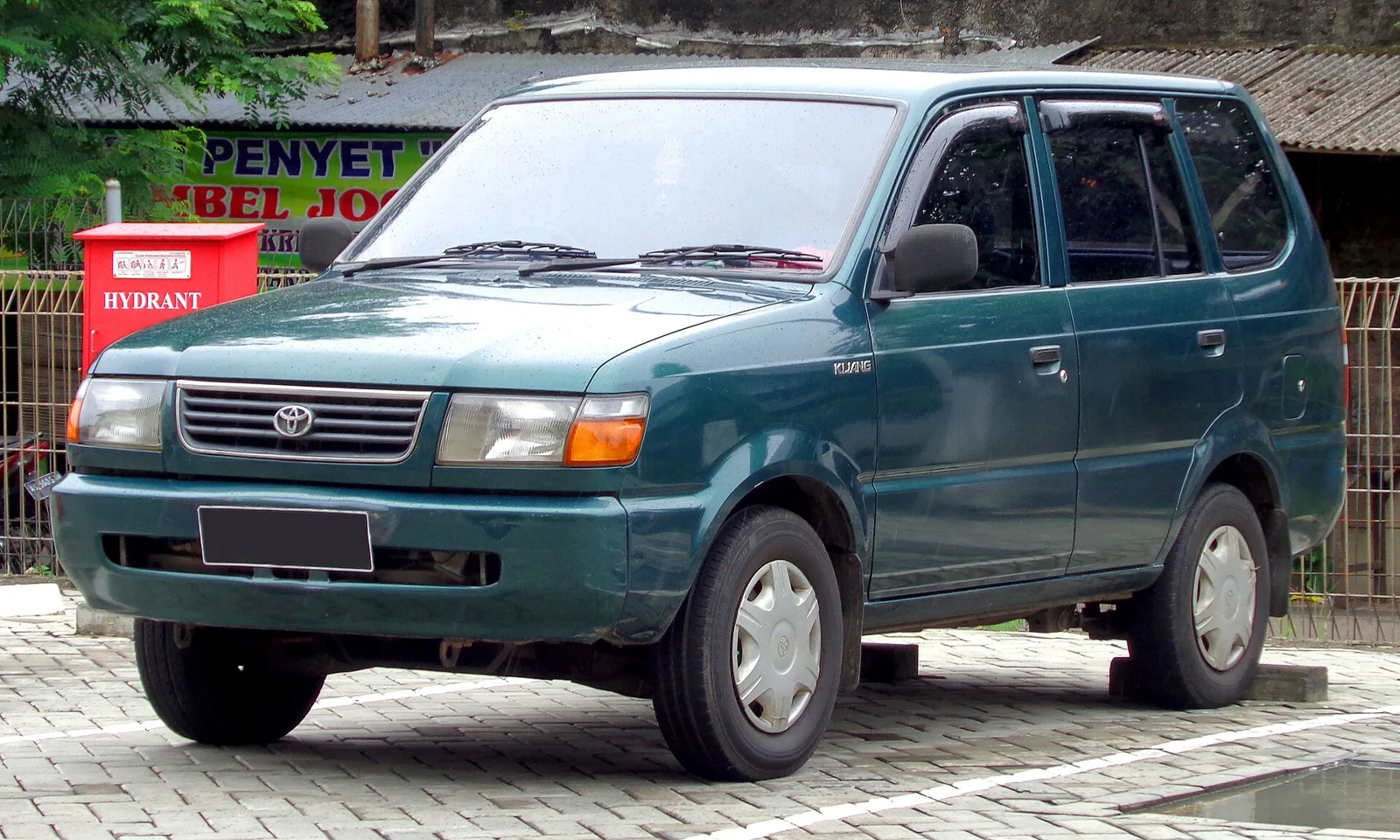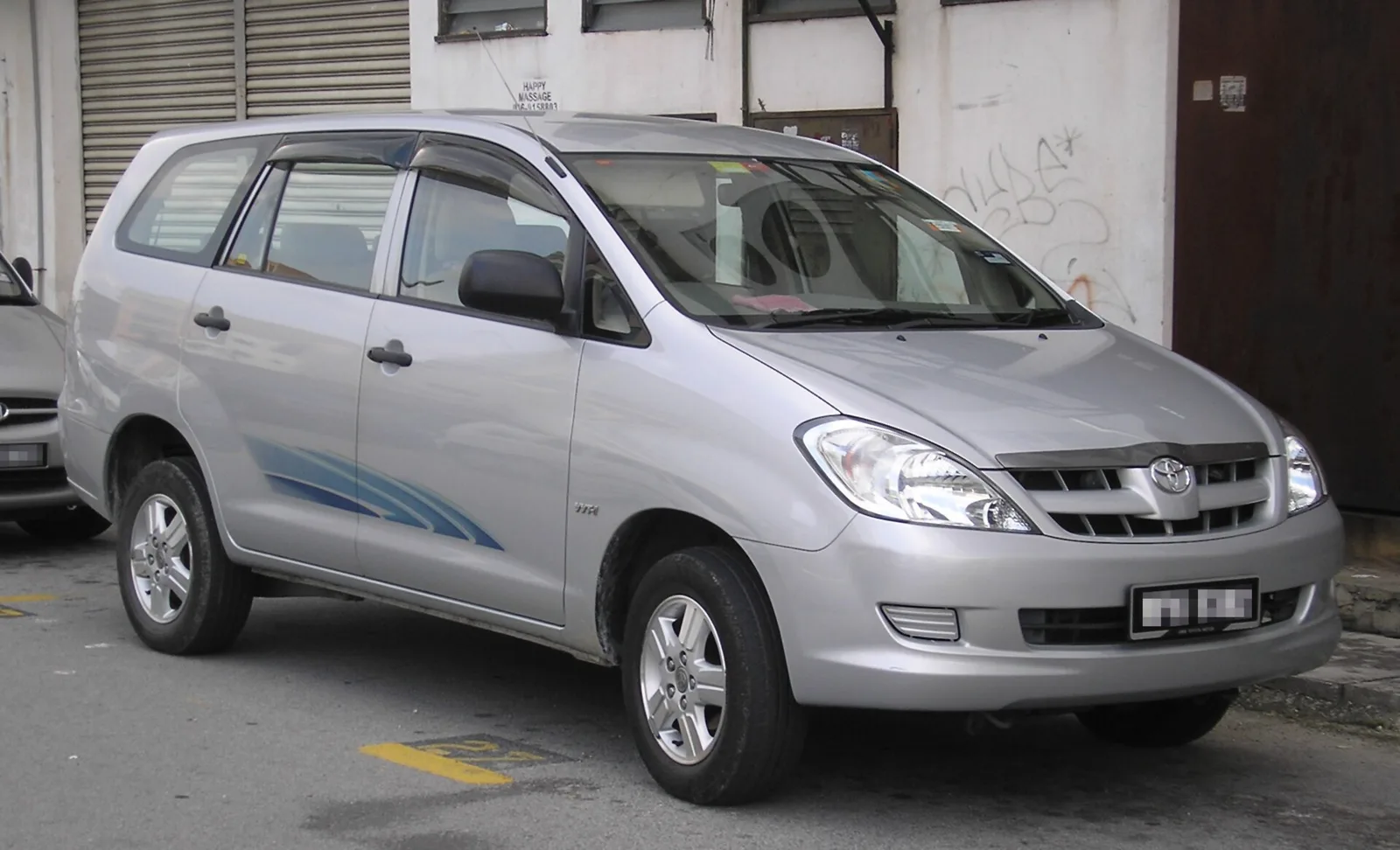
A body-on-frame successor to the Kijang wagon that became a front-drive hybrid in 2022, built in Indonesia, India and a long list of export markets.
Built by Toyota since 2004, the Innova is an MPV with mostly three-row seating. It succeeded the Kijang estate, moved from rear-wheel drive to a front-wheel drive platform in 2022, and has been built in Indonesia, India, Malaysia, the Philippines, Taiwan and Vietnam.
The Toyota Innova is a three-row multi-purpose vehicle that Toyota has built since 2004. It took over from the Kijang in its estate form and went through three generations, and the latest one switched to front-wheel drive with an optional hybrid system.
Where did the Toyota Innova come from?
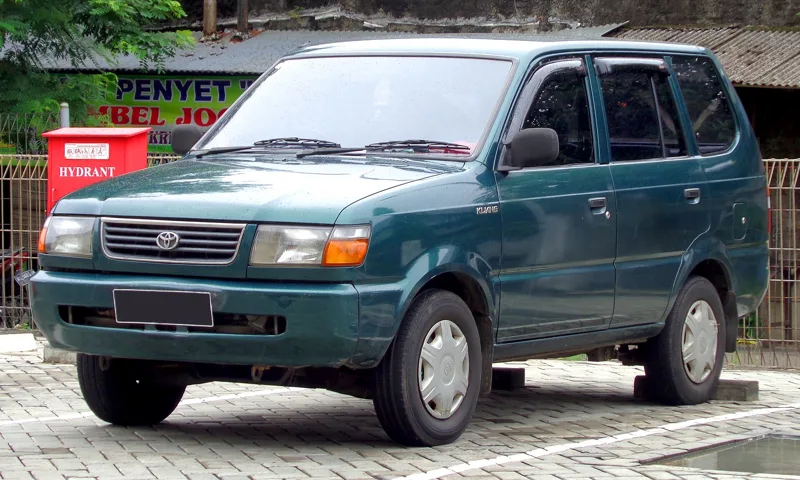
The Innova succeeded the Kijang estate, a nameplate that was sold under several local names in different markets, including Tamaraw FX/Revo, Unser, Zace and Condor. Toyota began development in 1999, and the car first went into production in Indonesia in September 2004.
The name is taken from the English word innovate. In Indonesia the car is sold as the Toyota Kijang Innova, while other markets use plain Innova. Toyota treated the Indonesian car as the fifth-generation Kijang, which kept the lineage of the fourth-generation model going, even though the new car was positioned further upmarket.
A body-on-frame family van that became a front-drive hybrid in 2022, with the Zenix now carrying the Innova story forward.
How did the first-generation Innova differ from the Kijang wagon?
Measured against the fourth-generation Kijang wagon, which had a long wheelbase, the first-generation car was 100 mm (3.9 in) wider and 30 mm (1.2 in) longer, and its wheelbase grew by 100 mm (3.9 in). It also adopted rounder MPV proportions and offered modern safety kit such as ABS and airbags, which the Kijang could not match.
Kaoru Hosokawa headed the project as chief engineer and product planning lead at the Toyota Commercial Vehicle Development Centre. Planners set a target of 80,000 units a year in Indonesia, with 10,000 of them destined for export. The team aimed for a model with a more global outlook than the Kijang it replaced.
Under the skin, the front end used double wishbones with coil springs and a stabiliser bar, and the rear was a four-link solid axle with a lateral rod. Throttle-by-wire and variable valve timing were also new for the model. Depending on the market and grade, buyers could choose a two-row five-seater, as sold in Taiwan, or a three-row car with eight seats or seven seats with captain chairs for the second row.
What changed in the Innova facelifts from 2008 to 2013?
Indonesia saw three facelifts, arriving in August 2008, July 2011 and August 2013. The 2008 update reworked the bumpers, grille and tail-lights, the 2011 car added new headlights, wheels and a revised centre console, and the 2013 model brought a larger grille and an updated boot garnish.
The 2008 facelift reached the Philippines in November 2008 and India on 28 January 2009. Indonesian E and G versions gained chrome details on the rear windscreen and boot lid in August 2009, and the Luxury package arrived for the G and V grades. The 2011 interior changes covered a new steering wheel, new air-conditioning knobs on every version except the V, and a revised dashboard.
In August 2014, the Indonesian G and V grades received redesigned alloy wheels, and the Luxury versions gained a reworked rear bodykit. The 2013 facelift was sometimes nicknamed the Kijang Innova Barong, because its look resembled a character from Balinese mythology.
How did the Innova sell in India?
The Innova went on sale in India on 24 February 2005, replacing the Qualis, with twelve variants on offer. The sales target at first was 45,000 units a year, and the car was primarily used by tourist taxi operators and fleets run by large technology outsourcing companies.
The petrol versions used the 1TR-FE, a 2.0-litre unit, while the diesels used the 2KD-FTV, a 2.5-litre turbo unit. Grades ran through E, G, GX and VX, and a Z flagship sat above the VX from 2012. A 2009 facelift brought exterior tweaks and an intercooler for the diesel engine, and a 2012 update added a new bumper, grille, headlights and alloy wheels.
The 2015 update for India made dual airbags standard on every first-generation variant. It also brought two-tone dark grey alloy wheels, a steering wheel with wood trim, reworked leather seats, an oak interior colour and rear air-conditioning outlets.
What engines powered the first-generation Innova?
The first generation came with a 2.0-litre 1TR-FE petrol, a 2.7-litre 2TR-FE petrol and a turbocharged 2.5-litre 2KD-FTV diesel, so buyers could pick between petrol and diesel power. The 2.0-litre petrol produced 100 kW (134 hp; 136 PS), and the diesel 75 kW (101 hp; 102 PS).
The 2.7-litre 2TR-FE was rated at 118 kW (158 hp; 160 PS). Diesel torque reached 260 Nm (192 lb ft) with the four-speed automatic and 200 Nm (148 lb ft) with the five-speed manual, so gearbox choice changed the character of the diesel.
In Indonesia the 2.7 V arrived in January 2005 as the flagship, with seven seats and an automatic gearbox only. It was dropped in 2007 because low demand was linked to its high price. Limited editions such as the V Luxury, V Xtra and G Cruise were offered in February 2006.
Why did the second generation switch to a crossover look?
Executive chief engineer Hiroki Nakajima described the second generation, launched in November 2015, as a crossover MPV that combined MPV practicality with the tougher appeal of an SUV. Compared with its predecessor, the AN140 grew by 150 mm (5.9 in) in length, 55 mm (2.2 in) in width and 35 mm (1.4 in) in height, with the wheelbase unchanged.
Nandi Julianto, director of production engineering at Toyota Motor Manufacturing Indonesia, said the new car carried only about 5 percent of its components over from the outgoing model. Interior room improved too, with more headroom for front and third-row passengers and 19 mm (0.7 in) more seat spacing between occupants.
The body-on-frame chassis stayed, but Toyota gave it a thicker side rail for extra strength and rigidity. Double wishbones remained at the front, and the rear used a four-link layout with coil springs and a lateral rod. Wheels were 16-inch on low-end versions and 17-inch on the top model, and buyers could add seven airbags, electronic stability control and hill-start assist.
Which markets built the second-generation Innova?
Factories in Indonesia and India build the second generation in full, while Malaysia, the Philippines and Vietnam receive kits for local assembly. Each market added its own grades and engines, so the same nameplate looked quite different from one country to the next.
In India the car was launched as the Innova Crysta in May 2016 with two diesel options: a 2.8-litre 1GD-FTV paired with a six-speed automatic, and a 2.4-litre diesel with a five-speed manual. A 2.7-litre petrol arrived in August 2016, a move prompted by the Delhi and NCR prohibition on diesels above 2,000 cc.
When Bharat Stage 6 arrived, the 2.8-litre engine was dropped in 2020 and the automatic moved to a 2.4-litre 2GD-FTV diesel. That engine delivered 360 Nm (36.7 kgm; 266 lb ft) in automatic form, matching the torque of the older unit, and 343 Nm (35.0 kgm; 253 lb ft) with the manual. It needed a DPF and SCR system that uses diesel exhaust fluid to meet the new rules.
Indonesia launched the second generation in Jakarta on 23 November 2015 with G, V and Q grades. The Venturer replaced the diesel Q in January 2017, adding crossover-style aero kits, black 17-inch alloy wheels, leather upholstery and captain seats. A limited TRD Sportivo followed in August 2020, and only 2,632 units were built.
Malaysia received the car on 5 December 2016, assembled by UMW Toyota at its Shah Alam facility, with E and G grades at first and a 2.0 X flagship from September 2017. The Philippines launch on 26 February 2016 offered four grades, and cars rolled off the Santa Rosa, Laguna line from 14 April 2016. Vietnam took the car on 18 July 2016 with the 2.0-litre petrol only, and it was discontinued there in September 2025.
Was there an electric Innova?
Yes, though only as a prototype. The Kijang Innova EV Concept made its debut on 31 March 2022 in Indonesia, and it was an electric conversion rather than a production model. Five prototypes were built, three in Melbourne and two in Indonesia.
The Australian arm of SEA Electric handled the conversion, and the firm specialises in electric trucks. The pack is 58.9 kWh of lithium-ion, with an expected range of 280 km (175 miles). The motor produces 134 kW (180 hp; 182 PS), with up to 700 Nm (520 lb ft) of torque and a claimed top speed of 120 km/h (75 mph).
Why did the third generation move to front-wheel drive?
Toyota moved the third-generation Innova, codenamed AG10, to the unibody GA-C platform with front-wheel drive, because the older IMV chassis could not accommodate the hybrid powertrain. The switch also brought comfort and efficiency benefits. The car launched in Indonesia on 21 November 2022 and in India on 25 November 2022.
Hideki Mizuma led development as chief engineer, a role he also held for several Noah/Voxy, Sienna and Estima/Previa generations. Toyota Auto Body, a subsidiary that produces minivans in Japan, was credited with the industrial design. The car uses a flat-floor variant of the GA-C platform that the fourth-generation Noah/Voxy shares.
Toyota framed the look as a multipurpose crossover. The A-pillars sit further back and the D-pillars tilt forward to avoid a van-like silhouette, while a narrow track keeps the turning circle small. Compared with the previous car, the third generation is 170 kg (375 lb) lighter, with a wheelbase 100 mm (3.9 in) longer, a cabin 56 mm (2.2 in) longer at 1,746 mm (68.7 in), a cabin 46 mm (1.8 in) wider at 1,488 mm (58.6 in) and 32 mm (1.3 in) more headroom.
Standard kit includes an electric parking brake that can hold the car automatically, a gear selector on the dashboard, a panoramic roof and Toyota Safety Sense on the higher trims. Second-row captain seats come with Ottoman leg rests.
What is the Innova Zenix hybrid?
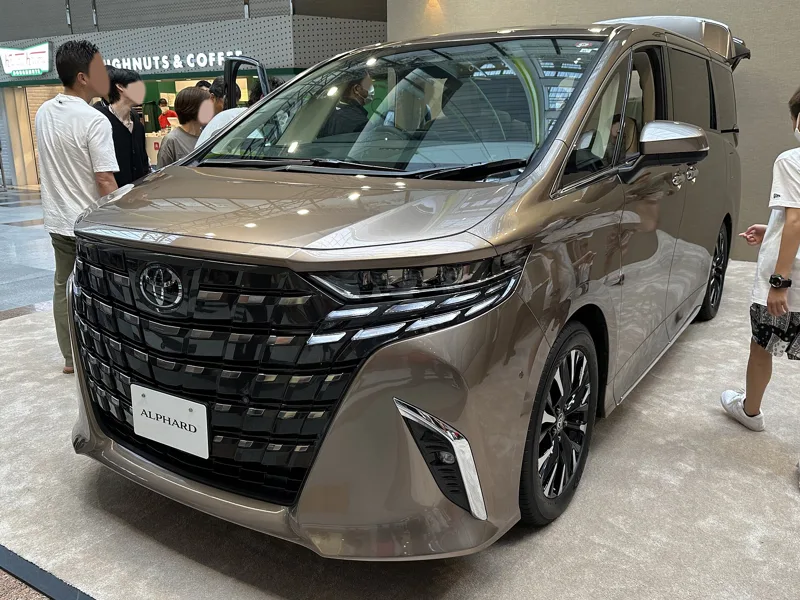
Zenix is the name Toyota uses for the third-generation car in Indonesia, Malaysia and Thailand, and the Philippines sells it as the Toyota Zenix. The hybrid is a fifth-generation Toyota system, pairing the M20A-FXS 2.0-litre petrol engine with a permanent magnet synchronous motor and a 6.5-Ah NiMH battery under the front seats.
Toyota chose nickel-metal hydride over lithium-ion because it holds up better in hot weather. In Indonesia the car comes in G, V and Q trims, with the hybrid optional on G and V and standard on Q. Toyota Safety Sense is standard on Q, and the Modellista accessory package is offered on the V hybrid and Q.
Indonesian sales targets were set at around 4,000 units a month, with exports to around 50 countries planned from February 2023. Local content in 2022 stood at 85 percent for the petrol model and 60 percent for the hybrid, since many of its electrical components come from Japan. The NiMH battery is assembled locally, while the M20A engines come from India.
Where has the Innova been sold beyond Indonesia?
Beyond Indonesia, the Innova has been built in India, Malaysia, the Philippines, Taiwan and Vietnam, and sold in Brunei, Cambodia, Myanmar, Thailand, across the GCC, in Ecuador, Egypt, Jamaica and Argentina. The third generation rolled out across Asia and Latin America from 2023.
Brunei was the first market to receive the third generation, on 14 April 2023, with a single 2.0 V trim using the petrol engine and a CVT. Malaysia followed on 21 June 2023 with 2.0 V and 2.0 HEV models as the Innova Zenix, and the Philippines launched the car as the Toyota Zenix on 22 June 2023.
In the Philippines, Toyota dropped the Innova name from its marketing to avoid confusion with the diesel second generation, which stayed on sale and was assembled locally at Santa Rosa. The Zenix still carries the physical Innova emblem. Thailand launched its Zenix on 19 July 2023 in Smart and Premium trims, both hybrid. Vietnam sold the car from 12 October 2023 as the Innova Cross, after bookings opened in July 2023.
Guatemala launched the car on 17 June 2023 with AF-24 petrol and BN-24 hybrid trims, and Panama followed on 26 June 2023 with one petrol trim on a CVT. The GCC markets received the car on 10 July 2023, each with its own specification. In India, Maruti Suzuki launched a rebadged and restyled version, the Suzuki Invicto, on 5 July 2023, offered only as a hybrid in Zeta+ and Alpha+ trims.
What are the Toyota Innova specifications?
| Specification | Detail |
|---|---|
| Layout | Multi-purpose vehicle, usually three-row seating |
| First generation | 2004, AN40, rear-wheel drive on body-on-frame |
| Second generation | 2015, AN140, body-on-frame, 150 mm (5.9 in) longer than predecessor |
| Third generation | 2022, AG10, unibody front-wheel drive on GA-C |
| First-generation engines | 2.0-litre 1TR-FE 100 kW (134 hp; 136 PS); 2.7-litre 2TR-FE 118 kW (158 hp; 160 PS); 2.5-litre 2KD-FTV 75 kW (101 hp; 102 PS) |
| First-generation diesel torque | 260 Nm (192 lb ft) with automatic; 200 Nm (148 lb ft) with manual |
| Second-generation India diesel | 2.8-litre 1GD-FTV, then 2.4-litre 2GD-FTV; 360 Nm (266 lb ft) automatic, 343 Nm (253 lb ft) manual |
| Third-generation engines | 2.0-litre M20A-FKS petrol; 2.0-litre M20A-FXS hybrid |
| Hybrid battery | 6.5-Ah nickel-metal hydride, under the front seats |
| Third-generation weight | 170 kg (375 lb) lighter than predecessor |
| Third-generation cabin | 1,746 mm (68.7 in) long; 1,488 mm (58.6 in) wide |
| Second-generation safety | ASEAN NCAP 2016: 4 stars (3 airbags, no stability control), 5 stars (5 airbags with stability control); 2020: 5 stars |
| Kijang Innova EV Concept | 58.9 kWh lithium-ion; 280 km (175 miles) estimated range; 120 km/h (75 mph) claimed top speed |
How did the second generation score in crash tests?
The second-generation Innova scored 4 stars in ASEAN NCAP testing in 2016 for the three-airbag version without electronic stability control, and 5 stars for the five-airbag version with it. In 2020 it reached 5 stars under the 2017-2020 standards, after stability control became standard across the range.
The gap between the two 2016 results came down to airbags and stability control. The 2016 round used the 2012-2016 ASEAN NCAP standards, and the 2020 round moved the bar on to the next set of rules.
Did the Innova win awards and sales records?
The third-generation Innova won four Indonesian awards in 2023, and the same year it topped Indonesian sales for the first time in 18 years. The awards were the Car of the Year Otomotif Award, the Car of The Year GridOto Award, the Forwot Cars of The Year and the Best Carvaganza Editors Choice Award.
Earlier sales figures are also notable. In Vietnam the first-generation car sold 9,934 units in its first year, taking 23 percent of the overall car market, a record for the country. The Philippines recorded more than 140,000 first-generation sales, and the Innova HyCross passed 100,000 sales two years after its Indian launch.