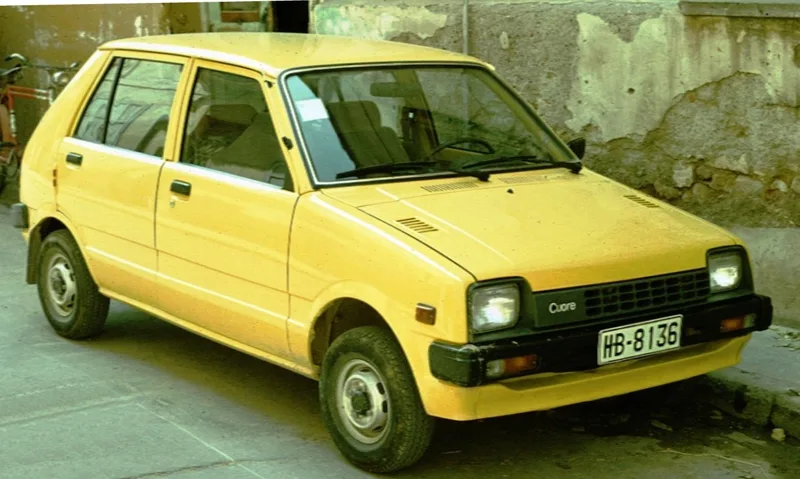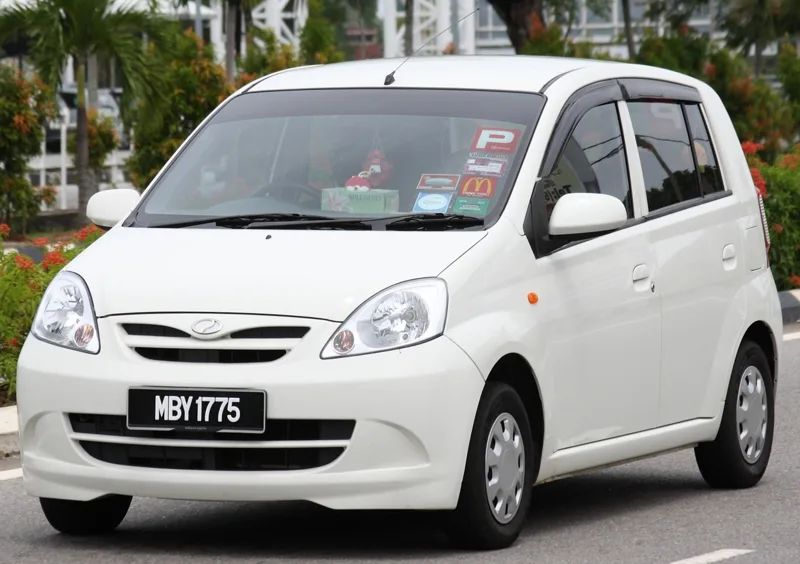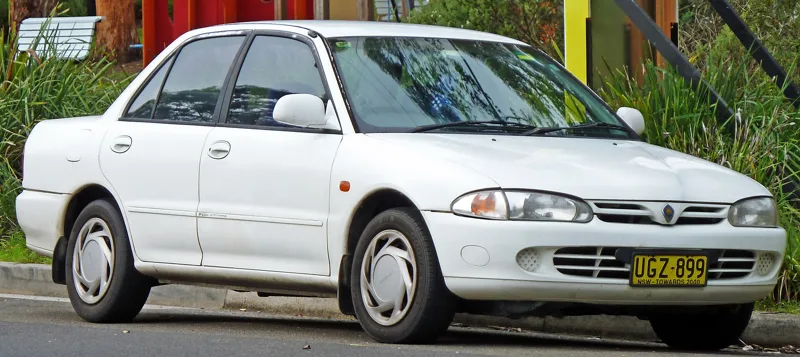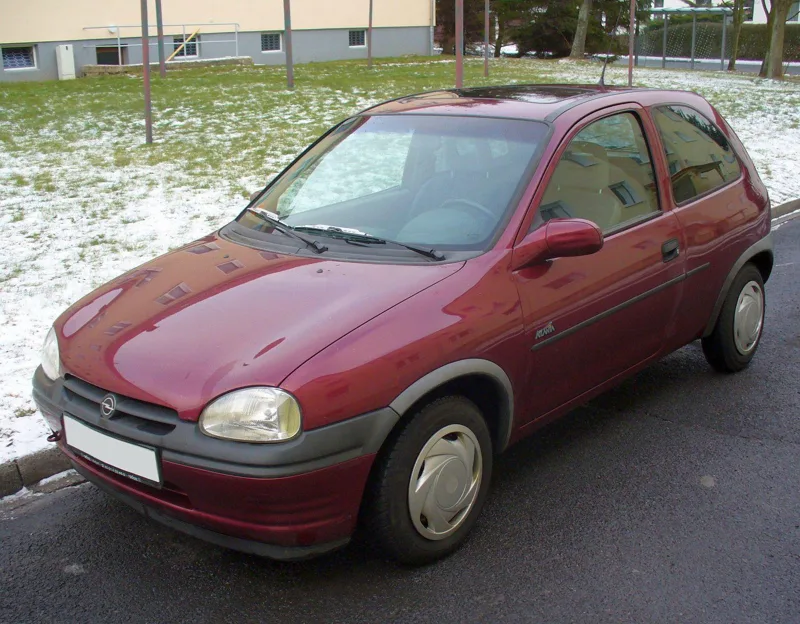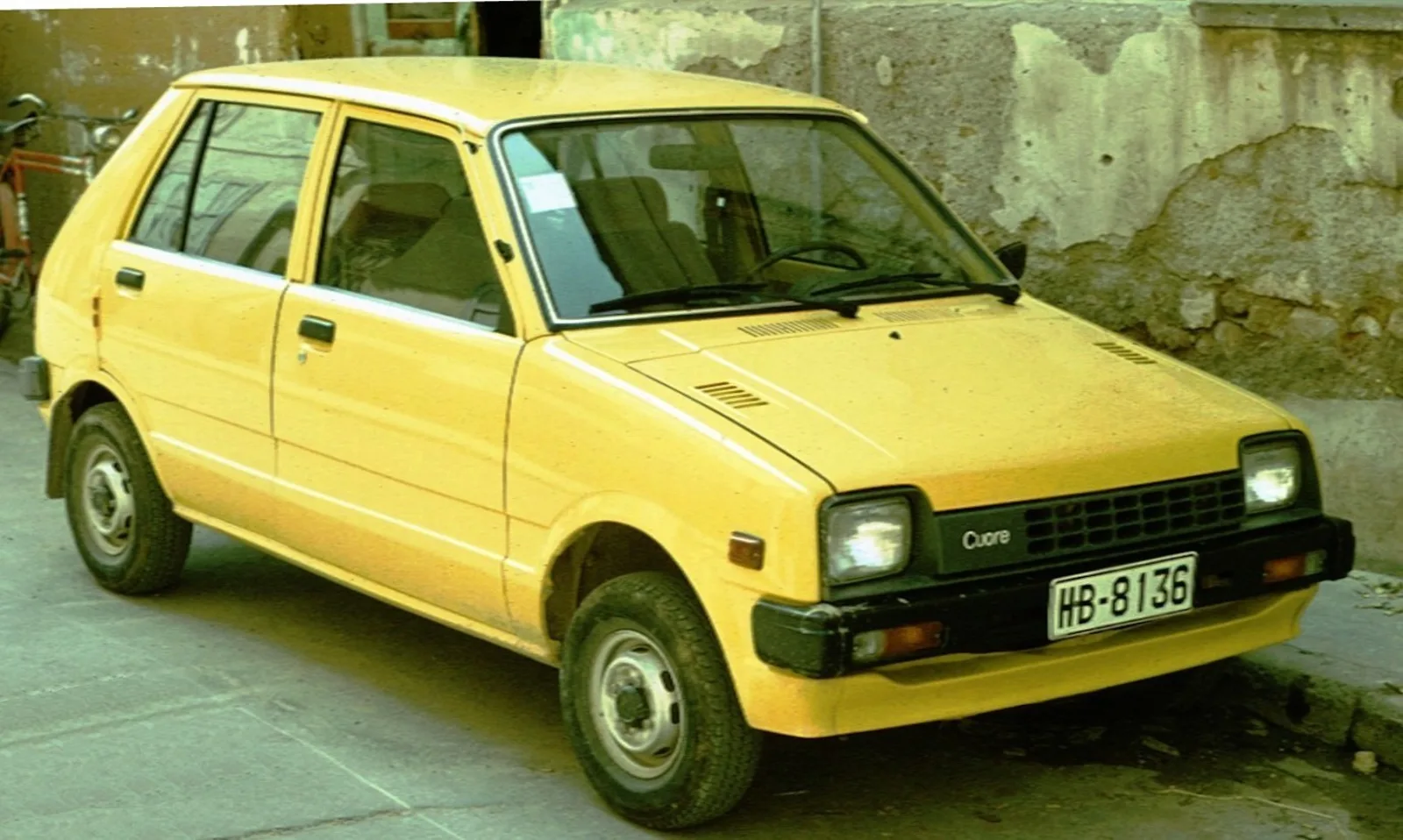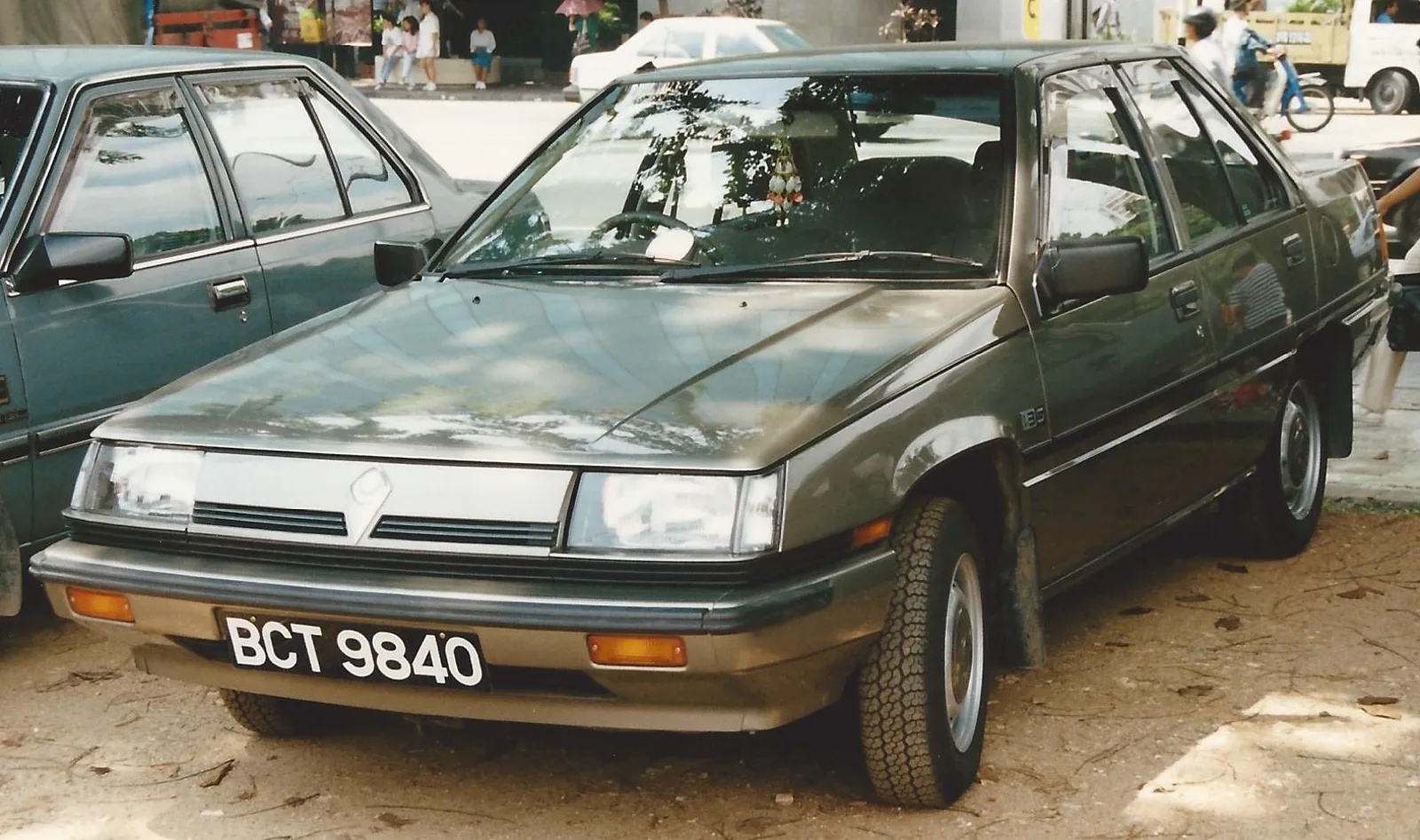
Malaysia's Mitsubishi-based Saga and Daihatsu-based Kancil, and the Kia sedan Indonesia's president's son sold with tax privileges until the WTO stopped it.
Malaysia built the Proton Saga from a 1983 Mitsubishi design and launched it in 1985, then added the Daihatsu-based Perodua Kancil in 1994. Indonesia's Timor, a rebadged Kia owned by Tommy Suharto, began selling in 1996 and was ended by a WTO ruling in 1998.
Within six months of its British launch in March 1989, Proton had beaten its sales target for the first twelve. Malaysia's first national car, the Proton Saga, was earning a record as the fastest-selling new make ever to enter the United Kingdom.
Meanwhile Indonesia's answer to the same ambition followed a different script: a national car pioneer owned by the president's youngest son, a Korean sedan wearing a new badge, and a ruling from the World Trade Organization that stopped it. The Proton Saga, the Perodua Kancil and the Timor are three attempts to create a Southeast Asian family car, and they ended in very different places.
Why did Malaysia want a national car?
The idea of a Malaysian car was formed in 1979 by Mahathir Mohamad, who held the trade and industry portfolio at the time, as part of a push for heavy industry and self-sufficiency. The existing motor industry dated from the late 1960s, when six plants assembled cars from complete knock-down kits imported from Europe, America, Japan and Australia. Small volumes and local content rules pushed prices up through the 1970s, and most locally assembled models cost more to make than the same car imported ready-built.
By the early 1980s the government had decided to step in. Mahathir became prime minister in July 1981, and the National Car Project was approved in 1982. Its goals were faster technology transfer, higher local content and a larger role for Malay entrepreneurs in an industry then dominated by ethnic Chinese businesses. In line with his Look East Policy, Mahathir invited Mitsubishi Motors to take part. By January 1983 Mitsubishi had built two prototypes in Japan, codenamed LM41 and LM44, and on 7 May 1983 Perusahaan Otomobil Nasional, or Proton, was founded. HICOM took 70 per cent, with 15 per cent each for Mitsubishi Motors and Mitsubishi Corporation.
The Proton Saga, the Perodua Kancil and the Timor ended in very different places.
Proton Saga history: how did the first national car work out?
Mahathir launched the Saga on 9 July 1985. Its basis was the 1983 Mitsubishi Lancer Fiore, and it came as a four-door saloon or a five-door hatchback, powered by a 1.3-litre or 1.5-litre Orion II engine. The first Saga to leave the production line at Shah Alam is kept at the Muzium Negara, standing for the beginning of Malaysian car making. On 14 September 1985 Mahathir drove a prototype with a 2.0-litre engine and the national flag across the Penang Bridge at its opening ceremony.
Supply was thin at first, with only 700 cars ready for the launch. Even so, by mid-1986 the Saga held 64 per cent of the segment for engines under 1600cc. Exports started in 1986 with Bangladesh on 26 December, and New Zealand, Brunei, Malta and Sri Lanka followed in 1987.
The car stayed in production for more than 22 years until early 2008, the longest run of any Proton. Total sales reached 1.9 million as of 2022, of which 1.2 million were the first generation, which makes it the company's most successful product. The milestones came fast: the 10,000th Saga in 1986, the 50,000th in 1987, the 100,000th in 1988, the 200,000th on 16 May 1990 and the 300,000th in 1991.
Variants multiplied. A 1.5I range-topper arrived in January 1987, followed by an updated Magma engine in mid-1987 and the Aeroback hatchback in October. The Proton Knight of 8 March 1989 came only in majorca black, with a 1.5-litre Magma engine and five-speed manual gearbox, and was built for just one year. The Megavalve of 12 August 1990 moved to 12 valves, which made it 11 to 15 per cent more powerful than the Magma, and cost RM28,000 to RM36,000. A stretched limousine, 25 per cent longer than the saloon, even had a freezer and a television.
By 1991 locally made Saga parts had reached 69 per cent after the Engine and Transmission Factory opened in Shah Alam. That year Fortune magazine ranked Proton as the 29th largest car company in the world, a ranking it held again in 1992 on the strength of the Saga alone, Proton's only model until 1993.
Proton Saga Iswara and the LMST
The next car, the Saga Iswara, launched on 15 August 1992. It was named after the great Helen butterfly of Sarawak, built on the old Saga platform and restyled by a British firm. In Britain it was sold as the Proton Mpi, and cars sent to Singapore and the UK had fuel injection and a catalytic converter, so that they complied with Euro I. The saloon became a common sight as a Malaysian taxi through the 1990s and 2000s, many converted to run on natural gas, and plenty are still working. A UK-market Iswara also appeared in an episode of Mr. Bean. In 2001 the Iswara Aeroback Special Edition became the first of its line to get ride and handling input from Lotus, a tweak carried into the Saga LMST, which replaced the Iswara in 2003 and ran until 2008 with a fully redesigned interior on the same aged platform that dated back to 1985.
What happened when Proton tried to sell the Saga abroad?
The record is mixed. Proton tried to enter the United States with the American entrepreneur Malcolm Bricklin, and sales were pencilled in for October 1988. Soon after the first cars arrived, Bricklin revealed that he had no import approval and that the Saga had failed emissions testing. All investments were ended, and Proton took a heavy financial loss. It is believed that Mitsubishi helped sink the deal, since it did not want a cheaper clone of its own car competing in a market then regarded as the most important in the world. Mitsubishi then dismissed Proton's management, replaced them with Japanese executives and restricted export plans.
Europe went better. Ireland came first, on 11 March 1988, because only small changes were needed to pass its rules and its market of about 50,000 units a year was far smaller than Britain's 2 million. Prices ran from 8,999 to 10,799 pounds. At the British International Motorshow that October the Saga won three awards for coachwork and ergonomics, two gold and one silver.
The full British launch came on 16 March 1989, backed by over 100 dealers. The saloons became the Proton 1.3 and 1.5, with S.E. or G.L. trim suffixes, and the cars kept the original Lancer Fiore dashboard and rear fog lights to meet British safety law. The homologation process took over 400 modifications and a 1,000-mile trial on British roads. Proton advertised under the slogan "Japanese Technology, Malaysian Style". It issued limited editions with names such as Puma, Lynx, Emerald, Prism and SE Le Mans. By 1991 it had exported 40,151 cars, of which 33,291 went to the United Kingdom, 3699 to Singapore, 1160 to Ireland and 847 to New Zealand.
Where did the Proton Persona come from?
The Proton Persona name started as a British export label. In November 1993 the Proton Wira went on sale in the UK as the Persona, and the family later added a Compact in November 1995 and a two-door Coupe in 1997. Australia received the Wira in May 1995 and renamed it Persona in 1996, and it stayed on sale there until 2004. Chile also used the name.
The second generation, unveiled on 15 August 2007, was the first Proton to carry the Persona name at home. It was a saloon version of the GEN2 hatchback, with the whole section behind the B-pillar re-engineered, and it sold over 40,000 units a year, becoming a best-seller. The SE arrived on 26 August 2008, the Elegance facelift in March 2010 and the SV in November 2013, when prices were cut and all-round disc brakes and twin airbags became standard.
The third generation came in August 2016 on an extended Iriz platform, with the Iriz's 1.6-litre VVT engine and a fresh exterior, one class smaller than before but with more headroom and a significantly larger boot. Proton promoted its affordable safety, and every variant earned five stars from ASEAN NCAP. Facelifts followed on 23 April 2019, when over 300 parts were changed, and on 5 August 2021. The nameplate's run is listed as 1993 to 2026, with production scheduled to end in 2026.
Perodua Kancil: Malaysia's second national car
Perodua, founded in 1993, made the Kancil its first car. It was a small five-door monocoque hatchback seating five, a rebadged third-generation Daihatsu Mira (L200). Rebadging had become common in Malaysian motoring since 1985, when Proton began building on retired Mitsubishi designs. The name is Malay for the mouse deer, a creature of local fable that lives in the Malaysian jungle.
Perodua unveiled the Kancil on 29 August 1994 in EX and GX forms with a 660 cc engine producing 31 PS (23 kW). An 850 cc unit with 37 PS (27 kW) arrived in August 1996, and a fuel-injected 850 with 50 PS (37 kW) in the EZi of February 2003. The EZ automatic was launched in January 1995 at RM28,931.14 in solid colours. The car was facelifted in August 1997, again in October 1999 when Mahathir unveiled the new look at the KL Motorsport Show, in 2000, and more extensively in September 2002. The 850 EXS special edition of 2005 was the only Kancil to come with a CD player. Production ended on 20 July 2009, and the Perodua Viva took over.
The Kancil was an instant hit. It suited beginner drivers, was common in driving schools, and was prized for fuel economy and for being easy to park. Perodua made its 50,000th in December 1995, its 100,000th by January 1997 and 250,000 by 1999. Monthly output averaged 4,000, peaking at 7,700 in October 2002, and the total was 722,223 cars, of which around 14,000 were exported to 19 countries, among them Brunei and Mauritius from 1996 and Sri Lanka from 1997.
Perodua Kancil abroad: Nippa and Ceria
In Britain it became the Perodua Nippa from September 1997. Priced at just over 5,000 pounds, then 4,999 pounds in 1999, it was the least expensive new car sold there until the Perodua Kelisa replaced it four years later. In Indonesia it was the Daihatsu Ceria, shown at the 11th Gaikindo Auto Expo in Jakarta in July 2001 after a concept version with leather and wood trim, the KX-P, the year before. The Ceria was discontinued in 2006 and was succeeded in 2012 by the Daihatsu Ayla, which Malaysia builds as the Perodua Axia.
Timor Putra Nasional: how did Indonesia's version work?
PT Timor Putra Nasional, known as Timor, operated from 1996 to 2000 and was founded by Tommy Suharto. The name abbreviates the Indonesian phrase for the People's Car Industrial Power, while Putra Nasional means national son. Presidential instruction No. 2 of 1996, dated 28 February, ordered ministers to create a national car industry and said that a company could receive "pioneer" status if its cars carried an Indonesian-owned brand, were built in Indonesia and used domestic parts. They had to reach 20, 40 and 60 per cent local content by the end of years one, two and three. Pioneers were freed from the 65 per cent duty on imported components, and their cars from a 35 per cent luxury tax on sedans, for four years.
The status went to TPN, which Tommy Suharto, the youngest son of the then president, owned 99 per cent. Indonesia's government had approved the company's production plans more than three months before the announcement. TPN had to build 15,000 cars by September 1996 to keep the support, so it needed a foreign partner quickly. It considered Lada and Iran Khodro before choosing Kia, which was willing to let TPN build, alter, rebadge and ship out its vehicles.
On 8 July 1996 TPN launched the Timor S515 at the Sarinah Building in Jakarta. It was a badge-engineered Kia Sephia, imported from South Korea because the factory had not been built, and a presidential decree waived the import duties. Asked why the cars were tax-free, Tommy claimed that Indonesian migrant workers had assembled them in South Korea. From June 1996 to July 1997 TPN imported 39,715 cars. The fuel-injected S515i followed on 11 April 1997, and local knock-down assembly began on 15 May 1997 at Tambun, near Bekasi.
Why did the Timor upset the car market?
Price. The Timor cost around Rp 35 million, about half the price of its rivals, and the similarly sized Toyota Corolla cost about Rp 70 million. By the end of the first half of 1997 it held 26 per cent of the passenger car market. Ford and Chrysler withdrew their investment in Indonesia, because they could not compete with a subsidised rival, and General Motors put its investment on hold in June 1996. The Timor also killed the state's own national car scheme, the Maleo, a Zagato design, and set Tommy against his brother Bambang Trihatmodjo, who had already begun a similar project with Hyundai.
The plant at Cikampek in West Java, a planned US$1 billion factory run by a joint venture that TPN owned 70 per cent and Kia 30 per cent, began construction on 24 February 1997 with a planned capacity of 50,000 cars a year.
What brought the Timor down?
A trade ruling and a crash. Japan, America and the European Communities took the national car programme to the World Trade Organization, whose dispute body found in 1998 that it broke the rules on subsidies, because a tax exemption linked to domestic goods is a subsidy. A decree of 21 January 1998 ended the company's operations, and TPN was ordered to repay US$1.3 billion in luxury taxes. At the same time the whole market collapsed: total car sales fell from almost 400,000 in 1997 to about 53,000 in 1998, and TPN sold only 2,493 cars in 1998 against 19,471 a year earlier. By early 1998 some 15,000 of the nearly 40,000 imported cars sat unsold in Jakarta.
During the May 1998 riots, owners took the T logo off their cars to avoid being linked with the Suharto family, and dealers changed their signage colours while keeping the Timor name. In 2000 Kia considered reviving the company, but only if Tommy Suharto's influence was removed, and the investment was not made. TPN formally ceased to exist on 5 November 2021, after the state confiscated its assets.
| Model | Country | Launched | Base car | Volume |
|---|---|---|---|---|
| Proton Saga | Malaysia | 9 July 1985 | Mitsubishi Lancer Fiore | 1.9 million sold as of 2022 (all generations) |
| Perodua Kancil | Malaysia | August 1994 | Daihatsu Mira (L200) | 722,223 built |
| Timor S515 | Indonesia | 8 July 1996 | Kia Sephia | 39,715 imported, June 1996 to July 1997 |
Timor variants and prototypes
The S5 series comprised the S515, the S515i and a limited-edition S516i LE licensed by Prodrive. To cut prices, the Timor had fewer features than the Sephia, with no automatic gearbox, airbags or ABS, and it was converted to right-hand drive. The body maker New Armada built 30 of a planned 50 SW516i station wagons, which are now rare and highly priced. Only one SL516i limousine with six doors was made. A rebadged Kia Sportage called the J520i never materialised, while the S213i hatchback, designed by Zagato and powered by a 1.3-litre engine of around 82 hp, was finished as a prototype in 2000. A Timor Borneo was allegedly planned as a rebadged Lamborghini LM003, since Tommy owned a stake in Lamborghini through Megatech.
What these projects mean for buyers and drivers
The cars left a visible mark on the road. The Saga Iswara taxis of Malaysia are still in use but are being phased out in favour of newer Proton models. The Kancil's price put it at the bottom of the British market, and the third-generation Persona earned five-star safety ratings. In Indonesia, a Timor buyer in 1997 paid about half the price of a rival sedan, thanks to tax exemptions that the WTO later ruled out.
Where this goes next
For Proton, production of the Persona is scheduled to end in 2026. Perodua's link to Daihatsu lives on through the Axia, which grew out of the Daihatsu Ayla that superseded the Ceria in 2012. In Indonesia the Timor story is settled: the company was formally closed on 5 November 2021.