A Japanese small car that became a Malaysian best seller, a tall kei car, an Indonesian MPV and a van sold under three brands.
The Boon is a Daihatsu subcompact sold as the Toyota Passo and, abroad, as the Sirion and Perodua Myvi. The Tanto is a Japanese kei car. The Sigra is an Indonesian three-row MPV sold as the Toyota Calya. The Gran Max is a van and pickup range.
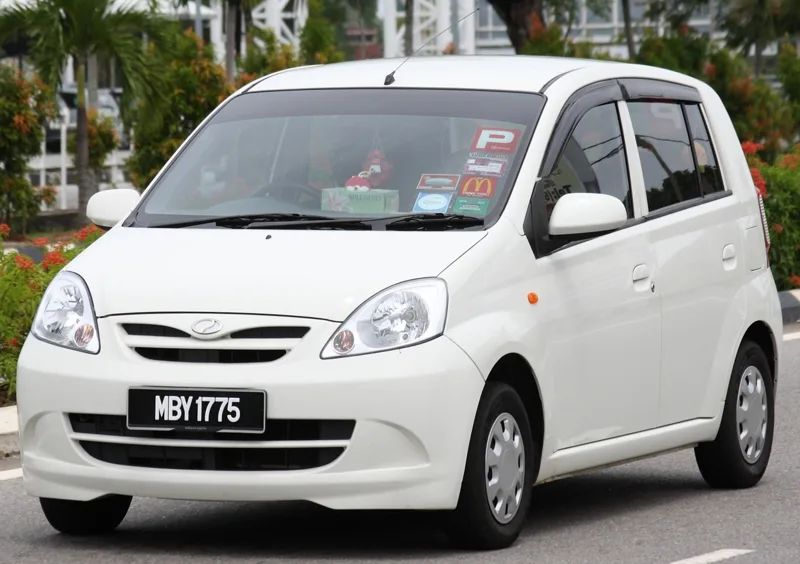
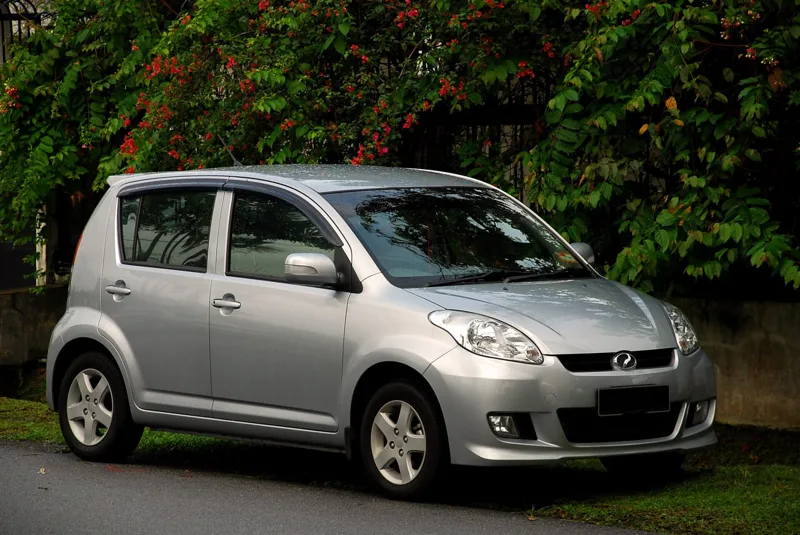
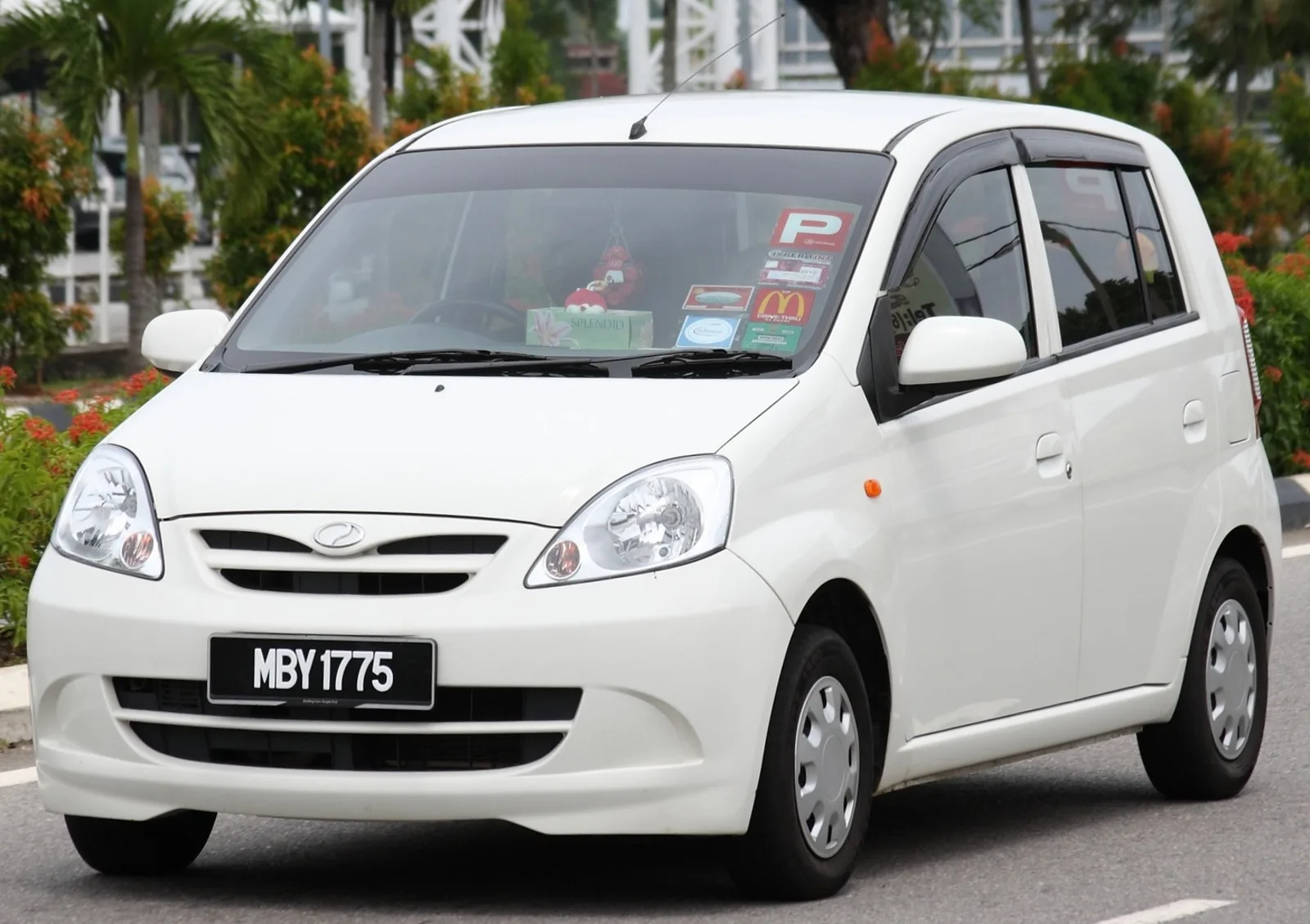
For four straight years, the best-selling car from Malaysia's Perodua was a Daihatsu Boon in different clothes. Perodua launched the Myvi, a variant of the Boon with multiple cosmetic changes, on 25 May 2005, and it topped the company's Malaysian sales in 2006, 2007, 2008 and 2009. That habit of one design wearing many badges runs through Daihatsu's range, from the Boon and Tanto in Japan to the Sigra and Gran Max in Indonesia.
What are the Daihatsu Boon, Tanto, Sigra and Gran Max?
The Boon is a subcompact car sold by Daihatsu from 2004 to 2023, and by Toyota as the Passo. The Tanto is a tall kei car. The Sigra is a three-row A-segment MPV built only for Indonesia, and the Gran Max is a series of light commercial vans and pickups sold in many countries.
Each has sister models: the Boon became the Passo, Perodua Myvi, Subaru Justy and Sirion; the Tanto became the Subaru Chiffon; the Sigra the Toyota Calya; and the Gran Max the Toyota LiteAce, TownAce and Mazda Bongo.
One Daihatsu design, the Boon, topped Perodua's Malaysian sales for four straight years.
What is the Daihatsu Boon, and why does it have so many names?
Daihatsu says the name Boon comes from the English word and from the sound Japanese children make when imitating a car. Toyota's version, the Passo, takes its name from the Italian word for step, and Toyota says it was meant to suggest a casual, approachable car. Corolla Store dealers sold the Passo until Toyota folded them into its other dealer networks in 2020.
Overseas, the first two generations of Boon were sold as the Sirion, as its second and third generations. The first Sirion, for its part, was marketed in Japan under the name Storia.
How did the first-generation Boon work?
Toyota chief engineer Tetsuya Tada led development of the first-generation Boon (M300 to Daihatsu, AC10 to Toyota). Japanese buyers could have a 996 cc or a 1.3-litre engine, and a turbocharged 936 cc four-wheel-drive version called the Boon X4 was also available. The Boon and the European Sirion both came in front-wheel and four-wheel drive.
The car was designed for European tastes, so it took on a larger, stockier frame. It weighs about 940 kg (2,072 lb), and luggage capacity grows from 225 L (8 cu ft) to 630 L (22 cu ft) with the back seats folded.
Its spread was quick. Daihatsu launched the second-generation Sirion in Brunei in early 2005, using the Boon's facilities and parts, and it lasted until 2010. Daihatsu later left the Brunei passenger car market in 2014, and Perodua's Myvi launched there in April 2016. Perodua also exported the Myvi to Singapore and Britain.
The Boon was restyled on 25 December 2006, and that version went to Europe as the Sirion in 2007. That year Daihatsu also launched the Sirion in Indonesia, using the Myvi's facility and parts, and the Subaru Justy, built from the Boon, was unveiled at the Frankfurt Motor Show as Subaru's entry-level model.
What changed in the second and third generations?
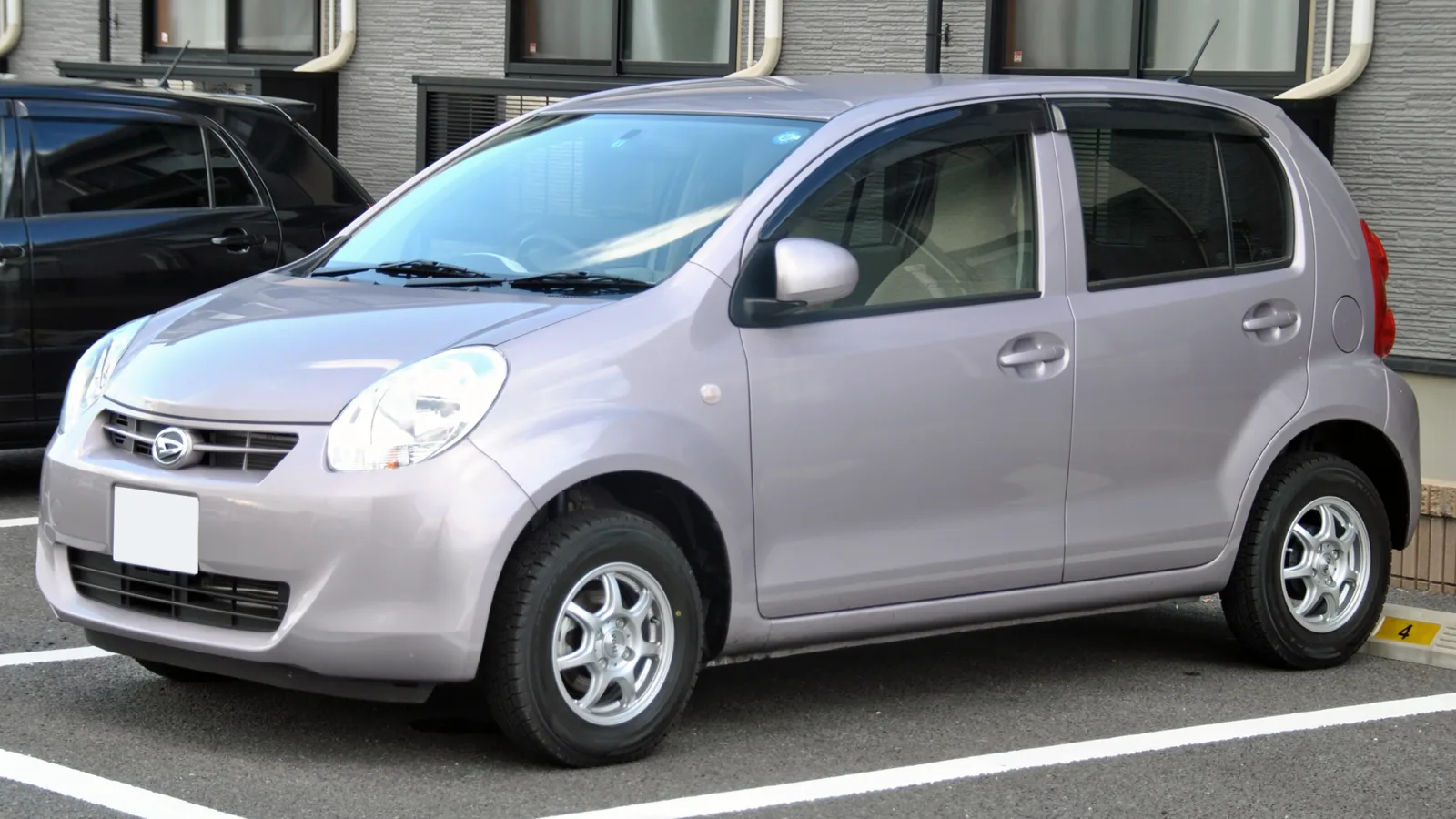
Japan saw the second-generation Boon on 15 February 2010, shown together with a new Passo. Its Daihatsu code is M600 and its Toyota code AC30. Toyota also offered a well-equipped Passo +Hana, with a smoothed-off nose, champagne-coloured door handles and mirrors, that had no Daihatsu equivalent.
The second-generation Myvi was released in Malaysia on 17 June 2011, and the Indonesian market's third-generation Sirion was revealed at that country's International Motor Show on 23 July 2011. Toyota New Zealand, in April 2013, stopped selling the second-generation Sirion, saying it could not secure Daihatsu products that would meet future regulatory standards there.
Japan got the third-generation Boon and Passo on 12 April 2016. A richer Boon CILQ wore a pill-shaped grille, and Toyota's equivalent, the Passo Moda, replaced the +Hana. Both received a facelift on 10 October 2018, when the Boon gained a Style variant. The Passo's Smart Assist III collision avoidance system detects pedestrians, vehicles and obstacles, and can warn the driver or switch between high and low beams.
This third-generation Boon is the only one that is not built as the matching generation of the Perodua Myvi.
What is the Boon Luminas?
The Boon Luminas was a minivan sold alongside the regular Boon from 2008 until 2012, developed jointly with Toyota, which sold it as the Passo Sette. Its arrival brought back Daihatsu's minivan line, which had lapsed for four years after the Atrai 7 ended in 2004.
Compared with the Boon, it is 580 mm longer, 20 mm (0.8 in) wider and 85 mm (3.3 in) taller, with a wheelbase stretched from 2,440 mm (96.1 in) to 2,750 mm (108.3 in). It was designed around flexible seating, with the second and third rows able to fold completely flat and to be combined for different numbers of passengers and amounts of luggage.
It was built at the Kyoto Plant, and at the end it was the only Daihatsu sold from that site. Grades were CL and CX, and an Aero package added a different front fascia and spoiler.
The Passo Sette sold through Corolla dealers. It had the same 1.5-litre engine, three rows and seven seats as the first-generation Toyota Sienta, but the Sienta used Toyota's NBC platform and sliding doors, while the Sette used the Daihatsu A Platform. The 1,495 cc 3SZ-VE four-cylinder produced 109 PS (80 kW; 108 bhp) and 141 N-m (104 lb-ft), with a four-speed automatic.
In Malaysia it was the Perodua Alza, introduced on 23 November 2009. Sales of the Sette fell sharply, partly because the first-generation Sienta returned in May 2011, and the Luminas and Sette ended in 2012.
What is the Daihatsu Tanto?
The Tanto is a kei car introduced at the 2003 Tokyo Motor Show. It took the tall body style of the Daihatsu Move, and the Tanto Custom followed in July 2005. The name comes from the Italian, Spanish and Portuguese word meaning so much or a lot.
How did the first two Tantos differ?
The first generation (L350) went on sale on 27 November 2003 in L, X and X Limited grades with a naturally aspirated engine, and R and RS with a turbo. Only conventional automatics were offered, mostly four-speed. The Custom, aimed at younger buyers, had linked headlights and clear taillights across the rear, and the Custom RS came with 15-inch alloys and a Momo steering wheel. At the 2005 Tokyo Motor Show Daihatsu displayed the Tanto FCHV, a fuel cell prototype based on the Custom with a hydrogen tank and electric motors.
The second generation (L375) arrived on 17 December 2007 with an ordinary hinged door on the right and a sliding door on the left that has the B-pillar built into it, a feature Daihatsu calls Miracle Open Door. From June 2011 the naturally aspirated engines gained Eco Idle start-stop, which made the car eligible for extra tax breaks, and the turbo Custom RS followed in May 2012. It was discontinued in September 2013.
What is the Tanto like now?
The third-generation Tanto (LA600), on sale from 3 October 2013, has Miracle Open Door sliding doors on both sides and a curved windscreen. Daihatsu retuned the ride, steering and throttle response for better feel. At first the turbo engine was available only on the Custom, which drew criticism, and two months later the Tanto X Turbo arrived. Subaru has sold it as the Chiffon since December 2016.
The fourth generation (LA650) went on sale in Japan on 9 July 2019 and the second-generation Chiffon followed a week later. It sits on Daihatsu's DNGA platform, short for New Global Architecture. The regular Tanto comes in L, X and X Turbo, the Custom in L, X and RS, and all versions have a CVT, with four-wheel drive optional except on the Chiffon GS.
Within a month of launch, orders reached about 37,000 against a monthly target of 12,500. The Custom was facelifted on 3 October 2022, when the crossover-styled Tanto FunCross joined the range. As of June 2025 the Tanto series had sold 3 million, following the Mira and Move to that mark.
What is the Daihatsu Sigra?
The Sigra is an A-segment MPV with three rows as standard, designed by Daihatsu and made since July 2016 by Astra Daihatsu Motor in Indonesia and sold nowhere else. Chief engineer Nobuhiko Ono developed it on a lengthened version of the Ayla platform, and it sits below the Xenia as a cheaper MPV. Toyota sells it as the Calya with a different front end.
Both cars were built to Indonesia's Low Cost Green Car rules, under which economical cars escape the luxury goods tax. The Sigra was previewed by the UFC concepts in 2012, 2013 and 2014. The production car was unveiled on 2 August 2016 with the Calya and on show at the Gaikindo auto show in Indonesia from 11 August 2016. Karawang is the plant for both, and the localisation level is claimed to be 94%.
Sigra comes from a Sanskrit word for quick response, and Calya means perfection. The Sigra wears the S-shaped front logo used by the Ayla, while the Calya has a Garuda-inspired badge, as the LCGC rules require.
How has the Sigra been updated?
The facelift of 16 September 2019 added a redesigned front end, a longer rear number plate garnish, LED headlights on all but the Sigra 1.0 D and a storage space under the gear lever. Another minor update followed on 7 July 2022.
A third minor facelift was unveiled at GIIAS 2026, with two-tone paint, red accents on the grille and black door handles. It is available only on the 1.2 R trim.
What is the Daihatsu Gran Max?
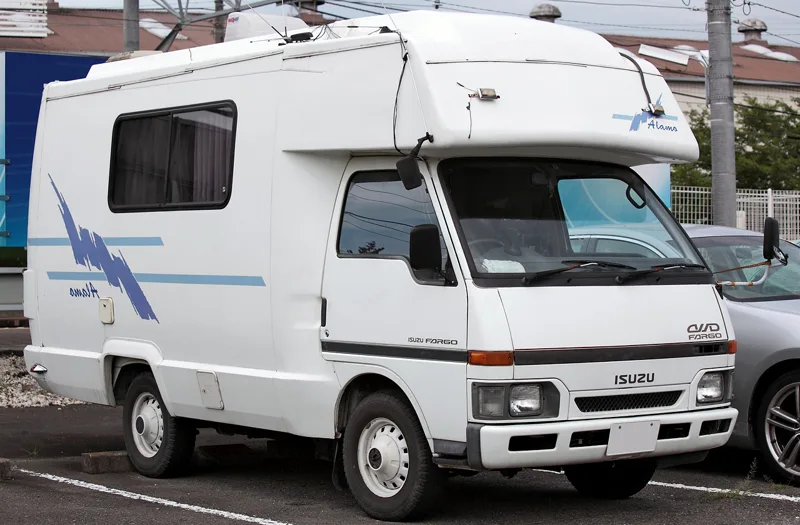
The Gran Max is a series of vans and pickups made by Daihatsu since late 2007. Toyota sells it as the LiteAce and TownAce from 2008, and Mazda in Japan sells it as the Bongo from 2020. It was developed under chief engineer Masaharu Tezeni and released in November 2007 to replace the Zebra in Indonesia, where it is produced by Astra Daihatsu Motor, and the Perodua Rusa in Malaysia.
It uses a semi-cab layout, with the front wheels ahead of the doors, like the tenth-generation Hijet Cargo, but is wider and longer than that kei vehicle. Petrol engines are a 1,298 cc K3-DE, a 1,495 cc 3SZ-VE and, since 2020, a 1,496 cc 2NR-VE.
How did the Gran Max change in Indonesia?
Indonesia launched it on 6 November 2007, with 1.3-litre and 1.5-litre petrol engines and a five-speed manual. In August 2022 the 2NR-VE replaced the 3SZ-VE, along with a four-spoke steering wheel, an extra cup holder, electric power steering, 14-inch alloys and 15 mm (0.6 in) more ground clearance. In September 2025 a new 1.5 Blind Van AC-PS arrived with a four-speed automatic, dual front airbags, ABS with EBD, ESC and an immobiliser.
Where else is the Gran Max sold?
Japan has had it since February 2008, first as the Toyota LiteAce and TownAce, below the HiAce. After the 2020 facelift the LiteAce was dropped because Toyota's dealers merged, and Daihatsu began selling it as the Gran Max, above the Hijet kei vehicles, as its first captive import. Mazda sells the Bongo, which replaced Mazda-built models. Smart Assist collision avoidance is optional.
Taiwan began pre-sales of the Town Ace pickup in November 2021, assembled by Kuozui Motors in Guanyin, with deliveries from February 2022 and van pre-orders from October 2022. The Philippines launched the Lite Ace on 15 July 2022 with the 1.5-litre engine and a five-speed manual, in pickup, panel van, FX utility van and cargo aluminium van forms. The Lite Ace van reached Gulf states, among them Saudi Arabia and the UAE, in July 2022 with a four-speed automatic.
The four Daihatsus compared
| Model | Type | Main market | Badge twins | First seen |
|---|---|---|---|---|
| Boon | Subcompact car | Japan, with Sirion exports | Toyota Passo, Perodua Myvi, Subaru Justy | 2004 |
| Tanto | Kei car | Japan | Subaru Chiffon | 2003 Tokyo Motor Show |
| Sigra | A-segment three-row MPV | Indonesia only | Toyota Calya | Unveiled 2 August 2016 |
| Gran Max | Light van and pickup | Indonesia, Japan and others | Toyota LiteAce and TownAce, Mazda Bongo | November 2007 |
What are the latest changes to each model?
The Sigra's third minor facelift appeared at GIIAS 2026 on the 1.2 R trim, and the Gran Max added its 1.5 Blind Van AC-PS in September 2025. The Boon and Passo ended in 2023, while the Tanto passed 3 million sales by June 2025.