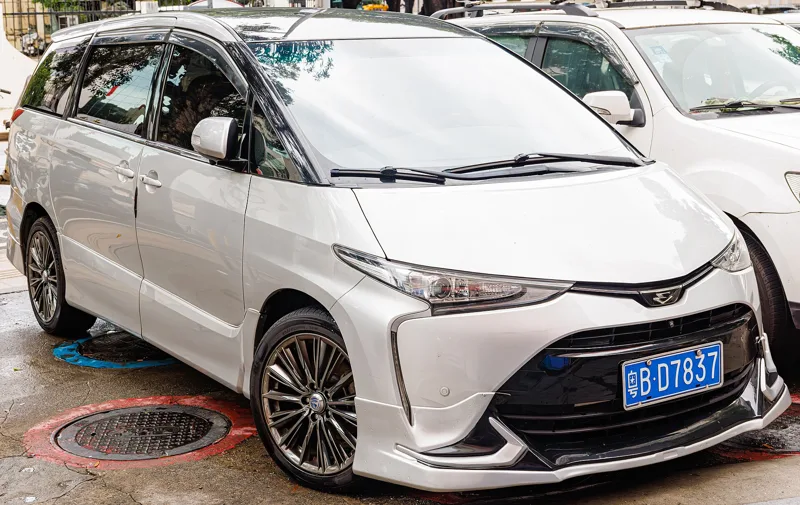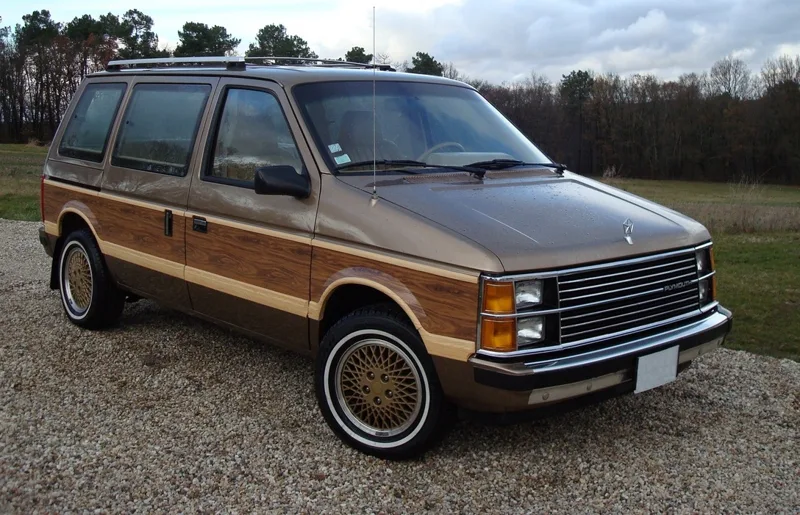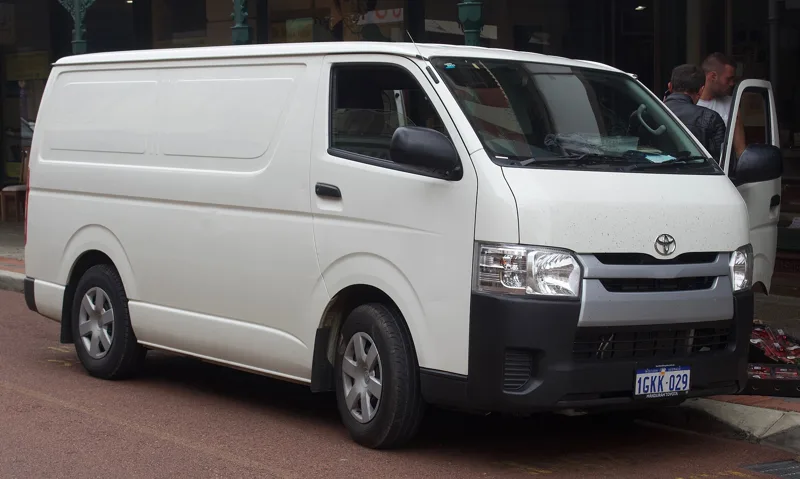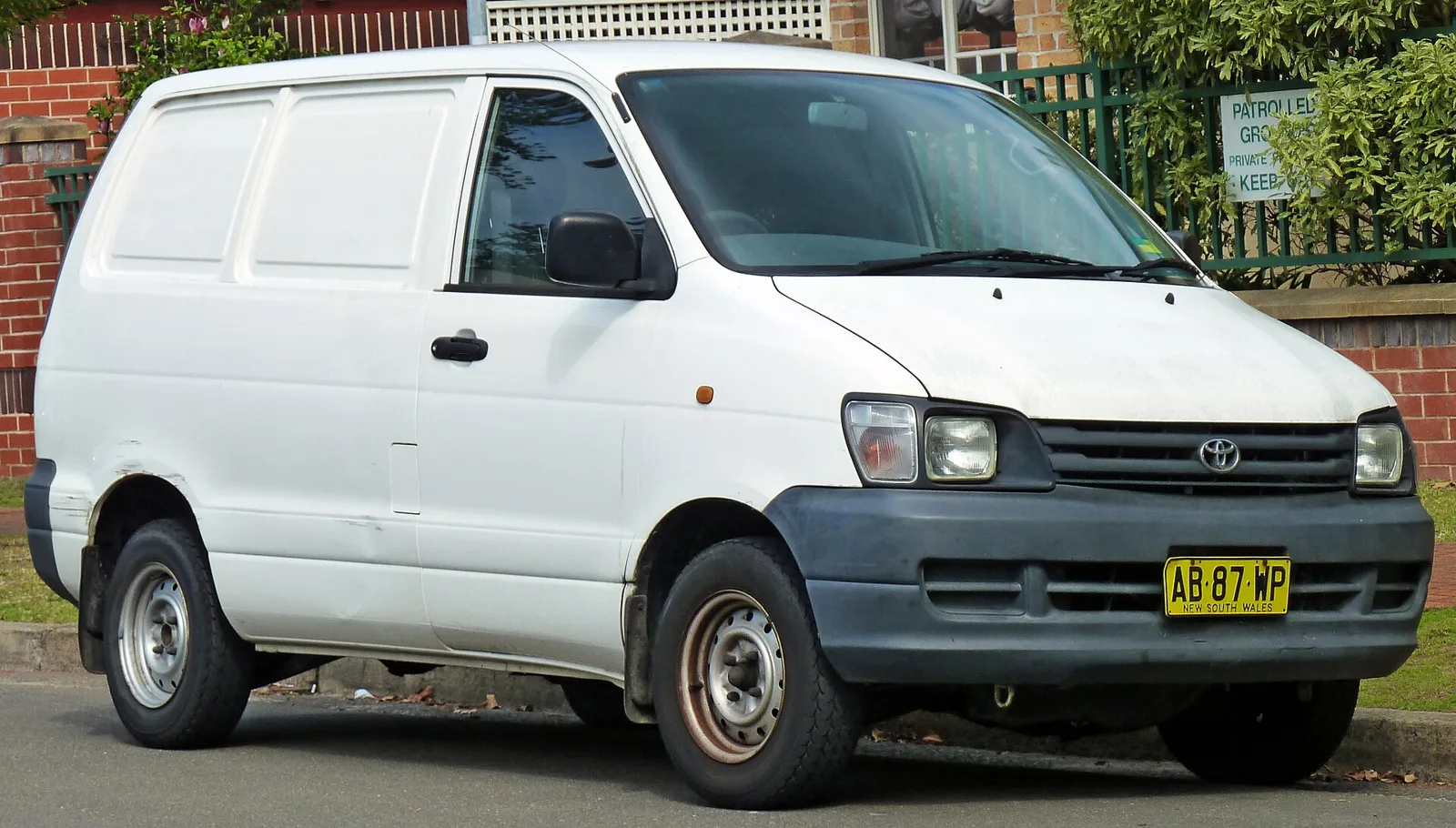
A light Toyota van that bridged the MiniAce and HiAce, merged with the TownAce in 1992 and lives on in the S400 range.
Launched as a truck in 1970, the LiteAce grew into a van family whose bodies were later shared with the TownAce. Its name survives today in parts of the S400 range and in export markets, where it was used for a pickup as well as a van.
The Toyota LiteAce is a light commercial van and truck that Toyota first built in 1970 to fill the space between its MiniAce and HiAce. Over the next five decades it shared its body and name with the larger TownAce, and the two lines were eventually merged into one range. This profile follows the family from the first M10 truck to the current S400 vans.
Where did the LiteAce come from?
The LiteAce was built by Toyota Auto Body and went on sale as a truck in November 1970. It sat above the MiniAce, which had arrived in 1967, and below the HiAce, while staying inside Japanese limits on exterior size and engine displacement.
Staying within those limits meant buyers avoided the extra taxes that applied to the larger HiAce. Cab-over trucks of the period were popular for affordable hauling, and many could carry up to 1,000 kilograms (2,200 lb). The LiteAce offered less, but its size kept it out of the higher tax bracket.
Daihatsu also sold a near-identical truck as the Delta 750 from March 1971. It had a smaller front grille and different detailing, and in 1978 it took the same 4K-J engine as the Toyota it was based on.
A light van that filled the gap above the MiniAce and below the HiAce, then lived on under the TownAce name.
What did the first generation offer?
The first generation came as a truck and as a one-box van and wagon, with the van and wagon arriving in February 1971. The truck carried a 750 kilogram (1,650 lb) payload on a three-seat front bench, and the passenger versions were offered with one, two or three rows of seats.
The van began with a single sliding door on the passenger side. Seating in the three layouts provided room for three, six or nine people. In September 1973 Toyota added a five-door version with dual sliding doors, along with a high-roof wagon as an option.
The nine-seat wagon was retired in 1975 because it could not meet new Japanese emission standards. The TownAce arrived a year later to take over the larger passenger role in Toyota's range.
Early trucks and vans used the 1166 cc 3K inline-four, rated at 68 PS (50 kW), which gave that model its KM10 code. In February 1978 the larger 1290 cc 4K-J engine replaced it, creating the KM11, and a light facelift changed the panels above the headlamps.
Each headlamp sat beneath a vertical black resin grille. Chrome trim ran from the windscreen to just above the bumper, holding the lamp and black panel in place together. The van and wagon had a top-hinged back door and resin trim above the tail lamps that echoed the front.
How did the second generation change things?
The second generation went on sale in Japan in October 1979 and was the first LiteAce to be widely exported. Its wagon seated eight in a 2/3/3 layout, and the range gained reclining seats, a three-speed automatic option and a wider choice of petrol engines.
The second and third rows of the wagon reclined fully. Buyers could specify dual-zone air conditioning, a four-speaker audio system and aluminium wheels, while the high-roof GXL grade added a moonroof option. Trucks gained a just-low version that used 10-inch tyres at the rear to drop the bed further.
Vans and trucks used the 1290 cc 4K-J rated at 69 PS (51 kW), while the wagon ran the 1770 cc 13T-U rated at 92 PS (68 kW). Both engines were paired with a four-speed manual at first.
The December 1980 update added a three-speed automatic and a five-speed manual to the wagon. In 1981 Toyota introduced a handy-cab version that could carry a passenger in a wheelchair. The Montana package of January 1982 added removable loft beds and powered curtains.
Toyota's November 1982 update brought a front-end facelift and power steering. The van gained a 1626 cc 1Y engine rated at 84 PS (62 kW), and a 1839 cc 1C diesel joined the range at 63 PS (46 kW).
Why was the TownAce created?
The TownAce was a wider and longer relative of the LiteAce that arrived in October 1976. It occupied a position between the LiteAce and the HiAce, and it filled a gap that opened when the MiniAce was retired and the HiAce grew larger.
The first TownAce, the R10 series, borrowed the LiteAce's doors and several panels but used a wider, longer body. The Town name alludes to its suitability for urban areas, in contrast to the Lite name for light-duty work.
Early vans came with three or six seats. The more popular TR10 used the 1588 cc 2T-J engine rated at 93 PS (68 kW), while the smallest KR10 had a 1166 cc 3K-J rated at 64 PS (47 kW).
Eight-seat wagons used a de-smogged 12T engine rated at 85 PS (63 kW). The high-roof models stood 1,975 and 1,990 mm tall (77.8 in and 78.3 in), and Toyota added a flagship Custom Extra grade with a manual sunroof in October 1978.
A TownAce truck followed in October 1978 with low-deck, high-deck and just-low beds. Its radial tyres had smaller diameters, which lowered the bed while keeping the same 13-inch wheel size.
What did the third generation bring?
The third generation LiteAce van and wagon arrived in September 1985 with four roof variations and a body that grew wider at the expense of length. Truck versions followed in October 1986 under the M50 to M80 codes, and the truck line ended in July 2007.
Four roof styles were offered: standard, high, high with a panoramic Skylite moonroof, and a high roof for the SW grade. Body width increased at the expense of length, and the driving position was close to that of a saloon car.
The rear suspension moved from semi-elliptical leaf springs to a four-link layout with a Panhard rod, and rack and pinion steering replaced the older system. The engine sat beneath a small hatch in the front seat area, and its limited opening drew complaints.
Petrol engines included the 1486 cc 5K-U rated at 70 PS (51 kW) and the 1812 cc 2Y-U at 79 PS (58 kW). Diesel options were the 1974 cc 2C and a turbocharged 2C-T rated at 82 PS (60 kW). Part-time four-wheel drive arrived in October 1985.
A Japan-only facelift in August 1988 lengthened the body by 75 mm (3.0 in), introduced Toyota Electronic Modulated Suspension on a one-box wagon for the first time, and raised the turbo diesel to 85 PS (63 kW). The five-speed manual became standard in August 1990, and four-wheel drive reached truck bodies in October 1991.
What was the Tarago in Australia?
The Toyota Tarago was the Australian name for the R20 and R30 TownAce-based van and wagon, launched in February 1983 as an eight-seater. The name came from the town of Tarago in New South Wales, and the vehicle used TownAce front styling with a 1.8-litre petrol engine at launch.
At launch the Tarago came in DX, GL and GLS trims, all with a 1.8-litre 2Y-C petrol engine rated at 57 kW (76 hp). A 2.0-litre 2C diesel rated at 48 kW (64 hp) arrived in July 1983 as an option on the DX, and the five-speed manual was standard across the range.
The GLS was the only grade with a four-speed automatic at first. It also added power steering, dual-zone air conditioning, electric windows, a moonroof and alloy wheels, and from October 1984 it gained cruise control and front seat armrests.
A March 1984 upgrade brought a 2.0-litre 3Y-C rated at 65 kW (87 hp) and a three-speed automatic option on the DX and GL. The October 1985 facelift adopted MasterAce Surf styling with twin headlamps and heavier bumpers, and a 2.2-litre 4Y-E petrol engine rated at 75 kW (101 hp) appeared in the GLi and the automatic GLS.
A GLi Xtra Trak four-wheel drive model followed in October 1985 with the 2.2-litre petrol engine. Late in 1988 the GX gained the larger engine and became the GXi, while the three-speed automatic had given way to a four-speed unit across the range.
How did the TownAce and LiteAce merge in 1992?
The rebodied R20 and R30 range arrived in January 1992 and lasted until September 1996. From then on the LiteAce van took its body from the TownAce, so the two names covered one range of vans, with the grille and lamp design as the main way to tell them apart.
Under the skin the mechanicals carried over, which is why the R20 and R30 chassis codes stayed. The styling was fully refreshed, with a far more streamlined look. Trucks kept the older shape until the S400 range replaced them in 2008.
The commercial vans differed in small ways. The TownAce had extra headlamps beside the main units and a small air intake slit, while the LiteAce had grilles in those places. Passenger wagons looked different again, with LiteAce wagons using two separate headlamps and TownAce wagons using flush lamps behind a translucent garnish.
Toyota Australia launched the TownAce commercial van in April 1992. The eight-seat passenger wagon followed in October 1993 as the Toyota Spacia, using the 2.2-litre 4Y-E rated at 75 kW (101 hp) and 180 Nm (130 lb ft) of torque. Equipment was basic, with power steering, cloth trim and a radio cassette player.
How did the R40 and R50 Noah models differ?
The R40 and R50 range replaced the 1992 generation in October 1996 and was the first full redesign since 1982. Vans were badged LiteAce and TownAce, while the passenger wagons became the LiteAce Noah and TownAce Noah, and the engine moved ahead of the cabin to give a semi-cab-over shape.
Noah models had three rows of seats in six, seven or eight-seat layouts, and a flat floor allowed walk-through access between the rows. Anti-lock brakes were standard on the Noah, and twin moonroofs were optional, while the Skylite roof was dropped.
Vans came with the 1486 cc 5K engine rated at 70 PS (51 kW) or the 1781 cc 7K and 7K-E at 76 or 82 PS (56 or 60 kW). Noah passenger models could be ordered with a 1998 cc 3S-FE petrol engine rated at 130 PS (96 kW), or with turbocharged diesels.
Full-time four-wheel drive was optional, replacing the part-time system. Diesel engines were dropped in August 2004 because they did not meet emissions standards. Production of the Noah range ended in November 2001, when the Toyota Noah and Voxy took its place.
In Australia, the KR42R TownAce vans sold from January 1997 to 2003, and the eight-seat Spacia arrived in January 1998 with a 3S-FE engine and four-speed automatic option. Dual airbags were standard, and a Value Pack in 2000 and 2001 added dual air conditioning and parking sensors.
What were the Daihatsu Delta versions?
Daihatsu sold rebadged versions under the Delta name for much of the family's life. The Delta 750 truck arrived in March 1971, the Delta Wide van and wagon in October 1976, and the Delta Van/Wagon ran from October 1996 to November 2001.
The Delta 750 used the donor Toyota's chassis and bodywork in the early years, and the D20 series sold from October 1979 to October 1982 with the 4K-J engine. Its badge engineering was limited to small grille and trim changes.
The Delta Wide B20 series ran from November 1982 to January 1992 with 1300 and 1600 variants at launch. The 1300 carried 600 kilograms (1,300 lb) with a three-seat bench, while the 1600 carried 750 kilograms (1,650 lb) and dropped to 500 kilograms (1,100 lb) when a second row of three seats was fitted.
Where were the LiteAce and TownAce sold?
Toyota exported the LiteAce and TownAce widely to Africa, Asia and Australia, and selected models were also sold with Daihatsu Delta badges in Japan. Overseas, the R20 and R30 vans carried local names such as Toyota Van and Space Cruiser.
North American sales began in 1983 for the 1984 model year as the Toyota Van. The first engine was a 2.0-litre 3Y-U, replaced by a 2.2-litre 4Y-E for the 1986 model year, and four-wheel drive versions were sold between 1987 and 1989.
Toyota's advertising called the passenger versions the Wonderwagon, and the cargo version was the Cargo Van. The Canadian market also received a special EXPO86 edition with a unique light blue finish.
In Europe the model was known as the Space Cruiser in some places, while Germany, Sweden, Norway, China and parts of Latin America sold it as the Model F. Golden Dragon built a licensed version in China as the XML6390.
Specifications at a glance
| Specification | Detail |
|---|---|
| Type | Light commercial van and truck, cab-over until 1996, then semi-cab-over |
| First truck | M10 series, launched November 1970 |
| First engine | 1166 cc 3K inline-four, 68 PS (50 kW) |
| First payload | 750 kilograms (1,650 lb) |
| Second generation wagon | 1770 cc 13T-U, 92 PS (68 kW) |
| Third generation petrol | 1486 cc 5K-U, 70 PS (51 kW); 1812 cc 2Y-U, 79 PS (58 kW) |
| Third generation diesel | 1974 cc 2C; turbocharged 2C-T at 82 PS (60 kW) |
| Noah petrol | 1998 cc 3S-FE, 130 PS (96 kW) |
| Late truck petrol | 1781 cc 7K-E, from the June 1999 update |
| TownAce debut | October 1976, R10 series |
| Current S400 engine | 1,496 cc 2NR-VE from June 2020 |
| Current drive | Rear-wheel drive standard; four-wheel drive option from July 2010 |
What is the current S400 range?
The S400 series went on sale in Japan in February 2008 as a badge-engineered model derived from the Daihatsu Gran Max built in Indonesia. It keeps a semi-cab-over layout with the engine under the front seats, and it comes as a van or a high-deck truck.
The van is offered only with a standard roof, while the truck has a high deck. Early Japanese models used a 1,495 cc 3SZ-VE engine with a five-speed manual or an optional four-speed automatic. Rear-wheel drive is standard, and the S412 four-wheel drive version arrived in July 2010.
The LiteAce badge was discontinued in Japan in June 2020, when the lineup was consolidated under the TownAce name and the engine changed to a 1,496 cc 2NR-VE. Overseas the pickup has carried other names, with Taiwan selling it as the TownAce from November 2021 and the Philippines marketing it as the LiteAce from July 2022.
Why does the LiteAce still matter?
The LiteAce matters as the starting point of a van family that ran for nearly five decades in Toyota's range. Its middle position between the MiniAce and HiAce set the pattern for the TownAce, which carried the same engineering ideas forward into the twenty-first century.
Several factors explain its staying power: a compact footprint that suited Japanese tax rules, a cab-over layout that gave way to semi-cab-over, and repeated rebadging for export markets. Each step kept the family relevant to fleet buyers, tradespeople and families who needed a practical multi-purpose van.