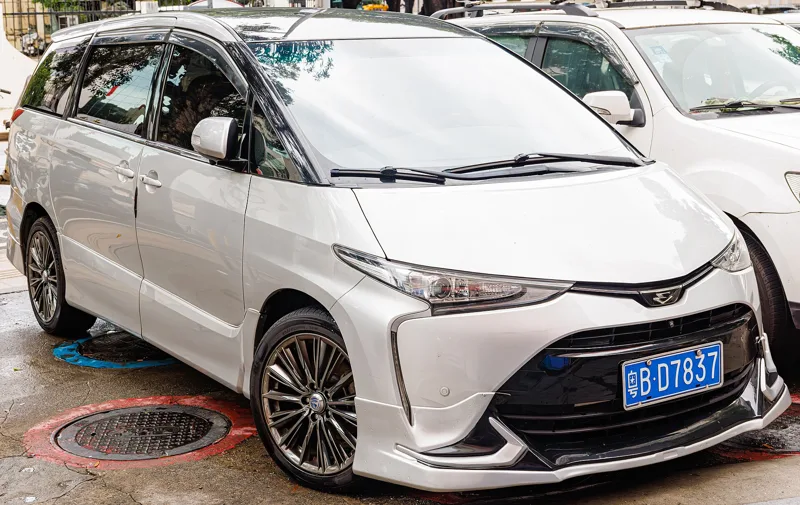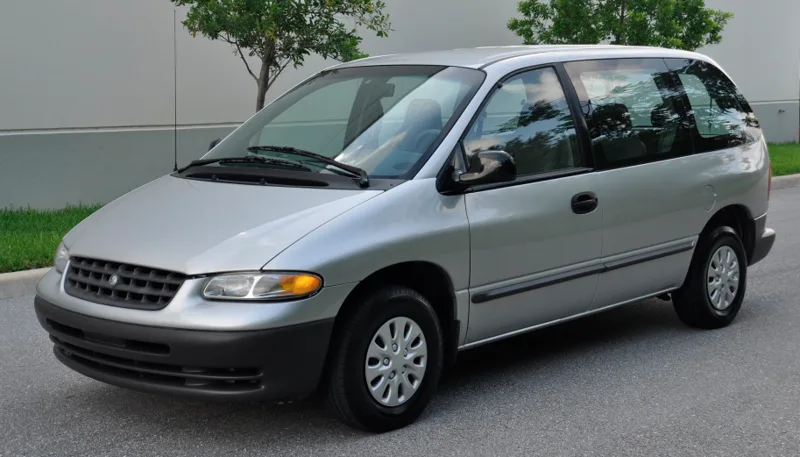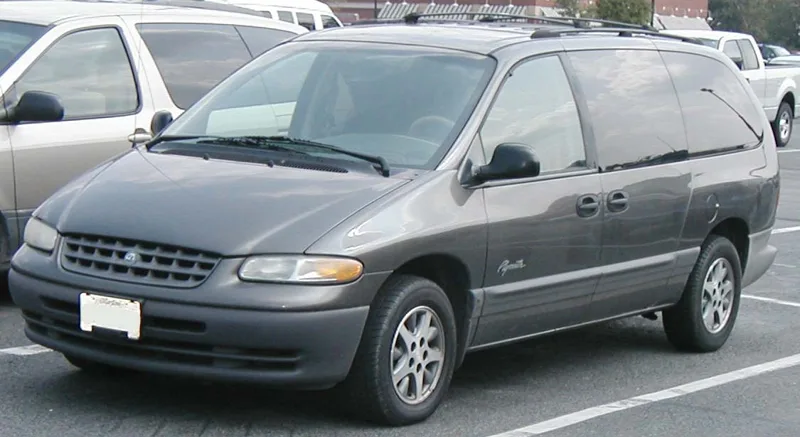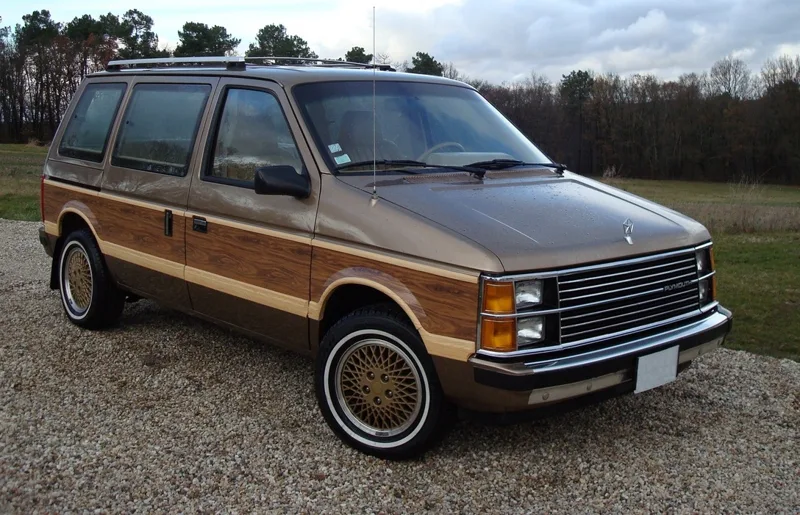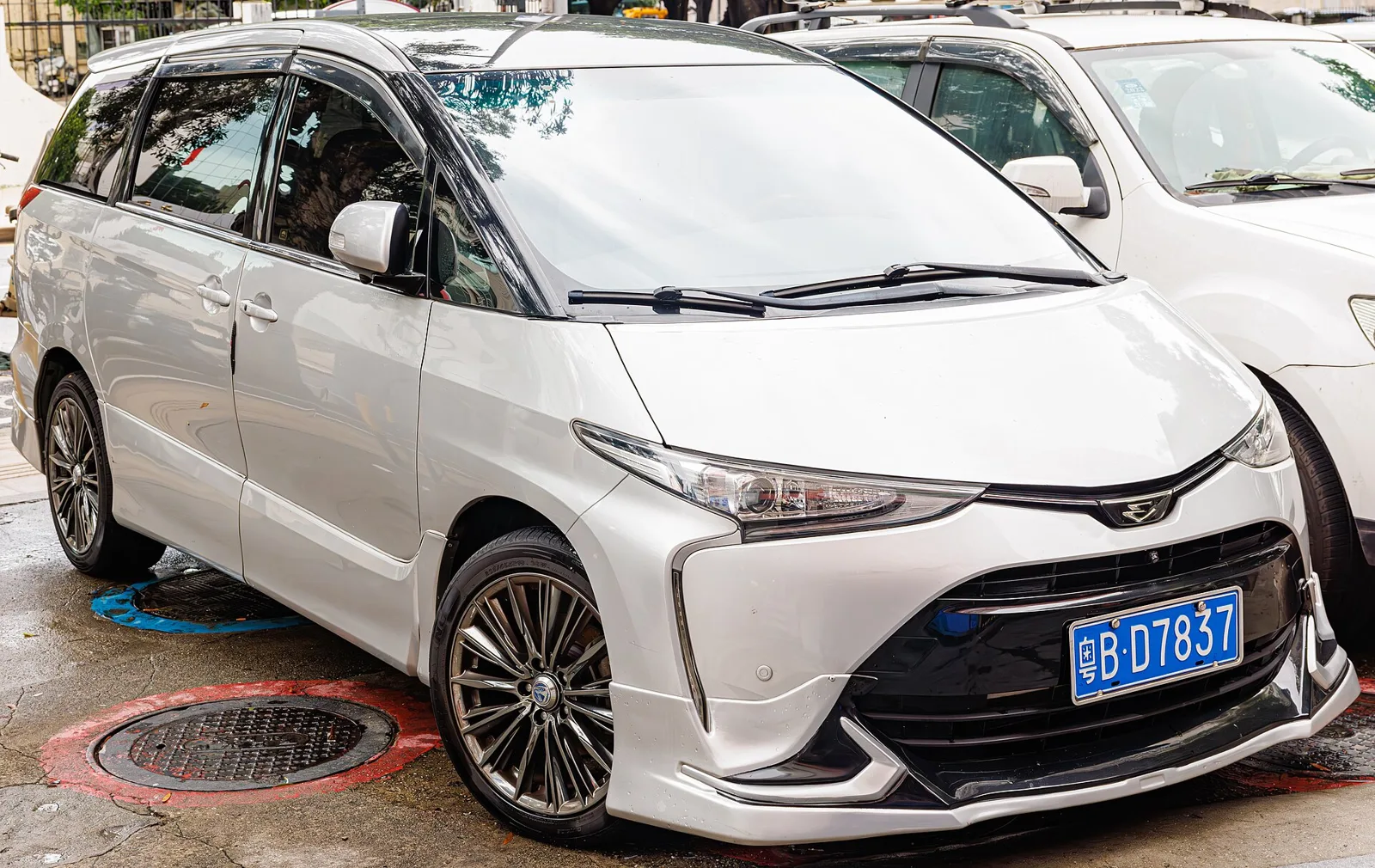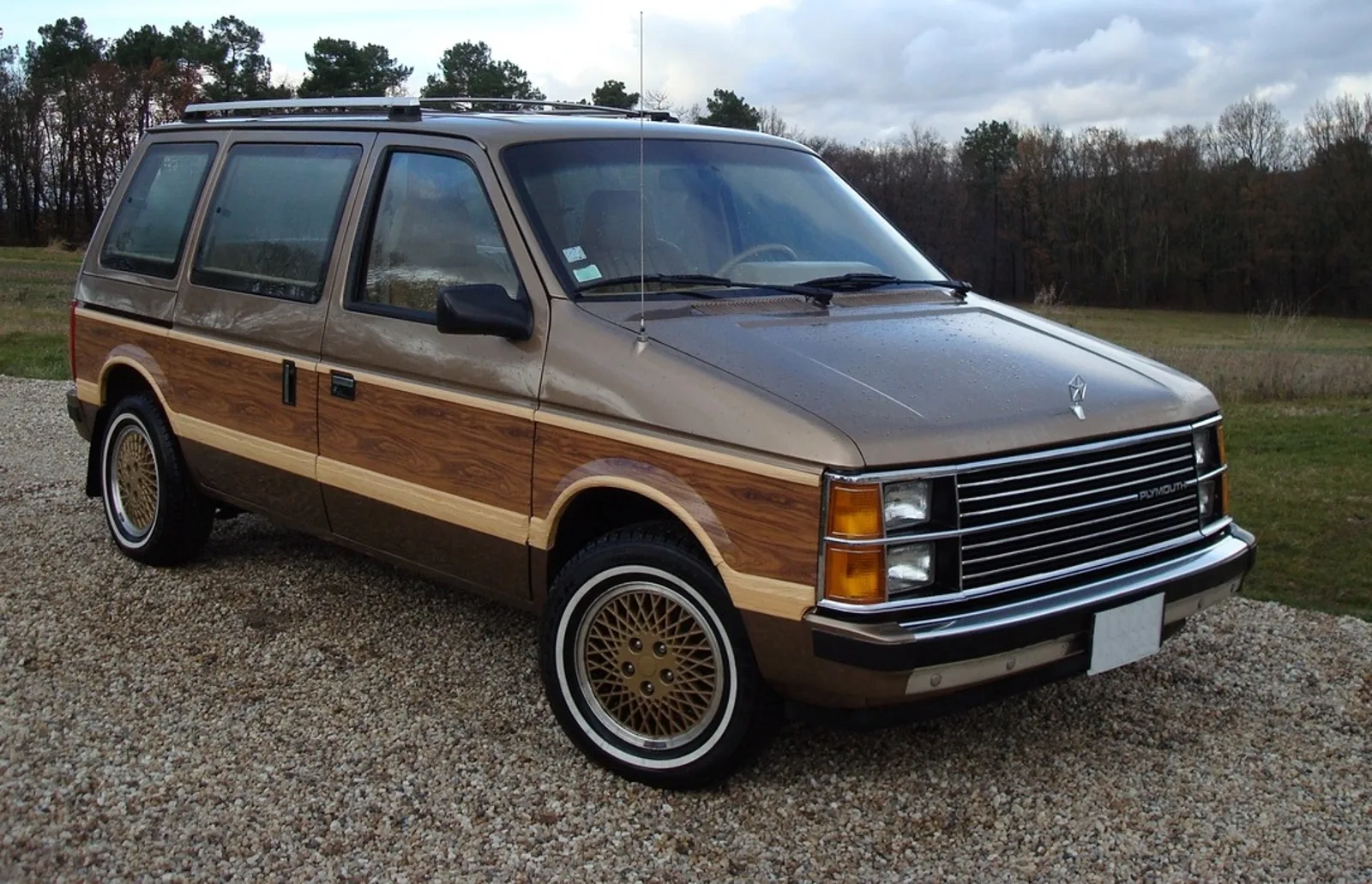
Chrysler's first minivans went on sale years before Toyota's mid-engined Previa reached America, and the two vans never agreed on how a family van should be built.
Chrysler's Dodge Caravan and Plymouth Voyager went on sale in 1983 on a front-wheel drive S platform. Toyota's Previa followed in 1990 with a mid-mounted four-cylinder and a rear-wheel drive or All-Trac layout, and its American sales stayed modest against the Chrysler vans.
The first Chrysler minivans and the Toyota Previa were built on opposing ideas of what a family van should be. Chrysler's Dodge Caravan and Plymouth Voyager used a conventional front-wheel drive layout on the S platform, while the Previa hid its four-cylinder engine almost flat beneath the front seats. Toyota's van never won much of Chrysler's American business, but its layout was unlike anything else in the segment.
Which van arrived first?
The Dodge Caravan and Plymouth Voyager launched in November 1983 for the 1984 model year, and they were the first minivans from an American maker. The Previa was introduced on 27 January 1990 and reached the United States as a 1991 model, by which time the Chrysler vans had been on sale for years.
Chrysler's first generation ran until the 1990 model year, when the Town and Country arrived as a luxury model. Toyota's van had a different plan from the start, with a mid-mounted engine and a single sliding door for rear passengers.
Toyota imported the Previa to compete with the Dodge Caravan and its twins, the Chrysler Town and Country and Plymouth Voyager. Toyota designer Tokuo Fukuichi and Calty designer David Doyle drew up the first generation in 1987, and the patent was filed on 24 December 1987.
A mid-engined van with more cargo room than Chrysler's best, and still not enough to take the market.
What did Chrysler's brief ask for?
Chrysler's team set four main goals: a van that fitted a standard-size garage, car-like noise and vibration levels, a low and flat load floor, and removable rear seats that could carry a 4x8 sheet of building material on the floor.
Chrysler looked at the K-car and L-body as possible donor platforms, and it considered rear-wheel drive before ruling the L-body out as too light-duty for its planned six-cylinder engine. Research across the United States in 1978 found a potential market of nearly 1 million vehicles a year, with Chrysler selling 215,000 of them.
Ford's rival idea, the Carousel, fell victim to the 1973 oil crisis before it could reach the market.
Why did the Previa put its engine in the middle?
The Previa's inline-four sat almost flat under the front seats, tilted 75 degrees from vertical, so the designers could maximise interior space for a given exterior size. Chrysler's answer was a front-wheel drive layout that shared its powertrain with the K-cars.
The mid-engine idea had a clear logic. Placing the engine there gave the Previa a nearly equal front and rear weight distribution, which helped its ride and handling.
The cost was flexibility. The mid-engine layout ruled out larger engines and stopped the platform from being shared with other vehicles, so the development cost could not be spread across other models.
How did the two layouts differ under the skin?
Chrysler's S platform was unibody, with MacPherson struts at the front and a beam rear axle on leaf springs. The Previa offered rear-wheel drive or All-Trac all-wheel drive, and most models used a beam axle with a four-link arrangement and a Panhard rod at the rear.
Chrysler's drivetrain choices were difficult. The K-car's 2.2-litre four was considered inadequate, and the 3.7-litre Slant Six could not be mounted sideways. The S platform was not directly related to the K platform, despite the shared powertrains, and its body structure allowed a higher hoodline and seat height.
The Previa's All-Trac system used a viscous-coupled centre differential that normally split torque 50/50 between the front and rear axles. Some rear-drive models ran independent suspension at each wheel, using MacPherson struts in front and double wishbones behind.
Specifications side by side
| Specification | Chrysler minivans (first generation) | Toyota Previa (first generation) |
|---|---|---|
| Model years | 1984 to 1990 | 1990 to 1997 in the US; production in Japan to October 2019 across three generations |
| Layout | Front-wheel drive, S platform, unibody | Mid-engined; rear-wheel drive or All-Trac all-wheel drive |
| Wheelbase | 112.1 inches standard; 119.1 inches Grand | 2,870 mm (112.8 in) |
| Length | Not given | 4,750 mm (187.0 in) |
| Launch engines | 2.2-litre four, 96 hp; optional Mitsubishi 2.6-litre four, 104 hp | 2.4-litre 2TZ-FE four, 99 kW (133 hp; 135 PS) |
| Later engines | 3.0-litre Mitsubishi V6, 136 hp (1987); turbo 2.5-litre, 150 hp (1989); 3.3-litre V6, 150 hp (1990) | Supercharged 2TZ-FZE from 1994, 158 hp (118 kW) in the US |
| Transmission | Not given | Five-speed manual, four-speed automatic option; manual dropped in the US for 1994 |
| Fuel economy | Not given | 18 to 20 mpg-US (13 to 12 L/100 km) estimated combined |
| Cargo space | 115.9 to 139.4 cubic feet (short and long versions) | 157.8 cubic feet (4.47 m3) |
| Seating | Five in two rows, or seven or eight in three rows | Seven or eight, with three configurations (two in North America) |
| Build location | Saint Louis Assembly, Fenton, Missouri; Windsor Assembly, Ontario | Toyota Auto Body Fujimatsu plant, Kariya, Aichi |
| Crash test | Not given | IIHS 1996 moderate overlap: Poor |
| Safety features | Not given | Driver's airbag from 1992; standard dual airbags from 1994 |
What engines did each van offer?
The Chrysler minivans began with a 2.2-litre four rated 96 hp and an optional 2.6-litre Mitsubishi rated 104 hp. The Previa's 2.4-litre 2TZ-FE was rated 133 hp (99 kW), and a supercharged version arrived in the 1994 model year, rated 158 hp (118 kW) in the United States.
Chrysler's engine line moved toward V6 power. A Mitsubishi 3.0-litre V6 arrived in March 1987 at 136 hp, a turbocharged 2.5-litre four rated 150 hp came in the 1989 model year, and a 150 hp 3.3-litre V6 joined the option list for 1990.
The Previa's engine made 206 N-m (152 lb-ft) of torque at 4,000 rpm. American drivers expected more power than that, and the mid-engine design ruled out bigger engines. Chrysler's V6 options gave slightly more power, which made the gap easy to see on a test drive.
The supercharged 2TZ-FZE used a Roots-type supercharger giving 6 psi (41 kPa) of boost and an air-to-air intercooler. Toyota kept fuel economy at an estimated 19 mpg-US (12 L/100 km) combined with the supercharged engine.
Which van offered more cargo room?
The Previa held more cargo in American figures, with 157.8 cubic feet against 115.9 to 139.4 cubic feet for the short and long-wheelbase Chrysler minivans. Its mid-engine layout gave the Previa the larger interior for the same exterior size.
The Chrysler vans answered with a practical load floor. The standard-length van offered nearly double the cargo space of a K-car station wagon on a seven-foot cargo floor, and the Grand version reached 150 cubic feet with both rear seats removed.
The Previa's glass-heavy body had a cost. Its panoramic view turned the van into a greenhouse that heated quickly in the sun, and solar control glass later became an option. Dual moonroofs were available, including a power horizontal-sliding glass unit above the middle row.
Interior, seating and styling
The Chrysler vans offered five passengers in two rows, or seven or eight in three rows. A Convert-a-bed fold-flat rear seat arrived in 1985, and a large storage drawer sat under the passenger seat because the dashboard had no room for a conventional glovebox.
The Previa's eight-seat version had a 2/1 split swiveling bench in the middle row. The seven-seat versions offered Quad Seating, with two independently swiveling captain's chairs, or a two-seat bench offset toward the driver's side. Its third row was better upholstered in the seven-seat version.
The Previa's centre console was pushed back toward the front passengers, and the press called it pregnant. Popular Mechanics praised the stereo during a long-term test. Owners and fans gave the van nicknames, including eggvans and beans, Wombats in Australia and Bucky buses in New Zealand.
How did the Previa perform in crash tests?
The Previa was the first minivan to meet all US passenger-car safety standards for the 1992 model year, with a driver's airbag, under-dash knee bolsters and a centre high-mounted stop light. Its crash record is the more documented of the two, and it is not a flattering one.
The IIHS moderate overlap test on a 1996 model gave the Previa a Poor rating. The cabin structure was judged unstable, the steering wheel moved up toward the windshield, and the lap belt tore, leaving high loads on the lower legs, head and neck.
Dual airbags became standard from the 1994 model year, which made the Previa the first minivan to offer a passenger airbag as standard. The manual gearbox was dropped in the US for the same year that the supercharged engine arrived.
How did the Previa fare in the American market?
The Previa sold in the US from March 1990, for the 1991 model year, until 1997. It was more popular than the Toyota Van it replaced, but it did not take significant share from Chrysler, held back by its higher price, controversial styling, lower fuel economy and weaker engine performance.
Chrysler fought hard. Chrysler CEO Lee Iacocca and other domestic automakers accused Toyota of dumping the Previa at up to 30.5% below its actual cost in the United States. The Department of Commerce found the imports were sold below fair value, but the International Trade Commission found no material injury to domestic manufacturers.
Chrysler also launched redesigned minivans around the same time, which blunted the Previa's gains. The Previa's US run ended after the 1997 model year, when the Camry-based front-wheel drive Sienna took its place.
The US model line and its changes
The American Previa came in DX, DX All-Trac, DX S/C, LE, LE All-Trac, LE S/C and LE S/C All-Trac. DX was also known as Deluxe, and S/C marked the supercharged engine. The middle-row captain's chairs swivelled from the 1992 to 1997 model years.
A driver's airbag and a third brake light came in the 1992 model year, and the five-speed manual was discontinued for 1994. The supercharged engine became standard for 1996, so the US line ended with a single engine choice.
What did the Japanese market get that America did not?
Japan received smaller versions of the van. The Estima Lucida and Estima Emina went on sale from 13 January 1992, each about 110 mm (4.3 in) narrower and 70 mm (2.8 in) shorter than the standard model. Japan's vehicle tax depends on the product of length and width, so the smaller variants fell into a lower tax band.
The smaller models also came with a 2.2-litre diesel, in 3C-T and 3C-TE form. Toyota Store dealers sold the Estima and Estima Emina, while the Estima Lucida was handled by Toyota Corolla Store dealerships.
Unsold Estimas and Lucidas were rebadged as 1995 and 1996 Previas in some countries, mainly Australia, Japan and the United Kingdom. The diesel option was never part of the US line-up, which stayed on petrol engines throughout.
Which buyer suits each van?
A buyer who wanted the original American minivan, with a choice of seating layouts and front-wheel drive, would look at the Chrysler. A buyer who valued cargo room, a low centred engine and the option of all-wheel drive would look at the Previa.
Power is the sticking point for the Previa. American buyers were used to V6 engines in the Chrysler range, and the Previa's four-cylinder could not match them, so buyers who wanted more output from the factory were better served by the Chrysler line.