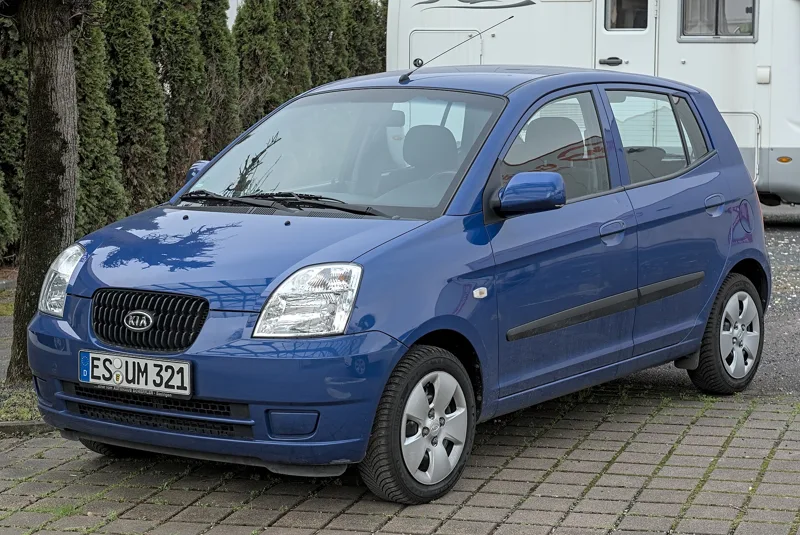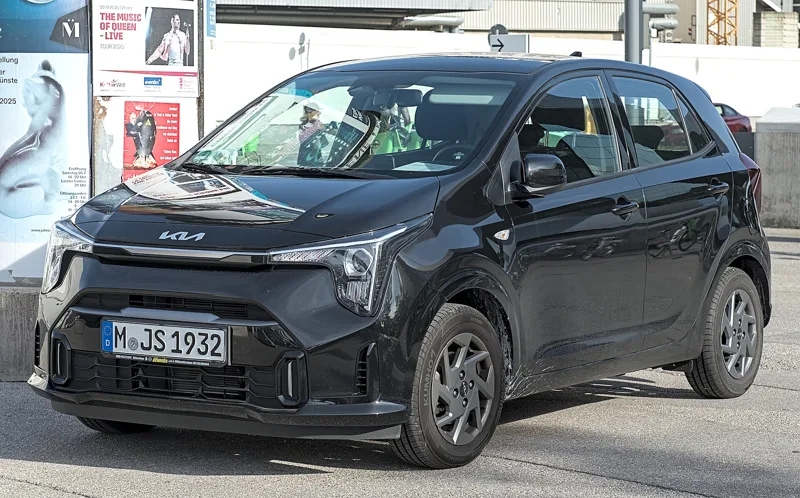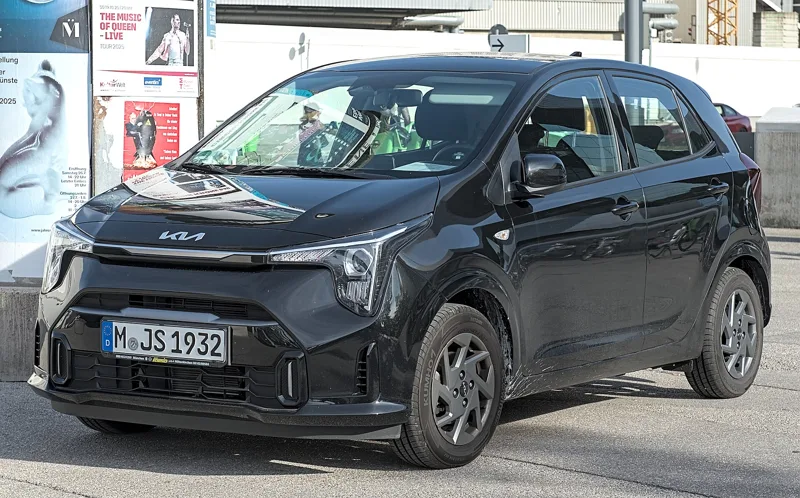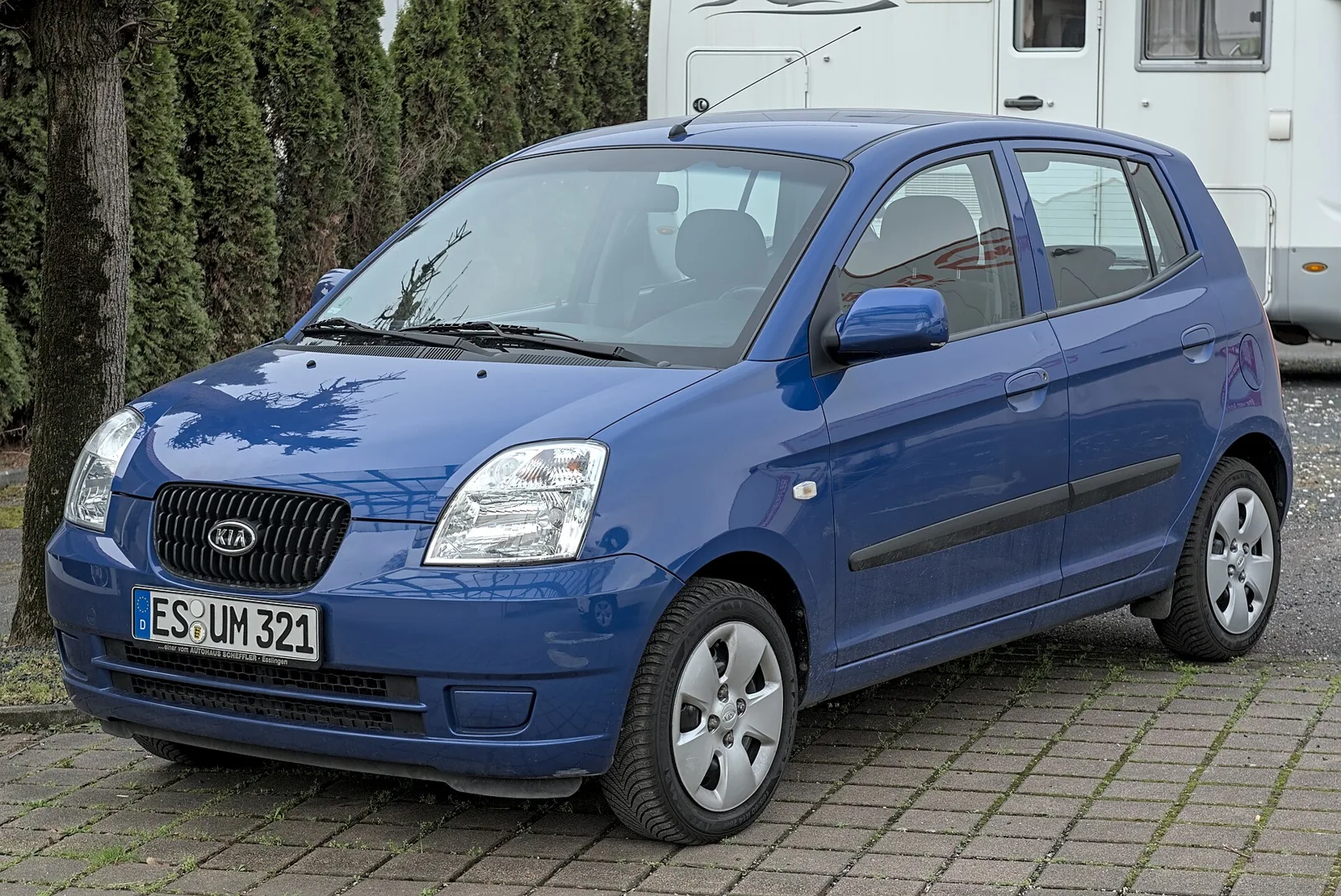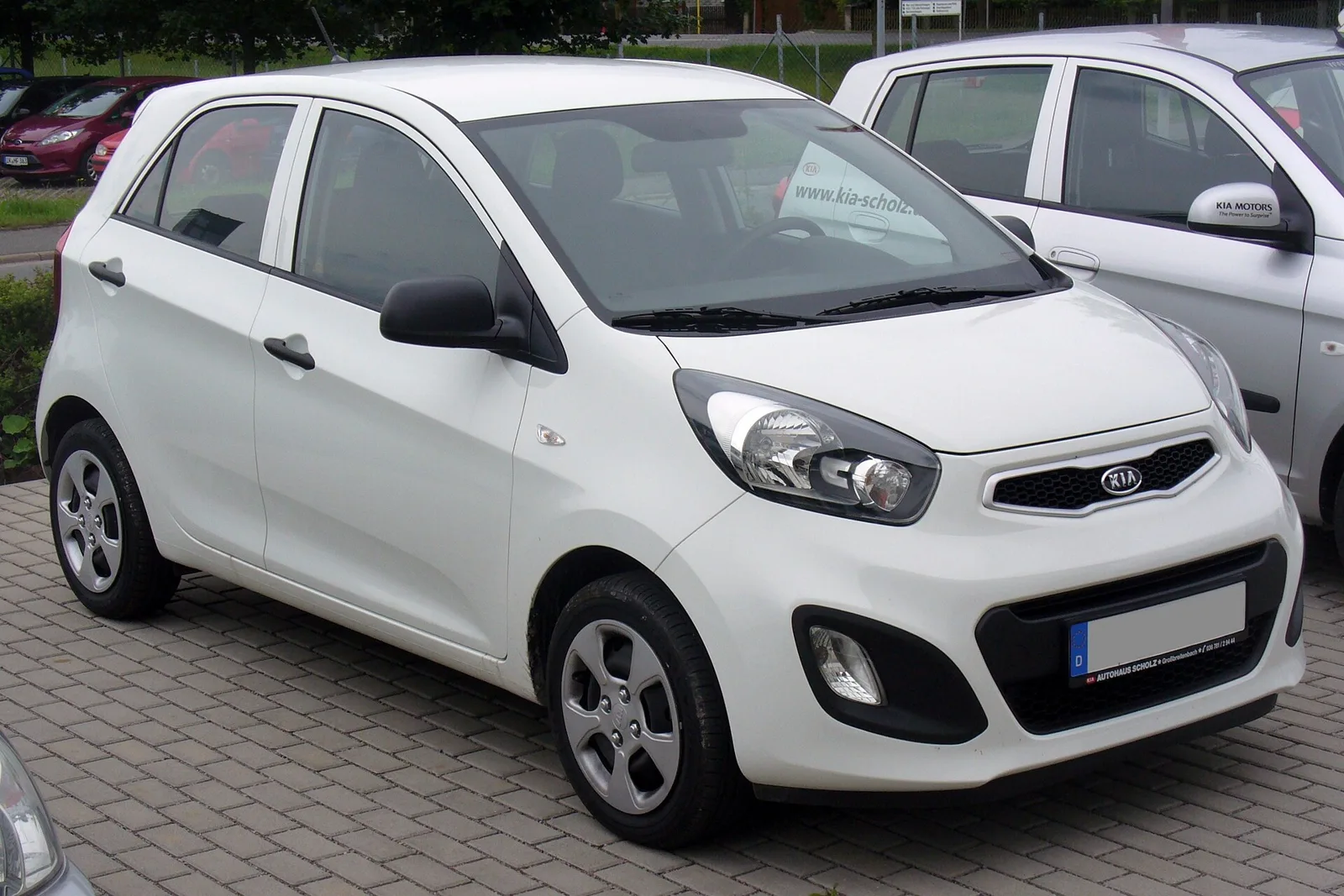
The second-generation Picanto from 2011: a knee airbag in the top trim, a 4.4-litre-per-100 km rating and Euro NCAP results that missed five stars.
Kia's Picanto TA is a small city car whose second generation went on sale in Europe in 2011. Its standard fuel consumption is rated at 4.4 l/100 km, and Euro NCAP gave it 86% for adult occupant protection, though it missed a fifth star.
Kia's second Picanto reached Europe in May 2011 with a new body, a knee airbag in the top trim and published fuel figures for its wheel sizes. The tall city hatchback, also called the Kia Morning, and the changes from the first generation reach into the chassis, the safety kit and the interior.
What did the second Picanto bring to Europe?
The new generation debuted in May 2011 as a five-door, and a three-door arrived in the autumn, the first time that body was offered. Kia listed four seats, or five in the import version. Donghee Auto, a contract manufacturer, assembles the car at Seosan in South Korea, and the bodywork was developed afresh.
As a marketing hook, the vehicle details were published at picantoleaks.de, a site styled after the WikiLeaks platform. The joke was that the site "revealed" where the colours came from: the Volcano Black paint, for example, supposedly came from volcanic rock of the Eyjafjallajokull. The same site claimed the fuel tank held CO2-absorbing nanorobots.
A knee airbag arrived with the second Picanto, but its raised bonnet still gave pedestrians little protection.
How economical is the Picanto TA?
Its rated consumption of 4.4 l/100 km (64.2 mpg-imp; 53.5 mpg-US) is not best in class, yet the figure sits roughly half a litre under the average for comparable small cars introduced since 2010.
For the first time the figures also show how much larger wheels push up fuel use. Top-trim 15-inch alloys cost 0.2 litres more per 100 km than the 14-inch and 13-inch sets, mainly because heavier rotating parts resist braking and acceleration. Going down to 10-inch rubber would cut tyre-related fuel use by half, though such sizes need a different body design, perhaps for future electric cars.
Key figures at a glance
| Specification | Figure |
|---|---|
| Standard consumption | 4.4 l/100 km (64.2 mpg-imp; 53.5 mpg-US) |
| Turning circle | 9.80 metres, 15 cm smaller than before |
| Autogas tank | 27 litres, over 400 km at standard consumption |
| Petrol tank | 35 litres |
| Boot | 53 cm deep, 1 metre wide, 200 litres under the cover |
| Warranty | Seven years, limited to 150,000 km after the third year |
How does the Picanto TA handle?
The first generation's running gear had earned praise in test reports, so the concept stayed. Engineers gave the front a steeper caster angle for steadier straight-line running, and they enlarged the bushings of the rear trailing arms for stability. To counter understeer, the rear axle now runs a setting 60 percent firmer.
All four springs became softer, while shorter travel limiters allow more suspension stroke to cope with urban road surfaces. The turning circle is 15 cm tighter at 9.80 metres, a useful gain on crowded city streets.
Which safety features were new?
Curtain airbags are a newcomer in this generation, and European top trims add a driver's knee airbag. The maker admitted that the first car's safety had become outdated and pinned the blame on a production process aimed at low costs. The front seats only get active head restraints in top trim.
A driver's knee airbag was a first for the small-car segment. The honour for the first knee airbag belongs to the Sportage of 1994, and the maker's later models did not copy it until the Picanto arrived.
Anti-trapping protection now guards the driver's door window lifter and the optional glass roof. In an emergency stop the brake lights flicker three times. Cars fitted with ESP also gain rear discs, though the stability system itself is available only from the mid-range trim up.
ESP became mandatory for new model launches two months after the three-door premiered, and from November 2014 every new registration had to include it.
How did the design meet pedestrian rules?
The developers found meeting the stricter Euro NCAP pedestrian protection from 2010 demanding. The steep front, which looks like an SUV's, received an offset bonnet catch and a crushable zone in front of the windscreen. The lower crossmember now starts the rotation of the pedestrian's body, which protects the knee.
How did the Picanto score in Euro NCAP tests?
Adults received 86%, children 83%, pedestrians 47% and safety assistants 43%. The Picanto lacks a fifth star because of its assistance systems, and occupant protection runs from good to adequate across the crash tests.
Adult occupants: 86%
Protection for occupants sits between "good" and "adequate". The rear impact and the chest in the pole test reach "marginal" protection, the middle of five levels. The class leader for rear impact is a trio built on one platform, the Seat Mii, Skoda Citigo and VW Up, which managed "good" there. Active head restraints were absent from the test cars, as they were on the Picanto.
The frontal test sets two cars of equal weight, each travelling at 55 km/h, against each other with an offset on the driver's side. According to Euro NCAP this represents half of real frontal crashes. Equal weights, though, confine its conclusions to a single segment, and tests with heavier vehicles would be more informative for the rising number of light cars.
Euro NCAP has so far left out load-carrying body components. Those ought to catch an incoming vehicle, spread its force over the front, and avoid concentrated loads. An ADAC-tested SUV showed the problem: its steel beams, aligned with the direction of travel, slid unbent into the oncoming crumple zone. From 2015 the agency plans to downgrade such "incompatible" structures, and it calls its current procedures deficient.
Side collisions use a barrier of small-car size, driven sideways at 50 km/h into the pillars that support the car. By 2015 this best-case setup is also to move closer to the crash patterns that insurers encounter more often.
Child occupants: 83%
Child protection comes out of the same tests, and the Picanto mostly achieves the best grade. The one blemish is the 3-year-old dummy, and its chest takes medium loads in a frontal impact, earning 9.6 out of 12 points. Clearly fewer points went to the Suzuki Alto and Fiat Panda, while the Nissan Micra and the three-model group of Mii, CitiGo and Up gave consistently good results in the situations tested.
Seat attachment and instructions also earn the Picanto the segment's top score, which makes it the small car with the most points for child protection.
Pedestrians: 47%
The effort on the bumper design shows results, but the raised bonnet gives pedestrians barely any cover. The Nissan Micra does better for the head, while the Suzuki Alto is stronger at the head and weaker at the leg. Otherwise the Picanto scores in line with its 2011 competitors. Tests used an adult and a child dummy. Starting in 2012 the scoring tightens, and 60% in this category becomes a precondition for five stars.
Safety assistants: 43%
Three systems earn points if most cars in the range carry them. ESP shows up only in upper Picanto trims, so it scores nothing across the range, and the speed limiter, which is unavailable across the segment, scores nothing either. A limiter sounds a warning when a driver-chosen top speed is reached, or stops the car from exceeding it.
That leaves seat-belt reminders as the sole source of points, and every Picanto fits them at all seats. Systems for lane changes or following distance are not scored at all but rewarded with the Beyond NCAP Award. The first small car to win it was the VW Up, for its city emergency braking, which brakes before obstacles below 30 km/h and can prevent collisions below 20 km/h. It is sold as part of the 590-euro drive pack plus, and Euro NCAP expects that most of the model's production includes it.
What does the warranty cover?
The maker gives all European Kia models sold since 2010 a seven-year warranty, and the cover moves to later owners automatically. After year three it is capped at 150,000 km. Owners must have the car serviced punctually and completely, following the maker's specifications. Paint carries five years of cover, and protection against rust perforation runs for 12 years.
Like all vehicles, the Picanto's rust cover pays out in only very few cases of rust formation.
Which engines and fuels were offered?
Buyers could choose from three engines: two petrol units and a third that runs on petrol or LPG autogas. No diesel was available. The autogas car carries a 27-litre gas tank, enough for more than 400 km at standard consumption, and paired with the 35-litre petrol tank it gives a combined range well over 1,000 kilometres.
The LPG kit comes fitted at the factory rather than as an add-on. Engine naming includes CVVT, the continuously variable valve timing system.
How was the interior designed?
Equipment was the second weak point the maker named for the first car, so the update targets owners of larger cars by borrowing their features. Kee Hong Park handled the exterior, turning the sketches of Kia's chief designer, Peter Schreyer, into production form.
LED mirror indicators and LED daytime running and rear lamps are meant to suggest quality, although they are largely unavailable in Germany. Folding door handles gave way to chrome bow handles, which the maker says also spare some female customers' nails. The three-door, in particular, is designed to pull in more male buyers.
Quieter running came from larger mounts for the engine and gearbox, two-layer door seals and three-layer engine insulation. The mirrors cause less turbulence now, and the aerial sits further back for the same reason.
The rear seat splits 40 to 60 and folds down, yet it cannot slide forward for extra luggage room, just as in the predecessor. Few cars this size offer a sliding bench, the Daihatsu Cuore and the Fiat Panda being exceptions. The boot is 53 cm deep and 1 metre wide, with the removable cover at 56 cm high and 200 litres of storage underneath.
Driver aids include hill-start assist, electrically folding mirrors and automatic headlights. Parking sensors have not appeared in the German specification so far, though other markets offer them. Radio and hands-free Bluetooth controls sit in the steering wheel for an extra fee, and voice control is absent. For a surcharge, a SmartKey unlocks the car as the driver approaches, and a start button then fires the engine.
Heated seats and a heated steering wheel are optional, and storage varies with the trim. Every car has a make-up mirror, with LEDs on each side that switch on in sequence like an airport runway.
Climate control in the European base trim only circulates outside air. Air conditioning comes as standard in Austria, but in Germany it costs extra in the middle trim. Automatic climate control is available only in top trims, and in Germany it may also depend on an extra package.
Interior colours are black, black with dark grey, and light grey. Optional seat covers are red, light grey or black artificial leather, edged with cloth on backrest and cushion. The light grey and black options carry a contrasting band between the materials.