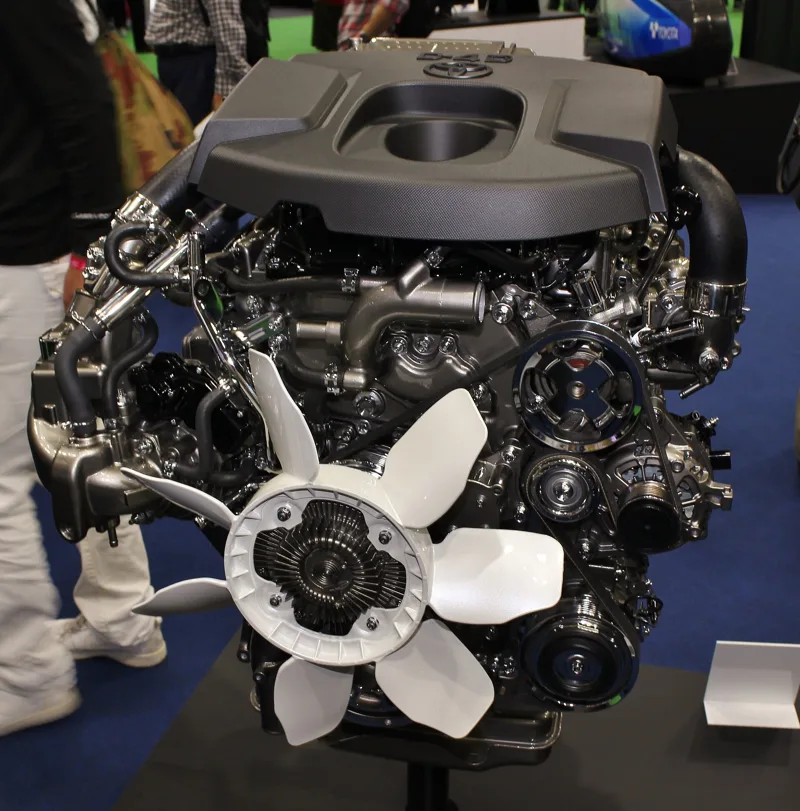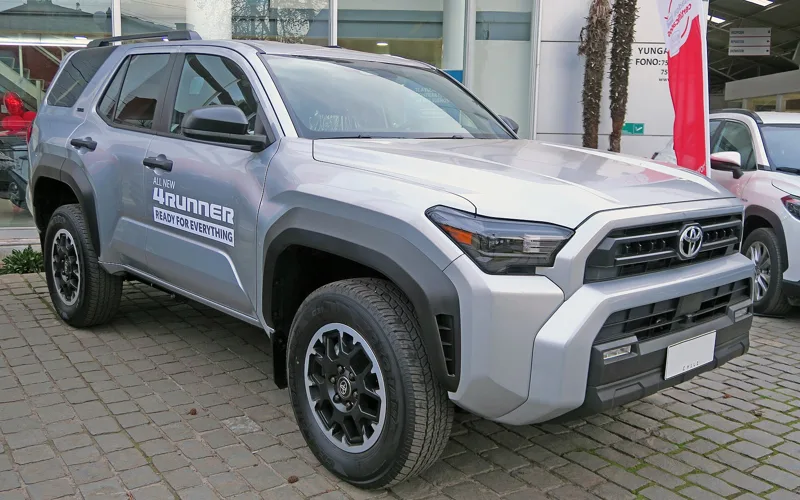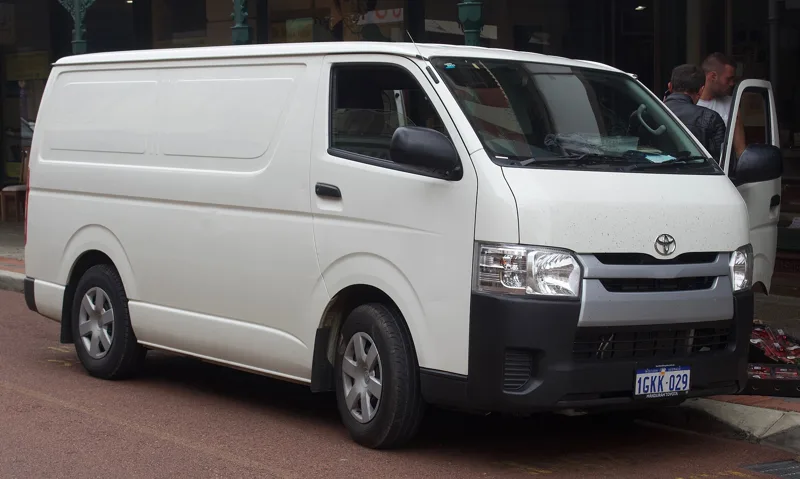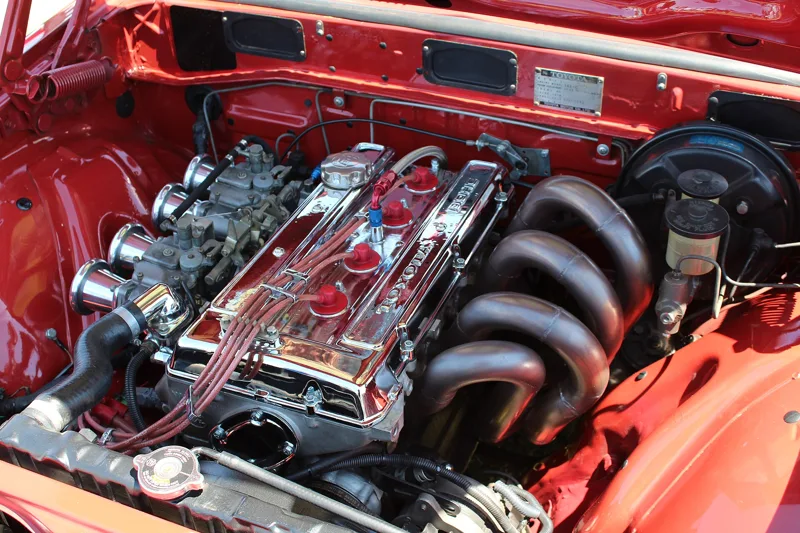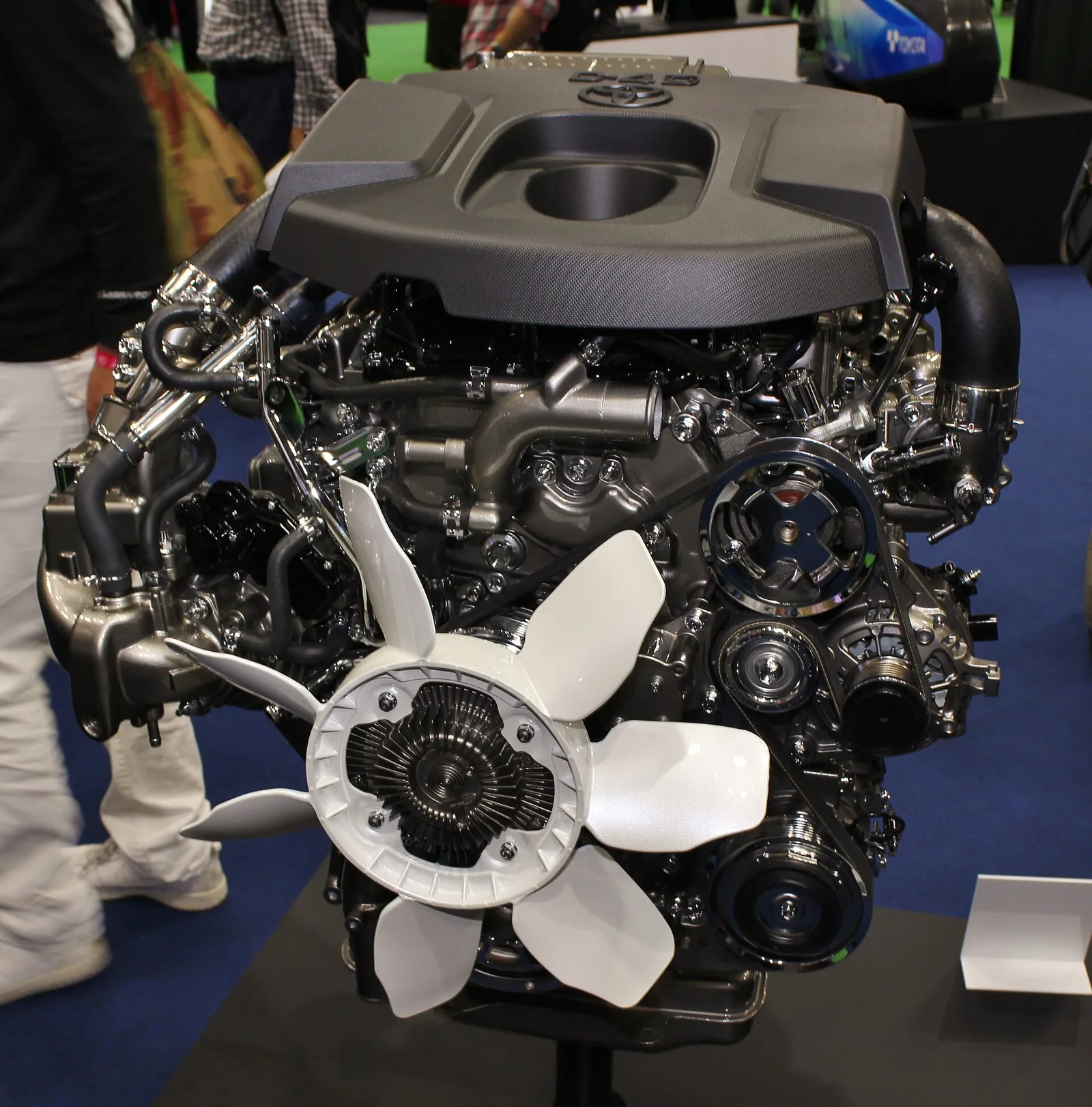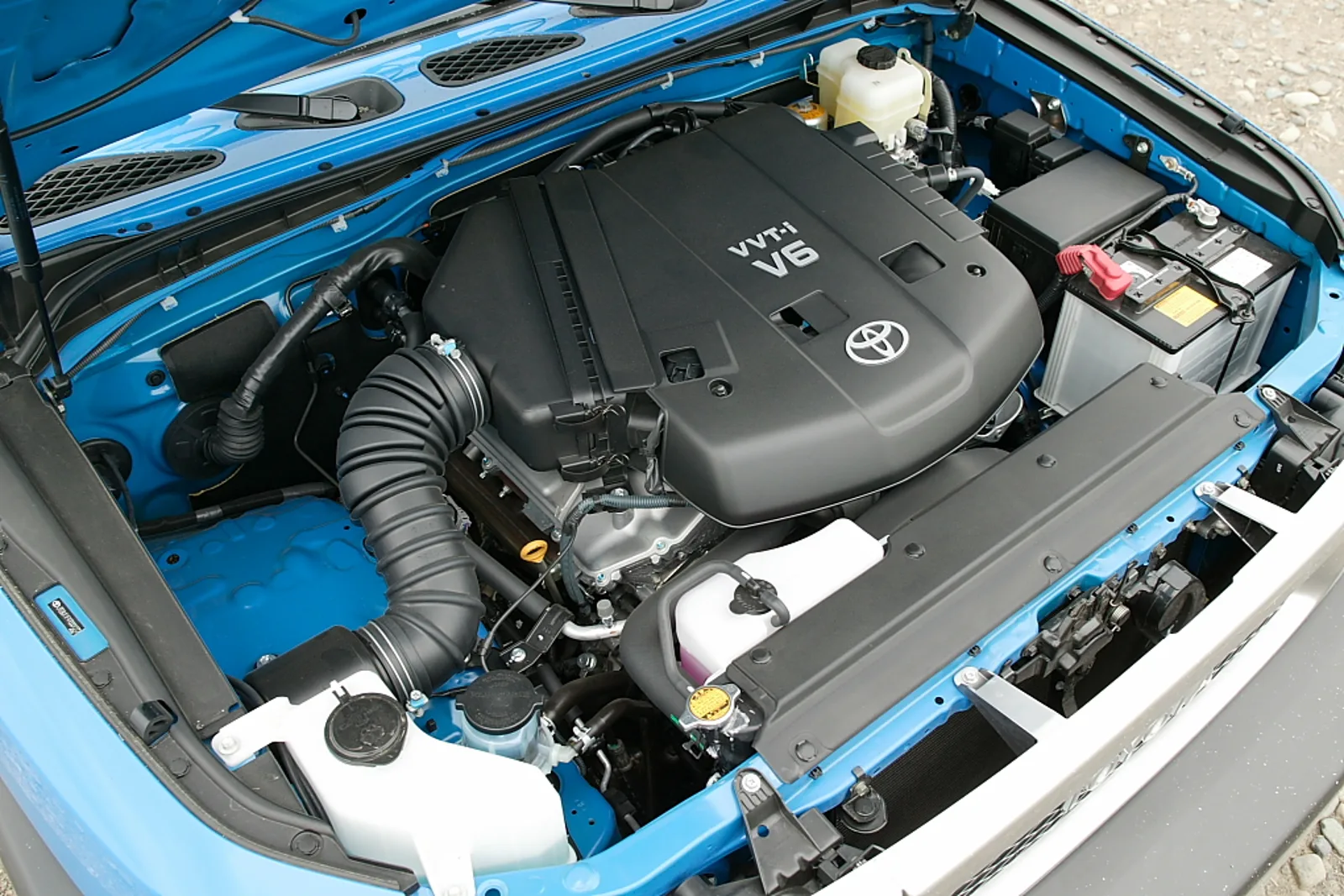
A 60-degree aluminium V6 family, running from 3.0 to 4.0 litres, that powered pickups, sedans, SUVs and sports cars.
The Toyota GR family is a series of 60-degree aluminium V6 engines with four valves per cylinder, timing chains and cast camshafts, used from pickups and SUVs to Lotus sports cars.
The Toyota GR family is a set of gasoline V6 engines built around a 60-degree aluminium block, and it covered everything from light pickups and SUVs to executive sedans and Lotus sports cars. It replaced the older MZ and JZ engines, and in light trucks it took over from the VZ V6.
What is the basic design of the GR engine?
The GR series is a family of gasoline V6 engines with a 60-degree die-cast aluminium block and aluminium double overhead cam heads. Each cylinder has four valves, and forged steel connecting rods and crankshaft were chosen for durability. A timing chain drives one-piece cast camshafts, and a cast aluminium lower intake manifold completes the arrangement.
The GR replaced the previous MZ V6 and the JZ inline-six, and in light trucks it succeeded the VZ V6. Engines in the family use several injection systems: some have multi-port fuel injection, some D4 direct injection, and others combine direct injection with port injection or the D4-S twin system.
Power ratings changed with the SAE measurement revision of 2005, which applied from the 2006 model year. Toyota rates its engines on 87 pump octane, while Lexus rates its own on 91 pump octane, so the published figures are not always like for like.
One 60-degree aluminium V6 design that moved from pickups and SUVs to Lotus sports cars without changing its basic shape.
How did the 1GR-FE 4.0 litre engine work?
The 1GR-FE is the 4.0 litre member of the family, a 3,956 cc unit designed for longitudinal mounting in rear-wheel drive and four-wheel drive pickups. Its 94 mm bore and 95 mm stroke gave a compression ratio of 10.0:1, and early versions carried Toyota's VVT-i on the intake camshaft.
Early output on 87 octane was 237 hp (240 PS; 177 kW) at 5200 rpm. Torque stood at 361 N m (266 lb-ft; 37 kg-m) at 4000 rpm. Tuned for 91 octane the same engine managed 240 hp (179 kW; 243 PS) at 5200 rpm. The Dual VVT-i update lifted output to 267 hp (199 kW; 271 PS) at 5600 rpm, with 278 lb-ft (377 N m) at 4400 rpm on 87 octane.
The combustion chamber used a taper-squish design with matching pistons, which helped control knock and improved efficiency. A siamese-type intake port reduced the surface area of the port walls, so less fuel clung to them. Spiny cast-iron cylinder liners were cast into the block for better adhesion, and a high temperature plastic insulator filled the space between the cylinders and the outer block to stiffen the structure.
Damage to a cylinder wall, such as scoring or a deep protrusion, means the entire block must be replaced, which makes the liners central to any rebuild. Two water passages per bank, four in all, were added between the bores to even out combustion chamber temperatures.
The first-generation single VVT-i version also used Toyota's Acoustic Control Induction System. A bulkhead divided the intake manifold, and a control valve changed its effective length. At moderate revolutions under high load, an actuator closed that valve to lengthen the manifold, and at other conditions it opened to shorten it.
A bolt-on TRD supercharger kit was once offered for the Tacoma and FJ Cruiser, though Toyota has since discontinued it. The 2015 HiLux received a slightly different single VVT-i engine with a conventional air filter housing and resonators in the new intake pipe, while its output stayed the same.
What made the 2GR-FE 3.5 litre a widely used engine?
The 2GR-FE is a 3.5 litre (3,456 cc) V6 with a 94 mm bore and an 83 mm stroke. It uses Dual VVT-i on both camshafts, a timing chain and roller rocker arms, and it appeared across a long list of Toyota, Lexus and Lotus models.
Output depends on the application. Across the range it runs from about 268 hp to 314 hp, with the top figure arriving at 6200 rpm. Torque sits between 248 and 260 lb-ft (336 and 353 N m), reached at 4700 rpm on 87 octane, and the engine weighs 163 kg (359 lb) in service.
The head uses roller rocker arms with concave cam lobes, which raise valve lift and need a taller cylinder head. That head is split into three parts: a valve cover, a camshaft sub-assembly housing and a cylinder head sub-assembly. The same arrangement appears on other GR engines with Dual VVT-i.
The 2GR-FE has a strong aftermarket following and is a common candidate for engine swaps, including into the SW20 MR2. In Lotus form, the Evora used the 2GR-FE with Lotus engine management, and a Sport Pack raised its redline to 7000 rpm. A 470 hp naturally aspirated race version of the Evora GTE raced in the ALMS and at Le Mans.
Supercharged 2GR applications followed. The Lotus Evora S from 2011 to 2016 produced 345 hp, and the Exige range from 2012 to 2021 spanned 345 to 430 hp. The Lotus Emira from 2022 uses a supercharged 2GR variant as well.
How did the 2GR-FSE use D-4S injection?
The 2GR-FSE is a 3.5 litre engine that combines direct injection with port injection through Toyota's D-4S twin system. It appeared in the Lexus IS, GS, Mark X and Crown, and it runs an 11.8:1 compression ratio. Port injection does much of the mixture work, avoiding the in-cylinder restrictions that pure direct injection needs.
The direct injectors are rated at 949 cc a minute, and their dual fan spray runs across the piston travel. The port injectors are rated at 298 cc a minute, and they help emissions in the first 20 seconds after start-up, while the catalytic converter is still warming up.
Depending on tune, the engine develops 227 to 236 kW (309 to 321 PS; 304 to 316 hp) at 6,400 rpm, and 377 to 380 N m (278 to 280 lb-ft) at 4,800 rpm. At 68 kW (92.5 PS; 91.2 hp) per litre it sits close to the top of naturally aspirated production petrol engines, and Ward's 10 Best Engines named it in 2006, 2007, 2008 and 2009.
The Mark X reached 234 kW (318 PS; 314 hp), and a supercharged Mark X +M of 2009 made 265 kW (360 PS; 355 hp). Those figures show how far the D-4S layout could be pushed before the Lotus and hybrid variants took over the headlines.
What were the GR hybrid engines?
The 2GR-FXE is an Atkinson-cycle hybrid engine with VVT-i and cooled exhaust gas recirculation. Its compression ratio reached 12.5:1 in the RX 450h and 13.0:1 in the GS 450h. The later FKS and FXS engines paired D-4S injection with a simulated on-demand Atkinson cycle.
The FXE came in a multi-port form for the RX 450h, rated at 245 bhp (183 kW; 248 PS), and in a D-4S form for the 2012 GS 450h at 292 bhp (218 kW; 296 PS). The 2013 Crown Majesta matched the D-4S output.
The 2GR-FKS first appeared in the 2015 Lexus RX 350. It pairs the D-4S layout of the 2GR-FSE with a simulated Atkinson cycle borrowed from other Toyota engines, and it went into a long list of models, from the Tacoma to the Camry and Alphard. Its hybrid counterpart, the FXS, gave 308 hp in the 2015-2022 RX 450h and 404 hp in the 2023 TX 550h+ plug-in.
How did the 3GR to 8GR engines differ?
The 3GR, 4GR and 5GR engines covered the 2.5 to 3.0 litre part of the range, while the 6GR, 7GR and 8GR engines extended the family to 3.5 and 4.0 litres. Most used Dual VVT-i, and the later ones added D-4 direct injection or the Atkinson cycle.
The 3GR-FE is a 3.0 litre engine with a 10.5:1 compression ratio, designed for rear-wheel drive mounting. Its peak power, 170 kW (228 hp; 231 PS), arrived at 6,400 rpm, while the 300 N m (221 lb-ft) of torque came at 4,800 rpm. The direct-injected 3GR-FSE reached 256 PS (188 kW; 252 hp) at 6,200 rpm.
The 4GR-FSE is a 2.5 litre unit with a 12.0:1 compression ratio and an improved D4 direct injection system, rated at 203 to 215 PS (149 to 158 kW; 200 to 212 hp) at 6,400 rpm. The 5GR-FE is also a 2.5 litre, but it was built only in China, where it shares a production line with the 3GR-FE.
The 6GR-FE, a 4.0 litre engine, made 229 hp (171 kW; 232 PS) at 5,000 rpm and went into the 2013 Coaster sold in China. The 7GR-FKS, a 3.5 litre unit, produced 278 hp (282 PS; 207 kW) at 6,000 rpm and went into the Chinese Land Cruiser Prado and the HiAce from 2019. The 8GR-FKS gave 315 PS (232 kW; 311 hp) at 6,600 rpm in the 2017 Lexus LS 350.
The 8GR-FXS is the hybrid member of that group, rated at 295 hp (220 kW; 299 PS) at 6,600 rpm with a 13.0:1 compression ratio. It appeared in the 2017 Lexus LC 500h and LS 500h and in the 2018 Toyota Crown.
Which GR engines were fitted where?
| Variant | Capacity | Published output | Example applications |
|---|---|---|---|
| 1GR-FE (Dual VVT-i) | 4.0 L (3,956 cc) | 267 hp (199 kW; 271 PS) at 5600 rpm | 4Runner, Land Cruiser, Tacoma, Hilux |
| 2GR-FE | 3.5 L (3,456 cc) | 268 to 314 hp at 6200 rpm | Camry, Highlander, Lotus Evora |
| 2GR-FSE (D-4S) | 3.5 L (3,456 cc) | 234 kW (318 PS; 314 hp) in Mark X | IS, GS, Mark X, Crown |
| 2GR-FXE (hybrid) | 3.5 L (3,456 cc) | 245 bhp (183 kW; 248 PS) in RX 450h | RX 450h, Highlander Hybrid |
| 2GR-FKS | 3.5 L (3,456 cc) | 278 hp (207 kW; 282 PS) in Tacoma | Tacoma, RX 350, Camry, Alphard |
| 3GR-FE | 3.0 L (2,994 cc) | 170 kW (228 hp; 231 PS) at 6,400 rpm | Crown, Reiz, GS 300, IS 300 |
| 4GR-FSE | 2.5 L (2,499 cc) | 203 to 215 PS (149 to 158 kW) at 6,400 rpm | IS 250, GS 250, Crown |
| 5GR-FE | 2.5 L (2,497 cc) | 145 kW (194 hp; 197 PS) at 6,200 rpm | Reiz and Crown (China) |
| 6GR-FE | 4.0 L (3,956 cc) | 229 hp (171 kW; 232 PS) at 5,000 rpm | Coaster (China) |
| 7GR-FKS | 3.5 L (3,456 cc) | 278 hp (282 PS; 207 kW) at 6,000 rpm | HiAce, Land Cruiser Prado (China) |
| 8GR-FKS | 3.5 L (3,456 cc) | 315 PS (232 kW; 311 hp) at 6,600 rpm | LS 350 |
| 8GR-FXS (hybrid) | 3.5 L (3,456 cc) | 295 hp (220 kW; 299 PS) at 6,600 rpm | LC 500h, LS 500h, Crown |
Why are GR power figures hard to compare?
Published power figures for GR engines are not directly comparable across years or markets. Toyota rates its engines on 87 pump octane, Lexus rates on 91, and the 2005 measurement revision altered figures for later model years. A table can therefore quote kilowatts, metric horsepower and imperial horsepower for the same engine, so check which unit and octane rating apply before drawing conclusions.
Fuel grade alone can move the number, as the 1GR-FE shows with 237 hp on 87 octane and 240 hp on 91 octane. Read the test conditions alongside the headline figure, because a few horsepower can separate two variants that behave almost the same on the road.
Why do GR engines still matter?
GR engines matter because one aluminium V6 design covered trucks, executive sedans and a set of Lotus sports cars. Dual VVT-i, D-4S injection and hybrid Atkinson variants show how the family adapted over two decades without abandoning its basic architecture.
The family also left a racing legacy. The naturally aspirated Evora GTE race version took part in the ALMS and at Le Mans, and a 2GR variant was used in the Toyota Corolla E140 and E150 for Super GT. Those racing uses sit alongside the everyday pickups and SUVs that made the GR name familiar.
Engine swaps keep the older 2GR-FE in circulation, and the Dual VVT-i head design carried over to later GR engines. The family's story is one of steady refinement, with aluminium blocks, roller valve gear and direct injection combined in different ratios as each unit was tuned for its market.