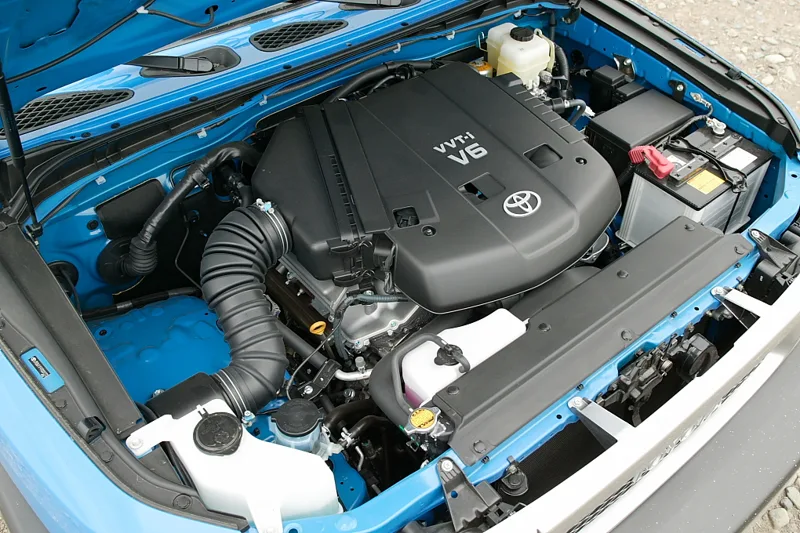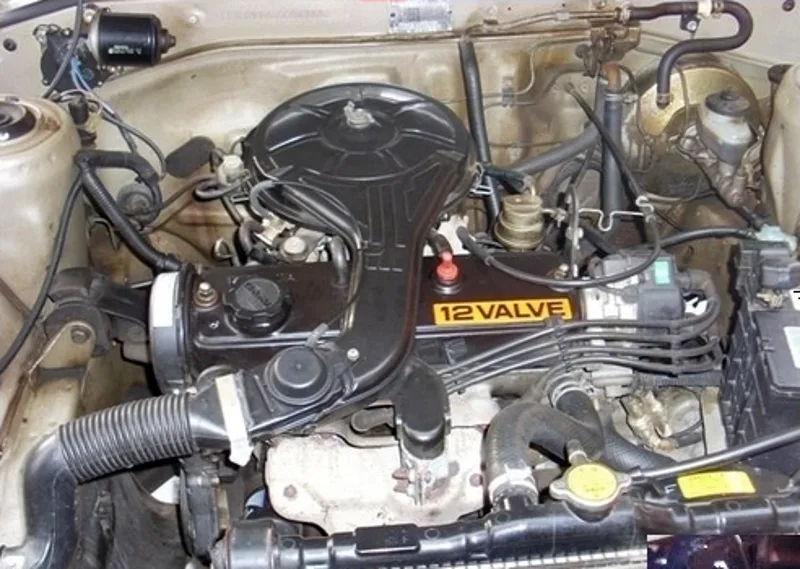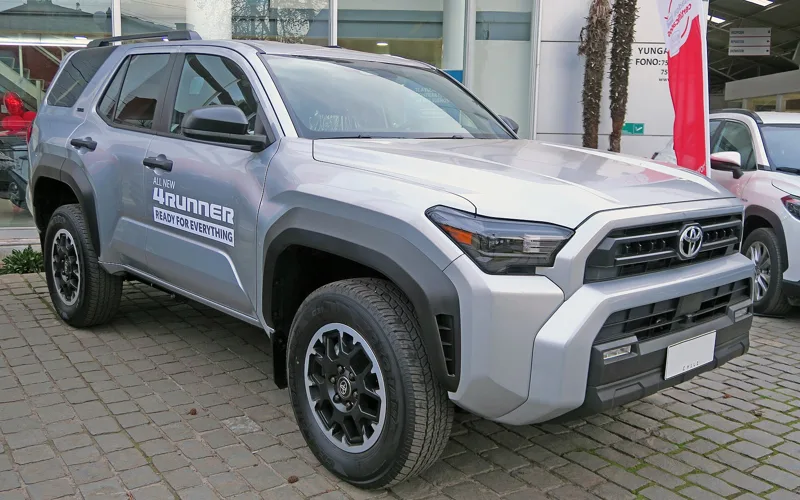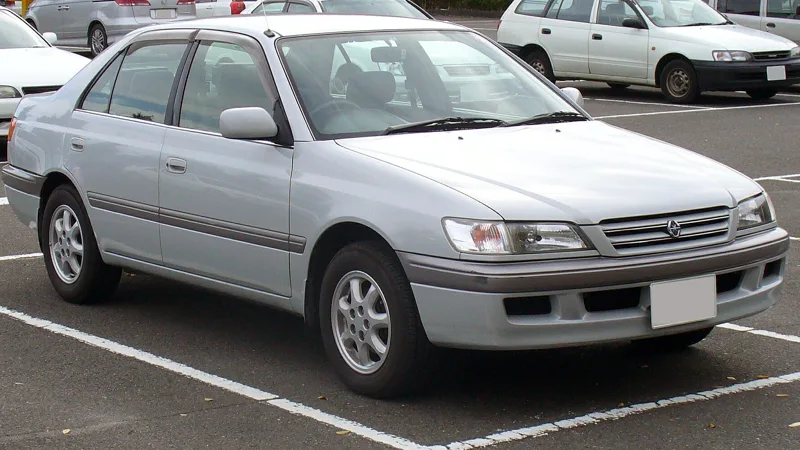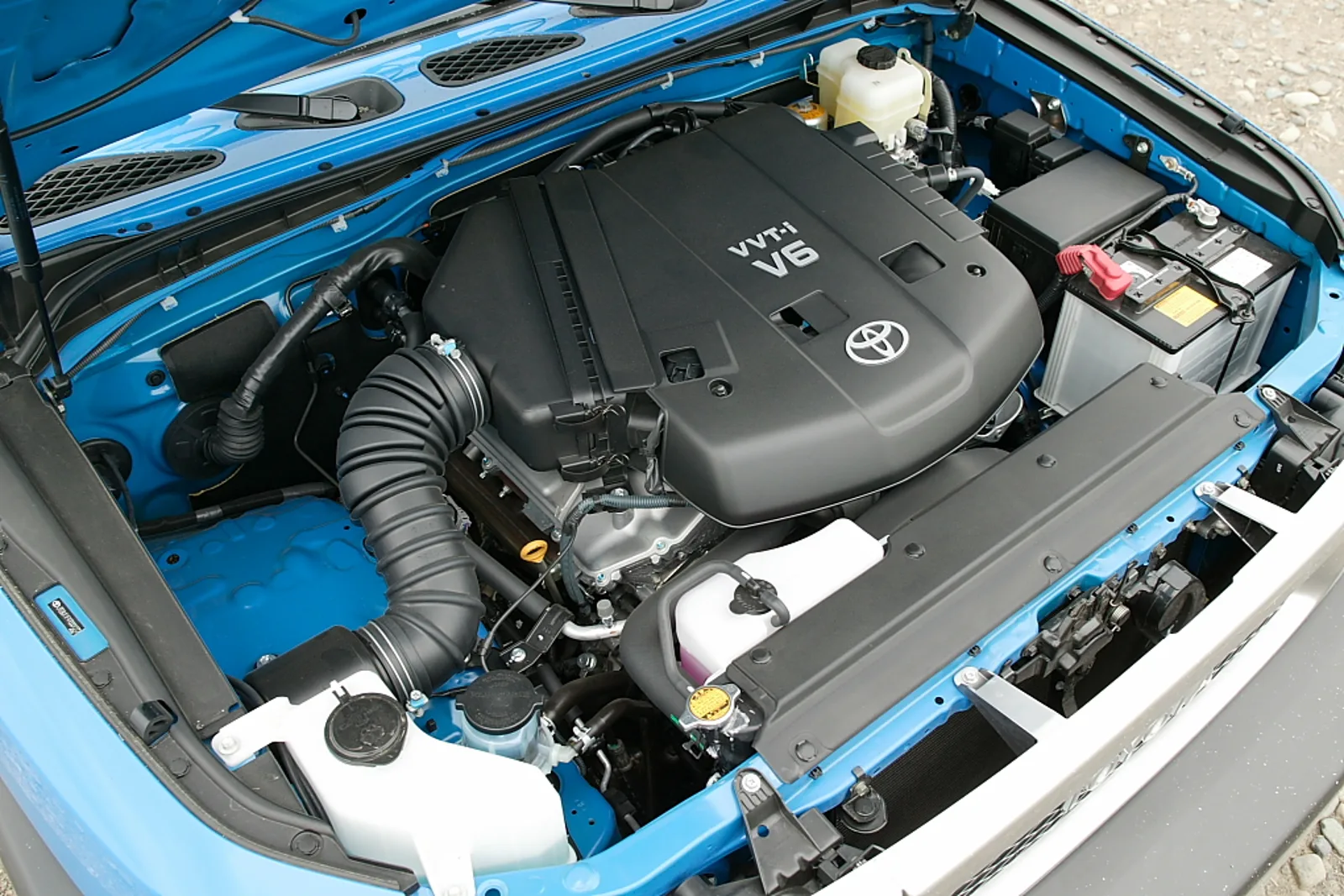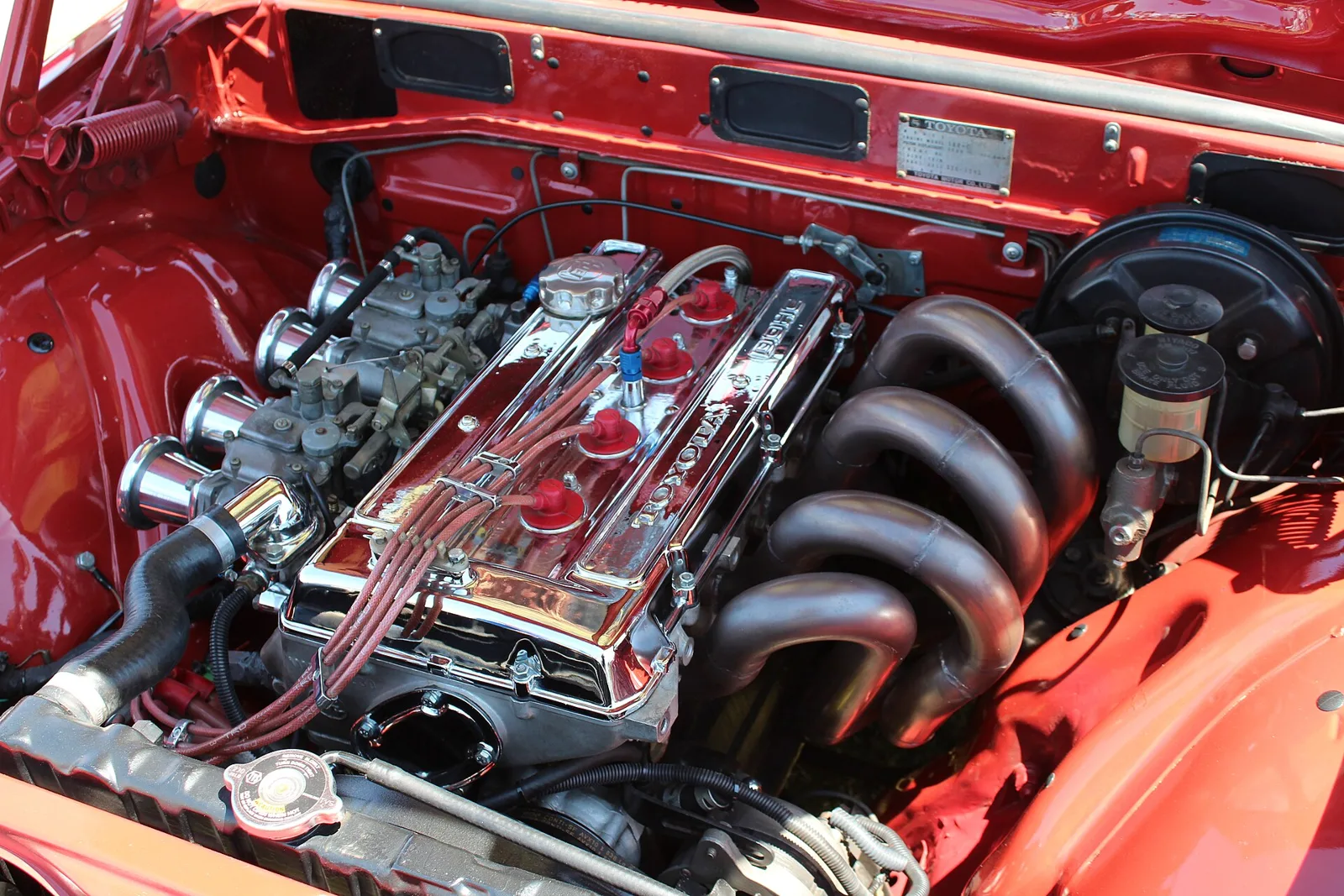
From the 1.5 litre R that first went into the Crown to the 22R that powered Hilux pickups for years, Toyota's R family ran for more than four decades across many tunes.
The Toyota R family was a series of inline-four petrol engines built from 1953 to 1997 in capacities from 1.5 to 2.4 litres. It was designed for longitudinal placement in cars such as the Celica and Hilux, and it included pushrod and overhead cam versions.
Toyota's R family was a long-running line of inline-four petrol engines that appeared in family saloons, pickup trucks, sports coupes and rally cars. Production ran from 1953 to 1997, a span of more than four decades that covered several generations of Toyota models and many different tunes.
The story is one of steady refinement with a few notable detours, including the twin-cam 8R-G, a Yamaha-designed 9R and the rally-bred 152E. By the 1990s the engine's natural home had shifted as Toyota moved its mainstream cars to front-wheel drive, and the longitudinal R units were used less.
What was the Toyota R family?
Put simply, the R was a long-lived inline-four petrol family that ran from 1953 to 1997 at capacities between 1.5 and 2.4 litres. Its engines were laid out longitudinally, as in the Celica and Hilux, and they came as pushrod units or as overhead cam designs with a chain-driven camshaft.
Many versions ran on liquefied petroleum gas as well as petrol. Engines were built at the Toyota Honsha plant at first, and later at the Kamigo plant and in the Philippines, where the 12R was built by Toyota's local affiliate.
A family that ran for more than four decades and did much to earn Toyota its reputation for reliability.
How did the early R engines begin?
The first engine, the 1.5 litre R, was produced from 1953 through 1964 and was originally made at the Toyota Honsha plant. It had a 77 mm bore and 78 mm stroke, and it used a cast iron block and head with a three-bearing crankshaft.
Its valves were operated by a side-mounted, gear-driven camshaft and pushrods, in a non-cross flow head where the inlet and exhaust manifolds sat on the same side. A twin-throat downdraft carburettor fed it, the compression ratio was 8.0:1, and the engine weighed 155 kg (342 lb). An LPG version covered its last two years.
The R was the engine of the 1958 Toyota Crown, the first Toyota model exported to the United States. Road and Track was not impressed when it arrived, noting that the engine idled quietly but could not reach very high revs.
The 2R followed in 1964 as a square-bore engine with a 78 mm bore and a capacity of 1,490 cc. It was used in the Corona, Mark II and Hilux, and its production moved from the Honsha plant to the new Toyota Kamigo plant in 1968.
The 3R displaced 1.9 litres (1,897 cc), with an 88 mm bore and a 78 mm stroke, and was built from 1959 to 1968. Its compression ratio rose from 7.7:1 to 8:1 in 1960, and the 3R-B kept the older 7.7:1 ratio for buyers who wanted it. The 3R-C was built to meet California emissions laws.
What did the 5R, 6R and 7R bring?
The 5R was a 2.0 litre (1,994 cc) two-valve OHV engine built from 1968 to 1986. Its 88 mm bore and 82 mm stroke gave 79 kW (106 hp; 107 PS) at 5,200 rpm, while the torque-tuned version used in Dyna trucks made 59 kW (79 hp; 80 PS) at 4,600 rpm. The 5R-LPG was produced from 1968 to 1983 and was popular for taxi use in later Crown generations.
The 6R was a 1.7 litre (1,707 cc) that put out 107 hp (80 kW; 108 PS) at 5,300 rpm, with a 6R-B variant and a natural gas powered 6R-LPG from 1970 to 1973. The 7R displaced 1.6 litres (1,591 cc), and its 86 mm bore with a shorter 68.5 mm stroke gave it different power characteristics from the similar 4R.
The 7R-B used dual SU carburettors and higher compression from 1968 to 1969, and it was the most driver-focused of the family's early pushrod engines.
What were the 8R, 9R and 10R twin-cams?
The 8R was a 1.9 litre (1,858 cc) engine built from 1968 to 1973 with an 85.9 mm bore, an 80 mm stroke and a five-bearing crankshaft. It had a two-valve SOHC head, and Road and Track praised its quietness and free-revving nature, which marked a major departure for the R family.
Toyota then added the DOHC 8R-G, which was still a two-valve design. It was produced from 1969 to 1972 and was known as the 10R until February 1971, when the name changed to reflect that twin-cam engines would carry a G suffix. The 8R-G removed the timing chain tensioner gear to make it quieter, and it weighed 170 kg (370 lb).
A total of 4,931 twin-cam engines were built, all for the Corona Mark II RT72 and RT75 1900 GSS. The 10R was rated at 104 kW (139 hp; 141 PS) at 6,400 rpm in its earlier form.
The 9R was a 1.6 litre (1,587 cc) built from 1967 to 1968. It was basically a 4R fitted with a Yamaha-designed DOHC head, and its valves were driven directly by bucket-and-shim actuation from the cam lobes. The 9R made 82 kW (110 hp; 111 PS) at 6,200 rpm, and it weighed 174 kg (384 lb). Only 2,229 of them were built, and most went into the Corona RT55 1600 GT.
| Engine | Displacement | Years built | Output | Typical applications |
|---|---|---|---|---|
| R | 1.5 L (1,453 cc) | 1953-1964 | Not recorded | Super, Master and Crown |
| 9R | 1.6 L (1,587 cc) | 1967-1968 | 82 kW (110 hp; 111 PS) at 6,200 rpm | Corona RT55 1600 GT |
| 10R | 1.9 L (1,858 cc) | 1967-1971 | 104 kW (139 hp; 141 PS) at 6,400 rpm | Corona Mark II GSS |
| 5R | 2.0 L (1,994 cc) | 1968-1986 | 79 kW (106 hp; 107 PS) at 5,200 rpm | Crown, Coaster and Dyna |
| 16R | 1.8 L (1,808 cc) | 1974-1980 | 105 PS (77 kW; 104 hp) at 5,600 rpm | Carina and Corona |
| 20R | 2.2 L (2,190 cc) | 1975-1980 | 72 kW (97 hp; 98 PS) at 4,800 rpm | Hilux, Celica and Corona (US) |
| 21R | 2.0 L (1,972 cc) | 1978-1987 | 74 kW (100 PS; 99 hp) export DIN | Carina, Celica and Cressida |
| 22R | 2.4 L (2,366 cc) | 1981-1997 | 72 kW (97 hp; 98 PS) at 4,800 rpm, initially | Hilux, Pickup and 4Runner |
| 22R-TE | 2.4 L (2,366 cc) | 1985-1988 | 101 kW (135 hp; 137 PS) at 4,800 rpm | Hilux and 4Runner |
How did the R family go rallying?
The R family reached motorsport through the 18R-G and its competition version, the 152E. A 152E finished second in the 1977 RAC Rally in a Celica, which made it one of the most respected competition R units of its era.
The 18R-G was a 2.0 litre DOHC engine built from 1973 to 1982, replacing the 8R-G. Most of them had heads designed and made by Yamaha, and their combustion chambers were hemispherical. In 1975 Japan-market versions gained air injection for cleaner emissions, and the fuel-injected 18R-GEU followed from 1978 to 1982.
The 152E had four-valve heads, an 89 mm bore and 80 mm stroke, and a capacity of 1,995 or 1,998 cc, with the figure varying between references. Two twin-choke carburettors fed the Group 4 rally version, which made 240 PS (177 kW; 237 hp) at 9,000 rpm, while higher-tuned engines reached 300 PS (221 kW; 296 hp) at 9,200 rpm.
German team Schnitzer also built a turbocharged silhouette Celica to take on the Porsche 935. A KKK turbocharger lifted the silhouette car to 560 PS (412 kW; 552 hp), though its durability left something to be desired.
Why did the 20R and 22R earn their reputation?
The 20R and 22R were the engines that gave the R family its reputation for reliability, and the 22R became known for its durability and strong low to mid-range torque. Earlier R engines had not always been trusted, so the change mattered to Toyota's image.
The 20R was a 2.2 litre (2,190 cc) with an 88.5 mm bore, 89 mm stroke and aluminium alloy heads. Its head was changed from a reverse-flow to a cross-flow design with hemispherical combustion chambers and shorter rockers, while the timing chain and lower block bearings were strengthened.
Those changes raised torque substantially and moved the peak of both power and torque lower in the rev range. The final 20R, built from 1979 to 1980, dropped to 67 kW (90 hp; 91 PS) at 4,800 rpm.
The 22R was a 2.4 litre (2,366 cc) with a 92 mm bore and 89 mm stroke, introduced for the 1981 model year and produced until 1997. When new it gave 72 kW (97 hp; 98 PS) at 4,800 rpm, and by 1990 the figure had risen to 81 kW (109 hp; 110 PS) at 5,000 rpm.
The turbocharged 22R-TE, sold from late 1985 through 1988, made 101 kW (135 hp; 137 PS) at 4,800 rpm, and its torque of 234 N m (173 lb ft) arrived at 2,800 rpm. Its long stroke and restrictive head, however, limited the 22R's use in high-revving applications.
A popular modification to the early 22R was to fit a 20R head. There is a widespread belief that the 20R head has smaller combustion chambers, but that is not the case. The 20R head has straight ports that flow better at high rpm, though it needs the matching 20R intake manifold.
What went wrong with the 22R timing chain?
From the 1983 model year the 22R used a single-row timing chain with plastic guides, and after about 100,000 miles (160,000 km) the chain could stretch enough to beat the guides to pieces. The result could be a serious failure, especially in an interference engine.
A loose chain reduces ignition timing accuracy, which usually causes rough running. It can also jump a tooth on the drive sprocket or break entirely. A stretched chain can slap against the timing cover, wear through the aluminium into the coolant passage behind the water pump, and damage both the oil and cooling systems. Such damage is sometimes misdiagnosed as a head gasket failure.
Aftermarket timing chain kits with steel-backed guides are the usual cure, and they let the chain run beyond the 100,000 mile point without incident. Some Toyota mechanics still recommend keeping the plastic guides because they break early and give a warning chatter from the front of the engine.