Decades of Mazda diesels, from Perkins-based units and the RF family to common rail turbos and the 2009 SKYACTIV-D.
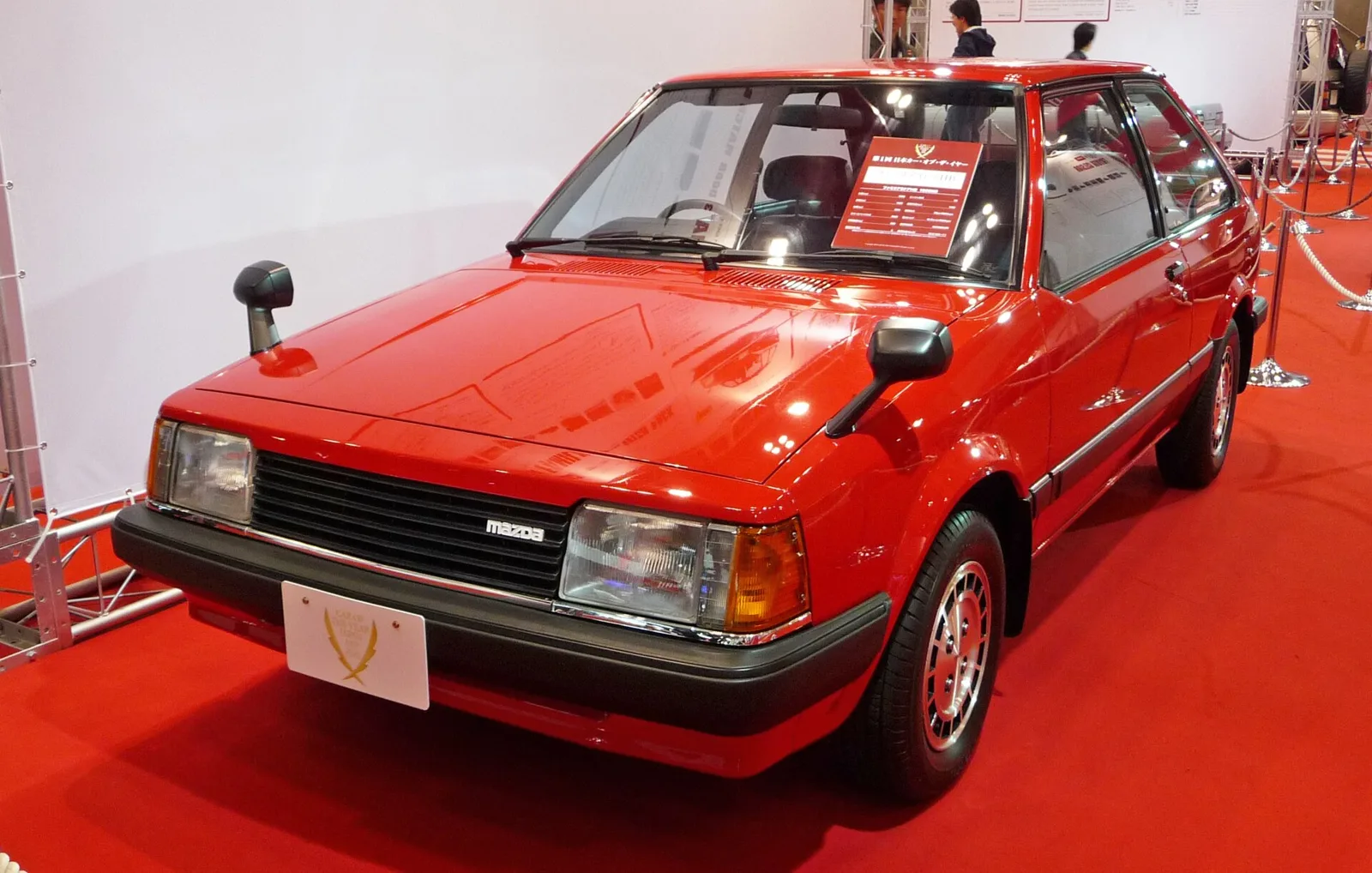
Mazda's diesel engines began with Perkins-based licence units and grew through the RF family into common rail MZR-CD units, PSA-based Y engines and the 2009 SKYACTIV-D. The 1983 RF was a diesel version of the FE, and its descendants lasted for decades.
Mazda has built its own diesel engines for decades, with a few exceptions made under licence. The line ran from small inline-fours for light trucks to common rail and twin-turbo units, and it passed through Perkins-derived engines and the RF family along the way.
Where did Mazda's diesel engines begin?
Mazda has a long record of building its own diesel engines, with a few units made under licence as the exception. Early examples included the Perkins 200 series, built by the licensee Toyo Kogo, which worked as Mazda, for automotive and other uses. Internally these engines were known as GA, GB and GC.
The Perkins-derived engines were part of the company's diesel work in the 1970s, and they used cast iron blocks and indirect injection.
From Perkins licence units to the 2009 SKYACTIV-D, Mazda's diesels evolved one layer at a time.
Which Perkins licence engines did Mazda build?
Three Perkins-related units formed the core of the licence programme, each tied to a particular Mazda application. The S2 was 2.2 L (2,209 cc), the XA was 2.5 L (2,522 cc) and the HA was 3.0 L (2,977 cc). Replacement parts for the Perkins 4.135, 4.154 and 4.182 engines fitted the S2, XA and HA respectively.
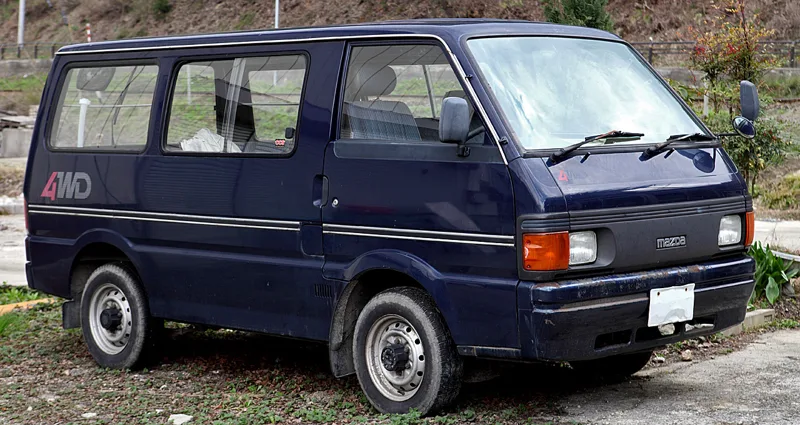
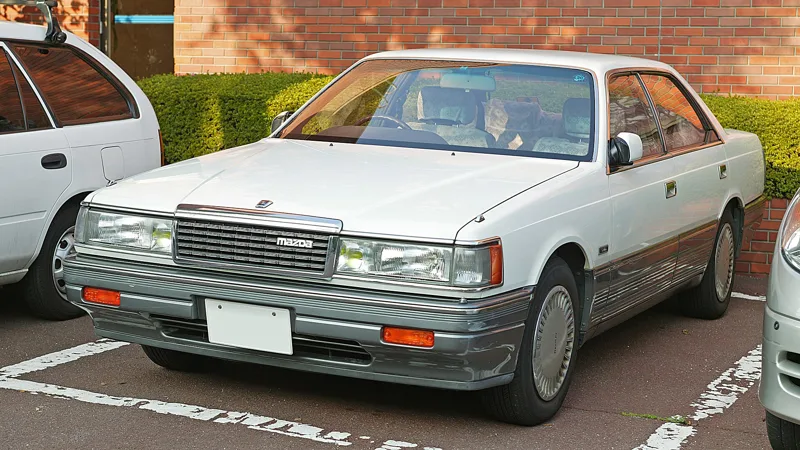
The S2 served from 1979 to 1986 in the Mazda Luce, the Bongo or E2200, the B2200 and the Ford Ranger. The XA appeared in the 1970 Mazda E2500 and the 1971 Mazda Titan, Mazda Light Bus and Mazda Parkway, and some Bobcat skid-steer loaders also used it.
A six-cylinder version of the XA was called the YA. All of these engines had cast iron blocks and heads, two overhead valves per cylinder, crossflow heads and indirect injection. The US-market B2200 and Ford Ranger trucks used rotary Bosch VE-style pumps built by Diesel Kiki under Bosch licence.
What were Mazda's inline-four diesels in the early years?
Mazda's own inline-fours covered a wide range of sizes, from the 1.7 L PN used in the Familia and Ford Laser to the 3.5 L SL that powered the T3500 light truck. The R2 at 2.2 L (2,184 cc) arrived in the Mazda Bongo from 1984, and the WL at 2.5 L (2,499 cc) was later used in the non-US 1995 Mazda MPV.
The SL's output was 105 PS (77 kW; 104 hp) at 3200 rpm, and its torque was 25.0 kg-m (245 Nm; 181 lb ft) at 2000 rpm. The line also included the 3.0 L VS, the 4.0 L TF, the 4.6 L TM and the 3.7 L XC.
The W9 at 2.9 L (2,892 cc) was an enlarged version of the WL, with a 95 mm bore and 102 mm stroke. The XB at 2.7 L (2,701 cc) made 81 PS (60 kW; 80 hp) and appeared in the 1973 Mazda Parkway.
What was the RF engine?
The RF was a diesel variant of the 2.0 L (1,998 cc) FE engine, and it shared the FE's square 86 mm x 86 mm bore and stroke. Its block was virtually the same, with an identical bell housing pattern, but the alloy head was entirely different and used directly actuated valves.
The original naturally aspirated RF weighed 146 kg (322 lb), which was 10 kg (22 lb) more than the FE. It used remote glow plug chambers and a mechanical fuel pump, and it was a SOHC engine with two valves per cylinder. It was also available with a pressure wave supercharger called Comprex.
The RF family carried on as the MZR-CD, gaining counter-rotating balance shafts and far more advanced head and injection technology. It was one of Mazda's more popular diesel engines.
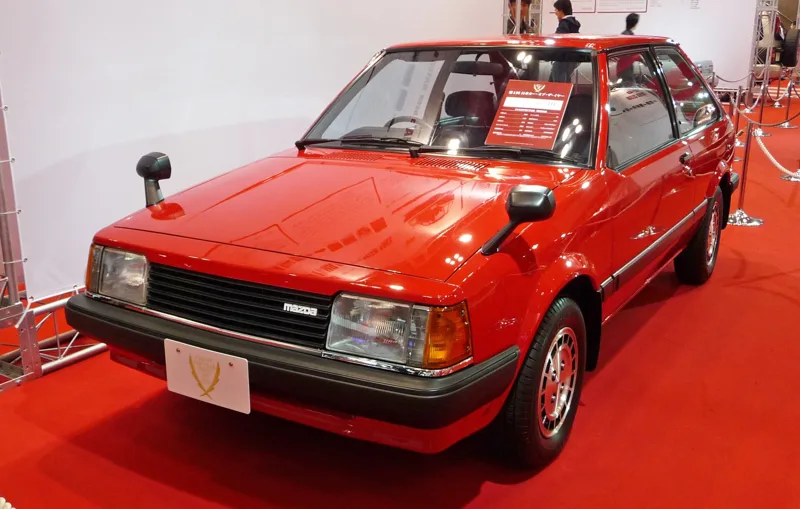
RF applications included the 1984 to 1992 Mazda Capella and 626, the 1983 to 1990 Mazda E-series, the 1984 to 1986 Ford Tempo and Mercury Topaz, and the 1984 to 1987 Ford Escort and Mercury Lynx in North America. Kia and Suzuki models followed later in the decade and into the late 1990s.
How did the 1997 update change the RF?
The emissions-improved RF used in the Mazda 323 from mid-1997 gained a new swirl chamber with an enlarged volume and a narrower throat. It produced 52 kW (71 PS; 70 hp) at 4500 rpm on a raised compression ratio of 21.7:1, with a broad spread of torque.
Peak torque was 128 Nm (94 lb ft) at 3000 rpm. A Multi-Function cam profile raised valve lift to 9.1 mm (0.36 in), and torque never fell below 108 Nm (80 lb ft) between 1500 rpm and 4500 rpm.
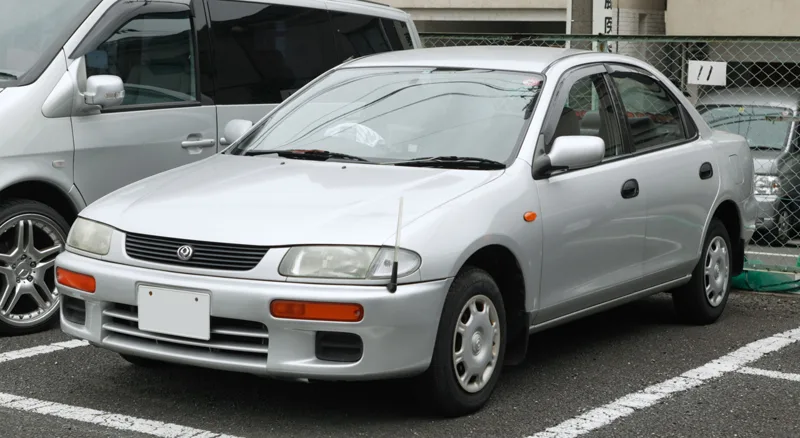
The update also brought an optimised intake manifold, an electrically controlled distributor-type fuel injection pump and an electronically controlled EGR valve. Engines went into the 323 P 3D hatchback and 4D sedan from June 1997, with the 5D hatchback following in August 1998.
What did the Comprex supercharged diesel offer?
The Comprex system used an ABB pressure wave supercharger to boost the RF. In its 1987 Japanese domestic market form it produced 56 kW (76 PS; 75 hp) at 4,000 rpm, and 172 Nm (127 lb ft) of torque came at 2000 rpm. A 1991 revision raised that to 60 kW (82 PS; 80 hp) and 181 Nm (133 lb ft).
Japanese domestic market Capellas carried the Comprex from 1987 to 1991. The system then reached the European Mazda 626 in June 1992, bringing a supercharged diesel to a wider audience.
How did the DiTD turbo diesel work?
The RF-T DI 2.0 DiTD introduced direct injection and four valves per cylinder to the family. It first appeared in the June 1998 Mazda 626 Wagon 2.0 DiTD, and it used a Denso V5 rotary injection pump with a Denso PCM for control.
The DiTD came in three power levels. The first was 66 kW (90 PS; 89 hp) with 220 Nm (162 lb ft) of torque. The second matched that torque at 74 kW (101 PS; 99 hp), and the third reached 81 kW (110 PS; 109 hp) with 230 Nm (170 lb ft).
The DiTD appeared in the Mazda 323 hatchback and sedan from August 1998, then in the Mazda 626 Capella from June 1998. The most powerful version reached the Capella in October 2000, and the Mazda Premacy took a version as the DE 2.0L (DIREC-D) for Euro III markets.
Why was the 2002 MZR-CD important?
The 2002 MZR-CD was the next step for the RF, with common rail direct injection arriving in the European Mazda 6 in June 2002. It produced 89 kW (121 PS; 119 hp) or 100 kW (136 PS; 134 hp) at 3500 rpm, depending on the version, with a compression ratio of 18.3:1 on both.
Both versions topped out at 310 Nm (229 lb ft) at 2000 rpm. The engine used a Denso common rail system at up to 1800 bar, with pilot and post injection for smooth, quiet combustion, and a new dual-mass flywheel.
Efficiency and emissions gains came from a special piston surface that created a vertical swirl, plus a variable turbine geometry turbocharger. Combined fuel economy was 6.5 L/100 km (43 mpg-imp; 36 mpg-US), and the car met Euro Stage III with a catalytic converter, a lambda probe and exhaust gas recirculation.
The engine was fitted to the first-generation Mazda 6 Atenza in both power versions, and to the second-generation Mazda MPV in its High Power form from June 2002.
What changed in the 2005 MZR-CD?
The improved MZR-CD arrived with the July 2005 Mazda 6 facelift and met Euro Stage IV. Its variable geometry turbocharger had 14 percent less inertial moment, and a new Denso second generation common rail system at 1800 bar could make up to nine injections per cycle.
The compression ratio dropped to 16.7:1 to help combustion noise and emissions, and an oxygen sensor fed a 32-bit powertrain control module that continuously adjusted the air and fuel mix. NOx fell because combustion temperatures were lowered.
Two power versions were offered. The Standard Power unit made 89 kW (121 PS; 119 hp) at 3500 rpm, peaking at 320 Nm (236 lb ft) at 2000 rpm, while the High Power unit reached 105 kW (143 PS; 141 hp) at 3500 rpm, and its torque peaked at 360 Nm (266 lb ft) at 2000 rpm.
Both versions came with a diesel particulate filter, which the engine cleaned by raising exhaust temperature with extra injections. The company said the 2005 engines emitted 80 percent less particulate matter than Euro Stage IV required.
The 2005 engine went into the Mazda 5 (Premacy) from January 2006 and into the first-generation Mazda 3 (Axela) in High Power form from March 2007.
How did the 2007 and 2.2 MZR-CD engines develop the family?
A slightly detuned version of the 2005 unit, rated at 103 kW (140 PS; 138 hp) at 3500 rpm, with a maximum of 330 Nm (243 lb ft) at 2000 rpm, arrived with the second-generation Mazda 6 in November 2007. Recalibrated control mapping improved drivability and fuel efficiency, and combined consumption fell to 5.6 L/100 km (50 mpg-imp; 42 mpg-US).
The 2.2-litre MZR-CD was based on the RF, with its stroke lengthened by 8 mm (0.31 in). It came in High, Mid and Low power forms, with the High Power version producing 136 kW (185 PS; 182 hp) at 3500 rpm, with a torque band of 400 Nm (295 lb ft) from 1800 to 3000 rpm.
The 2.2 used a Denso HP3-based common rail system with injection pressure raised to 2,000 bar (29,000 psi). Its injectors had 10 spray holes of 0.119 mm (0.0047 in), against six on the 2.0, and the compression ratio was lowered to 16.3:1.
The 2.2 with a selective catalytic reduction system arrived in the 2009 facelift of the Mazda CX-7, producing 127 kW (173 PS; 170 hp) at 3500 rpm. The AdBlue tank held 15.5 litres and was said to last over 20,000 km (12,000 mi) under normal driving.
What are the key Mazda diesel specifications?
| Engine | Application or period | Displacement | Peak output | Torque |
|---|---|---|---|---|
| SL (T3500) | T3500 light truck | 3.5 L (3,455 cc) | 105 PS (77 kW; 104 hp) at 3200 rpm | 25.0 kg-m (245 Nm; 181 lb ft) at 2000 rpm |
| XA (Perkins licence) | 1970 to 1971 Mazda E2500 and Titan | 2.5 L (2,522 cc) | ||
| RF (1983) | 1983 onward | 2.0 L (1,998 cc) | 61 PS (45 kW; 60 hp) at 4000 rpm | 12.3 kg-m (121 Nm; 89 lb ft) at 2750 rpm |
| Y4 (PSA-based) | Mazda 2 DY and DE | 1.4 L (1,399 cc) | 50 kW (68 PS; 67 hp) at 4,000 rpm | 160 Nm (118 lb ft) at 1,750 rpm |
| WL-T 2.5 turbo | Mazda Bounty and Ford Ranger, 1998 to 2006 | 2.5 L (2,499 cc) | 110 PS (81 kW; 108 hp) at 3500 rpm | 265 Nm (195 lb ft) at 2000 rpm |
| Y6 (PSA-based) | Mazda 3 and Mazda 2 DE | 1.6 L (1,560 cc) | 81 kW (110 PS; 109 hp) at 4000 rpm | 240 Nm (177 lb ft) at 1750 rpm |
| 2.2 MZR-CD High Power | 2008 onward | 2.2 L | 136 kW (185 PS; 182 hp) at 3500 rpm | 400 Nm (295 lb ft) from 1800 to 3000 rpm |
How did the SKYACTIV-D differ from earlier diesels?
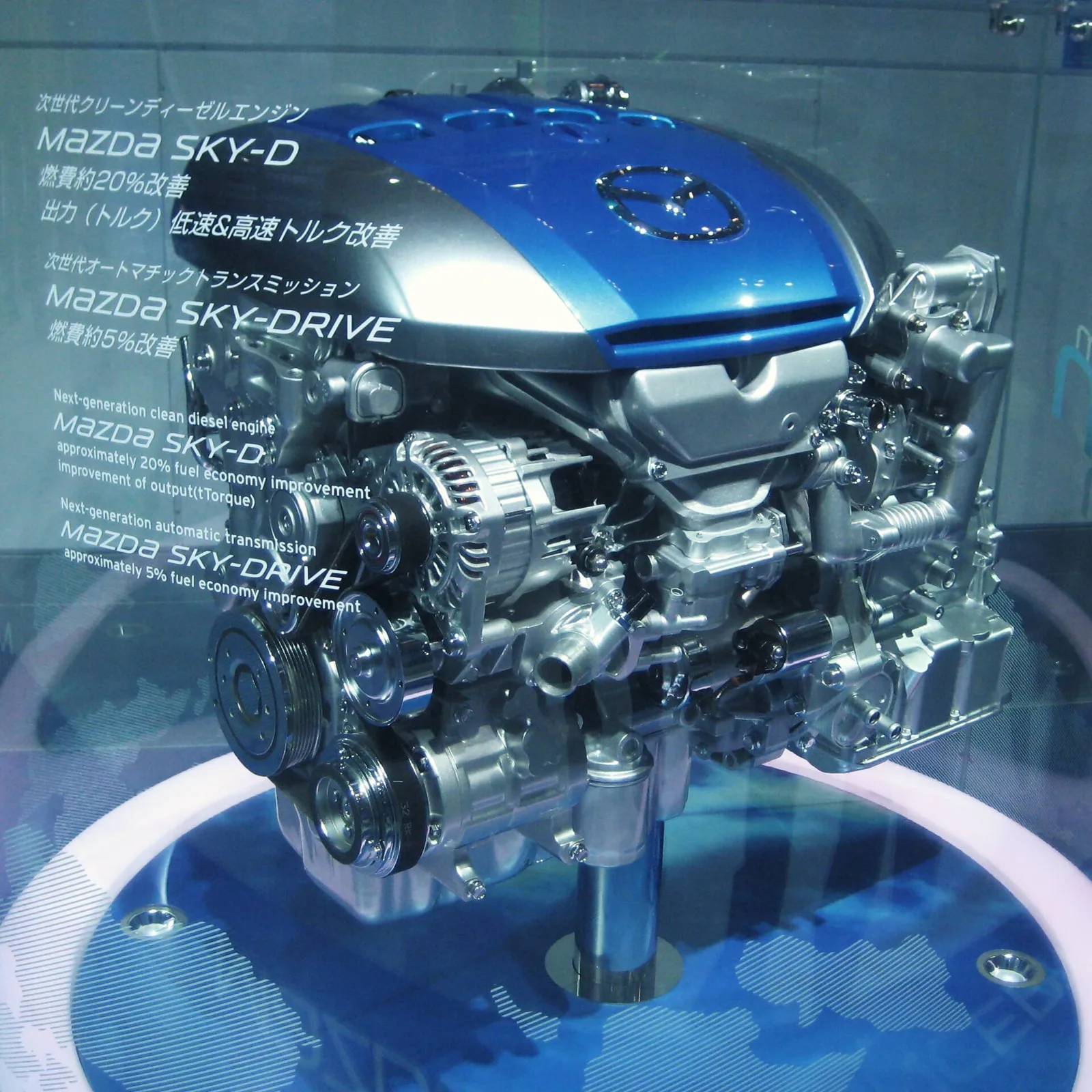
The SH 2.2 SKYACTIV-D was introduced at the 41st Tokyo Motor Show in 2009. It used a high pressure common rail system that controlled piezo injectors, with an aluminium block and lighter reciprocating and rotating parts that brought its weight close to the petrol version.
Its air handling included a wide-range, high volume EGR system and a two-stage twin turbocharger that delivered high boost over a broader rev range. A diesel particulate filter with a catalysed oxidation layer shortened regeneration. Mazda claimed 20 percent better fuel efficiency than its R2 2.2 MZR-CD.
The engine was later the subject of recalls in several markets. The problem involved leaking fuel injector seals, which allowed carbon build-up that could cause vacuum pump and turbocharger failure.
What were the PSA-based Y4 and Y6 engines?
The Mazda Y4, also called the 1.4 MZ-CD or 1.4 CiTD, was a rebadged PSA DV4 unit built at a PSA plant in Tremery or a Ford plant in Dagenham. It was an SOHC eight-valve turbo diesel with a bore and stroke of 73.7 mm x 82 mm (2.90 in x 3.23 in) and a compression ratio of 18.0:1.
The Y4 went into the Mazda 2 DY and DE with a five-speed manual gearbox. It had a VNT turbocharger without intercooling, and its maximum output was 50 kW (68 PS; 67 hp) at 4,000 rpm, and torque reached 160 Nm (118 lb ft) at 1,750 rpm.
The Mazda Y6 was a rebadged PSA DV6 with a 1.6 L (1,560 cc) DOHC 16-valve design and a compression ratio of 18.3:1. Its second generation Bosch common rail system ran at 1,600 bar (23,000 psi), and it used a Garrett GT15 turbocharger with a larger front mount intercooler than the 2.0 MZR-CD.
The Y6 was fitted to the Mazda 3 (Axela) and Mazda 2 DE with either Getrag-Ford manual transmissions or a four-speed automatic. Its three versions ranged from 66 kW (90 PS; 89 hp) to 81 kW (110 PS; 109 hp).
Were there larger Mazda diesel sixes?
Mazda also built inline-six diesels, including the YA at 3.8 L (3,783 cc), which powered the Mazda Boxer as the EYA. The ZB at 4.1 L (4,052 cc) served the EZA Boxer, the second-generation Mazda Titan and Asian and Kia Combi vans, and it was originally called the Perkins 6.247.
The ZC at 5.5 L (5,494 cc) completed the range of larger six-cylinder units.
What is the legacy of Mazda's diesel engines?
Mazda's diesel story moved from licence-built Perkins engines to its own RF family, then to the common rail MZR-CD and the SKYACTIV-D. Each stage added more power, lower emissions and better efficiency than the last.
The RF design lasted long enough to become the MZR-CD, and its later versions showed how far the basic layout could be pushed. The PSA-based Y engines and the SKYACTIV-D show the company willing to combine its own engineering with outside technology.