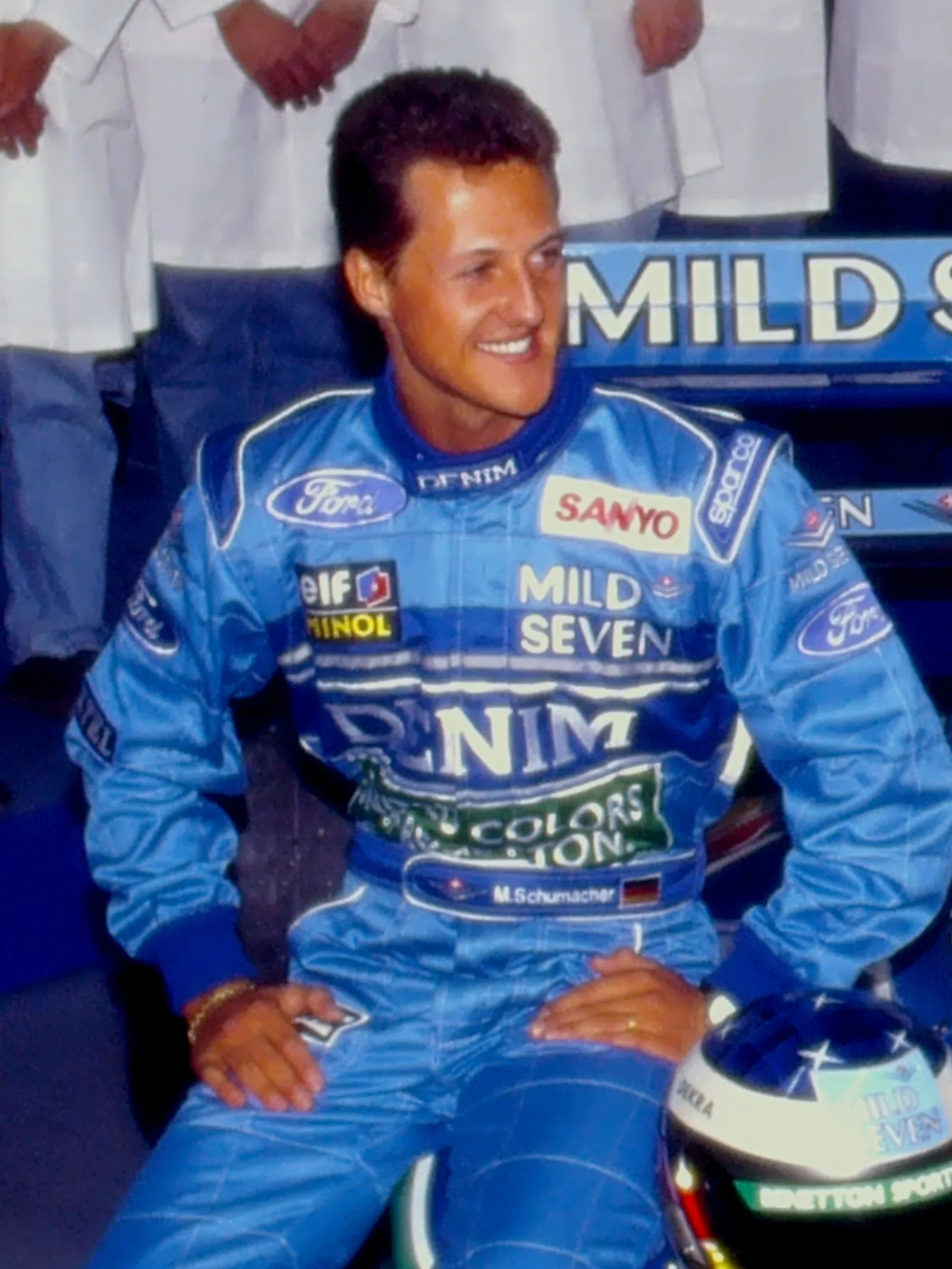
A Ford-financed Cosworth V8 carried Michael Schumacher to his first title in 1994, then shrank to 3.0 litres and became the weakest customer engine in the field.
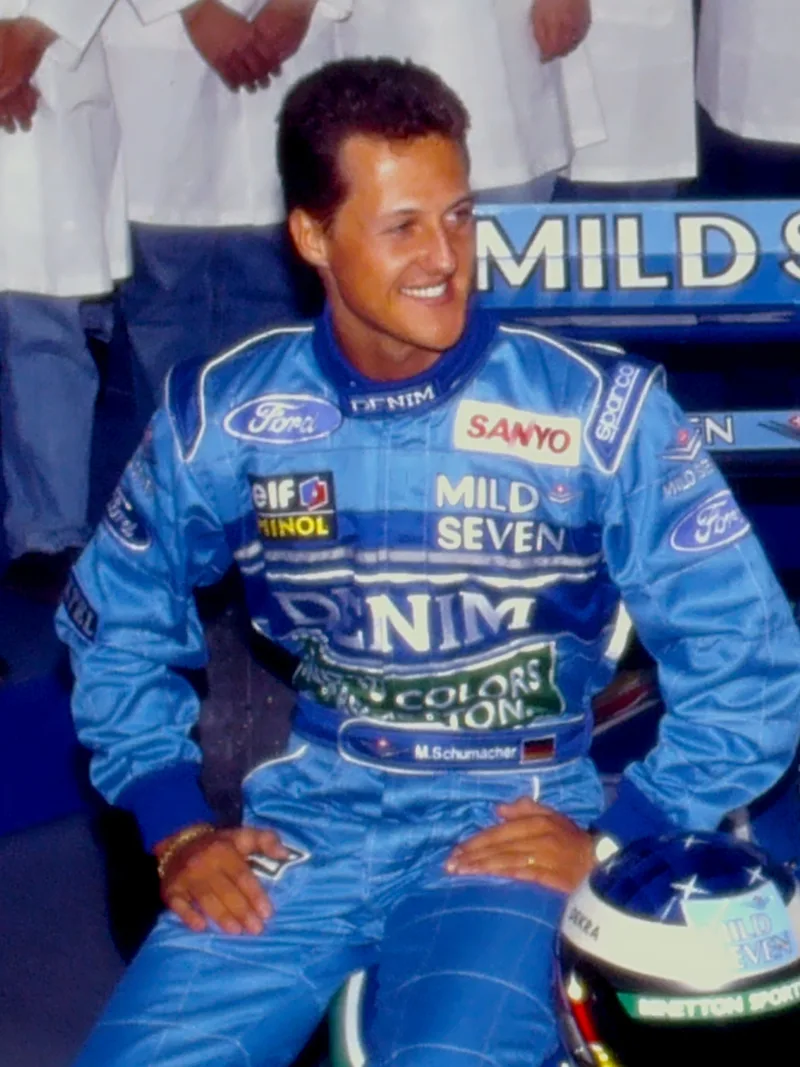
The Ford-Cosworth EC was a 3.5-litre V8 that Benetton used to win the 1994 Drivers' title with Michael Schumacher. After the 1995 rule change to 3.0 litres, Cosworth made the ECA for Sauber and the ED customer engine, which scored only three world championship points.
The Ford-Cosworth EC and ED were naturally aspirated Formula One V8 engines designed and built by Cosworth and financed by Ford. The EC was a 3.5-litre engine that won the 1994 Drivers' title for Michael Schumacher at Benetton, and it was the last Ford-powered championship in the sport. After the rules cut capacity to 3.0 litres, Cosworth produced the ECA for Sauber and the cheaper ED for smaller teams, with the ED ending up as the weakest engine in the field.
What were the Ford-Cosworth EC and ED engines?
The EC and ED were a family of Formula One V8 racing engines, used between 1994 and 1997. The works units were the EC, a 3.5-litre engine, and the ECA, a 3.0-litre version for 1995 and 1996. The customer engine was the ED, which was used by smaller teams including Minardi, Simtek, Pacific, Forti and Tyrrell.
The engines were badged as the Ford Zetec-R on the works cars, which made them a rare example of a Ford-branded Formula One engine of the period. Cosworth did the engineering and built the units, while Ford provided the funding and, for the EC, the engine electronics.
An eight-cylinder Ford-financed engine that gave one driver his first title, then shrank to 3.0 litres and fell to the back of the grid.
Why did Benetton run a Cosworth V8 in 1994?
Benetton had been the preferred partner of Cosworth and Ford since 1987, and it received the latest engines exclusively. The earlier HB V8 had been reliable, but it lacked the power of the ten and twelve-cylinder engines from Renault and Honda. Benetton finished third in the constructors' championship in 1992 and again in 1993 with the HB, with Michael Schumacher third and fourth in the drivers' standings in those years.
For 1994 the redesigned EC went exclusively to Benetton, and the team's management, led by Flavio Briatore and Tom Walkinshaw, had modest expectations at first. The expectation was second place in the constructors' championship, but the engine and the car proved far stronger than that. The EC gave the team a real chance against the Williams and McLaren runners.
What was the EC engine like?
The HB had been developed into the EC, a 3,498 cc V8 with a bore and stroke of 99.75 mm by 55.9 mm. Its 75-degree cylinder bank angle matched the HB, and the large bore gave the EC the biggest bore of any engine in the 1994 season. At 620 mm the EC matched the length of the ten-cylinder Honda, Peugeot and Renault units, although Ilmor's V10 was 25 mm shorter.
The engine had two overhead camshafts for each bank, two intake and two exhaust valves per cylinder, and camshafts driven by chains and gears. Cosworth used expensive materials, with ceramic-coated combustion chambers, titanium connecting rods and valves, and pistons of a magnesium-copper-nickel alloy. A single piston weighed only 305 grams, and the complete engine weighed 135 kg.
Estimates put the EC at around 755 hp in race trim and 765 hp in qualifying. That left it roughly 30 hp behind the strongest ten-cylinders, yet its output relative to its weight matched them. The cost was high, because a revision was due after 350 km, so one engine did not even last a whole race weekend.
How did Schumacher win the 1994 title?
Schumacher won the first two races of the 1994 season, while Ayrton Senna struggled with the new Williams FW16. After Senna's fatal accident at Imola, neither Williams nor McLaren could compete with Benetton over the rest of the year. Williams was left with the young, inexperienced pairing of Damon Hill and David Coulthard, and McLaren had problems adapting to its new Peugeot engine.
Schumacher won six more championship races after Senna's death. He was also disqualified twice and banned for two races, the second time for disregarding a disqualification in Great Britain. Eight wins and two second places carried him to the title on 92 points, and Ford had its last Formula One championship with the engine.
Why did the EC become the ECA?
The fatal accidents of Roland Ratzenberger and Senna at the San Marino Grand Prix in 1994 led the FIA to cut the displacement limit to 3.0 litres for 1995. The EC therefore had to be revised after its first year. Cosworth began work on the 3.0-litre version in July 1994, and because there was no time to design a new engine, the engineers adapted the EC block to the smaller capacity.
The result was the ECA, displacing 2,994 cc, which was only 10 mm shorter than the EC at 610 mm. It weighed 130 kg, which was similar to the ten-cylinder engines from Renault at 132 kg and Mugen at 135 kg. Lighter ten-cylinder units from Ilmor and Yamaha were far below that, at 120 kg and 117 kg. Its estimated output was 625 to 640 hp, while Renault and Ferrari were already above 700 hp.
How did the ECA perform at Sauber?
Cosworth chose Sauber as its works team in November 1994, after its attempt to land Jordan had failed. The relationship was designed to last two years, and it took over the role that Benetton had played. The ECA was presented in Zurich in January 1995, and Sauber began testing in February.
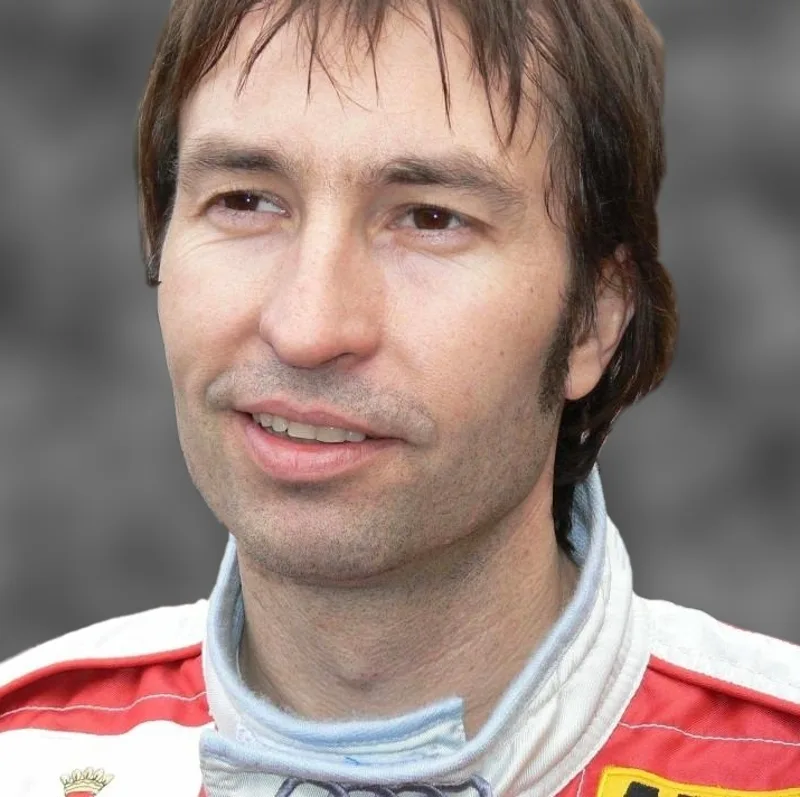
The Sauber C14 had been designed for the lighter Mercedes engine that had powered the team before, so the late switch to the Cosworth caused problems. The handling was described as erratic, and the aerodynamics were not efficient. Frentzen's third place at the Italian Grand Prix was the team's best result, and it was the only podium the ECA ever achieved in its three-year history. Sauber finished seventh in the constructors' championship with 18 points, and Frentzen was ninth in the drivers' standings.
Wendlinger failed to finish any of six races for the team, and Jean-Christophe Boullion scored points only twice in eleven races, with his best finish fifth in Germany. In 1996 Sauber switched to a newly designed ten-cylinder Cosworth JD, which was also badged as the Zetec-R, and the ECA's three-year run was over.
What was the Cosworth ED?
The ED was an eight-cylinder naturally aspirated customer engine that Cosworth designed for smaller teams. It was used at the start of the second 3.0-litre era, from 1995 to 1997. It replaced the HB that had been used until 1994, and it was technically related to that engine. It was also the last eight-cylinder Cosworth until the rule change in 2006.
The ED was never competitive, collecting just three world championship points across its three seasons. Its development was led by Cosworth engineer Stewart Banks, and it was a mere further development of the HB. The displacement was 2,995 cc and the bank angle 75 degrees, with a length of 595 mm and a height of 542 mm.
The power output was low. Early versions produced between 580 and 590 hp, which was well below the 725hp of the earlier 3.5-litre HB, and the ED became the weakest engine in the starting field. It remained so until the end of 1997, although output rose gradually over the following years.
How did the ED develop through five versions?
Five versions of the ED were built between 1995 and 1997. The basic ED1 was used by every customer team in 1995, and Cosworth made no further changes that year. The ED2 arrived at the start of 1996, adding 15 hp to the base version, but it still had the lowest power in the field.
The ED3 came at the Spanish Grand Prix in 1996, with its speed limit raised to 14,500 rpm, and it was used only by Minardi. The ED4 was the base version for 1997, and Tyrrell ran it. The ED5 appeared at the 1997 Spanish Grand Prix. It had a new cylinder head, new moving parts and new ancillaries, and according to the factory it was 20 kg lighter than the ED4, produced 20 hp more and reached 15,000 rpm.
Who ran the ED engine?
Forti Corse made its Formula One debut in 1995 after years of success in Formula 3000, using an ED1 with the FG01 chassis. The team was often lapped five or six times in races, and its drivers were slow for most of the season. In 1996 Forti switched to the more expensive ECA, which was barely more powerful, and the team stopped racing after the German Grand Prix when Cosworth stopped supplying engines.
Pacific used ED1 engines in 1995 with the PR02 chassis, designed by Frank Coppuck, but the car suffered aerodynamic problems and the team could not afford testing. Its season recorded 16 defects and eight accidents, and no points were scored. Simtek, which had entered Formula One in 1994, switched from the HB to the ED1 for 1995 and was regarded as the most competitive ED car, but insolvency followed after the Monaco Grand Prix.
Minardi was the best ED customer in 1995, but it still finished behind the midfield teams. Pierluigi Martini came seventh twice, and Pedro Lamy scored Minardi's only world championship point in Australia, which left the team tenth in the constructors' standings. In 1996 Minardi was the only ED customer and scored no points at all. Tyrrell was the last customer in 1997, paying around US$5.5 million for the engines, which was a substantial burden compared with the free supply it had enjoyed from Yamaha.
What happened to Lola in 1997?
Lola had built customer cars for Formula One teams since the 1970s but had never run its own works team. Its founder, Eric Broadley, decided in autumn 1996 on a factory commitment that was brought forward to 1997 at the insistence of sponsor Mastercard. Lola had little time to build a new chassis, so it revised the 1994 prototype and fitted an ECA eight-cylinder engine.
The project was poorly prepared and underfunded. At the season-opening round in Australia, the two Lola drivers, Sospiri and Rosset, both failed to qualify, falling outside the 107 percent cut-off by six and nine seconds. Mastercard terminated the agreement two days after the race, and the team and its parent company went bankrupt.
Specifications at a glance
| Engine | Years | Displacement | Layout | Output | Weight |
|---|---|---|---|---|---|
| EC | 1994 | 3,498 cc | 75-degree V8 | About 740 bhp; estimated 755 hp race trim | 135 kg |
| ECA | 1995 to 1997 | 2,994 cc | 75-degree V8 | Estimated 625 to 640 hp | 130 kg |
| ED1 | 1995 | 2,995 cc | 75-degree V8 | 580 to 590 hp | Heavier than the EC |
| ED2 | 1996 | 2,995 cc | 75-degree V8 | 15 hp more than ED1 | Heavier than the EC |
| ED5 | 1997 | 2,995 cc | 75-degree V8 | 20 hp more than ED4 | 20 kg lighter than ED4 |