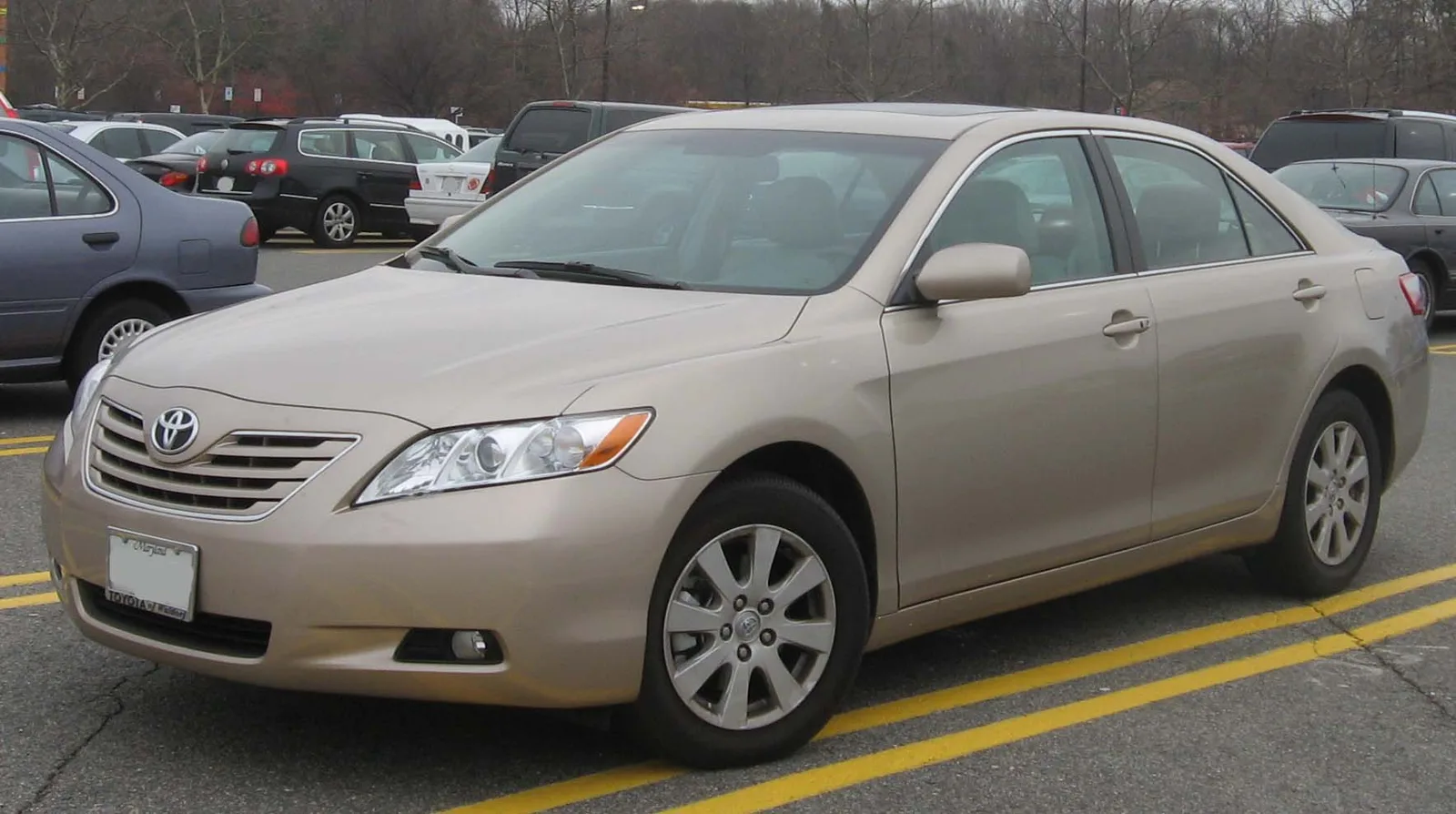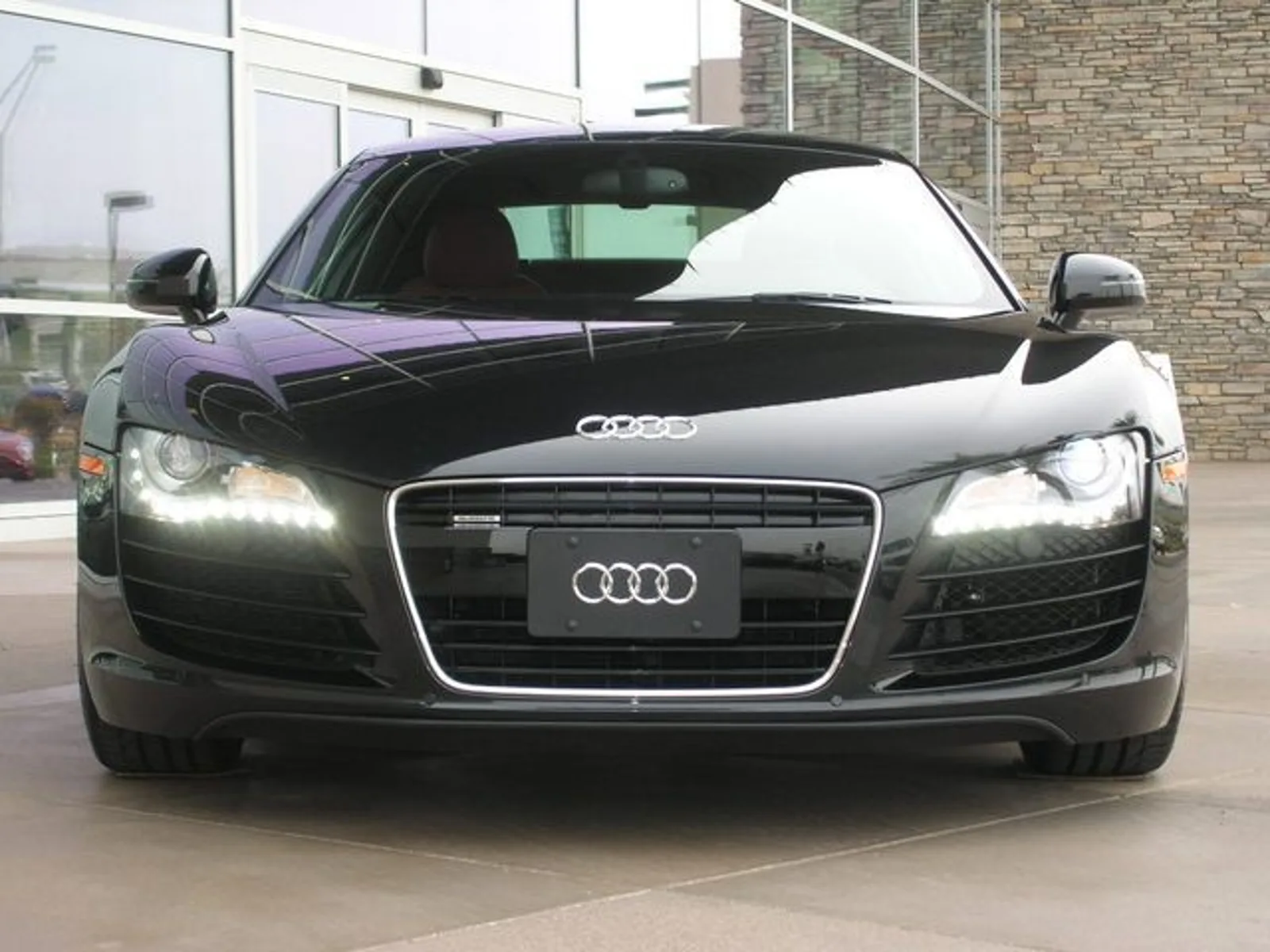
From dark Scandinavian winters in 1972 to the mixed safety record of the US and the fuel debate in Europe, how the daytime running lamp became a legal requirement in some places and an option in others.
Daytime running lamps switch on automatically so other road users notice a moving vehicle in daylight. Sweden mandated them first, in 1977, the EU and Canada later required them, and the US left them optional after a 2008 study found limited crash benefit.
A daytime running lamp, or DRL, is a light on the front of a road vehicle or bicycle that switches on automatically when the car is in gear, the handbrake is released or the engine starts. Its job is to help other road users spot an active vehicle, not to light the road for the driver. Some countries require it, others allow it, and the evidence on whether it prevents crashes is more mixed than many people expect.
What is a daytime running lamp?
A daytime running lamp is a front light that stays on whenever the vehicle is running in daylight. It is switched on automatically, often when the ignition is on, though some vehicles activate it when the parking brake is released or the vehicle moves into gear. Its light is brighter than normal running light when the headlamps are off, and it dims slightly when the headlamps come on.
The emitted light is white, yellow or amber, and the lamp is intended for other road users. A driver rarely needs a DRL to see the road, which is why it is a visibility device rather than an illumination device. The same principle applies to bicycles, where a front light helps other road users notice the rider.
A light meant for other road users to see the vehicle, not for the driver to see the road, and whose benefit depends on how dark it is.
How are DRLs wired into a car?
Vehicles can provide the daytime function in several ways. Some switch on specific lamps, while others run low-beam headlamps or fog lamps at full or reduced intensity. High-beam headlamps can run at reduced intensity, and some cars use steady-burning front turn signals. Each method has trade-offs in cost, glare and complexity.
Dedicated DRLs are generally the best option. Compared with any mode of headlamp operation, they maximise the safety benefit while limiting glare, motorcycle masking and other drawbacks. That is why European rules insist on functionally specific lamps rather than headlamps or turn signals used as DRLs.
Did daytime running lamps make cars safer in the US?
In 2008 the US National Highway Traffic Safety Administration reviewed frontal and side-on collisions between two vehicles, along with crashes involving pedestrians, cyclists and motorcyclists, to see whether DRLs changed outcomes. It found no statistically significant reduction in the frequency or severity of most of the collisions studied.
The one exception was a statistically significant fall of 5.7 percent in the involvement of light trucks and vans in two-vehicle crashes. That finding is narrow, and it did not establish a general benefit across all vehicles. Such results help explain why the US authorities have remained neutral on whether DRLs should be required.
Why do DRLs matter more in dark countries?
The safety benefit of DRLs depends heavily on the amount of ambient light. As daylight increases, the potential benefit falls, and the lamp intensity needed for a safety improvement rises. Scandinavia, where winter days are dark, perceived the benefit first, and the safety gain in relatively dark Nordic countries is roughly triple the gain seen in the brighter United States.
This dependence on light explains why the same device is controversial in one country and treated as essential in another. A lamp that adds little in a sunny state may still make a real difference in the long winter darkness of northern Europe.
How did Scandinavia start the DRL requirement?
Sweden made widespread DRLs compulsory in 1977. The Swedish name for the function, varselljus, roughly means perception light or notice light. The early Swedish rules favoured 21-watt signal bulbs, the same type used in brake lamps and turn signals, producing yellow or white light of about 400 to 600 candela on the axis.
Finland adopted a daytime light requirement in 1972 for rural roads in winter. It extended the rule to rural roads in summer in 1982 and to all roads all year in 1997. Norway followed in 1985, Iceland in 1988 and Denmark in 1990. To give manufacturers more flexibility, the daytime use of low-beam headlamps was added as an optional route, which would produce about 450 candela on the axis with the headlamp specifications then in use.
What did the European Union require?
European Union Directive 2008/89/EC required all passenger cars and small delivery vans first approved on or after 7 February 2011 to carry daytime running lights. The directive ended its validity on 31 October 2014, when it was implicitly repealed by Regulation (EC) No 661/2009, which was later replaced by Directive 2019/2144. The mandate was extended to trucks and buses in August 2012.
Headlamps, front turn signals and fog lamps cannot be used as DRLs under the EU rules. Instead, the directive requires functionally specific lamps that meet ECE Regulation 87 and are mounted in line with ECE Regulation 48. Those lamps emit white light of between 400 and 1,200 candela on the axis, with a visible surface of 25 to 200 cm2 (4 to 31 sq in), and they must meet a further intensity range in a defined field.
Older habits did not disappear. Several European countries once encouraged or required daytime low beams on certain roads, and some still require full or reduced-voltage low beams at all times. Whether the DRLs fitted to new cars satisfy those national requirements depends on each country's law.
Why was the UK's dim-dip system short-lived?
UK regulations briefly required vehicles first used on or after 1 April 1987 to carry either a dim-dip device or functionally dedicated daytime running lamps. Dim-dip ran the low-beam headlamps at between 10 and 20 percent of their normal intensity when the engine was running and the front position lamps were switched on. The alternative running lamps had to produce a minimum of 200 candela dead ahead, with a ceiling of 800 candela in any direction.
Dim-dip was never really meant as a daytime light. It was intended as a town beam, brighter than parking lamps but softer than full low beams, which were considered too glaring in built-up areas. Most vehicles took the dim-dip option rather than the running lamps. The UK was the only country to demand dim-dip, and in 1988 the European Commission succeeded in its case at the European Court of Justice, which quashed the requirement. Dim-dip systems remained permitted, and some new cars still fitted them well into the 1990s.
How did Canada and the United States take different paths?
Canada's Motor Vehicle Safety Standard 108 required DRLs on all new vehicles made or imported after 1 January 1990. The proposed Canadian rule was similar to Scandinavian regulations, with an axial luminous intensity limit of 1,500 candela. Automakers objected that a new front lighting device was too expensive and would raise warranty costs through extra bulb replacements.
After a regulatory battle the standard was rewritten. It permitted reduced-voltage high-beam headlamps producing up to 7,000 candela axially, and any colour from white to amber or selective yellow. Those changes let automakers use cheaper options, such as connecting high-beam filaments in series so each receives half its rated voltage, or burning the front turn signals full time except when flashing.
| Country or region | Milestone | Requirement or outcome |
|---|---|---|
| Sweden | 1977 | Widespread DRLs, first in the Nordic countries |
| United Kingdom | 1 April 1987 | Dim-dip or running lamps, quashed by the European Court of Justice in 1988 |
| Canada | 1 January 1990 | Mandatory under Standard 108 for new vehicles |
| United States | 1995 model year | Permitted but not required, after General Motors' 1990 petition |
| European Union | 7 February 2011 | Mandatory for new passenger cars and small vans under Directive 2008/89/EC |
In the United States, General Motors petitioned the National Highway Traffic Safety Administration in 1990 for permission to fit DRLs like those in Canada. The agency objected to the potential for glare and turn signal masking, and in 1991 it proposed a maximum intensity of 2,600 candela. The glare objections were eventually set aside, and most of the Canadian-style DRLs were permitted from the 1995 model year. GM fitted its vehicles beginning with the Chevrolet Corsica, and Saab, Volkswagen, Volvo, Suzuki and Subaru followed. Honda began equipping US models from the 2006 model year, mostly by running the high beams at reduced intensity.
Public reaction in the US was mixed. Thousands of glare complaints reached the Department of Transportation after DRLs were permitted, and some critics worried about motorcycle conspicuity and turn signal ambiguity. In 1997 the DOT proposed capping axial intensity at 1,500 candela, after measuring actual DRL intensity well above the 7,000-candela limit on vehicles in use. That proposal was rescinded in 2004 while the agency reviewed a 2001 petition from General Motors to mandate DRLs on all US vehicles. NHTSA denied that petition in 2009, citing serious methodological and analytical flaws in the data GM had supplied.
Are daytime running lamps a problem for motorcycles?
Motorcycle groups worry that headlamp-based DRLs reduce a motorcycle's conspicuity, because motorcycles are no longer the only vehicles showing lights during the day. Some researchers have suggested that amber DRLs be reserved for motorcycles in countries where amber is not allowed for DRLs on other vehicles. Other research found a safety disadvantage in two 90 mm by 520-candela DRLs on motorcycles compared with one 190 mm by 270-candela dipped beam.
That result suggests the luminous area of a lamp may matter as much as its intensity. A larger, dimmer light can be more visible than a small bright one, which makes the design details of the lamp as important as the rule that requires it.
How much fuel do daytime running lamps use?
Power consumption varies widely. Current production systems draw from 5 W for a dedicated LED system to more than 200 W when the headlamps and all parking, tail and marker lights are on. Because the power comes from the engine, which burns extra fuel to supply it, high-power DRLs add to CO2 emissions. Europe weighed that cost against the safety benefit, and high-power systems raised concerns about compliance with the Kyoto Protocol.
Efficient lamps avoid most of the penalty. LEDs and high-efficacy bulbs give enough light for an effective DRL without a significant fuel penalty. Fuel economy gains of up to 0.2 km/L (0.5 mpg-US; 0.6 mpg-imp) were reported when comparing a 55-watt DRL system with a 200-watt system. A 2006 study by the UK Department of Transport also found clear reductions in emissions and fuel use when comparing a 42-watt DRL with a 160-watt full headlight DRL. With 8 to 20 W LED or high-efficiency filament systems, the fuel impact can be reduced to insignificant levels.
Europe made headlamp-based DRLs illegal from the start of 2011, which pushed manufacturers toward dedicated, low-power lamps. Those measures show how the regulation has moved from simply requiring a light to requiring one that is both effective and efficient.
Where does Australia stand on daytime running lamps?
DRLs are permitted but not required in Australia. The Australasian College of Road Safety, an Australian automotive safety group, advocates making them mandatory rather than optional, which keeps the question open for the country's regulators.