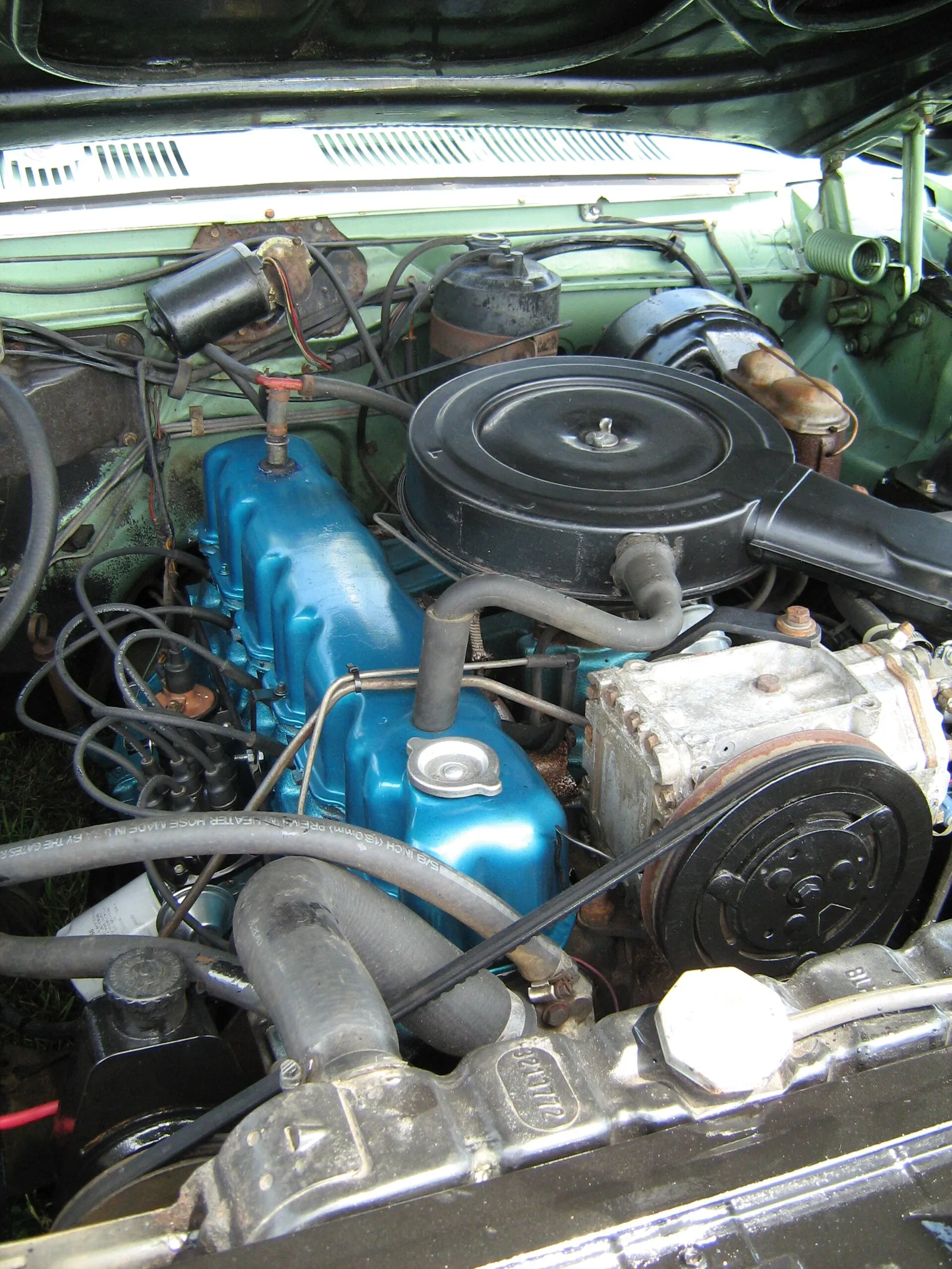
American Motors' inline six ran from 1964 to 2006 in cars and Jeeps, and its 4.0-litre version became one of the most respected off-road engines of its era.
The AMC straight-six was an inline-six family made by American Motors from 1964 to 2006 for cars and Jeeps. It grew from the 232 of 1964 into the 199, 258 and 4.0 litre versions, and the 4.0 became one of the most trusted off-road engines of its time.
American Motors Corporation built this inline six for passenger cars and Jeep vehicles from 1964 until 2006. Its roots go back to the Nash Motors six of the early 1940s, and its final form, the 4.0-litre unit of 1987, earned a reputation as a durable off-road powerplant. Production continued under Chrysler after it acquired AMC in 1987.
What was the AMC straight-six engine?
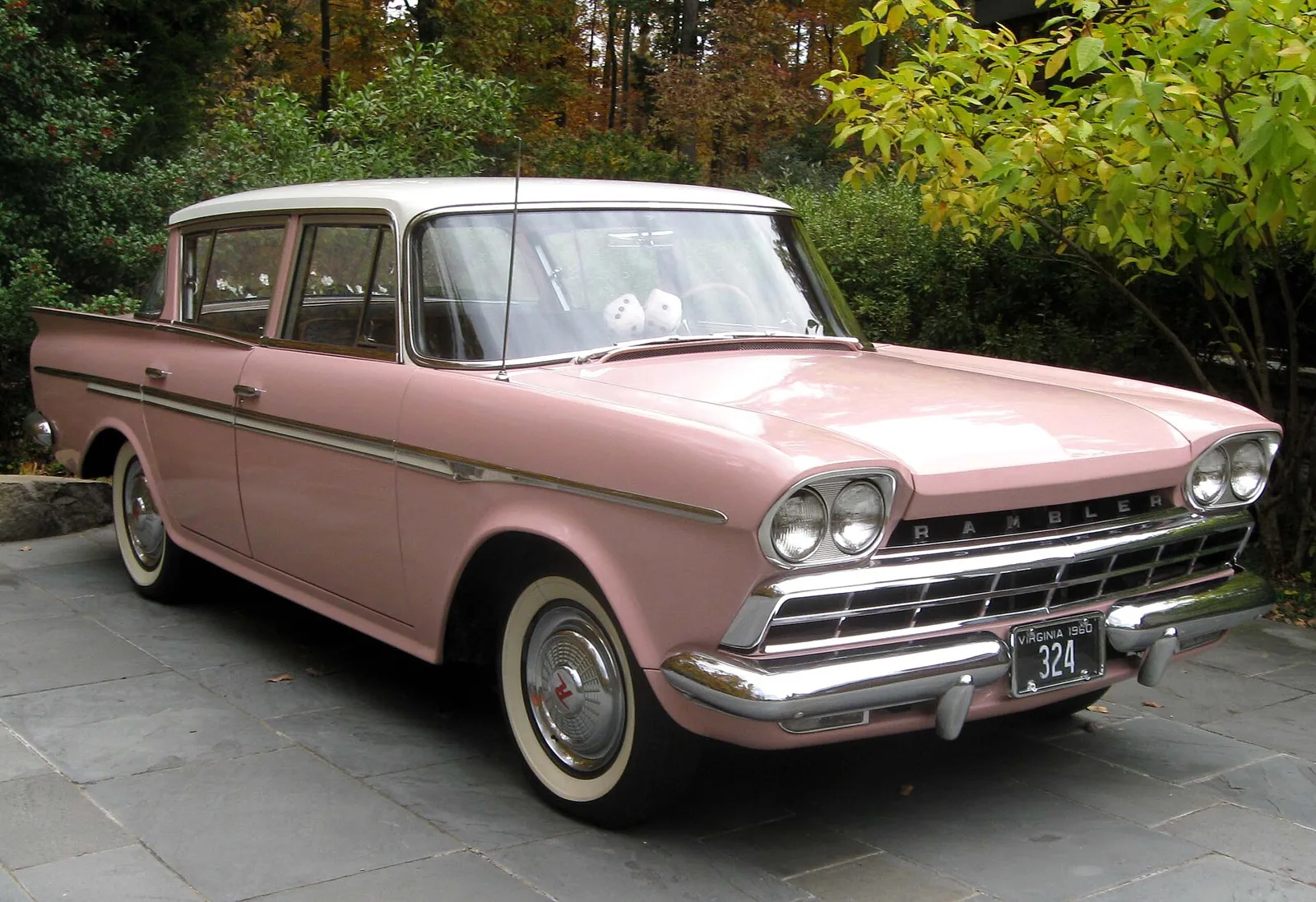
In practical terms, the engine was a range of displacements, from 199 cu in to 4.0 litres, that shared one basic layout and was fitted to Rambler, Ambassador and Jeep vehicles. and some were also made by the Mexican subsidiary Vehiculos Automotores Mexicanos, known as VAM. The family ran through a number of design changes but kept the basic straight-six layout.
The engine is still remembered as one of the most durable American sixes. Its later form, the 4.0 litre, was regarded as one of the best 4x4 engines of its day, and it remained in production for almost two decades under Chrysler ownership.
A short-stroke six from 1964 that became the 4.0 Jeep engine, and was still being built when the family's story ended in 2006.
Where did the AMC straight-six come from?
The lineage goes back to Nash Motors, which introduced an economy six in the 1941 Nash Ambassador 600. Its first displacement was 172.6 cu in (2.8 L), which grew to 184 cu in (3.0 L) and then to 195.6 cu in (3.2 L) in 1952. Nash merged with Hudson in 1954 to form American Motors, and the engine continued to develop under the new company.
For the 1956 model year the engine changed from a flathead side-valve layout to an overhead valve design. The flathead returned in 1958 as the base economy engine for the new Rambler American, and the two designs ran side by side until 1965. In 1961 AMC also offered a die-cast aluminium block version of the overhead valve 195.6, which weighed 380 lb (170 kg) against 460 lb (210 kg) for the cast iron engine. The aluminium version was built until 1964.
What did AMC's 1964 engine bring?
In 1964 American Motors introduced a new inline six with a short stroke and a robust seven-main-bearing crankshaft, designed to give good low-speed torque. It was first marketed as the Torque Command engine, and the launch engine displaced 232 cu in (3.8 L). It became AMC's first genuinely modern six-cylinder engine, and it lasted under AMC and VAM and then Chrysler until 2006.
To mark the launch, AMC built 2,520 Typhoon editions of the Rambler Classic two-door hardtop. These cars carried the 145 hp (108 kW; 147 PS) engine with 8.5:1 compression, and they wore Solar Yellow paint with a Classic Black roof and a Typhoon badge. Consumer Reports praised the engine for its smooth and quiet running.
How did the 199 and the 232 differ?
The 199 and 232 shared the same 3.75 in (95.3 mm) bore. The 199 used a 76.2 mm (3 in) stroke, against 88.9 mm (3.5 in) on the 232. The 199 arrived in 1966, replacing the older overhead valve and L-head 195.6 engines across the passenger car range. It was produced from 1965 to 1970 and was rated at 128 hp (95 kW; 130 PS) at 4400 rpm, while torque peaked at 182 lb-ft (247 N-m) at 1600 rpm.
A special short water pump let the 232 fit the smaller 1965 Rambler American. Air conditioning could only be fitted to the older 196 in the American models, because the longer 232 left too little space for the compressor. The 199 was discontinued in 1970, while the 232 continued alongside the larger 258.
Why did Barney Navarro put a 199 engine in an Indy car?
Barney Navarro chose the 199 for an Indianapolis 500 project because of its strong bottom end and thick cylinder walls. He had previously applied turbocharging to several engines, and the 199 was an unusual choice for a racing engine since it had never been used in an IndyCar. His first attempt used a fuel-injection system, a special head and a single turbocharger to reach 550 hp (410 kW; 558 PS) at 6000 rpm.
Later versions added double turbochargers and produced 640 to 700 hp (477 to 522 kW; 649 to 710 PS). The car, number 50, never qualified for the race because of problems with the drivers and the suspension. It was later entered at the 1971 Rafaela 300 season opener in Argentina, where it started 19th and Dave Strickland drove it for 45 laps. An auction in 2005 cleared the Navarro workshop, and a private buyer paid $15,000 for a complete 700 hp engine.
How did the 232 develop through the 1970s?
The 232 was the base six on many models through 1979, and it was considered reasonably modern in design even towards the end of its life. In 1971 AMC raised the deck height, so the 232 adopted the longer connecting rods of the 199 and shared the deck height of the new 258. The bore and stroke stayed the same. In 1972 the bellhousing pattern changed to match the larger V8 engines.
The 1976 model year brought fuel economy improvements, which reshaped the carburettor air passages and cut warm-up time. A 232-equipped Gremlin reached 30 mpg-US (7.8 L/100 km; 36 mpg-imp) in EPA testing, against 24 mpg-US (9.8 L/100 km; 29 mpg-imp) for 1975. Power fell steadily as emissions rules and extra weight took their toll, and the 232 was discontinued in 1979.
What were the VAM 252 and 282?
AMC's Mexican subsidiary VAM built the 252 cu in (4.1 L) from 1969, and it was dropped after 1972 when the 258 arrived. It had a 3.91 in (99.3 mm) bore and the same 3.5 in stroke as the 232. The 1972 Rambler American Rally version produced 170 hp (127 kW; 172 PS) at 4600 rpm, with 240 lb-ft (325 N-m) arriving at 2300 rpm, from a compression ratio of 9.5:1.
VAM also made the 282 cu in (4.6 L) from 1971 to 1986, with a bore of 3.917 in (99.5 mm). It was the ancestor of the later stroker engines, and a high-performance version was developed from the racing team engine. The modifications included headers, a 302 degree camshaft and a Holley 2300 350CFM carburettor, which lifted output from 132 hp to 172 hp (128 kW; 174 PS), and the torque figure reached 225 lb-ft (305 N-m).
Why was the 258 so long-lived?
The 258 cu in (4.2 L) was produced from 1971 to 1990, with an undersquare 3.75 in bore and a 3.895 in stroke. It was otherwise similar to the 199 and 232, and it became known for being reliable, inexpensive and torquey. It also found work outside cars, including the International Harvester 4000 swather.
Later 258s gained AMC's computerised engine control system, starting with California Concords and Spirits in 1980. For 1981 AMC cut the crankshaft from twelve counterweights to four as part of a weight reduction programme, which saved about 9.1 kg. The 258 had also been the base for stroker builds that used 258 crankshafts in other blocks.
How did the 4.0 engine come about?
Work on the 242 cu in (4.0 L) engine started in 1984, and the design was finished in just 26 months by borrowing many ready-made parts. Despite tougher components, it weighed 483 pounds (219 kg), a single pound more than the 258. Its cast aluminium valve cover used 15 bolts, more than was usual, to keep the seal tight.
The 4.0 was introduced in 1986 for the 1987 model year Jeep Cherokee XJ. It was a further evolution of the 258, and it used the 2.5 litre four's block, head and crank in places, combined with the 258's valvetrain. Its bore was 3.875 in (98.4 mm), its stroke 3.414 in (86.7 mm), and the total was 241.6 cu in (4.0 L). Chrysler kept the engine when it bought AMC in 1987, and it was one of four AMC engines to stay in production.
How did the 4.0 change over its life?
The first 4.0 engines in 1987 used a Renix engine management system with a knock sensor, which was advanced for its time but hard to diagnose with the scan tools of the day. The 1987 unit made 173 hp (129 kW; 175 PS), with 220 lb-ft (298 N-m) of torque. In 1988 higher-flowing injectors took the figures to 177 hp (132 kW; 179 PS), and torque rose to 224 lb-ft (304 N-m).
In 1991 Chrysler replaced the Renix system with multi-port fuel injection, which lifted the figures to 190 hp (142 kW; 193 PS), while torque stood at 225 lb-ft (305 N-m). From 2001 to 2006 the rating was 190 hp at 4600 rpm, while torque reached 235 lb-ft (319 N-m) at 3200 rpm. Early versions of the 2000 model year cylinder head, casting 0331, were prone to cracking, and a fixed casting carrying the word TUPY was introduced in late 2001.
Why is the 4.0 so respected?
The 4.0 earned a strong reputation for longevity, and it is commonly said to run for more than 300,000 miles without a rebuild. A Motor Trend long-term test of a 1997 Cherokee XJ praised it for getting people where they need to go, and Popular Mechanics ranked it first among the ten best car engines that had been stopped in the previous two decades. SlashGear also rated it among the most reliable inline sixes ever built.
Its harmonic balancer usually gives out only after around 300,000 miles, and the rubber insulation is often due replacement at that point. The 4.0 is widely regarded as one of the most dependable off-road engines, and many owners keep examples running for decades.
What ended the AMC straight-six?
The 4.0 was discontinued at the end of the 2006 model year. The 2007 redesign of the JK Jeep Wrangler brought in Chrysler's 3.8 litre overhead valve V6 instead, a unit first used in its minivans. The last of the AMC inline sixes was thus the 4.0, which had been part of the family since 1964 in one form or another.
Specifications at a glance
| Version | Years | Displacement | Output | Typical use |
|---|---|---|---|---|
| 232 | 1964 to 1979 | 232 cu in (3.8 L) | 145 hp (108 kW; 147 PS) in the Typhoon | Rambler and Ambassador |
| 199 | 1965 to 1970 | 199 cu in (3.3 L) | 128 hp (95 kW; 130 PS) at 4400 rpm | Rambler American |
| 252 | 1969 to 1972 | 252 cu in (4.1 L) | 170 hp (127 kW; 172 PS) at 4600 rpm | VAM-built Rambler American |
| 258 | 1971 to 1990 | 258 cu in (4.2 L) | Reliable, inexpensive, torquey | Jeep and AMC models |
| 282 | 1971 to 1986 | 282 cu in (4.6 L) | 200 hp (149 kW; 203 PS) at 4400 rpm, 1971 to 1973 | VAM-built models |
| 4.0 | 1986 to 2006 | 241.6 cu in (4.0 L) | 190 hp (142 kW; 193 PS) | Jeep Cherokee XJ and Wrangler |