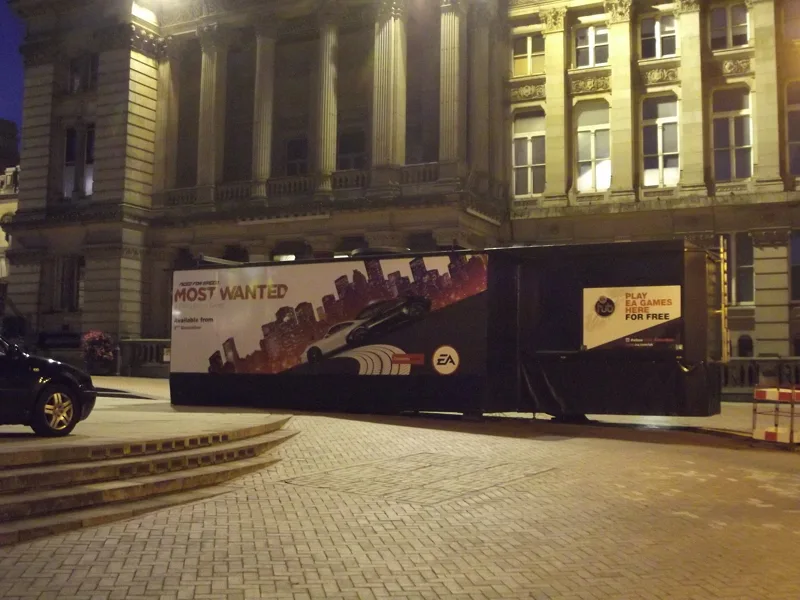
The 2004 sequel moved the import scene into an open city, added sponsors, outruns and a comic book story, and sold around 11 million copies.
Need for Speed: Underground 2 is the 2004 sequel that moved the import scene into the open city of Bayview. It added sponsorships, tournaments, outruns and a comic book story, and it sold around 11 million copies worldwide. Critics praised its length and customisation, and the game set sales records in the United Kingdom.
Need for Speed: Underground 2 is the 2004 eighth installment in the series and the direct sequel to Underground. EA Black Box developed it and Electronic Arts published it, and it appeared on Windows, GameCube, PlayStation 2 and Xbox, with separate Game Boy Advance and Nintendo DS versions.
The game picks up the Underground storyline and moves it to a new city called Bayview, where tuning cars for street races is still the core activity. It sold around 11 million copies worldwide and set sales records in the United Kingdom.
What is Need for Speed: Underground 2 about?
Underground 2 is a street racing game in which the player rebuilds a career in the open city of Bayview after an ambush in Olympic City. Sponsorships, tournaments and free roam driving move progress along, and the story is told in a comic book style. Rival Caleb Reece is the main antagonist.
The story begins in Olympic City, where the player celebrates a win at a party and is ambushed by a Hummer H2 while talking to Samantha on the phone. The Skyline is wrecked, and a stranger whose hand bears a scythe tattoo later calls to say the matter is handled.
Six months later the player flies into Bayview carrying a note of encouragement from Samantha, along with a car key tagged Rachel. Rachel Teller, Samantha's friend, has parked her Nissan 350Z at the airport lot. The player may skip her request and race a few events first, but once Rachel phones demanding the car, no new races appear.
A sequel that turned a city into an open playground, with sponsors, rivals and a comic book story to follow.
How does the story unfold in Bayview?
Rachel becomes the player's key contact. She explains the sponsorship system and the Underground Racing League, and she gives tips on driving, shops and hidden events. The player's wins attract sponsors and draw the attention of Caleb Reece, who leads a crew called The Wraiths.
Rachel then warns that Caleb is manipulating sponsorship deals to take control of the racing scene. Caleb tries to make the player lose a URL tournament by placing Nikki Morris, a Wraith, in the same field. The plan backfires: Caleb berates Nikki for losing, she quits the Wraiths and joins Rachel and the player. Nikki warns what Caleb would do if he took over the city's scene.
The player then learns that Caleb was the driver of the Hummer in Olympic City. Desperate to stop a racer who has gathered too much reputation and hype, Caleb sends all his remaining Wraiths into a URL tournament against the player, and that attempt fails. Having lost a second sponsor, Caleb calls the player out for a head-to-head showdown.
Caleb loses that showdown and his money with it, and the player then celebrates with Rachel and Nikki. That finish puts the player at the top of Bayview's street scene.
What is Bayview like?
Bayview is the fictional city where Underground 2 is set. It is the first open world in the series, and it draws on San Francisco and Los Angeles. Players drive freely, explore, and unlock areas by winning races, with cash and info icons scattered throughout.
Racing is no longer picked from a menu. Players drive to a location in the city to start a race. Most races appear on the in-game radar, while some stay hidden and have to be searched for. A cell phone and text message system delivers calls and messages, which can be reviewed later in a menu.
Cash and info icons hover across each stage, including the intro. Driving through them brings a cash reward and sometimes information about the city. The icons are one of several features that help the player find races without a list.
How do the race types differ?
Underground 2 keeps circuit and sprint races but drops the Knockout competition, leaving a Lap Knockout option in non-career circuit races. Its race types also include parkade and downhill drifts, drag races, Street X, Underground Racing League tournaments, special events and outruns.
Circuit races use up to four cars on a loop track, with a minimum of 2 laps and a maximum of 5. Sprints are point-to-point races with up to four vehicles.
Drifting is split between parkade tracks and downhill runs. Parkade tracks put up to 3 rivals on the road at once, and the player earns points for slides that finish cleanly. Downhill drifts take the player from top to bottom with no racers, but city traffic is present, and sliding past city cars adds points. Nitrous is not allowed in either form.
Time matters more here than in the first game. If the opponents cross the line well ahead, a 30-second timer starts, and the player must collect drift points until it runs out or they cross the line too.
Drag racing is a straight-line test that requires a manual transmission. Steering is simplified to lane changes, and the tachometer and engine temperature readouts are enlarged. A forfeit follows from a collision with traffic or barriers, or from an overheated engine after long redlining.
Four new variants join the mix. Street X uses closed, tight tracks for up to four racers and disables nitrous. Underground Racing League tournaments run on closed circuits or airport runways, with one to three races and up to six cars, and a points system decides the winner. Special events send the player to a photographer target within a time limit for a magazine cover.
Outruns happen in free roam. The player challenges a rival car with bright tail lights and tries to open a gap of 300 metres (1,000 feet) while leading. Each stage has a set number of outruns to win, and the intro stage allows 3. Winning them unlocks unique parts, and the mode resembles Tokyo Xtreme Racer and Wangan Midnight, which use health bars rather than distance.
How did the five stages and sponsors work?
The races are divided into 5 stages. When a stage is complete, its race locations are replaced by those of the next stage. The player chooses one sponsor per stage and can run only 3 of the 11 unique sponsor races, which leaves 8 sponsor races unfinished at the end of each stage.
A World Map lists races from earlier stages and marks which are complete and which remain. Stages 2 through 5 require a number of DVD events to be completed first, and the game rewards those with DVD covers.
Unfinished sponsor races can only be run from the World Map. A bug on the PC version means a non-completed race earns no cash or reputation unless the player restarts it at least once.
How did nitrous refills and style points work?
Nitrous can be used more than once in this game, a change from Underground, where it worked only once per race. The refill has to be earned through stunts such as drifts and near misses, which build style points that turn into nitrous. The more style points a player earns, the more nitrous builds up, until the meter fills up twice.
Which cars and SUVs were available?
Most of the vehicles are Japanese tuner models, such as the Nissan 240SX, Nissan Skyline GT-R and Mitsubishi Eclipse. Three SUVs appear for the first time in the series: the Hummer H2, the Cadillac Escalade and the Lincoln Navigator. The roster differs by version, with 29 of the 31 possible cars in each.
Ford Mustang and Pontiac GTO muscle models come back after their absence from Underground. The Hyundai Tiburon is the second Korean-made car in the series, after Underground, to be playable.
In America the roster includes the Acura RSX and Honda Civic Si; elsewhere the Peugeot 106 and Opel Corsa take their places, the Corsa being the Vauxhall Corsa in Britain. The remaining 27 cars are the same in every version.
SUVs can be upgraded and tuned like cars, and some career events are SUV-only. When the player drives an SUV offline or in career, rival cars become SUVs as well, and apart from SUV-only races, a car or an SUV can enter any event.
How did customisation and tuning work?
Customisation expanded sharply, with visual parts, car stereos, hydraulics and underglow neon, plus a performance system with a dyno. Most visual changes do not alter performance, but spoilers and hoods affect downforce. Visual ratings rise to 10.0, and unlocking all 10 DVD events needs at least one car rated 10.0.
Visual parts cover front and rear bumpers, side skirts, spoilers, hoods, exhaust tips, doors, roof scoops, wheels with spinners and the lights, plus paint and mirrors. Vinyl and decals also fit. The sound systems can be placed in the trunk, but they serve no purpose beyond looks.
Hydraulics combined with nitrous at the start of a race can lift a car into a wheelie and give some cars a better launch. Spoilers and hoods change how downforce is managed at the front and rear, so cosmetic choices can influence handling.
Performance can be raised through the engine, ECU, transmission, suspension, tyres, brakes, weight reduction, turbo and nitrous. Players can buy upgrade packages or individual parts. The dyno-tuning system lets them adjust the ECU, turbo, springs, shocks, gear ratios, aerodynamics and brake bias, then test the setup on a dyno run that graphs torque and power against rpm.
Was there online multiplayer?
Underground 2 offered online multiplayer on PlayStation 2, PC and Xbox, but EA Games shut the servers down on August 1, 2006. The PC version still has a LAN mode, and a virtual private network lets internet races run through that mode.
In September 2025, Insignia, which revives servers for the original Xbox, announced that Underground 2 would be the first EA game it supports. That announcement points toward online play returning after the shutdown.
How did critics respond?
Critics widely praised Underground 2 as one of the best games in the series, citing its gameplay, length, customisation, side missions and open-world free roam. They criticised the lack of fast travel to races and events, and the GameCube version drew complaints for an unstable frame rate.
Product placement drew notice from brands such as Burger King, Best Buy and the mobile company Cingular, whose logo appeared in the messaging system and on screen for much of play. The hip-hop slang, comic book cutscenes and the absence of police, who were last seen in Hot Pursuit 2, also drew criticism.
GameSpot scored the mobile version 9.2 out of 10, praising its length and replay value. IGN gave the same version eight out of ten. Detroit Free Press gave the Rivals version four stars for its fun racing and party play, while the Sydney Morning Herald gave it three-and-a-half stars and called it a quick, entertaining street racer.
The Academy of Interactive Arts and Sciences put the game forward in the soundtrack category at the 8th Annual Interactive Achievement Awards. The Times awarded four stars and praised the downtown locations.
Which platforms scored how?
Scores on the two review aggregators varied by platform, from 86% on mobile down to 65.44% on the Nintendo DS. The table lists each version with its GameRankings and Metacritic figures.
| Version | GameRankings and Metacritic score |
|---|---|
| Mobile | 86% |
| PC | 83.50% and 82 out of 100 |
| Xbox | 82.61% and 83 out of 100 |
| PlayStation 2 | 80.77% and 82 out of 100 |
| GameCube | 79.98% and 77 out of 100 |
| PSP | 76.44% and 74 out of 100 |
| Game Boy Advance | 69.45% and 72 out of 100 |
| Nintendo DS | 65.44% and 65 out of 100 |
The two lowest scores belong to the Game Boy Advance and Nintendo DS versions, while the mobile and PC releases led the table.
How well did it sell?
Electronic Arts' own figures put sales above 8.4 million units by the close of 2004. Its overall total reached roughly 11 million copies, and it set UK sales records. The PlayStation 2 version earned an ELSPA Double Platinum award, which points to at least 600,000 UK copies.
The game also appeared in the best-seller lines for each console: PlayStation 2 Greatest Hits, Xbox Platinum Hits and GameCube Player's Choice. Together they show the game was reissued on all three main consoles.