The 2007 eleventh entry traded illegal street racing for legal track events, a new physics engine and a sales total of 5.5 million copies.
ProStreet moved the Need for Speed series from illegal street racing to legal events on closed circuits. Its four race modes, Grip, Drag, Drift and Speed, sit alongside a new physics engine. The game sold 5.5 million copies worldwide by February 2008, and critics gave it mixed reviews.
Need for Speed: ProStreet is the 2007 eleventh entry in the series. Developed by EA Black Box, it swapped the illegal street scene of Carbon for legal circuit events on closed tracks. The game mixed sim and arcade driving, and it had sold 5.5 million copies worldwide by February 2008.
The first release date was November 14, 2007, in North America, and European launches followed on November 23. ProStreet was the first series title built primarily for high-definition consoles, although Windows, PlayStation 2 and Wii editions were also made.
What is ProStreet about?
ProStreet is a racing game in which Ryan Cooper, a former street racer, enters showdown events run by several racing organisations. Players tune and race cars on closed tracks and earn points and cash, aiming to beat a series of elite drivers called Kings. Beating every King crowns Cooper the Street King.
Each showdown is made of several races against computer opponents. Winning earns points and cash. Points open harder events and move the career forward, while cash pays for car upgrades and purchases.
The structure gives the career a clear chain of rivals, with each King standing between the player and the next step.
A racing game that traded the public street for the closed circuit, and asked players to earn every King.
How are the race modes built?
The modes on offer are Grip, Drag, Drift and Speed, four in total. Grip races run over several laps with multiple win conditions. Drag races are short and straight, with manual gear changes. Drift races reward points for slides around bends, and Speed races test top speed on point-to-point courses.
A Grip race can be won by finishing first, by beating a rival class defined by car performance, or by posting the quickest lap or the quickest sector times. Sectors are sections of the circuit, each timed on its own.
Drag races begin with a mini-game in which players warm up the tyres while braked to gain better grip at the start. Some drag races also demand long wheelies, which adds a technical step to a race that can last only seconds.
Speed races sit on a fairly straight point-to-point course and can be won by first place or by the highest speed at designated checkpoints. Drift races ask for a steady line through bends, where each slide adds to the score.
Real locations host the events, including Autopolis, Mondello Park, Portland International Raceway and Texas World Speedway.
How do cars and tuning work?
ProStreet offers a large roster, from tuner-friendly sedans to exotic cars, and every car can be customised for performance, handling and appearance. Parts are grouped into four performance tiers that unlock as the career advances, and each car can carry up to three blueprints.
A Grip event rewards quick pickup and strong drag force, while a Speed event rewards high top speeds and stability. Choosing the right car for each race type is therefore central to finishing the game.
Body parts such as spoilers and hoods affect aerodynamics, and they can be sculpted. A wind tunnel shows how the car's aerodynamics work, and the auto-sculpt system now changes performance as well as looks.
Damage matters. Cars can be wrecked or totalled, and repairs cost cash or require repair markers. Markers are handed out in events or can be bought.
How do events, leaderboards and sharing work?
Stand-alone events let players race any track without paying to repair their cars. They double as social areas for online and split-screen play. Each event has its own leaderboard, and players can build custom events, choosing location, race type, race count, opponent difficulty and repair markers.
Players can pass custom events and car blueprints to each other, but a blueprint that has been passed on is frozen, because its records are tracked on leaderboards. Each shared custom event gets its own private leaderboard.
Asynchronous play lets players compete without being online at the same moment, a feature that reviewers later praised. Players can also race their career cars in these events if they choose.
How was the game developed?
Development began in early 2006 and took almost two years. EA Black Box used the same team that had led Most Wanted. The team started with 20 people and grew to over 100 by June 2007, with the aim of making the game the ultimate proving ground.
The studio concluded that street racing was drifting away from public roads and becoming more organised, because penalties had grown too harsh. The game therefore put its weight on car performance and driving skill, and it left out traffic and police chases.
The game was built for high-definition consoles first, so the team had to strip graphics back for the PlayStation 2 and Wii. That reversed the usual method, which ported older games upward. A new physics engine was built with real data gathered at the Porsche test track in Leipzig, Germany.
Driving aids include anti-lock brakes, stability control and traction control, which players can switch on for accessibility. Licensed cars had to be signed off by their makers before damage and tuning could be shown in full.
What was the sound design like?
The audio team of 12 people spent months auditioning cars for their loud sounds. The sound team picked racing cars stripped of mufflers, among them the Chevrolet Corvette C6.R, Cadillac CTS-V and Dodge Viper. Engines, turbos and tyre skids came from real cars, but whooshes and crashes were synthetic.
Crashes were built from layers of crane drops and metal hits in the studio, then edited in post-production. The Nissan GT-R was not yet on the market, so its sounds came from other cars. A crash audio system was built for the real-time damage model, and seven surface types each produce a different collision sound.
Junkie XL wrote the score and worked with the developers to make it interactive, matching the style of the licensed songs. The licensed songs cover electronic rock, electroclash, punk and dance-punk styles.
Who appeared in the marketing?
Krystal Forscutt, an Australian model and former Big Brother contestant, and Japanese model Sayoko Ohashi were hired as flag girls. Forscutt's animations were captured over four days, with promotional shots taken in the same period.
The auto-sculpt system from Carbon was improved so it affects performance, and artificial intelligence was made more aggressive, allowing opponents to crash cars. Online features were expanded with asynchronous gameplay, which lets players race without being online at the same moment.
How was ProStreet released?
The title was leaked by the Russian distributor Soft Club in February 2007, and the game was officially announced on May 31. At E3 2007 the game was put forward in the Best Racing Game category by the Game Critics Awards.
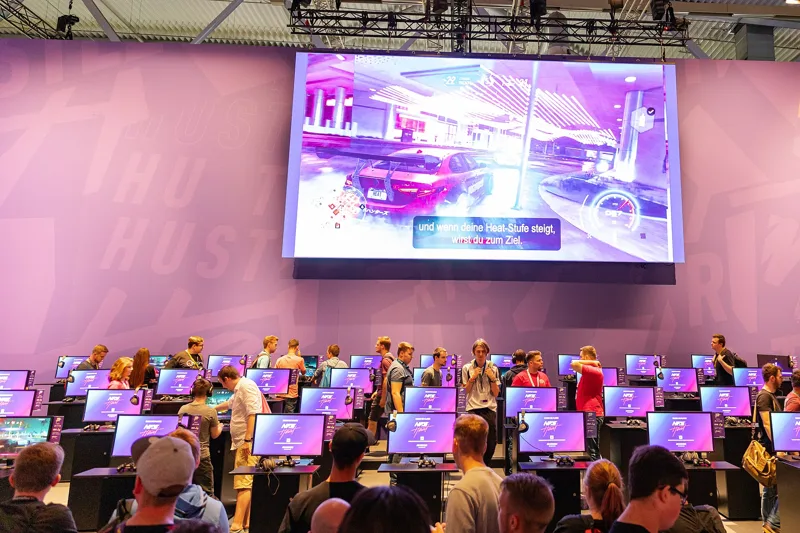
A single called More, which featured in the game, arrived digitally on September 25, ahead of Junkie XL's 2008 album Booming Back at You. A playable demo was shown at the Games Convention in August, and a demo was later made available for download on Xbox Live, PlayStation Network and for Windows users online.
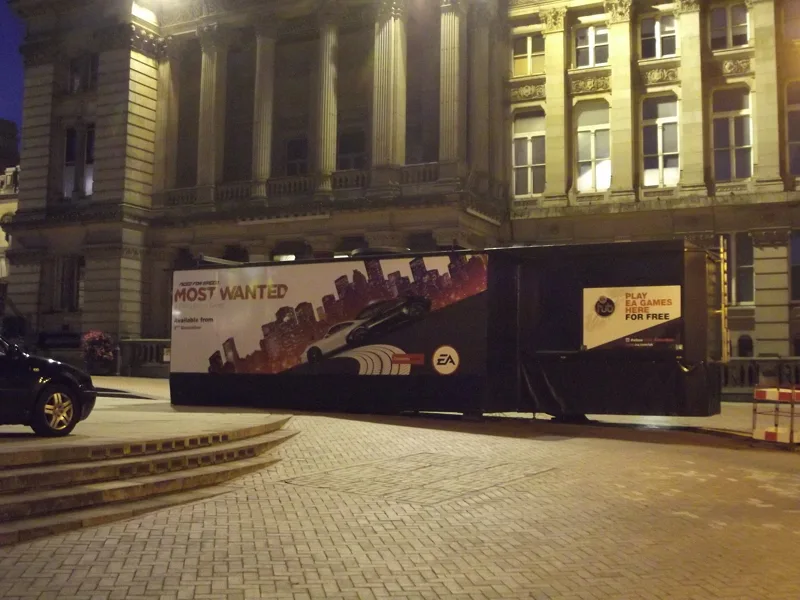
UK adverts on The Sun's Page 3 site showed topless models beside a Ferrari, and EA later removed the material, saying it had slipped through its approval process.
North American shops received the game on November 14, 2007, on PlayStation 3, Xbox 360, Windows, PlayStation 2 and Wii. The Xbox 360, PlayStation 3, Windows and PlayStation 2 versions followed in Europe on November 23, and the Wii version on November 30.
Downloadable content arrived between November 2007 and February 2008, adding cars, tracks and career races. Cars included the Porsche Cayman S, Shelby GT500, McLaren F1 and Bugatti Veyron 16.4, and the new tracks were Leipzig Test Track and Shuto Expressway. One update caused freezes and crashes on Windows and PlayStation 3. All of the online features were switched off in April 2012.
How did critics respond?
Critics gave ProStreet mixed reviews, according to Metacritic. GameSpot called it a solid racing game that missed features from earlier entries, while IGN noted a lack of extras beyond the races. Praise went to the online features, the career and the physics work.
IGN agreed that the game lacked features outside the races, especially compared to the open world and police chases of the earlier games. Other outlets were warmer. GamePro praised the high-definition graphics, online features and career, and 1Up.com highlighted the realism of the physics model.
The PlayStation 2 and Wii versions were seen as weaker than the PlayStation 3 and Xbox 360 editions because they lacked online features. The Windows version ran poorly on high graphics settings and had few online players.
Visuals drew generally good comments, though the PlayStation 2 and Wii versions suffered from heavy aliasing. 1Up.com praised the gritty, realistic look of the Nevada desert courses, and GameRevolution liked the smooth graphics but felt the track surroundings lacked cityscapes.
GameSpot praised the detailed car models, particularly when they were damaged, and Edge liked the event meetings between races. The announcers drew criticism. GameSpot said they were poorly voiced, had a weak script and repeatedly used players' names, which grew annoying over the course of the game.
Critics were split on the mix of sim and arcade elements. GameRevolution found the navigation aids distracting and unintuitive, while IGN said the driving physics were not realistic enough. 1Up.com praised the new physics engine for adding depth, and Nintendo Life found the Wii motion controls less responsive than those in Excite Truck.
Some critics found the gameplay repetitive, especially in Drag races. Eurogamer said each drag meant several rounds of tyre heating before a race that lasted only seconds, which made players lose interest quickly.
The Xbox 360 version drew fire for its monetisation. Players could buy cars with Microsoft Points as an alternative to in-game cash. Those points also let them buy any car at any stage of career mode, which critics said unbalanced the game by letting players tackle early courses with stronger cars.
Online features were a highlight for many. Critics liked the flexible options, the leaderboards and the ability to build events and share blueprints, which made the game feel very social. Asynchronous events were praised because players did not need to match time zones.
At the 11th Annual Interactive Achievement Awards the game was shortlisted for Racing Game of the Year and for sound design, both picked by the Academy of Interactive Arts and Sciences.
How well did ProStreet sell?
By February 2008 the publisher counted 5.5 million copies sold worldwide, and 65% of those were outside North America. It debuted at number two in the UK all formats chart, behind Assassin's Creed.
A Platinum award went to the PlayStation 2 version, which indicates at least 300,000 copies sold in the UK. By October 2009 the NPD Group counted 2.4 million copies sold in the United States.
EA Games president Frank Gibeau said the game fell short of sales expectations, because it departed from tuner culture and police evasion, the elements buyers expected. He promised that future games would return to those roots.
What were the portable versions like?
Mobile, Nintendo DS and PlayStation Portable adaptations were released with varying success. They offered simpler mechanics and fewer features than the console and PC versions, and the PSP edition had six race modes, while the DS version had a rhythm mini-game and online play for up to four players.
The mobile edition was built by IronMonkey Studios and released by EA Mobile in October 2007. Players drift around corners while the car manages its speed, and successful drifts build nitrous that boosts the car on straights. Drifting also earns cash for upgrades.
Three events of three races each unlock a code for the console and PC editions.
The Nintendo DS version came from Exient Entertainment in 2007, with releases on November 14 in North America and November 23 in Europe. It has the four race modes and a rhythm mini-game in which players tap buttons to a song while showing off a car's hydraulics.
Up to eight players can race through Download Play or a multi-cartridge wireless LAN link. In Download Play every player must drive the host's car. Online play supports up to four players through the Nintendo Wi-Fi Connection service. IGN called the DS version a successful conversion.
North America and Europe received the PlayStation Portable edition in February 2008. It has no backstory and offers six race modes, including Circuit, Sprint, Lap KO, Gate KO, Time Attack and Speed Trap. An assist called Driver Intuition boosts acceleration and traction when the car stays on an ideal line, and an ad hoc multiplayer mode is included.
Reviewers were harsher on the PSP edition, criticising its weak controls and generic race modes.