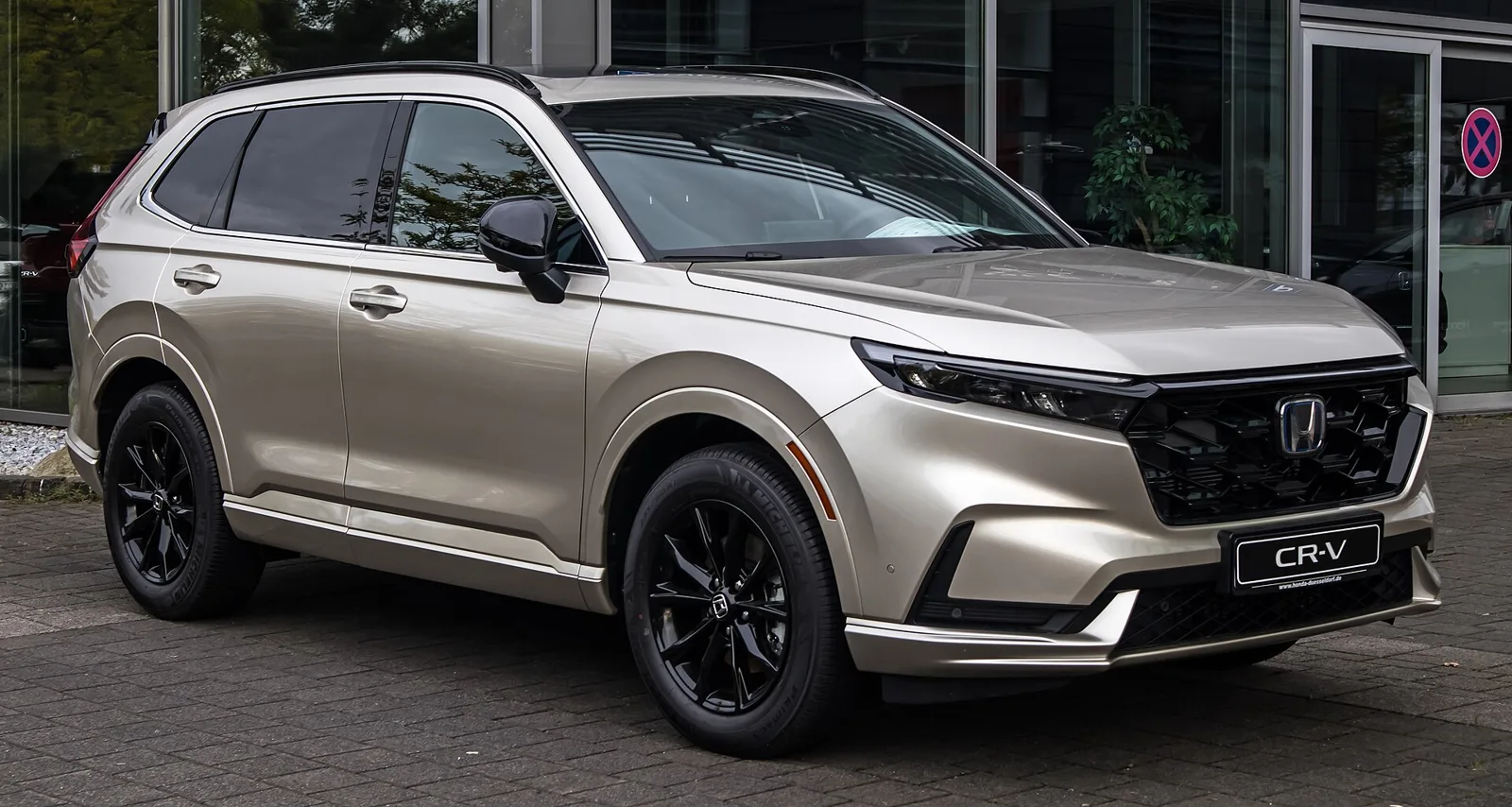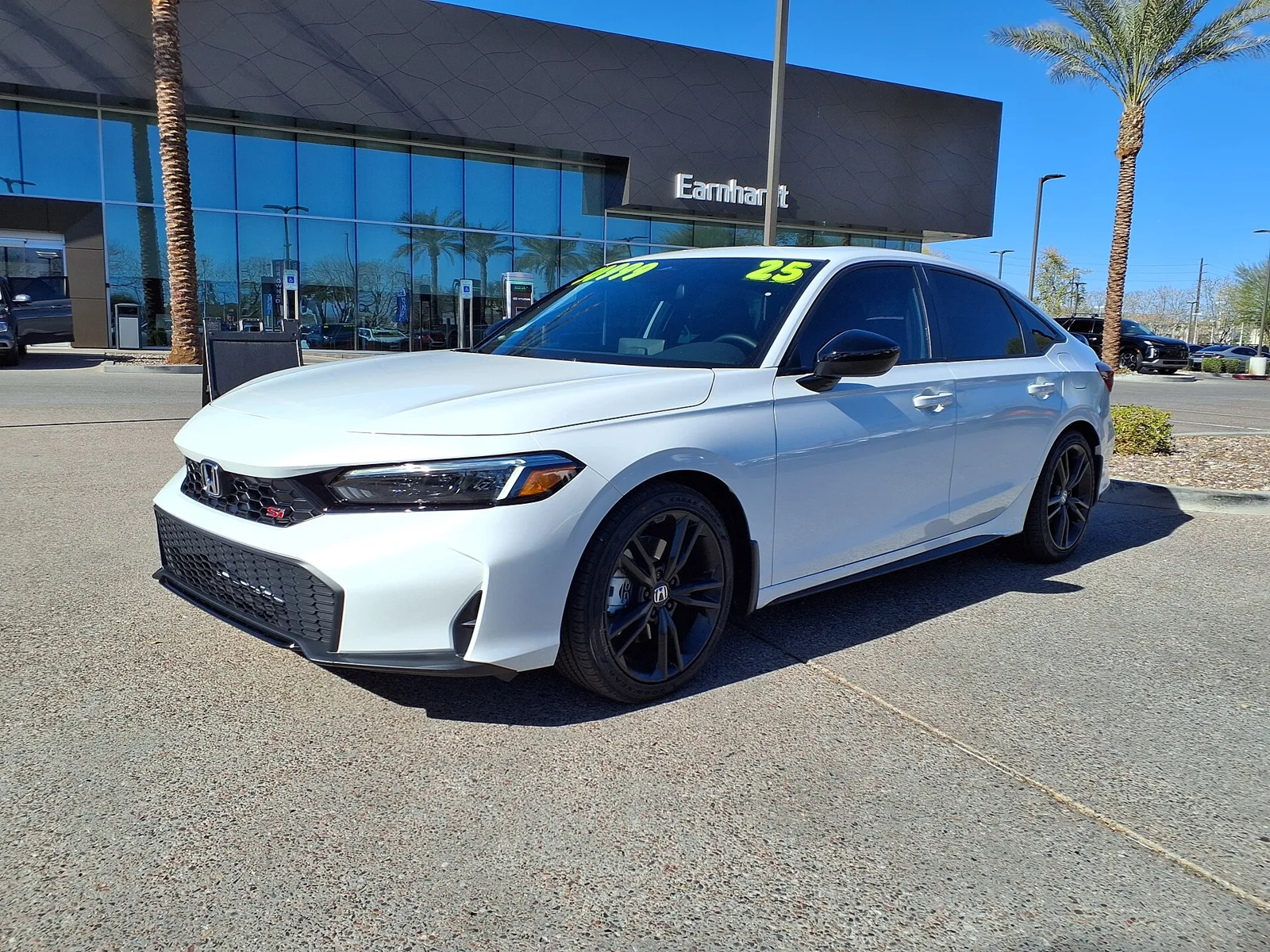
A sportier Civic trim from Japan's third generation to the 2015 model, with VTEC engines, a 197 hp K-series and a limited-run HFP kit.
The Honda Civic Si was the sporty trim of the Civic, first offered in Japan in 1984 on the third-generation hatchback. Later versions used VTEC engines and a 2.4 litre K-series, and the 2015 model was the last so far.
The Honda Civic Si was the sportier specification of the Civic, built on the Si trim first introduced with the third generation in Japan and North America. Its name stood for Sport Injected. Over the decades the Si stayed closer to a comfortable everyday car than the more spartan Type-R, and it used a range of engines from a 1.6 litre VTEC to a 2.4 litre K-series.
Honda first launched the Si in Japan in November 1984. The early car was a hatchback with improved suspension and a 16-valve engine, and a slight bulge on the bonnet, needed for the DOHC engine underneath, set it apart from the normal model.
How did the first Civic Si arrive in 1984?
The first Si was sold exclusively in Japan, with some imports to New Zealand and Australia in 1987. Japan also had a four-door saloon version, which is rare to find now. The ZC engine was a 1.6 litre 16-valve unit.
The US market Civic S used a lower-performance 1.5 L SOHC fuel-injected engine, the EW3, rated at 91 PS (67 kW; 90 hp). The European Civic GTi, a similar model, relied on a 12-valve 1.5i that reached the same 91 PS (67 kW; 90 hp) at 5,500 rpm.
The 1986 update brought a detachable glass sunroof, a five-speed manual, a sports steering wheel, a light panel in the rear roof area and a roof-mounted spoiler. The ZC1 engine, called D16A1 in Europe, produced 118 PS (87 kW; 116 hp) and could run from 0 to 100 km/h in 8.9 seconds on the way to a top speed of 196 km/h (122 mph).
A sporty Civic that stayed comfortable enough for daily use, from a 1984 hatchback to the 2015 model.
What made the SiR VTEC stand out?
The SiR VTEC was the top of the range on the fourth-generation Civic, and it used the B16A, the first Honda B series engine for the market. Its 1.6 L DOHC unit produced 158 PS (118 kW; 156 hp) at 7,600 rpm, thanks to the VTEC valve timing system.
VTEC used two camshaft profiles, one for fuel economy and one for performance. That gave the Civic a high-revving naturally aspirated engine that set a precedent for later performance variants.
The car was well received. Bild am Sonntag, a German paper, gave it the Golden Steering Wheel Award, and a 1989 poll run by the French title l'Automobile placed it first for quality and reliability among end-of-decade production cars. A five-speed manual was offered, and an automatic version offered slightly lower power from the same engine.
How did the 2006 Civic Si change?
The 2006 Si was a major step forward. It was the first Si to use the K series engines as standard. Its 2.0 litre K20Z3 with i-VTEC produced 197 hp (147 kW; 200 PS) and 139 lbf-ft (188 N-m) of torque, driven through a six-speed manual with a helical limited-slip differential.
The suspension was firmed up, with springs 40% stiffer than the dampers and stiffer anti-roll bars than on the standard car. The Si was also the quickest Civic Si yet, with a factory 0-100 km/h time of 6.7 seconds. Standard kit included a sunroof, a seven-speaker audio system of 350 watts and 17-inch alloy wheels.
How did the 1988 to 1991 Civic Si perform?
The 1988 Civic Si kept the D16A6 engine of the previous generation but gave the car a lighter, more agile character. It ran from 0 to 100 km/h in 8.1 seconds at a factory weight of 1,035 kg (2,282 lb), and covered the quarter mile in 16.2 seconds at 132 km/h (82 mph).
Compared with the earlier car, the Civic Si took corners more nimbly, thanks to double wishbone suspension on all four wheels. A lighter body also cut wind resistance.
A slight visual update came in 1990, in line with the rest of the range, with new bumpers and rear lights.
Civic Si engines across the generations
| Years | Model | Engine | Output |
|---|---|---|---|
| 1984 to 1987 | Third-generation Si | 1.6 L 16-valve ZC | 118 PS (87 kW; 116 hp) for the ZC1 from 1986 |
| Fourth generation | SiR VTEC | 1.6 L B16A, VTEC, DOHC | 158 PS (118 kW; 156 hp) at 7,600 rpm |
| 2006 to 2011 | Fourth-generation Si | 2.0 L K20Z3 i-VTEC | 197 hp (147 kW; 200 PS) |
| 2012 to 2015 | Ninth-generation Si | 2.4 L K24Z7 | 201 PS (148 kW; 198 hp) |
What changed on the 2007 and 2008 Civic Si?
The 2007 model year added Si badges and decals for the saloon, VSA stability control, dark silver alloy wheels and a rear spoiler. The Si coupe's launch price rose by US$800, leaving a recommended price of US$21,090.
The 2007 car also gained a grille painted in body colour, a red and black instrument cluster and embroidered Si emblems on the front headrests. VSA was not available on Canadian models, except in 2010 and 2011.
For 2008 the Civic received darker wheels, a new gear lever with red stitching and a tyre pressure monitoring system. A new rear upper arm reduced rear camber, and the coupe received shorter suspension springs. That year was also the first in which the Civic Si Sedan was sold in Canada.
What were the Mugen and Sedan editions?
In North America the Civic Si Sedan debuted in 2007 at the Chicago Auto Show, shown with 18-inch alloys and four-piston brakes. The production sedan dropped those extras, but it was mechanically almost identical to the coupe, with a weight rise of 27 kg balanced by a slightly better front weight distribution.
For 2008 Honda offered a Mugen Sedan Si, announced at the 2007 SEMA Show. It came only in Fiji Blue Pearl and had a high-flow exhaust, racing suspension set-up, Mugen forged wheels and a body kit. Production was limited to 1,000 units at US$29,500, and tests by Car and Driver found its acceleration roughly equal to the standard Si coupe.
Which colours could buyers pick for the Civic Si?
The Civic Si came in Fiji Blue Pearl, Habanero Red Pearl, Galaxy Grey Metallic, Nighthawk Black Pearl, Rallye Red, Taffeta White and Alabaster Silver Metallic. Fiji Blue and Habanero Red were exclusive to the Si, while the other shades also appeared on non-Si models.
In 2009 four of the colours were replaced: Dyno Blue Pearl, Redline Orange Pearl, Polished Metal Metallic and Crystal Black Pearl took their places.
What did the 2009 facelift change?
The 2009 facelift replaced the front bumper and grille, fitted 17-inch five-spoke wheels and added fog lamps. It also brought a USB port with MP3 playback for the stereo and a third red brake light on the rear spoiler. The 2010 Si changed little, apart from a black engine cover in place of a silver one.
Clear indicator lenses with orange bulbs front and rear, and a chrome trim on the boot lid of the saloon, completed the update.
What happened to the Civic Si after 2011?
The ninth-generation Si arrived as a coupe and a sedan. Its K24Z7 engine had a compression ratio of 11.0:1, higher than that of the Honda CR-V, and the redline came down to 7,000 rpm with fuel cut at 7,200 rpm. The gearbox was a six-speed manual, and it had a helical limited-slip differential.
At the 2011 SEMA Show Honda announced an HFP (Honda Factory Performance) version, sold through dealers as a limited parts package. It included lower suspension, 18-inch Diamond Cut wheels, a full body kit, HFP badges and floor mats. Canada was limited to 400 cars, 200 black and 200 white coupes, and the US to 500 units.
Production was stopped because of low sales, and the 2015 model was the last so far.
Which Civic Si models appeared in Canada's theft list?
A report by the Insurance Bureau of Canada on the ten most stolen vehicles in 2005 placed four Civic Si models in the list. The 2000 two-door Si took first place, the 1999 coupe second, the 1994 hatchback fifth and the 1995 hatchback eighth.
The report noted that the sixth and seventh generations were classed as SiR in Canada, and that the Canadian Si was equivalent to the US market EX. That context matters when comparing the Canadian and US lists.