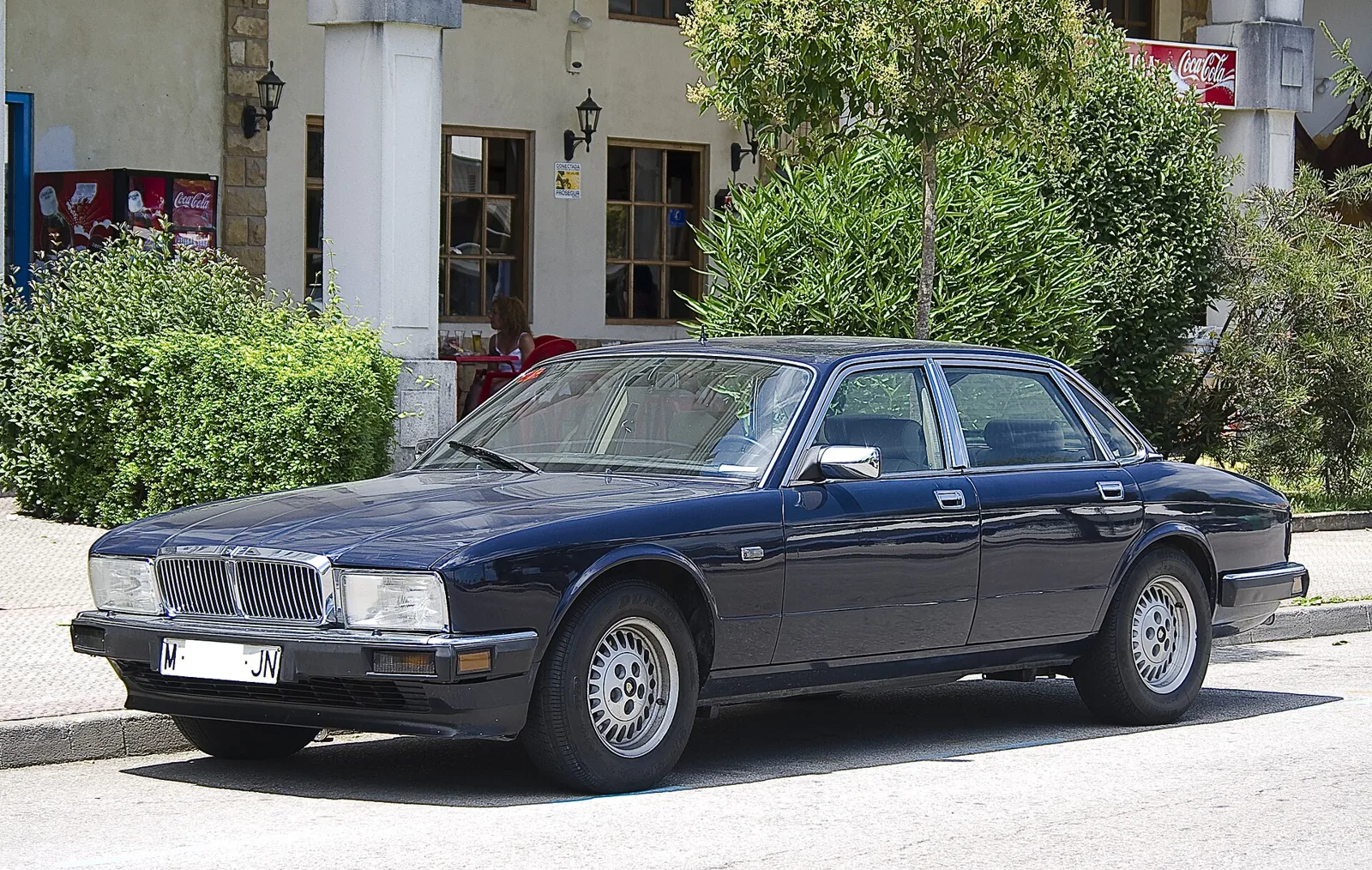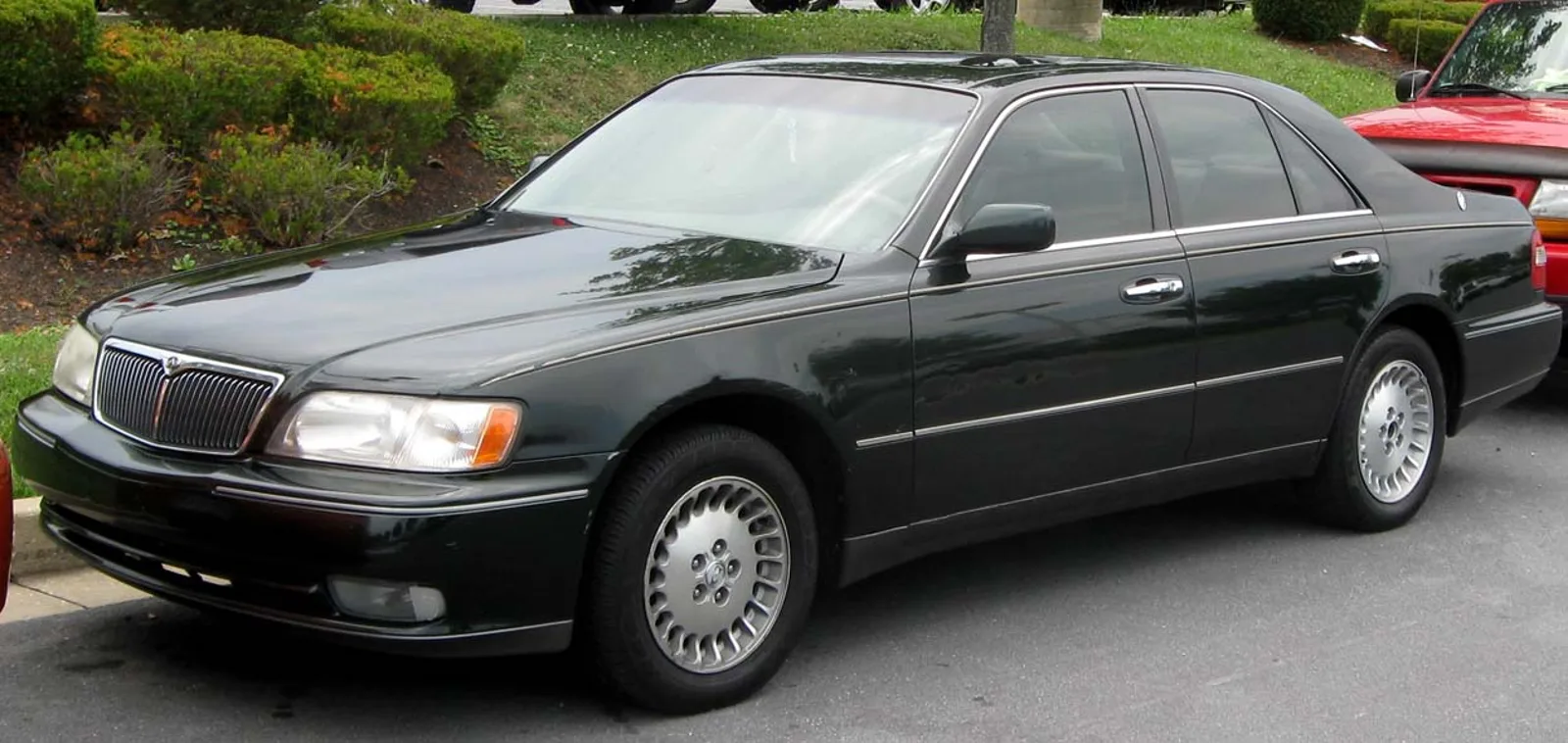
Lexus opened with a sales bang while Infiniti's flagship struggled for volume, even though the two cars were built for the same showrooms.
The Infiniti Q45 and Lexus LS were full-size luxury flagships from Nissan and Toyota's new brands. The LS 400 launched in January 1989 with a 4.0-litre V8 and a US$35,000 starting price, while the Q45 arrived as a 1990 model with a 4.5-litre V8 costing US$38,000.
Lexus and Infiniti both entered the North American market in the late 1980s with full-size sedans meant to challenge the established European flagships. The Lexus LS 400 and the Infiniti Q45 were the flagships of those new brands, and they competed for the same buyers in the same showrooms.
This comparison uses the first generations of both cars where the record allows, then follows each line forward. Where the record gives no figure, the text says so rather than filling the gap with an estimate.
The two cars shared a price band and a rival in the BMW 7-Series, yet they ended up on very different paths. One helped launch a marque, while the other struggled to match its volumes, a result the record puts partly down to styling.
Why were the Lexus LS and Infiniti Q45 direct rivals?
The LS 400 and the Q45 were built to match the same European and American flagships on specification and price. The Q45 was expected to match the LS 400 on both, with more emphasis on handling, and it also competed with the BMW 7-Series and the Mercedes-Benz S-Class on size.
The contemporary upstart Lexus had challenged the dominance of European full-size luxury cars with the LS 400, and that car was largely responsible for launching the Lexus marque. Its project began in August 1983 under the code name F1, as a secret flagship sedan.
Chief engineer Ichiro Suzuki sought an all-new design, and the development programme cost over US$1 billion. The Celsior, the Japanese domestic version, won Car of the Year Japan at its 1989 introduction, which gave the car an early domestic reputation.
Infiniti's Q45 launched in August 1989 as a 1990 model and became the brand's first product line and flagship. Both cars were therefore arriving in the same market at the same moment, each backed by a new luxury brand that needed a flagship to prove itself.
Two V8 flagships, one that helped launch a luxury marque and one that had to fight for every sale in the same showrooms.
How did the LS and Q45 differ in design?
The LS 400 was a high-specification flagship with California walnut trim, some 300 technological innovations and a design drag coefficient of Cd 0.29. The Q45 was meant to express the Japanese concept of luxury, and its first version had no front grille and no wood on the dashboard.
The LS 400's cabin offered an automatic tilt-and-telescoping steering wheel, a memory system for seat, mirror, steering wheel and belt positions, and an optional Nakamichi sound system. Lexus also measured a quiet cabin, recording 58 dB at 100 km/h (62 mph).
The LS 400 also avoided the U.S. Gas Guzzler Tax, a practical advantage for American buyers. Its second generation added Skyhook adaptive air suspension, the first such system on an LS.
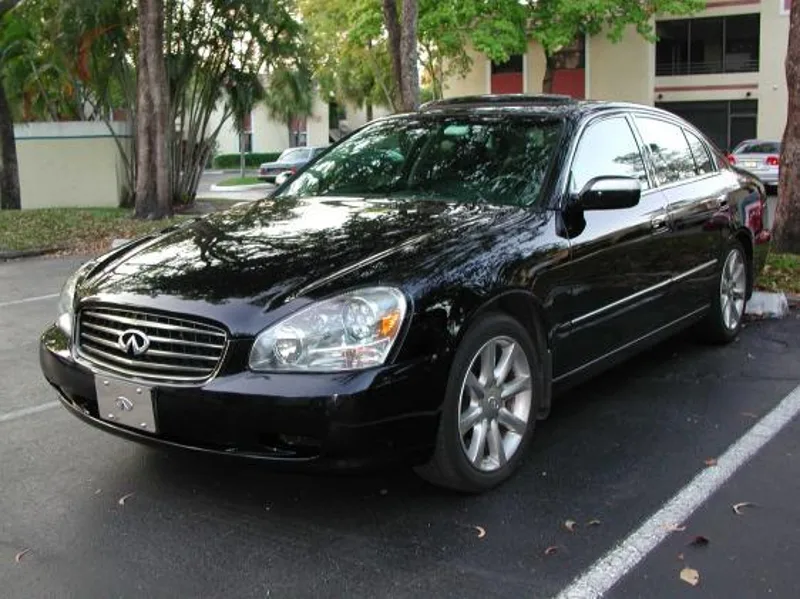
The Q45 followed a more minimalist route. Poltrona Frau helped with its interior, and a grille was added only in 1993, with interior wood appearing by 1995. Its multi-link suspension was derived from the Z32 300ZX, which gave the car a sporting chassis beneath its restrained look.
Each generation of the LS was built in Tahara, Aichi, Japan. The Q45 was built at Nissan's Kaminokawa, Tochigi plant from 1989 to 2006.
How did the engines and performance compare?
The Q45 had the larger V8 in its first generation, with 278 hp (207 kW) and 292 lb-ft (396 N-m) in North American trim. The LS 400's 4.0-litre V8 produced 245 PS (180 kW; 242 hp) and 350 N-m (258 lb-ft), and it reached 0-100 km/h (62 mph) in 8.5 seconds.
Torque tells a different story from peak power. The G50 reached 396 N-m of torque, which is more than the LS 400 produced, although the LS engine was the smaller of the two.
The LS 400 used a four-speed automatic with ECT-i electronically controlled shifts, and its top speed was 250 km/h (155 mph).
Infiniti's second generation Y33 moved to a 4.1-litre VH41DE V8 rated at 267 hp (199 kW) and 278 lb-ft (377 N-m), and it reached 0-60 mph in about 7.5 seconds. The F50 returned to 4.5 litres with the VK45DE twin-cam V8 and a five-speed automatic.
Lexus kept refining the LS. The second-generation LS 1994 model produced 194 kW (260 hp) and 366 N-m (270 lb-ft), while weighing 95 kg (209 lb) less than the original. Its 0-100 km/h (62 mph) time fell to 7.5 seconds, and the LS 460 later introduced the first production eight-speed automatic.
Which car was more practical for passengers?
The Q45 came with a Bose sound system, leather interior and keyless entry as standard. The Y33 added 3.9 in (99 mm) of rear legroom despite a shorter wheelbase, but its trunk held only 12.6 ft3 (360 L), a figure owners faulted as small.
The LS 400 focused on comfort features, including power-adjustable seats and soft-touch controls. Lexus added a passenger front airbag to the refreshed 1992 model, the first such fitment on a Toyota-built series production car, and the Celsior introduced GPS navigation with voice guidance that year.
The F50 Q45 widened the car and gave it 5 ft3 (0.14 m3) more interior volume than the Y33.
Which car sold better, and how were they received?
The LS sold far better in its early years. Its US sales passed those of the Mercedes-Benz, BMW and Jaguar models by 1990, and the first generation totalled over 165,000 units. The Q45 did not match those volumes, and its unconventional styling and an advertising campaign without photos of the car were blamed.
Lexus planned for about 50,000 cars a year to hold its quality standards, with 40,000 earmarked for the United States, 8,000 for Japan and about 2,000 for the rest of the world.
Reviews in Germany were less generous at first. Auto Motor und Sport ranked the LS 400 last in a comparison with the BMW 735i and the Mercedes-Benz 420 SEL, even though the Lexus earned the highest marks for its power train in that test.
Lexus recalled 8,000 vehicles in December 1989, and that work helped establish its customer service reputation. Consumer Reports later included the LS 400 on its 2007 list of long-lasting vehicles.
The Q45's price followed a steady upward path. It launched at US$38,000 (equivalent to $99,000 in 2025) and reached US$54,000 (equivalent to $114,000 in 2025) by 1995. The LS 400 also rose, from US$35,000 at launch to more than US$50,000 by 1994.
How do the specifications compare?
| Specification | Lexus LS 400 | Infiniti Q45 (G50) |
|---|---|---|
| Launch | January 1989 debut, 1990 model | August 1989, 1990 model |
| Engine | 4.0-litre 1UZ-FE V8 | 4.5-litre VH45DE V8 |
| Power | 245 PS (180 kW; 242 hp) | 278 hp (207 kW), North American trim |
| Torque | 350 N-m (258 lb-ft) | 292 lb-ft (396 N-m), North American trim |
| Transmission | four-speed automatic, ECT-i | no figure given |
| 0-100 km/h (62 mph) | 8.5 seconds | no figure given |
| Top speed | 250 km/h (155 mph) | no figure given |
| Design drag | Cd 0.29 | no figure given |
| Launch price | US$35,000 | US$38,000 |
| Sales | over 165,000 first-generation units | volumes below the LS |
| Recall | 8,000 vehicles, December 1989 | no figure given |
On the table alone, the Q45 is the more powerful V8 at launch, while the LS 400 had the lower launch price and the stronger sales record. The later generations change the picture, since the Y33 and LS 1994 models moved both cars on in different directions.
How did each car evolve over its generations?
Both cars changed generations quickly. The LS 400 debuted in January 1989 and was followed by a second generation in 1994, a LS 430 in January 2000 and an LS 460 in 2006. The Q45 ran from 1990 to 2006 over three generations, and it was replaced by the Infiniti M.
The Q45 went through three generations: G50, Y33 and F50. The Y33 was a Nissan Cima variant, while the F50 shared its platform with the President. Each generation carried its own engine, from a 4.5-litre V8 at first to a 4.1-litre V8 in the Y33.
Lexus used the 1994 car to refine the chassis, adding Skyhook suspension and a stronger engine output. The LS 460 later brought the eight-speed automatic, a step the Q45 did not take in the record.
The early LS figures are the clearest measure of the two marques' fortunes. The LS 400 was largely responsible for the successful launch of Lexus, and the model set the tone for the rest of the brand's range.
Which buyer suits each car?
The LS suits a buyer who values a proven sales record, a car that made the Consumer Reports list of long-lasting vehicles, and a high-specification cabin. The Q45 suits a buyer who wants a larger V8 with a distinctive look and a brief that put handling first, particularly in the first generation.
Buyers focused on long-term reputation can read the LS's record as the stronger case. Buyers who value an individual design, and who like the Japanese minimalism of the early Q45, will find more character in the Infiniti.
A like-for-like comparison of later prices is not possible from the record. The launch figures of US$35,000 for the LS 400 and US$38,000 for the Q45 are the only pricing points given for the two first generations side by side.
The two cars also tell different product stories. The LS line has a clear run of generations, with updates in 1994, 2000 and 2006. The Q45's generations were more tangled, since the Y33 and F50 were shared with Nissan's Cima and President models.