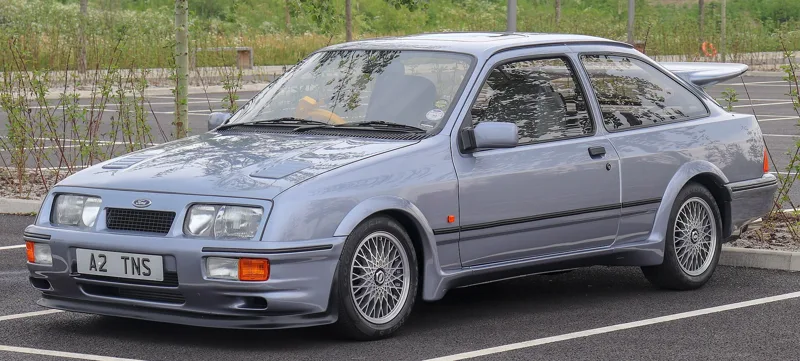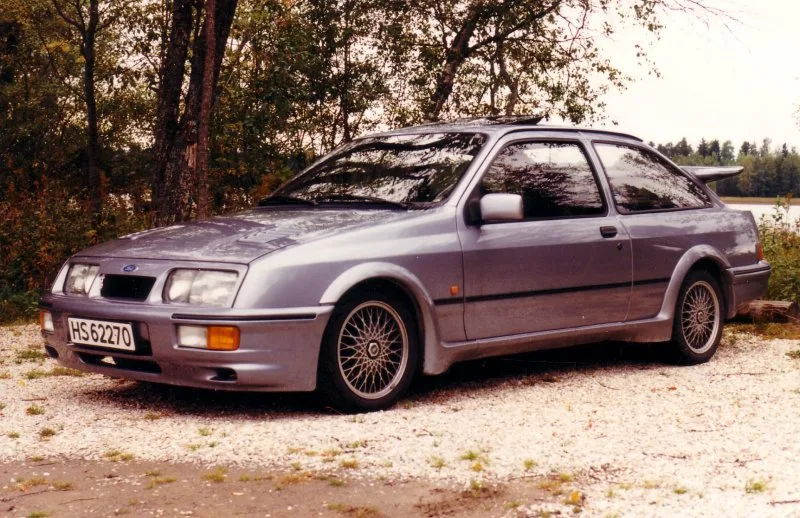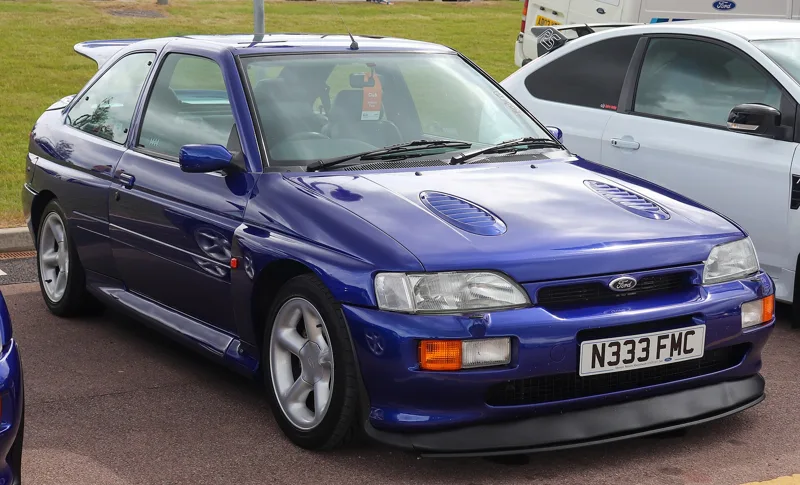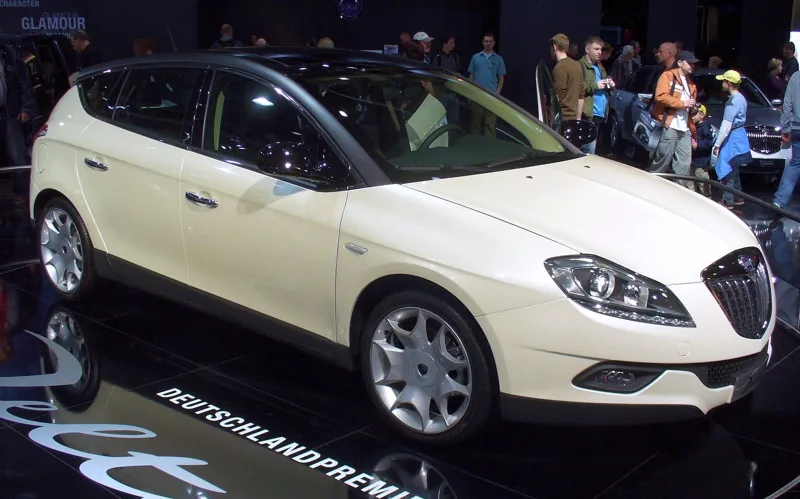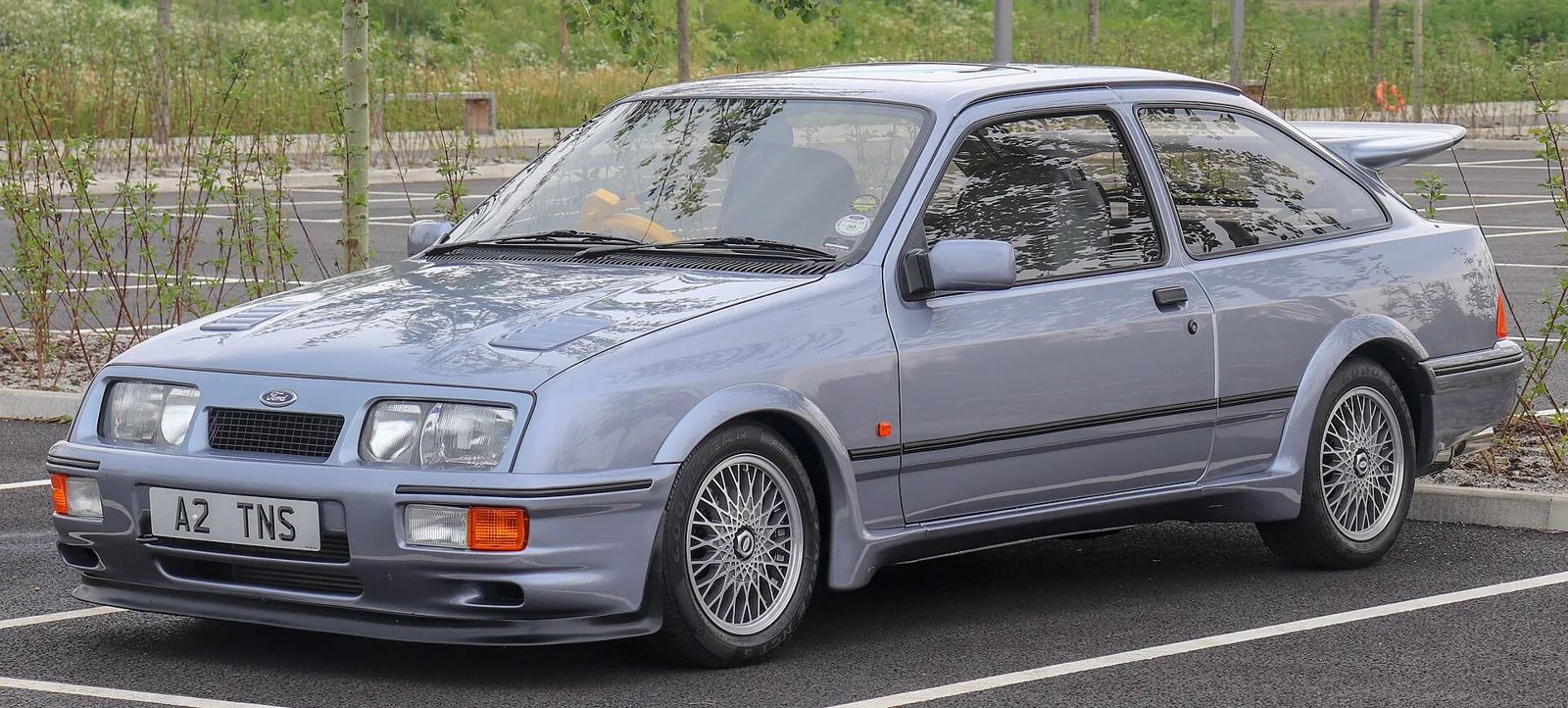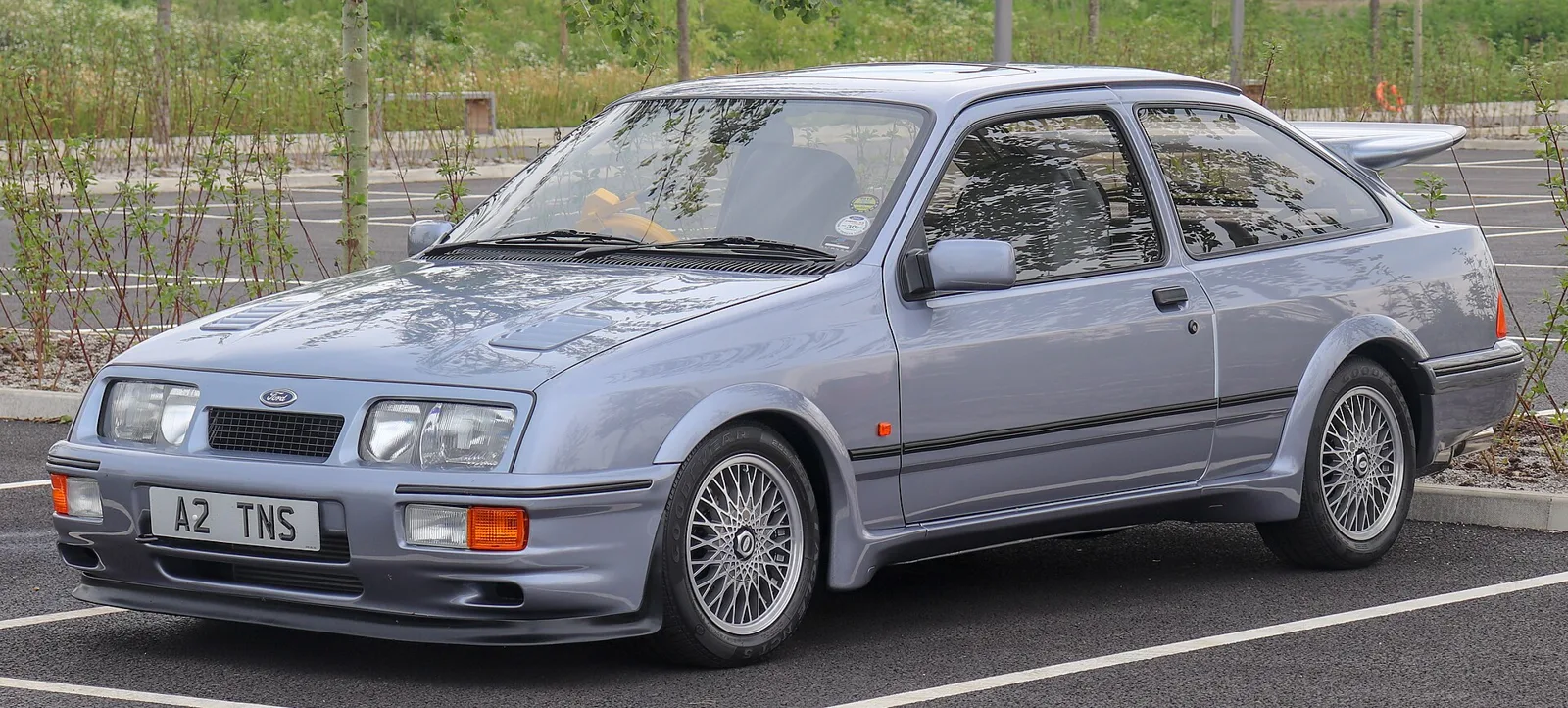
Ford's rear-drive Cosworth ruled touring car circuits, while Lancia's front-drive Delta won rally stages and the Constructors' title six years running.
The Ford Sierra RS Cosworth was built from 1986 to 1992 to win Group A racing. The Lancia Delta first generation was built from 1979 to 1994 and its HF variants dominated the World Rally Championship. Both were built to qualify racing cars for Group A.
The Ford Sierra RS Cosworth and the Lancia Delta were both built to win Group A racing, and both were road cars made in numbers large enough to qualify for the rules. The Sierra came from Ford's motorsport department and was a rear-drive hatchback with a Cosworth turbo engine. The Delta was a front-wheel-drive small car that became one of the most successful rally cars of its era.
Where did the Sierra and Delta come from?
The Sierra RS Cosworth was a Ford Motorsport project, built by Ford Europe from 1986 to 1992. Stuart Turner defined it in the spring of 1983, and Walter Hayes, Ford's vice-president of public relations, backed it with enthusiasm.
The Lancia Delta was a small family car made by Lancia in three generations, from 1979 to 1994, from 1993 to 1999 and from 2008 to 2014. The first generation was a five-door hatchback designed by Giorgetto Giugiaro's Italdesign, and it was launched at the Frankfurt Motor Show in September 1979.
The Delta's project codename was Y 5. It sat below the larger Beta, and its platform was derived from the Fiat Ritmo but with different suspension and more welds for a stiffer chassis. Lancia had no car of around four metres in length since the Fulvia Berlina ended in 1973.
The Delta offered features unusual in its class, including fully independent suspension, rack and pinion steering, optional air conditioning and a height-adjustable steering wheel. Its bumpers were built in three pieces of sheet moulding compound, which Lancia claimed was a first for the industry.
Saab helped with the heating and ventilation, and it also claimed a hand in the car's rust proofing. Between 1980 and 1982 Saab sold the Delta in Sweden, Denmark and Norway as the Saab-Lancia 600, replacing its own 96 model.
Ford's rear-drive Cosworth dominated touring car circuits, while Lancia's front-drive Delta won rally stages and the Constructors' title six years running.
Why did Ford build the Sierra into a homologation special?
Turner's team chose the Sierra in April 1983 because it offered rear-wheel drive and reasonable aerodynamic drag. A racing version could also help a car that had struggled with its reputation since its introduction in 1982.
The engine came through Cosworth, which had already produced a twin-cam, 16-valve prototype on Ford's T88 block, better known as the Pinto. The turbocharged version, designated YBB, was asked to deliver 180 HP on the street and 300 HP in race trim.
Cosworth set two conditions: a street output of at least 150 kW (204 HP), and a commitment to no fewer than 15,000 engines. Ford needed only about 5,000 for the project, yet it accepted, and the surplus later helped justify a four-door second-generation RS Cosworth.
Ford's knowledge of touring car suspension came from outside. Jack Roush's turbocharged IMSA Merkur XR4Ti and Andy Rouse's 1985 British Saloon Car Championship campaign taught Ford much, and some XR4Ti parts, including a speedometer with an integral boost gauge, reached production.
How did the Delta and Sierra reach their final forms?
The Delta's first facelift came in November 1982, with one-piece thermoplastic bumpers, a more prominent lower spoiler and a weight saving of 40 kg across the range. The GT 1600 followed as the car's first sporting variant, with a 1,585 cc, 105 PS DOHC engine.
The GT 1600 was the first sporting Delta. It had a GT badge on the grille, matte black door handles and window trim, and disc brakes on all four wheels, with the richest standard equipment in the range.
The Sierra's shape was harder to settle. Lothar Pinske, responsible for the bodywork, demanded freedom over the car's appearance, because the hatchback body lifted significantly even at moderate speed. The prototype on an XR4i body raised little enthusiasm, particularly the large rear wing.
Pinske argued that each change was necessary. The wing kept the car on the ground at 300 km/h, the headlight opening fed the intercooler, and the wheel arch extensions housed 10-inch wheels. Ford's designers agreed to build a production version from the prototype.
The Delta HF arrived in July 1983 and went on sale in September, bringing a turbocharged version of the 1.6-litre engine. It used a Garrett TBO-225 turbocharger, an air-to-air heat exchanger and a ZF five-speed gearbox, with 175/65 Michelin TRX tyres on R 340 alloys.
Could either car sell in the numbers the rules required?
Ford had a sales question to answer first. In 1984 Walter Hayes visited European Ford dealers to gauge demand for the Sierra RS Cosworth. The dealers estimated they could sell about 1,500 cars, while Group A required 5,000 to be built and sold.
Hayes kept lobbying internally, and dealer test drives on prototypes lifted enthusiasm. Ford also cut the price by limiting the car to three exterior colours and one grey interior, with just two equipment options.
Lancia faced a different question. The Delta HF Integrale was the rally answer, and the road cars existed to satisfy Group A. About ten thousand Delta HFs were made over a two-year production period, and the Integrale family that followed sold far more.
The HF Martini was a limited edition launched at the March 1984 Geneva Motor Show. It was painted white with a Martini stripe, carried Martini badging and had Recaro seats as standard. Only 150 were produced between 1984 and 1985.
How many of each car were built?
Ford's Sierra RS Cosworth was launched in July 1986, and 5,545 cars were built in total. The vehicles were made at Ford's Genk factory in Belgium, in both left and right-hand drive, with production running from summer 1986 to December 1986.
Production was split by colour. White and moonstone blue each accounted for about two-fifths of the right-hand drive cars, and black for about one-fifth. Of the 5,545, 500 went to Tickford for conversion into the RS500.
The Delta's numbers were larger. The first generation totalled 478,645 cars, and 44,296 of them were Integrales. Lancia passed 200,000 Deltas at the Chivasso factory on 9 March 1984, and sales reached 43,000 in 1980 alone.
How did the RS500 compare with the Integrale?
The RS500 was an evolution model. Aston Martin Tickford was signed in March 1987 to convert 500 cars, and the RS500 was announced in July 1987 and homologated that August. Its engine produced 227 PS (224 hp; 167 kW) at 6000 rpm, with 277 N-m (204 lb-ft) of torque at 4500 rpm.
Some RS500 hardware was only for show or for racing. A second set of injectors and a second fuel rail were fitted but did not work in the road cars, and the rear semi-trailing arm beam had mounting points that were extended but never used.
Exactly 500 were built, all right-hand drive for the UK, with 56 white and 52 moonstone blue cars among them. Lancia's Integrale was not a single special but a family of cars that grew up through 1987 and 1989.
Lancia's HF 4WD was unveiled at the April 1986 Turin Motor Show, and in September 1987 it was replaced by the more capable Delta HF Integrale. The 16-valve Integrale arrived in March 1989.
The 1986 range was refreshed with new enveloping bumpers, a new grille and slanted headlight covers. Seven models made up the range, and the diesel Turbo ds arrived as the first Delta with a diesel engine, a 1,929 cc unit producing 80 PS.
What did each car win in motorsport?
Eggenberger Motorsport, running the RS500, won the 1987 World Touring Car entrants' title, despite its cars being disqualified from the 1987 Bathurst 1000. Klaus Ludwig took the 1988 DTM drivers' title for Ford Team Grab, but Ford left the DTM after 1989.
In Australia Dick Johnson Racing dominated the 1988 and 1989 Australian Touring Car Championships, and the RS500 won the Bathurst 1000 in both years. The RS500 also took the Japanese Touring Car Championship from 1987 to 1989.
The Delta's record came in rallying. Modified HF versions scored 46 victories and won the Constructors' Championship a record six times in a row, from 1987 to 1992. Juha Kankkunen took the drivers' title in 1987 and 1991, and Miki Biasion in 1988 and 1989.
The Delta S4 was a different beast. It was a purpose-built Group B racer, and the works team ran it from the 1985 RAC Rally to the end of 1986, just before the HF 4WD and Integrale began their world championship careers.
Ford Sierra RS Cosworth and Lancia Delta side by side
| Feature | Ford Sierra RS Cosworth | Lancia Delta |
|---|---|---|
| Production span | 1986 to 1992 | First generation 1979 to 1994; Integrale 1987 onwards |
| Total built | 5,545 cars | First generation 478,645; Integrale 44,296 |
| Layout | Rear-wheel drive | Front-wheel drive; HF 4WD and Integrale four-wheel drive |
| Turbo engine | Cosworth turbo, 150 kW (204 HP) minimum on the street | 1.6 litre turbo on the HF; turbocharged 2.0 litre on the HF 4WD |
| Top performance | 149 mph and 0-60 mph in 6.5 seconds | None given |
| Special version | RS500, 500 built with 227 PS (224 hp; 167 kW) | HF Martini, 150 built 1984 to 1985 |
| Build site | Ford's Genk factory, Belgium | Chivasso factory |
| Motorsport peak | 1987 World Touring Car entrants' title; Bathurst 1000 wins in 1988 and 1989 | 46 WRC victories; six Constructors' titles in a row, 1987 to 1992 |
| Drivers' titles | Klaus Ludwig, 1988 DTM | Kankkunen 1987 and 1991; Biasion 1988 and 1989 |
| Awards | None described | European Car of the Year for 1980 |
| Successor | Four-door second-generation RS Cosworth | Second generation 1993 to 1999 |
Which buyer suits each car?
The Sierra suits a buyer who wanted a rear-drive turbo saloon with a touring car pedigree and a rare special edition. The Delta suits a buyer who valued front-wheel drive, a well-equipped small car and, in the later cars, four-wheel traction and rally heritage.
The two records do not settle the question. The Sierra's successes came mostly on circuits, and the Delta's came on rally stages, so each car's reputation rests on a different kind of racing.
Anyone looking at an RS500 should check originality with care, since only 500 exist and all were right-hand drive for the UK. A Delta buyer should check which version the car is, because the HF, HF turbo and Integrale differ widely in power and equipment.
What became of the Sierra and the Delta?
The Sierra's line continued with a four-door second-generation RS Cosworth, which the surplus engine commitment helped to justify. The first-generation Sierra ended in 1992, after its six-year run.
The Delta's second generation arrived in 1993 and ran to 1999, while a third generation followed from 2008 to 2014. The first-generation Delta's last update came in June 1991, almost twelve years after its debut.
A sportier 1.3, the Delta Personalizzata, arrived in May 1990 in red or white with contrasting twin pinstripes. The final first-generation update in June 1991 kept only LX, GT i.e. and HF turbo, with body-coloured side skirts and dual wing mirrors.
Both cars left their mark on the homologation era, when a road car existed mainly to qualify a racing car.