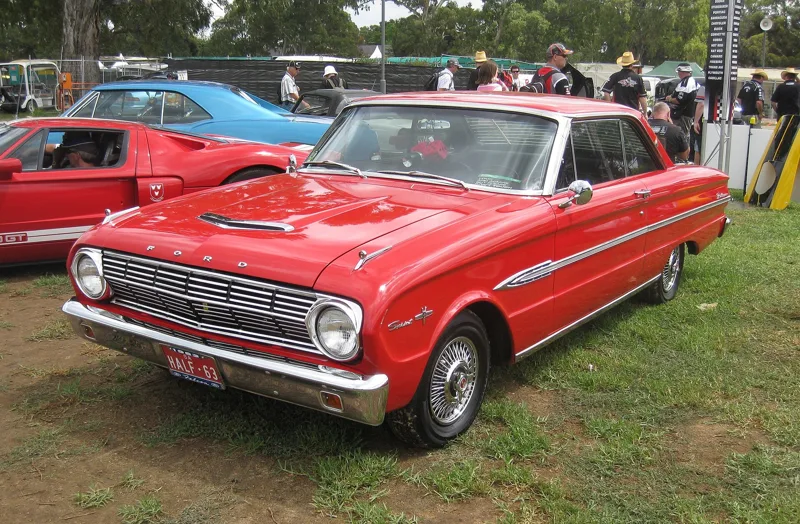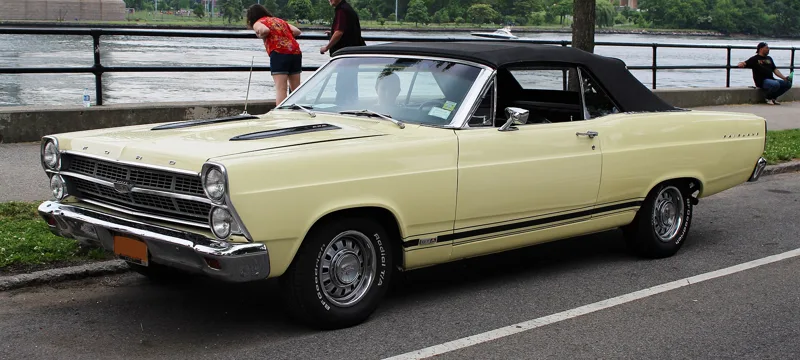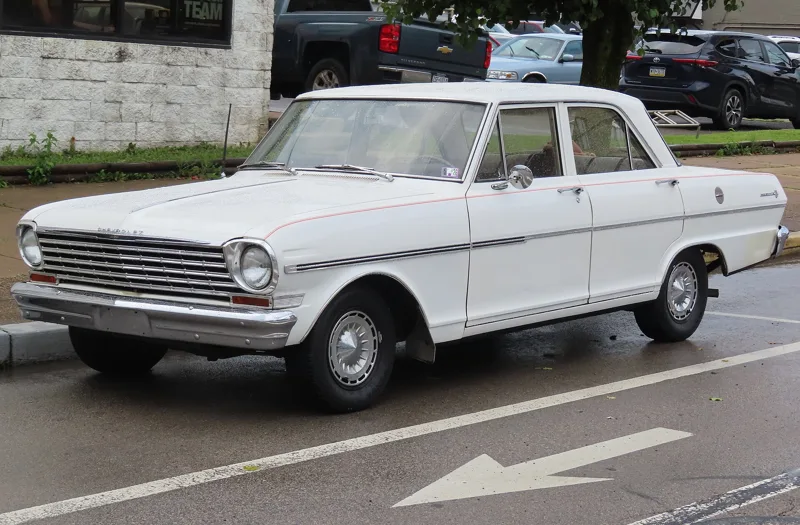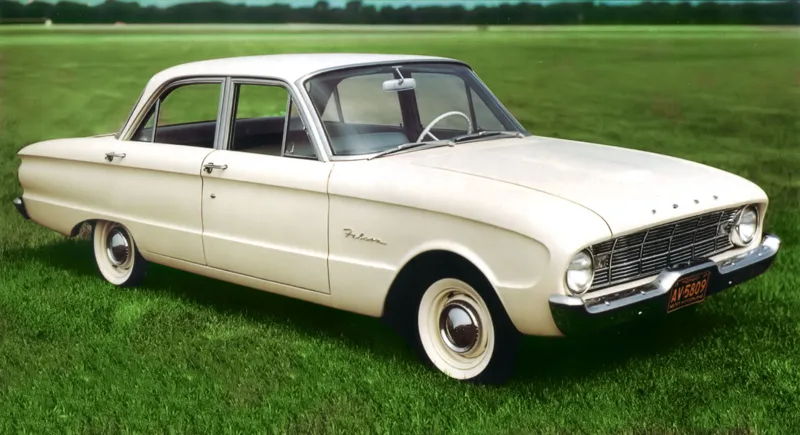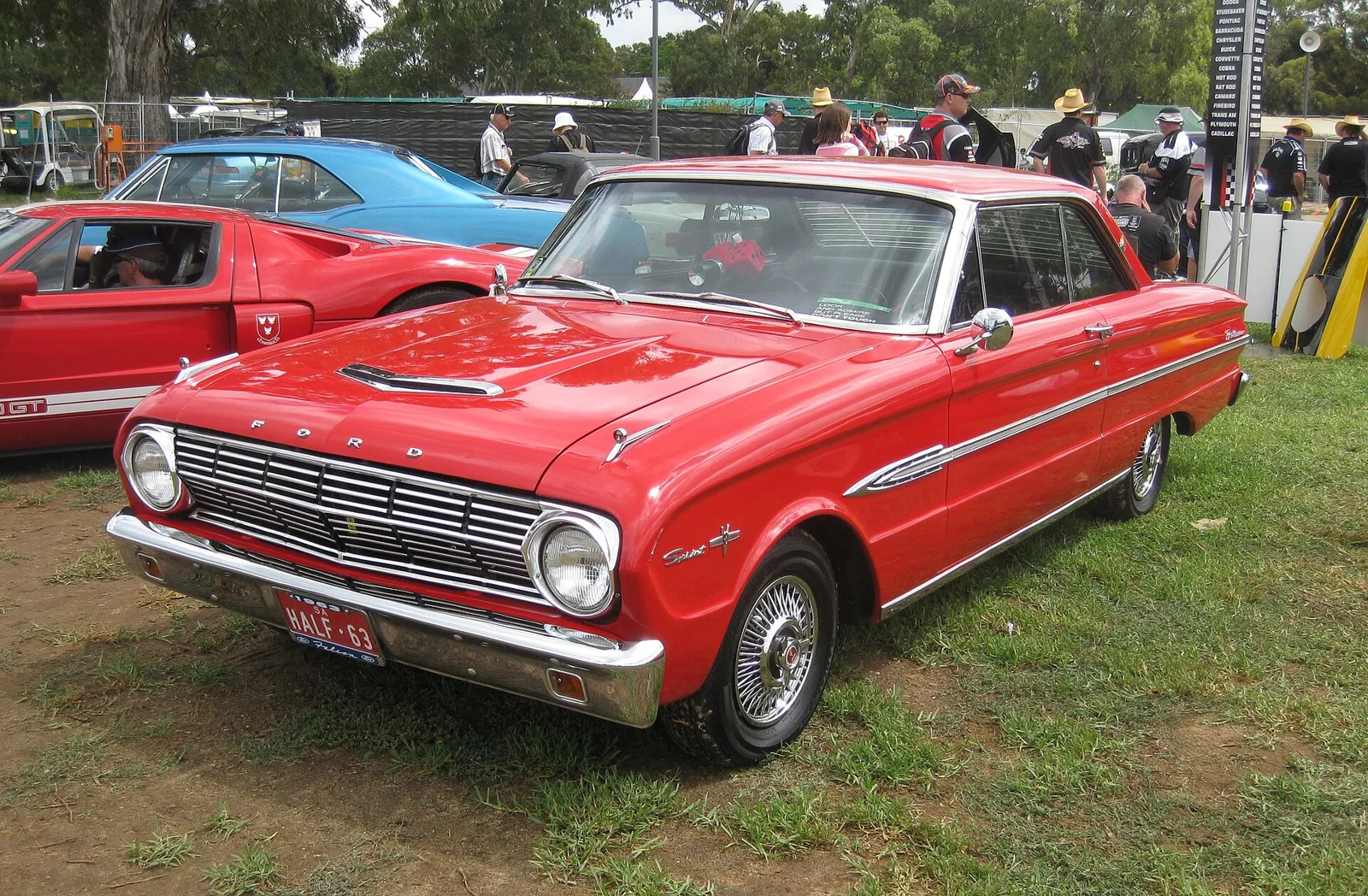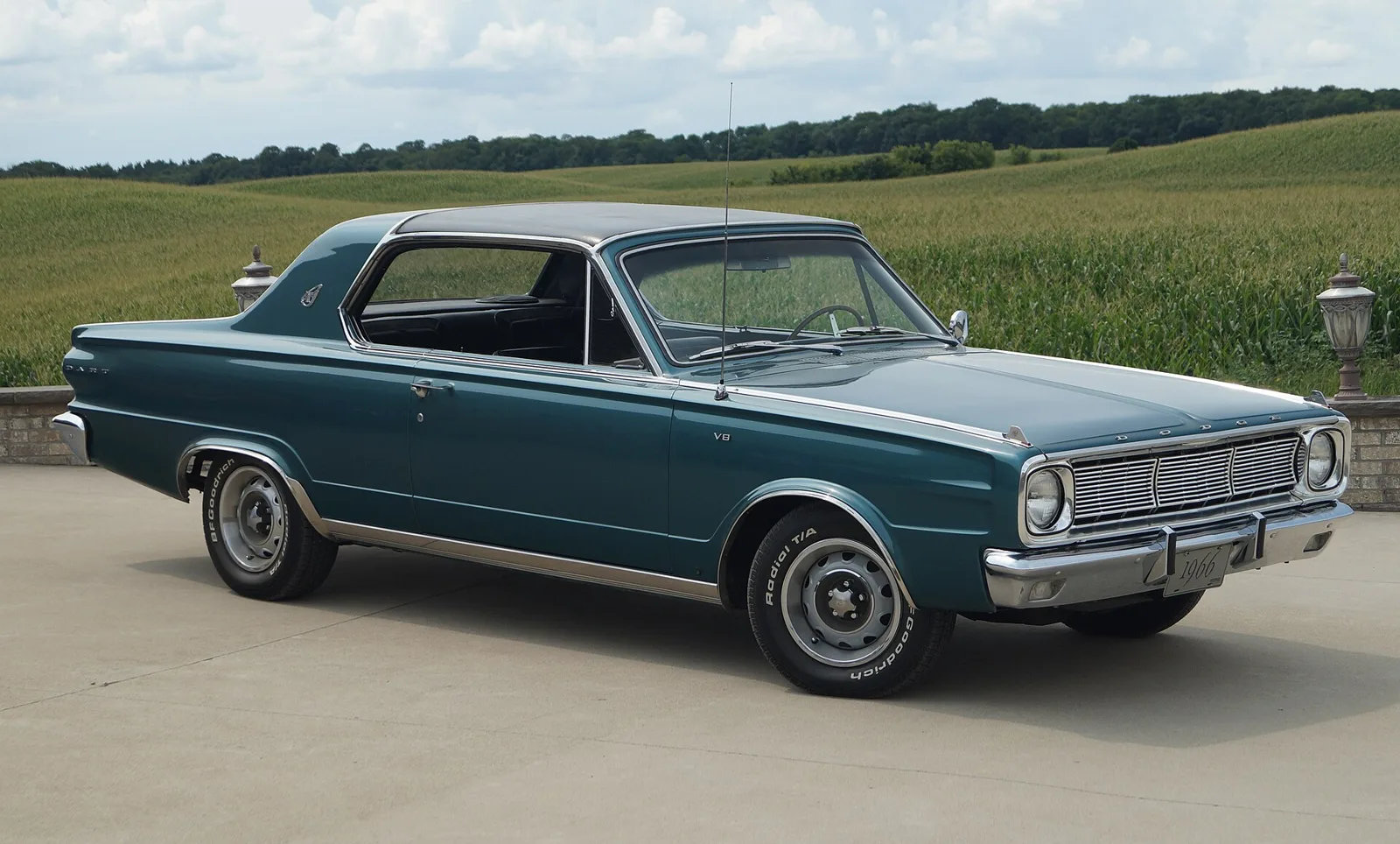
Both were 1960 launches, but the Dart spent its early years as a full-size model while the Falcon began life as a scaled-down Galaxie.
The Dodge Dart and Ford Falcon were both American compacts of the 1960s, although the Dart began life as a full-size model and only became a compact in 1963. The Falcon came from a Big Three maker and sold strongly from its first year.
Dodge and Ford went after many of the same buyers with very different cars. Ford's Falcon was scaled down from the full-size Galaxie and was a sales success from its first year, while Dodge's Dart was built to fill the gap that Plymouth had left in the low-priced segment. The two cars met in showrooms and in the sales comparisons for most of the decade.
How did the Falcon begin?
The Falcon was built as a smaller take on the full-size Ford Galaxie, and it was the first compact sold by one of the Big Three. Robert McNamara sponsored the project, and engineer Harley Copp used a unibody design with a standard suspension to keep the price low.
The first-year sales were striking. The Falcon sold over half a million in its first year and more than a million by the end of its second, which showed how much demand there was for a compact from Detroit.
The Falcon's coupe utility pickup became the basis of the Ford Ranchero, and the platform went on to serve eleven Ford vehicle lines. The Mustang, the Mercury Cougar and several Ford vans all drew on the same underpinnings.
Two American compacts from 1960, one scaled down from a big Ford and one pulled up from a low-priced Dodge slot.
How did the Dart and Falcon engines compare in 1960?
The 1960 Falcon used a 95 hp, 144 cu in (2.4 L) six with a single-barrel carburettor.
Ford called this engine the Mileage Maker, a name that stressed economy in a car meant to be a sensible second vehicle for many families.
The Dart's base engine was a 225 cu in slant-six, and its V8 options gave it more power choice than the Falcon offered that year.The Falcon's transmissions were a three-speed manual with column shift and a two-speed Ford-O-Matic automatic. Its brakes were drums at both ends in 1960.
By 1961 the Falcon had a 101 hp, 170 cu in (2.8 L) six as an option. A V8 first arrived in the 1963 half-year Sprint, which carried a 260 cu in unit rated 164 hp.
How did the Dart's compact years compare with the Falcon's?
From 1963 the Dart used a 111 in (2,819 mm) wheelbase, and its 273 cu in V8 rated 180 bhp arrived in 1964. The Falcon's second generation came out in 1964 with squarer styling, and its third arrived in 1966 on a shortened Fairlane platform.
The Dart's 1965 Charger version used a 235 bhp (175 kW) four-barrel 273. Falcon performance came mostly from the Sprint package, which brought the Fairlane's 260 V8 to the car.
A 225 cu in six rated 145 hp (108 kW) was offered in 1963 alongside the base 170, and the 273 cu in V8 gave Dart buyers a clear performance step.
The Dart stayed popular through its final production year of 1976, and it was compared with the Falcon and the Chevrolet Nova throughout its compact era. The Falcon's own run ended a few years earlier.
Why did the Mustang hurt the Falcon?
The Mustang launched in 1964 on a unified frame design taken heavily from the Falcon, and its options matched the Sprint's for only a small amount more. Because of that pricing, the Sprint never caught on, and it was discontinued after 1965.
The Mustang took a heavy toll on Falcon sales in North America, and the car never regained its footing there. Ford's compact, which had been a huge seller in its first years, was overshadowed by a car that was built on much of the same engineering.
The final North American model year for the Falcon was 1970. The car had few changes in its later years, and the third generation was the last one sold in the region.
How did the Falcon live on outside North America?
Ford Argentina built the platform as the Ford Granada until 1991, and Ford Australia developed its own Falcon from 1972 until 2016. Those long runs show that the design travelled well beyond its first market. Ford Australia's version grew into a line of its own, which outlasted the North American car by decades.
The platform also served the Ford Maverick and the Mercury Comet, and the Lincoln Versailles luxury sedan became the final model line derived from the Falcon.
Ford's advertising for the early Falcon featured Charlie Brown and Lucy from the Peanuts comic strip, who stayed in the brochure until 1965. The television marketing used the same characters, and the campaign promoted the car's good fuel economy.
What did the Falcon look like in its early years?
The first Falcons were simple, practical cars with a six-cylinder engine, a three-speed manual and room for six passengers. The 1962 facelift softened the look with a new grille, bumper and tail lights, while a sporty Futura trim arrived in 1961.
The Futura brought bucket seats and a console in the 1961 model year, along with a sedan delivery. By 1962 its two-door sedan had a flat rear window in place of the earlier wrap-around unit, which brought the car into line with other Ford models.
In 1962 Ford added the Falcon Club Wagon, an eight-passenger van built on the Econoline cab-over platform. In a Mobilgas economy run the car managed 32.5 mpg-US (7.2 L/100 km; 39.0 mpg-imp).
The 1963 range grew to include a four-door Futura, a Deluxe wagon and Futura convertibles. Hardtops and the new Sprint model followed later in the model year, as Ford widened the car's appeal beyond the basic family buyer.
How did the 1963 half-year Sprint compare with the Dart's V8?
Halfway through the 1963 model year Ford added a 260 cu in V8 rated 164 hp to the Falcon Sprint. The Dart's V8 options at the time came from the 318 and 361 cu in families, and the Dart's 273 cu in unit arrived in 1964.
The Sprint was built in small numbers, with 10,479 two-door hardtops and 4,602 convertibles produced. These cars became the basis for the 1964 Mustang, which Ford released a year later.
The Dart's 273 was described as a compact, lightweight unit that suited the car's size. Its arrival meant that both compacts could offer a V8 by the mid-1960s, although the Falcon's V8 lasted for only one half-year.
The Sprint was therefore a brief experiment within the Falcon range, while the Dart's 273 became a standing option through the early compact years. Each car's V8 story reflects how the two makers handled performance in the same market.
What did the 1966 third generation change?
The third generation, launched in late 1965 for 1966, moved onto a shortened Fairlane platform with revised styling. Its top model was the Futura Sports Coupe, whose chrome window frames made the two-door sedan resemble a hardtop.
Brakes were 9 in for six-cylinder cars and 10 in for V8s, and the two-door hardtop and convertible were dropped from the range. The station wagon and the Ranchero moved to the larger platform shared with the Fairlane, which left the Falcon as a sedan and wagon line.
The 1967 models added federal safety equipment, including a dual-circuit brake system, an energy-absorbing steering wheel and mountings for front shoulder belts. The Ranchero left the Falcon line for 1967 and adopted the Fairlane's front sheet metal.
The 1968 model introduced square tail lights, and cars built after January 1, 1969 added front outboard shoulder belts and headrests. The final model year for the Falcon in North America was 1970, after continuing sales declines.
How did the Dart and Falcon compare across the decade?
The Dart and the Falcon were both compacts sold for much of the 1960s, but they came from different parent designs and reached very different stages of their lives. The table sets out their main milestones side by side.
| Feature | Dodge Dart | Ford Falcon |
|---|---|---|
| Launch | 1960 as a full-size model | 1960 as a compact |
| Compact era | 1963 to 1976 | Compact through the 1960s and 1970 |
| Launch engine | 225 cu in (3.7 L) slant-six | 95 hp, 144 cu in (2.4 L) six |
| Early sales | 142,708 Darts in 1961 | Over half a million in the first year |
| Wheelbase | 111 in (2,819 mm) from 1963 | Not given |
| Top V8, mid-1960s | 273 cu in, 235 bhp (175 kW) in 1965 | 260 cu in, 164 hp in the 1963 half-year Sprint |
| Sporting model | Dart GT and Dart Charger (1965) | Sprint package (1964) and Futura Sports Coupe (1966) |
| Final year | 1976 | 1970 in North America |
The contrast is clearest in the early sales. The Falcon's first year was a major success, while the Dart's strength built gradually as it moved into the compact class and held a steady following into the 1970s.
Neither side of the table shows a clear winner, and the figures for the Dart's compact-era sales are not given. The Falcon's early lead is well documented, while the Dart's longer run is the stronger point for the later years.
Which buyer suits each car?
The Dart suits a buyer who wanted a Dodge with a long compact run and a range of six and V8 engines, while the Falcon suits a buyer who wanted a Ford with early success and the option of a sporting Sprint.
The Falcon's early sales are clear, with over half a million in the first year and over a million by the end of the second. The Dart's strength came later, as it stayed popular through its compact years and into 1976.
Both cars were built as family transport at accessible prices, and both had a V8 option at some point. The Dart offered more V8 choice across its run, while the Falcon's V8 was a short-lived half-year option.
A buyer in the early 1960s could choose the Falcon for its six-cylinder economy, with an optional 170 cu in unit and a choice of manual or two-speed automatic transmissions. The Dart offered a wider engine menu, with six and V8 options that suited buyers who wanted more performance.
Neither car is shown to be better overall, and the figures for the Dart's sales by year are not given. The buyer's choice therefore depends on whether a Chrysler or a Ford product suits the individual.