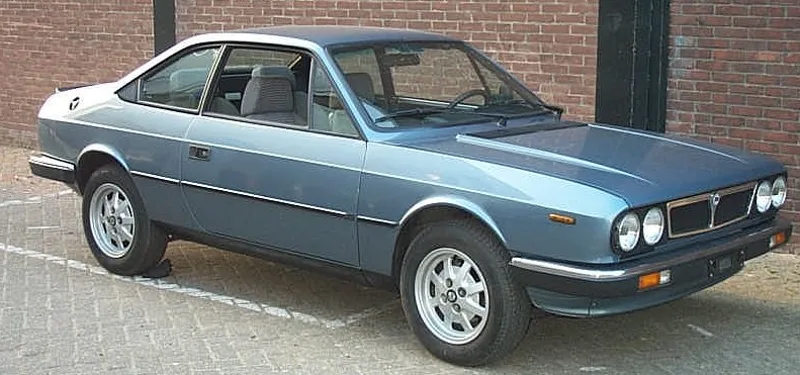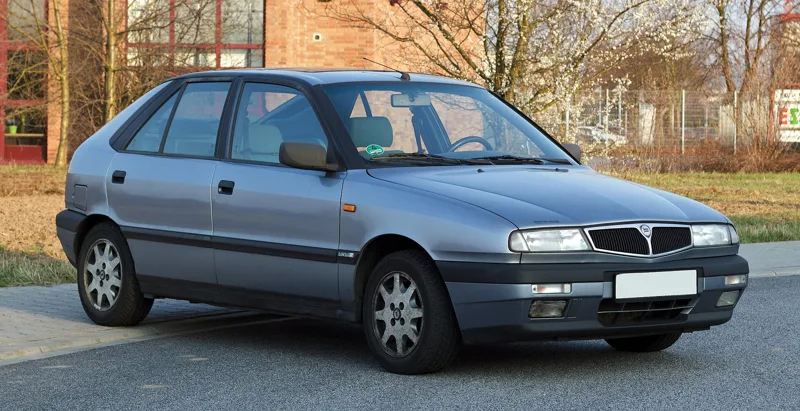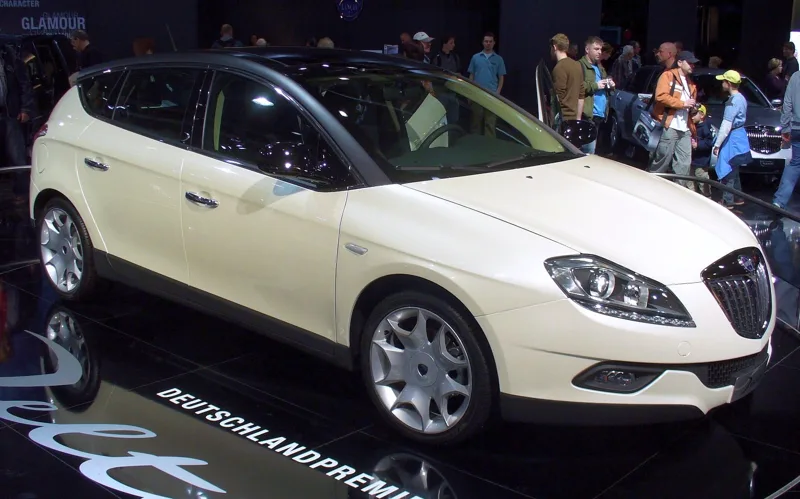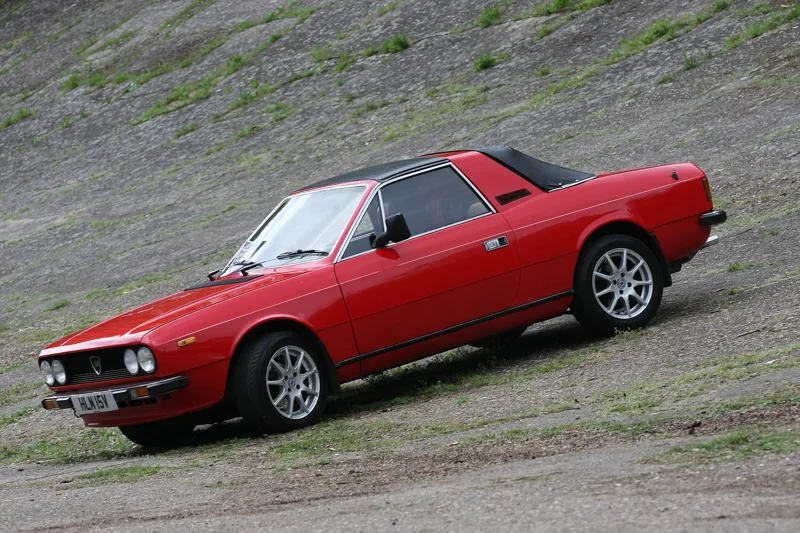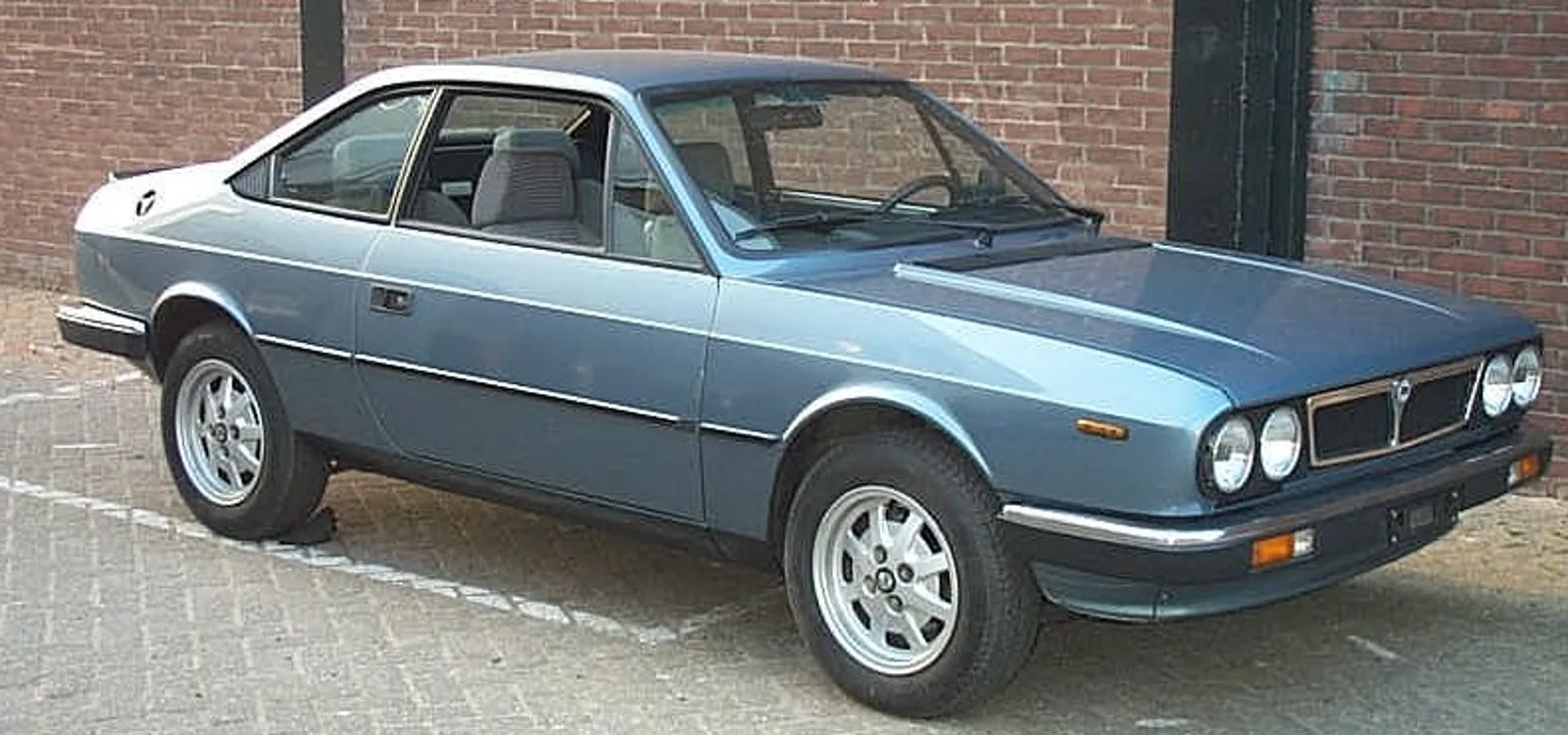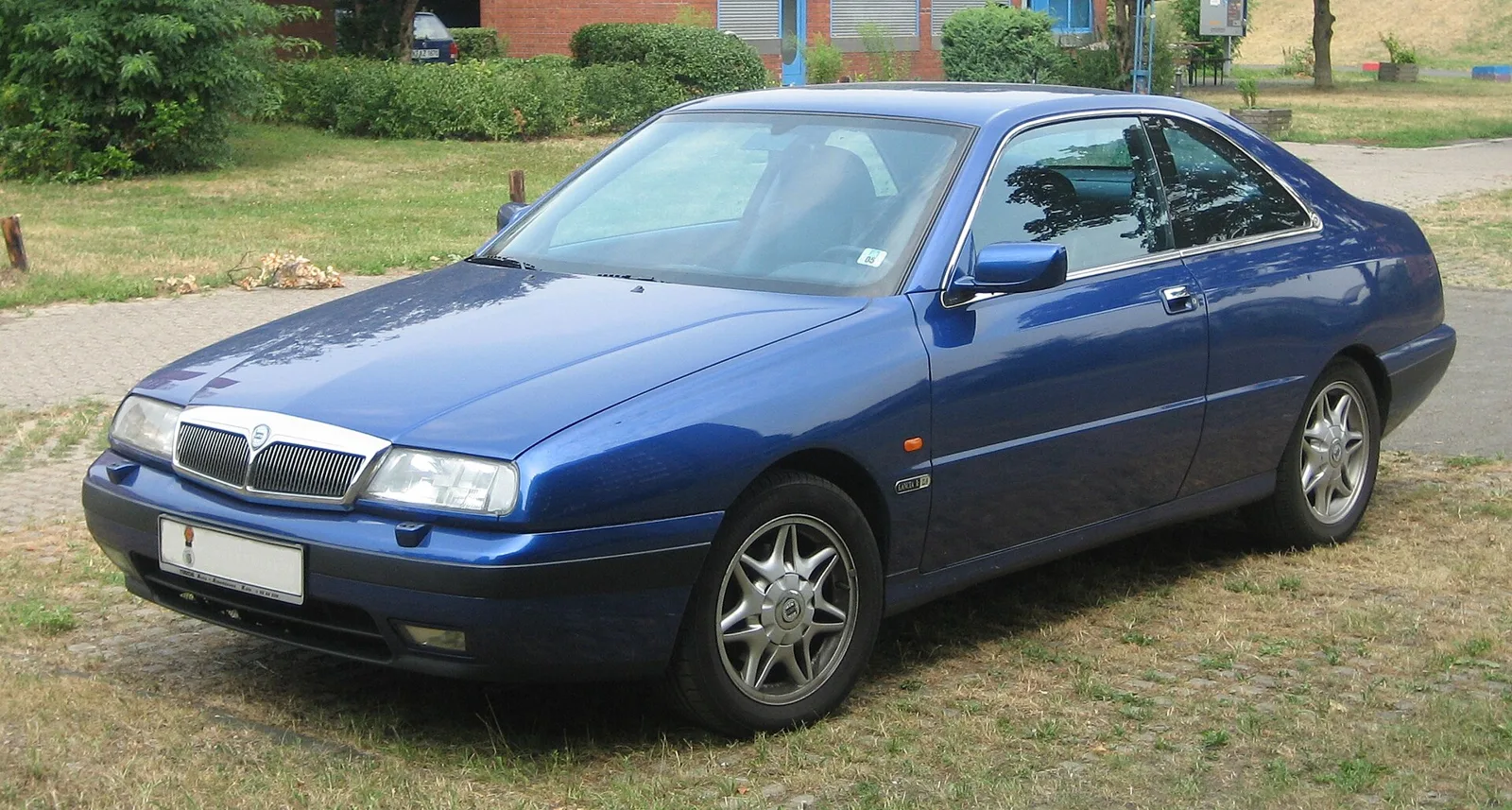
Maggiora's two-door Kappa, built at Chivasso from 1996 to 2000 on Fiat-group running gear, with a notchback body and a small production run.
Built by Maggiora for Lancia from autumn 1996 to spring 2000, the Kappa Coupe used engines running from a 2.0-litre turbo up to a 3.0-litre Alfa Romeo V6. Only 3,271 examples were made, and the car was offered in only some markets, while the Kappa saloon it was based on set its platform.
The Lancia Kappa Coupe was a two-door version of the Kappa saloon, built by the Turin coachbuilder Maggiora at the old Chivasso plant. Lancia sold it from April 1997 in only some of its markets, and production ended in spring 2000 after 3,271 examples had been built.
Where did the Kappa Coupe come from?
The Kappa Coupe followed a long Lancia habit of pairing saloons with individual coupes and cabriolets. That habit faded in the 1980s as the parent company Fiat gained influence, and the Kappa saloon's arrival in 1994 gave Lancia a fresh basis for a two-door car.
Two outside studies came first. Paolo Martin's K 2000 Coupe, drawn at Bonasea, was faulted for too weak a link to the brand, and Bertone showed the Lancia Kayak in 1995. Lancia's own Centro Stile then designed the production coupe, and Maggiora was commissioned to build it.
Its debut came at the Turin show in autumn 1996, several months before sales opened in April 1997. By then the Kappa saloon had been selling for close to three years, and the coupe was assembled at Chivasso, a plant Maggiora had taken over in 1994.
Once the saloon was discontinued, the coupe lost its technical basis. The last cars were built in spring 2000, and Maggiora's later Granturismo Lancia study never reached series production.
A two-door Kappa built in small numbers, which remained little known.
How was the Kappa Coupe styled?
Enrico Fumia of Lancia's Centro Stile led the design. The front end, windscreen and dashboard came from the saloon, but the longer doors, the more steeply raked C-pillar and the rear end were new, and the result had a drag coefficient of 0.37, an improvement on the saloon.
Fumia borrowed a tail fin motif, with the roof's outer curves flowing down through the C-pillar into the top of each rear wing. The rear was meant to recall the Lancia Flaminia Coupe. The window line sits inside a bar of polished stainless steel, while the rear side windows do not lower.
Some small parts were shared with the group. The number plate lamp matched those of the Lancia Thema and the Maserati Quattroporte IV, and the tail lamp lens was the same as on a version of the contemporary Lancia Delta, though on the coupe the lamps were offset. Media reports also put forward the claim that Gianna Maggiora, the founder's daughter, took part in the design.
Which engines powered the Kappa Coupe?
Three engine options were offered, and only two were available in Germany before the May 1998 update. The 2.0 16V turbo with 205 PS was sold in Italy, Belgium and Switzerland only, while the most frequently chosen engine was a five-cylinder 2.4-litre 20V with 175 PS.
The largest engine was a throttled 3.0-litre V6 24V with 204 PS, borrowed from Alfa Romeo, and it came with automatic transmission as standard. In Germany it cost from 74,900 DM. ZF supplied the four-speed automatic until early 1999, after which Aisin's five-speed unit was fitted.
The change in gearbox altered the performance figures. Acceleration from 0 to 100 km/h improved to 8.9 seconds from 9.8 seconds, while top speed fell by 5 km/h to 220 km/h (137 mph). Pollutant output rose by 6 g/km to 300 g/km, and EU standard consumption rose from 12.3 l to 12.7 l per 100 km.
Kappa Coupe specifications
| Specification | Detail |
|---|---|
| Body | Two-door coupe, notchback |
| Platform | Fiat group Tipo-4, shared with the Kappa saloon |
| Engines | 2.0 16V turbo 205 PS; 2.0 20V turbo 220 PS; 2.4 20V 175 PS; 3.0 V6 24V 204 PS |
| Gearbox (3.0) | Automatic as standard: ZF four-speed to early 1999, then Aisin five-speed |
| 0-100 km/h (3.0) | 8.9 seconds, from 9.8 seconds before the gearbox change |
| Top speed (3.0) | 220 km/h (137 mph), 5 km/h down on the earlier figure |
| Emissions (3.0) | 300 g/km, up 6 g/km |
| EU consumption (3.0) | 12.7 l per 100 km, from 12.3 l |
| Drag coefficient | 0.37 |
| Wheelbase | 12 cm shorter than the Kappa saloon |
| Production | 3,271 examples, autumn 1996 to spring 2000 |
How many Kappa Coupes were built?
Maggiora built 3,271 examples in total, a figure well below the output of the Lancia Gamma Coupe, which had reached 6,789 examples. Lancia expected 200 sales in Germany in the first year, and daily output in 1999 was five cars, which kept the coupe firmly in niche territory.
Maggiora's capacity at Chivasso was at most 3,000 vehicles a year, and the Fiat Barchetta roadster was built there alongside the coupe. The Fiat 130 Coupe, with 4,493 examples, also outsold it, and the Lancia Aurelia B20 Coupe of the 1950s reached a comparable 3,871.
Serial numbers were not handed out in order. They ran between #0011 and #3308, with the first car carrying #0020 and the last #3306. Examples #0011-0050 were pure test cars without an assigned interior.
How was the Kappa Coupe received?
Recognition of the Kappa Coupe stayed low, and many comparison tests in Germany went against it. Mercedes-Benz's CLK coupes, which arrived at the same time, and the Peugeot 406 Coupe were strong rivals, and auto, motor und sport questioned the premium over the simpler CLK 230.
Contemporary critics mostly praised its comfort. Hans Werner called it a model of modern comfort in the Berliner Zeitung in 1997, and Artemi Paolo of the Corriere della Sera described it as a typical Lancia and an alternative to the aggressive models from Alfa Romeo.
Its styling caused little debate at first, but it later became a point of controversy. Nine years on from the end of production, the AutoBild-Klassik team drove an example in 2009 and labelled the kC a classic of modernity. A further piece called it a sports car for every day.
What did the 1998 update change?
The May 1998 update brought body-coloured bumpers, a centre armrest, glossier imitation wood trim and a redesigned steering wheel. In Germany the navigation unit was a Blaupunkt RNS2 Travelpilot with a six-disc CD changer in the boot, and side airbags also came fitted as standard there.
The entry-level Lampredi engine, a 2.0-litre four-cylinder 16V turbo with 205 PS that was available in Italy and Switzerland, was replaced by a 2.0-litre five-cylinder 20V turbo with 220 PS. That unit was then offered in all markets except the Netherlands.
Brembo brakes on the 2.0 20V turbo and 3.0 models made new wheels necessary, which kept the same design but had a greater outward curve. The 2.4-litre engine also gained an aluminium rocker cover in place of a plastic one.
What options came with the Kappa Coupe?
Only one trim level was offered, which matched the top LX grade of the other models. The Recaro seats were trimmed in Alcantara, and the car also had blue-tinted Solextra glazing, seat heating, a leather steering wheel and gear knob, and electrically folding mirrors as standard.
Extras ran from a Poltrona Frau leather option at 2,500 DM, offered in twelve colours, to xenon headlamps at 1,450 DM and an electric sunroof at 1,600 DM. The Route Planner satellite navigation system from Magneti Marelli appeared only in the first series.
The 3.0 came with the Servotronic as standard, while cruise control and the Servotronic arrived for the other engines in spring 1999. Only the 2.0t 20V had door handles painted in body colour, and all other versions had chrome handles.
Maggiora also met special requests, most of them late in production and similar to those on the Lancia Delta Integrale Evoluzione. Examples included three silver and two white paint jobs, six cars with violet interiors, a 3.0 with a six-speed manual gearbox, and one car built with the 2.4 JTD diesel engine.
What became of the Kappa Coupe?
As a successor, Maggiora designed the Granturismo Lancia study on the basis of the Lancia Thesis and presented it to the public, but Lancia ruled out series production of it.
The Kappa Coupe therefore remains a two-door Lancia built in a limited run and offered in only some markets. Its styling, which was largely overlooked when new, later caused some controversy among commentators.