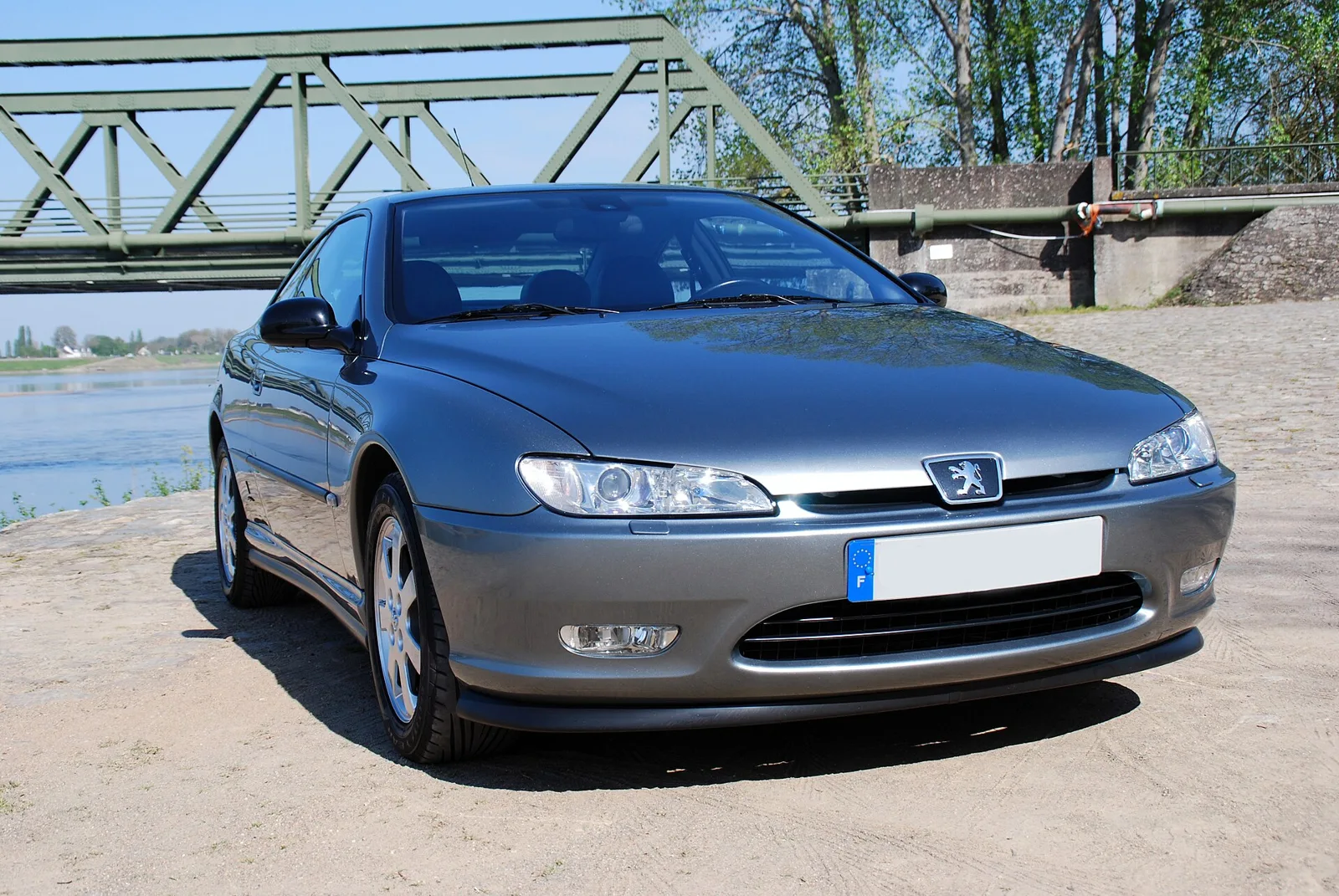
A two-door 406 styled in Italy and built near Turin, with 107,631 examples produced between May 1997 and October 2004.
Built at San Giorgio Canavese near Turin, the Peugeot 406 Coupe was sold from May 1997 to October 2004 with engines of 135 to 210 PS. Pininfarina styled the body, and 107,631 were built before the 407 Coupe replaced it.
The Peugeot 406 Coupe was a two-door car sold by the French maker from May 1997 to October 2004, built at a plant near Turin. It shared its wheelbase, interior and most mechanical parts with the 406 saloon, but its body was entirely new and came from the Italian coachbuilder Pininfarina. Engine choices ran from a 135 PS 2.0 to a 210 PS V6, and the coupe was finally replaced by the 407 Coupe.
Few Peugeots have a design history that crosses a national border this clearly. The car was commissioned by a French maker, styled in Italy and built near Turin. That mix explains much of its character and much of its story, from the shared mechanical chassis to the stream of special editions that followed.
Why did Peugeot turn to Pininfarina for the coupe?
Peugeot looked to Pininfarina because its own design team refused the job, and the design director feared a head-to-head comparison with the Italian firm. Pininfarina was trusted to make no mistake, and it already knew Peugeot's working methods from many earlier models. The two companies had worked together on many models in the past.
The coupe itself has a long pedigree at Peugeot. The first model in the line, the Type 21, dates from 1898. No model took over the role once 504 Coupe output stopped in 1983, because the company was struggling with finances after its US export drive faltered and its purchase of Chrysler-Simca in August 1978.
A two-door 406 with a new body and an Italian studio's pen, built to 107,631 against an initial contract for 70,000.
How did the 406 Coupe take shape on paper?
The project, internally called D85, was a two-door version of the forthcoming 406 saloon. Work began in June 1992 at Pininfarina Studi e Ricerche, where the first sketches showed a rounded, bio-design style in the style of several Japanese cars of that era, Mazda's RX-7 III among them. Later sketches moved closer to the final car, though the overall shape was still less elongated than the one finally chosen.
Designer Maurizio Corbi produced two drawings closer to the final car. One had a fine air intake between two pronounced headlamps and a rear light strip that ran across the number plate. The other had a simpler tail and an oval grille, close in layout to the future Maserati 3200 GT, which Giorgetto Giugiaro had drawn.
The final form came from Davide Arcangeli, working under Lorenzo Ramaciotti. He refined the curves for more than a year. Two full-size mock-ups followed in September 1992, the style was frozen in April 1993 at 95% of the final design, and the reference mock-up was finished in January 1995.
How did the coupe relate to the saloon?
The coupe was meant to share the saloon's wheelbase, chassis floor pan, interior, engines and most mechanical parts. Only the body was different, which meant a separate production set-up. Development of the coupe began in parallel with the end of the saloon's development.
Setting up production was handed to Industrie Pininfarina in 1993. The initial contract covered 70,000 vehicles. Because the body was unique, it could not borrow the saloon's panels, and the coupe kept only the mechanical and interior components that the saloon already used.
When did the coupe reach showrooms?
The coupe was announced with the saloon in 1995, but leaks and pirated drawings spread for a long time before the official unveiling. Its first public showing came at the Paris Motor Show in October 1996. Peugeot then took the car around Europe, with a stop at the Autosport International show in Birmingham and a Geneva showing in February 1997.
Sales began seven months after the Paris debut. The coupe went on sale on 15 May 1997, and the first phase of its career had started. The launch line-up was petrol engines only, with the diesel arriving later.
What changed in phase 2?
Phase 2 arrived in April 1999, at the same time as the saloon. It brought partial multiplexing, known as semi-mux, an on-board computer and a new display. Mechanically the 2.0 engine changed from 135 PS to 137 PS, while the V6 was reworked to 210 PS with variable valve timing, with technical input from Porsche, and the car's throttle cable gave way to a potentiometer.
The diesel decision came in January 2001. Peugeot chose the company's largest engine, the 2.2 HDi of 136 PS, to join the petrol range. The purists were not fond of diesel, yet the combination helped revive sales. Full multiplexing, emergency brake assist and automatic headlight switching followed in July 2001, along with 16-inch Hoggar wheels.
What did phase 3 bring?
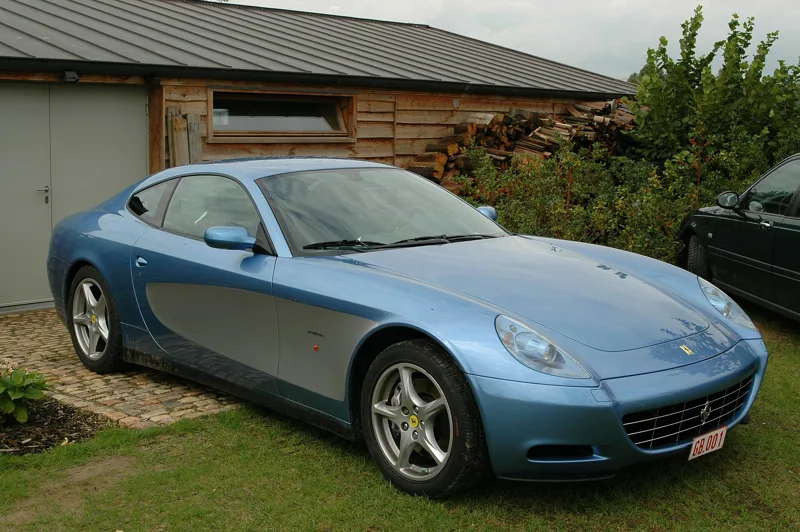
Phase 3 was launched in April 2003, with new colours, new trim and new 16-inch Tacoma wheels. New European rules on pedestrian impact led Pininfarina to supply a new front bumper. It was more closely tied to the brand's Lion styling and recalled the Ferrari 612 Scaglietti, while also foreshadowing the future Peugeot 407. The Brembo calipers disappeared from the V6 cars at the same time.
The coupe's career ended at the end of 2004. Peugeot built 107,631 examples in total, well above the 70,000 vehicles in the initial contract with Pininfarina.
How did the 406 Coupe handle and stop?
Suspension was a pseudo-MacPherson front with a multi-link rear, and the wheelbase matched the saloon. Brakes were floating calipers on ventilated 283 mm front discs and 290 mm rear discs, and the V6 and HDi cars gained larger 305 mm front discs with Brembo calipers.
Ground clearance was lower than on the saloon, which dropped the centre of gravity. Only the 2.0 L cars lacked an anti-roll bar, and adjustable suspension was an option on the V6 Pack. Anti-lock brakes were standard on every version from launch, while electronic stability control arrived with phase 2 in April 1999 and emergency brake assist followed in July 2001.
Which engines did most buyers choose?
The 2.0 L was the most-sold engine, according to figures from the 406 Coupe club. It accounted for 45.1% of the fleet, so the typical coupe on the road was a 2.0 rather than a V6 or a diesel.
Those figures show where most owners sat in the range. The diesel arrived late in the coupe's life, yet it was found under 21.7% of bonnets. The V6 was the top of the range, and its share of the fleet was smaller than the 2.0's.
What tyres and wheels did the coupe wear?
The 2.0 L cars ran 205/60 R15 tyres on 15-inch wheels, while the 2.2 L, HDi and V6 cars used 215/55 R16 tyres on 16-inch wheels. The wheel designs changed through the car's life.
The seven-spoke 16-inch Hoggar wheel replaced the original BBS wheels in July 2001. The two-tone Nautilus design appeared with the Settant'anni series, and by 2002 it was fitted across the range in a plain grey metallic version. Five-spoke Tacoma wheels came with phase 3 in April 2003.
What were the Peugeot 406 Coupe specifications?
| Item | Detail |
|---|---|
| Production period | May 1997 to October 2004 |
| Build location | San Giorgio Canavese, near Turin |
| Engines | 135 to 210 PS (133 to 207 hp; 99 to 154 kW) |
| Launch V6 | 194 PS (143 kW; 191 hp) |
| Diesel (from January 2001) | 2.2 HDi, 136 PS |
| Coupe vs saloon | 60 mm longer; 100-200 kg heavier (220-441 lb) |
| Drag coefficient (phase 1) | Cx 0.32; SCx 0.656 |
| Brakes | 283 mm front discs, 290 mm rear discs |
| Total built | 107,631 |
Which special series did the coupe have?
The coupe had two numbered limited series. The first was Settant'anni, presented in October 2000 to mark Pininfarina's 70th anniversary. It came with exclusive trim, a white leather option, a Pininfarina logo on the headrests and new two-tone Nautilus wheels. Only the 210 PS V6 was offered with it. A total of 1,305 were built, against 1,200 planned, and the first went to Sergio Pininfarina.
The second numbered series was the Ultima Edizione, officially limited to 2,000 examples and introduced in May 2004 to close out production. It carried the Pack trim's equipment, and the car that closed production was numbered 2107, a 2.2 HDi in Ecarlate red. Pininfarina announced only 2,097 sold, although a few cars with higher numbers are known to be in circulation.
Several smaller editions followed the same pattern. The Sport, from 2002, was not numbered and came in Granit black or Thallium grey with Nautilus wheels, and 2,597 were built. The Black & Silver Edition of 2003 was sold only in Austria, and the Griffe, introduced in April 2003, was a rare run of 885. A Premium model for Germany only, launched in April 2001, was based on the Base trim with some Pack additions.
How did the Base and Pack trims differ?
Two main trims were offered: Base and Pack. From the 1999 facelift, the coupe came with an on-board computer, air conditioning and cruise control as standard. On both trims, metallic paint and GPS cost extra, while the electric sunroof was optional on everything except the Griffe, which included it as standard.
Base trim included mid-leather upholstery, ABS and ESP on most cars, and light-alloy wheels. The Pack trim added leather, headlamp washers, a memory driver's seat, heated front seats, plus JBL's Prestige sound system. The Base trim sold 50,701 examples and the Pack trim 50,046, a near-even split between the two.
How did the coupe look from outside?
Pininfarina gave the coupe a fluid, clear body that the press praised. The design was entirely the coupe's own, and it won several awards during its career. Only the front bumper was restyled late in the car's life. Mirror housings were painted a dark colour rather than the body colour, which, according to the designer, made the mirrors seem invisible when the car was seen from the side.
The mirror colour also changed over time. Crepuscule grey was used until 2003, when it gave way to Cosmos grey, and Granit black coupes kept mirrors in their own colour. Fifteen colours were offered over the car's life, only Rouge Ecarlate and Gris Thallium were on sale for the whole run.
What was the cabin like?
The coupe seated four, and its leather was well made. The seats were electrically adjustable, with memory, and they were designed by Pininfarina and built by Recaro. The cabin borrowed several parts from the saloon, which made it feel more conventional than exclusive. The dashboard was distinguished mainly by metal rings around the instruments.
Upholstery choices were limited but deliberate. Three leather trims and two fabric trims were offered at launch, and the leathers had perforated seats. The steering wheel, gear knob and gaiter used Ouragan leather in every trim. In phase 2 the Amarante trim gave way to Cobalt blue, and the Chess interior arrived with the Sport series.
How did the 406 Coupe end its life?
Production ended at the end of 2004, and the closing chapter was car number 2107, an Ultima Edizione finished in Ecarlate red. Its successor was presented in 2005. The 407 Coupe was unveiled in Frankfurt in September 2005, and its design came from Peugeot itself.
The result of the design contest left Pininfarina outside the new car. Reports suggest it lost the competition against Peugeot's own Style Centre, and Gerard Welter led the design of the 407 Coupe. The 406 Coupe had been a joint project, and the next coupe was not.
What followed the 406 Coupe?
The next coupe, the 407, was designed by Peugeot's own studio, with Gerard Welter leading the work. The 406 Coupe remains the Peugeot whose two-door body came from an Italian studio.