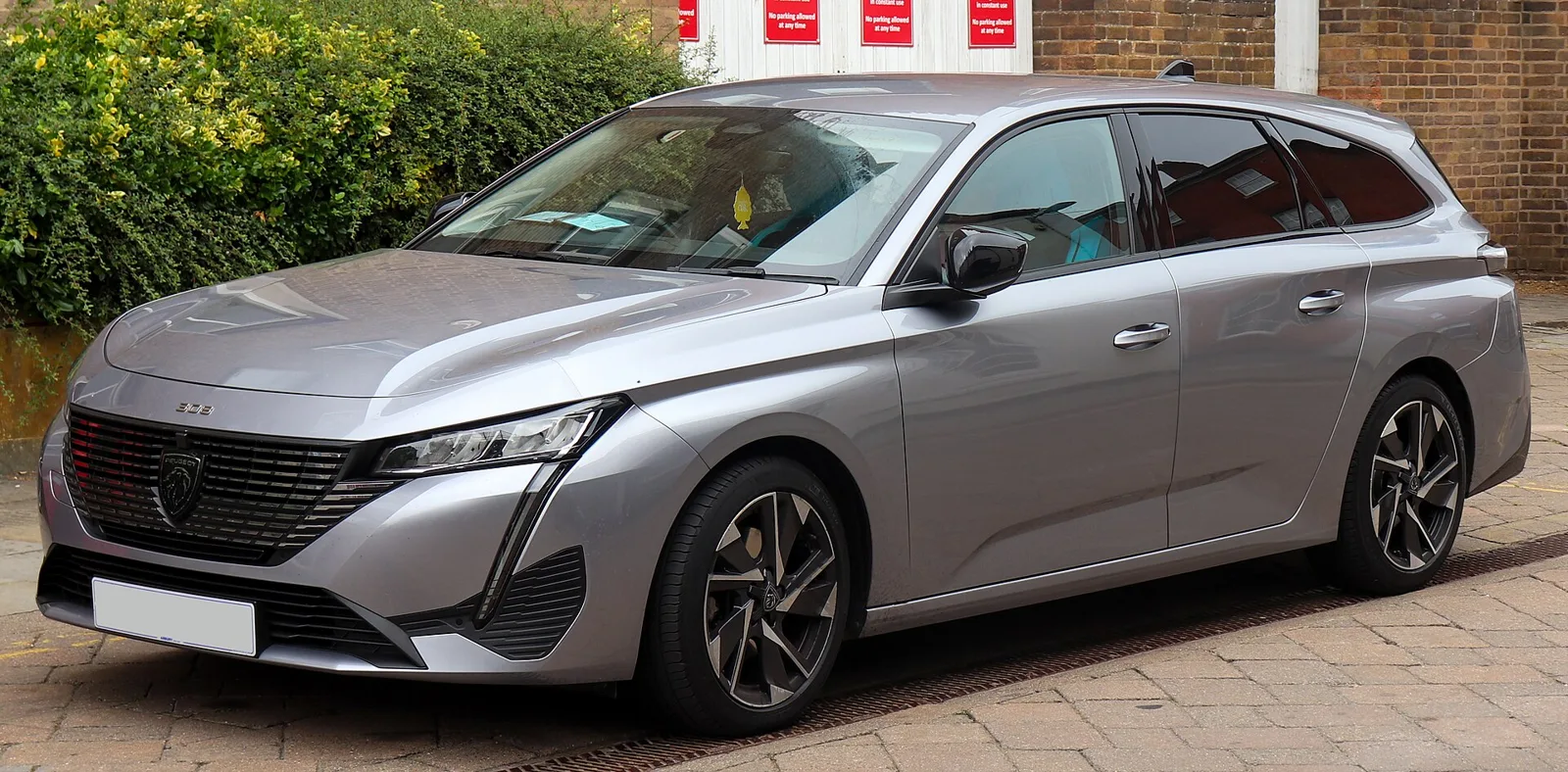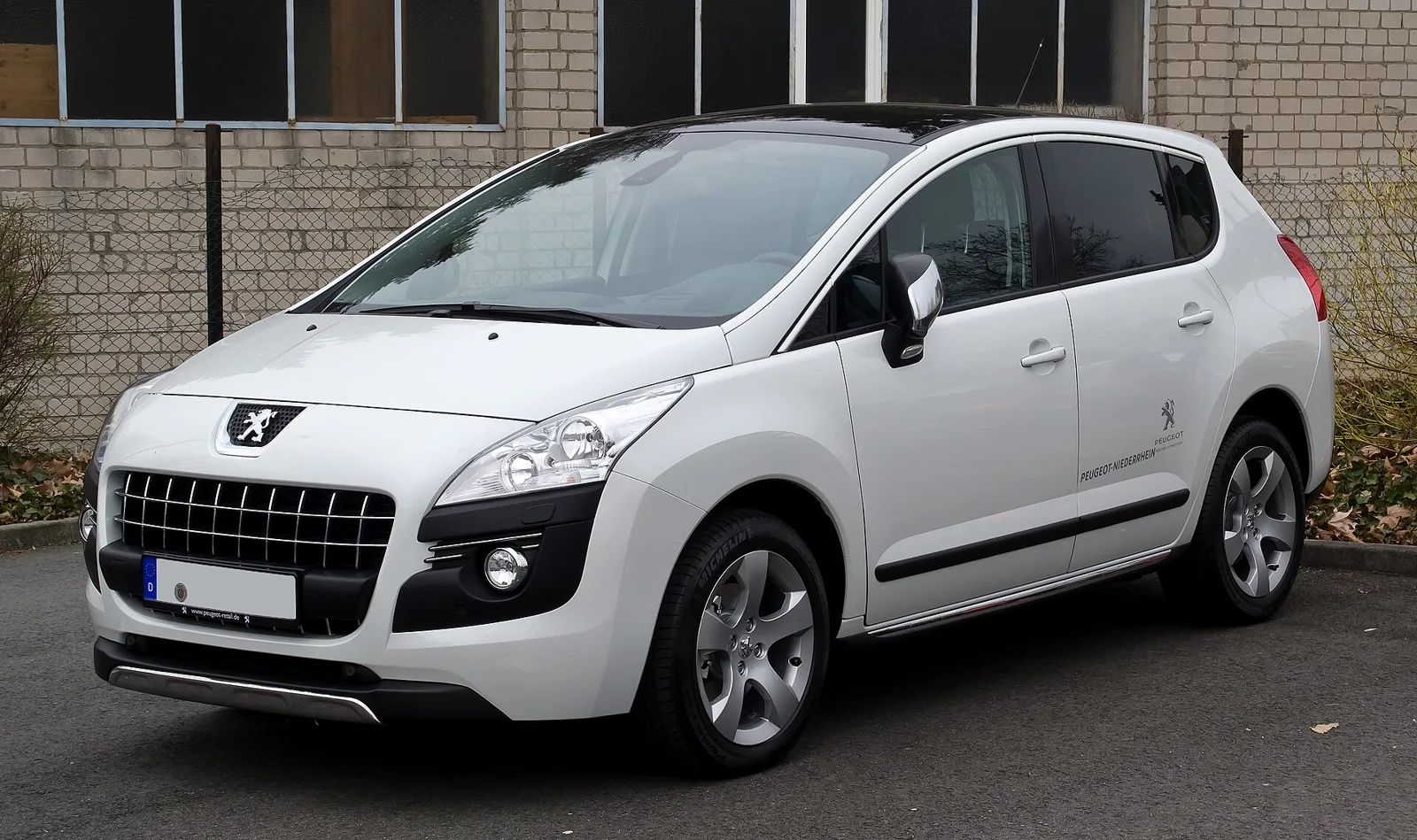
A 308-based crossover with a saloon-like driving position, a five-star crash rating and the first production diesel-hybrid in the world.
The Peugeot 3008 I was a crossover built from 2009 to 2016 on the 308 platform, and it was Peugeot's first true crossover. Five-star Euro NCAP rated, it used 1.6 and 2.0 litre engines and, as the Hybrid4, became the first production hybrid with a diesel engine. Production ended at the start of August 2016.
The Peugeot 3008 I was a mid-size crossover built by Peugeot from 2009 to 2016 on the platform of the 308. It was the French maker's first true crossover, and it offered a driving position closer to a saloon than to an SUV. Its Hybrid4 version was the first production hybrid to pair a diesel engine with an electric motor.
Peugeot had a crossover in mind almost as soon as the 308 reached the market. Early drawings of varying reliability circulated, and the answer came about a year later at the Paris Motor Show, where the Prologue prototype showed a car close to its final form.
Why did Peugeot build the 3008?
Peugeot planned the 3008 soon after launching the 308, the new C-segment car, and based the crossover on that model. The definitive car was presented at the 2009 Geneva Motor Show, with only minor changes from the Prologue, and sales began in most European markets from mid-2009.
Peugeot had already sold the 4007, but that car still counted as a genuine SUV. The 3008 was the first crossover in the range, and it carried Peugeot styling cues from the second half of the 2000s into a new body shape.
A crossover built on the 308 that drove more like a saloon and was the first production hybrid to pair a diesel with an electric motor.
How did the 3008 look and feel inside?
The body mixes the features of a two-box saloon, an estate, an MPV and an SUV in a single shape. That places the car among crossovers, competing directly with the Nissan Qashqai and, a year later, with the Mitsubishi ASX that debuted in mid-2010.
At the front, a large mouth-like grille and aggressive headlamps dominate, with thin light clusters above raw plastic fog lamp housings. The rear lamps look like a triangle with distorted sides, or a three-armed starfish if you prefer that image.
The cabin is fairly spacious without leading its class. The driver sits lower than an SUV driver would, closer to the seating of a saloon such as the 308, and that is notable given that the 3008 stands more than ten centimetres taller. The dashboard is well finished, and the Head-Up Display projects key information onto the windscreen.
Distance Alert, a proximity radar, helps the driver keep a safe gap to the car ahead. The rear bench cannot slide, which is the most obvious shortcoming of the cabin. The boot floor can sit on three levels, and luggage capacity runs from 432 to 1,241 litres, with a folding seat.
How safe and well engineered was the 3008?
The 3008 earned a five-star Euro NCAP rating. Its body was designed to channel frontal impact energy from the nose to the tail, with the aim of protecting occupants even in severe crashes.
Deformable tubular elements called Boge sit in the structure so that, at medium-low speeds, they deform in place of the main body frame and spare it the worst damage. These elements were a deliberate part of the safety design.
The car shares its platform with the 308, the 307 and the Citroen C4, and much of its mechanics come from the same family. The main handling problem was a rather high centre of gravity, which affected stability. Peugeot fitted a Dynamic Rolling Control system at the rear, a transverse damper that reduces roll in corners.
The 3008 is front-wheel drive, so it is not built for demanding off-road use. Its ground clearance is 4 cm (1.6 in) greater than the 308's, which helps on simpler unpaved routes. A Grip Control system adjusts how the ESP intervenes according to the grip of the surface, with five modes: normal ESP, snow, mud, sand and ESP off.
Which engines did the first 3008 offer?
At its debut the 3008 came with four engines, two petrol and two common rail turbodiesels. Each engine was paired with a manual or a more advanced gearbox depending on the version chosen.
The 1.6 VTi was naturally aspirated, and the 1.6 THP used a Twin Scroll turbocharger. The two diesels were the 1.6 HDi and the 2.0 HDi, and the larger diesel was the one later used in the Hybrid4.
3008 I engines and specifications
| Model | Engine | Displacement | Output |
|---|---|---|---|
| 1.6 VTi | Prince petrol, naturally aspirated | 1,598 cc (97.5 cu in) | 120 PS (88 kW; 118 hp) |
| 1.6 THP | Prince petrol, Twin Scroll turbocharged | 1,598 cc (97.5 cu in) | 150 PS (110 kW; 148 hp) |
| 1.6 HDi | DV6 common rail diesel | 1,560 cc (95.2 cu in) | 109 PS (80 kW; 107 hp) |
| 2.0 HDi | DW10 common rail diesel | 1,997 cc (121.9 cu in) | 150 PS (110 kW; 148 hp) |
| Hybrid4 | 2 litre diesel with electric motor | 2 litre diesel | 200 PS (147 kW; 197 hp) combined |
How did the 3008 range change from 2009 to 2016?
The range was updated steadily. A 163 PS 2.0 HDi arrived a few months after launch, and the 1.6 THP was raised to 156 PS (115 kW; 154 hp) by late 2009 so that it met the Euro 5 standard. In the second half of 2010 the 1.6 HDi rose from 109 to 112 PS (82 kW; 110 hp).
The 1.6 e-HDi arrived in late summer 2011 with a new generation start-stop system, which helped cut consumption and emissions. A European restyle followed in November 2013, with a smaller, rounder grille and redesigned light clusters.
Spring 2015 brought a three-cylinder 1.2 turbo with 131 PS (96 kW; 129 hp) and BlueHDi diesels in 1.6 and 2 litre sizes. The naturally aspirated 1.6 Prince left the price lists, and production came to an end at the start of August 2016.
Where did the Hybrid4 come from?
The Hybrid4 made its formal debut at the Frankfurt show in September 2011, having first appeared as a prototype at earlier exhibitions dating back to 2009. It was the most unusual model in the 3008 range, and in spring 2016 it became the first model in the range to leave the line-up.
What made the Hybrid4 different?
The Hybrid4 was the first production hybrid in the world in which the combustion engine was a diesel rather than a petrol. A three-phase electric motor rated at 37 PS (27 kW; 36 hp) worked alongside the 2 litre common rail turbodiesel of 163 PS (120 kW; 161 hp), bringing combined output to 200 PS (147 kW; 197 hp).
The diesel drove the front wheels and the electric motor drove the rear, so the Hybrid4 was the only 3008 with four-wheel drive, although it was not permanent. The electric motor helped from rest and smoothed gear changes, and it could run alone for up to 5 km. Full all-wheel drive needed the 4WD mode, selected with a rotary control, which brought both motors into use together.
The same switch selected a fully electric ZEV mode or a Sport mode, in which the car sprinted from 0 to 100 km/h in eight and a half seconds. The Hybrid4 used a 6-speed robotised gearbox, and its boot shrank to 362 litres to make room for the batteries and electric motor, against 432 litres in the normal 3008.
Which trim levels could buyers choose?
The 3008 came in four trim levels: Premium, Tecno, Outdoor and Business. Premium was reserved for the naturally aspirated 1.6 petrol and the 1.6 HDi, while Tecno was available with every engine.
Outdoor covered all engines except the basic 1.6 VTi. Business was reserved for the diesel engines alone, and it could be fitted with a manual or another type of gearbox.
How did the China-only 3008 differ?
A version for the Chinese market kept being built after the European car ended. It was restyled with sharper front headlamps and a more vertical grille, similar to that of the updated 2008. It was sold beside the more refined 4008 II, giving buyers in China a cheaper crossover.
The Canton Motor Show saw the restyled car presented on 23 November 2012, but that update was not sold in Europe. The Chinese car also received a cosmetic update at the front bumper in 2015.