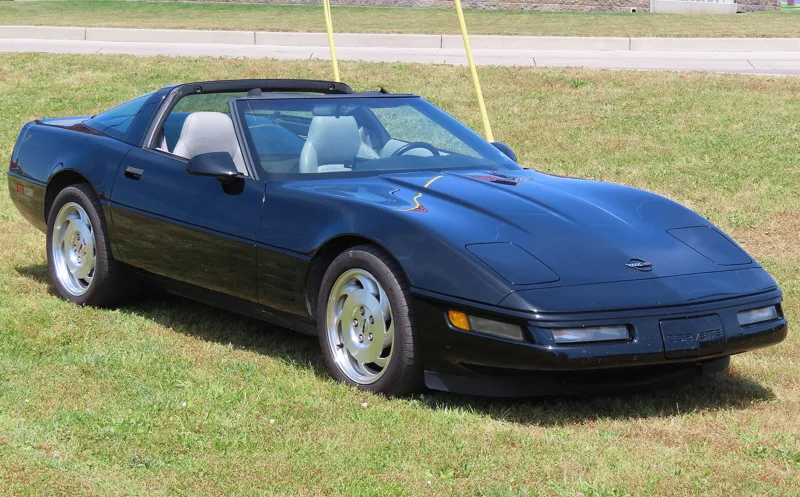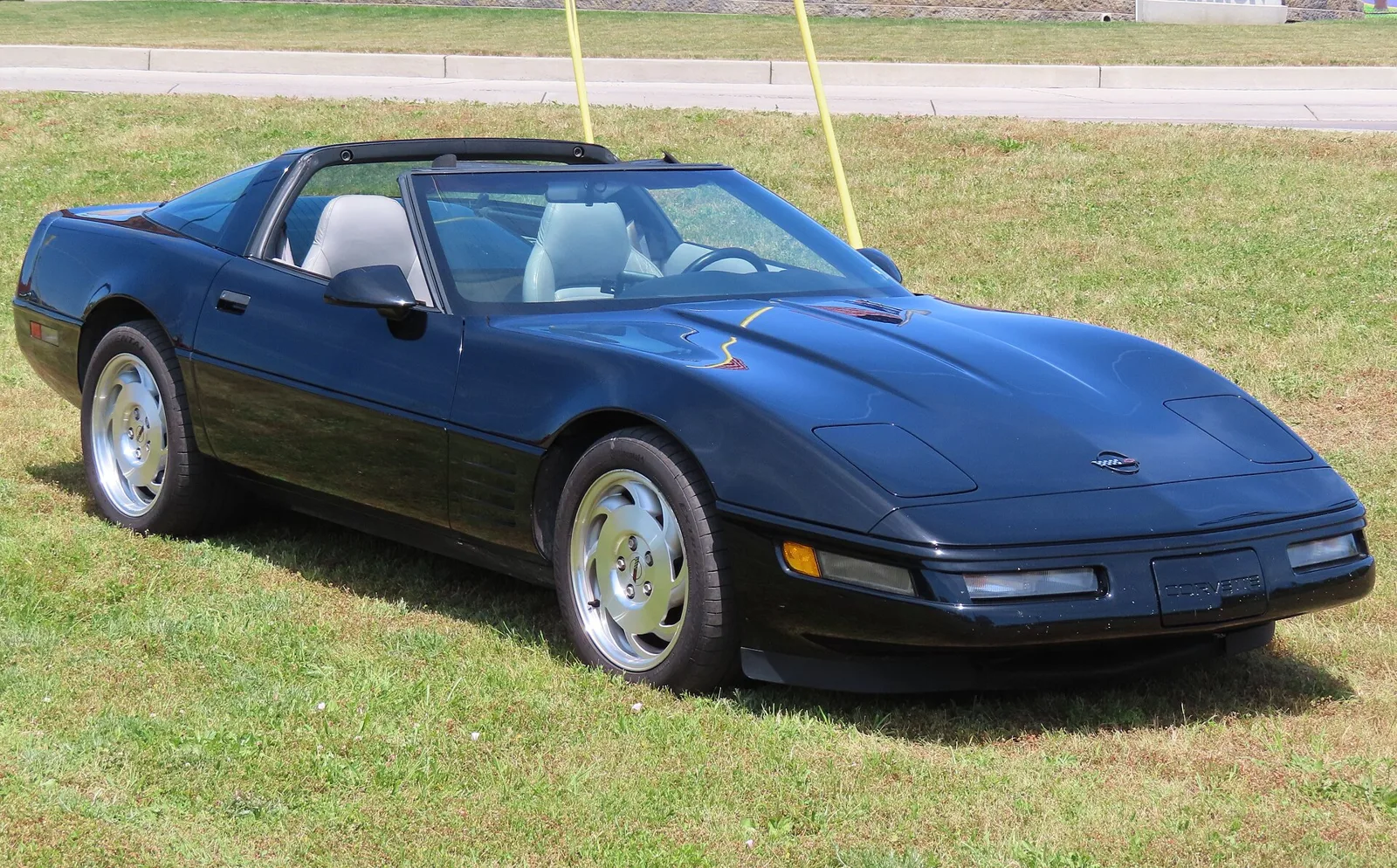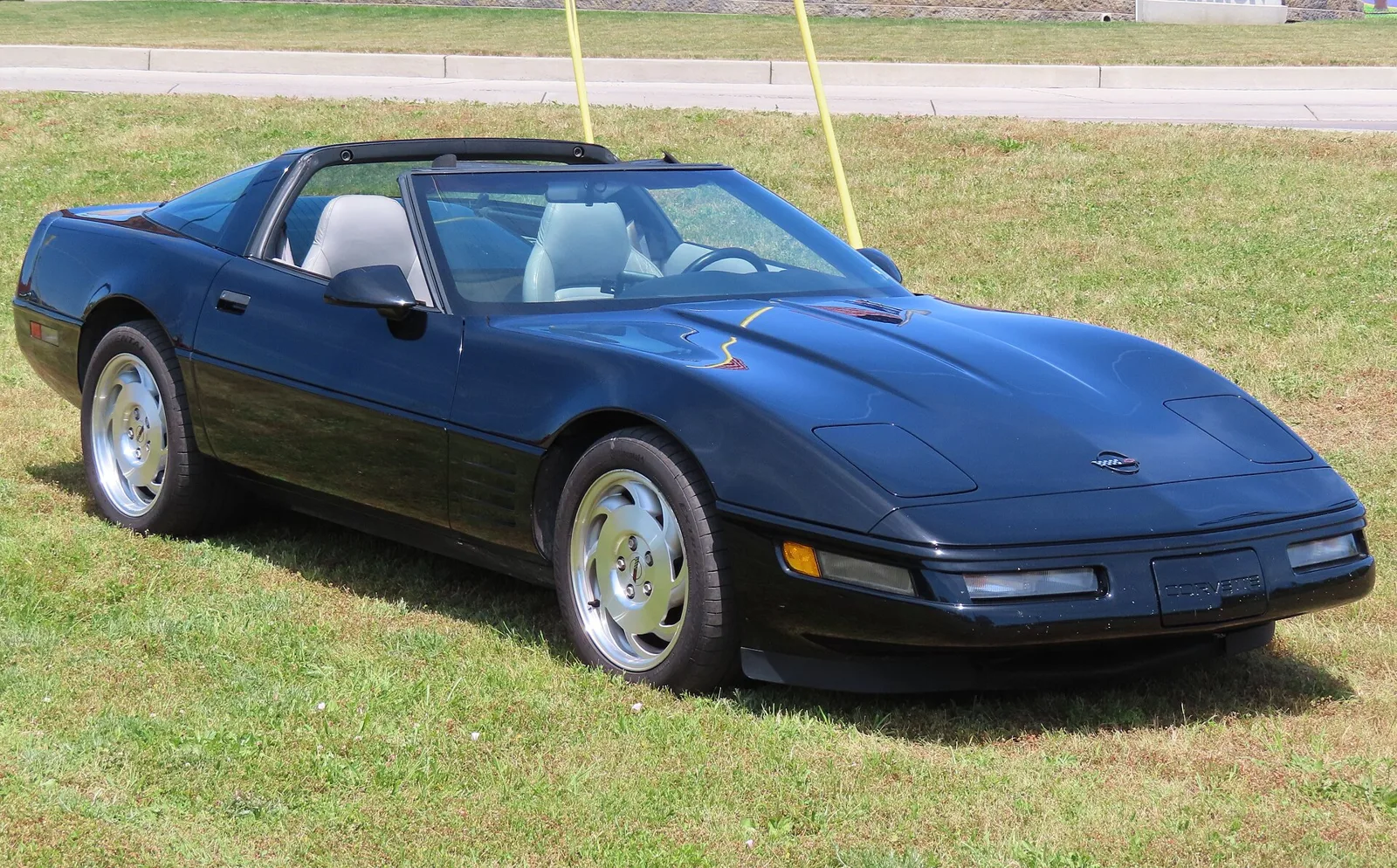
A new chassis and targa top from 1984, a 1983 car that was never sold, and the Lotus-engineered ZR1 that averaged over 175 mph for 24 hours.
The Chevrolet Corvette C4 was the fourth generation of the Corvette sports car, built for the 1984 to 1996 model years. It broke with the C3 in chassis and styling, and its Lotus-engineered ZR1 variant set 24-hour speed records in 1990.
The Chevrolet Corvette C4 arrived with a new chassis, sleeker styling and a targa top that bolted into place. Power was modest at first, but the Lotus-engineered ZR1 later took the range to a new level of speed. The car ran from the 1984 to 1996 model years.
What was the 1983 Corvette that never went on sale?
General Motors built 43 pre-production 1983 Corvettes for engineering and testing, and none of them reached the public. The 1983 model year was cancelled after parts supplier quality problems and a changeover on the production line, and the 1984 cars were started early. All but one were ordered destroyed.
One white pre-production car, VIN 1G1AY0783D5100023, escaped the crusher. It was parked outside the factory and largely forgotten for years, until it was rediscovered and restored. It has the L83 350 cu in V8 rated at 205 hp (153 kW) and a four-speed automatic, and it is now the only true 1983 Corvette in existence.
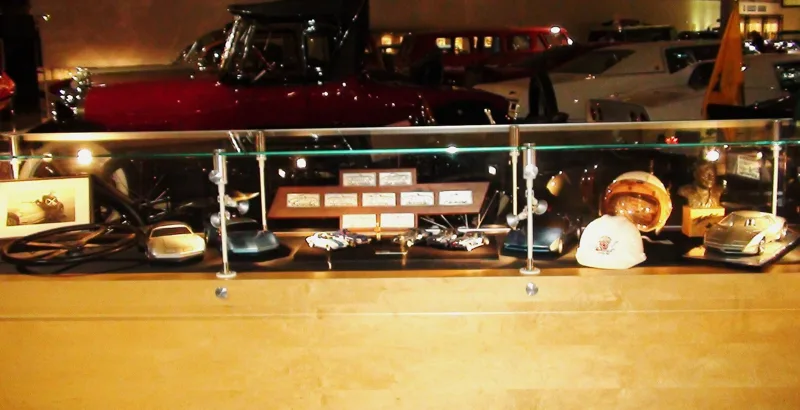
The survivor came through a massive sinkhole at the National Corvette Museum in 2014. It is on permanent display in Bowling Green, Kentucky.
A clean break from the C3, a 1983 car that was never sold and a ZR1 that averaged over 175 mph for a day.
How did the C4 differ from the C3?
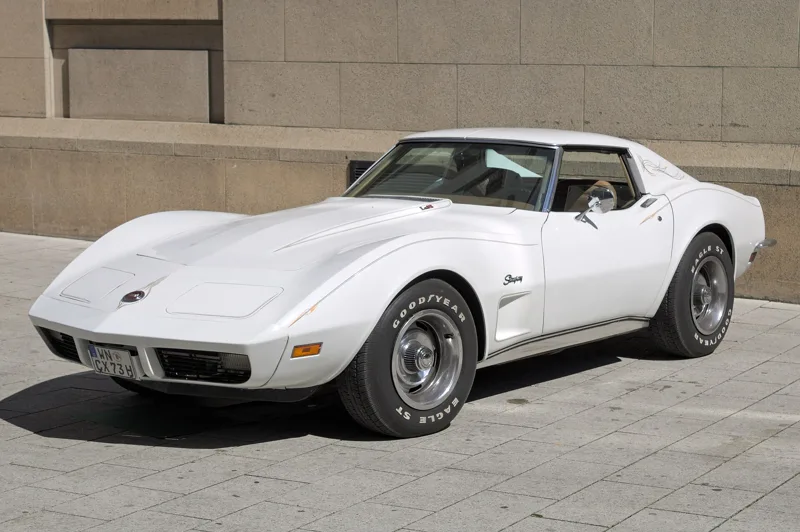
The C4 was a clean break from the C3 designed under Zora Arkus-Duntov. It had a completely new chassis and sleeker, more modern styling that still evolved from the old car. The design team was led by chief Corvette designer Dave McLellan, who had taken over from Duntov in 1975, under the design direction of Irv Rybicki.
The rear bumpers and panels moved from fibreglass to sheet moulding compound. The fastback coupe was the first general production Corvette with a glass hatchback, though the 1982 Collector Edition had been the first to get one. The roof panel was removable and could be made from fibreglass or clear acrylic.
The C4 also came with an electronic dashboard and a digital liquid crystal display instrument cluster. For the first time since 1957, the Corvette used single headlights instead of dual units, though they still retracted.
How was the C4 chassis built?
The C4 did not use the body-on-frame construction of its predecessors. GM called its structure a uniframe, a perimeter frame welded to the door posts, windscreen frame and an overhead halo behind the seats. It was not a unibody, because none of the outer panels were structural.
The styling choice of a targa roof rather than T-tops removed the structural link between the windscreen frame and the halo. That called for extremely tall side rails, and the door sills became deep. Contemporary journalists likened the entry and exit to a fall in and a climb out. The targa top bolted into place, which made it a structural component.
Launch emphasis was on handling and braking, because emissions rules were still shifting and engine power was low. The car had an all-independent, light-weight suspension, new brakes with aluminium calipers, and a transverse fibreglass mono-leaf spring at the front in place of the C3's coil springs. The spring weighed a third as much as the coils and gave an anti-roll bar-like effect.
The price of that handling focus was ride comfort, particularly with the Z51 performance and handling package. Spring rates were softened for the 1985 model year, and the parking brake moved lower and rearward in 1987 to ease entry and exit.
Which transmissions did the C4 use?
From the 1984 model year through 1988 the Corvette could be ordered with the Doug Nash 4+3 transmission. It was a four-speed manual coupled to an automatic overdrive on the top three gears. It was controversial, but it kept a stout four-speed while adding overdrive, and it was later replaced by a ZF six-speed manual.
The early engine was the L98 V8, rated at 250 hp (186 kW), which held performance back until 1992. That year the second-generation small-block, the 300 hp (224 kW) LT1, arrived and lifted the car's performance. The LT4 followed in 1996 with 330 hp (246 kW), making 340 lb ft (461 N m) of torque at 4,500 rpm and peak power at 5,800 rpm. It was offered on six-speed manual cars and was the highlight of the 1996 Grand Sport package.
What happened to the Corvette in 1986?
The convertible returned in 1986, after an absence since 1975, and a yellow convertible led the Indianapolis 500 as its pace car. All 7,315 convertibles built that year carried Indy 500 Pace Car console identification, and the Pass Key I anti-theft system arrived the same year.
Pass Key I worked by having each key carry a pellet that the car read through its electrical resistance. Early in the rollout there were only 15 resistance values, and once thieves found the weakness the value of the system fell.
How did Lotus help build the ZR1?
General Motors acquired Group Lotus, the UK engineering consultancy and performance car maker, in 1986. The Corvette division then asked Lotus to help develop the world's fastest production car on the C4. The result was the ZR1, which used a new engine in place of the L98.
The engine was the LT5, an aluminium-block V8 with the same bore centres as the L98, but with four overhead camshafts and 32 valves. Lotus also designed an air management system that shut off 8 of the 16 intake runners and fuel injectors at part throttle, widening the power band. At wide open throttle the ZR1 still produced 375 hp (280 kW).
To fit the new layout, the bore was reduced from 4.00 to 3.90 inches while the stroke grew from 3.48 to 3.66 inches. The cylinder liners were Nikasil-coated, the compression ratio was 11.0:1, and the engine held 12 quarts of oil, seven more than the L98. The intake used three throttle bodies, and the ignition was direct-fire, with four coils firing two spark plugs at once.
The chassis gained Goodyear Eagle Gatorback tyres in P315/35ZR-17, specially made for the car, along with larger ventilated disc brakes. The ZR1 weighed 200 lb (91 kg) more than the standard C4. Its FX3 suspension, engineered by Bilstein and similar to the system on the Porsche 959, had six damping settings in each of three driving modes.
The transmission was a six-speed manual made by ZF, coded ML9. It used Computer Aided Gear Selection, which forced a shift from first to fourth in low-power urban driving, and the final drive was 3.45:1.
Engine assembly was too much for the Bowling Green plant, so Mercury Marine of Stillwater, Oklahoma, assembled the engines under its MerCruiser division. Its experience with aluminium suited the job, and the engines were largely hand-assembled and tested on a stand before shipping. Mercury Marine kept two of the LT5s, one for the company president's ZR1 and another for a custom speedboat with 420 hp.
How did the ZR1 perform on the road?
Road & Track recorded 0-60 mph in 4.9 seconds, a quarter mile in 13.4 seconds and a top speed of 179 mph (288 km/h). Car and Driver was quicker, timing 0-60 mph at 4.5 seconds and the quarter mile at 12.8 seconds, at 111 mph (179 km/h).
The ZR1 was introduced at the 1989 Geneva Motor Show and went on sale that year as a fastback coupe with a removable roof panel. It had 11-inch wide rear wheels, a convex rear fascia and four square taillights with a red ZR1 badge between them.
In 1991 the ZR1 gained traction control, known as Acceleration Slip Regulation. For 1993 Lotus revised the cylinder heads, exhaust system and valvetrain, raising output from 375 to 405 hp (302 kW) at 5,800 rpm, with torque peaking at 385 lb ft (522 N m) at 5,200 rpm. An exhaust gas recirculation system improved emissions.
The ZR1 was discontinued after the 1995 model year, as interest waned, the LS engines were being developed and the C5 was coming. A total of 6,939 were built over six years. Chevrolet did not match its performance again until the C5-based Z06 arrived in 2001.
What records did the ZR1 set in 1990?
On 1 March 1990 a production ZR1 took seven international and world records on a Fort Stockton, Texas, test track. The FIA verified them in the group II, class 11 category. The 24-hour average of 175.885 mph (283.059 km/h) covered 4,221.256 miles (6,793.453 km).
The 100-mile average was 175.600 mph (282.601 km/h), the 500-mile average 175.503 mph (282.445 km/h) and the 1,000-mile average 174.428 mph (280.715 km/h). Over 5,000 km the car averaged 175.710 mph (282.778 km/h), a world record, and over 5,000 miles it managed 173.791 mph (279.690 km/h), another world record. A 12-hour run averaged 175.523 mph (282.477 km/h).
The Volkswagen W12 concept car later broke these records.
Which Corvettes came from outside General Motors?
Callaway Cars offered its B2K Twin-Turbo under licence from Chevrolet between 1987 and 1991. Buyers could order it through the RPO B2K option at Chevrolet dealers. Chevrolet had approached Callaway after seeing the power it had extracted reliably from twin-turbocharged Alfa Romeo V6 engines.
The conversion cost an extra US$26,995 over the base Corvette, and the engine was rated at a reportedly conservative 382 hp (285 kW). The car kept the normal Chevrolet warranty and gained an extra one-year, 12,000-mile warranty from Callaway. The EPA classed it as a standard Corvette, and more than 500 cars were converted.
A derivative, the Callaway SledgeHammer with 880 hp (656 kW), reached 254.76 mph (410.00 km/h) at Ohio's Transportation Research Center in 1988, making it the fastest road-going car of its time.
Chevrolet also built a ZR1 Active Suspension prototype in 1990. It borrowed the hydraulic active suspension of the GTP race car, and 25 such cars were built at Bowling Green. One prototype sold at the 2009 Barrett-Jackson Palm Beach auction for $60,000.
What special editions did the C4 offer?
The 1988 35th Anniversary car was a white fastback with white wheels and interior, and it came with its own emblems and a numbered plaque on the console. Of the 2,050 built, a quoted 180 had manual transmissions. The 1993 40th Anniversary package added Ruby Red paint and leather sport seats, and 6,749 buyers paid an extra US$1,455 for it.
Brickyard 400 parade cars (1994)
Indianapolis Motor Speedway received 25 Corvette convertibles for the inaugural Brickyard 400, with thirteen red and twelve black. They introduced the 43 NASCAR drivers on a parade lap, two drivers to a car, with their names shown on the bonnets. They also carried dignitaries such as Richard Petty, Bobby Allison and Indianapolis Mayor Goldsmith on other laps.
1995 Indy pace car
A C4 convertible was again the Indianapolis 500 pace car in 1995, and a special edition was offered alongside it. 527 were built.
Grand Sport (1995)
The Grand Sport marked the end of C4 production and took its name from the original 1963 Grand Sport. A total of 1,000 were built, 810 coupes and 190 convertibles. They came with the 330 hp LT4 V8 in Admiral Blue with a white stripe, black five-spoke wheels and two red hash marks on the front driver's wheel arch.
Collector Edition (1996)
The 1996 Collector Edition was the last C4, in Sebring Silver with silver five-spoke alloy wheels and special emblems and seat trim. The run totalled 5,412 cars: 4,031 coupes and 1,381 convertibles. Buyers paid $1,250 above the base price.
Which concept cars came from the C4?
The Ramarro was a restyled C4 by the Italian design house Gruppo Bertone, unveiled at the 1984 Los Angeles Auto Show. It went on to win the Auto&Design Car Design Award in 1985, and its name means green lizard in Italian.
The CERV III grew out of the Corvette Indy concept car, shown at the Detroit Auto Show in January 1986. By 1990 it had become a prototype closer to a production car, developed with Lotus, but its high cost kept it from production.
The ZR2, nicknamed Big Doggie, was built in 1989 as a development car. It used a 7.4-litre big-block V8 rated at 400 hp (406 PS; 298 kW) with a six-speed manual, and it was sold at Barrett-Jackson in 2009 for US$71,500.
Did the C4 race?
As part of GM's push to promote the new C4, the company funded a Corvette GTP prototype in the IMSA GT Championship, mostly run by Hendrick Motorsports. It shared little with the production car, though it borrowed some styling cues. The programme ran until 1988 with mixed results.
The final GTP car, run by Peerless Racing, went back to a V8 from its turbocharged V6, and its aerodynamic work influenced later production cars. Doug Rippie's ZR1-based C4 took on the GT1 class at Le Mans and Sebring in 1995, and it led briefly at Sebring.
C4 specifications at a glance
| Specification | Detail |
|---|---|
| Production | 1984 to 1996 model years; last car built 20 June 1996 |
| 1983 pilot cars | 43 built, one survives |
| Early engine | L98 V8, 250 hp (186 kW), until 1992 |
| LT1, from 1992 | 300 hp (224 kW) |
| LT4, 1996 | 330 hp (246 kW), 340 lb ft (461 N m) at 4,500 rpm |
| ZR1 engine | LT5 5.7-litre DOHC 32-valve V8, 375 hp (280 kW), 11.0:1 compression |
| ZR1 from 1993 | 405 hp (302 kW) at 5,800 rpm; 385 lb ft (522 N m) at 5,200 rpm |
| ZR1 0-60 mph | 4.9 seconds (Road & Track); 4.5 seconds (Car and Driver) |
| ZR1 production | 6,939 over six years |
| Callaway B2K | 382 hp (285 kW), US$26,995 extra |
| Grand Sport (1995) | 1,000 built, LT4 V8 |
| Collector Edition (1996) | 5,412 built |