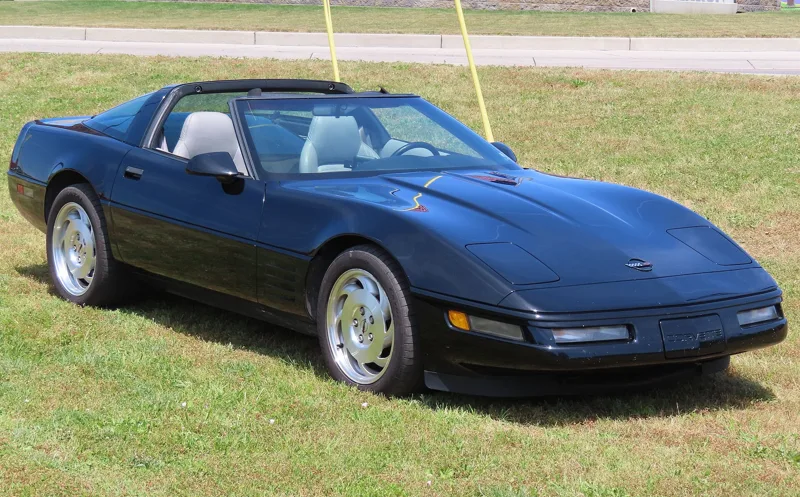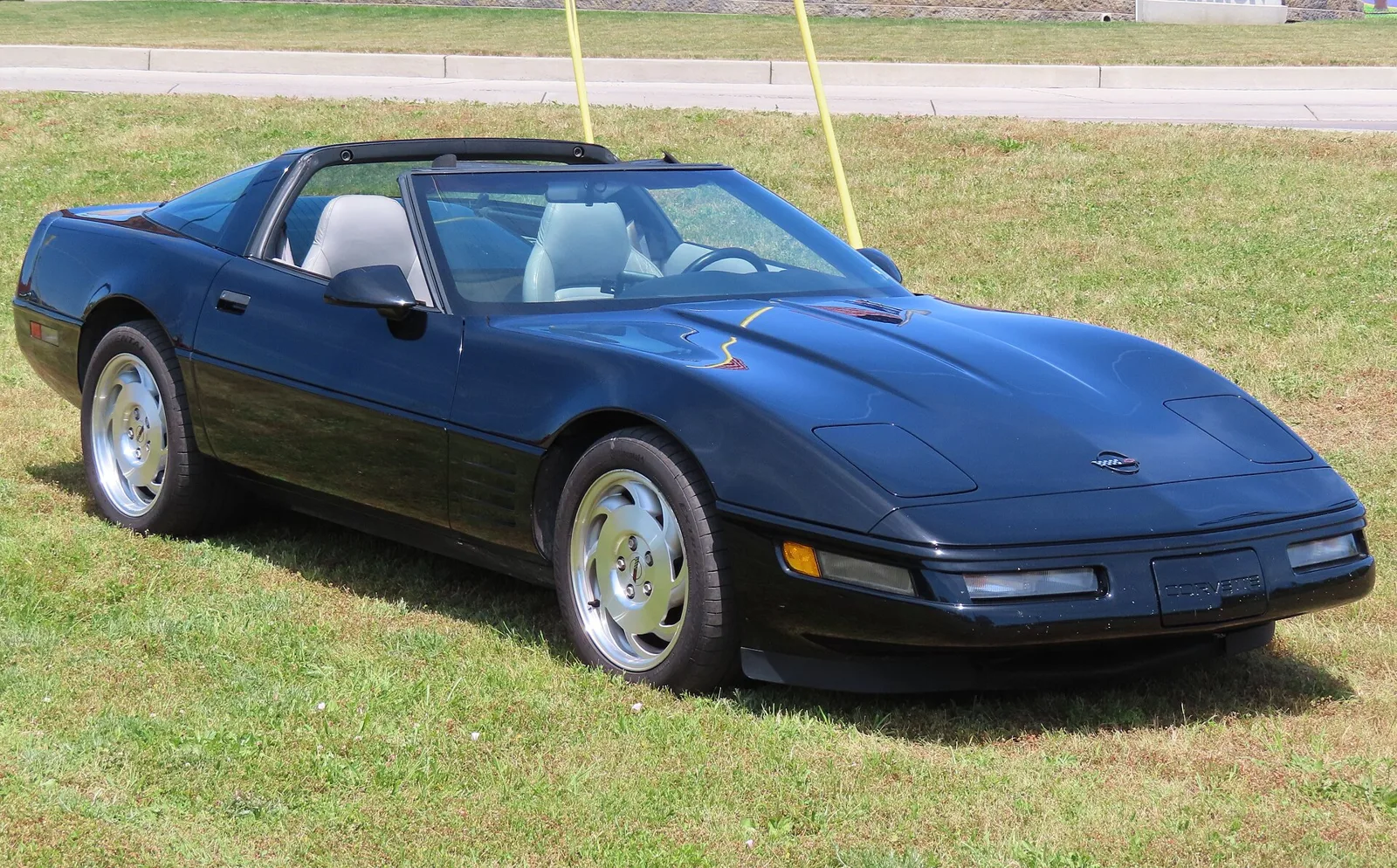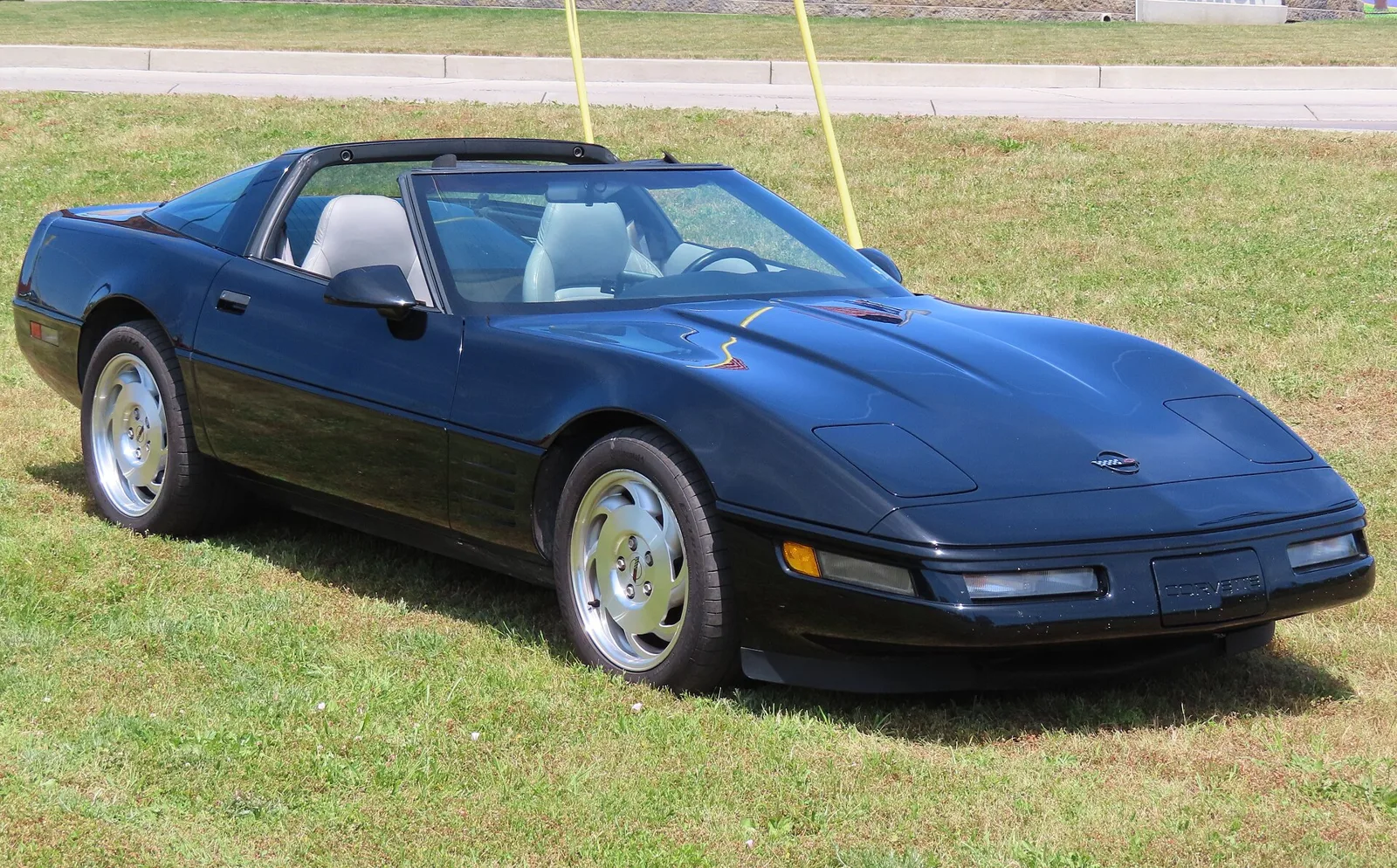
The American Corvette C4 and the Japanese 300ZX both went on sale in the United States in 1984, and both chased performance through very different engineering.
The Chevrolet Corvette C4 and Nissan 300ZX both sold in the United States from 1984 to 1996. The C4 sought performance through a new chassis and the Lotus-developed ZR1, while the 300ZX used a V6 with a turbo option and grew more luxurious over its run.
The Chevrolet Corvette C4 and the Nissan 300ZX went on sale in the United States in the same window, and both were built for buyers who wanted fast two-door sports cars without the price of the exotics. The Corvette chased performance through a new chassis and, eventually, the Lotus-developed ZR1. The 300ZX relied on a V6 with a turbo option and a body that grew more luxurious over time.
Both cars sold in North America from 1984 to 1996, which gives the comparison a clear shared decade. The Corvette was an American fixture, and the 300ZX was the Japanese answer to the same kind of buyer.
Were the Corvette C4 and 300ZX rivals?
They were rivals in the American sports car market from the mid-1980s, with overlapping model years and similar buyers. The 300ZX was introduced to the United States in October 1983, while the C4 had reached customers in March 1983, a few months earlier.
Their rivalry was one of philosophy as much as speed. The C4 broke cleanly from the C3, with a new chassis and a sleeker shape, while the 300ZX moved up-market in its second generation and grew more expensive each year.
Two American and Japanese sports cars that reached the US market together and left it in the same year.
What did the C4 change from the C3?
The C4 broke cleanly from the Zora Arkus-Duntov-designed C3, with a new chassis and more modern, still evolutionary styling. A team led by chief Corvette designer Dave McLellan produced it, with Irv Rybicki providing the design direction. McLellan had taken over the design work from Duntov in 1975.
The body dropped the fiberglass panels of its forebears in the rear, where bumpers and panels used sheet molding compound. The fastback coupe was the first general-production Corvette with a glass hatchback, and its roof panel was removable, made of fiberglass or optional clear acrylic.
Specifications side by side
| Specification | Chevrolet Corvette C4 | Nissan 300ZX (Z31) |
|---|---|---|
| Production | 1984 to 1996 model years; last car built 20 June 1996 | Japan 1983 to 2000; US 1984 to 1996 |
| Base engine | L98 250 hp (186 kW) until 1992 | 3.0 L VG30E V6, 160 hp (119 kW) in North America |
| Upgraded engine | LT1 300 hp (224 kW) from 1992; LT4 330 hp (246 kW) in 1996 | VG30ET turbo V6, 200 hp (149 kW) in North America |
| Flagship | ZR1, LT5 V8, 375 hp (280 kW) | Shiro Special (1988), turbo V6 with uprated suspension |
| Torque | LT4: 340 lb ft (461 N m) at 4,500 rpm | No figure given |
| Transmission | Four-speed with overdrive (1984 to 1988), then ZF six-speed | Five-speed manual or four-speed automatic |
| 0-60 mph | 4.9 seconds, ZR1 (Road & Track); 4.5 seconds (Car and Driver) | No figure given |
| Quarter mile | 13.4 seconds, ZR1 (Road & Track); 12.8 seconds at 179 km/h (111 mph) (Car and Driver) | No figure given |
| Top speed | 179 mph (288 km/h), ZR1 (Road & Track) | 153 mph (246 km/h), Shiro Special (Motor Trend) |
| Skidpad | 0.94 g (Road & Track); 0.89 g (Car and Driver), ZR1 | No figure given |
| Weight | ZR1 200 lb (91 kg) heavier than the standard C4 | No figure given |
| Recognition | Pace Car for the 1986 Indianapolis 500 | Ten Best list for seven consecutive years; 1990 Import Car of the Year |
How did the C4 handle?
The primary design emphasis at launch was handling and braking. The C4 had an all-independent lightweight suspension and new brakes with aluminium calipers, while the C3's coil springs gave way to a transverse fiberglass mono-leaf spring that weighed a third as much.
The cost of that focus showed in ride comfort, most of all on cars fitted with the Z51 package. Springs were softened from the 1985 model year, and the parking brake moved lower and rearward in 1987 for easier entry and exit.
What was the C4's structure?
The C4 did not use the separate body-on-frame construction of its predecessors. GM called its design a uniframe, a perimeter frame whose door posts, windshield frame and halo U-shaped overhead frame were welded into one assembly. That kept the chassis rigid, though it made entry and exit harder.
Because the car used a targa top rather than T-tops, the windshield frame had no structural link to the halo. That required tall side rails and deep door sills, which contemporary writers likened to a fall in and climb out of the car. The targa top bolted into place and became a structural component.
How did the 1983 pilot cars come about?
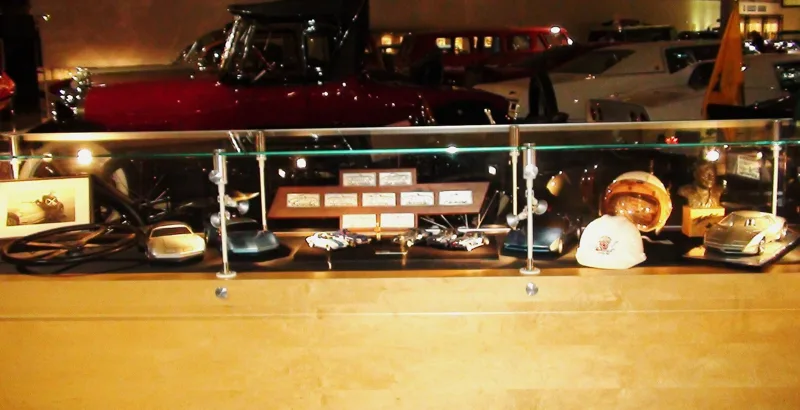
The 1983 pilot programme ran to 43 pre-production cars, and all but one were ordered destroyed. The survivor, a white car with a medium blue interior, was hidden away and largely forgotten until it was restored, and it remains the only true 1983 Corvette in existence.
The survivor was fitted with a 350 cu in (5.7 L) L83 at 205 hp (153 kW) and a four-speed automatic. It survived a sinkhole at the museum in 2014 and has a permanent place there.
Why did regular 1984 production start early?
The 1983 model year was cancelled because of problems with parts supplier quality and production line changeovers. GM started the 1984 model year Corvettes early, with regular production beginning on 3 January 1983 and deliveries to customers in March that year.
The 1984 models were produced for 17 months, and the car was available with a Doug Nash 4+3 transmission from the 1984 model year until 1988. Its four-speed manual was coupled to an automatic overdrive on the top three gears, which was controversial but gave the car a stout low gear and an overdrive.
How did the C4 engines develop?
Until 1992 the C4 ran the L98, a 250 hp (186 kW) V8 that held back its performance. The LT1 that followed was rated at 300 hp (224 kW) and came from the second-generation Chevy small block. The 1996 LT4 was the high point of small-block development, rated at 330 hp (246 kW).
The LT4 reached its peak power at 5,800 rpm, and its 461 N m (340 lb ft) of torque arrived at 4,500 rpm, and it was highlighted in the 1996 Grand Sport package. It was fitted only to six-speed manual cars.
What made the ZR1 different?
General Motors had bought Group Lotus in 1986, and the Corvette division asked Lotus to develop the world's fastest production car based on the C4. Lotus designed a new engine to replace the L98, the LT5, with an aluminium block and four overhead camshafts running 32 valves.
The LT5 used the same bore centres as the L98, but its bore fell from 4.00 to 3.90 inches while its stroke rose from 3.48 to 3.66 inches. It carried an 11.0:1 compression ratio, and the engine held 12 quarts of oil, seven more than the L98.
How did the ZR1 handle and brake?
Lotus helped GM design the ZR1's upgraded braking and steering. The car wore Goodyear Eagle Gatorback tyres, sized P315/35ZR-17, with bigger ventilated discs, and it was 200 lb (91 kg) heavier than the standard C4 because of its engine, body and wider tyres.
The suspension was the FX3 system, engineered by Bilstein and similar to the Porsche 959 system, with six damping settings in each of three driving modes. A microprocessor adjusted the dampers, and the ZR1 also had a low-tyre-pressure warning system and a Bosch ABS.
How did the ZR1 perform on test?
Road & Track measured a 0-97 km/h (0-60 mph) time of 4.9 seconds and a quarter mile in 13.4 seconds. Its braking distances were 132 ft from 60 mph and 233 ft from 80 mph, with a skidpad figure of 0.94 g and a tested top speed of 288 km/h (179 mph).
Car and Driver recorded 0-97 km/h (0-60 mph) in 4.5 seconds and a quarter mile in 12.8 seconds at 179 km/h (111 mph), with a skidpad figure of 0.89 g. The two sets of figures came from separate magazine tests.
Where was the ZR1 engine built?
The engine needed special assembly that neither the Bowling Green plant nor GM's normal production facilities could handle. Mercury Marine, of Stillwater, Oklahoma, was contracted to assemble the engines through its MerCruiser division, because of its experience with aluminium. Finished engines then travelled to Bowling Green, where ZR1s were put together.
Mercury Marine did about 95 percent of the drilling and boring, and the engines were largely assembled by hand. The company kept two LT5s for itself, one for a ZR1 owned by its president and another for a speedboat called the Wette Vette, which made 313 kW (420 hp) in that form.
What records did the ZR1 set?
In early March 1990 the ZR1 set records for the highest average speed over 24 hours, at over 282 km/h (175 mph), and over 5,000 miles, at over 278 km/h (173 mph). Its debut came at the 1989 Geneva Motor Show, and it went on sale later that year as a fastback coupe.
The ZR1 was easy to tell apart from other Corvettes, with a wider tail, 11-inch wide rear wheels and a convex rear fascia carrying four square taillights and a red ZR1 badge.
Which 300ZX special editions were made?
Nissan built two special versions of the Z31. The 50th Anniversary Edition of 1984 was a turbocharged two-seater with a digital dash, mirrored T-tops and Bodysonic speakers, and 5,148 went to the US market. The Shiro Special arrived four years later with performance upgrades.
The Shiro was turbocharged, with pearl white paint, stiffer springs, heavy-duty anti-sway bars and a viscous limited-slip differential. A total of 1,002 were produced for the US market between January and March 1988, and Motor Trend tested one at 153 mph (246 km/h).
How did the 300ZX's engines develop?
The Z31 had a naturally aspirated VG30E V6 that produced 160 hp (119 kW) in North America, and a turbocharged VG30ET producing 200 hp (149 kW). From 1988 to 1989 the North American turbo cars were rated at 205 hp (153 kW), and naturally aspirated versions at 165 hp (123 kW).
The 200ZR, a Japan-market car with an inline-six, was introduced in October 1985 with a ceramic turbocharger developed by Nissan and NGK. It made 180 PS (132 kW), and roughly 8,283 were produced between 1985 and 1988.
How did the 300ZX change over its run?
The 1986 facelift added side skirts, flared fenders and 16-inch wheels on the turbo models, and many black trim pieces were painted to match the body. The 1987 makeover brought 9004 bulb-based headlamps and an LED third brake light, which was the first central LED brake light in the history of the car.
Z31 production ran until 1989, outlasting every earlier Z-car. The Z32 that followed was driven up-market, and sales dwindled as the price rose each year.
Which buyer suits each car?
The C4 suits a buyer who wants an American two-seater with a new chassis, a removable roof and, from 1990, the ZR1's Lotus-developed V8 and tuned suspension. The 300ZX suits a buyer who wants a six-cylinder sports car with a choice of turbo power and a more luxurious interior.
Practicality is only partly covered. The C4's luggage space and the 300ZX's rear seating are not compared here, and running costs for either car are not covered, so the choice rests on performance and character.
How did the two cars sell?
The Corvette's price rose and its sales declined with the new chassis and styling, and the C4 ended its run on 20 June 1996. The 300ZX passed 70,000 units in North America in 1985 alone, and Nissan stopped selling new Z-cars in the US after the 1996 model year.
Both cars ended their US runs in 1996, which makes the 1984 to 1996 span the clearest common ground between them. The 300ZX's recognition came from the Ten Best list and the Import Car award, while the Corvette's came from its pace car role and its ZR1.