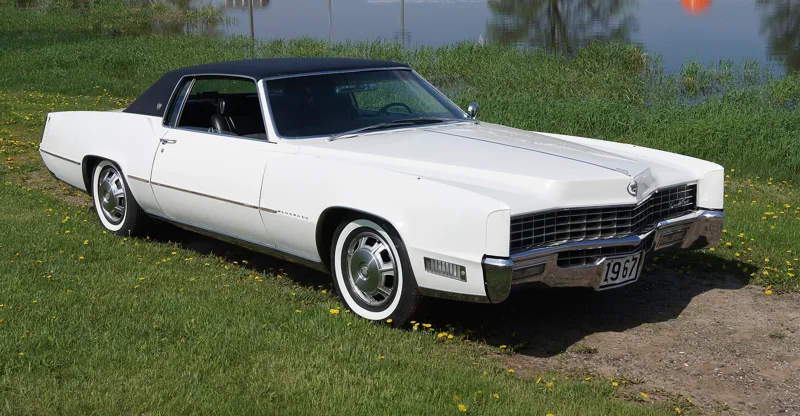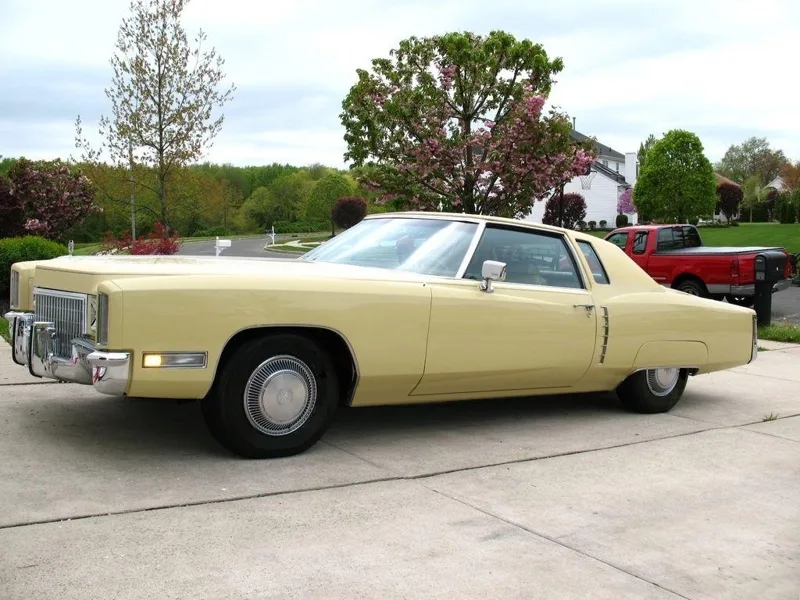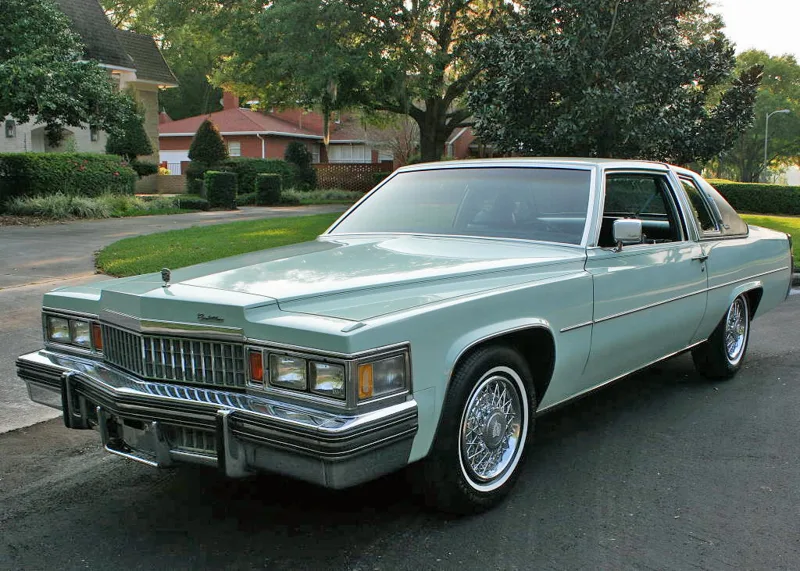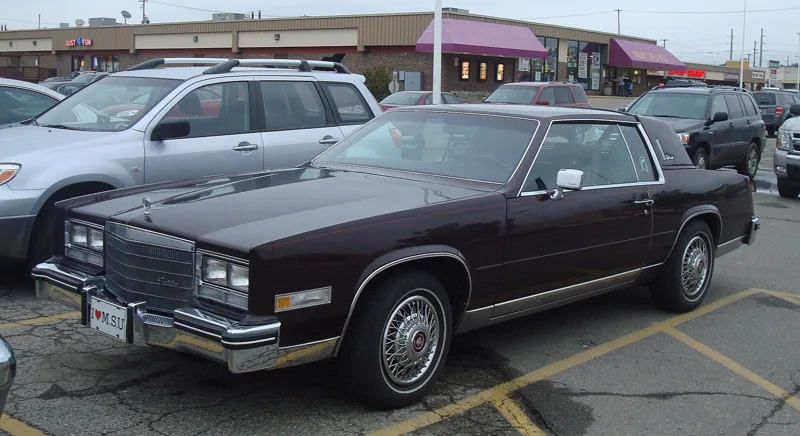
An X platform saloon built to answer imported Mercedes-Benz and BMW models, with a diesel option, a Gucci edition and a version assembled in Iran.
The Cadillac Seville of 1975 to 1979 was a luxury saloon built on General Motors' X platform, the smallest Cadillac since the war. It had a 350 cu in V8 with 180 SAE-PS, a three-speed automatic and a 1978 diesel option, and it spawned Gucci and Elegante editions.
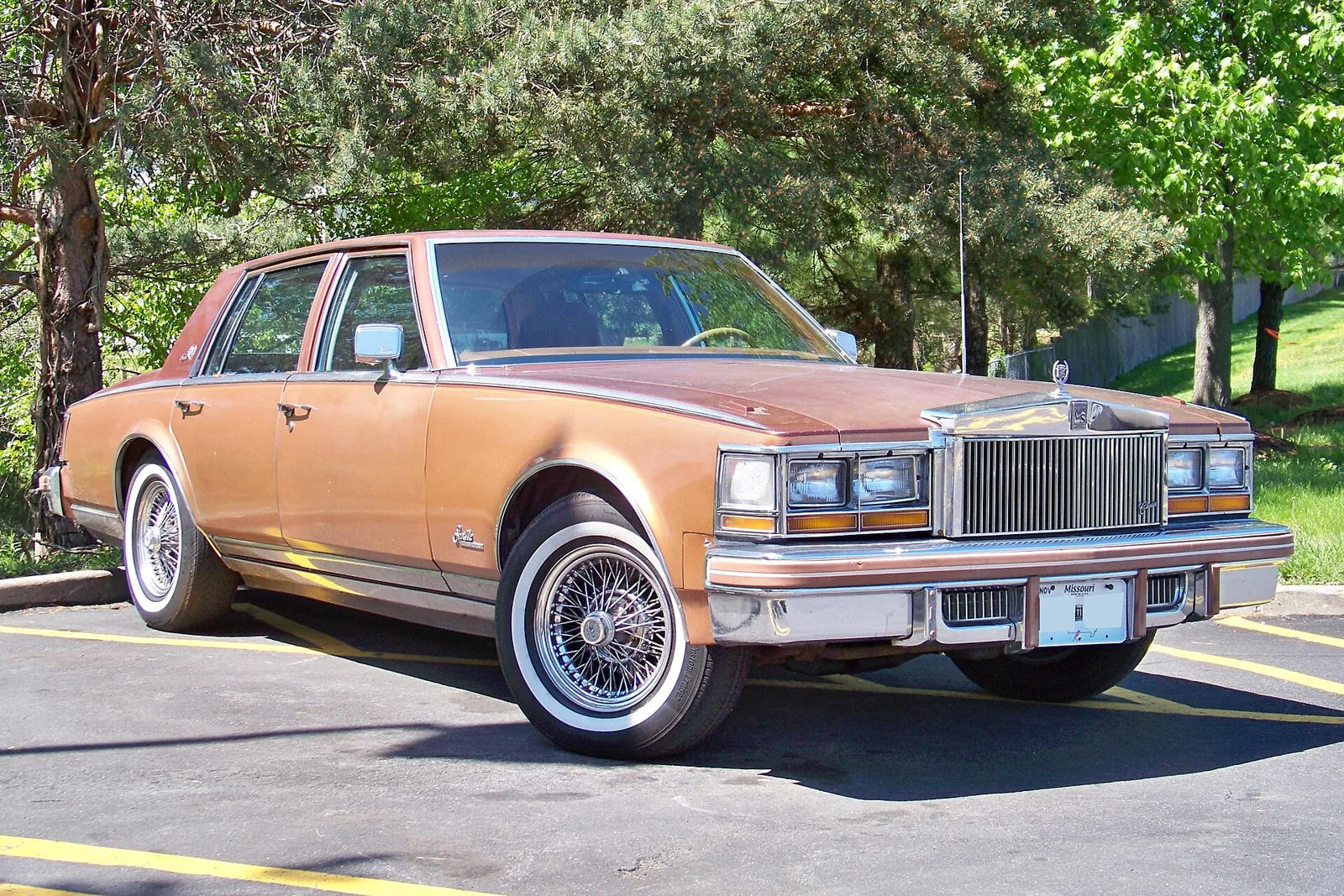
The Cadillac Seville of 1975 to 1979 was the first Cadillac to sit in the intermediate class, a luxury saloon General Motors built on its own X platform. It was the smallest Cadillac since the Second World War, and it was the company's answer to the imported Mercedes-Benz and BMW models that had taken hold in America after the oil shock of 1973.
Why did Cadillac build a smaller car?
Through the postwar years Cadillac built only full-size cars, among the largest and most powerful cars in the USA. When fuel prices jumped in 1973, wealthy American buyers began to look at smaller European luxury cars, and imports such as the Mercedes-Benz 'Strich Acht' and the BMW 2500 or 2800 sold strongly.
Of the three large American carmakers, General Motors was the first to spot demand for smaller luxury models under its own badges. Cadillac briefly considered selling the German Opel Diplomat B as a Cadillac through badge engineering, with a Chevrolet eight-cylinder in its top trim. The idea was dropped because the Diplomat's tight German tolerances would not transfer easily to US factories, and it shared no parts with American-built cars.
Smaller, well-equipped Cadillacs could sell in America, and the Seville proved it.
Where did the Seville's platform come from?
The Seville was derived from General Motors' X platform, which had served American mid-size cars since 1968. Cadillac renamed the basic structure the K platform for its own car, and the layout was rear-wheel drive, as was usual in the USA at the time.
Front-wheel drive, used on the Eldorado, was not an option for the first Seville. General Motors did not yet have the production capacity to build front-drive components for another model, so the car kept its rear-drive layout. Front-wheel drive arrived only with the 1980 generation.
How long did the Seville take to develop?
The Seville was developed in just 16 months. Management approved the project in December 1973, and the car went on sale in May 1975.
The Seville was the first Cadillac to belong to the intermediate class.
How big was the Seville compared with other Cadillacs?
Against the full-size DeVille and 60 Special, the Seville came in 50 cm (19.7 in) shorter and weighed nearly 450 kg (992 lb) less. On size it was close to the American-market Mercedes-Benz S-Class, and its trim level sat near that of the Eldorado personal luxury coupe.
Buyers got better equipment than on the regular DeVilles, so the Seville was not simply a smaller Cadillac in the usual sense. It stayed in the range for five years before the 1980 front-drive edition replaced it.
Why did the Seville matter for the Cadillac brand?
Its success showed that a well-appointed car from an American maker could find a market, and it prepared the ground for the downsizing Cadillac carried out in 1977, when the volume DeVille and Fleetwood Brougham series were reduced in size, and the brand moved toward smaller cars.
Its influence went beyond Cadillac. Its smooth, unadorned styling was taken up by Cadillac's own downsized full-size range, and by other makers such as Ford, whose Fairmont of 1977 and LTD of 1978 followed the same path.
What was the Seville called, and why?
At first the LaSalle name was considered. It had been carried by a Cadillac sister brand between 1927 and 1940, but that was awkward, since LaSalle had sold budget versions of Cadillac models while the new car was meant to be one of the priciest in the range. Market research also tied LaSalle to a loser's image.
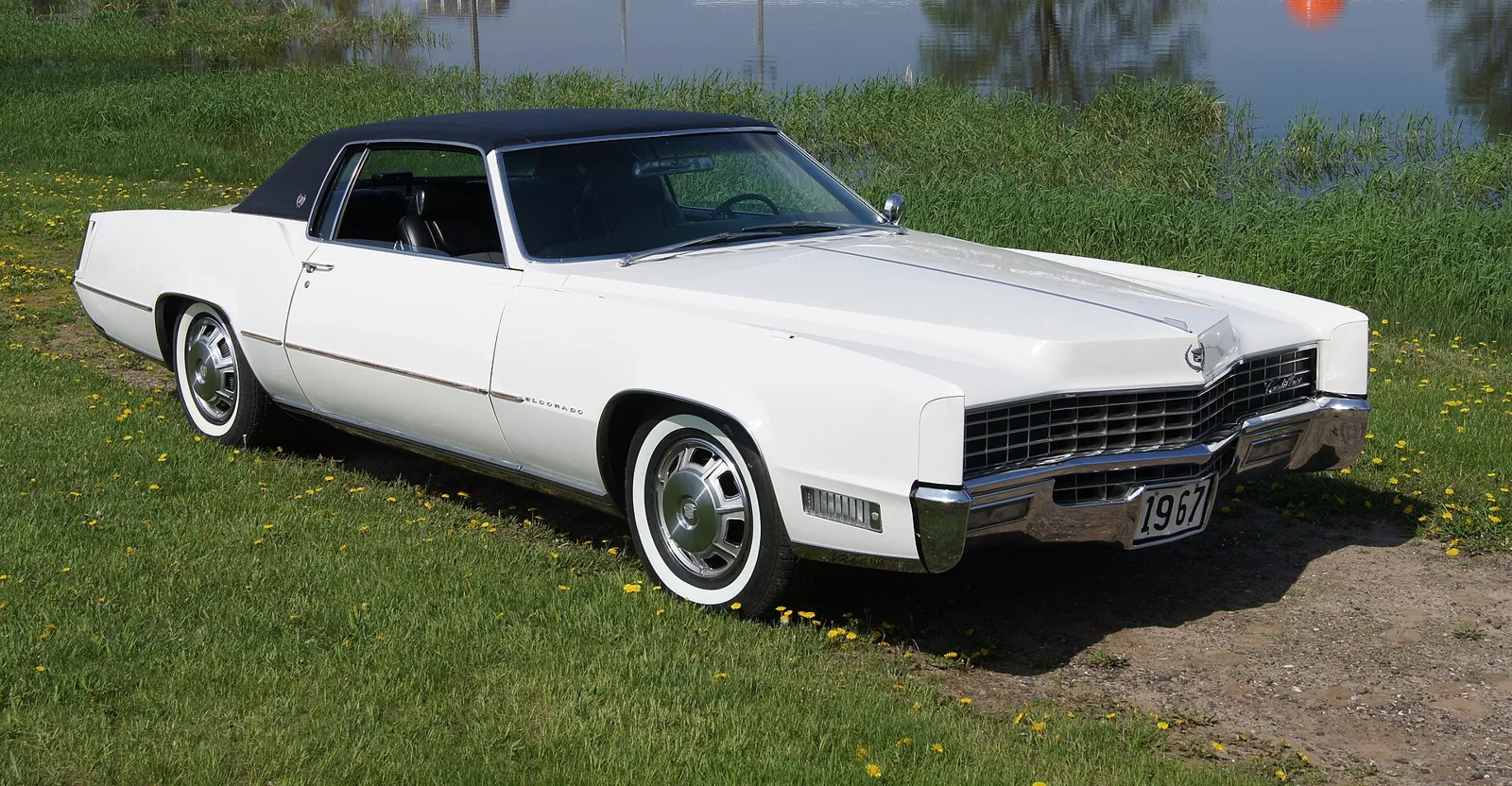
Leland, named for Henry Leland, Cadillac's founder, was dropped as well, since it echoed British Leyland too closely. Seville, named after the Spanish city, was chosen instead. Cadillac had used the word before, between 1956 and 1960, for the closed Eldorado Seville. When the 1953 Eldorado, first sold only as a two-door convertible, gained a hardtop coupe, the open car became the Biarritz and the closed one took the Seville name.
How was the Seville's chassis built?
Unlike the full-size Cadillacs, the Seville was built with a self-supporting body, with subframes fitted at each end. The rear subframe was adapted from the X platform's design, much like the one under the Chevrolet Nova. The floor pan also came from the X platform, stretched by 90 mm (3.5 in) for the Seville.
The front wheels were independently sprung on coil springs. The rear used a solid axle on leaf springs, taken over without change from the Nova. Early cars had discs only at the front, with drums behind them. From the 1977 model year every Seville had discs on all four wheels as standard.
How was the Seville body styled?
Credit for the body usually goes to GM design chief Bill Mitchell, though he supplied only a handful of core concepts. The detailing fell to a Cadillac team led by Stanley F. Parker, whose scheme beat an early hatchback idea from Wayne Kady.
Nothing about the Seville's looks echoed the other Cadillacs on sale. Rolls-Royce's Silver Shadow and Mercedes-Benz's S-Class inspired the stylists. The car had flat, angular surfaces and less chrome than any sibling, and few of its exposed panels could be swapped with other Cadillac or GM models.
The roof was the exception in the first two years. Its front section matched the X-body saloons, while the rear section was unique, which left a weld seam that was hidden under vinyl. From 1977 the roof was pressed in one piece, which removed the seam and allowed a painted metal roof, a choice many customers wanted.
What engines did the Seville use?
The standard engine throughout was a 350 cu in (5,735 cc) petrol V8. Oldsmobile, a GM division, supplied the block, while Cadillac made its own intake manifold. Bendix engineered the electronic fuel injection that came as standard. The engine made 180 SAE-PS (132 kW; 178 hp) through the 1977 model year.
The final two model years brought 170 SAE-PS (125 kW; 168 hp), after stricter emissions regulations. A three-speed TH-400 Turbo-Hydramatic automatic, standard equipment, sent drive to the rear axle.
Was there a diesel Seville?
A diesel eight arrived as a paid option during the 1978 model year, again made by Oldsmobile. Its capacity matched the petrol V8 exactly, yet peak output was just 120 SAE-PS (88 kW; 118 hp). It was the thriftier choice.
Economy figures were 21 mpg (11.5 L/100 km) in town, and the motorway figure was 30 mpg (7.5 L/100 km), according to the maker. The diesel added US$2,286 to the price.
Seville specifications at a glance
| Item | Detail |
|---|---|
| Model years | 1975 to 1979 |
| Platform | General Motors X platform, renamed K for Cadillac |
| Body | Unitary steel body with front and rear subframes |
| Standard engine | 350 cu in (5,735 cc) V8, petrol |
| Power, 1975 to 1977 | 180 SAE-PS (132 kW; 178 hp) |
| Power, last two model years | 170 SAE-PS (125 kW; 168 hp) |
| Diesel option, 1978 | 120 SAE-PS (88 kW; 118 hp) |
| Diesel fuel use | 21 mpg (11.5 L/100 km) city; 30 mpg (7.5 L/100 km) motorway |
| Transmission | Three-speed TH-400 automatic, rear-wheel drive |
| Length | 50 cm (19.7 in) shorter than the full-size DeVille |
| Weight | Nearly 450 kg (992 lb) lighter than the full-size DeVille |
| Production total | 218,659 cars |
How many Sevilles were built?
Detroit's Clark Avenue West works was where the Seville was assembled. Across almost five years, 218,659 examples were produced. Yearly figures ran from 43,772 in 1976 up to 56,985 in 1978, which put it at the bottom of Cadillac's sales table.
Only the long state limousines cost more among regular Cadillacs, which made the Seville the priciest production car in the range, about US$2,000 above the Fleetwood Eldorado. Its yearly volume was close to that of the Eldorado coupe. The cheaper DeVille and Fleetwood Brougham outsold it by as much as five to one.
Which Seville special editions were made?
Two special editions sat above the basic car, each sold at a much higher price than the standard saloon and each carrying equipment that set it apart.
The Elegante, launched in 1978, was Cadillac's answer to the Fleetwood Eldorado Biarritz coupe. Its standard kit ran deep: a roof free of vinyl, two-tone paint in black and grey or gold and brown, wire-spoke wheels, and leather upholstery on the seats, armrests, storage bins and writing tables.
The Gucci Edition came in the final model year, limited to 300 vehicles and developed with the Italian fashion house. Cadillac borrowed the idea from Lincoln, which had sold designer specials on the Continental Mark IV and Mark V coupes. The Florentine house was not tied to Lincoln, and its name had last appeared on an American Motors car, the Hornet, in 1971.
The Gucci cars came in black, white or brown. The C-pillar was vinyl-covered in a contrast colour, the interlocked Gucci 'G' appeared as a crest on both sides of it, on the wheel rims, the front wings and the bonnet mascot, and a green, red and green stripe ran across the lower edge of the boot lid. Miami specialist International Automotive Design converted each car by hand from a standard saloon. At US$23,000 the Gucci was US$9,000 more than the basic Seville and US$400 more than the Fleetwood limousine.
What did coachbuilders do to the Seville?
Independent coachbuilders produced their own versions of the Seville. Their conversions changed the car's length, its doors and its seating.
The best-known were the Grandeur models from Florida. Grandeur lengthened the car ahead of the passenger compartment and fitted dummy spare-wheel covers on both sides. The two-door, two-seat Opera Coupe kept the standard length, because the front extension and the cut at the rear cancelled out, while the four-door Opera Sedan was clearly longer than a standard Seville.
Chatsworth, California, was home to the Coach Design Group, which built five-seat, two-door notchback coupes marketed as San Remo coupes. Only the front doors were lengthened, and the rear doors were dropped. Some were given horizontal tail lamps on request, and some four-seat convertibles followed the same pattern.
Milan Coach Builders made a different car: a two-seat Milan coupe between 1976 and 1980. It shortened the wheelbase by 46 cm (18.1 in), removed the rear seats and covered the B-pillar in vinyl. To keep the shortened car balanced, Milan added over 200 kg (440 lb) of ballast at the rear, and by 1980 it had converted about 500 series Sevilles.
How did rivals answer the Seville at home?
Ford and Chrysler both brought out similar intermediates once the Seville had proved the idea in the US market. Their cars differed in how well they were equipped and priced, and that shaped how far each one reached.
Ford answered with the Lincoln Versailles in 1977, a car whose looks leaned toward the Seville. Doors, wings and roof panels were borrowed from the Granada and its Mercury Monarch twin, leaving only the nose and tail as new work. That family resemblance to its plainest sibling did it no favours, and Ford sold just over 50,000 in four years.
Chrysler, the smallest of the three big American makers, launched the LeBaron in 1977, with the Dodge Diplomat as its twin. Both cars grew out of the F platform, which also carried the Dodge Aspen and Plymouth Volare. The LeBaron came well equipped, yet it was less upmarket than the Seville or the Versailles, and it was much cheaper than either Cadillac or Lincoln. That gave it far wider reach, and Chrysler built more than 400,000 by 1981.
What happened to the Seville in Iran?
Starting in 1978, Iran General Motors of Tehran (Pars Khodro from 1980) put Sevilles together from CKD kits for the Iranian market. Locally it was called the Cadillac Iran (according to another source, the Cadillac Civil). It matched the American car, except that it lacked the US-mandated emissions control, so its engine output was noticeably higher.
Accounts of its production run do not agree. Some say building stopped in 1980, after the Islamic Revolution ended relations between Iran and the USA, while others claim output continued to 1987, possibly from kits delivered before 1980. Most estimates put the total above 2,000, with figures between 2,200 and 2,653 cars.