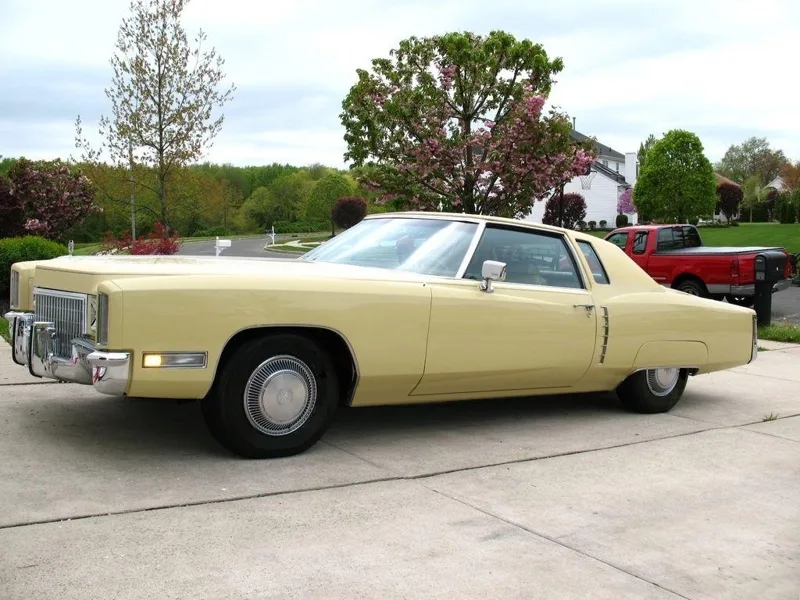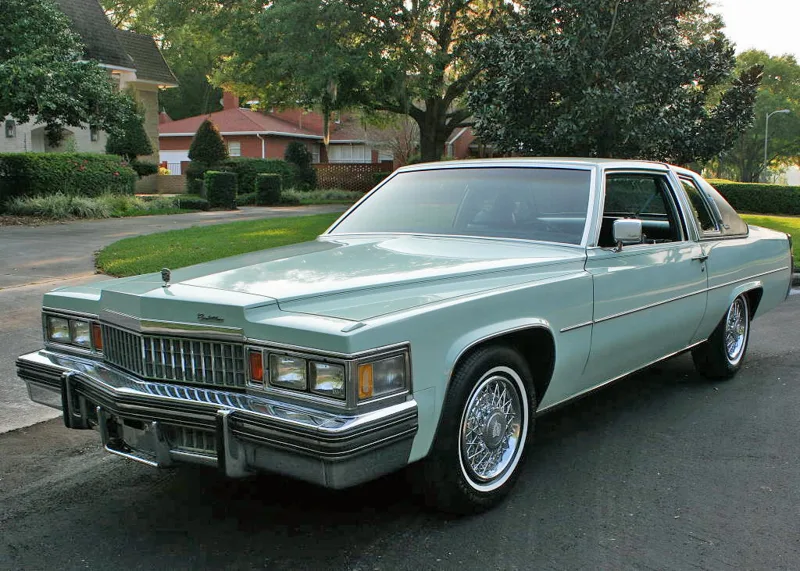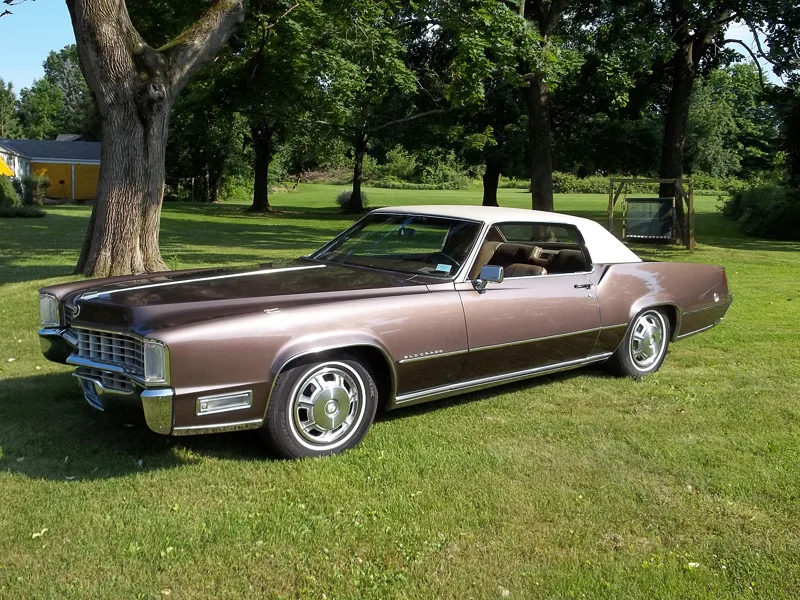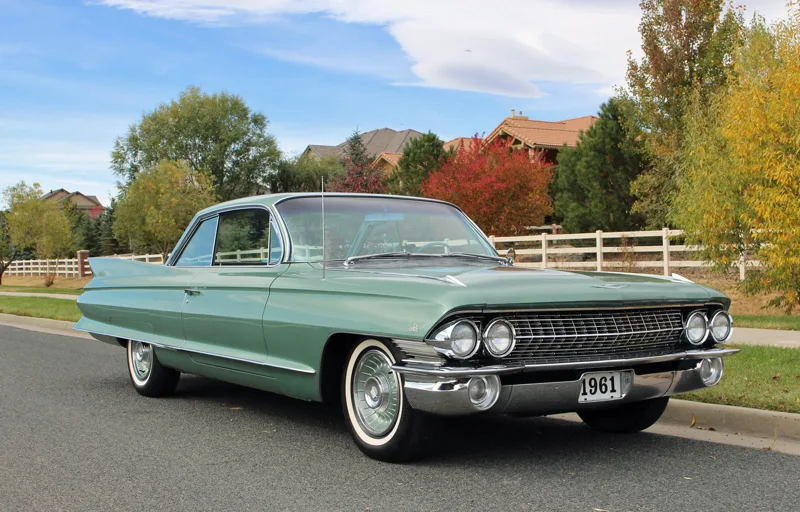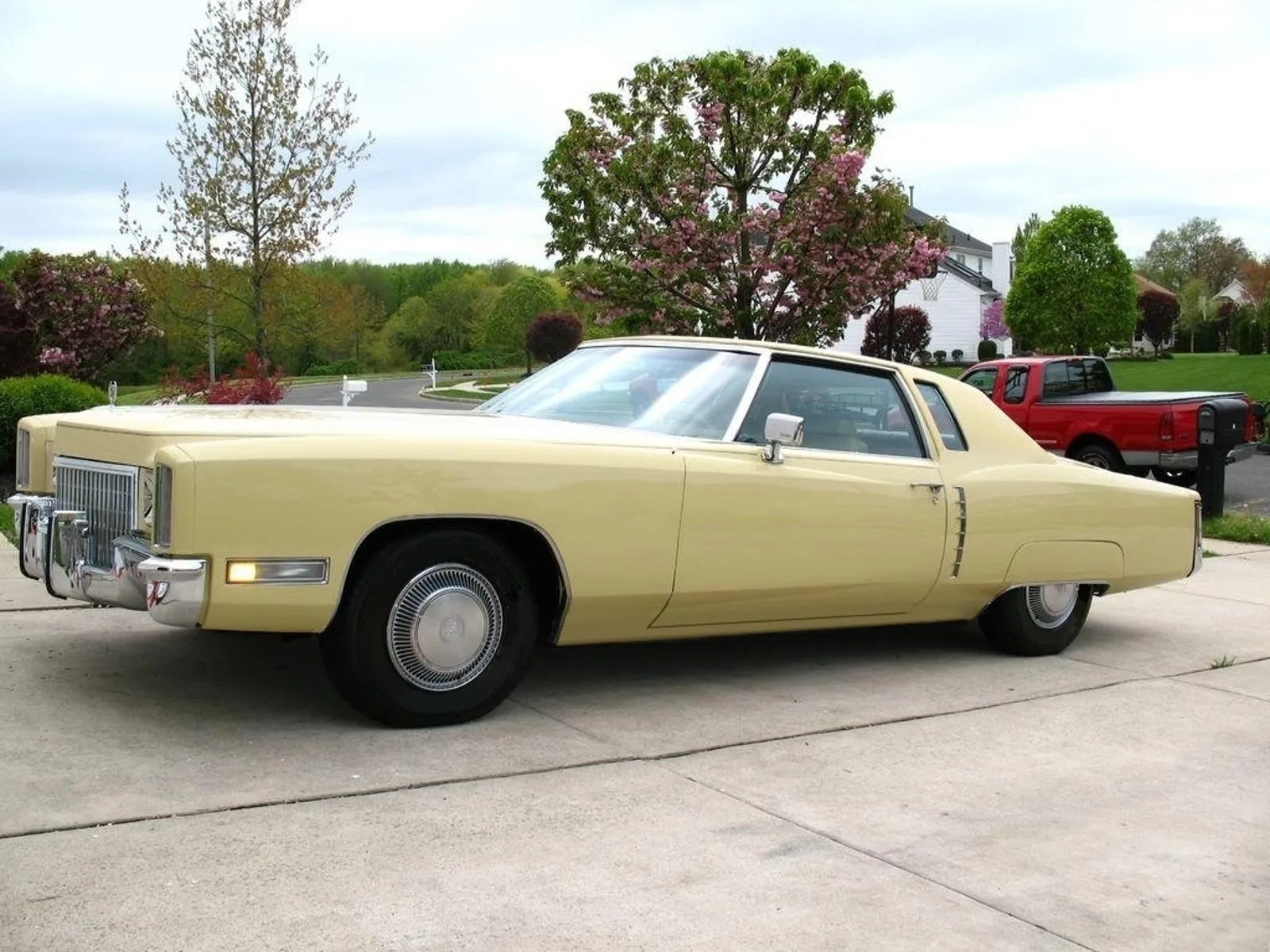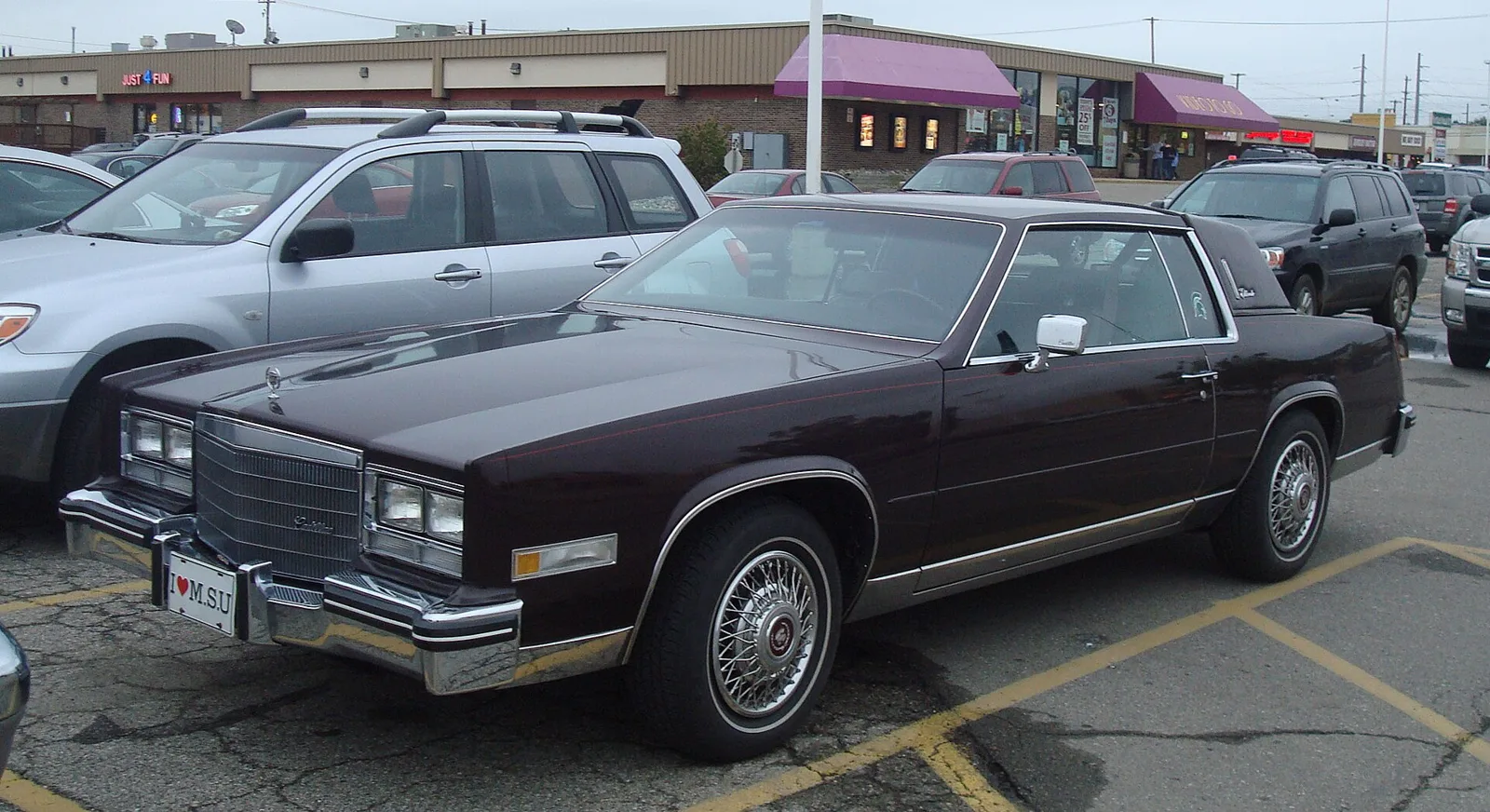
A front-drive personal luxury coupe that lost more than 50 cm in length, gained a diesel and a cylinder-deactivating V8, and outsold its Lincoln and Chrysler rivals.
The 1979 to 1985 Cadillac Eldorado was a front-drive personal luxury coupe from General Motors' Cadillac division, built on the E platform shared with the Buick Riviera and Oldsmobile Toronado. It was smaller than the car it replaced, offered an eight-cylinder diesel and regularly outsold the Lincoln models it competed with.
The Eldorado of 1979 was the third front-drive generation, and it was shorter and lighter than the car it replaced. It appeared just before the second oil crisis. Its engines caused trouble, but its sales did not.
Where did the Eldorado come from?
The Eldorado line started in 1953, after a summer 1952 show car, the El Dorado Golden Anniversary, had marked Cadillac's 50th year. For the first 13 years the Eldorado sat above the Series 62 Convertible in the Cadillac hierarchy, usually running on the base model's rear-drive engineering.
The first-year price gap to the Series 62 exceeded US$3,500, then settled in a band of US$1,500 to US$2,000. Until 1958 the Eldorado had bodies of its own that set it apart from standard Cadillacs. From 1959 it shared the body of Cadillac's standard convertibles, and the names Eldorado Biarritz and later Fleetwood Eldorado followed. Annual output in the 1960s stayed in the lower four-figure range.
A smaller, lighter Eldorado that arrived just before the second oil crisis and outsold its Lincoln rivals.
Why did the 1967 Eldorado change direction?
In 1967 Cadillac separated the Eldorado from its standard models in engineering and styling, developing it into an independent upper-class coupe. Part of that shift was the move to front-wheel drive, a novelty in the class.
The second front-drive generation appeared in August 1971, after just under four years of the first. Larger, heavier and more unwieldy, it was thought to be the biggest front-drive car anywhere. During the oil crisis years it sold poorly, well behind the Lincoln rivals.
Why was the third generation smaller?
Cadillac had already downsized its DeVille and Fleetwood Brougham for 1977. Two years later it carried the same development into the front-drive Eldorado. The coupe that appeared in late summer 1978 was assigned to the 1979 model year. It was over 50 cm (19.7 in) shorter and weighed 500 kg (1,102 lb) less than its predecessor.
The smaller car still offered more interior room than before. It arrived just before the second oil crisis broke out, and the press called it the right car at the right time. Unlike the car it replaced, it regularly sold more than the Lincoln rivals.
The model also shed its Fleetwood name with this generation, so from 1979 the coupe carried just the Eldorado badge.
How did the chassis and body work?
The Eldorado had a newly designed chassis with independent rear suspension in place of the live axle. That was unusual for American cars of the period, and it freed space in the cabin and boot despite smaller outside dimensions. Disc brakes at the front and rear, and electronically controlled level regulation, were standard.
Designers built a squared-off body with smooth panels and crisp angles on the shared E-platform shell. Bill Mitchell's 1967 proportions were kept: a long bonnet and a short tail. The most striking element was an almost vertical C-pillar with a narrow rear window. The shape of the rear roof section and the vinyl pattern varied with the trim level. The sister cars shared a common body concept, yet many details diverged.
The tail, with its narrow vertical rear lamps, quoted Mitchell's 1967 Eldorado. The square twin headlamps with indicators below them followed the fashion of the period, and each of the three major American makers offered similar faces.
Eldorado engine line-up
| Engine | Years | Output | Notes |
|---|---|---|---|
| 5.7-litre (348 cu in) eight-cylinder diesel | 1979 to 1985 | 105 SAE PS | Supplied by Oldsmobile |
| 5.7-litre V8 petrol | 1979 | 170 SAE PS | Standard engine, used in the Seville from 1975 |
| 6.0-litre (366 cu in) V8 petrol | 1980 | 145 SAE PS | Cadillac design, digital petrol injection |
| 6.0-litre V8 with cylinder deactivation | 1981 | 140 PS | Four, six or eight cylinders working |
| 4.1-litre (250 cu in) six | 1981 and 1982 | 125 SAE PS | Bought in from Buick, first six in Cadillac history |
| 4.1-litre (250 cu in) eight-cylinder High Technology Engine | 1982 onward | 125 PS, then 135 PS from 1983 | Developed by Cadillac |
Why did the engines damage the brand?
Tightening legal requirements on exhaust emissions and fleet fuel economy pushed Cadillac toward smaller engines. Some designs were not mature, produced complaints and hurt the brand's reputation. Output fell as low as 105 PS, and some engines had only half the capacity of the predecessor's 8.2-litre eight.
The diesel was the only engine offered through the whole production run of the coupe. Its 5.7-litre eight-cylinder produced 105 SAE PS, which left the Eldorado and the standard Cadillacs that could also take it underpowered, and the engine was unreliable as well.
Cylinder deactivation on the 1981 engine often did not work correctly. Together with the diesel, it damaged the brand's image at the start of the 1980s.
What trim levels did the Eldorado offer?
The Eldorado Biarritz was a particularly well-equipped version, offered throughout the production run. It had chrome-spoke wheels, specially padded seats and a forward roof panel in polished stainless steel. The Touring Coupe, from 1982, was a sportier alternative with firmer suspension and two separate front seats.
The Biarritz name referred to the Basque seaside resort and echoed a naming scheme first used in 1956. In the first year the surcharge for a Biarritz with leather trim was US$2,600, and adding the Astroroof sliding roof raised it by US$1,138.
The Touring Coupe was marketed as a driver's car. It carried less chrome than the standard models and had a body-coloured roof, while vinyl covering and whitewall tyres were not offered on it.
Did the Eldorado come as a convertible?
Production of the Eldorado that was, for the time being, the last open Cadillac ended in 1976, and Cadillac announced that it would build no more open vehicles. Interest in Eldorado convertibles persisted on the American market, and independent firms converted new coupes into convertibles to customer order from 1977, and the practice carried on with the third generation. Cadillac's own convertible therefore arrived only in 1984, after the outside converters had filled the gap.
In certain years the Cabriolet Roof was all Cadillac offered, a coupe with a fixed, fabric-covered metal roof that looked like a convertible but could not open.
Cadillac did not address that demand at the factory for years. Chrysler's small LeBaron Convertible, built on the K-car, had brought an open car back into Chrysler's range in 1982 with considerable success. Buick followed with the Riviera Convertible in 1983, and Cadillac came next in 1984 with the Eldorado Biarritz Convertible. ASC converted series coupes on factory commission, and the car was offered only with the 4.1-litre eight-cylinder petrol engine. At US$31,286 it cost more than 50 percent above the regular coupe. About 3,300 were built in 1984 and a further 2,300 the following year, so output fell in the second year.
Who built the conversions and special versions?
Independent firms made most of the conversion work. Among the most successful firms in this trade were American Custom Coachworks (ACC), based in Hollywood, the American Sunroof Corporation (ASC) of Michigan, and Hess & Eisenhardt in Ohio. ACC was the main maker of lengthened versions, which had a trimmed spare wheel tucked between the front arch and the front door edge.
Pierre Cardin Automotive produced the Cardin Evolution I on this generation. Its outward styling had been reworked and its interior fitted out to a high standard, and about 100 were sold between 1980 and 1982.
How did the Eldorado compare with its rivals?
On its home market the Eldorado competed mainly with Lincoln's Continental Mark VI, which ran for four years in coupe and four-door saloon forms. Chrysler also offered the Imperial Coupe for three years, but the Eldorado was by far the most successful of the three.
The third front-drive generation was produced for seven years in total, and in that time the Eldorado regularly outsold its Lincoln competitors.