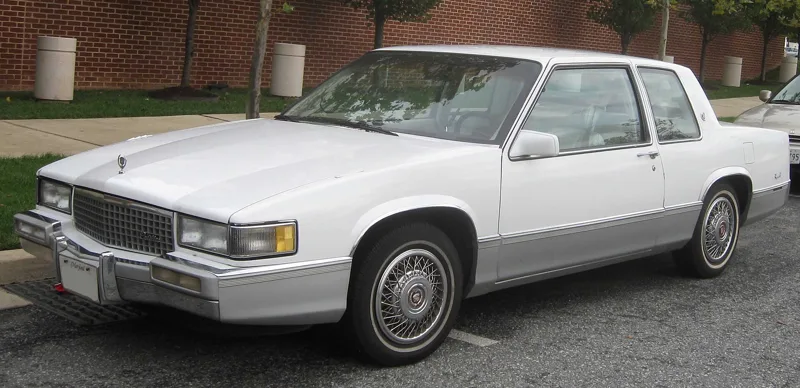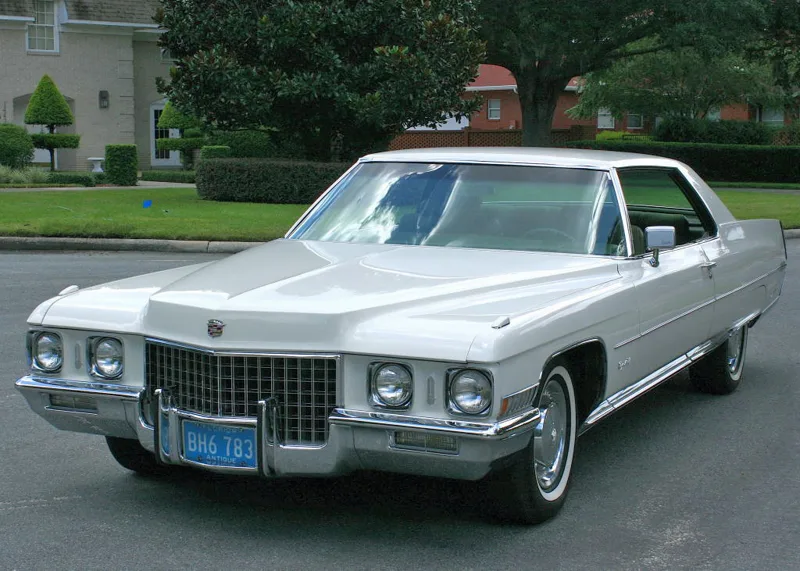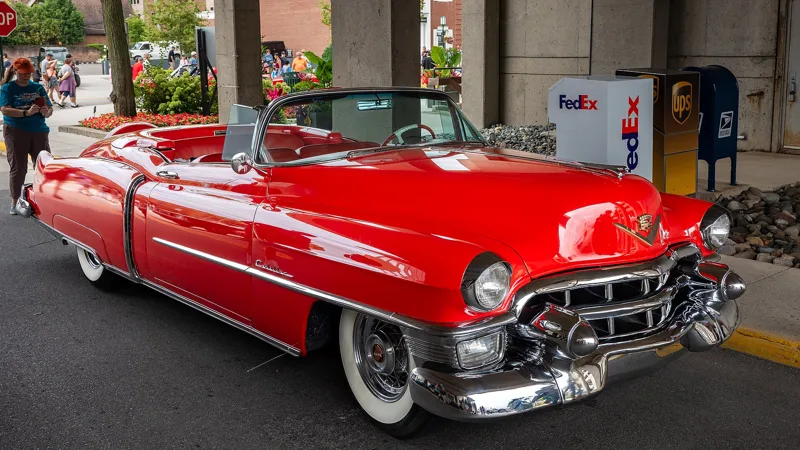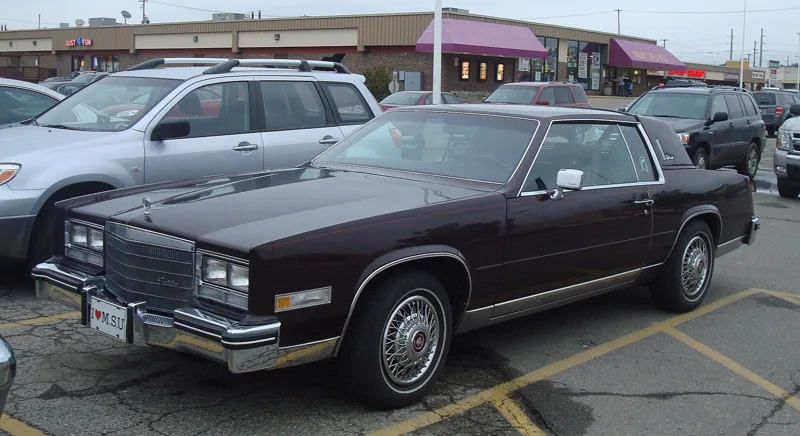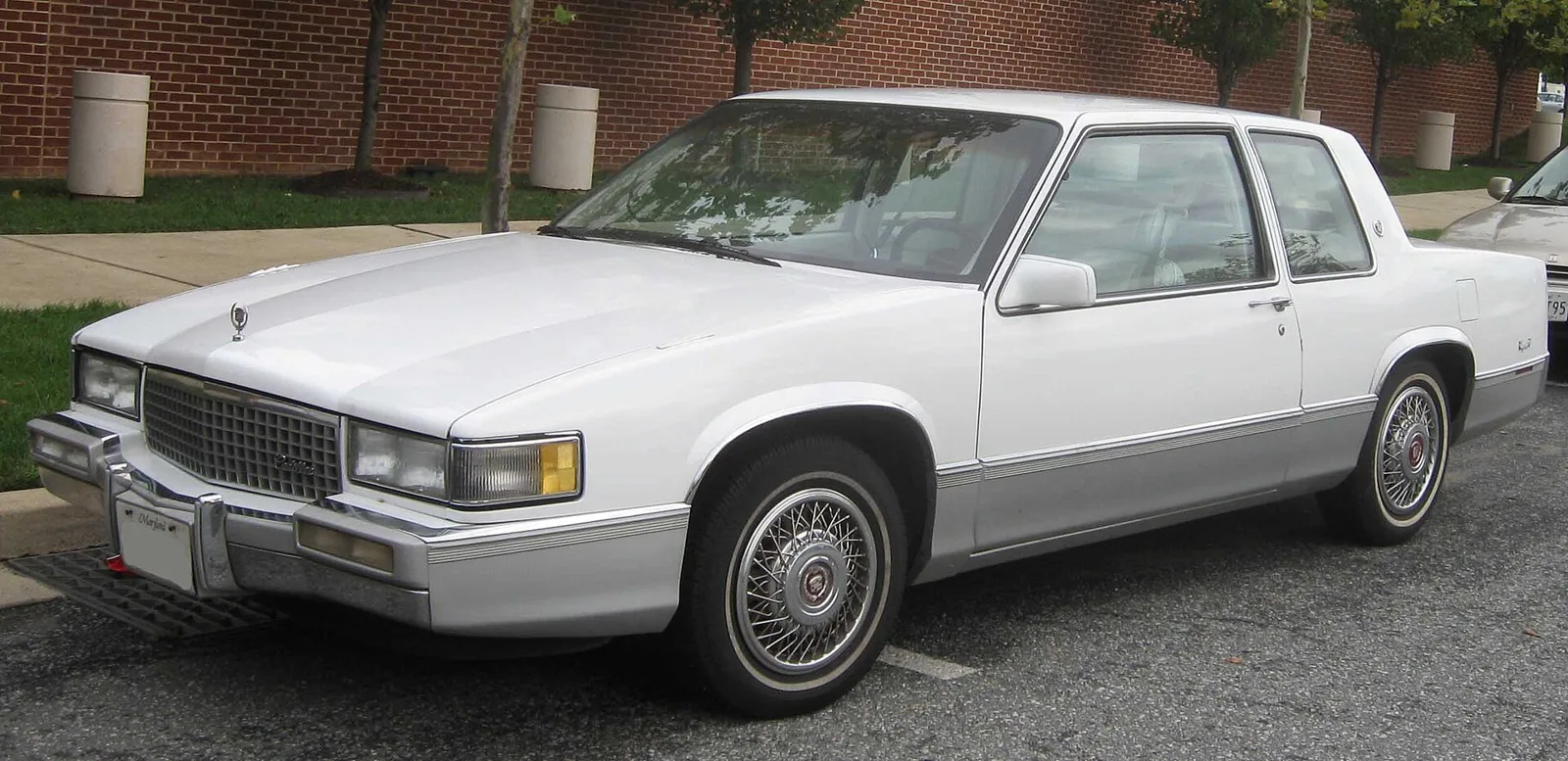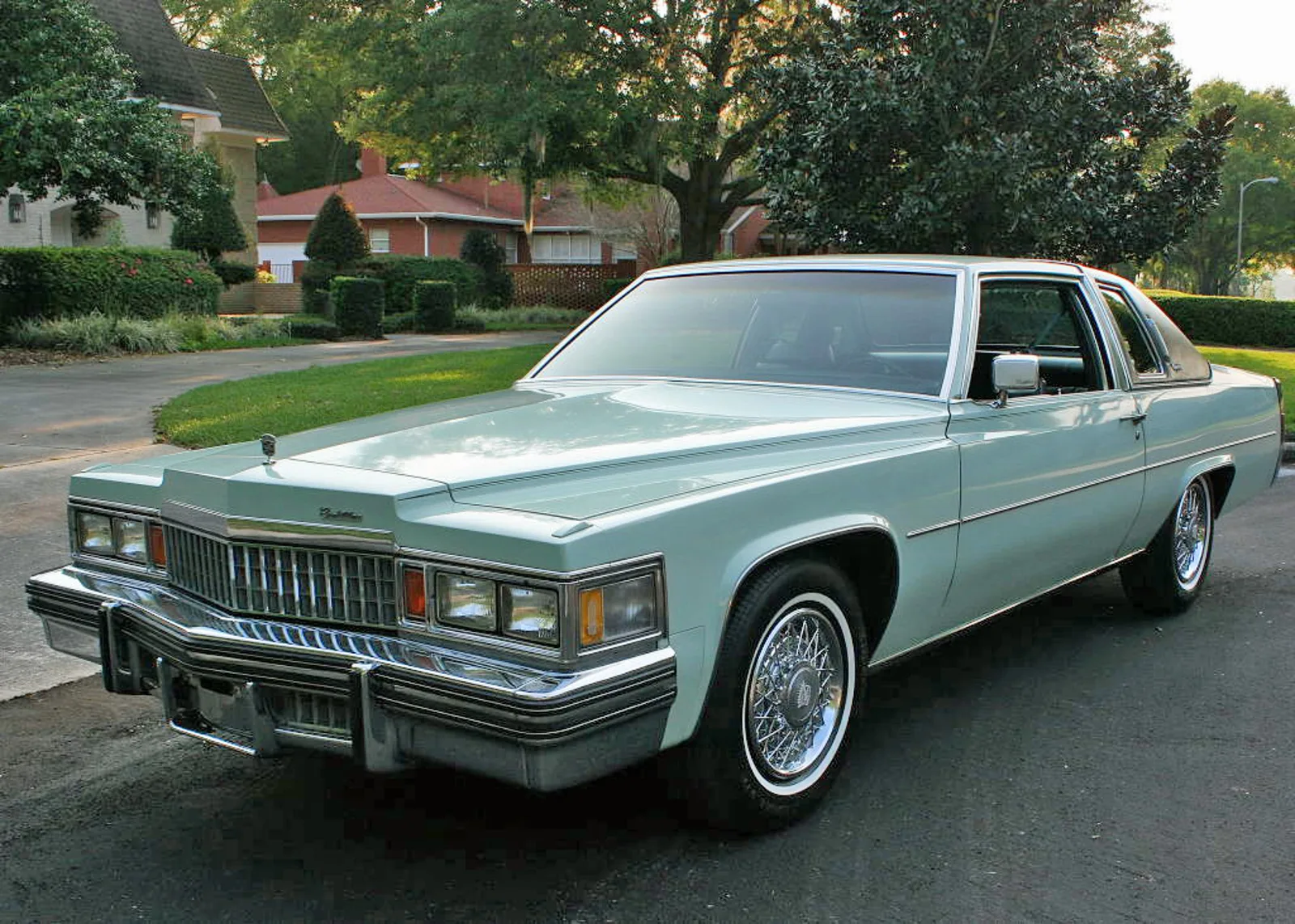
The fifth DeVille generation traded size for economy, then depended on engines that too often let owners down.
The fifth-generation Cadillac DeVille, built from 1977 to 1984, was the last rear-drive DeVille and a shorter, lighter full-size car. Its 7.0-litre V8 gave way to a 6.0-litre engine with cylinder deactivation, and an Oldsmobile diesel was offered alongside. The coupe and sedan were joined by the dearer Fleetwood Brougham.
Built from 1977 to 1984, the Cadillac DeVille was a rear-drive coupe and sedan, and it was the fifth generation of a family that began in 1949. It was also the last DeVille with rear-wheel drive, and its engines earned it a reputation for trouble.
Where did the DeVille name come from?
The DeVille name began in 1949 on a Cadillac hardtop coupe. At first it was simply a better-equipped Series 62, but for model year 1959 it became a separate model, positioned between the Series 62 and the costlier Series 60 Special. When the Calais range took over from the Series 62, the DeVille held the middle ground.
The fifth generation arrived for model year 1977 and ended production of the last Calais, which had no successor. That move turned the DeVille into the brand's entry-level car, a position it held until the arrival of the Cimarron in 1982.
A shorter, lighter DeVille that still depended on engines too many owners found unreliable.
Why did the fifth generation shrink?
Fuel prices and rules drove the change. The 1973 oil price crisis hit sales of big American cars, some of which were up to six metres long with kerb weights of up to 2.5 tonnes. Federal fleet fuel rules called CAFE took effect in 1975, and they forced manufacturers to cut consumption, with requirements tightened over time.
Cadillac's answer was a shorter and lighter DeVille built on a new platform. The fifth generation was produced for eight years, with the Fleetwood Brougham sitting above it as a dearer version on the same basis.
How was the DeVille built?
The car rode on a new platform that Cadillac called the C platform. Its chassis was a steel ladder frame with crossmembers, and the body sat on top. Coil springs sat at both ends of independent suspension. The front had disc brakes and the rear drum brakes, while the Fleetwood Brougham had discs at all four corners.
Despite the smaller dimensions, the fifth generation remained technically undemanding in its construction. The DeVille offered rear level control as an extra, while the Fleetwood Brougham fitted it as standard.
Body styles and the 1975 rules
The DeVille came as a four-door notchback saloon and a two-door notchback coupe, and no convertible was offered. The last open DeVille had been built in 1970. Factory special editions used vinyl roof coverings to suggest a convertible hood, and independent coachbuilders turned coupes into convertibles for private customers.
Side-impact rules changed the design. From 1975 newly introduced cars could no longer reach the market without a continuous centre pillar, so the saloon and coupe lost their genuine hardtop status. This generation was also the first DeVille with no side cover over the rear wheels.
Styling otherwise stayed close to the original. Minor trim changes came almost every year, the tail lamp surrounds were revised after the first model year, and the 1980 model year brought the only major facelift. That facelift reworked the nose and the shape of the C-pillar, and the indicators moved horizontally beneath the headlamps.
What was the 7.0-litre V8?
Standard from 1977 to 1979 was a 7.0-litre V8 of 6,966 cc (425 cu in), derived from a 7.7-litre eight introduced in 1968. Stroke stayed at 103.1 mm, and the bore was trimmed to 103.7 mm. The base engine had a four-barrel carburettor and made 182 PS (134 kW; 180 hp).
Buyers who paid extra could specify fuel injection, which lifted output to 198 PS (145 kW; 195 hp). That was the stronger of the two versions.
Engines that let owners down
For model year 1980 a 6.0-litre V8 replaced the seven-litre unit. From 1981 Eaton Corporation's cylinder deactivation scheme was fitted, running four, six or eight cylinders depending on the load. The unused cylinders received no mixture and their pistons simply moved without power. The system often failed, and that damaged the brand's image early in the 1980s. The 6.0-litre unit stayed in the DeVille and the Fleetwood Brougham only until the close of model year 1981; only the long Fleetwood Limousine kept it until 1984.
Cadillac brought in a Buick-built 4.1-litre V6 at the close of calendar 1980, in the middle of model year 1981, after the deactivation system had shown early unreliability. It was priced US$165 below the V8-6-4 engine and carried on for 1982. For 1982 a new HT-series V8 of 4,087 cc (249 cu in) became the standard engine, with an aluminium block, cast-steel heads and electronic petrol injection. Its output was 101 kW (135 PS; 133 hp).
The diesel was an Oldsmobile eight-cylinder of 5,736 cc, which Cadillac had in its range from 1978 to 1984. It started at 125 PS (123 hp) and fell to 105 PS (104 hp) from 1980, and a design fault in the cylinder head caused many serious failures on the road. The diesel programme was described as one of the biggest disasters in General Motors' history.
Why did output drop so sharply in 1980?
Cadillac built 40 per cent fewer cars in 1980 than the year before, the hardest hit of any brand after the second oil crisis of spring 1979. Model year 1980 produced 55,500 coupes and 49,000 sedans. Prices had also climbed, with the coupe at US$11,750 and the sedan at US$12,093.
Model years 1977 to 1984 in brief
1977
The debut year offered only the 7.0-litre V8, in four-door and two-door bodies. Vertical tail lamps, visible from three sides, appeared on this year alone, and Cadillac brought the idea back on the redesigned Eldorado in 1979.
1978
The tail lamps were redesigned with a chrome surround, and the Phaeton Edition arrived at a high surcharge. Production fell slightly, while the Fleetwood Brougham gained ground.
1979
This was the last year with the original body shape, and the eight-cylinder diesel from Oldsmobile was offered for the first time alongside the familiar petrol engine. Output was at a similar level to the year before, with 121,890 coupes and 93,211 sedans built.
1980
The revised car gained a formal roofline and a new front end, and the Custom Phaeton was dropped without replacement. The new Fleetwood Brougham coupe broke with the tradition that models above the DeVille were four-door only.
1981
The 6.0-litre engine with cylinder deactivation was the standard unit, and a Buick V6 with a twin-barrel carburettor came in at a US$165 saving over the V8-6-4 engine. It made the car feel underpowered.
1982
The Cimarron's arrival ended the DeVille's role as the brand's entry-level car. Only marginal style changes were made, mainly to the grille pattern, and prices rose markedly.
1983
Buick's six-cylinder was removed from the range, leaving the HT4100 petrol unit alongside Oldsmobile's diesel. Changes were confined to small items such as indicator lens colours and trim placement.
1984
The last year brought no further changes to the rear-drive DeVille. The front-drive successor was already on sale from April 1984, which hit sales of the old models.
How much did the DeVille cost and sell?
In 1977 the coupe listed at US$9,810, and the four-door cost US$200 more. Those two were the cheapest Cadillacs, while the Fleetwood Brougham sold for just over US$1,500 more. The coupe found 138,750 buyers, making it the best-selling Cadillac of the year.
Sales then drifted. In 1978 the coupe list price rose by US$650 and the sedan by US$900, while production eased to 117,750 coupes and 88,951 sedans. Fleetwood Brougham sales rose by just over 10,000 units against 1977.
Prices kept climbing. The 1981 coupe cost US$13,450 and the sedan US$13,847, and by 1982 the base prices had reached US$15,249 for the coupe and US$15,699 for the sedan. The 1983 coupe listed at US$15,970, while the four-door cost US$16,441.
What was the Cabriolet Roof option?
The Cabriolet Roof was a widely fitted option on the coupe, available in all model years. Its metal roof could not be folded, and only the rear section carried a vinyl covering meant to suggest a landau. Marketing sometimes called its rear side window the opera window, and the option cost US$348 in 1977.
What was the Custom Phaeton?
The Custom Phaeton was a package for the saloon and coupe in 1978 and 1979. Like the Cabriolet Roof, it used vinyl to imitate a convertible hood, but the vinyl covered the whole roof, running from the windscreen frame back to the end of the C-pillar. Surcharges sat near US$2,000, about a fifth of a DeVille's base price.
The 1978 colours included Cotillion White with a dark blue roof, Platinum Silver with a black roof and Arizona Beige with a dark brown roof. In 1979 white and silver remained, joined by Western Saddle Firemist with Antique Saddle leather, and Arizona Beige was dropped.
What did the D'Elegance package include?
The D'Elegance Edition was available in every model year on both bodies. It changed the interior, mainly the seats, which had velour-covered cushion tops with buttons as appliques, and it matched the door side panels. The pattern changed yearly. It cost US$689 in 1977 and US$1,005 in 1980. Leather was not offered on the DeVille.
Many critics called the package plush, and argued that it distracted buyers from the basic engineering under the sheet metal. That makes it a typical feature of the Malaise Era in that regard.
A DeVille on screen
Martin Scorsese's film GoodFellas features a 1979 Coupe DeVille in the hands of Henry Hill, a role for Ray Liotta. The car carries a Phaeton package in Western Saddle Firemist.
Specifications at a glance
| Specification | Detail |
|---|---|
| Model years | 1977 to 1984 (fifth generation) |
| Layout | Rear-wheel drive, steel ladder frame, C platform |
| Length change from 1976 | Down 250 mm (9.8 in) |
| Wheelbase change from 1976 | Down 216 mm (8.5 in) |
| Weight change from 1976 | Up to 500 kg (1,102 lb) lighter |
| Engine, 1977 to 1979 | 6,966 cc (425 cu in) V8, 182 PS (134 kW; 180 hp) |
| Fuel-injected option, 1977 to 1979 | 198 PS (145 kW; 195 hp) |
| Engine, 1980 and 1981 | 6.0-litre V8; V8-6-4 cylinder deactivation from 1981 |
| Buick V6, 1981 and 1982 | 4,128 cc (252 cu in), 125 PS (93 kW; 123 hp) |
| HT4100 V8, from 1982 | 4,087 cc (249 cu in), 101 kW (135 PS; 133 hp) |
| Oldsmobile diesel, 1978 to 1984 | 5,736 cc, 125 PS (123 hp), then 105 PS (104 hp) |
| Coupe price, 1977 | US$9,810 base |
| Coupe price, 1983 | US$15,970 |
What came after the rear-drive DeVille?
Production of the rear-drive DeVille ran out in 1984, unlike that of the Fleetwood Brougham. The sixth generation followed for model year 1985 as a considerably shorter and lighter car with a unitary body and front-wheel drive, with transversely mounted engines.
The change marked a break with rear-wheel drive, which the fifth generation was the last DeVille to have.