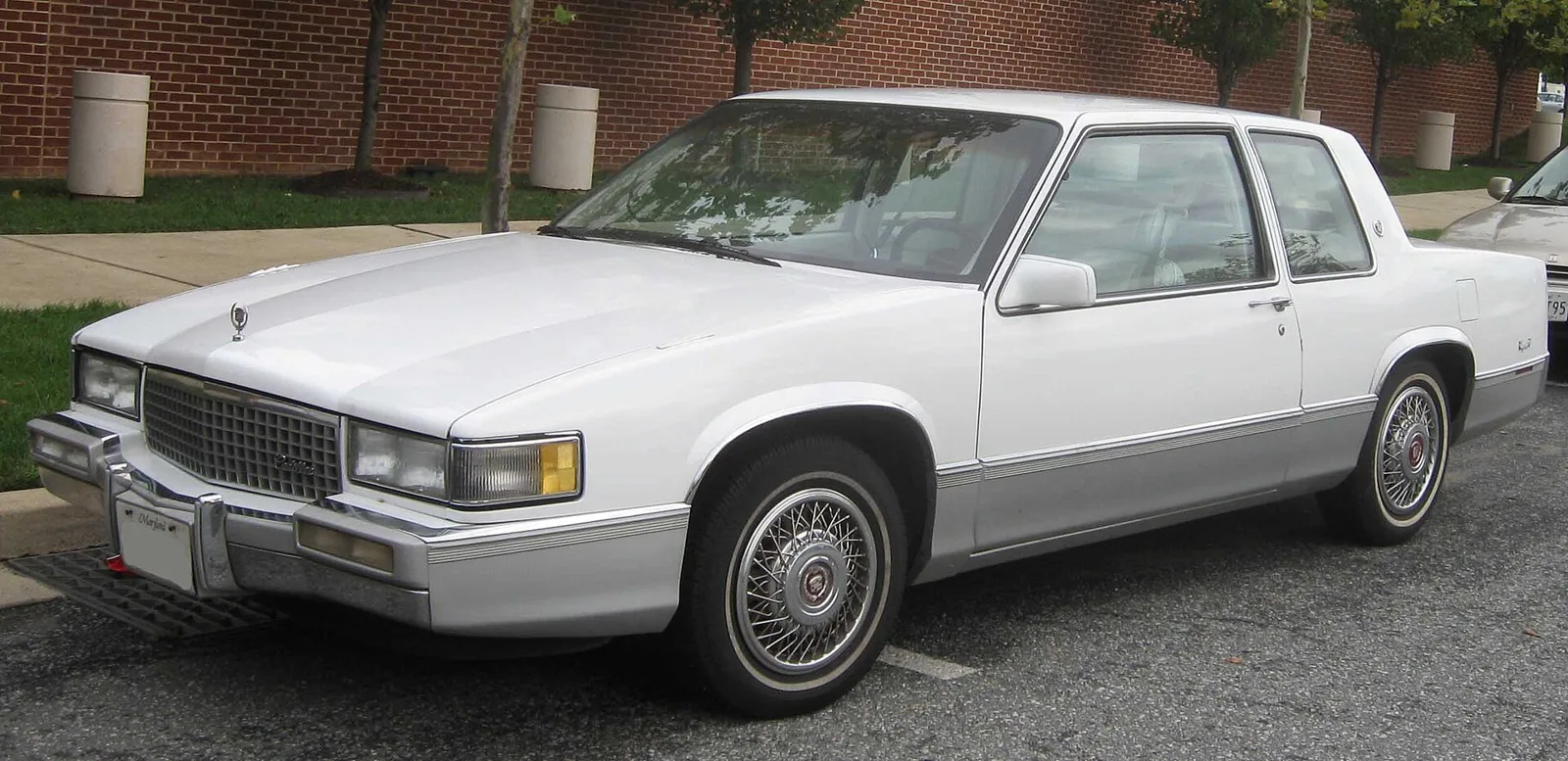
The sixth DeVille generation, sold from 1985 to 1988, traded its rear-drive frame for a self-supporting front-drive body and a shorter, lighter shape.
The Cadillac DeVille of 1985 to 1988 was a luxury car sold by General Motors as the Coupe DeVille and Sedan DeVille. It was the sixth of nine DeVille generations and the first to use front-wheel drive, with a transverse V8 and a body about 600 mm shorter than its predecessors.
The 1985 to 1988 Cadillac DeVille was the first DeVille with front-wheel drive, and it arrived as the sixth generation of a family that began in 1949. General Motors sold it as the Coupe DeVille and the Sedan DeVille, aimed mostly at North American buyers, with a pricier Fleetwood alongside.
Where did the DeVille come from?
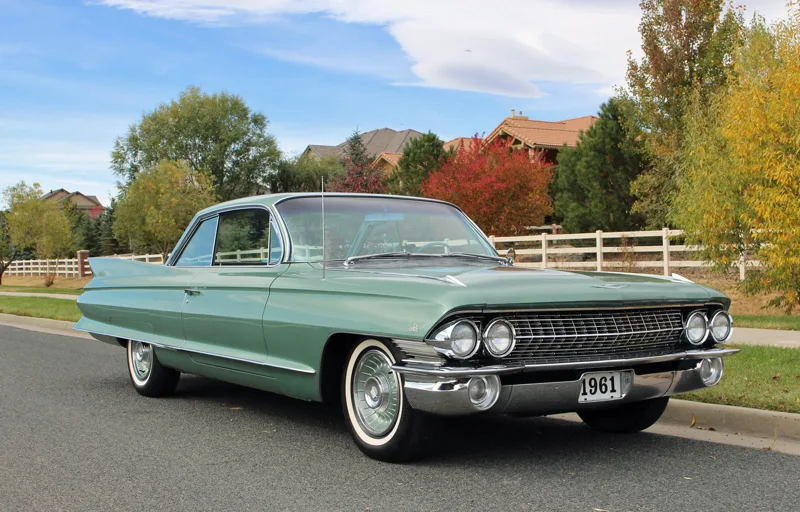
The DeVille began in 1949 as a Cadillac hardtop coupe. For a time it was only a better-equipped trim of the Series 62, then it became a model of its own for 1959, sitting above the Series 62 and below the costly Series 60 Special. It later became the entry-level Cadillac.
Through the following years Cadillac kept comparable models in its line-up.
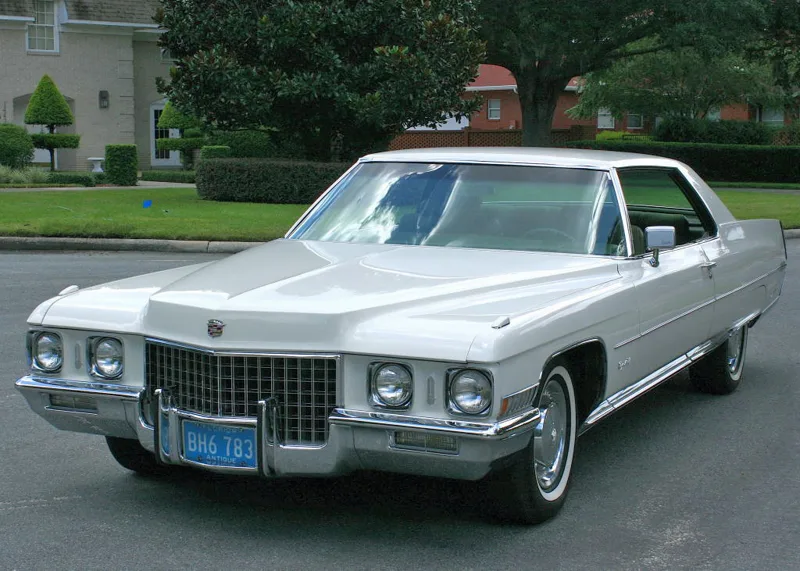
When the Calais took over the middle of the full-size line from the Series 62, the DeVille stayed put in that slot. The Calais was dropped at the end of 1976, and that made the DeVille the least expensive Cadillac on sale. Above it sat the Fleetwood Brougham, which used the same platform but came better equipped.
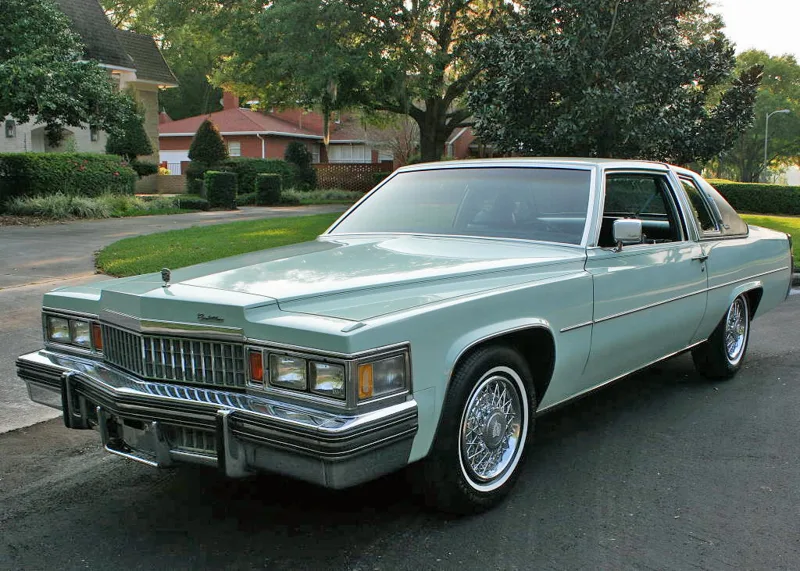
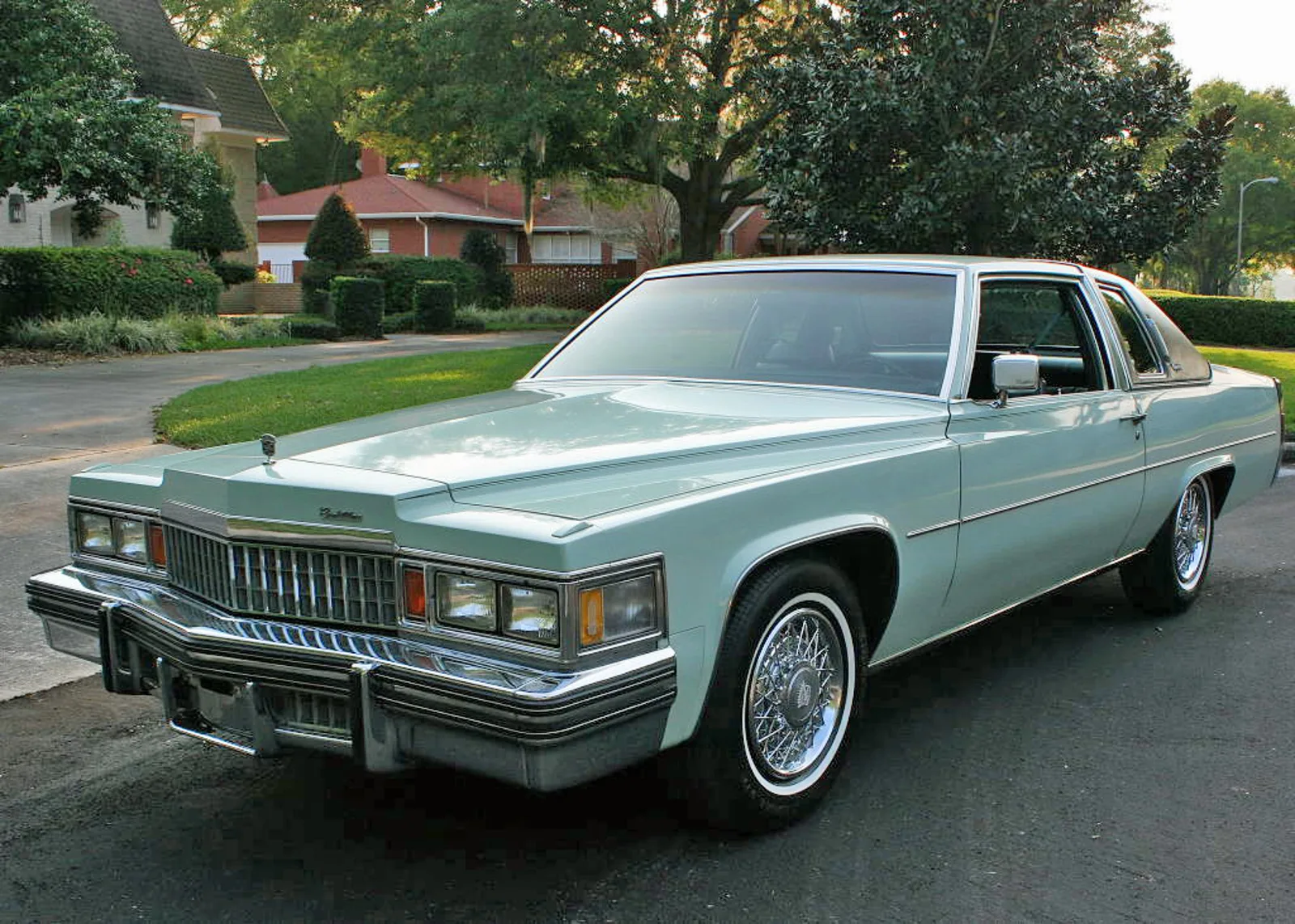
The 1977 generation was lighter and smaller than the cars that came before, but its underpinnings stayed conventional and undemanding. The shrinking was Cadillac's answer to the 1973 oil crisis, when fuel prices rose sharply. These cars were the brand's first steps toward smaller, more economical full-size models.
A front-drive DeVille with a self-supporting body, shorter and lighter than the car it replaced.
How did the 1977 cars differ from the 1985 DeVille?
The 1977 cars were lighter and smaller than their 1976 forerunners, but they still relied on a box chassis with power sent to the rear wheels. The 1985 generation went further, with a self-supporting body, a transversely mounted engine and front-wheel drive, so no separate frame carried the body.
Cadillac therefore changed the foundation of the car rather than only its size. The 1977 cars were a step toward economy, while the 1985 model went on to rework the drive itself.
Why did Cadillac downsize again for 1985?
For 1985 Cadillac shrank its large cars once more and moved them to front-wheel drive with transverse engines. The new volume series was markedly shorter and lighter than the model it replaced. The DeVille was again the base car, while the richer, dearer variant was now sold under the Fleetwood name and dropped the Brougham tag it had worn before.
Cadillac was not certain buyers would accept a smaller car with a new drive system. To hedge, the old large rear-drive saloons stayed in production beside the new models, continued as Fleetwood Brougham models for 1985 and 1986, and as Cadillac Brougham from 1987.
The 1989 model year brought another DeVille generation. It again had front-wheel drive, but it was longer and wider, and it remained on sale until 1992.
What set the C-platform apart?
The sixth generation rode on a freshly designed floor pan called the C-platform. Its body was self-supporting, so there was no separate box frame underneath, and the transverse engine drove the front wheels. The new cars came out roughly 600 mm (23.6 in) shorter and as much as 800 kg (1,764 lb) lighter than what they replaced.
Passenger space at front and rear did not shrink, but critics complained that the cabin felt tighter. The windscreen and side windows sat much nearer to the occupants than they had on earlier DeVilles.
The same platform underpinned the top models of other GM brands: Buick's Electra and LeSabre, and Oldsmobile's Eighty Eight and Ninety Eight.
What engines were offered?
The standard engine in every model year was the HT eight, a V8 with an aluminium alloy block and a cast-iron head, mounted transversely at the front. The 4,087 cc (249 cu in) version came first, and a 4,467 cc (273 cu in) version took over for 1988. A 4.3-litre (262 cu in) V6 diesel from Oldsmobile was offered for the 1985 model year only.
How did the HT engine fit the smaller body?
The HT eight had reached the market in 1982, in the bigger rear-wheel-drive DeVille and Fleetwood Brougham. Cadillac shortened the engine installation for the smaller front-drive car by shrinking and rearranging the ancillary units.
The smaller DeVille needed these adaptations to bring the overall length down. The diesel option was a one-year offer, dropped after 1985.
Engine and drivetrain specifications
| Engine | Model years | Displacement | Output |
|---|---|---|---|
| HT 4100 V8 | 1985-1987 | 4,087 cc (249 cu in) | 101 kW (135 PS; 133 hp) |
| HT 4500 V8 | 1988 | 4,467 cc (273 cu in) | 116 kW (155 PS; 153 hp) |
| LS2 V6 diesel | 1985 | 4.3-litre (262 cu in) | 63 kW (85 PS; 84 hp) |
Power went through a four-speed automatic, the GM 440-T4, which was selected by a stalk on the steering column, whatever the engine. Every wheel had independent suspension with coil springs, and a stabiliser bar sat at the rear.
What did the design look like?
The DeVille of this generation came as a four-door notchback saloon and a two-door notchback coupe, as its immediate predecessors had.
Irv Rybicki led the styling. The body was built around smooth flanks, a bonnet that sloped slightly forward and a narrow C-pillar that stood almost upright. Wide-band headlamps sat at the front, and narrow vertical tail lamps at the rear, a styling cue the brand had used on its large cars since the 1960s.
Depending on trim, the coupe could carry a body-colour metal roof with a large rear side window, a Formal Cabriolet vinyl top with a small side window and a broad C-pillar, or, from 1987, a Full Cabriolet whose vinyl covering mimicked a closed soft top.
There was still no convertible, since the last open DeVille had left the factory in 1970. Bumpers were blended into the body, and the radiator opening carried a fine mesh grille inside a chrome surround. For 1987 the headlamps and grille trim changed, and the tail lamps grew to reach into the rear wings.
The Touring Coupe and Touring Sedan
From 1986 to 1988 Cadillac sold a Touring package meant to give the coupe and saloon a European flavour. The visual kit included a contrasting front apron with a suggested spoiler, fog lamps under the bumpers, lower flanks painted in the apron's shade, and a boot lid stretched a little along its upper edge to suggest a break edge.
Inside, the Touring cars had leather seats and rear head restraints as standard. Despite their sporty image they kept the column gear selector and the three-seat front bench. The suspension was firmer, with a front stabiliser bar, and the gearing was adjusted slightly for quicker acceleration.
The Performance Enhancement Package added a larger-diameter exhaust tailpipe, raising output by 5 PS. The Touring package cost US$2,800 and pushed the DeVille's price close to the Fleetwood, and few buyers chose it.
What did the Fleetwood and Brougham names mean?
Fleetwood was the better-equipped and clearly dearer sister model, and from 1985 it was sold without the Brougham suffix. The rear-drive saloons kept that suffix as the Fleetwood Brougham for 1985 and 1986, then became the Cadillac Brougham from 1987. The two families therefore ran side by side for a short period. In this generation the Fleetwood was simply a richer variant of the DeVille, priced well above it.
What did a DeVille cost new?
At launch the Coupe DeVille's base price was US$17,472, and the four-door Sedan DeVille cost US$300 more. The rear-drive Fleetwood Brougham had a list price of US$17,128, which made it cheaper than either front-drive model.
Production at Orion Township
The Cadillac DeVille came from the Orion Assembly works in Orion Township, Michigan. Work started in December 1983, and in April 1984 the first examples went on sale. They were already counted as 1985 models.
The first model year saw 140,718 DeVilles built, alongside roughly 40,000 Fleetwoods.